The phrase "supercharged Tundra" gets tossed around truck forums, but if you're researching Toyota's electrified full-size pickup, you're likely looking at the Tundra i-Force MAX hybrid—a twin-turbo V6 paired with a 49-HP electric motor integrated into the 10-speed automatic transmission. It's not a plug-in, and it doesn't have a charge port. So why are EV buyers searching for it? Because many Tundra hybrid owners are simultaneously shopping for a battery-electric daily driver or setting up home Level 2 charging infrastructure for a second EV in the garage. Others are comparing the hybrid's real-world MPG to what a full-electric truck like the Ford F-150 Lightning or Rivian R1T would cost per mile.
This guide bridges both worlds: we'll break down exactly how the i-Force MAX hybrid system works (and why you can't "charge" it at home), then deliver a complete home EV charging setup playbook—costs, electrical requirements, equipment picks, and cost-per-mile math—for the electric truck or car you might park next to it.
The Tundra i-Force MAX Hybrid: How Its Electric System Actually Works
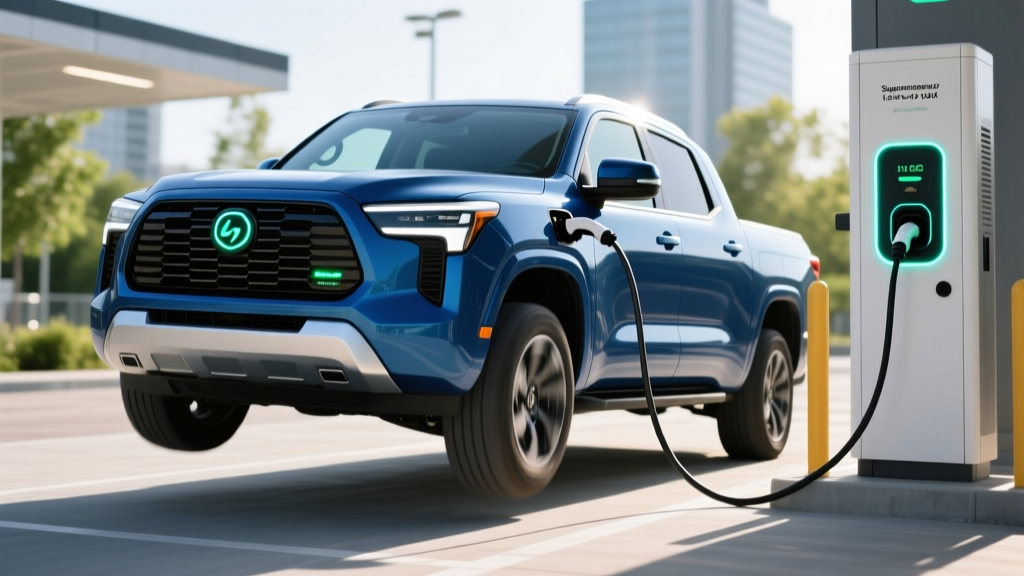
The 2026 Toyota Tundra i-Force MAX pairs a 3.4L twin-turbo V6 with a 49-HP (36 kW) electric motor-generator sandwiched between the engine and transmission. A small 1.87 kWh nickel-metal hydride (NiMH) battery sits under the rear seat. This is a conventional hybrid (HEV), not a plug-in hybrid (PHEV) or battery-electric vehicle (BEV).
| Spec | Value |
|---|---|
| Combined System Output | 437 HP / 583 lb-ft torque |
| Electric Motor | 49 HP (36 kW) |
| Battery Capacity | 1.87 kWh (NiMH) |
| EPA MPG (4x4, combined) | 20–22 MPG (depending on trim/bed) |
| 0-60 mph | ~5.7 seconds |
| Max Towing | 12,000 lbs |
| Charge Port | None (HEV — no plug-in capability) |
| Powertrain Warranty | 5 years / 60,000 miles |
| Hybrid Battery Warranty | 10 years / 150,000 miles |
| Base MSRP (SR5 4x4) | ~$60,000 |
Data sourced from fueleconomy.gov and Toyota's official specifications. Real-world MPG for the i-Force MAX typically lands between 18–21 MPG combined in mixed driving, dropping to 15–17 MPG when towing heavy loads—well below the EPA sticker.
Why "Supercharged Tundra" Searches Lead to EV Charging Questions
The aftermarket supercharger kits once available for the previous-generation 5.7L V8 Tundra are not compatible with the current twin-turbo i-Force or i-Force MAX engines. The forced induction is already built in. What many truck buyers are actually evaluating is whether to go hybrid (i-Force MAX), wait for a potential future Tundra PHEV or BEV, or pair the Tundra with a separate electric commuter vehicle. That last scenario is where home charging infrastructure becomes critical.
If you're installing a Level 2 charger for an EV in the same garage where your Tundra lives, the electrical planning is identical to any home EV charging setup. Let's walk through it.
Charging Levels Explained: kW, Miles Per Hour, and What You Need
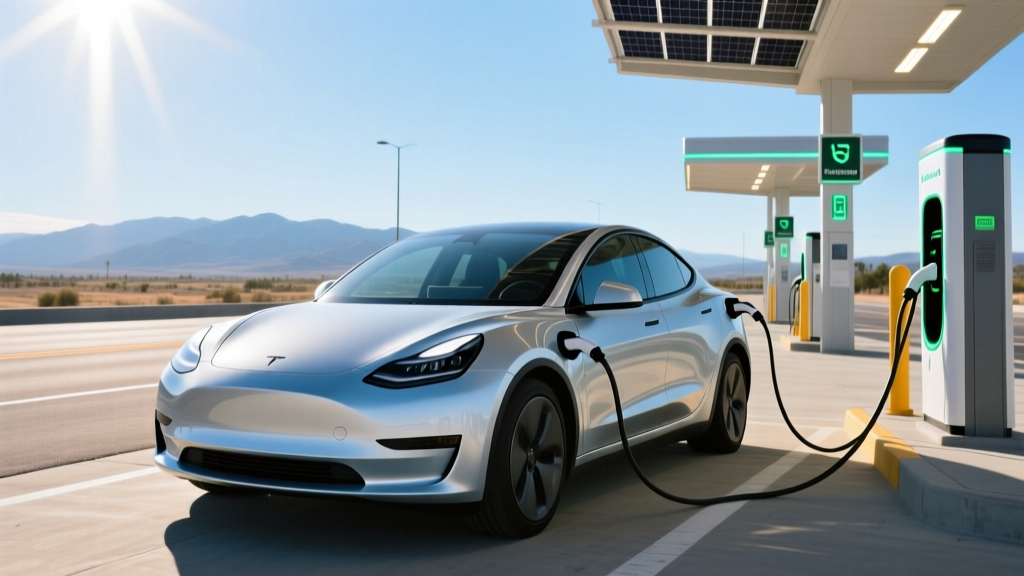
Before buying equipment, understand the three charging tiers. The critical literacy point: kW (kilowatts) measures power—how fast energy flows. kWh (kilowatt-hours) measures energy—the battery's total capacity. Think of kW as the hose diameter and kWh as the bucket size.
| Level | Voltage / Amps | Power (kW) | Miles of Range Added Per Hour | Typical Use Case |
|---|---|---|---|---|
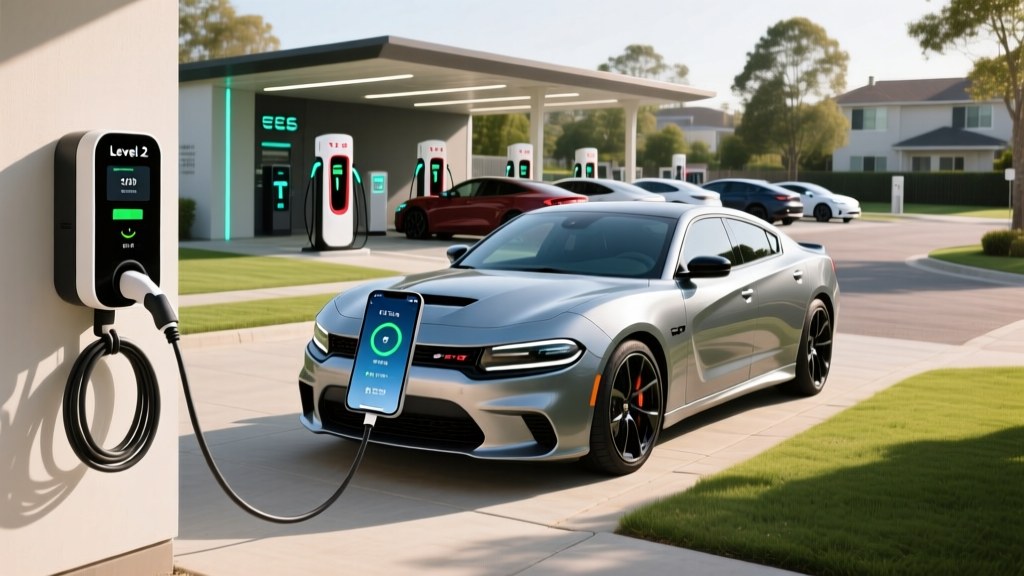
| Level 1 | 120V / 12A | 1.4 kW | 3–5 miles | Overnight trickle; PHEVs; emergency |
| Level 2 (Home) | 240V / 32–48A | 7.7–11.5 kW | 25–44 miles | Daily home charging; primary setup |
| DC Fast Charge | 400–800V DC | 50–350 kW | 150–1,000+ miles (in ~20 min) | Road trips; rapid top-ups |
For a typical 75–100 kWh battery pack (common in electric trucks like the F-150 Lightning or Rivian R1T), a Level 2 home charger at 11.5 kW (48A) will fully replenish the battery in roughly 7–10 hours—perfect for overnight. A DC fast charger at 150 kW can take a 100 kWh pack from 10% to 80% in approximately 35–45 minutes, though charging speed tapers significantly above 80% State of Charge (SoC) to protect battery health. This taper is why manufacturers advertise "10-80%" times rather than full charges.
Home Charger Installation: Electrical Requirements, Costs, and Panel Gotchas
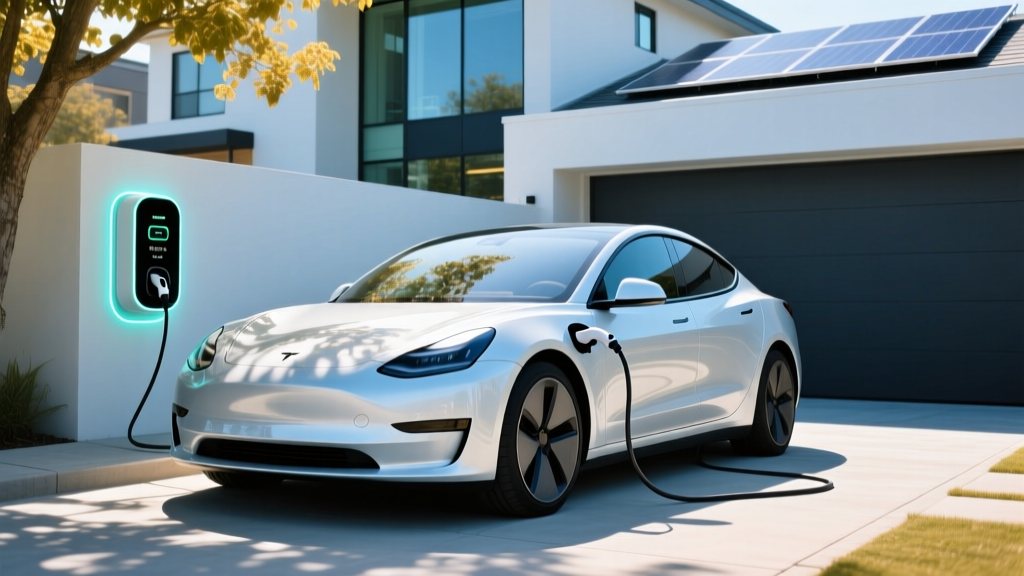
Installing a hardwired Level 2 charger is not a simple DIY outlet swap. Here's what a licensed electrician will evaluate:
- Dedicated circuit: A 240V circuit rated for 40A–60A, depending on the charger's max amperage. The National Electrical Code (NEC) requires the circuit to be rated 125% above the charger's continuous draw—so a 48A charger needs a 60A breaker.
- Wire gauge: Typically 6 AWG copper for 48A circuits, or 4 AWG for 60A. Longer wire runs from the panel to the garage may require upsizing to prevent voltage drop.
- GFCI protection: NEC 2020 and later require GFCI breakers for EV charging circuits in garages, adding $50–$120 to material costs.
- Panel capacity: This is where budgets blow up. Many older homes have 100A or 125A main panels already near capacity. Adding a 60A EV circuit may require a panel upgrade to 200A—costing $1,500–$3,500 on top of the charger install.
- Permits: Most jurisdictions require an electrical permit ($50–$250) and a post-install inspection.
| Component | Low End | High End | Notes |
|---|---|---|---|
| Level 2 Charger (Equipment) | $350 | $750 | Smart Wi-Fi chargers, 40–48A |
| Electrician Labor | $400 | $1,500 | Depends on wire run length, wall type |
| Electrical Materials (wire, breaker, conduit) | $150 | $500 | Longer runs and 60A circuits cost more |
| Permit & Inspection | $50 | $250 | Varies by municipality |
| Panel Upgrade (if needed) | $1,500 | $3,500 | 100A → 200A upgrade; not always required |
| Total (no panel upgrade) | $950 | $3,000 | Most homes with 200A panels |
| Total (with panel upgrade) | $2,450 | $6,500 | Older homes with 100A/125A service |
Connector Compatibility: NACS, CCS, and What Fits Your EV
As of 2026, the North American charging connector landscape has consolidated significantly, but legacy vehicles still use older standards. Here's what fits what:
| Connector | Brands Using It (2026) | Notes |
|---|---|---|
| NACS (Tesla / SAE J3400) | Tesla, Ford, GM, Rivian, Volvo, Polestar, Mercedes, Nissan (new models) | Industry standard by 2026; access to Tesla Supercharger network |
| CCS1 | Hyundai, Kia, BMW, VW (existing models), Stellantis | Legacy standard; still widely supported at public DC stations |
| CHAdeMO | Nissan Leaf (older), Mitsubishi Outlander PHEV | Deprecated; new models moving to NACS/CCS |
For home Level 2 charging, all non-Tesla EVs use a J1772 connector. Tesla vehicles use a proprietary Level 2 connector, but every Tesla ships with a J1772 adapter. If you buy a third-party Level 2 charger with a J1772 plug, it will work with any EV on the market (Tesla included, via adapter). Most 2026 NACS-equipped vehicles from Ford, GM, and others also include J1772 adapters for Level 2 compatibility.
Adapter tip: If you own a CCS-equipped EV and want to use Tesla Superchargers, Tesla sells a CCS-to-NACS adapter (~$250) for approved non-Tesla vehicles. Conversely, if you drive a Tesla and need to use a CCS public charger, a NACS-to-CCS adapter is available. Always verify adapter compatibility with your specific model year before purchasing.
Level 2 Home Charger Recommendations: Equipment Picks for 2026
We evaluated chargers based on power output, cable length, smart features, build quality, and price. All recommendations are hardwired-capable, Wi-Fi-enabled, and rated for indoor/outdoor use (NEMA 4).
ChargePoint Home Flex
- Power: Up to 11.5 kW (48A), configurable down to 16A
- Connector: J1772 (NACS adapter available)
- Cable: 23 feet
- Smart Features: Wi-Fi, app scheduling, Alexa, utility demand-response integration
- Price: ~$550
- Best For: Flexible amperage for homes with limited panel capacity
Tesla Wall Connector
- Power: Up to 11.5 kW (48A)
- Connector: NACS native; J1772 adapter included in box
- Cable: 24 feet
- Smart Features: Wi-Fi, over-the-air updates, power-sharing (pair two units on one circuit)
- Price: ~$475
- Best For: Tesla owners or multi-EV garages with NACS vehicles
Emporia Vue Level 2 Charger
- Power: Up to 11.5 kW (48A)
- Connector: J1772
- Cable: 24 feet
- Smart Features: Wi-Fi, real-time energy monitoring, solar integration, load management
- Price: ~$400
- Best For: Budget-conscious buyers who want detailed energy tracking
All three chargers are EnergyStar certified and qualify for any active local utility rebates. Check with your electric co-op or municipal utility—many offer $200–$500 rebates for smart charger installations, effectively cutting your equipment cost in half.
Cost to Charge: Per-Mile Math vs. the Tundra's Gas Bill
Let's compare what it costs to fuel the Tundra i-Force MAX hybrid against a battery-electric truck like the Ford F-150 Lightning (131 kWh extended-range battery, EPA 320 miles). We'll use national averages for 2026.
| Scenario | Tundra i-Force MAX (20 MPG combined) | F-150 Lightning (2.0 kWh/mile) |
|---|---|---|
| Home charging (off-peak, $0.13/kWh) | $0.18/mile (gas at $3.50/gal) | $0.026/mile |
| Home charging (peak, $0.22/kWh) | $0.18/mile | $0.044/mile |
| Public Level 2 ($0.35/kWh avg) | $0.18/mile | $0.070/mile |
| DC Fast Charge ($0.48/kWh avg) | $0.18/mile | $0.096/mile |
At 15,000 miles per year, the Tundra i-Force MAX costs roughly $2,625 annually in gasoline. The F-150 Lightning charged primarily at home off-peak costs about $390 per year in electricity—a savings of over $2,200 annually. Even using only public DC fast charging (the most expensive option), the Lightning still costs roughly $1,440/year, saving over $1,100 versus the hybrid Tundra.
However, the electric truck's higher purchase price ($55,000–$90,000+ depending on trim and battery) and potentially higher insurance premiums ($200–$400/year more, per III.org data) offset some of these fuel savings. The total-cost-of-ownership crossover point typically arrives around year 4–6, depending on your local electricity rates, annual mileage, and whether you qualify for the federal §30D tax credit.
Safety, Code, and Best Practices for Home EV Charging
EV chargers draw sustained high current for hours—unlike a dryer or oven that cycles on and off. This makes proper installation non-negotiable:
- Always use a licensed electrician. Unpermitted or DIY 240V work voids homeowner's insurance coverage for electrical fires and creates a serious shock hazard.
- Dedicated circuit only. Never share the EV charger circuit with other appliances. The continuous load profile demands its own breaker.
- Outdoor-rated equipment. If your charger is mounted outside or in an unsealed garage, ensure it carries a NEMA 4 or NEMA 4X rating for water and dust resistance.
- Cable management. A 24-foot cable dragging on a garage floor is a trip hazard and degrades the cable jacket over time. Install a wall-mounted cable organizer or retractor.
- Load management for multi-EV homes. If you have two EVs but only one 60A circuit, chargers like the Tesla Wall Connector support "power sharing"—splitting available amperage between two units dynamically. Alternatively, an Emporia or ChargePoint charger with load-management software can throttle charging when household demand peaks.
- Surge protection. Consider a whole-panel surge protector ($150–$300 installed) to shield the charger's electronics and your EV's onboard charger from lightning or grid spikes.
Frequently Asked Questions
Can I charge a Toyota Tundra i-Force MAX at home?
No. The Tundra i-Force MAX is a conventional hybrid (HEV), not a plug-in. Its 1.87 kWh battery recharges only through regenerative braking and the gasoline engine. There is no charge port. If you see "supercharged Tundra" kits advertised, those refer to aftermarket engine superchargers for the older 5.7L V8—not electrical charging.
How much does it cost to install a home EV charger?
For a typical Level 2 (240V, 48A) installation in a home with an adequate 200A electrical panel, expect to spend $950–$3,000 total, including the charger unit ($350–$750), electrician labor ($400–$1,500), materials ($150–$500), and permits ($50–$250). If your home has an older 100A or 125A panel that needs upgrading to 200A, add $1,500–$3,500 to that total.
How fast will each charging level add range?
Level 1 (120V) adds roughly 3–5 miles of range per hour—suitable only for PHEVs with small batteries or emergency trickle charging. Level 2 (240V, 48A) adds 25–44 miles per hour, fully replenishing most EV batteries overnight. DC fast charging at 150 kW can add 150–250 miles in 15–20 minutes, though speed tapers above 80% SoC.
Which connector or charger is compatible with my EV?
For home Level 2 charging, any J1772 charger works with every EV on the market—Teslas use a simple adapter. For DC fast charging in 2026, most new vehicles from Ford, GM, Tesla, Rivian, and Volvo use NACS. Hyundai, Kia, and some others still use CCS1. CHAdeMO is deprecated and limited to older Nissan and Mitsubishi models. Check your vehicle's charge port or owner's manual to confirm.
How much does charging cost per mile compared to gas?
Charging at home at the national average off-peak rate of $0.13/kWh costs roughly $0.026–$0.04 per mile for a typical EV—about 6–7× cheaper than a 20 MPG hybrid truck burning $3.50/gallon gas ($0.18/mile). Even public DC fast charging at $0.48/kWh ($0.10/mile) is still nearly half the per-mile cost of gasoline.
What electrical upgrades might I need for a home charger?
The most common upgrade is a panel replacement from 100A to 200A service ($1,500–$3,500) if your existing panel lacks capacity for a 40–60A dedicated EV circuit. You may also need a new breaker slot, upgraded wire from the meter to the panel, or a GFCI breaker (required by NEC for garage EV circuits). An electrician's load calculation will determine exactly what's needed before any work begins.