Why Supercharged Trucks Need a Serious Charging Strategy
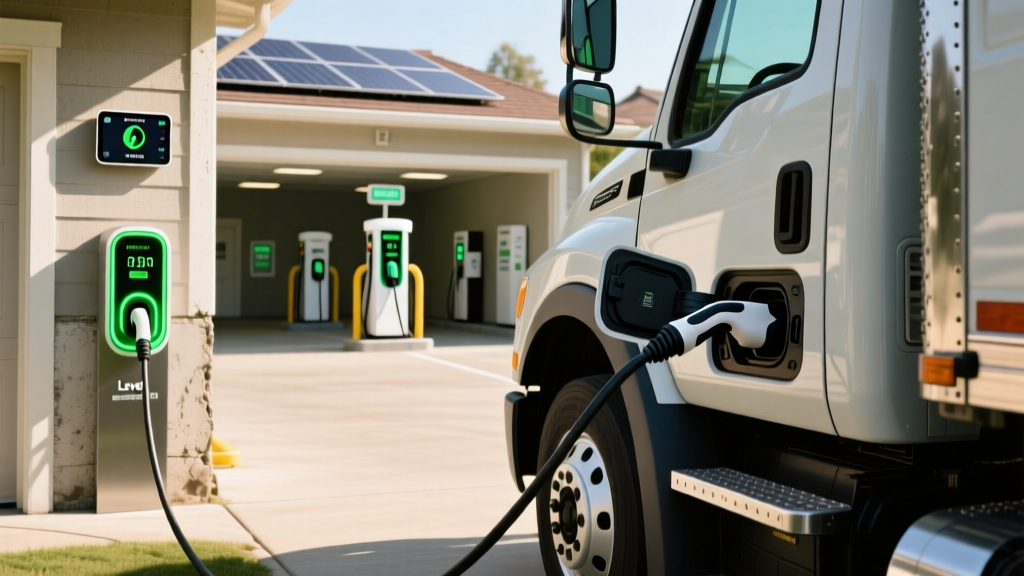
Electric pickups pack some of the largest battery packs on the road. The Ford F-150 Lightning Extended Range carries a 131 kWh usable pack; the Chevrolet Silverado EV 4WT tops out near 200 kWh; and the Rivian R1T Max Pack runs 149 kWh. These are not compact sedans sipping 60 kWh from a wallbox overnight. If you are plugging a 130+ kWh truck into a standard 120V outlet (Level 1), you are adding roughly 3–5 miles of range per hour — meaning a full charge could take well over 30 hours.
That reality makes a deliberate charging setup non-negotiable for any supercharged truck owner. This guide walks through every charging tier, the real electrical work your garage may need, connector compatibility across the major truck platforms, and what you will actually spend per mile versus a gas-powered F-150 or Silverado.
Charging Levels Explained: kW, Miles Per Hour, and Real Charge Times
The most common mistake new EV truck buyers make is confusing kW (kilowatts — the rate of power delivery, like water pressure from a hose) with kWh (kilowatt-hours — the total energy stored in the battery, like the size of the tank). A charger rated at 11.5 kW delivers energy at that rate; a 131 kWh battery needs roughly 131 kWh of energy to fill from empty. Charging time depends on both.
| Level | Voltage / Amps | Power (kW) | Miles of Range Added Per Hour | Typical Use Case |
|---|---|---|---|---|
| Level 1 | 120V / 12A | ~1.4 kW | 3–5 mi/hr | Emergency top-off, PHEVs |
| Level 2 (basic) | 240V / 32A | ~7.7 kW | 18–25 mi/hr | Daily home charging (smaller packs) |
| Level 2 (high-power) | 240V / 48A | ~11.5 kW | 28–38 mi/hr | Recommended for large truck packs |
| Level 2 (80A) | 240V / 80A | ~19.2 kW | 45–58 mi/hr | F-150 Lightning dual-charger option |
| DC Fast Charging | 400V–800V DC | 50–350 kW | 150–700+ mi/hr (peak) | Road trips, fleet depots |
For a truck with a 131 kWh battery and an efficiency of roughly 2.0 mi/kWh (a reasonable real-world figure for a loaded F-150 Lightning), an 11.5 kW Level 2 charger adds about 23 miles of range per hour, meaning a 10–80% session (roughly 92 kWh) takes about 8 hours. That is fine for overnight charging. But on a DC fast charger rated at 150 kW peak, that same 10–80% session can complete in roughly 40–45 minutes — though sustained rates taper significantly above 80% State of Charge (SoC).
Real-World 10–80% Charge Time Examples for Popular Trucks
| Truck Model | Battery (kWh usable) | Peak DC Fast kW | Est. 10–80% DC Time | Level 2 (11.5 kW) 10–80% |
|---|---|---|---|---|
| Ford F-150 Lightning Ext. Range | 131 kWh | 150 kW | ~41 min | ~8.0 hr |
| Chevrolet Silverado EV 4WT | ~200 kWh | 350 kW | ~45 min | ~12.2 hr |
| Rivian R1T Max Pack | 149 kWh | 200+ kW (NACS) | ~42 min | ~9.1 hr |
| GMC Sierra EV Denali Edition 1 | ~200 kWh | 350 kW | ~45 min | ~12.2 hr |
Note: DC fast charge times assume optimal battery preconditioning and ambient temperatures above 60°F. Cold packs charge significantly slower — expect 20–40% longer sessions below freezing. Charge curves taper heavily above 80% SoC to protect battery health.
Home Charger Installation: Electrical Requirements, Panel Upgrades, and Real Costs
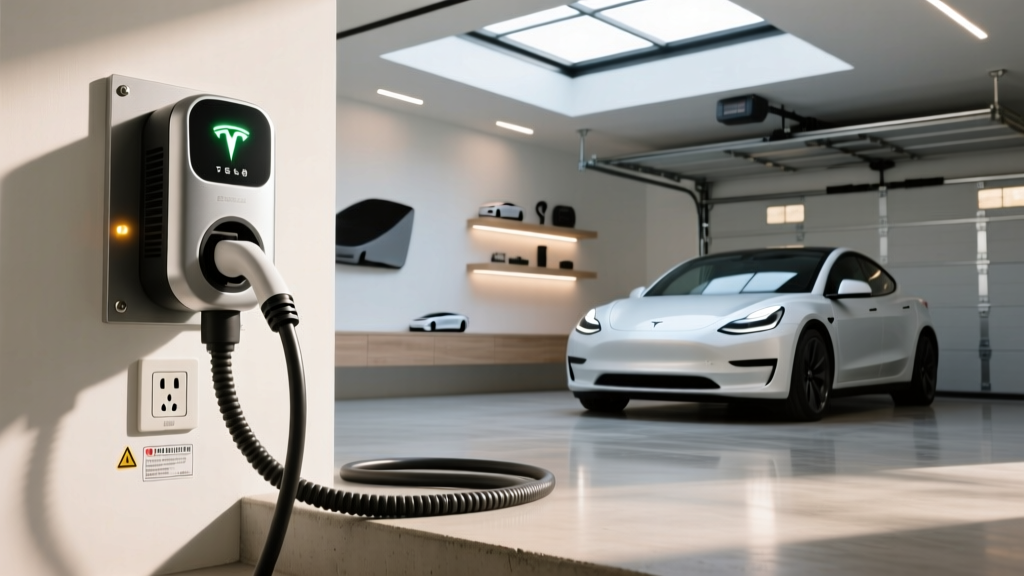
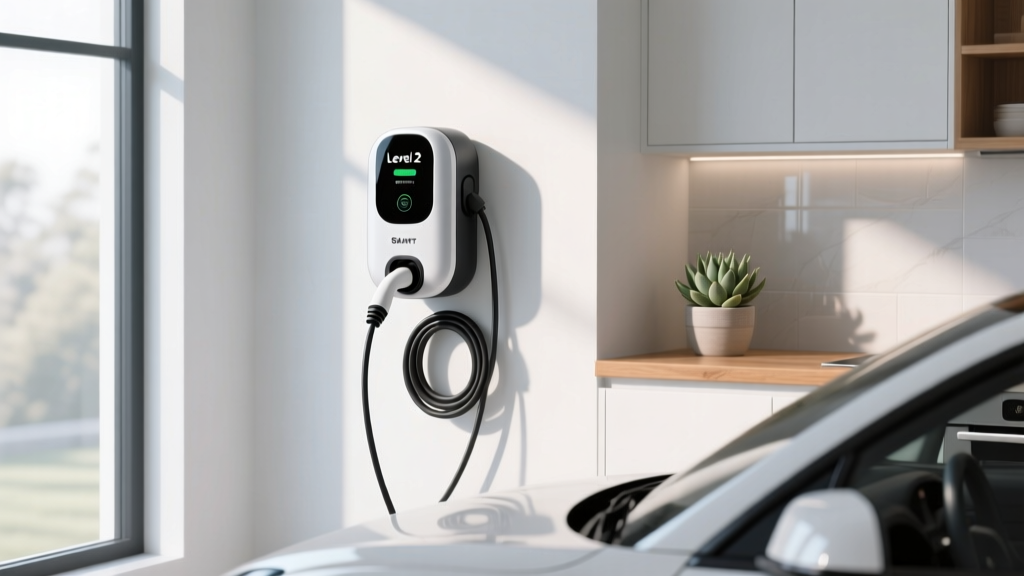
Installing a Level 2 home charger for a supercharged truck is not a simple plug-and-play job. Most trucks benefit from a 48A or higher charger, which requires a dedicated 60A (or larger) circuit on a 240V line. Here is what that actually involves.
Electrical Requirements for Truck-Class Level 2 Charging
- Voltage: 240V (split-phase, same as an electric dryer or oven)
- Amperage: 60A breaker for a 48A continuous charger (NEC requires 125% overhead for continuous loads); 100A breaker for an 80A charger
- Wire gauge: 6 AWG copper for 60A; 3 AWG for 80A (varies by run length and local code)
- Dedicated circuit: Required — you cannot share with other major appliances
- GFCI protection: Required for outdoor installations per NEC 2023+; many jurisdictions now require it indoors as well
Will You Need a Panel Upgrade?
This is the cost variable most online guides gloss over. If your home has a 100A main service panel — common in houses built before the 1990s — adding a 60A EV circuit may exceed your panel's capacity, especially if you already run electric heat, a dryer, and an oven. An electrician will perform a load calculation per NEC Article 220 to determine if your panel can handle the additional draw.
If a panel upgrade is needed (to 200A or 400A), expect to add $1,500–$4,000 to your project. Homes with existing 200A panels usually have enough headroom for a 48A–60A EV circuit without an upgrade.
Home Charger Installation Cost Breakdown
| Component | Low Estimate | High Estimate | Notes |
|---|---|---|---|
| Level 2 Charger (48A, hardwired) | $400 | $750 | ChargePoint Home Flex, Wallbox Pulsar Plus, Tesla Wall Connector |
| Level 2 Charger (80A, hardwired) | $500 | $900 | Ford Charge Station Pro, Tesla Wall Connector (48A max on single) |
| Electrician labor (standard install) | $600 | $1,800 | Depends on run length from panel to garage |
| Electrical permit | $50 | $250 | Varies by municipality |
| Panel upgrade (if needed) | $1,500 | $4,000 | 100A → 200A or 200A → 400A service |
| Conduit, wire, junction boxes | $150 | $600 | Longer runs = higher material cost |
| Total (no panel upgrade) | $1,200 | $3,400 | |
| Total (with panel upgrade) | $2,700 | $7,400 |
Always hire a licensed electrician and pull a permit. Unpermitted EV charger work can void homeowner's insurance coverage in the event of an electrical fire and may cause issues at resale. Check the National Electrical Code (NEC) requirements adopted by your state.
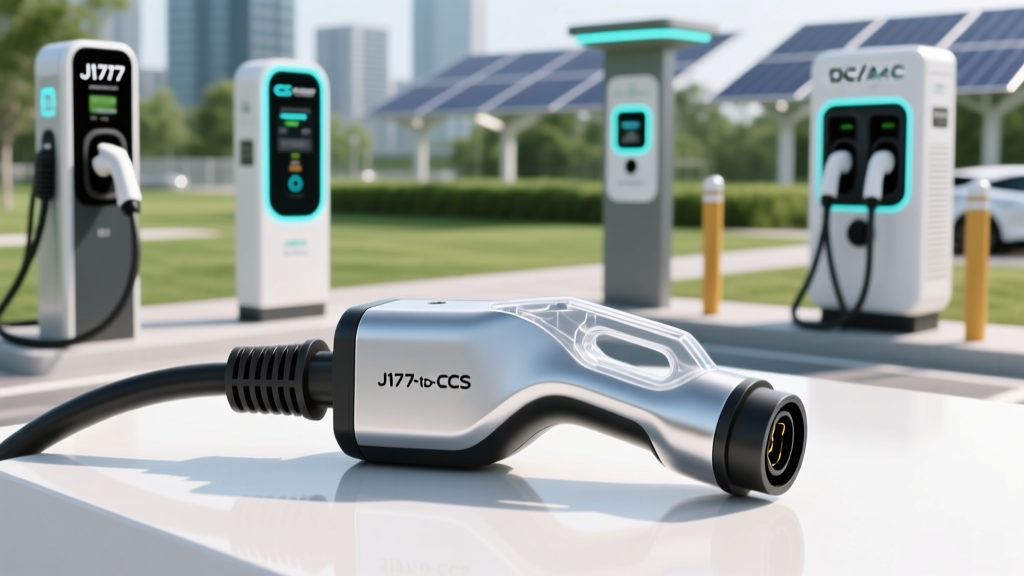
Connector Compatibility: NACS, CCS1, and What Your Truck Actually Needs
The connector landscape shifted dramatically in 2024–2025 when Ford, GM, Rivian, and most other automakers adopted Tesla's North American Charging Standard (NACS) for new vehicles. By 2026, here is where the major truck platforms stand:
| Truck | Native Connector | Adapter Needed for CCS Stations? | Adapter Needed for Tesla Superchargers? |
|---|---|---|---|
| Ford F-150 Lightning (2025+) | NACS | Yes (NACS-to-CCS adapter included) | No — direct plug |
| Ford F-150 Lightning (2022–2024) | CCS1 | No | Yes (Ford-provided adapter) |
| Chevrolet Silverado EV (2024+) | NACS | Yes (adapter available) | No — direct plug |
| Rivian R1T (2025+) | NACS | Yes (adapter available) | No — direct plug |
| Rivian R1T (2022–2024) | CCS1 | No | Yes (Rivian adapter) |
| GMC Sierra EV | NACS | Yes (adapter available) | No — direct plug |
| Tesla Cybertruck | NACS | Yes (Tesla CCS adapter) | No — direct plug |
Key takeaway: If you are buying a 2025+ model-year electric truck, it almost certainly ships with a NACS port. For home charging, this means a Tesla Wall Connector or any NACS-equipped Level 2 station is a direct plug. For public DC fast charging, NACS trucks can use Tesla Superchargers natively and CCS stations (Electrify America, EVgo) with an adapter. Carry the adapter in your truck at all times.
Equipment Recommendations: Best Level 2 Chargers for Electric Trucks
Not all Level 2 chargers are equal. For a truck with a 130–200 kWh battery, you want at least 48A output to keep overnight sessions manageable. Here are three proven options:
Tesla Wall Connector (NACS)
- Power output: Up to 11.5 kW (48A) on a 60A circuit
- Connector: NACS (native for 2025+ Ford, GM, Rivian trucks)
- Cable length: 24 ft
- Smart features: Wi-Fi, OTA updates, load sharing (pair two units on one circuit), access control
- Price: ~$475
- Best for: NACS-native trucks; cleanest install with no adapter needed
ChargePoint Home Flex (NACS or CCS)
- Power output: Up to 12 kW (50A) on a 60A circuit; configurable down to 16A
- Connector: Available in NACS or CCS1 — choose at purchase
- Cable length: 23 ft
- Smart features: Wi-Fi, ChargePoint app scheduling, Alexa integration, flexible amperage via DIP switch
- Price: ~$550–$650
- Best for: Multi-EV households; adjustable amperage for older panels
Ford Charge Station Pro (80A)
- Power output: Up to 19.2 kW (80A) on a 100A circuit
- Connector: NACS (2025+ models)
- Cable length: 25 ft
- Smart features: FordPass integration, bi-directional charging support (F-150 Lightning Intelligent Backup Power), scheduled charging
- Price: ~$800–$1,300
- Best for: F-150 Lightning owners who want maximum Level 2 speed and home backup power capability
Important: The Ford Charge Station Pro at 80A requires a 100A dedicated circuit — that is a significant electrical install. Confirm with your electrician that your panel has the capacity before committing to this unit.
Cost to Charge: Home vs. Public vs. Gas — What Supercharged Truck Owners Actually Pay
Large batteries mean large electricity bills if you are not strategic. Here is how the numbers break down for a typical supercharged truck driven 12,000 miles per year at an efficiency of 2.0 mi/kWh (6,000 kWh annually):
| Scenario | Cost per kWh | Annual Cost (12K mi) | Cost per Mile |
|---|---|---|---|
| Home charging (off-peak utility rate) | $0.10 | $600 | $0.050 |
| Home charging (national avg. residential) | $0.17 | $1,020 | $0.085 |
| Public Level 2 (ChargePoint, EVgo) | $0.30 | $1,800 | $0.150 |
| DC Fast Charging (Electrify America, EA Pass) | $0.40 | $2,400 | $0.200 |
| Tesla Supercharger (avg. 2026) | $0.32 | $1,920 | $0.160 |
| Gas F-150 (18 MPG combined, $3.40/gal) | — | $2,267 | $0.189 |
| Gas Silverado 1500 (19 MPG, $3.40/gal) | — | $2,147 | $0.179 |
The bottom line: Home charging on an off-peak rate saves electric truck owners $1,500–$1,900 per year versus gas. Even exclusive DC fast charging is roughly cost-competitive with gasoline. The economics only work in your favor if you can charge at home most nights. If your daily routine forces reliance on public DC fast charging at $0.40+/kWh, your per-mile cost will equal or exceed a gas truck.
Check your utility for time-of-use (TOU) plans. Many utilities offer rates as low as $0.06–$0.10/kWh between midnight and 6 AM. Set your charger or truck's scheduled charging to those windows for maximum savings. According to the U.S. Department of Energy, the national average electricity cost for EV charging at home is roughly $0.17/kWh as of late 2025.
Safety, Code, and Smart Charging Practices for Large Truck Batteries
Charging a 130–200 kWh battery pack night after night puts sustained demand on your home electrical system. Follow these guidelines:
- Hardwire over plug: For 48A+ chargers, hardwiring is recommended (and often required by code) over a NEMA 14-50 receptacle. Hardwired connections eliminate the risk of receptacle overheating under sustained high-amperage loads.
- GFCI protection: Required for outdoor installations per NEC. Use a GFCI breaker in the panel rather than a GFCI receptacle for EV circuits.
- Outdoor-rated equipment: If your charger mounts outside, verify NEMA 4 (weatherproof) rating. All recommended units above carry outdoor ratings.
- Battery preconditioning: Before a DC fast charging stop, use your truck's built-in navigation to route to the charger. This triggers battery preconditioning — warming the pack to optimal temperature for faster charge acceptance. Skipping preconditioning can add 10–15 minutes to a fast-charge session in cool weather.
- 80% daily limit: For NMC battery chemistries (used in the F-150 Lightning and Silverado EV), set your daily charge limit to 80% to slow long-term degradation. Charge to 100% only before road trips. The Rivian R1T Max Pack also uses NMC chemistry and benefits from the same practice.
Frequently Asked Questions About Charging Electric Trucks
How much does it cost to install a home EV charger for a supercharged truck?
A typical 48A Level 2 installation with an existing 200A panel costs $1,200–$3,400 including equipment, electrician labor, wire, and permit. If your home needs a panel upgrade (common with 100A service), add $1,500–$4,000, bringing the total to $2,700–$7,400. Always get at least two quotes from licensed electricians.
How fast will each charging level add range to my electric truck?
Level 1 (120V) adds roughly 3–5 miles per hour — essentially useless for a 130+ kWh pack. Level 2 at 48A (11.5 kW) adds about 23–30 miles per hour depending on truck efficiency. Level 2 at 80A (19.2 kW) adds roughly 38–48 miles per hour. DC fast charging at 150 kW can add 200+ miles in 20 minutes during the peak portion of the charge curve.
Which connector and charger is compatible with my electric truck?
Model-year 2025+ trucks from Ford, GM, and Rivian use the NACS connector natively and plug directly into Tesla Wall Connectors and Tesla Superchargers. Older model years (2022–2024) generally use CCS1 and require an adapter for Tesla Superchargers. Check your truck's specific model year and consult the manufacturer for adapter availability.
How much does charging an electric truck cost per mile versus gas?
At the national average residential electricity rate of ~$0.17/kWh and a truck efficiency of 2.0 mi/kWh, home charging costs about $0.085 per mile. A comparable gas F-150 at 18 MPG and $3.40/gallon costs about $0.189 per mile. Home charging saves roughly $0.10 per mile, or about $1,200 per year at 12,000 miles.
What electrical upgrades might I need for a home truck charger?
The most common upgrade is a panel capacity increase from 100A to 200A service ($1,500–$3,000). You will also need a dedicated 60A breaker (for 48A charging) or 100A breaker (for 80A charging), appropriate-gauge wire (6 AWG or 3 AWG copper), and a permit. Your electrician will perform a NEC Article 220 load calculation to determine what your current panel can support.
Can I use a NEMA 14-50 outlet instead of hardwiring my charger?
Yes, for chargers up to 40A (which draw 32A continuous on a 50A breaker). However, for 48A+ chargers — recommended for truck-class batteries — hardwiring is preferred and often required by local code. Sustained 48A+ draws through a plug receptacle can cause overheating over time. Consult your electrician and local building department.
Does the federal tax credit cover home charger installation?
The IRS §30D credit applies to the vehicle, not the charger. However, a separate Alternative Fuel Vehicle Refueling Property Credit (IRS §30C) can cover up to 30% of home charger equipment and installation costs (maximum $1,000 for residential). Eligibility depends on census tract requirements. Consult a tax professional or IRS.gov for current qualification rules.
The Verdict: Plan Your Charging Before You Buy the Truck
Supercharged trucks deliver extraordinary capability — 500+ horsepower, 300+ miles of EPA range, and genuine utility — but their massive battery packs demand a charging plan that matches. Budget $1,200–$3,400 for a proper 48A+ Level 2 home installation (more if you need a panel upgrade), confirm your connector type before buying equipment, and enroll in your utility's off-peak rate plan. With home charging in place, a supercharged truck will cost roughly half what a gas truck costs per mile to fuel — and you will never visit a gas station again.