Why "Supercharged Mustang" Searches Are Spiking — And What It Means for EV Charging
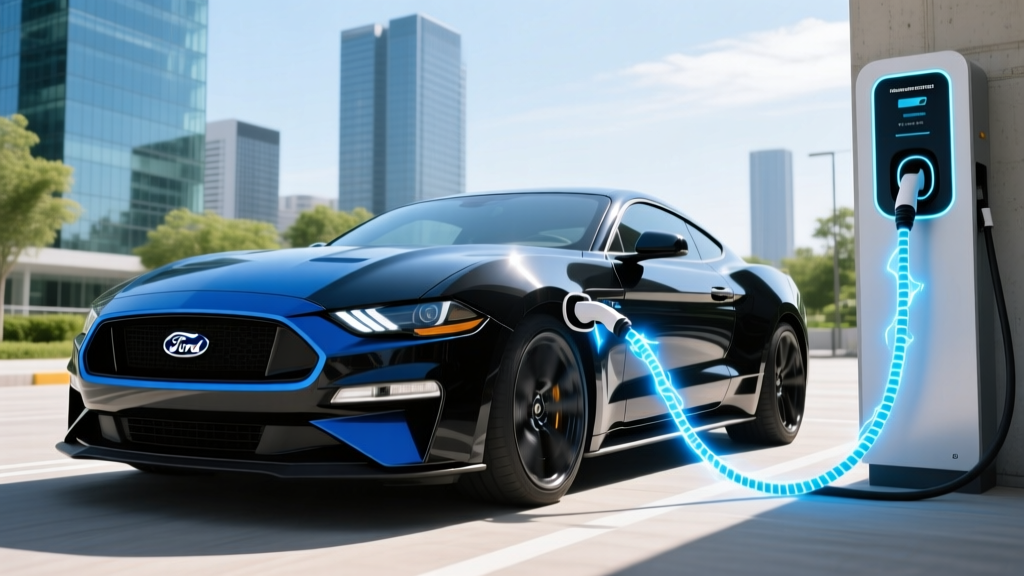
Search interest in a supercharged Mustang continues to climb as enthusiasts weigh the thrill of forced-induction V8s against the instant torque of electric powertrains. Ford's current Mustang Mach-E GT delivers 480 hp and a 3.8-second 0-60 without a supercharger in sight, while rumors of a future high-performance Mustang EV keep the forums buzzing. Whether you own a Mach-E today, drive a supercharged 5.0-liter Coyote V8, or are waiting to see what Ford's electric muscle car lineup looks like in the late 2020s, one question unites both camps: how do you actually keep this thing fueled?
This guide covers EV charging from the ground up — home installation, public DC fast charging, connector standards, real costs per mile, and the equipment you need. We'll also translate what "supercharged" performance means in the EV world, where kilowatts replace cubic centimeters and charge curves matter more than boost pressure.
Charging Levels Explained: kW, Miles Per Hour, and Real Charge Times
The single most important distinction in EV charging is between kW (kilowatts) and kWh (kilowatt-hours). kW measures power — how fast energy flows into the battery, like water pressure from a hose. kWh measures energy — the total capacity of the battery, like the size of the tank. A 91 kWh battery charged at 11 kW will take roughly 8+ hours; at 150 kW DC fast charging, that same battery can go from 10% to 80% in under 30 minutes.
| Level | Voltage | Max Power (kW) | Miles of Range Added Per Hour | Best Use Case |
|---|---|---|---|---|
| Level 1 | 120V AC | 1.4–1.9 kW | 3–5 mi/hr | Overnight top-ups, PHEVs, emergencies |
| Level 2 | 240V AC | 7.2–19.2 kW | 20–60+ mi/hr | Daily home/work charging |
| DC Fast (Level 3) | 400–800V DC | 50–350 kW | 150–1,200+ mi/hr (peak) | Road trips, quick stops |
Real-world charge time examples (10% to 80% SoC):
- Ford Mustang Mach-E Extended Range (91 kWh usable, NMC): ~10 hours on an 11 kW Level 2 home charger; ~30 minutes on a 150 kW DC fast charger (peaks near 150 kW, tapers above 80%)
- Hypothetical 100 kWh performance EV (future supercharged Mustang EV): ~11 hours on 11 kW Level 2; ~22 minutes on a 350 kW DC fast charger (if equipped with 800V architecture)
- Typical 60 kWh crossover: ~6.5 hours on 11 kW Level 2; ~25 minutes on a 100 kW DC charger
Remember that DC fast charging follows a charge curve: peak kW is only sustained between roughly 10–50% state of charge. Above 80%, speeds taper dramatically to protect the battery. This is why manufacturers quote 10–80% times rather than 0–100%.
Home Charger Installation: Electrical Requirements, Costs, and Panel Gotchas
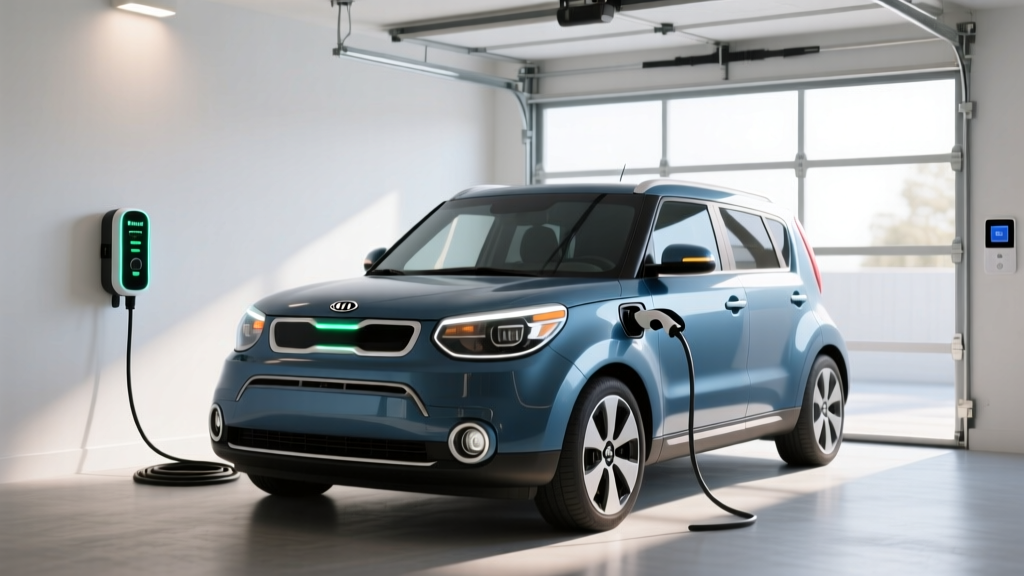
Installing a Level 2 home charger is the single biggest ownership upgrade you can make. It transforms EV life from "planning around charging" to "waking up with a full battery every morning." But the install cost varies enormously depending on your home's electrical panel, the distance from panel to charger location, and local permit requirements.
What a Level 2 Charger Requires Electrically
A typical Level 2 home charger runs on a 240V dedicated circuit — the same voltage as your electric dryer or oven. Common configurations:
- 32A circuit / 40A breaker: Delivers up to 7.7 kW — sufficient for most daily driving needs (adds ~25–30 miles per hour of charging)
- 48A circuit / 60A breaker: Delivers up to 11.5 kW — ideal for larger batteries like the Mach-E Extended Range or F-150 Lightning
- 80A circuit (rare): Delivers up to 19.2 kW — requires a 200A+ panel and heavy-gauge wiring; usually overkill for residential
Your charger should be set to draw no more than 80% of the breaker's rated amperage (this is a National Electrical Code requirement for continuous loads).
The Panel Upgrade Question
Homes built before the 1990s often have 100A or even 60A main service panels. If your panel is already near capacity — running central A/C, an electric range, a dryer, and an electric water heater — adding a 40A or 60A EV circuit may require a panel upgrade to 200A. This is the single biggest cost variable in home charger installation.
Signs you may need an upgrade:
- Your panel is rated below 150A
- You have fewer than 4–6 open breaker slots
- Your electrician's load calculation shows you're above 80% of panel capacity
- Your home has a Federal Pacific or Zinsco panel (known safety hazards that insurers may require you to replace)
| Component | Simple Install (panel nearby, no upgrade) | Complex Install (long run or panel upgrade) |
|---|---|---|
| Level 2 charger unit (hardwired or NEMA 14-50) | $400–$700 | $400–$700 |
| Electrician labor (2–4 hrs simple; 6–10+ hrs complex) | $300–$800 | $1,000–$2,500 |
| Materials (wire, conduit, breaker, junction box) | $100–$300 | $300–$800 |
| Permit & inspection | $50–$200 | $50–$200 |
| Panel upgrade (if needed: 200A service) | N/A | $1,500–$4,000 |
| Total estimated cost | $850–$2,000 | $3,250–$8,200 |
Federal incentive note: The IRS §30C credit covers up to 30% of home EV charger equipment and installation costs, capped at $1,000 for residential property. Eligibility depends on census-tract requirements. Consult a tax professional for your specific situation.
Connector Compatibility: NACS, CCS, CHAdeMO, and What Your EV Needs
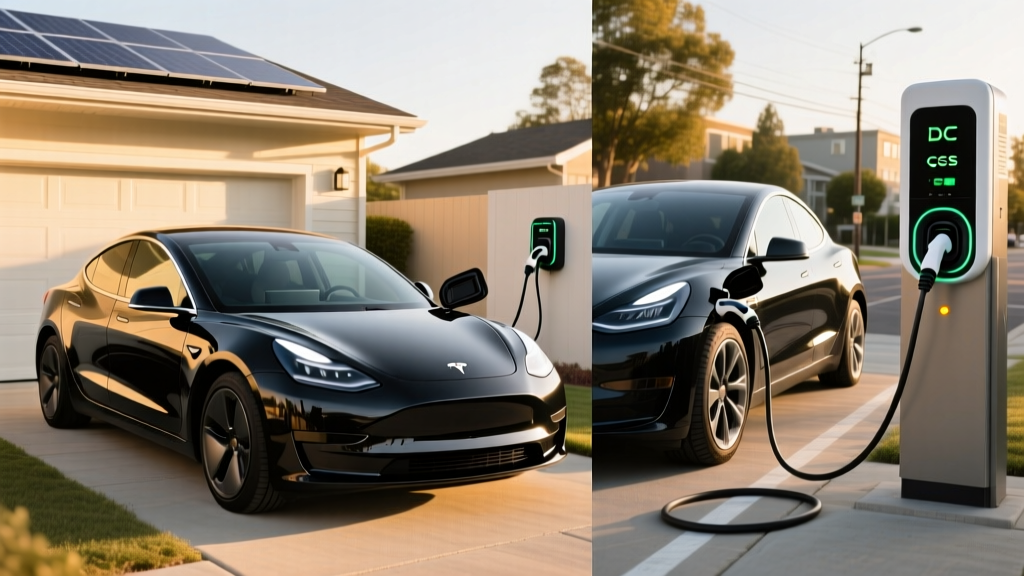
The connector landscape has shifted dramatically. As of 2025–2026, Ford has adopted the NACS (North American Charging Standard) — the Tesla-designed connector — across its EV lineup. The Mustang Mach-E now ships with a native NACS charge port, granting direct access to Tesla's Supercharger network (over 25,000 stalls in North America) without an adapter.
| Connector | Used By | Max DC Fast Charge Power | Adapter Needed? |
|---|---|---|---|
| NACS (Tesla / J3400) | Tesla, Ford, GM, Rivian, Volvo, Polestar, and growing | Up to 350 kW (V4 Superchargers) | CCS-to-NACS adapter for older CCS vehicles at Superchargers |
| CCS1 (Combined Charging System) | Hyundai, Kia, BMW, VW, most legacy non-Tesla EVs | Up to 350 kW | NACS-to-CCS adapter needed for Supercharger access |
| CHAdeMO | Nissan Leaf (legacy), Mitsubishi Outlander PHEV | Up to 100 kW | Rare adapters; network being phased out in the US |
| J1772 (Level 1/2 AC) | All non-Tesla EVs for AC charging | Up to 19.2 kW AC | Tesla Mobile Connector includes J1772 adapter |
If you're buying a home charger today, choose one with a NACS connector if your vehicle uses it (or plan to use a J1772-to-NACS adapter). For CCS vehicles, most home chargers still ship with J1772 connectors, which work fine for Level 2 AC charging regardless of your DC fast-charge port type.
Cost to Charge: Home Electricity vs. Gasoline Per Mile
One of the strongest arguments for electrification — whether you're driving a Mach-E GT or waiting for a supercharged electric Mustang — is the fuel cost advantage. Here's how the numbers shake out in 2026:
| Scenario | Cost | Vehicle Efficiency | Cost Per Mile |
|---|---|---|---|
| Home charging (off-peak, $0.13/kWh avg) | $0.13/kWh | 3.0 mi/kWh (Mach-E avg) | $0.043/mi |
| Home charging (peak, $0.25/kWh) | $0.25/kWh | 3.0 mi/kWh | $0.083/mi |
| Public Level 2 (ChargePoint, EVgo, $0.35/kWh avg) | $0.35/kWh | 3.0 mi/kWh | $0.117/mi |
| DC Fast Charging (Electrify America, $0.48/kWh avg) | $0.48/kWh | 3.0 mi/kWh | $0.160/mi |
| Tesla Supercharger ($0.30/kWh avg) | $0.30/kWh | 3.0 mi/kWh | $0.100/mi |
| Gasoline — 25 MPG combined ($3.40/gal) | $3.40/gal | 25 MPG | $0.136/mi |
| Gasoline — 16 MPG performance V8 ($3.40/gal) | $3.40/gal | 16 MPG | $0.213/mi |
The takeaway: Home off-peak charging costs roughly one-third what gasoline costs per mile for an average car, and one-fifth the cost of fueling a supercharged or high-performance V8. Even public DC fast charging undercuts a performance gas car. The savings are most dramatic for high-mileage drivers and those with access to cheap overnight electricity.
Recommended Home Charging Equipment for 2026
Based on reliability track records, smart features, connector options, and value, here are our top Level 2 home charger picks:
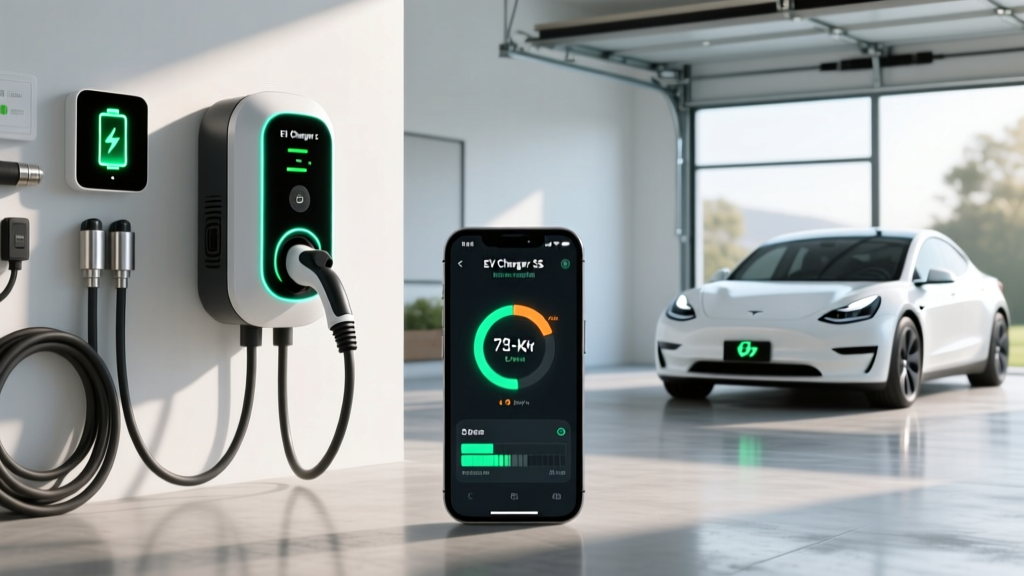
Emporia Level 2 EV Charger
- Power output: Up to 11.5 kW (48A)
- Connector: J1772 or NACS (select at purchase)
- Cable length: 24 ft
- Smart features: Energy monitoring, solar integration, scheduled charging, load management
- Price: ~$400–$500
- Best for: Budget-conscious buyers who want smart features and solar pairing
ChargePoint Home Flex
- Power output: Up to 12 kW (50A) — configurable down to match your circuit
- Connector: J1772 or NACS
- Cable length: 23 ft
- Smart features: Wi-Fi, app scheduling, Alexa/Google Home, amperage dip-switch adjustment
- Price: ~$550–$700
- Best for: Flexibility across panel capacities; reliable brand with strong app ecosystem
Tesla Wall Connector
- Power output: Up to 11.5 kW (48A)
- Connector: NACS native; includes J1772 adapter for non-Tesla EVs
- Cable length: 24 ft
- Smart features: Wi-Fi updates, power sharing (daisy-chain up to 6 units), load management
- Price: ~$475
- Best for: NACS-equipped vehicles, multi-EV households, clean aesthetic
Grizzl-E Smart
- Power output: Up to 10 kW (40A)
- Connector: J1772 or NACS
- Cable length: 24 ft
- Smart features: OCPP-compatible, works with utility demand-response programs, outdoor-rated (NEMA 4)
- Price: ~$500–$600
- Best for: Outdoor installations, extreme temperatures (-40°F rated), utility program participants
Safety, Code Compliance, and Installation Best Practices
A Level 2 charger is a high-draw, continuous-load appliance. Cutting corners on installation risks fire, voided insurance, and failed inspections. Here's what matters:
- Dedicated circuit: Your EV charger must be on its own dedicated breaker — not shared with other appliances. The NEC requires continuous loads to be limited to 80% of the breaker rating.
- GFCI protection: The 2023 NEC update requires GFCI protection for EV charging outlets (NEMA 14-50 receptacles). Hardwired chargers may be exempt depending on your jurisdiction, but many AHJs (Authorities Having Jurisdiction) require it regardless. Hardwiring also eliminates the receptacle as a potential failure point.
- Outdoor rating: If your charger is installed outdoors (carport, driveway), the unit must be rated at least NEMA 4 (weather-resistant). All our picks above meet this standard.
- Permit and inspection: Most jurisdictions require an electrical permit for EV charger installation. Skipping the permit risks insurance claim denials if a fire originates from unpermitted work. Budget $50–$200 for the permit and plan for a post-install inspection.
- Wire gauge: A 48A/60A circuit typically requires 4 AWG copper wire (or 6 AWG for shorter runs, depending on local code). Your electrician will calculate this based on run length and ambient temperature.
- EVSE certification: Only buy chargers that are UL-listed or ETL-listed. Uncertified units imported from overseas marketplaces may lack critical safety protections.
The Supercharged Mustang Question: V8 Thrills vs. Electric Torque
For enthusiasts searching for a supercharged Mustang, the landscape in 2026 offers two distinct paths. The traditional route — a supercharged 5.0L Coyote V8 in a Mustang GT or Dark Horse — delivers 700+ hp, a visceral exhaust note, and a $15,000–$25,000 supercharger kit investment (Roush, Whipple, VMP). Fuel cost? At 14–16 MPG combined and $3.40/gallon, you're looking at $0.21–$0.24 per mile just in fuel.
The electric alternative — a Mustang Mach-E GT with the Performance Upgrade — delivers 480 hp, 634 lb-ft of instant torque, and a 3.8-second 0-60 for a base MSRP around $60,000. EPA range is 280 miles (real-world highway: expect ~240–250). Charging at home costs roughly $0.04–$0.08 per mile. And Ford has signaled that future high-performance Mustang EVs could push well past 600 hp with dual-motor AWD architectures.
Will Ford eventually build a true "supercharged" electric Mustang — perhaps with a tri-motor setup or a dedicated performance platform? Industry rumors point to a next-generation performance EV wearing the Mustang badge, potentially with 800V architecture enabling 350 kW DC fast charging. Until then, the Mach-E GT Performance remains Ford's electric muscle car benchmark, and home Level 2 charging is the foundation of owning one.
Frequently Asked Questions
How much does it cost to install a home EV charger?
A straightforward Level 2 home charger installation (panel nearby, no upgrade needed) typically costs $850–$2,000 all-in, including the charger unit, electrician labor, materials, and permit. If your home needs a 200A panel upgrade or a long wire run, expect $3,250–$8,200. The IRS §30C credit can offset up to $1,000 (30% of costs) if your census tract qualifies.
How fast will each charging level add range?
Level 1 (120V) adds 3–5 miles per hour — fine for PHEVs or low-mileage drivers. Level 2 (240V, 48A) adds 25–35 miles per hour, fully replenishing most EV batteries overnight. DC fast charging adds 150–1,200+ miles per hour at peak power, but sessions are typically limited to 10–80% to protect the battery and because of charge-curve tapering above 80%.
Which connector/charger is compatible with my EV?
Check your vehicle's charge port. Ford EVs from 2025 onward use NACS. Most non-Tesla EVs built before 2025 use CCS1. The Nissan Leaf uses CHAdeMO. For home Level 2 charging, all non-Tesla EVs accept J1772 connectors, and Tesla vehicles accept NACS — though Tesla's Wall Connector now includes a J1772 adapter for charging non-Tesla vehicles.
How much does charging cost per mile vs gas?
Home off-peak charging averages $0.04–$0.05 per mile for a Mustang Mach-E. Even public DC fast charging at $0.48/kWh costs about $0.16 per mile. Compare that to $0.14/mile for a 25 MPG gas car or $0.21+/mile for a supercharged V8 getting 16 MPG. Home charging is dramatically cheaper; public fast charging is competitive with average gas cars.
What electrical upgrades might I need?
If your home has a 200A panel with available breaker slots and capacity headroom, you likely need only a dedicated 40A or 60A breaker and a wire run to your garage. If your panel is 100A, nearly full, or an older hazardous brand (Federal Pacific, Zinsco), you'll need a panel upgrade ($1,500–$4,000). Some utilities offer load-management devices that let you add an EV circuit without a panel upgrade by throttling charger power when other appliances are running.
Can I use a regular outlet to charge my EV?
Yes — that's Level 1 charging on a standard 120V household outlet. It adds only 3–5 miles of range per hour, meaning a full charge for a 91 kWh battery could take 3+ days. It works as a supplement or for PHEV owners with small batteries, but a Level 2 installation is strongly recommended for any battery-electric vehicle.