From Supercharged LT4 Torque to Kilowatts: Why Charging Literacy Matters
If you've ever felt the 650 lb-ft of a supercharged LT4 V8 slam you into your seat in a Corvette Z06 or a CTS-V, you already understand instantaneous torque. Electric vehicles deliver that same seat-of-the-pants shove — but instead of a 6.2L blower gulping 93-octane, an EV pulls electrons from the grid at rates measured in kilowatts (kW). The transition from internal combustion to electrification isn't just a powertrain swap; it's an entirely different fueling paradigm. This guide breaks down everything you need to charge an EV at home and on the road in 2026, with exact numbers, real costs, and equipment picks.
A quick literacy checkpoint before we proceed: kW (kilowatts) measures power — the rate at which energy flows into your battery, like the flow rate of a gas pump nozzle. kWh (kilowatt-hours) measures energy — the total capacity stored in your battery, like gallons in a fuel tank. A 75 kWh battery charged at 11.5 kW takes roughly 6.5 hours from empty to full. Confusing these two is the single most common EV mistake. We'll use them precisely throughout.
The Three Charging Levels Explained: Speeds, Power, and Range Added
EV charging falls into three tiers, each with dramatically different speeds and use cases. Here's the full breakdown:
| Level | Voltage | Power (kW) | Miles of Range Added per Hour | Best For |
|---|---|---|---|---|
| Level 1 | 120V AC | 1.0–1.4 kW | 3–5 mi/hr | Overnight top-ups, PHEVs, low-mileage drivers |
| Level 2 | 240V AC | 3.3–19.2 kW | 12–75 mi/hr | Home daily charging, workplace, hotels |
| DC Fast Charging | 200–800V DC | 50–350+ kW | 150–1,000+ mi/hr (peak) | Road trips, rapid top-ups, commercial fleets |
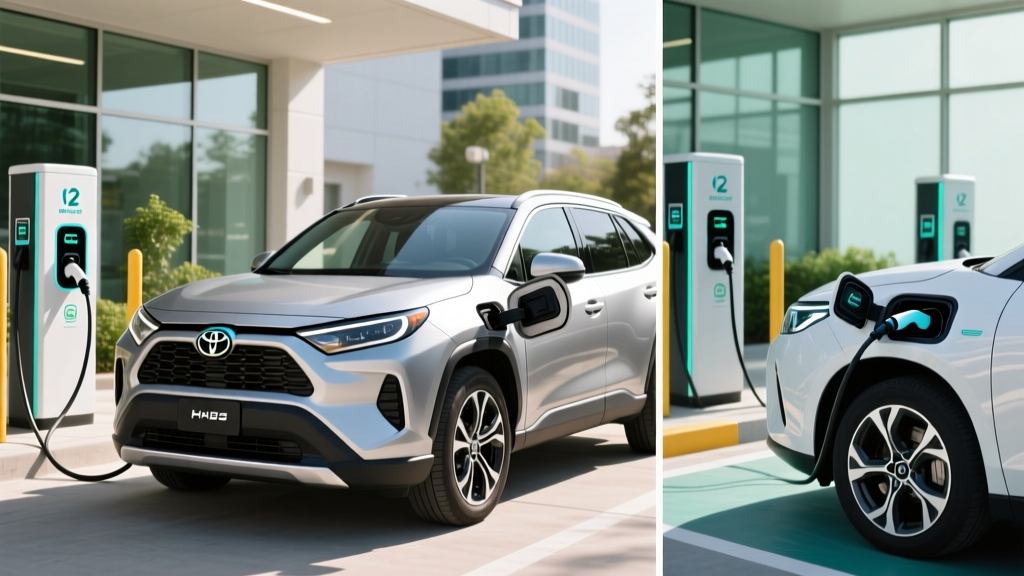
Level 1 uses a standard household 120V outlet and the portable cordset that ships with most EVs. It's slow — roughly 4 miles of range per hour — but adequate for plug-in hybrids with small batteries (a Toyota RAV4 Prime's 18.1 kWh battery fills in about 5.5 hours) or BEV owners who drive under 30 miles daily and can charge over 10–12 hours overnight.
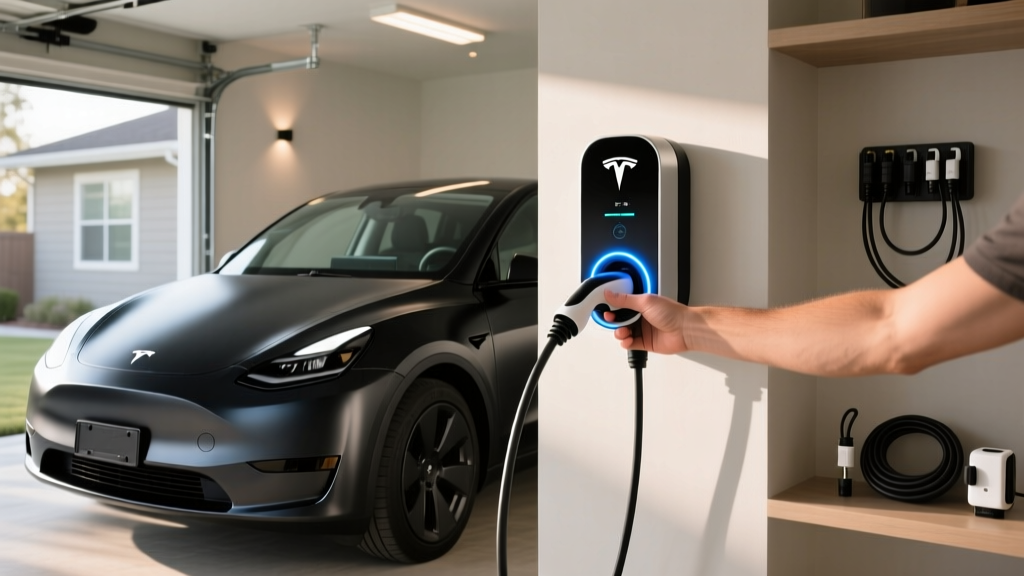
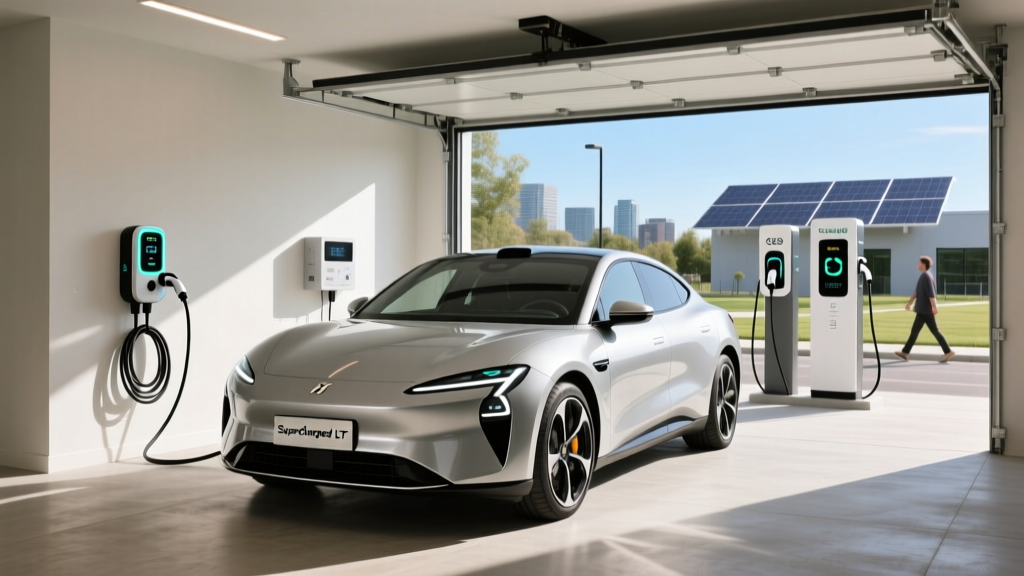
Level 2 is the home-charging sweet spot. A 48-amp hardwired station on a 240V/60A circuit delivers 11.5 kW, adding roughly 40–44 miles of range per hour to a typical midsize EV like the Hyundai Ioniq 5 or Tesla Model Y. Most EV owners install a Level 2 unit and wake up to a full battery every morning — the equivalent of starting every day with a "full tank."
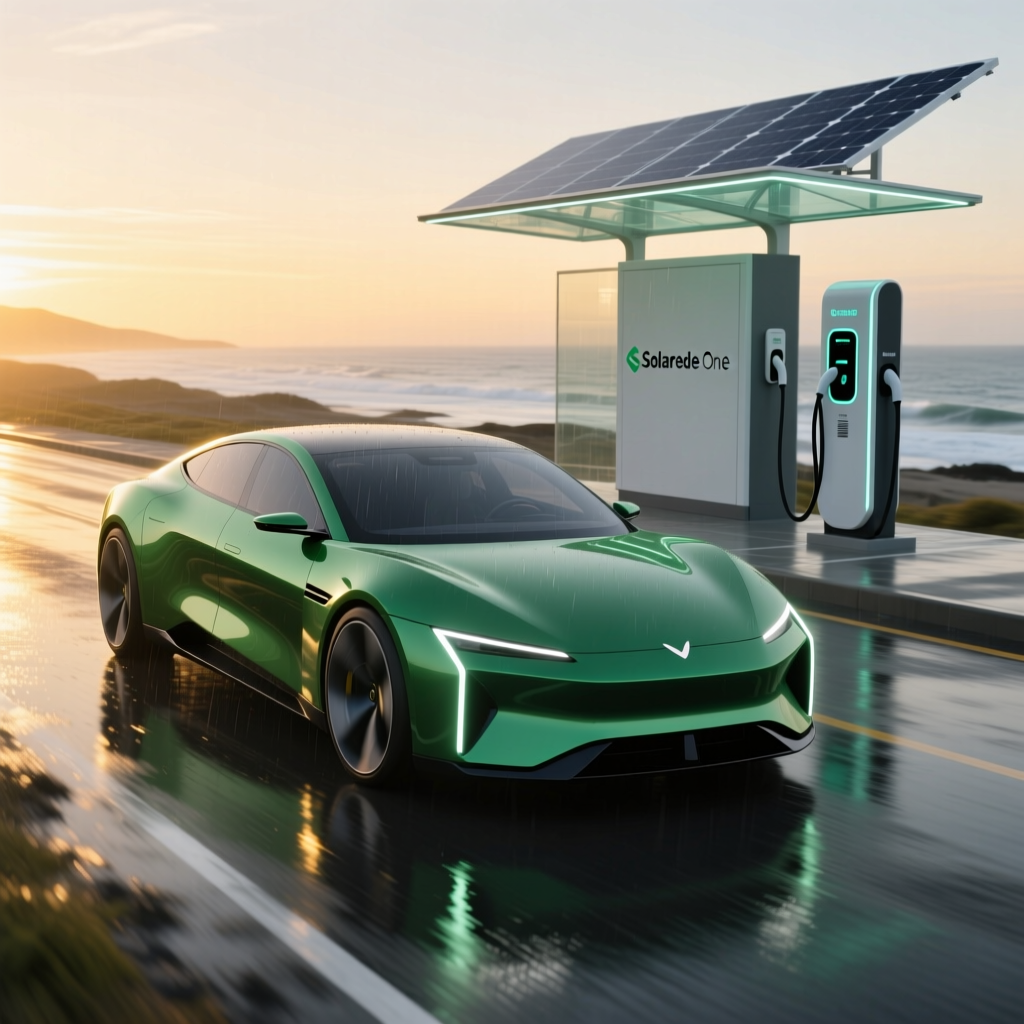
DC Fast Charging bypasses the vehicle's onboard charger and feeds DC current directly into the battery at high power. A 350 kW Electrify America or Tesla Supercharger V4 stall can add 200 miles to an 800V-architecture vehicle (like the Ioniq 5 or Porsche Taycan) in about 18 minutes from 10–80% State of Charge (SoC). However, peak rates aren't sustained — charge curves taper significantly above 80% SoC to protect battery health. Expect the 80–100% top-off to take nearly as long as the 10–80% sprint.
Home Level 2 Installation: Electrical Requirements, Costs, and Panel Upgrades
Installing a Level 2 home charger is part electrical project, part appliance purchase. Here's what's involved and what it actually costs in 2026.
Electrical Requirements
A typical high-output Level 2 charger draws 48 amps continuously. The National Electrical Code (NEC) requires that continuous loads use only 80% of a circuit's rated capacity, so a 48A charger needs a dedicated 60-amp, 240V circuit. This means:
- Wiring: 6 AWG copper (or 4 AWG aluminum) run from your electrical panel to the charger location
- Breaker: A dedicated 60A double-pole breaker occupying two adjacent slots in your panel
- Hardwired vs. plug: Hardwired connections are preferred for 48A+ units (more reliable, no plug wear). Units rated 40A or below can use a NEMA 14-50 receptacle, which adds flexibility but requires a properly torqued, industrial-grade outlet — cheap residential-grade 14-50 outlets are a known fire risk under sustained EV loads
- GFCI: NEC 2020 and later require GFCI protection for EV outlets in garages; hardwired units typically have ground-fault protection built in
Panel Upgrade: The Hidden Cost
Many homes built before 2000 have 100-amp or 150-amp main panels that are already near capacity. Adding a 60A EV circuit may push you over the load calculation, requiring a panel upgrade to 200A. This is the single biggest variable in home charging cost — and one that catch-first-time buyers off guard.
Installation Cost Breakdown
| Component | Low End | High End | Notes |
|---|---|---|---|
| Level 2 Charger Unit (40–48A) | $350 | $700 | Emporia, ChargePoint, Wallbox, Tesla Wall Connector |
| Electrician Labor (simple install) | $500 | $1,200 | Short wire run, panel has space, same wall as panel |
| Electrician Labor (complex install) | $1,200 | $3,500 | Long wire run, conduit, trenching, attic crawl, detached garage |
| Permit & Inspection | $50 | $300 | Varies by municipality; some jurisdictions waive for EV |
| Panel Upgrade (100A → 200A) | $1,500 | $4,000 | Only if needed; older homes, high existing loads |
| Utility Service Upgrade (to 200A) | $2,000 | $5,000+ | If utility must replace service drop/meter; rare |
Typical total (no panel upgrade): $850–$2,200
With panel upgrade: $2,500–$5,500+
Utility rebate offset: Many utilities offer $250–$1,000 rebates for Level 2 installations. Check your local provider — some also offer time-of-use (TOU) rates that cut charging costs by 40–60% during off-peak hours.
Connector Compatibility: NACS, CCS1, CHAdeMO, and Adapter Realities
The North American charging landscape in 2026 has largely consolidated around the North American Charging Standard (NACS), originally developed by Tesla and now adopted by Ford, GM, Rivian, Hyundai/Kia, BMW, and most other major automakers. Here's where each connector stands:
| Connector | Native Vehicles | DC Fast Network Access | Adapter Needed? |
|---|---|---|---|
| NACS (Tesla-style) | Tesla (all), Ford (2025+), GM (2025+), Rivian (2025+), Hyundai/Kia (2026+), BMW, Mercedes | Tesla Supercharger (17,000+ stalls), Electrify America (partial), EVgo, ChargePoint | No for native NACS vehicles |
| CCS1 | Legacy VW/ID.4, older BMW i4/iX, pre-2025 Hyundai/Kia, Lucid, some Stellantis | Electrify America, EVgo, ChargePoint, non-Tesla networks | NACS-to-CCS adapter available (~$200–$300) for Supercharger access |
| CHAdeMO | Nissan Leaf (legacy only — discontinued for 2026) | Limited and shrinking; Electrify America has removed CHAdeMO from many new stations | No adapter exists for CHAdeMO-to-NACS; avoid for new purchases |
Practical advice: If you're buying a new EV in 2026, prioritize native NACS. It unlocks the Tesla Supercharger network — the most reliable and expansive DC fast-charging network in North America, with over 17,000 stalls. If you own a CCS-equipped vehicle, Ford and GM provide NACS adapters, and third-party options from companies like Lectron and A2Z exist. For home Level 2 charging, most stations ship with a J1772 connector; Tesla vehicles use a J1772-to-NACS adapter (included with every Tesla) or you can buy a NACS-terminated home charger like the Tesla Wall Connector.
Charging Cost Per Mile: EV vs. Gas (With Real 2026 Numbers)
The economics of EV charging depend heavily on where and when you charge. Here's a realistic comparison using a midsize EV (2026 Tesla Model Y Long Range, 28 kWh/100mi efficiency) versus a comparable gas crossover (2026 Toyota RAV4 AWD, 30 MPG combined) with gas at $3.40/gallon (2026 national average per EIA):
| Charging Scenario | Rate ($/kWh) | Cost per 100 Miles | Cost per Mile |
|---|---|---|---|
| Home off-peak (TOU rate) | $0.08–$0.12 | $2.24–$3.36 | $0.022–$0.034 |
| Home standard rate | $0.14–$0.18 | $3.92–$5.04 | $0.039–$0.050 |
| Public Level 2 (workplace/mall) | $0.20–$0.35 | $5.60–$9.80 | $0.056–$0.098 |
| DC Fast Charging (Electrify America/Tesla) | $0.35–$0.55 | $9.80–$15.40 | $0.098–$0.154 |
| Gas vehicle (30 MPG, $3.40/gal) | — | $11.33 | $0.113 |
The takeaway: Home-charged EVs cost roughly one-quarter to one-third per mile compared to gas. Even DC fast charging is cost-competitive with gas on a per-mile basis in many states. The worst-case scenario — exclusively using expensive public DC fast chargers — roughly matches gas costs. The savings compound: at 12,000 miles/year, home off-peak charging saves approximately $900–$1,100 annually versus gas.
Note: Some utilities offer dedicated EV rates with super off-peak pricing as low as $0.05–$0.07/kWh between midnight and 6 AM. If you can schedule charging overnight, this is the cheapest "fuel" in transportation.
Charging Time Examples: How Long Does 10–80% Actually Take?
Real-world charging speed depends on battery size, peak charge rate, the charge curve taper, and battery preconditioning. Here are representative 10–80% times for popular 2026 EVs:
- Tesla Model Y Long Range (75 kWh usable, 250 kW peak DC): ~22 minutes at a V3 Supercharger. Sustains ~170 kW through 50% SoC, then tapers.
- Hyundai Ioniq 5 (77.4 kWh, 800V architecture, 240 kW peak): ~18 minutes on a 350 kW charger. The 800V system sustains high power longer than 400V competitors.
- Ford Mustang Mach-E Extended Range (91 kWh usable, 150 kW peak): ~38 minutes. Slower charge curve, but larger battery offsets range needs.
- Chevrolet Equinox EV (85 kWh, 150 kW peak): ~35 minutes on 150+ kW DC fast charger.
- BMW iX xDrive50 (105.2 kWh usable, 200 kW peak): ~34 minutes. Large battery means more total energy even at moderate C-rate.
Key insight on charge curves: A "250 kW peak" rating doesn't mean 250 kW for the entire session. Most EVs hit peak power only between 10–30% SoC, then step down in stages. The average power during a 10–80% session is typically 60–75% of the peak rating. This is why 800V vehicles like the Ioniq 5 and Porsche Taycan charge faster overall — they sustain a higher percentage of peak power for longer.
Cold weather impact: In sub-40°F conditions, expect 10–80% charge times to increase by 20–40% unless you precondition the battery (most EVs do this automatically when you navigate to a charger). A cold-soaked battery that would normally charge in 22 minutes may take 30–35 minutes without preconditioning.
Equipment Recommendations: Best Home Level 2 Chargers for 2026
Best Overall: Tesla Wall Connector (Gen 4)
- Power Output: Up to 11.5 kW (48A) on a 60A circuit
- Connector: NACS native; J1772 adapter included for non-Tesla EVs
- Cable Length: 24 feet
- Smart Features: Wi-Fi connectivity, OTA firmware updates, load sharing between multiple units, access control, energy tracking via Tesla app
- Price: ~$425
- Why: Highest build quality in the segment, works with every EV (via adapter), and supports power-sharing if you install two units on a single circuit. Best for Tesla owners and mixed-EV households.
Best Value: Emporia Vue Level 2 Charger
- Power Output: Up to 11.5 kW (48A) configurable down to match your circuit
- Connector: J1772 (NACS adapter available separately)
- Cable Length: 24 feet
- Smart Features: Emporia app integration, solar-aware charging (pairs with Emporia Vue energy monitor), scheduled charging, TOU rate optimization, detailed energy analytics
- Price: ~$350
- Why: Best smart features per dollar. If you have solar panels, the Emporia can prioritize charging from excess solar production — effectively making your "fuel" free.
Best for Non-Tesla NACS Vehicles: ChargePoint Home Flex (2nd Gen)
- Power Output: Up to 12 kW (50A) on a 60A circuit, adjustable in 4A increments
- Connector: Available in J1772 or NACS termination
- Cable Length: 24 feet
- Smart Features: ChargePoint app, Alexa/Google Home integration, flexible amperage settings to match available circuits, scheduling, guest access
- Price: ~$550 (NACS version)
- Why: The adjustable amperage is a standout — if your panel can only spare a 40A circuit, you can set the Flex to 32A without buying a different unit. Future-proofs your investment.
Best Budget Pick: Lectron V-BOX Pro
- Power Output: Up to 11.5 kW (48A)
- Connector: J1772 or NACS options
- Cable Length: 20 feet
- Smart Features: Basic app, scheduling, energy tracking
- Price: ~$280
- Why: Reliable, UL-listed, and the cheapest way to get 48A Level 2 charging at home. Lacks advanced features but delivers on core functionality.
Safety, Code Compliance, and Installation Best Practices
Home EV charging draws sustained high current for hours — far more continuous load than your dryer or oven. Cutting corners is a fire risk. Here's what the code requires and what you should insist on:
- Dedicated circuit: Your EV charger must have its own dedicated breaker — never share a circuit with other appliances. A 48A charger on a shared 60A circuit is a code violation and a hazard.
- Proper wire gauge: 6 AWG copper minimum for a 60A circuit. Longer runs (over 50 feet) may require 4 AWG to prevent voltage drop. Your electrician will calculate this.
- NEMA 14-50 outlet quality: If you opt for a plug-in charger, use an industrial-grade receptacle (Hubbell, Bryant, or Cooper) rated for continuous 50A loads. Standard residential-grade 14-50 outlets from big-box stores have been linked to overheating and melting under sustained EV charging loads.
- Outdoor rating: If your charger is installed outside (carport, driveway), it must be rated NEMA 4 (weatherproof). Most major chargers carry this rating, but verify before purchasing for outdoor installs.
- Permit and inspection: Most jurisdictions require an electrical permit for new 240V circuits. The inspection ensures proper wire gauge, breaker sizing, grounding, and GFCI compliance. Do not skip this — it protects you and is required for insurance coverage in case of an electrical fire.
- Surge protection: Consider a whole-home surge protector or a charger with built-in surge suppression. A lightning strike or grid surge can fry a $400+ charger and potentially damage your vehicle's onboard charger.
Always hire a licensed electrician — ideally one with EV charger installation experience. Per NFPA 70 (National Electrical Code), Article 625 covers Electric Vehicle Charging System Equipment specifically. Your electrician should be familiar with these requirements.
Frequently Asked Questions
How much does it cost to install a home EV charger?
A typical Level 2 home charger installation costs between $850 and $2,200 if your electrical panel has sufficient capacity and space. This includes the charger unit ($280–$700), electrician labor ($500–$1,200 for a straightforward install), and permit fees ($50–$300). If your home needs a panel upgrade from 100A to 200A, add $1,500–$4,000. Many utilities offer rebates of $250–$1,000 that offset a significant portion of the cost. Check with your local utility before starting work — some require pre-approval for rebate eligibility.
How fast will each charging level add range?
Level 1 (120V) adds roughly 3–5 miles of range per hour — sufficient for PHEVs and low-mileage drivers. Level 2 (240V, 48A) adds 35–44 miles per hour for most EVs, meaning a full overnight charge restores 250–350 miles. DC Fast Charging adds 150–1,000+ miles per hour at peak rates, with typical 10–80% sessions lasting 18–40 minutes depending on the vehicle's charge rate and battery size.
Which connector and charger is compatible with my EV?
For 2026 model-year vehicles, most new EVs from Tesla, Ford, GM, Rivian, Hyundai, Kia, and BMW use the NACS connector natively. Older CCS-equipped vehicles (pre-2025 VW ID.4, older Hyundai/Kia models) need a CCS-to-NACS adapter (~$200–$300) to access Tesla Superchargers. CHAdeMO is effectively obsolete — only the discontinued Nissan Leaf used it. For home Level 2 charging, a J1772-terminated charger works with all non-Tesla EVs, and Tesla includes a J1772 adapter with every vehicle.
How much does charging cost per mile compared to gas?
Home charging on a standard rate ($0.14–$0.18/kWh) costs roughly $0.04–$0.05 per mile for an efficient EV — about one-third the cost of a 30 MPG gas vehicle at $3.40/gallon ($0.11/mile). Off-peak TOU rates drop this to $0.02–$0.03/mile. Even the most expensive public DC fast charging ($0.45–$0.55/kWh) costs $0.10–$0.15/mile, comparable to gas. Over 12,000 miles/year, home charging saves most drivers $800–$1,200 annually.
What electrical upgrades might I need for a home charger?
The most common upgrade is adding a dedicated 60A/240V circuit, which requires two adjacent breaker slots in your panel. If your panel is full (no open slots) or undersized (100A main service in an older home with high existing loads), you'll need a panel upgrade to 200A — a $1,500–$4,000 job. In rare cases, the utility must upgrade the service drop from the street, adding $2,000–$5,000+. Have an electrician perform a load calculation before committing to a charger amperage — you may opt for a 32A charger on a 40A circuit to avoid a panel upgrade entirely.