If you've been searching for a supercharged Jaguar SVR and wondering how charging works for high-performance electrified vehicles—or if you're cross-shopping Jaguar's SVR lineup against battery-electric rivals like the Porsche Taycan or Tesla Model S Plaid—understanding EV charging infrastructure is essential. Jaguar's SVR models (the F-Type SVR, F-PACE SVR, and XE SVR Project 8) are built around supercharged 5.0L V8 engines, not electric motors. But as Jaguar pivots to an all-electric lineup by 2026, many buyers are weighing the last generation of supercharged SVR performance against the incoming wave of high-power EVs.
This guide covers exactly what you need to know about home and public EV charging—whether you're preparing your garage for a future Jaguar electric GT, adding a plug-in hybrid to your stable, or simply want to understand what Level 2 and DC fast charging look like for performance-oriented EVs that demand high power delivery.
Understanding EV Charging Levels: Speeds in kW and Miles Per Hour
The single most important distinction in EV charging is between kW (kilowatts), which measures power—the rate at which energy flows—and kWh (kilowatt-hours), which measures energy—the total capacity of a battery. Think of kW as the width of a hose and kWh as the size of the bucket. Confusing the two is the most common EV literacy gap, and it leads to bad purchasing decisions.
Here's how each charging level translates to real-world range recovery:
| Level | Voltage | Power (kW) | Miles of Range Added Per Hour | Typical Use Case |
|---|---|---|---|---|
| Level 1 | 120V AC | 1.2–1.9 kW | 3–5 mi/hr | Overnight trickle; emergency top-up |
| Level 2 | 240V AC | 7.2–19.2 kW | 25–75 mi/hr | Home daily charging; workplace; hotels |
| DC Fast Charge | 400–800V DC | 50–350 kW | 150–1,200+ mi/hr (peak) | Road trips; rapid top-ups at highway stops |
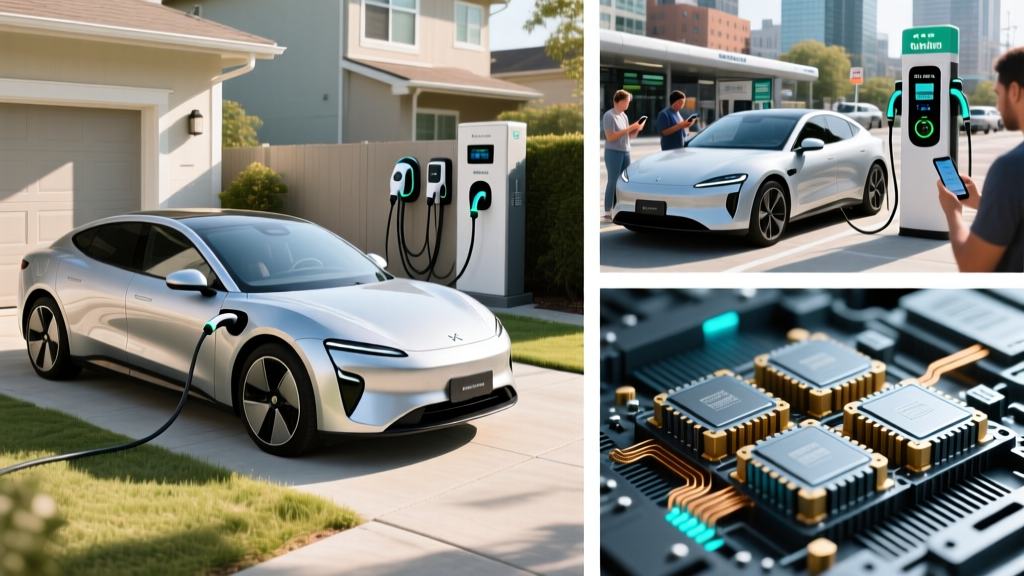
For a performance EV with a large battery (say, 90–100 kWh usable), Level 1 charging is essentially useless—you'd need 50+ hours for a full charge. Level 2 at 11.5 kW (48A) will replenish that battery overnight in roughly 8–9 hours. DC fast charging at 250 kW can take you from 10–80% in 18–25 minutes, depending on the vehicle's charge curve and battery preconditioning.
Home EV Charger Installation: Electrical Requirements and Cost Breakdown
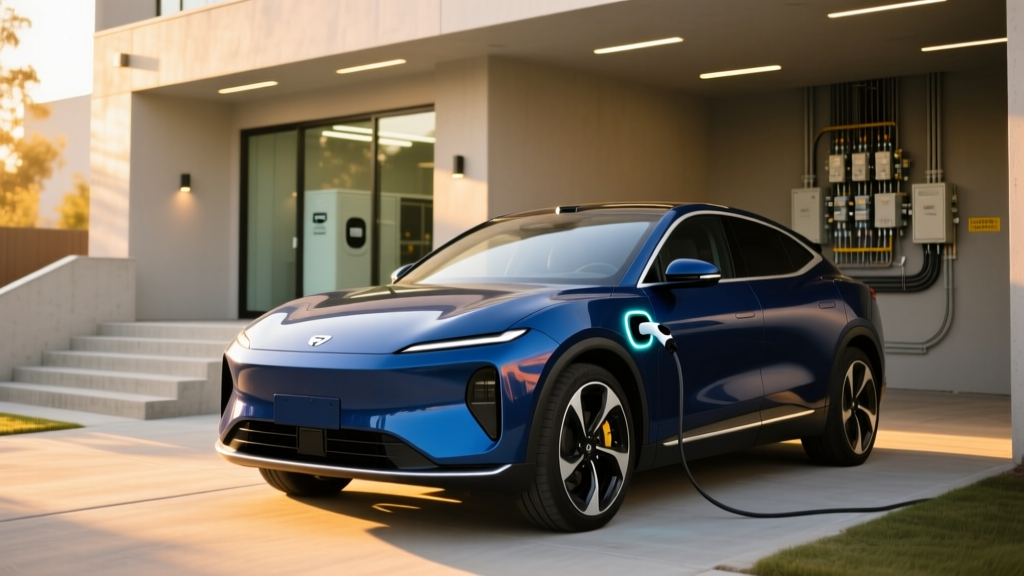
Installing a Level 2 home charger is the single most impactful upgrade for EV ownership. But the cost varies wildly depending on your home's electrical panel, the distance from panel to garage, and local permitting requirements.
Electrical Requirements
Most Level 2 chargers require a dedicated 240V circuit, similar to what an electric dryer or oven uses. Common amperage configurations:
- 32A circuit (40A breaker): Delivers 7.7 kW. Adequate for most daily driving needs (adds ~30 miles per hour of charging).
- 48A circuit (60A breaker): Delivers 11.5 kW. Recommended for large-battery EVs (90+ kWh) and performance vehicles. Adds ~45 miles per hour.
- 80A circuit (100A breaker): Delivers 19.2 kW. Requires a 200A+ main panel and heavy-gauge wiring. Found in luxury/high-performance EV setups like the Lucid Air or upcoming Jaguar GT.
Per the National Electrical Code (NEC), EV chargers are considered continuous loads, meaning the circuit breaker must be rated at 125% of the charger's maximum draw. A 48A charger requires a 60A breaker.
Panel Upgrade Considerations
Homes built before 2000 often have 100A or 150A main service panels. Adding a 60A EV circuit to an already-loaded 100A panel may require a panel upgrade to 200A, which is the single largest cost variable in a home charging installation. Signs you may need an upgrade:
- Main breaker is 100A or less
- No open slots in the panel for a double-pole breaker
- Existing heavy loads: electric heat, electric oven, hot tub, AC compressor
- Panel is a recalled Federal Pacific or Zinsco model (common in pre-1990 homes)
Installation Cost Breakdown
| Component | Low-End (Simple Install) | High-End (Complex Install) |
|---|---|---|
| Level 2 Charger Equipment | $400 (32A hardwired) | $750 (48A smart charger w/ WiFi) |
| Electrical Permit | $50 | $250 |
| Electrician Labor (2–6 hours) | $300 ($150/hr × 2 hrs) | $1,200 ($200/hr × 6 hrs) |
| Wiring & Conduit Materials | $100 | $600 |
| Panel Upgrade (if needed) | $0 (panel has capacity) | $2,500–$4,500 |
| Total Without Panel Upgrade | $850 | $2,800 |
| Total With Panel Upgrade | $3,350 | $7,300 |
The national average for a straightforward Level 2 installation (no panel upgrade, panel within 30 feet of the charger location) falls between $1,200 and $2,000 all-in. Always get three quotes from licensed electricians, and confirm they pull a permit—unpermitted work can void homeowner's insurance claims.
Connector Compatibility: NACS, CCS1, CHAdeMO, and the Adapter Landscape
The connector landscape has consolidated significantly since 2024, when Ford, GM, Rivian, Volvo, and most other automakers committed to adopting the North American Charging Standard (NACS), originally developed by Tesla. Here's where things stand in 2026:
| Connector | Brands Using It (Native) | DC Fast Charge Networks | Adapter Availability |
|---|---|---|---|
| NACS (Tesla) | Tesla, Ford, GM, Rivian, Volvo, Polestar, Mercedes (2025+), Hyundai/Kia (2025+), Jaguar (2026+ EV GT) | Tesla Supercharger, Electrify America (NACS stalls), ChargePoint, EVgo | CCS→NACS adapters from Tesla, Lectron, A2Z (~$150–$250) |
| CCS1 | Legacy models: VW ID.4 (pre-2025), Hyundai Ioniq 5 (pre-2025), Kia EV6 (pre-2025), BMW i4/iX, Stellantis EVs | Electrify America, EVgo, ChargePoint, Ionity (EU) | NACS→CCS adapters available (~$200) |
| CHAdeMO | Nissan Leaf (legacy only; discontinued) | Limited; most networks phasing out | No practical adapter to NACS/CCS for DC fast charging |
For anyone purchasing a new EV in 2026, NACS is the default connector. If you're buying a 2024–2025 model with a CCS1 port, a CCS-to-NACS adapter (priced around $150–$250) unlocks the entire Tesla Supercharger network—over 25,000 stalls in North America. This adapter compatibility is one of the most significant practical shifts in EV charging access.
Charging Cost Per Mile: EV vs. Gasoline (Including Supercharged V8 Baselines)
One reason buyers cross-shop the last supercharged Jaguar SVR models against EVs is operating cost. A supercharged 5.0L V8 in an F-PACE SVR returns roughly 16 MPG combined per EPA data on fueleconomy.gov. At $3.50/gallon, that's $0.219 per mile in fuel alone.
Here's how EV charging costs compare across scenarios, using a performance EV averaging 2.8 miles per kWh (roughly 35.7 kWh/100mi, typical for a high-power sedan or SUV):
| Charging Scenario | Rate ($/kWh) | Cost Per Mile | Annual Cost (12,000 mi) |
|---|---|---|---|
| Home Level 2, Off-Peak (utility TOU rate) | $0.08–$0.12 | $0.029–$0.043 | $343–$514 |
| Home Level 2, Standard Rate | $0.14–$0.18 | $0.050–$0.064 | $600–$771 |
| Public Level 2 (workplace, mall) | $0.20–$0.30 | $0.071–$0.107 | $857–$1,286 |
| DC Fast Charge (Electrify America, EVgo) | $0.35–$0.55 | $0.125–$0.196 | $1,500–$2,357 |
| Tesla Supercharger (member pricing) | $0.25–$0.35 | $0.089–$0.125 | $1,071–$1,500 |
| Gasoline: Supercharged V8 (16 MPG) | $3.50/gal | $0.219 | $2,625 |
| Gasoline: Average Sedan (30 MPG) | $3.50/gal | $0.117 | $1,400 |
The takeaway: home charging at off-peak rates delivers fuel costs roughly 85% lower than a supercharged V8. Even exclusive DC fast charging is generally cheaper per mile than a 16 MPG vehicle. But if you rely entirely on public DC fast chargers at $0.50/kWh, your savings narrow considerably—making home charging installation economically critical.
Charging Time Examples: 10–80% for Common Battery Sizes
Most EV owners charge between 10% and 80% state of charge (SoC) on road trips to balance speed and battery health. Charging above 80% slows dramatically due to the charge curve taper, which is why 10–80% is the standard benchmark.
Here are representative 10–80% times for common battery sizes and charger types:
| Battery Size (usable kWh) | Vehicle Example | 150 kW DC | 250 kW DC | 350 kW DC | Level 2 (11.5 kW) |
|---|---|---|---|---|---|
| 60 kWh | VW ID.4, base Tesla Model 3 | ~28 min | ~22 min | ~20 min | ~4.5 hrs |
| 77 kWh | Tesla Model Y LR, Ford Mustang Mach-E ER | ~35 min | ~25 min | ~22 min | ~5.8 hrs |
| 90 kWh | BMW iX, Mercedes EQS (est.) | ~42 min | ~28 min | ~23 min | ~6.8 hrs |
| 112 kWh | Lucid Air Grand Touring, GMC Hummer EV | ~52 min | ~35 min | ~27 min | ~8.5 hrs |
Jaguar's upcoming electric GT (announced for the 2026 model year as part of Jaguar's full EV relaunch) is expected to feature a large battery pack (~100+ kWh) with 800V architecture capable of accepting 300+ kW DC fast charging. If those specs hold, expect 10–80% in roughly 18–22 minutes at a compatible 350 kW station—competitive with the Porsche Taycan and Lucid Air.
Equipment Recommendations: Top Level 2 Home Chargers for 2026
Not all Level 2 chargers are created equal. For performance EVs and large-battery vehicles, prioritize chargers that deliver at least 48A (11.5 kW) and include smart features like WiFi connectivity, scheduling (for off-peak TOU rates), and load management.
ChargePoint Home Flex
- Power Output: Up to 12 kW (50A), adjustable down to 16A for lower-capacity circuits
- Connector: NACS (2025+ models); J1772 (legacy)
- Cable Length: 23 feet
- Smart Features: WiFi, Alexa integration, scheduling, energy tracking via app
- Price: ~$599 (NACS version)
- Best For: Versatility—adjustable amperage means it works on 20A to 60A circuits
Wall Connector (Tesla, Gen 4)
- Power Output: Up to 11.5 kW (48A)
- Connector: NACS native
- Cable Length: 24 feet
- Smart Features: WiFi, OTA updates, power sharing (link multiple units on one circuit), Tesla app integration
- Price: ~$475
- Best For: Tesla owners and NACS-native EVs; best value at 48A
Emporia Vue Level 2 Charger
- Power Output: Up to 11.5 kW (48A)
- Connector: J1772 (with NACS adapter included in 2025+ kits)
- Cable Length: 24 feet
- Smart Features: Integration with Emporia home energy monitoring, solar-aware scheduling, load management
- Price: ~$399
- Best For: Budget-conscious buyers who want energy monitoring and solar integration
Grizzl-E Smart
- Power Output: Up to 10 kW (40A)
- Connector: J1772 (NACS adapter available separately)
- Cable Length: 24 feet
- Smart Features: WiFi, OCPP-compatible, adjustable amperage
- Price: ~$449
- Best For: Cold-climate durability (rated to -40°F); outdoor installations
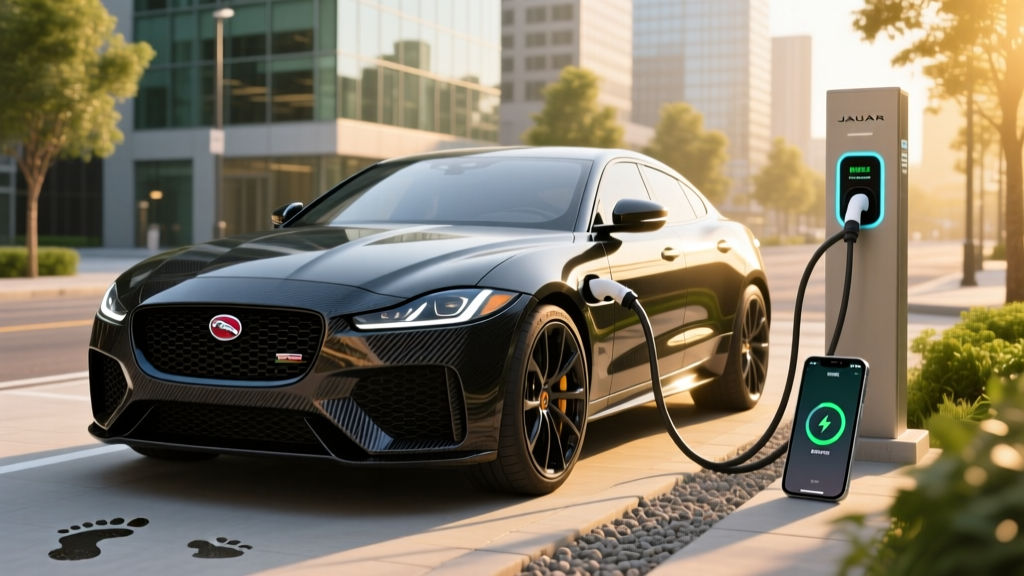
For a future Jaguar electric GT or any high-power EV, the ChargePoint Home Flex or Tesla Wall Connector (Gen 4) are the strongest picks. Both deliver the 48A+ needed to fully replenish a large battery overnight, and both have robust app ecosystems for scheduling off-peak charges.
Safety, Code Compliance, and Installation Best Practices
EV charging draws sustained high current for hours—a more demanding electrical load than most household appliances. Cutting corners on installation is both dangerous and costly if it leads to a fire or insurance denial.
Key Safety and Code Requirements
- Dedicated circuit: The NEC requires EV chargers to have a dedicated circuit—not shared with other outlets or appliances.
- GFCI protection: The 2020 NEC update requires GFCI (ground-fault circuit interrupter) protection for all EV charging outlets. Hardwired chargers with built-in GFCI satisfy this requirement.
- Outdoor rating: If installing outside, the charger must carry a NEMA 4 or IP65 rating for weather resistance. All major chargers listed above meet this standard.
- Wire gauge: A 60A circuit requires 6 AWG copper wire (or 4 AWG aluminum) for runs up to 50 feet. Longer runs may need thicker wire to prevent voltage drop.
- Permit and inspection: Every jurisdiction requires an electrical permit for EV charger installation. The inspection ensures the work meets NEC and local code. Skipping this step risks insurance claim denial in the event of an electrical fire.
According to the National Fire Protection Association (NFPA), properly permitted and inspected EV charging installations carry no elevated fire risk compared to other 240V household circuits.
Supercharged Jaguar SVR vs. Electric Performance: The Charging Transition
The last-generation supercharged Jaguar SVR models—particularly the F-PACE SVR (550 hp, 5.0L supercharged V8) and F-Type SVR (575 hp)—represent the final chapter of Jaguar's internal-combustion performance heritage. These vehicles deliver thrilling acceleration (0–60 in 3.8–4.1 seconds) but at a fuel cost of roughly $2,600+ per year for an average driver.
Jaguar's 2026 electric relaunch promises a new GT flagship with expected specs including 800V architecture, 300+ kW DC fast charging capability, and a range target exceeding 370 miles (per Jaguar's announced preliminary figures). If delivered, this vehicle will match or exceed SVR-level performance while cutting operating costs by 70–85%—provided the owner has access to Level 2 home charging.
The charging infrastructure you install today will serve whatever EV you drive next. A 60A circuit with a NACS-compatible smart charger is the most future-proof setup for a performance EV buyer transitioning from a supercharged V8.
Frequently Asked Questions
How much does it cost to install a home EV charger?
A standard Level 2 home charger installation costs between $1,200 and $2,800 when no panel upgrade is needed. This includes the charger unit ($400–$750), electrician labor ($300–$1,200), permit ($50–$250), and wiring materials. If your home's electrical panel needs upgrading from 100A to 200A, add $2,500–$4,500 to the total.
How fast will each charging level add range?
Level 1 (120V) adds 3–5 miles of range per hour—barely useful. Level 2 (240V, 48A) adds roughly 40–45 miles per hour, enough to fully replenish most EVs overnight. DC fast charging adds 150–1,200+ miles per hour at peak rates, with a typical 10–80% session taking 18–35 minutes depending on battery size and charger power.
Which connector/charger is compatible with my EV?
In 2026, most new EVs use the NACS connector (Tesla's standard, now industry-wide). Vehicles from 2023–2024 with CCS1 ports can access NACS/Supercharger networks using a CCS-to-NACS adapter (~$150–$250). The older CHAdeMO standard is effectively discontinued. Check your vehicle's charge port or the manufacturer's spec sheet to confirm.
How much does charging cost per mile vs. gas?
Home charging at off-peak rates ($0.08–$0.12/kWh) costs $0.03–$0.04 per mile for a typical EV. A supercharged V8 getting 16 MPG at $3.50/gallon costs $0.22 per mile. That's a difference of roughly $1,800–$2,100 per year at 12,000 miles—making the home charger installation pay for itself within 1–2 years.
What electrical upgrades might I need?
The most common upgrade is a main panel upgrade from 100A to 200A, needed when your existing panel can't accommodate the additional 40–60A load of an EV charger alongside existing appliances. Other potential upgrades include adding a sub-panel (if the main panel is far from the garage), replacing outdated wiring, or installing a home energy credit-eligible smart panel. Per the IRS, the §30D clean vehicle credit does not cover home charger installation, but the separate §30C Alternative Fuel Vehicle Refueling Property Credit provides up to $1,000 for home charging equipment installed in qualifying census tracts—check current-year eligibility.