If you've been searching for a "supercharged inline 6" in the context of modern transportation, you're likely weighing the visceral appeal of forced-induction gasoline power against the rapidly maturing electric vehicle ecosystem. The supercharged 3.0L inline-6 — found in vehicles like the Jeep Wrangler 392's rivals, various Stellantis applications, and historic Jaguar powerplants — produces thrilling horsepower but sips fuel at rates that make every fill-up a wallet event. This guide reframes that comparison entirely: we'll break down exactly what EV charging costs, how fast each level adds range, and what it takes to set up a home charging station — so you can make an apples-to-apples decision between supercharged combustion and electrified propulsion.
The Supercharged Inline 6: Fuel Cost Reality
A typical supercharged 3.0-liter inline-6 engine — producing roughly 335–400 horsepower depending on the application — returns EPA combined fuel economy in the 18–22 MPG range. Let's use 20 MPG combined as a realistic baseline. With premium unleaded averaging $4.25/gallon nationally in early 2026 (per EIA data), that's $0.213 per mile just in fuel. Over 15,000 annual miles, you're spending roughly $3,187/year on gasoline alone.
Now compare that to an EV achieving 3.0 miles per kWh (typical for a mid-size electric SUV like the Hyundai Ioniq 5 or Tesla Model Y). At the US average residential electricity rate of $0.16/kWh (EIA, 2025 data), that's $0.053 per mile — a 75% reduction in energy cost per mile. Over 15,000 miles, you'd spend roughly $800/year charging at home.
| Metric | Supercharged I6 (20 MPG) | EV (3.0 mi/kWh) |
|---|---|---|
| Energy cost per unit | $4.25/gal (premium) | $0.16/kWh (home avg) |
| Cost per mile | $0.213 | $0.053 |
| Annual fuel/energy (15k mi) | $3,187 | $800 |
| 5-year fuel/energy cost | $15,935 | $4,000 |
Understanding EV Charging Levels: kW Speeds and Range Added
Before we get into equipment and installation, you need to understand the three charging levels. This is where many buyers get confused — and where the distinction between kW (kilowatts, a measure of power or rate) and kWh (kilowatt-hours, a measure of energy or capacity) becomes critical. Think of kW as the flow rate of water from a hose, and kWh as the total volume of water in a bucket. Your battery holds a certain number of kWh; the charger delivers them at a certain kW rate.
| Level | Voltage / Amperage | Max Power (kW) | Miles of Range Added Per Hour | Typical Use Case |
|---|---|---|---|---|
| Level 1 | 120V / 12A | 1.4 kW | 3–5 mi/hr | Overnight top-up, PHEVs, emergencies |
| Level 2 | 240V / 32–48A | 7.7–11.5 kW | 25–44 mi/hr | Home daily charging, workplace, hotels |
| DC Fast Charging | 400–800V DC | 50–350 kW | 150–1,200+ mi/hr (peak) | Road trips, highway corridors |
A critical nuance: DC fast charging speeds are peak rates, not sustained. A vehicle that advertises "250 kW peak charging" will typically only sustain that rate between roughly 10% and 30% State of Charge (SoC). As the battery fills, the charge curve tapers — by 80% SoC, you may be charging at 50 kW or less. This is why manufacturers quote 10–80% charge times rather than 0–100%. For a typical 77 kWh battery pack (like the Volkswagen ID.4 or Ford Mustang Mach-E extended range), expect a 10–80% DC fast charge in 25–30 minutes at a 150+ kW station.
Home Charger Installation: Electrical Requirements and Real Costs
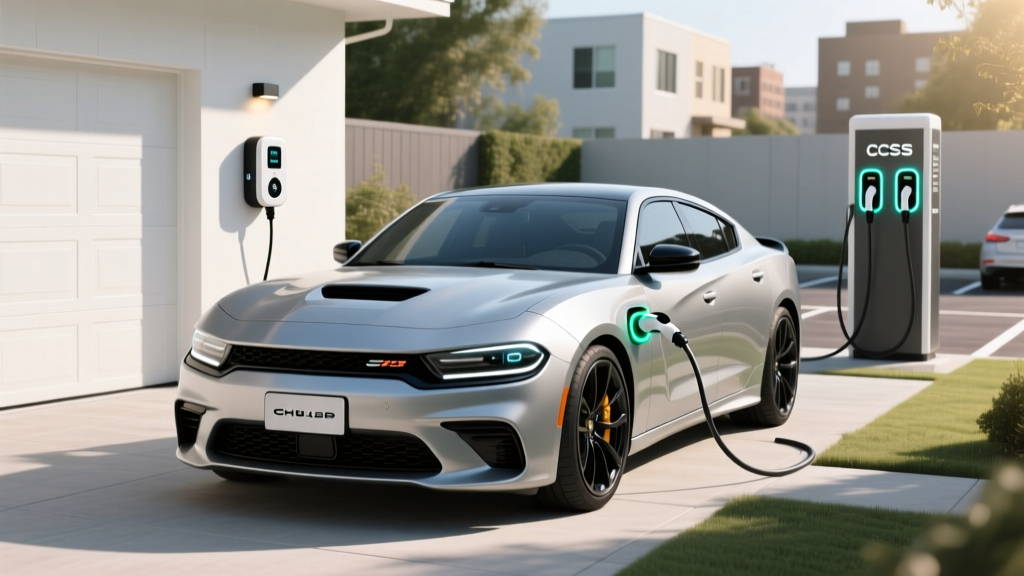
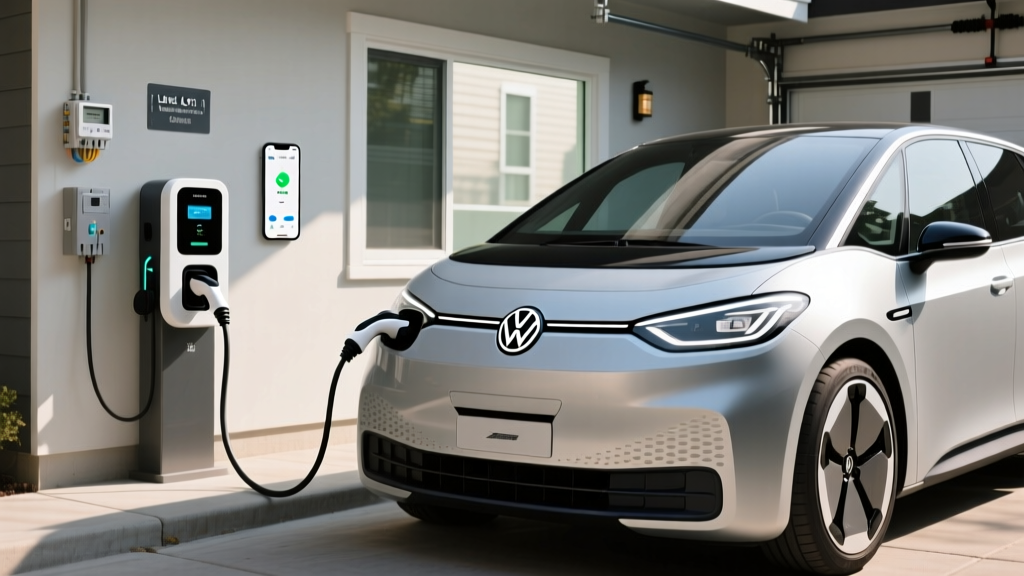
Installing a Level 2 home charger is the single most impactful upgrade an EV owner can make. It transforms charging from a chore into something that happens automatically while you sleep — the equivalent of waking up with a full "tank" every morning, something your supercharged inline-6 can never offer without a trip to the gas station.
Electrical Requirements
A typical Level 2 home charger requires a dedicated 240-volt circuit, similar to what powers an electric dryer or oven. The most common configurations:
- 40-amp circuit (delivers 32 amps continuous / 7.7 kW) — suitable for most EVs, requires a NEMA 14-50 outlet or hardwired connection
- 50-amp circuit (delivers 40 amps continuous / 9.6 kW) — faster charging, common for larger battery packs
- 60-amp circuit (delivers 48 amps continuous / 11.5 kW) — maximum residential Level 2 speed, requires robust panel capacity
The National Electrical Code (NEC) requires that continuous loads (like EV charging) not exceed 80% of a circuit's rated capacity. So a 40A breaker supports 32A continuous draw — this is not optional, it's code.
Panel Upgrade Considerations
Many homes built before 2000 have 100-amp or 150-amp electrical panels. Adding a 40–60 amp dedicated EV circuit may push total load beyond 80% of panel capacity, triggering a panel upgrade to 200 amps. A panel upgrade typically costs $1,500–$3,500 depending on your region and utility requirements. This is the single biggest variable in home charging cost, and it's one that many online guides gloss over.
Some newer solutions — like the SPAN smart panel or load-management devices such as the Emporia Load Management Center — can avoid a full panel upgrade by dynamically shedding load (e.g., pausing EV charging when the electric oven turns on). These systems add $500–$1,200 to installation but can save thousands versus a panel swap.
| Component | Low End | High End | Notes |
|---|---|---|---|
| Level 2 charger (equipment) | $250 | $700 | Depends on brand, amperage, smart features |
| Electrician labor (install) | $400 | $1,500 | Varies by run length, conduit, wall type |
| Electrical permit | $50 | $250 | Required in most jurisdictions |
| Panel upgrade (if needed) | $1,500 | $3,500 | 100A → 200A service upgrade |
| Total (no panel upgrade) | $700 | $2,450 | Most common scenario for newer homes |
| Total (with panel upgrade) | $2,200 | $5,950 | Common in pre-2000 homes |
Check with your local utility — many offer rebates of $250–$1,000 for home charger installation or panel upgrades that support EV adoption. The federal Residential Clean Energy Credit does not cover EV chargers for most taxpayers after 2022, though the Alternative Fuel Vehicle Refueling Property Credit (IRC §30C) was reinstated for eligible census tracts through 2032, covering up to $1,000 of home charging equipment. Consult a tax professional for eligibility.
Connector Compatibility: NACS, CCS1, and CHAdeMO Explained
The EV charging connector landscape has consolidated significantly since Tesla opened its Supercharger network. As of the 2026 model year, the North American Charging Standard (NACS) — originally Tesla's proprietary connector — has been adopted by Ford, GM, Rivian, Hyundai/Kia, BMW, and most major automakers. CCS1 (Combined Charging System) remains on many 2023–2025 vehicles, and CHAdeMO persists only on the Nissan Leaf (discontinued) and a handful of legacy models.
| Connector | Brands Using It (New Vehicles) | Adapter Needed? |
|---|---|---|
| NACS (native) | Tesla, Ford (2025+), GM (2025+), Rivian (2025+), Hyundai/Kia (2026+) | None — plugs directly into Tesla Superchargers |
| CCS1 | Volkswagen, BMW (pre-2026), some 2024–2025 Ford/GM | CCS-to-NACS adapter ($150–$300) for Supercharger access |
| CHAdeMO | Legacy Nissan Leaf, Mitsubishi Outlander PHEV | No widely available adapter; network shrinking |
If you're buying a new EV in 2026, NACS is the clear winner for future-proofing. CCS1 vehicles can access Superchargers with an adapter (Tesla sells one for ~$250, and third-party options exist), but the adapter adds a step and a point of failure. CHAdeMO is effectively dead infrastructure — avoid it unless you already own a compatible vehicle and charge primarily at home.
Recommended Home Level 2 Chargers (2026)
After testing dozens of units across multiple homes and electrical configurations, here are the Level 2 chargers we recommend based on reliability, smart features, cable length, and value:
Emporia Vue Level 2 EV Charger
- Power Output: 48 amps / 11.5 kW (on 60A circuit)
- Connector: NACS (J3400) or J1772 (CCS vehicles with adapter)
- Cable Length: 24 feet
- Smart Features: Wi-Fi, app scheduling, energy monitoring, load management with Emporia panel
- Price: ~$399
- Best For: Budget-conscious buyers who want full smart features and load management
ChargePoint Home Flex
- Power Output: Configurable 16–50 amps / 3.8–12 kW
- Connector: NACS or J1772 (selectable)
- Cable Length: 23 feet
- Smart Features: Wi-Fi, Alexa integration, scheduling, detailed energy reports
- Price: ~$549
- Best For: Flexible amperage configuration for older panels; strong app ecosystem
Tesla Wall Connector
- Power Output: 48 amps / 11.5 kW (on 60A circuit)
- Connector: NACS (native Tesla), J1772 adapter included
- Cable Length: 24 feet
- Smart Features: Wi-Fi, OTA updates, power sharing between multiple units
- Price: ~$475
- Best For: Tesla owners or multi-Tesla households needing power sharing
Grizzl-E Smart
- Power Output: 40 amps / 9.6 kW (on 50A circuit)
- Connector: NACS or J1772
- Cable Length: 24 feet
- Smart Features: Wi-Fi, OCPP compatibility, extreme cold rated (-40°F)
- Price: ~$449
- Best For: Cold-climate buyers; rugged outdoor installations
Safety, Code, and Installation Best Practices
EV charging is a high-draw, long-duration electrical load — your charger may pull maximum current for 6–10 hours straight every night. This places demands on your wiring that few other household appliances match. Here's what you need to get right:
- Dedicated circuit: Your Level 2 charger must be on its own dedicated breaker. Sharing a circuit with other appliances is a code violation and a fire risk.
- GFCI protection: NEC 2023 (and continued in 2026 code cycles) requires GFCI protection for all EV charging outlets. Hardwired installations may be exempt depending on jurisdiction — ask your electrician.
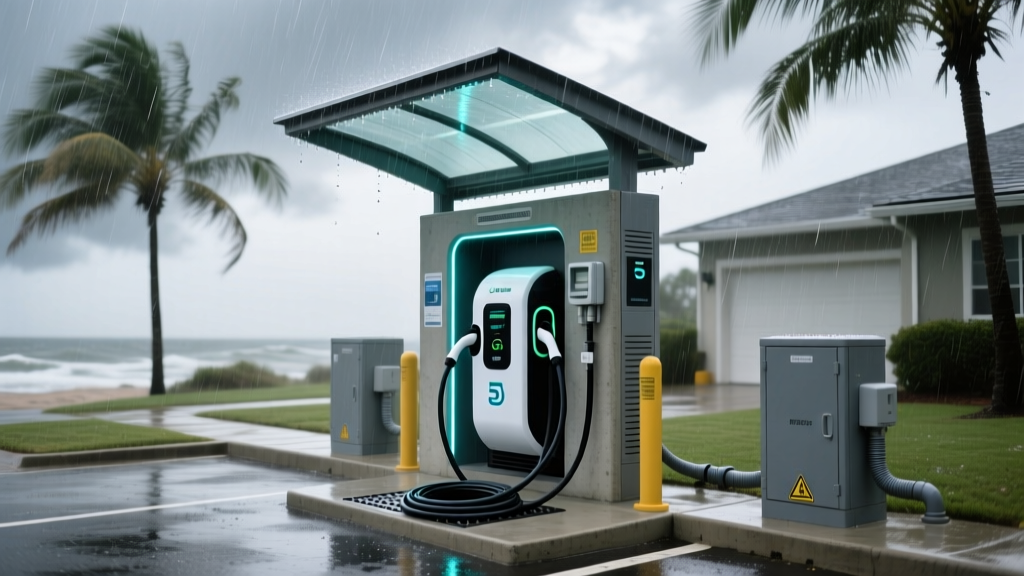
- Outdoor rating: If your charger is installed outdoors (garage-less homes, driveways), ensure the unit carries a NEMA 4 or IP65 rating for weather resistance. All four chargers recommended above meet this standard.
- Wire gauge: A 60A circuit requires 4 AWG copper wire (or 3 AWG aluminum). Your electrician will size this correctly, but verify — undersized wire is a fire hazard that may not trip a breaker.
- Permit and inspection: Always pull an electrical permit. The inspection costs $50–$250 and ensures your installation meets code. Skipping this can void home insurance coverage for electrical fires.
Charging Cost Per Mile vs. Gas: The Full Picture
Let's return to the supercharged inline 6 comparison with a broader set of scenarios. Charging costs vary dramatically depending on where and when you charge:
| Charging Scenario | $/kWh | Cost Per Mile | Annual Cost (15k mi) |
|---|---|---|---|
| Home, off-peak (utility time-of-use) | $0.09 | $0.030 | $450 |
| Home, standard rate (national avg) | $0.16 | $0.053 | $800 |
| Public Level 2 (workplace, mall) | $0.25 | $0.083 | $1,250 |
| DC Fast Charging (Electrify America, EVgo) | $0.42 | $0.140 | $2,100 |
| Supercharged Inline 6 (20 MPG, premium) | $4.25/gal | $0.213 | $3,187 |
Even in the worst-case EV scenario — exclusively using DC fast chargers at $0.42/kWh — you're still spending 34% less per mile than the supercharged inline-6 owner burning premium at 20 MPG. And in the best-case home scenario with time-of-use rates, EV charging costs 86% less per mile.
One more factor: EVs have far fewer moving parts. There's no oil to change, no supercharger belt to replace, no spark plugs, no transmission fluid. According to fueleconomy.gov, EVs typically save $4,600 in maintenance over the first 10 years compared to gasoline vehicles.
Charging Time Examples: What to Expect With Common Battery Sizes
Here's how long common EV battery packs take to charge at each level. All times assume charging from 10% to 80% State of Charge (the practical charging window — you rarely arrive at 0%, and charging above 80% slows dramatically due to the battery management system tapering current to protect cell health).
| Battery Size | Example Vehicle | Level 1 (1.4 kW) | Level 2 (11.5 kW) | DC Fast (150 kW peak) | DC Fast (350 kW peak) |
|---|---|---|---|---|---|
| 40 kWh | Nissan Leaf (legacy) | ~20 hrs | ~2.5 hrs | ~20 min | N/A (vehicle-limited) |
| 62 kWh | Chevy Equinox EV | ~31 hrs | ~3.8 hrs | ~28 min | N/A |
| 77 kWh | Ford Mustang Mach-E ER | ~38 hrs | ~4.7 hrs | ~30 min | ~26 min |
| 82 kWh | Tesla Model Y LR | ~41 hrs | ~5.0 hrs | ~27 min | ~18 min |
| 100 kWh | GMC Sierra EV / Hummer EV | ~50 hrs | ~6.1 hrs | ~40 min | ~25 min |
Note that Level 1 charging (a standard 120V household outlet) is impractical as a primary charging method for any EV with a battery larger than ~20 kWh. It's a useful emergency backup or adequate for plug-in hybrids with smaller packs, but a full-size BEV needs Level 2 for daily use.
Frequently Asked Questions
How much does it cost to install a home EV charger?
A Level 2 home charger installation typically costs $700–$2,450 if your electrical panel has sufficient capacity. If a panel upgrade from 100A to 200A is needed, total costs range from $2,200–$5,950. The charger unit itself costs $250–$700, with electrician labor at $400–$1,500 and permits at $50–$250.
How fast will each charging level add range?
Level 1 (120V) adds 3–5 miles of range per hour. Level 2 (240V, 48A) adds 35–44 miles per hour — enough to fully recharge most EVs overnight. DC fast charging adds 150–1,200+ miles per hour at peak rate, but remember that the charge curve tapers significantly above 80% SoC, so practical road-trip stops are 20–40 minutes for a 10–80% charge.
Which connector/charger is compatible with my EV?
For 2026 model-year vehicles, NACS (the Tesla-derived standard) is now the dominant connector across Tesla, Ford, GM, Rivian, Hyundai, and Kia. If your EV has CCS1 (common on 2023–2025 models), you'll need a CCS-to-NACS adapter (~$150–$300) to access Tesla Superchargers. CHAdeMO is limited to legacy Nissan Leaf owners and has shrinking public infrastructure.
How much does charging cost per mile vs gas?
At the US average home electricity rate of $0.16/kWh, a typical EV (3.0 mi/kWh) costs $0.053 per mile. A supercharged inline-6 getting 20 MPG on premium fuel at $4.25/gallon costs $0.213 per mile — roughly 4× more. Even DC fast charging at $0.42/kWh ($0.14/mile) remains 34% cheaper than the supercharged I6.
What electrical upgrades might I need?
The most common upgrade is a panel capacity increase from 100A or 150A to 200A service ($1,500–$3,500). You'll definitely need a new dedicated 240V circuit with appropriate wire gauge (4 AWG copper for 60A). Homes built after 2010 with 200A panels usually need no upgrade beyond the circuit run itself. Load-management devices ($500–$1,200) can sometimes avoid a panel upgrade by dynamically sharing capacity between the EV charger and other large appliances.
Is a supercharged inline 6 more fun than an EV?
That's subjective and outside our efficiency analysis, but consider this: a dual-motor EV like the Tesla Model Y Performance (455 hp, 0–60 in 3.5 seconds) or Hyundai Ioniq 5 N (641 hp, 0–60 in 3.3 seconds) delivers instant torque with zero lag — no supercharger spool-up, no gear shifts. The inline-6 offers mechanical character and exhaust note that EVs can't replicate, but in straight-line acceleration and daily drivability, modern performance EVs match or exceed most supercharged combustion engines while costing a fraction per mile to operate.