If you've ever wondered how a supercharged engine stacks up against an electric vehicle's charging and power delivery, the comparison reveals more than just 0-60 times. A supercharged internal-combustion engine uses a belt-driven compressor to force extra air into the cylinders, yielding immediate throttle response and linear power gains. An EV's electric motor delivers instant torque without any forced induction at all — and the real "refueling" story happens at the charger, not the pump. This guide breaks down every charging speed, home installation requirement, connector type, and per-mile cost you need to make an informed decision in 2026.
Power Delivery: Supercharged Engine vs Electric Motor
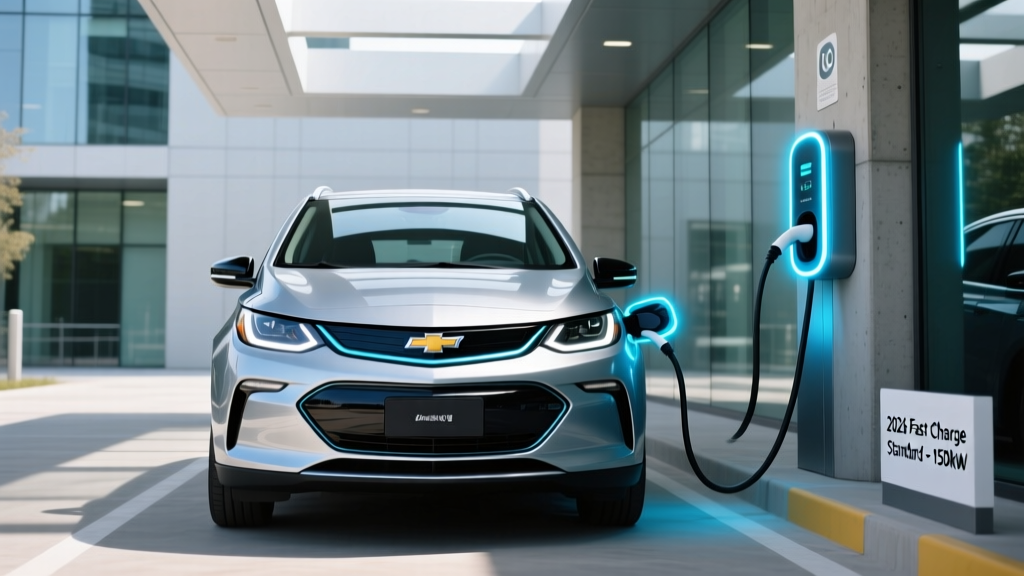
A typical supercharged V6 or V8 produces peak power only at higher RPMs, requiring a transmission to keep the engine in its power band. An electric motor in a BEV (battery electric vehicle) generates maximum torque from 0 RPM, which is why a Tesla Model 3 Performance (450 hp) hits 0-60 mph in roughly 2.9 seconds without any supercharger, turbo, or multi-speed gearbox. The trade-off is that while a supercharged gas car refuels in under five minutes at any station, an EV relies on a charging infrastructure that varies wildly in speed — from a trickle at a wall outlet to a 350 kW DC fast charger that can add 200 miles in 15 minutes.
The Three Charging Levels: Speeds in kW and Miles Per Hour
Understanding EV charging starts with one critical distinction: kW (kilowatts) measures power — the rate of energy flow — while kWh (kilowatt-hours) measures energy — the total amount stored in the battery. Confusing the two is the single most common mistake new EV owners make. A 10 kW charger delivering power for one hour adds 10 kWh of energy to the battery.
| Level | Voltage | Max Power (kW) | Miles of Range Added Per Hour | Best Use Case |
|---|---|---|---|---|
| Level 1 | 120V AC | 1.4 – 1.9 kW | 3 – 5 mi/hr | Overnight top-up, PHEVs, low daily mileage |
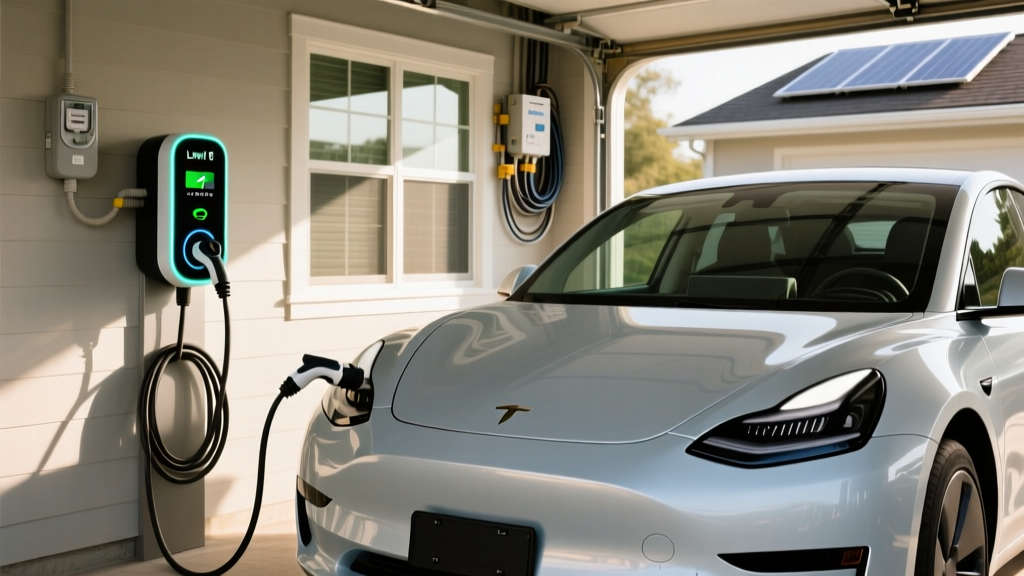
| Level 2 | 240V AC | 7.2 – 19.2 kW | 20 – 65 mi/hr | Home daily charging, workplace, hotels |
| DC Fast (Level 3) | 400–800V DC | 50 – 350 kW | 150 – 1,200+ mi/hr (peak) | Road trips, highway corridors, quick stops |
Home EV Charger Installation: Requirements, Costs & Panel Upgrades
Installing a Level 2 home charger is the single biggest quality-of-life upgrade an EV owner can make. Here's what's involved electrically and financially.
Electrical Requirements
Most Level 2 home chargers require a dedicated 240V circuit, similar to what an electric dryer or oven uses. Common configurations include:
- 40-amp circuit → delivers up to 32 amps continuous (7.7 kW at 240V) — the most common residential setup
- 50-amp circuit → delivers up to 40 amps continuous (9.6 kW) — ideal for larger batteries (100+ kWh)
- 60-amp circuit → delivers up to 48 amps continuous (11.5 kW) — maximum for most hardwired residential chargers
The National Electrical Code (NEC) requires that continuous loads not exceed 80% of a circuit's rated capacity, which is why a 40A breaker yields 32A of usable charging current.
Panel Upgrade Considerations
Homes built before 2000 often have 100-amp electrical panels. Adding a 40–60 amp EV circuit to an already-loaded 100A panel may require a panel upgrade to 200 amps, which is one of the most significant hidden costs in EV adoption. Signs you may need an upgrade:
- Your panel is at or near capacity (breaker slots full, high existing loads)
- You have a 100A service with electric heat, A/C, and an electric dryer
- Your electrician's load calculation exceeds 80% of panel capacity with the EV circuit added
| Component | Typical Cost Range | Notes |
|---|---|---|
| Level 2 Charger (Equipment) | $300 – $750 | Smart Wi-Fi-enabled units; basic units from $200 |
| Electrician Labor | $500 – $2,000 | Depends on run length from panel to garage/carport |
| Electrical Permit | $50 – $250 | Required in most jurisdictions; varies by locality |
| Panel Upgrade (if needed) | $1,500 – $3,500 | 100A → 200A service upgrade; not always required |
| Conduit & Wiring Materials | $100 – $500 | Longer runs from panel = higher material cost |
| Total (no panel upgrade) | $850 – $3,500 | Most homes with 200A service fall in this range |
| Total (with panel upgrade) | $2,350 – $7,000 | Older homes with 100A service |
Always hire a licensed electrician and pull a permit. Unpermitted EV charger installations can void home insurance claims and create fire hazards. According to the National Fire Protection Association (NFPA), EV charging circuits must meet NEC Article 625 requirements, including proper overcurrent protection and, in many jurisdictions, GFCI (Ground Fault Circuit Interrupter) protection for outdoor installations.
Connector Compatibility: NACS, CCS1 & CHAdeMO in 2026
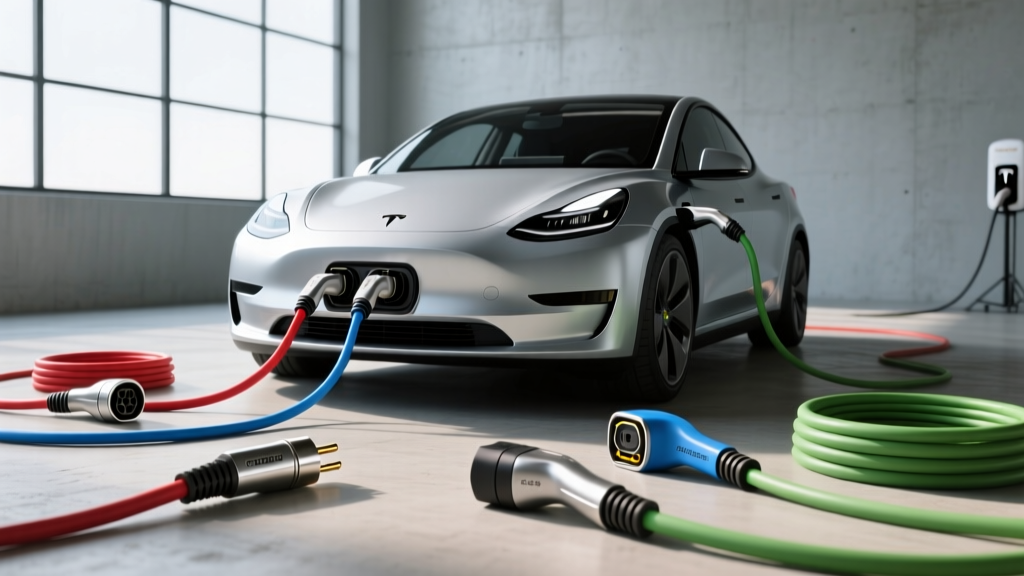
The connector landscape has consolidated dramatically. Tesla's North American Charging Standard (NACS) has been adopted by nearly every major automaker starting with 2025 model-year vehicles. Here's where things stand:
| Connector | Brands Using It | Adapter Needed? |
|---|---|---|
| NACS (Tesla standard) | Tesla, Ford, GM, Rivian, Volvo, Polestar, Mercedes-Benz, BMW, Hyundai/Kia (2025+), Subaru, Lucid | CCS vehicles need a NACS-to-CCS adapter (~$150–$250) for Tesla Superchargers |
| CCS1 (Combined Charging System) | VW, Audi (some), older Hyundai/Kia (pre-2025), Stellantis, legacy models | May need CCS-to-NACS adapter as networks transition |
| CHAdeMO | Nissan Leaf (legacy only) — effectively discontinued for new vehicles | Adapters exist but network support is declining |
For home Level 2 charging, all vehicles use a J1772 connector (or NACS, which incorporates J1772 signaling). Tesla includes a J1772 adapter with every vehicle, and most non-Tesla Level 2 chargers come with a J1772 plug that works universally. The key decision for home charging is whether to buy a NACS-equipped or J1772-equipped wall charger — if your vehicle has NACS, a native NACS home charger eliminates adapter hassle.
Charging Cost Per Mile vs Gas: The Real Numbers
The economics of EV charging depend heavily on where and when you charge. Here's a data-driven comparison using 2026 average electricity and fuel prices.
| Scenario | Rate | Vehicle Efficiency | Cost Per Mile |
|---|---|---|---|
| Home Level 2 (off-peak utility rate) | $0.08 – $0.12/kWh | 3.5 mi/kWh (avg EV) | $0.023 – $0.034 |
| Home Level 2 (standard residential rate) | $0.14 – $0.18/kWh | 3.5 mi/kWh | $0.040 – $0.051 |
| Public Level 2 (workplace/shopping) | $0.20 – $0.35/kWh | 3.5 mi/kWh | $0.057 – $0.100 |
| DC Fast Charging (public network) | $0.35 – $0.55/kWh | 3.0 mi/kWh (highway) | $0.117 – $0.183 |
| Gasoline car (28 MPG combined) | $3.25/gallon (2026 avg) | 28 MPG | $0.116 |
| Gasoline car (supercharged V8, 16 MPG) | $3.25/gallon | 16 MPG | $0.203 |
Charging Time Examples: 10–80% for Common Battery Sizes
Charging from 10% to 80% SoC is the standard benchmark because charging slows dramatically above 80% to protect battery cells. Here's how common vehicles perform:
| Vehicle | Battery (kWh usable) | Max DC Rate (kW) | 10–80% at DC Fast | Full Charge at Home Level 2 (11.5 kW) |
|---|---|---|---|---|
| Tesla Model 3 Long Range | 75 kWh (NMC) | 250 kW | ~25 min | ~7 hours |
| Hyundai Ioniq 5 (800V) | 77.4 kWh (NMC) | 240 kW | ~18 min | ~7 hours |
| Ford F-150 Lightning Ext. Range | 131 kWh (NMC) | 150 kW | ~42 min | ~11.5 hours |
| Chevrolet Equinox EV | 85 kWh (NMC) | 150 kW | ~32 min | ~7.5 hours |
| Toyota Prius Prime (PHEV) | 13.6 kWh (NMC) | N/A (L2 only) | N/A | ~1.5 hours (L2) |
Note that the Ioniq 5's 800V architecture allows it to sustain higher charge rates longer than 400V vehicles, which is why its 10–80% time is faster despite a similar battery size. This is the EV equivalent of a supercharged engine's sustained power band — peak numbers matter less than the area under the curve.
Recommended Home EV Chargers for 2026
Tesla Wall Connector
- Power: Up to 11.5 kW (48A) hardwired
- Connector: Native NACS
- Cable length: 24 ft
- Smart features: Wi-Fi, OTA updates, power sharing between units
- Price: ~$475
- Best for: Tesla owners and NACS-equipped vehicles
ChargePoint Home Flex
- Power: Up to 12 kW (50A) configurable
- Connector: J1772 (NACS adapter available)
- Cable length: 23 ft
- Smart features: Wi-Fi, app scheduling, Alexa integration, utility demand-response
- Price: ~$550–$650
- Best for: Non-Tesla EVs, utility rate scheduling
Emporia Level 2 Charger
- Power: Up to 11.5 kW (48A)
- Connector: J1772
- Cable length: 24 ft
- Smart features: Wi-Fi, energy monitoring, solar integration
- Price: ~$350–$400
- Best for: Budget-conscious buyers, solar-panel homes
When choosing a charger, match its maximum amperage to your installed circuit. A 48A charger requires a 60A breaker — installing it on a 40A circuit wastes its capability. Also consider whether you need a plug-in (NEMA 14-50 outlet) or hardwired unit. Hardwired installations eliminate the GFCI breaker requirement in many jurisdictions and allow higher amperage, but a NEMA 14-50 outlet offers portability if you move.
Safety, Code & Best Practices
Per NEC Article 625 and local building codes, keep these safety requirements in mind:
- Dedicated circuit: Your EV charger must have its own breaker — never share a circuit with other appliances
- GFCI protection: Required for outdoor receptacles and in many jurisdictions for indoor EV outlets as well; hardwired units may be exempt
- Outdoor rating: If mounting outside, ensure the charger carries a NEMA 4 or IP65 weatherproof rating
- Cable management: Use a holster or retractor to prevent tripping hazards and cable damage
- Load management: Some smart chargers (like the Emporia or Tesla Power Share) can dynamically reduce charge rate if the home's total electrical load approaches panel capacity — this can avoid a costly panel upgrade
For the most current electrical code requirements, consult the NFPA NEC resources and always defer to your licensed electrician's assessment of your specific home.
Frequently Asked Questions
How much does it cost to install a home EV charger?
Most homes with an existing 200-amp electrical panel spend between $850 and $3,500 for a complete Level 2 installation (equipment, electrician labor, permit, and wiring). Homes requiring a panel upgrade from 100A to 200A should budget $2,350 to $7,000 total. The wide range reflects variables like the distance from your electrical panel to the charging location, local labor rates, and permit fees.
How fast will each charging level add range?
Level 1 (120V) adds roughly 3–5 miles per hour — adequate for PHEVs with small batteries or drivers who travel under 30 miles daily. Level 2 (240V) adds 20–65 miles per hour depending on the charger's kW output and the vehicle's onboard charger capacity. DC fast charging can add 150–1,200+ miles per hour at peak rates, though real sessions average much lower due to charge-curve tapering above 80% SoC.
Which connector/charger is compatible with my EV?
For 2026 model-year vehicles, most new EVs from Ford, GM, Rivian, Hyundai, Kia, and others now use the NACS connector. Volkswagen Group and some Stellantis vehicles still use CCS1. The Nissan Leaf (discontinued for 2026) was the last major CHAdeMO vehicle. For home Level 2 charging, all EVs accept J1772 or NACS — Tesla provides a J1772 adapter, and J1772-to-NACS adapters are widely available. Check your vehicle's charge port before purchasing a home charger.
How much does charging cost per mile vs gas?
Home charging at off-peak utility rates costs approximately 2–3 cents per mile. Standard residential rates bring that to 4–5 cents per mile. Public DC fast charging ranges from 12–18 cents per mile. A comparable gasoline car averaging 28 MPG at $3.25/gallon costs about 12 cents per mile, while a supercharged performance vehicle at 16 MPG costs over 20 cents per mile. Home charging is consistently the cheapest option by a wide margin.
What electrical upgrades might I need?
The most common upgrade is a panel replacement from 100 amps to 200 amps, needed when your existing panel can't handle the additional 40–60 amp EV circuit alongside existing loads. Your electrician will perform a NEC-compliant load calculation to determine this. Other potential upgrades include adding a sub-panel in a detached garage, upgrading the service drop from the utility, or installing a smart load-management device that dynamically limits charger draw to avoid overloading the panel — the latter can sometimes eliminate the need for a panel upgrade entirely.