If you've searched "supercharge vs turbocharge" hoping to decode EV charging jargon, you're not alone. In the automotive world, supercharging and turbocharging are forced-induction systems that push more air into a combustion engine to make more power. But in the EV space, "Supercharging" refers specifically to Tesla's DC fast-charging network, and many non-Tesla drivers use the term loosely to mean any rapid public charge. The reality? EV charging speed is governed by physics — kilowatts (kW), battery chemistry, thermal management, and connector type — not by marketing names borrowed from internal combustion.
This guide strips away the confusion. We'll break down every charging level by exact kW output and miles of range added per hour, walk through real home installation costs including panel upgrades, map every major connector, and calculate your true cost per mile versus gasoline. Whether you drive a NACS-equipped Tesla, a CCS1 Hyundai Ioniq 5, or a CHAdeMO Nissan Ariya, you'll leave knowing exactly what hardware you need and what it will cost.
Forced Induction vs Fast Charging: Clearing Up the Terminology
A supercharger is a belt- or gear-driven compressor that forces denser air into an engine's intake, increasing horsepower. A turbocharger does the same job but is driven by exhaust gases instead. Both are strictly mechanical technologies for internal combustion engines and have nothing to do with electric vehicles.
When EV owners say "supercharge," they usually mean one of two things:
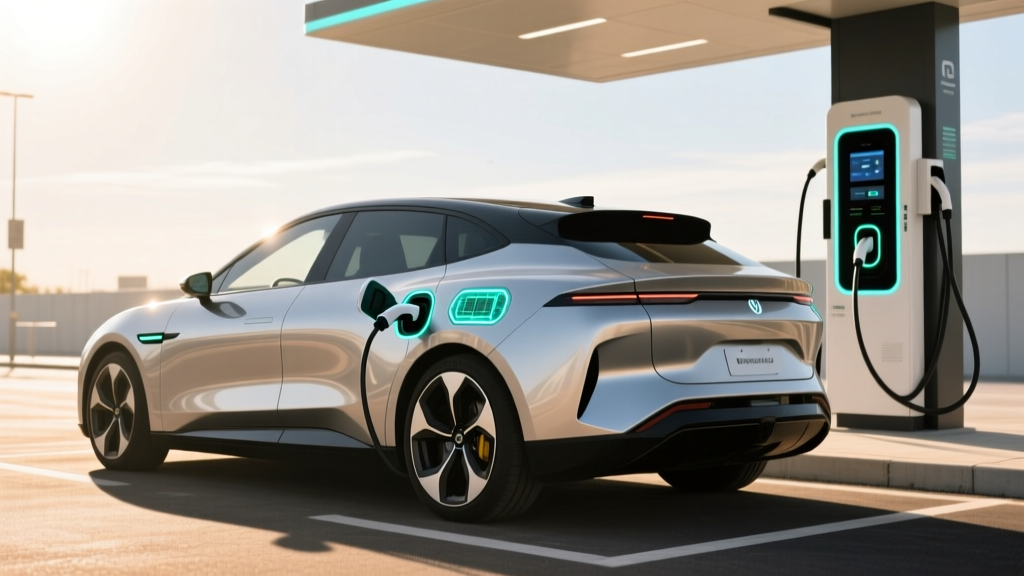
- Tesla Supercharger network: Tesla's proprietary DC fast-charging stations, now delivering up to 250 kW (V3 stalls) and rolling out 350 kW V4 architecture in select 2025–2026 deployments.
- Generic fast charging: Any public DC fast charger, whether from Electrify America, EVgo, or ChargePoint, operating at 50–350 kW.
The critical distinction for EV owners isn't supercharger versus turbocharger — it's kW (power) versus kWh (energy). Kilowatts measure the rate at which energy flows into your battery (like water pressure in a hose). Kilowatt-hours measure the total energy stored (like the size of the bucket). A 75 kWh battery charged at 150 kW will fill much faster than the same battery charged at 7 kW — but the bucket size doesn't change.
The Three Charging Levels: Speed, Power, and Real-World Range Gains
Every EV sold in the US charges via one of three tiers. Here's exactly what each delivers:
| Level | Voltage | Power (kW) | Miles of Range Added per Hour | Typical Use Case |
|---|---|---|---|---|
| Level 1 | 120V AC | 1.2–1.9 kW | 3–5 mi/hr | Overnight trickle; PHEVs; emergencies |
| Level 2 | 240V AC | 3.3–19.2 kW | 12–75 mi/hr | Home daily charging; workplace; destinations |
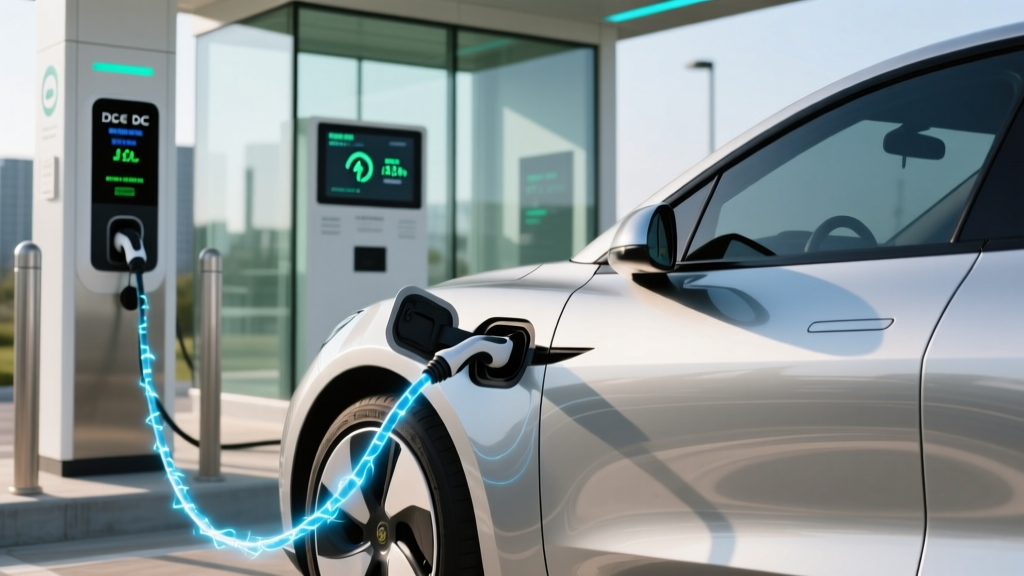
| DC Fast Charge (DCFC) | 400–800V DC | 50–350 kW | 150–1,000+ mi/hr (peak) | Road trips; rapid top-ups; commercial fleets |
According to fueleconomy.gov, the average EV consumes roughly 30 kWh per 100 miles (about 3.3 miles per kWh). Using that baseline, a 48-amp Level 2 home charger delivering 11.5 kW adds approximately 38 miles of range per hour. A 250 kW DC fast charger, at peak speed, can theoretically add 14+ miles per minute — but only during the early portion of the charge curve before the battery management system tapers power to protect the cells.
Charging Time Examples: 10–80% for Common EV Battery Sizes
EV batteries charge fastest between roughly 10% and 80% State of Charge (SoC). Above 80%, the charge rate tapers significantly to prevent lithium plating and thermal stress. Here's what 10–80% looks like across popular 2025–2026 models:
| Vehicle | Battery (kWh usable) | Peak DC kW | 10–80% Time | Architecture |
|---|---|---|---|---|
| Tesla Model Y (2026) | 75 kWh (NMC) | 250 kW | ~25 min | 400V |
| Hyundai Ioniq 5 (2026) | 77.4 kWh (NMC) | 240 kW | ~18 min | 800V |
| Ford F-150 Lightning (Std Range) | 98 kWh (NMC) | 150 kW | ~41 min | 400V |
| Chevrolet Equinox EV (2026) | 85 kWh (NMC) | 190 kW | ~30 min | 400V |
| Porsche Taycan (2026) | 97 kWh (NMC) | 320 kW | ~16 min | 800V |
Notice the 800V architecture advantage: Hyundai's E-GMP platform and Porsche's J1 platform accept higher sustained power, keeping charge rates elevated longer in the curve. A 400V vehicle rated at "250 kW peak" may only hold that rate for 2–3 minutes before tapering, while an 800V vehicle sustains higher power deeper into the session.
Home Level 2 Charger Installation: Costs, Electrical Requirements, and Panel Upgrades
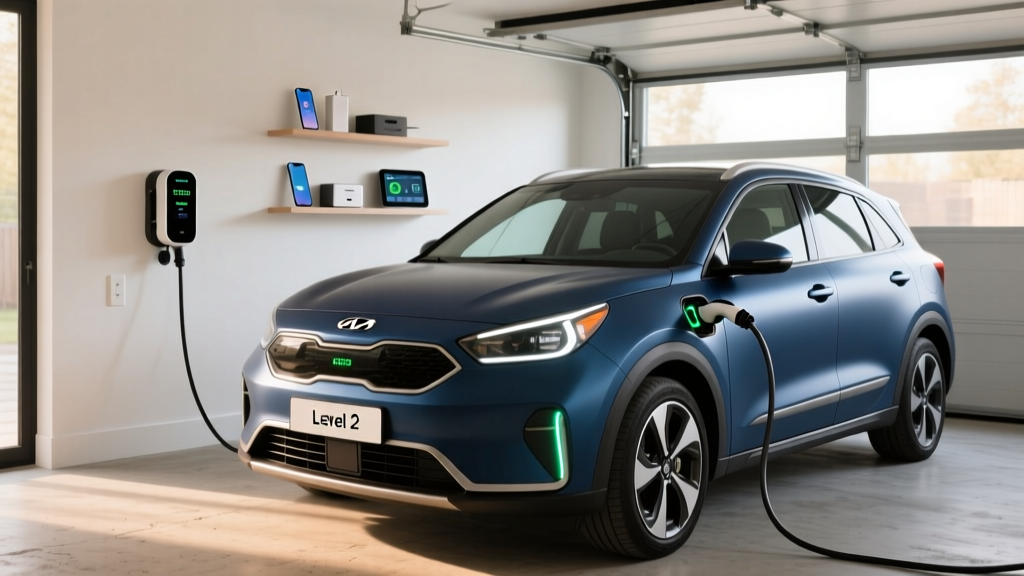
Installing a Level 2 home charger is the single most impactful ownership decision you can make. Here's what's involved electrically:
- Circuit: A dedicated 240V circuit, typically 40A, 50A, or 60A depending on charger amperage.
- Breaker sizing: EVSE amperage must not exceed 80% of the breaker rating per NEC Article 625. A 48A charger requires a 60A breaker.
- Wiring: 6 AWG copper (for 50A) or 4 AWG copper (for 60A) run in conduit from panel to outlet or hardwire point.
- Outlet vs hardwire: NEMA 14-50 outlets offer portability but require GFCI breakers in most 2026 jurisdictions. Hardwired units avoid GFCI nuisance tripping and are preferred for dedicated EV circuits.
| Component | Low End | High End | Notes |
|---|---|---|---|
| Level 2 EVSE (charger unit) | $350 | $750 | 32A–48A smart chargers |
| Electrician labor (standard install) | $400 | $1,200 | Short run, accessible panel |
| Permit & inspection | $50 | $250 | Varies by municipality |
| Electrical panel upgrade (if needed) | $1,500 | $3,500 | 100A→200A service upgrade |
| Total (no panel upgrade) | $800 | $2,200 | Most newer homes |
| Total (with panel upgrade) | $2,300 | $5,700 | Older homes with 100A service |
Homes built before 1990 often have 100-amp or even 60-amp main panels with limited spare breaker slots. Adding a 60A EV circuit may push total calculated load beyond panel capacity, triggering a mandatory service upgrade. Your electrician will perform a load calculation per NEC 220.82 to determine if your panel can handle the added draw. Some utilities offer rebates of $200–$500 for panel upgrades paired with EV charger installs — check with your local provider.
Connector Compatibility: NACS, CCS1, CHAdeMO, and Adapter Realities
The North American charging landscape has consolidated significantly since 2023, when Ford and GM announced adoption of Tesla's North American Charging Standard (NACS). As of 2026, nearly every new EV sold in the US ships with a native NACS port, and CCS1 is being phased out on new vehicles (though CCS1-equipped vehicles from 2020–2025 remain on the road in large numbers).
| Connector | Brands Using It (New Vehicles) | DC Fast Charge Network Access |
|---|---|---|
| NACS (Tesla standard) | Tesla, Ford, GM, Rivian, Volvo, Polestar, Hyundai, Kia, BMW, Toyota, Subaru | Tesla Supercharger, Electrify America (select), EVgo, ChargePoint |
| CCS1 | VW (ID.4 remaining stock), legacy 2020–2025 models | Electrify America, EVgo, ChargePoint, Ionity (EU) |
| CHAdeMO | Nissan Ariya (adapter), Mitsubishi Outlander PHEV; discontinued on new models | Limited; legacy stations only |
If you own a CCS1-equipped vehicle from the 2022–2025 era, you can access Tesla Superchargers using a NACS-to-CCS adapter (approximately $200–$250 from approved suppliers). Tesla owners accessing non-Tesla CCS networks may need a CCS-to-NACS adapter, though many networks are retrofitting stalls with native NACS cables through 2026.
Cost to Charge: Home vs Public vs Gas per Mile
The economics of EV charging depend entirely on where and when you plug in. Here's a realistic breakdown using the national average EV efficiency of 3.3 miles per kWh (per EPA fueleconomy.gov) and a gas vehicle averaging 28 MPG combined:
| Scenario | Price | Cost per kWh | Cost per Mile (EV) |
|---|---|---|---|
| Home, off-peak utility rate | $0.10–$0.14/kWh | $0.12 avg | $0.036 |
| Home, standard residential rate | $0.14–$0.20/kWh | $0.17 avg | $0.052 |
| Public Level 2 (workplace/retail) | $0.20–$0.35/kWh | $0.28 avg | $0.085 |
| DC fast charge (EA, EVgo, Supercharger) | $0.32–$0.55/kWh | $0.44 avg | $0.133 |
| Gasoline vehicle (28 MPG, $3.40/gal) | $0.121 | ||
Home charging on an off-peak rate delivers fuel costs at roughly one-quarter to one-third of gasoline. Even at expensive DC fast-charging rates, EVs are cost-competitive with gas on a per-mile basis — but the savings evaporate if you rely exclusively on public DCFC. The financial case for EV ownership is strongest when you can charge at home 80%+ of the time.
For a concrete example: a driver covering 12,000 miles per year charging primarily at home ($0.12/kWh) spends approximately $436/year on electricity. That same driver in a 28 MPG gas vehicle at $3.40/gallon spends $1,457/year — a savings of over $1,000 annually with home charging.
Recommended Home Level 2 Chargers for 2026
ChargePoint Home Flex
- Power: Up to 12 kW (50A, configurable down to 16A)
- Connector: NACS or J1772 (configurable at order)
- Cable: 23 feet
- Smart features: Wi-Fi, scheduling, energy dashboard, Alexa integration
- Price: ~$599
- Best for: Most homes; adjustable amperage fits various panel capacities
Tesla Wall Connector
- Power: Up to 11.5 kW (48A)
- Connector: Native NACS
- Cable: 24 feet
- Smart features: Wi-Fi updates, power sharing (multiple units on one circuit), access control
- Price: ~$450
- Best for: Tesla and NACS-native vehicle owners seeking a clean, integrated setup
Emporia Vue Level 2
- Power: Up to 11.5 kW (48A)
- Connector: NACS or J1772
- Cable: 24 feet
- Smart features: Solar integration, real-time energy monitoring, scheduled charging
- Price: ~$449
- Best for: Homes with solar panels; detailed energy tracking
All three units require a hardwired connection or NEMA 14-50 outlet on a dedicated circuit. The ChargePoint Home Flex stands out for its configurable amperage — if your panel can only spare a 40A breaker, you can set the unit to deliver 32A (7.7 kW) without swapping hardware.
Safety, Electrical Code, and Permitting Essentials
EV charging draws sustained high current for hours — a load profile unlike anything else in a residential panel. Safety requirements under the 2026 National Electrical Code (NEC Article 625) include:
- Dedicated circuit: Your EVSE must have its own breaker — no shared circuits with laundry, kitchen, or HVAC equipment.
- GFCI protection: Required for all receptacle-based (plug-in) EVSE installations in garages and outdoors. Hardwired installations are exempt in most jurisdictions.
- Outdoor rating: Outdoor-mounted EVSE units must carry a NEMA 4 or NEMA 4X enclosure rating. All recommended chargers above meet this standard.
- Permit and inspection: Nearly all US jurisdictions require an electrical permit for a new 240V circuit. The inspection verifies wire gauge, breaker sizing, grounding, and torque specifications. Expect $50–$250 in permit fees.
- Utility notification: Some utilities require you to notify them before installing an EVSE, especially if you're on a time-of-use rate plan or requesting a dedicated EV meter.
Never use extension cords, adapter splitters, or undersized wiring to shortcut an EV charger install. A sustained 48A draw on undersized wire generates heat that can degrade insulation and create fire risk over time — even if the circuit doesn't trip immediately.
Frequently Asked Questions
How much does it cost to install a home EV charger?
A standard Level 2 home charger installation costs $800–$2,200 including the charger unit, electrician labor, and permit. If your home requires an electrical panel upgrade from 100A to 200A service, total costs range from $2,300 to $5,700. Homes with a modern 200A panel and a short wire run from panel to garage typically fall at the lower end.
How fast will each charging level add range?
Level 1 (120V) adds 3–5 miles of range per hour. Level 2 (240V, 48A) adds approximately 35–40 miles per hour. DC fast charging adds 150–1,000+ miles per hour at peak, but only for the first 10–20 minutes of a session before the charge curve tapers. For daily driving, Level 2 at home is the practical standard — you'll wake up to a full battery every morning.
Which connector and charger is compatible with my EV?
If you purchased a new EV in 2025 or 2026, it almost certainly has a NACS port. Vehicles from 2020–2024 may have CCS1 (most non-Tesla brands) or NACS (Tesla). Check your vehicle's charge port or owner's manual. For home Level 2 charging, NACS vehicles use a NACS connector; CCS1 vehicles use a J1772 connector (the Level 2 standard that pairs with CCS1's DC pins). Adapters are available for cross-compatibility.
How much does charging cost per mile versus gas?
Home charging on an off-peak rate costs approximately $0.036 per mile — roughly one-third the cost of gasoline at $3.40/gallon in a 28 MPG vehicle ($0.121/mile). Even at expensive public DC fast-charging rates ($0.44/kWh average), EV charging costs about $0.133/mile — roughly on par with gas. The savings advantage of EVs is maximized with consistent home charging.
What electrical upgrades might I need?
If your home has a 100-amp electrical panel (common in homes built before 1990), you'll likely need a service upgrade to 200 amps, costing $1,500–$3,500. Even in homes with 200A panels, if your existing loads (HVAC, electric oven, dryer, water heater) consume most of your panel's capacity, a load calculation may show insufficient headroom for a 48A EV circuit. In these cases, a lower-amperage charger (32A/7.7 kW) or a smart load-management system can avoid a full panel upgrade.
Does the federal tax credit cover home charger installation?
The IRS Residential Clean Energy Credit (IRC §25C) previously covered 30% of home EVSE equipment and installation costs up to $1,000, but this specific provision has undergone legislative changes. Check current-year IRS guidance or consult a tax professional before claiming any credit, as eligibility rules, caps, and qualifying equipment definitions are subject to change. Some states and utilities also offer separate rebates for home charger installation — contact your local utility for current programs.