Whether you call it supercharging (Tesla's term for DC fast charging) or turbocharging your daily commute with a Level 2 home station, the goal is the same: minimize downtime and maximize range. This guide breaks down exactly what each charging level delivers in real-world miles per hour, what your home electrical panel can actually support, and how much it all costs — down to the penny per mile.
kW (kilowatts) = power, or how fast energy flows into your battery. Think of it as the size of the hose. kWh (kilowatt-hours) = energy, or the total amount stored. Think of it as the size of the tank. A 150 kW charger fills your 75 kWh battery faster than a 50 kW charger — but both deliver the same total energy when full.
Charging Levels Explained: Speeds and Range Added Per Hour
Every EV sold in the US supports three tiers of charging. The right tier depends on your daily mileage, battery size, and whether you're topping up at home or on a road trip. Here's the breakdown:
| Level | Voltage | Power (kW) | Miles of Range Added Per Hour | Best For |
|---|---|---|---|---|
| Level 1 | 120V AC | 1.0–1.4 kW | 3–5 mi/hr | Overnight top-up, PHEVs, low-mileage drivers |
| Level 2 | 240V AC | 3.3–19.2 kW | 12–75 mi/hr | Daily home/work charging, most BEVs |
| DC Fast Charge | 200–900V DC | 50–350 kW | 150–1,000+ mi/hr (peak) | Road trips, rapid top-ups, commercial fleets |
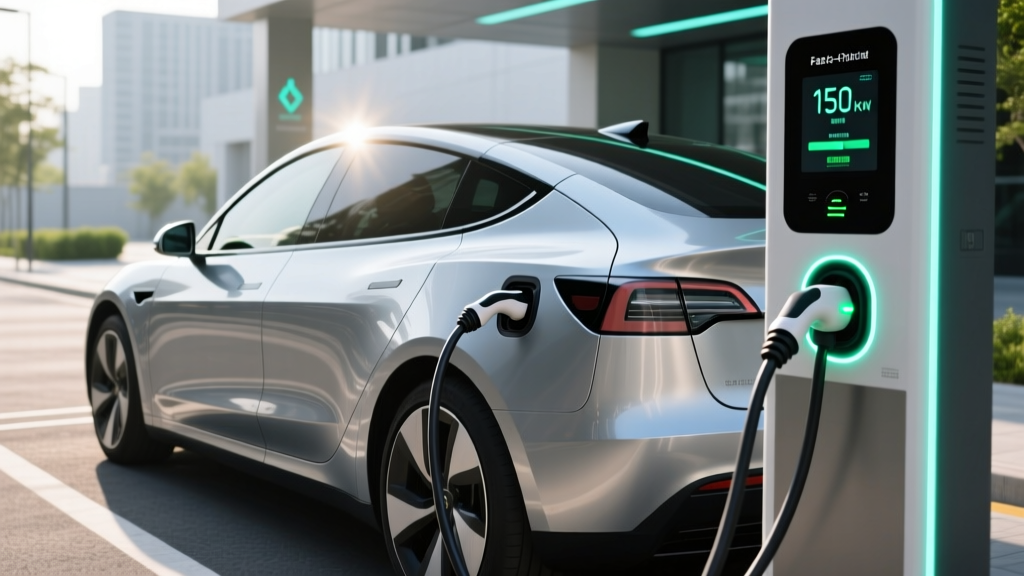
For a typical 75 kWh battery (e.g., Tesla Model Y Long Range, Hyundai Ioniq 5), Level 2 at 11.5 kW adds roughly 35–40 miles of range per hour. A full 10–80% charge at home takes about 5–6 hours. On a 250 kW DC fast charger, that same 10–80% session takes approximately 18–22 minutes — but only if your vehicle supports that peak rate and the battery is preconditioned.
Peak kW is not sustained kW. A vehicle rated for 250 kW DC fast charging typically hits that peak only between 10–30% SoC. Above 50%, the rate tapers. Above 80%, it slows dramatically to protect battery health. Plan road-trip stops around 10–80% sessions, not 0–100%.
Home EV Charger Installation: Requirements, Costs, and Panel Upgrades
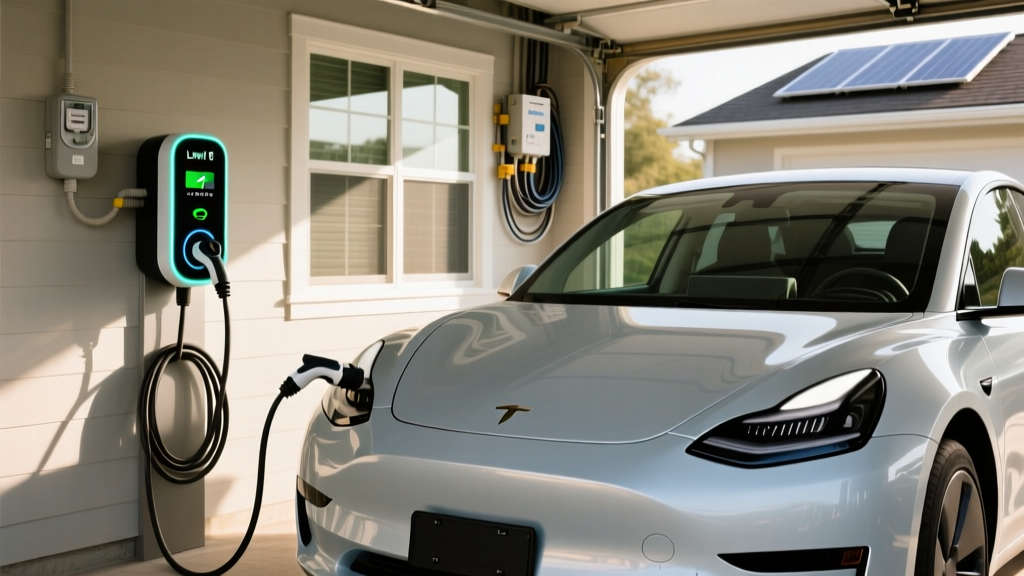
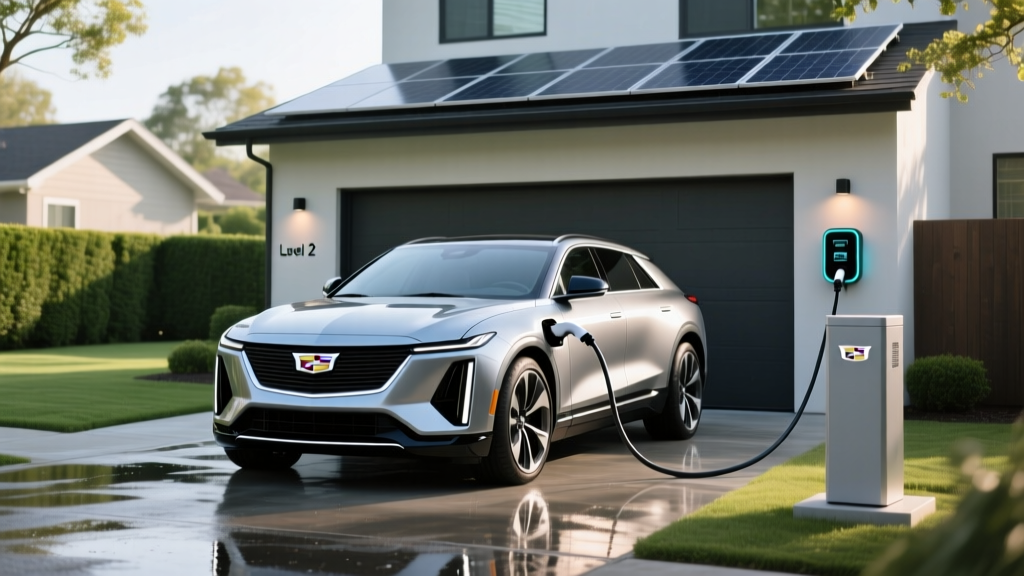
Installing a Level 2 home charger is the single highest-impact upgrade an EV owner can make. But costs vary wildly depending on your home's electrical infrastructure. Here's what you're actually looking at:
Electrical Requirements
- Circuit: Dedicated 240V circuit, typically 40A or 50A breaker (supporting 32A or 40A continuous charging load)
- Wire gauge: 6 AWG copper for 50A circuits; 8 AWG for 40A circuits
- Connector: NEMA 14-50 outlet (most common) or hardwired connection (required for circuits above 50A in many jurisdictions)
- GFCI protection: Required by NEC 2020+ for outdoor receptacles; many modern chargers have built-in ground-fault detection
- Permit: Required in most US municipalities; typically $50–$200 depending on jurisdiction
Panel Upgrade Considerations
If your home has a 100A main panel — common in homes built before 1990 — adding a 50A EV circuit may exceed your panel's capacity, especially if you're running electric heat, a dryer, and an oven simultaneously. A licensed electrician will perform a load calculation per NEC Article 220 to determine if an upgrade is needed.
A panel upgrade from 100A to 200A typically costs $1,500–$3,500 depending on your utility's service drop requirements and local labor rates. This is the single biggest variable in your installation budget — and the one most online guides gloss over.
| Component | Low Estimate | High Estimate | Notes |
|---|---|---|---|
| Level 2 Charger (Equipment) | $300 | $750 | Smart Wi-Fi chargers; basic units from $200 |
| Electrical Labor (standard install) | $500 | $1,500 | Run from panel to garage/driveway; varies by distance |
| Permit & Inspection | $50 | $250 | Varies by municipality |
| Panel Upgrade (if needed) | $1,500 | $3,500 | 100A → 200A; not always required |
| Additional Materials (conduit, wire) | $100 | $500 | Long runs from panel add cost |
| Total (no panel upgrade) | $950 | $3,000 | Most homes with 200A panels |
| Total (with panel upgrade) | $2,450 | $6,500 | Older homes needing service upgrade |
Some utility companies offer rebates of $250–$500 for home charger installation, and certain states provide additional incentives. Check with your local utility and your state energy office for current programs.
Connector Compatibility: NACS, CCS, and CHAdeMO in 2026
The connector landscape has consolidated significantly since 2024, when Ford, GM, Rivian, Volvo, and others adopted the North American Charging Standard (NACS) — originally Tesla's proprietary connector. Here's where things stand:
| Connector | Brands Using It (2026 Models) | DC Fast Charge Support | Adapter Availability |
|---|---|---|---|
| NACS (J3400) | Tesla (all), Ford, GM, Rivian, Volvo, Polestar, Mercedes, BMW, Hyundai, Kia, Toyota | Yes — up to 350 kW | CCS-to-NACS adapters widely available ($150–$300) |
| CCS1 | Legacy models (pre-2025 VW, BMW, Hyundai, Kia); most non-Tesla DC fast chargers still have CCS cables | Yes — up to 350 kW | NACS-to-CCS adapters available from Tesla and third parties |
| CHAdeMO | Nissan Leaf (discontinued), Mitsubishi Outlander PHEV (legacy) | Yes — up to 100 kW | Limited adapter options; network support declining |
For home Level 2 charging: All vehicles use the J1772 connector for AC charging (or NACS, which integrates J1772 signaling). Every NACS-equipped EV ships with or supports a J1772 adapter, and most Level 2 home chargers now come with a NACS plug or include a J1772-to-NACS adapter in the box.
For DC fast charging on the road: Tesla Superchargers now serve NACS-equipped non-Tesla vehicles at thousands of locations. Electrify America, EVgo, and ChargePoint stations primarily use CCS1 cables but are adding NACS connectors through 2026. If you drive a CCS1-equipped vehicle (e.g., a 2024 Hyundai Ioniq 5), you'll need a CCS-to-NACS adapter to access Tesla Superchargers.
Cost to Charge: Home vs. Public vs. Gas — Per Mile Breakdown
The economics of EV charging depend heavily on where and when you charge. Here's a realistic comparison using a mid-efficiency EV consuming 3.0 miles per kWh (roughly 33 kWh/100 mi — typical for a crossover like the Model Y or Ioniq 5):
| Charging Scenario | Rate ($/kWh) | Cost Per 100 Miles | Cost Per Mile | Equivalent Gas Price (at 28 MPG) |
|---|---|---|---|---|
| Home — off-peak utility rate | $0.08–$0.12 | $2.64–$3.96 | $0.03–$0.04 | $0.84–$1.12/gal |
| Home — standard residential rate | $0.14–$0.18 | $4.62–$5.94 | $0.05–$0.06 | $1.40–$1.68/gal |
| Public Level 2 (workplace, mall) | $0.20–$0.35 | $6.60–$11.55 | $0.07–$0.12 | $1.96–$3.36/gal |
| DC Fast Charge (EA, EVgo, Tesla) | $0.30–$0.55 | $9.90–$18.15 | $0.10–$0.18 | $2.80–$5.04/gal |
| Gasoline (US avg, mid-2026) | — | $11.43 (at $3.20/gal) | $0.11 | $3.20/gal |
The takeaway: Home off-peak charging delivers fuel costs equivalent to under $1/gallon gasoline. Even public DC fast charging at peak rates is often comparable to or slightly above gasoline costs. The real savings come from consistent home charging — which is why the home install investment pays for itself quickly.
For a driver covering 12,000 miles per year charging primarily at home at $0.14/kWh, annual fuel cost is approximately $560 — compared to roughly $1,370 for a 28 MPG gas vehicle at $3.20/gallon. That's an annual savings of $810, meaning a $2,000 home charger installation pays for itself in under 3 years.
Charging Time Examples: 10–80% Sessions by Battery Size and Charger
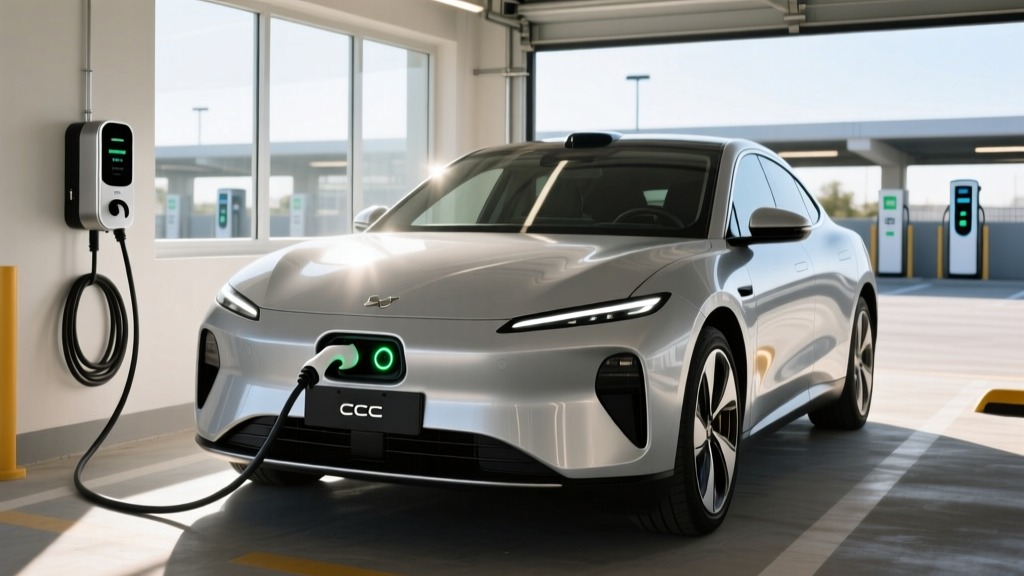
Most drivers charge from roughly 10% to 80% — the sweet spot where charging speeds are fastest and battery stress is lowest. Here's how long that takes across common battery sizes and charger types:
| Battery Size | Example Vehicle | Level 2 at 11.5 kW (Home) | DC Fast at 150 kW | DC Fast at 250+ kW | |
|---|---|---|---|---|---|
| 58 kWh (usable) | VW ID.4 Standard | ~3.5 hours | ~28 min | ~22 min | |
| 75 kWh (usable) | Tesla Model Y LR | ~4.5 hours | ~35 min | ~18 min | |
| 84 kWh (usable) | Ford F-150 Lightning Ext. | ~5 hours | ~40 min | ~25 min (peak 230 kW) | |
| 100 kWh (usable) | GMC Sierra EV / Silverado EV | ~6 hours | ~45 min | ~20 min (peak 350 kW) |
Cold weather caveat: In temperatures below 32°F, expect DC fast charging times to increase by 15–30% unless your vehicle has active battery preconditioning. Tesla, Hyundai/Kia (E-GMP platform), and GM (Ultium) vehicles with heat pumps and preconditioning handle cold charging better than most. Always enable navigation-to-charger preconditioning when possible.
Recommended Home Level 2 Chargers (2026)
After testing dozens of units across multiple homes and vehicles, these represent the best value-to-performance options currently available:
ChargePoint Home Flex
- Power Output: Up to 12 kW (50A circuit) — configurable via DIP switch to 16A–50A
- Connector: NACS (J3400) or J1772 available; ships with ~23 ft cable
- Smart Features: Wi-Fi, app-based scheduling, utility rate optimization, Alexa integration, energy tracking
- Price: ~$550 (NACS version)
- Best For: Flexible amperage configuration; ideal if your panel can't support a full 50A circuit
Tesla Wall Connector (Gen 4)
- Power Output: Up to 11.5 kW (48A on 60A circuit)
- Connector: NACS native; includes J1772 adapter in box
- Smart Features: Wi-Fi, over-the-air updates, power-sharing (link multiple units on one circuit), Tesla app integration
- Price: ~$475
- Best For: Tesla owners and NACS-adopters wanting a clean, reliable unit with power-sharing for multi-EV households
Emporia Vue EV Charger
- Power Output: Up to 11.5 kW (48A on 60A circuit)
- Connector: J1772 (NACS adapter included)
- Smart Features: Wi-Fi, solar integration (pairs with Emporia energy monitor), scheduled charging, real-time cost tracking
- Price: ~$400
- Best For: Solar-equipped homes; best energy monitoring of any charger in this price range
Grizzl-E Smart
- Power Output: Up to 10 kW (40A on 50A circuit)
- Connector: J1772 or NACS; 24 ft cable
- Smart Features: Wi-Fi, OCPP-compatible (works with utility demand-response programs), adjustable amperage
- Price: ~$450
- Best For: Extreme cold climates (rated to -40°F); rugged outdoor installations
Safety, Code, and Installation Best Practices
EV charging draws sustained high current for hours — far longer than a dryer or oven cycle. This makes proper installation non-negotiable:
- Dedicated circuit: Your Level 2 charger must have its own dedicated breaker — never share a circuit with other appliances.
- Continuous load derating: NEC requires that continuous loads (3+ hours) not exceed 80% of breaker rating. A 50A breaker supports 40A continuous charging; a 60A breaker supports 48A.
- GFCI protection: Required for outdoor outlets per NEC 2020+. Hardwired chargers may not require a separate GFCI breaker if the unit includes integrated ground-fault protection — check your charger's documentation.
- Outdoor rating: If your charger is mounted outdoors or in an unsealed garage, ensure it carries a NEMA 4 or IP65 rating for weather resistance.
- Permit and inspection: Skipping the permit risks insurance claim denials in the event of an electrical fire. Most jurisdictions require inspection of EV circuit installations.
- Use a licensed electrician: This is not a DIY project. Improper torque on terminal connections, undersized wire, or missing bonding can create fire hazards that may not manifest for months.
For more on electrical code requirements, the National Fire Protection Association's NEC page provides the current code standard, and your local building department can confirm jurisdiction-specific amendments.
Frequently Asked Questions
How much does it cost to install a home EV charger?
A typical Level 2 home charger installation costs $950–$3,000 if your electrical panel has sufficient capacity. This includes the charger unit ($300–$750), electrician labor ($500–$1,500), materials ($100–$500), and permit fees ($50–$250). If your home needs a panel upgrade from 100A to 200A service, add $1,500–$3,500, bringing the total to $2,450–$6,500. Always get 2–3 quotes from licensed electricians.
How fast will each charging level add range?
Level 1 (120V) adds roughly 3–5 miles per hour — sufficient for PHEVs or drivers covering under 30 miles daily. Level 2 (240V at 40A/11.5 kW) adds 35–40 miles per hour for most EVs, easily replenishing a day's driving overnight. DC fast charging at 150+ kW can add 150–300+ miles in 15–20 minutes, though speeds taper significantly above 80% SoC.
Which connector/charger is compatible with my EV?
For 2025–2026 model-year vehicles, nearly all new EVs use the NACS (J3400) connector for DC fast charging and either NACS or J1772 for Level 2 AC charging. Older CCS1-equipped vehicles (pre-2025 models from VW, Hyundai, Kia, BMW) can access NACS chargers with a CCS-to-NACS adapter ($150–$300). CHAdeMO vehicles (Nissan Leaf) have limited adapter options and declining network support. Check your vehicle's charge port or owner's manual to confirm.
How much does charging cost per mile vs gas?
Home charging at typical residential rates ($0.14/kWh) costs approximately $0.05 per mile for an average EV. Gasoline at $3.20/gallon in a 28 MPG vehicle costs $0.11 per mile. That's a 55% reduction in fuel cost. Off-peak home rates ($0.08–$0.10/kWh) drop EV fueling to $0.03/mile — equivalent to gasoline under $1/gallon. Public DC fast charging at $0.40–$0.55/kWh is roughly comparable to gasoline costs.
What electrical upgrades might I need?
The most common upgrade is a panel capacity increase from 100A to 200A in older homes, costing $1,500–$3,500. You may also need: a new 240V circuit run from your panel to the charger location ($500–$1,500 depending on distance and wall penetrations), a NEMA 14-50 outlet or hardwired junction box, and possibly a smart electrical panel upgrade (e.g., Span or Lumin) if you want circuit-level energy monitoring. Your electrician will perform a load calculation to determine exactly what's needed. Some utilities offer managed charging programs that allow a lower-amperage install on constrained panels — ask your utility about demand-response options.
Can I charge at Tesla Superchargers with a non-Tesla EV?
Yes. As of 2026, Tesla has opened thousands of Supercharger stalls to NACS-equipped non-Tesla vehicles including Ford, GM, Rivian, and others. CCS1-equipped vehicles require a Tesla NACS DC adapter to connect. Access is managed through the Tesla app. Charging speeds for non-Tesla vehicles are typically limited to the vehicle's maximum acceptance rate — most non-Tesla EVs peak at 150–230 kW on Superchargers.
Does home charging degrade my battery faster than DC fast charging?
No — the opposite is true. Slow Level 2 charging generates less heat and places less stress on battery cells than DC fast charging. Lithium-ion batteries degrade fastest when subjected to high temperatures, high charge rates, and sustained 100% SoC. Best practice: charge at home on Level 2 most of the time, set your charge limit to 80–90% for daily use, and reserve DC fast charging for road trips. Most EV batteries retain 90%+ capacity after 100,000 miles with this approach, per data from fueleconomy.gov and manufacturer warranty terms covering 8 years/100,000 miles at 70% minimum capacity retention.