If you've ever typed "can you supercharge and turbo charge a car" into a search bar while researching electric vehicles, you're not alone. The terminology collision between internal-combustion performance mods and EV charging vocabulary creates genuine confusion. Superchargers and turbochargers are mechanical devices that force more air into a gas engine. Tesla's Supercharger network, meanwhile, is a DC fast-charging system that pushes electrons into a battery pack. They share a name but operate in completely different physics domains.
This guide untangles that confusion and then gives you the practical EV charging data you actually need: charging speeds in kilowatts (kW), real-world miles added per hour, home installation costs with full breakdowns, connector compatibility, and equipment picks for 2026.
Superchargers vs. Turbochargers vs. EV Superchargers: What's the Difference?
A supercharger is a belt-driven compressor that forces additional air into an engine's intake, allowing more fuel to burn and producing more horsepower. A turbocharger does the same job but is driven by exhaust gases rather than a belt, reducing parasitic engine loss but introducing turbo lag.
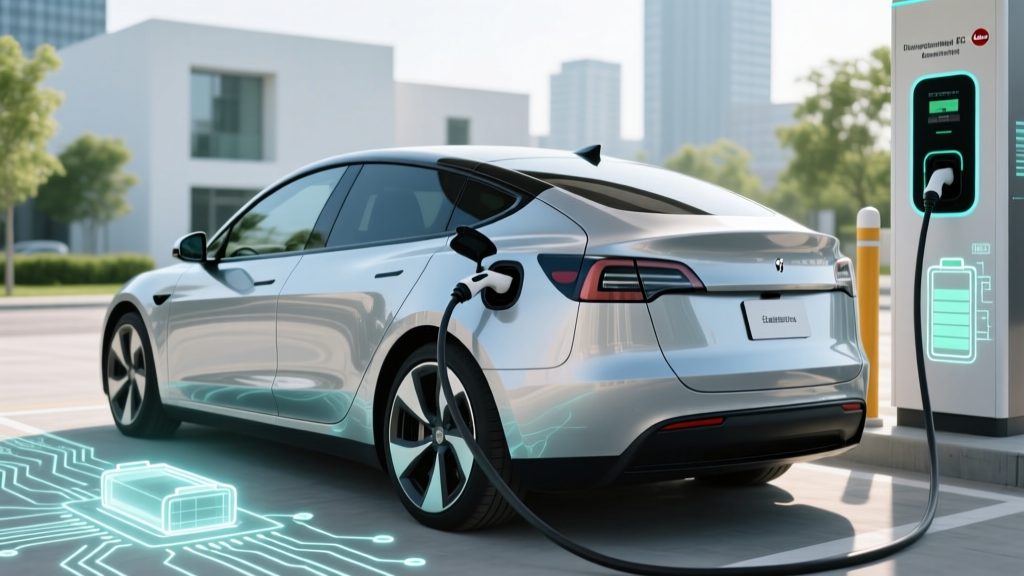
Neither device exists on an electric vehicle. EVs don't have intake manifolds, exhaust systems, or combustion chambers. An electric motor produces maximum torque from 0 RPM without any forced induction. When Tesla uses the term "Supercharger," it's a branding choice for their DC fast-charging network — currently capable of up to 250 kW at V3 stalls and up to 350 kW at V4 stalls rolling out through 2025-2026.
So, can you supercharge and turbo charge a car that runs on electricity? No. But you can charge an EV at speeds that rival the refueling time of a gas car, and that's where understanding charging levels becomes critical.
EV Charging Levels: Speeds in kW and Miles Per Hour
Before we get to hardware, the single most important distinction in EV ownership: kW (kilowatts) measures power — the rate of energy flow. kWh (kilowatt-hours) measures energy — the total amount stored in your battery. Think of kW as the width of a pipe and kWh as the size of the tank it's filling. Confusing them is the most common EV literacy mistake.
| Level | Voltage | Max Power (kW) | Miles of Range Added Per Hour | Typical Use Case |
|---|---|---|---|---|
| Level 1 | 120V AC | 1.4–1.9 kW | 3–5 miles | Overnight trickle, PHEVs, emergency |
| Level 2 | 240V AC | 7.2–19.2 kW | 20–65 miles | Home daily charging, workplace, hotels |
| DC Fast Charge | 400–800V DC | 50–350 kW | 150–1,000+ miles (equivalent rate) | Road trips, highway corridors, fleet depots |
A few real-world anchors: A Tesla Model Y Long Range (81 kWh usable battery, EPA 310 miles) charging at a 250 kW V3 Supercharger will add roughly 200 miles in 15 minutes under ideal conditions. That same vehicle on a 48-amp Level 2 home charger (11.5 kW) adds about 37 miles per hour — enough to fully replenish overnight from any daily driving.
Home EV Charger Installation: Electrical Requirements and Costs
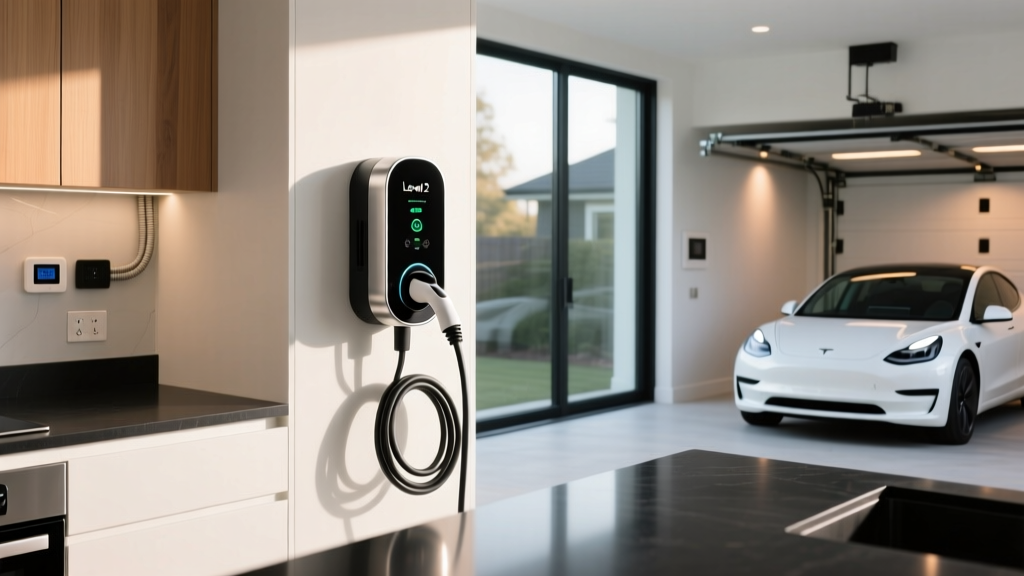
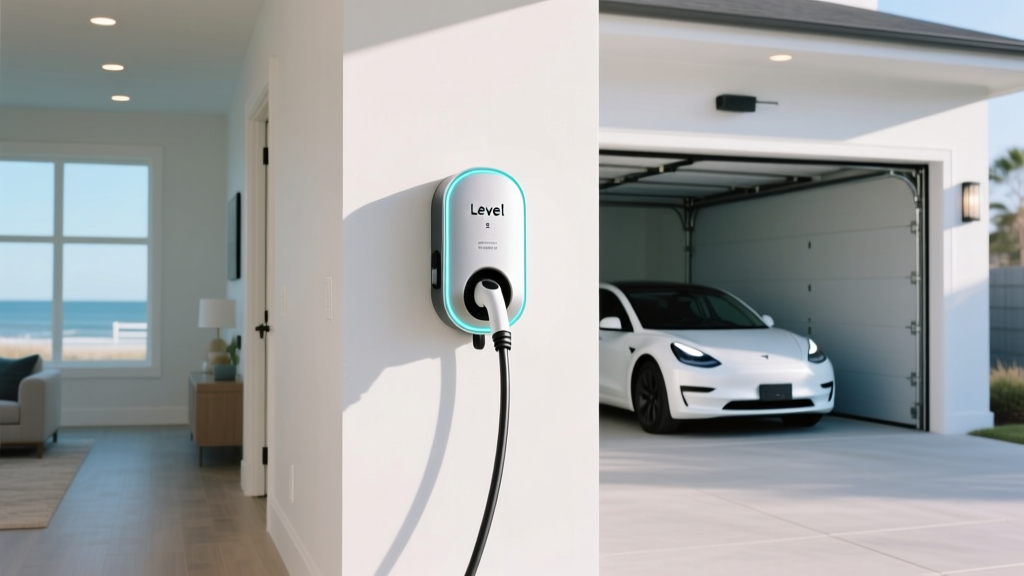
A Level 2 home charger is where 80–90% of all EV charging happens for owners with garage or driveway access. Here's what the installation actually requires.
Electrical Specifications
Most Level 2 home chargers require a 240-volt dedicated circuit, identical to what powers your electric dryer or oven. Common amperage configurations:
- 32-amp circuit → 7.7 kW output (requires 40-amp breaker)
- 40-amp circuit → 9.6 kW output (requires 50-amp breaker)
- 48-amp circuit → 11.5 kW output (requires 60-amp breaker)
- 80-amp circuit → 19.2 kW output (requires 100-amp breaker — rare, mostly for large trucks/fleet)
The breaker must be rated at 125% of the continuous load per NEC Article 625. This is non-negotiable and your electrician will follow it automatically.
Panel Upgrade Reality
Homes built before 2000 often have 100-amp or 150-amp main electrical panels. Adding a 60-amp EV circuit may exceed your panel's available capacity. A licensed electrician will perform a load calculation (NEC Article 220) to determine if your panel can handle the additional draw. If not, a panel upgrade to 200 amps typically costs $1,500–$3,500 depending on your utility and local labor rates. Some homeowners opt for a smart load management device (like the Emporia VUE or Span smart panel) that dynamically shares capacity between the EV charger and other circuits, potentially avoiding a panel upgrade entirely.
| Component | Low End | High End | Notes |
|---|---|---|---|
| Level 2 Charger (Equipment) | $300 | $750 | 32A–48A, hardwired or NEMA 14-50 plug |
| Electrician Labor (standard install) | $400 | $1,200 | Run from panel to garage/driveway, 20–60 ft |
| Materials (wire, conduit, breaker) | $100 | $400 | Copper wire gauge varies by amperage/distance |
| Permit & Inspection | $50 | $250 | Required by most jurisdictions; varies by municipality |
| Panel Upgrade (if needed) | $1,500 | $3,500 | 100A → 200A service upgrade |
| Total (No Panel Upgrade) | $850 | $2,600 | Most homes with 200A panels |
| Total (With Panel Upgrade) | $2,350 | $6,100 | Older homes needing service upgrade |
Check the IRS Residential Clean Energy Credit (IRC §25D) — as of 2026, this provides a 30% credit on qualified home charging equipment and installation costs, up to $1,000 per year. State and utility rebates may stack on top; check your local utility's EV programs and the Alternative Fuels Data Center state incentive database.
Connector Compatibility: NACS, CCS, and CHAdeMO in 2026
The connector landscape has consolidated significantly. Here's where things stand for 2026 model-year vehicles sold in North America:
| Connector | Brands Using It (2026 Models) | Notes |
|---|---|---|
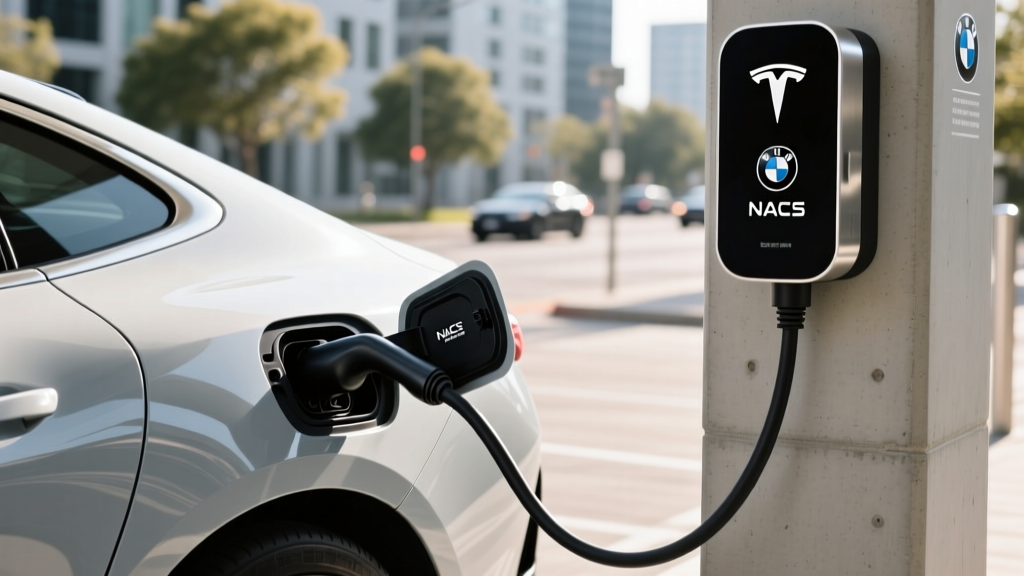
| NACS (North American Charging Standard) | Tesla (all), Ford, GM, Rivian, Volvo, Polestar, Hyundai, Kia, BMW, Mercedes-Benz, Nissan (new models) | Industry standard as of 2025+. Compact, no communication pins on DC side. Access to Tesla Supercharger network. |
| CCS1 (Combined Charging System) | Legacy models pre-2025 (VW ID.4 earlier years, older BMW i4/iX, Stellantis EVs) | Being phased out on new models. Adapters available to access NACS Superchargers. |
| CHAdeMO | Nissan Leaf (discontinued after 2025 model year), Mitsubishi Outlander PHEV (older) | Effectively discontinued. Limited public infrastructure remaining. |
If you're buying a new EV in 2026, it almost certainly has a NACS port. If you own an older CCS-equipped vehicle, Tesla and third-party manufacturers sell CCS-to-NACS adapters ($150–$250) that grant access to the Supercharger network. Always verify adapter compatibility with your specific model year before purchasing.
For Level 2 home charging, all EVs use the same J1772 connector (or NACS, which handles AC through the same port on Tesla and newer NACS-equipped vehicles). Any Level 2 charger you buy will work with any EV, though NACS-native vehicles may use a NACS connector on the home charger rather than J1772.
Charging Cost Per Mile: EV vs. Gas
The economics of EV charging depend heavily on where and when you charge. Here's a realistic breakdown using a 2026 Tesla Model Y Long Range (averaging 3.5 miles per kWh) compared to a Toyota RAV4 AWD (28 MPG combined) at $3.50/gallon gasoline:
| Charging Scenario | Rate ($/kWh) | Cost Per Mile (EV) | Annual Cost (12,000 mi) |
|---|---|---|---|
| Home Level 2 — Off-Peak TOU Rate | $0.08–$0.12 | $0.023–$0.034 | $276–$408 |
| Home Level 2 — Standard Rate | $0.13–$0.18 | $0.037–$0.051 | $444–$612 |
| Public Level 2 (Workplace/Mall) | $0.15–$0.30 | $0.043–$0.086 | $516–$1,032 |
| DC Fast Charge (Electrify America, EVgo) | $0.35–$0.55 | $0.100–$0.157 | $1,200–$1,884 |
| Gasoline (RAV4 AWD, 28 MPG, $3.50/gal) | — | $0.125 | $1,500 |
The takeaway: Home charging at off-peak rates delivers fuel costs roughly 75–80% below gasoline. Exclusive reliance on DC fast charging can approach or even exceed gas costs, which is why home Level 2 access remains the economic backbone of EV ownership. If you can't charge at home, a PHEV may be a better fit for your situation.
Recommended Home Level 2 Chargers (2026 Picks)
These are chargers we've evaluated based on reliability, power output, cable management, smart features, and value:
ChargePoint Home Flex
- Power: Up to 12 kW (50A), configurable down to 16A
- Connector: J1772 (NACS adapter included)
- Cable: 23 ft
- Smart Features: Wi-Fi, Alexa, scheduling, energy tracking
- Price: ~$550
- Install: Hardwired or NEMA 14-50 plug
Emporia Level 2 EV Charger
- Power: Up to 11.5 kW (48A)
- Connector: J1772 or NACS (configurable)
- Cable: 24 ft
- Smart Features: Wi-Fi, solar integration, load management with Emporia VUE panel monitor
- Price: ~$400
- Install: Hardwired recommended
Tesla Wall Connector
- Power: Up to 11.5 kW (48A)
- Connector: NACS native
- Cable: 24 ft
- Smart Features: Wi-Fi, OTA updates, power sharing between multiple units, vehicle-specific access control
- Price: ~$475
- Install: Hardwired only
Grizzl-E Smart
- Power: Up to 10 kW (40A)
- Connector: J1772 or NACS
- Cable: 24 ft
- Smart Features: OCPP-compatible, app scheduling, -40°F cold-weather rated
- Price: ~$450
- Install: NEMA 14-50 or hardwired
For most homes with a 200-amp panel, a 48-amp charger (11.5 kW) on a 60-amp breaker provides the best balance of charging speed and electrical capacity. If your panel is tight on space, a 32-amp (7.7 kW) charger on a 40-amp breaker is still more than adequate for overnight replenishment of any passenger EV.
Safety, Code, and Installation Best Practices
EV charging is a high-draw, continuous-load application. The National Electrical Code (NEC Article 625) has specific requirements:
- Dedicated circuit: Your EV charger must have its own breaker — no sharing with other outlets or appliances.
- GFCI protection: Required for all outdoor receptacles and increasingly required indoors per 2023 NEC updates (local adoption varies). Hardwired installations with built-in ground-fault protection in the charger may satisfy this.
- Outdoor rating: If your charger is installed outside (driveway, carport), both the unit and the receptacle must carry a NEMA 3R or NEMA 4 weatherproof rating.
- Wire gauge: 6 AWG copper for 48A circuits, 4 AWG for 60A+ runs, with adjustments for distance and ambient temperature.
- Permit and inspection: Nearly all jurisdictions require an electrical permit for EV charger installation. Skipping this can void homeowner's insurance claims related to electrical fires.
DC Fast Charging Times: 10-80% for Common Battery Sizes
DC fast charging speed depends on the vehicle's onboard charge acceptance rate (measured in kW), the charger's output, battery temperature, and state of charge. Charging is fastest between 10–50% SoC and tapers significantly above 80% to protect battery health. Here's what to expect from popular 2026 models at compatible public DC fast chargers:
| Vehicle (2026) | Battery (kWh Usable) | Peak DC Rate (kW) | 10-80% Time | Charger Type |
|---|---|---|---|---|
| Tesla Model Y Long Range | 81 kWh (NMC) | 250 kW | ~25 min | V3 Supercharger (CCS/NACS) |
| Hyundai Ioniq 5 | 77.4 kWh (NMC) | 240 kW (800V) | ~18 min | 350 kW Electrify America |
| Kia EV6 GT-Line | 77.4 kWh (NMC) | 240 kW (800V) | ~18 min | 350 kW Electrify America |
| Ford F-150 Lightning Ext. Range | 131 kWh (NMC) | 150 kW | ~41 min | 150 kW DC station |
| Chevrolet Equinox EV | 85 kWh (NMC) | 150 kW | ~30 min | 150 kW DC station |
| BMW i4 eDrive40 | 81.5 kWh (NMC) | 200 kW | ~31 min | 250 kW DC station |
Critical nuance: Peak kW is not sustained kW. A vehicle rated for 250 kW peak will typically only sustain that rate for the first 5–10% of charge, then taper. The 10-80% time is a more honest metric than peak rate alone. Also, cold batteries charge much slower — preconditioning (navigating to a charger in your EV so the battery warms up en route) can cut charging time by 20–30% in winter.
Frequently Asked Questions
Can you supercharge and turbo charge a car that's electric?
No. Superchargers and turbochargers are mechanical forced-induction devices for internal combustion engines. Electric vehicles use electric motors that produce maximum torque instantly without air compression. The term "Supercharger" in the EV context refers exclusively to Tesla's DC fast-charging network branding, not a performance modification.
How much does it cost to install a home EV charger?
A typical Level 2 home charger installation costs $850–$2,600 when no panel upgrade is needed (equipment, electrician labor, materials, and permit). If your home requires a 200-amp panel upgrade, total costs range from $2,350–$6,100. The IRS §25D Residential Clean Energy Credit covers 30% of equipment and installation up to $1,000, and many utilities offer additional rebates.
How fast will each charging level add range?
Level 1 (120V): 3–5 miles per hour. Level 2 (240V, 48A): 25–40 miles per hour depending on vehicle efficiency. DC fast charging: effectively 150–300+ miles in 15–30 minutes depending on vehicle acceptance rate and charger output. Level 2 is the practical daily solution; DC fast charging is for road trips.
Which connector/charger is compatible with my EV?
For 2026 models, nearly all new EVs sold in North America use the NACS (Tesla-style) connector. Older CCS-equipped EVs (pre-2025) can access Tesla Superchargers via a CCS-to-NACS adapter. CHAdeMO is effectively discontinued. For Level 2 home charging, all chargers are compatible with all EVs — you just need the correct plug end (J1772 for older vehicles, NACS for newer ones).
How much does charging cost per mile vs gas?
Home charging at off-peak rates ($0.08–$0.12/kWh) costs $0.02–$0.03 per mile — roughly 75–80% cheaper than gasoline at $3.50/gallon and 28 MPG ($0.125/mile). Public DC fast charging at $0.35–$0.55/kWh costs $0.10–$0.16 per mile, approaching gas costs. The economic case for EVs is strongest when you can charge at home.
What electrical upgrades might I need?
If your home has a 200-amp electrical panel with available capacity, you likely need only a new dedicated circuit (breaker + wire run). Homes with 100-amp or 150-amp panels, especially those with electric heat and appliances, may need a panel upgrade to 200 amps ($1,500–$3,500). An electrician's load calculation ($150–$300) will determine this before you commit to a charger purchase. Smart load-management devices can sometimes avoid a panel upgrade by dynamically limiting charger draw when other circuits are active.