The Short Answer: Forced Induction Is for Gas Engines, Not EVs
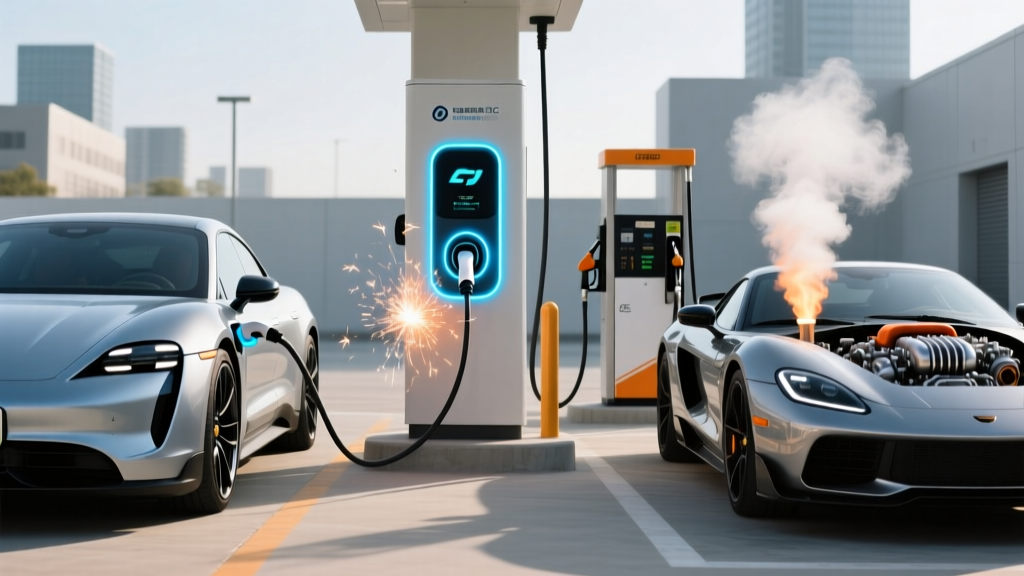
If you've been searching "can you supercharge and turbocharge a car," you're likely mixing up two very different worlds: internal-combustion forced induction and electric-vehicle charging. A supercharger (the engine kind) and a turbocharger are mechanical devices that cram more air into a gasoline or diesel engine to produce more power. They have nothing to do with plugging in an EV.
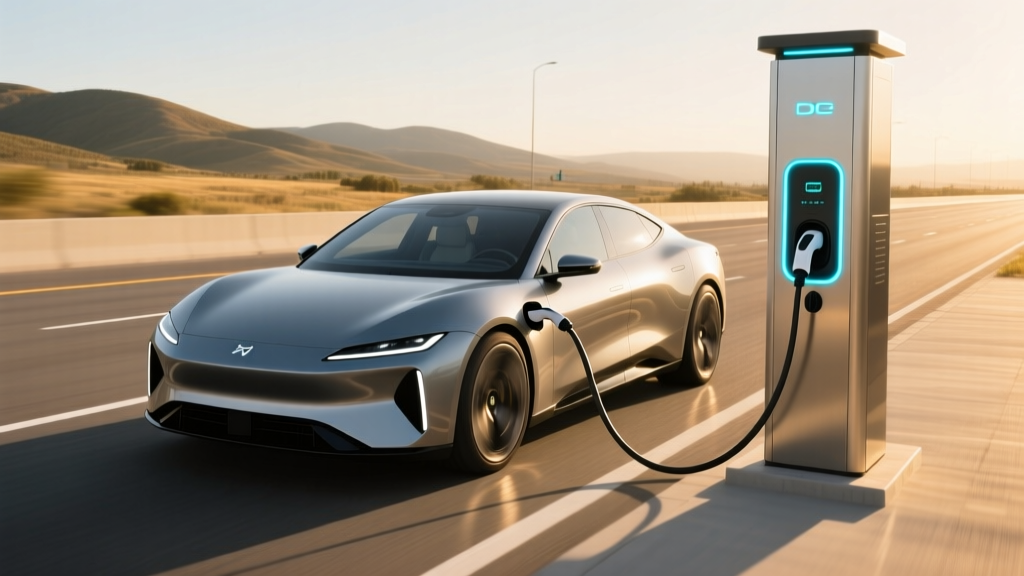
Tesla's "Supercharger" network borrowed the term for marketing, but it's really a DC fast-charging station delivering up to 350 kW of electrical power directly to an EV battery. No belts, no exhaust gases spinning a turbine — just electrons flowing through thick copper cables. This guide untangles the terminology and then gives you everything you actually need to know about charging an electric car at home and on the road in 2026.
Charging Levels Explained: How Fast Will Each Level Add Range?
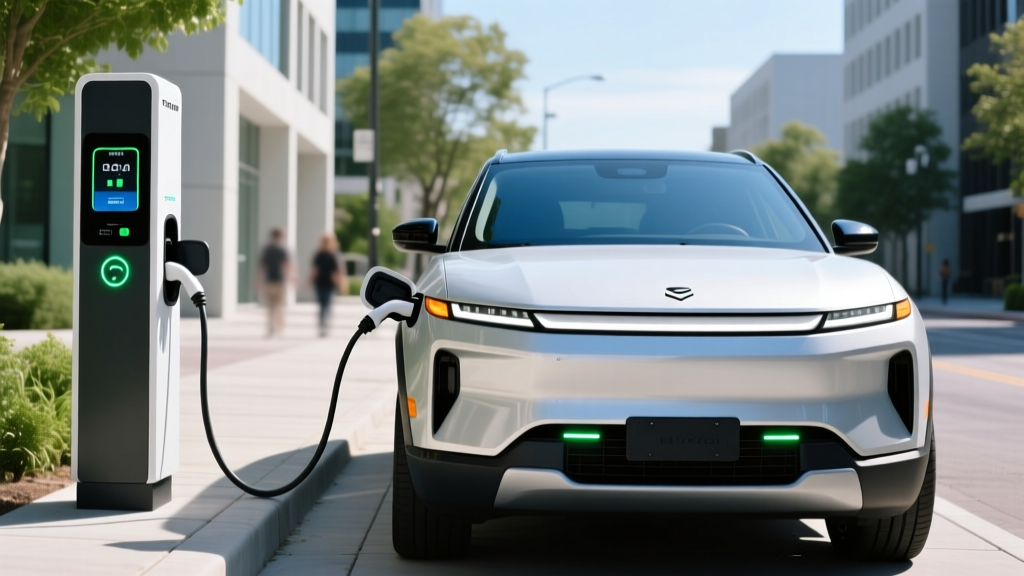
Every EV sold in the US charges at one of three levels. Understanding these is the foundation of practical EV ownership — and far more useful than wondering whether a turbocharger bolts onto a battery pack.
| Level | Voltage | Max Power (kW) | Miles of Range per Hour | Typical Use Case |
|---|---|---|---|---|
| Level 1 | 120V AC | 1.0–1.4 kW | 3–5 mi/hr | Emergency / overnight trickle for PHEVs |
| Level 2 | 240V AC | 7.2–19.2 kW | 20–60 mi/hr | Daily home and workplace charging |
| DC Fast Charge | 400–800V DC | 50–350 kW | 150–1,000+ mi/hr (peak) | Road trips, highway corridors |
Real-world nuance: DC fast chargers don't sustain peak power. A vehicle advertising "250 kW max" might hold that rate only between 10–30% state of charge (SoC), then taper. Expect a 10–80% session on a 250 kW-capable EV (like the Hyundai Ioniq 5 with its 800V architecture) to take roughly 18–22 minutes. A 150 kW-capable vehicle (like the Ford Mustang Mach-E) will need 30–40 minutes for the same 10–80% fill. The EPA's fueleconomy.gov database lists each model's efficiency in kWh/100mi, which directly determines how many miles each kW of charging adds.
Home Charger Installation: Electrical Requirements and Costs
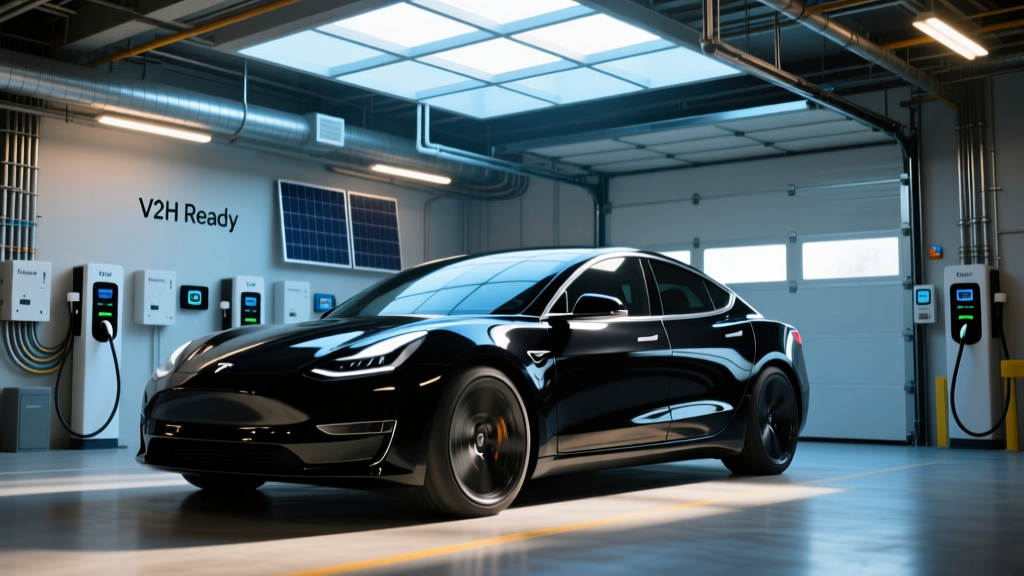
Installing a Level 2 home charger is where most EV buyers have real questions — and real expenses. Here's what's involved.
Electrical Requirements
A typical Level 2 charger requires a dedicated 240-volt circuit, similar to what powers an electric dryer or oven. The most common setup is a NEMA 14-50 outlet on a 50-amp breaker, delivering up to 40 amps (9.6 kW) continuously to the vehicle. Some newer chargers support 48 amps (11.5 kW) on a 60-amp breaker, or even 80 amps (19.2 kW) on a 100-amp circuit for vehicles with large batteries like the Chevrolet Silverado EV or GMC Hummer EV.
What About Panel Upgrades?
This is the cost many guides gloss over. If your home has a 100-amp main electrical panel (common in houses built before the 1990s), adding a 50-amp EV circuit may exceed your panel's capacity — especially if you already run electric heat, an electric dryer, and an electric stove. Upgrading to a 200-amp panel typically costs $1,500–$3,000 before the charger install even begins. A licensed electrician will perform a load calculation per NEC Article 220 to determine whether your panel can handle the additional draw. Some utilities offer rebates for panel upgrades tied to EV adoption.
| Item | Low End | High End | Notes |
|---|---|---|---|
| Level 2 charger (hardware) | $350 | $700 | Smart Wi-Fi chargers; basic units start ~$250 |
| Electrician labor + materials | $500 | $1,500 | Depends on run length from panel to garage |
| Electrical permit | $50 | $200 | Varies by municipality |
| Panel upgrade (if needed) | $1,500 | $3,000 | 100A → 200A service upgrade |
| Total (no panel upgrade) | $900 | $2,400 | Most homes with 200A service |
| Total (with panel upgrade) | $2,400 | $5,400 | Older homes with 100A panels |
The IRS §30D credit does not cover home charger installation for most taxpayers in 2026 — the residential clean energy credit (25C) for EVSE was modified under recent legislation. Check IRS.gov or consult a tax professional for current eligibility. Some states and utilities still offer $250–$1,000 rebates for home charger installation.
Connector Compatibility: NACS, CCS1, and CHAdeMO in 2026
The connector landscape has consolidated dramatically. Here's where things stand for the 2026 model year:
| Connector | Brands Using It (2026) | Max DC Fast Power | Adapter Needed? |
|---|---|---|---|
| NACS (Tesla / SAE J3400) | Tesla, Ford, GM, Rivian, Volvo, Polestar, Hyundai, Kia (2025+) | Up to 350 kW | CCS-to-NACS adapters available for legacy CCS vehicles (~$200) |
| CCS1 (Combined Charging System) | Legacy models: older VW ID.4, BMW i4, some Stellantis EVs | Up to 350 kW | NACS-to-CCS adapter needed at Tesla Superchargers |
| CHAdeMO | Nissan Leaf (discontinued after 2025 model year), Mitsubishi Outlander PHEV | Up to 100 kW | Limited public availability; network declining |
Practical takeaway: If you're buying a new EV in 2026, it almost certainly has a NACS port. The CCS-to-NACS adapter situation has matured — Tesla sells an official adapter, and third-party options from Lectron and A2Z are widely available. For Level 2 home charging, all vehicles use the J1772 connector (or NACS, which now includes J1772 AC pins), and adapters are trivial. CHAdeMO is effectively a legacy standard; plan around it only if you own an older Leaf.
Charging Cost per Mile vs. Gasoline
This is where the EV value proposition becomes concrete — and where the analogy to "supercharging" an engine for more power falls apart, because EV charging is about cost efficiency, not horsepower gains.
| Scenario | Rate | Cost per kWh | Cost per Mile (3 mi/kWh EV) | Equivalent Gas Cost (30 MPG) |
|---|---|---|---|---|
| Home off-peak (utility TOU rate) | $0.09–$0.14/kWh | $0.12 avg | $0.04/mi | $1.20/gal gasoline |
| Home standard rate | $0.15–$0.22/kWh | $0.18 avg | $0.06/mi | $1.80/gal gasoline |
| Public Level 2 (ChargePoint, etc.) | $0.25–$0.49/kWh | $0.35 avg | $0.12/mi | $3.60/gal gasoline |
| DC fast charging (EA, EVgo) | $0.35–$0.65/kWh | $0.48 avg | $0.16/mi | $4.80/gal gasoline |
| Tesla Supercharger (2026 avg) | $0.25–$0.45/kWh | $0.35 avg | $0.12/mi | $3.60/gal gasoline |
At 3 miles per kWh (a reasonable average for midsize EVs like the Tesla Model Y or Hyundai Ioniq 5), home charging on an off-peak rate costs roughly $0.04 per mile. Compare that to a 30 MPG gas car at $3.60/gallon: $0.12 per mile. Over 12,000 miles per year, that's $480 vs. $1,440 — a $960 annual fuel savings with home charging. The savings shrink if you rely heavily on DC fast charging, but even then, EVs remain cheaper per mile than gasoline.
Equipment Picks: Recommended Home Chargers for 2026
Not all Level 2 chargers are equal. Here are three proven options covering different budgets and needs:
ChargePoint Home Flex (2026)
- Power: Up to 12 kW (50 amps) on a 60A circuit
- Connector: J1772 with included NACS adapter
- Cable length: 23 feet
- Smart features: Wi-Fi, app scheduling, Alexa, utility TOU integration
- Price: ~$550
- Best for: Most EV owners; flexible amperage via DIP switches
Tesla Wall Connector
- Power: Up to 11.5 kW (48 amps) on a 60A circuit
- Connector: NACS native; J1772 adapter included
- Cable length: 24 feet
- Smart features: Wi-Fi, OTA updates, power sharing between units, Tesla app
- Price: ~$475
- Best for: Tesla owners and NACS-equipped vehicles; multi-charger garages
Grizzl-E Smart
- Power: Up to 10 kW (40 amps) on a 50A circuit
- Connector: J1772 (NACS adapter sold separately)
- Cable length: 24 feet
- Smart features: OCPP-compatible, works with multiple apps, adjustable amperage
- Price: ~$400
- Best for: Budget-conscious buyers; outdoor installs (NEMA 4 rated)
Safety and Code Considerations
EV charging draws sustained high current for hours — unlike a dryer that cycles on and off. This makes proper installation non-negotiable.
- Dedicated circuit: Your EV charger must be on its own breaker. Sharing a circuit with other appliances is a code violation and a fire risk.
- GFCI protection: NEC 2023 and later require GFCI (ground-fault circuit interrupter) protection for all EV charging outlets. Some chargers have built-in GFCI; confirm with your electrician to avoid nuisance tripping.
- Outdoor rating: If your charger mounts outside, ensure it carries at least a NEMA 4 rating (weatherproof against rain and splashing). NEMA 4X adds corrosion resistance for coastal areas.
- Wire gauge: A 50-amp circuit requires 6 AWG copper wire; a 60-amp circuit needs 4 AWG. Undersized wire causes voltage drop and heat buildup. Your electrician will size this correctly if permitted and inspected.
- Permit and inspection: Skipping the permit saves $50–$200 upfront but can void your homeowner's insurance if a fire traces back to unpermitted work. Most jurisdictions require inspection for new 240V circuits.
For the authoritative reference on electrical safety standards, see NFPA 70 (National Electrical Code), which governs EV charging installations under Article 625.
Charging Time Examples for Common Battery Sizes
Here's how long a 10–80% session takes across popular 2026 EVs at various charging speeds. The 10–80% window is the practical fast-charging range — above 80%, the battery management system dramatically reduces charge rate to protect cell longevity.
| Vehicle | Usable Battery (kWh) | Peak DC Rate (kW) | 10–80% Time (est.) | Level 2 at 11.5 kW |
|---|---|---|---|---|
| Tesla Model Y (2026) | 75 kWh | 250 kW | ~25 min | ~5.5 hrs (0–100%) |
| Hyundai Ioniq 5 (2026) | 81 kWh (NMC) | 240 kW (800V) | ~18 min | ~7 hrs (0–100%) |
| Ford F-150 Lightning (2026) | 131 kWh (extended) | 150 kW | ~45 min | ~11 hrs (0–100%) |
| Chevrolet Equinox EV (2026) | 85 kWh (NMC) | 190 kW | ~30 min | ~7.5 hrs (0–100%) |
| Toyota bZ4X (2026) | 64 kWh | 150 kW | ~30 min | ~5.5 hrs (0–100%) |
Cold-weather caveat: At freezing temperatures, expect 10–80% DC fast-charging times to increase 20–40% unless the vehicle preconditioned its battery during navigation to the charger. Vehicles with heat pumps and active thermal management (Ioniq 5, Tesla Model Y) handle this better than passively cooled packs.
Frequently Asked Questions
Can you put a turbocharger or supercharger on an electric car?
No. Turbochargers and superchargers (the mechanical kind) force more air into an internal combustion engine to burn more fuel and make more power. Electric motors don't use air or fuel in this way — they draw electricity from a battery. To get more power from an EV, engineers use larger motors, higher-voltage battery packs, or dual-motor configurations. The Tesla Model S Plaid produces 1,020 hp with three electric motors and zero turbochargers.
How much does it cost to install a home EV charger?
For a home with an adequate 200-amp electrical panel, expect $900–$2,400 total (charger hardware + electrician labor + permit). If your home needs a panel upgrade from 100A to 200A, add $1,500–$3,000, bringing the total to $2,400–$5,400. The long wire run from your panel to the garage is the biggest labor variable.
How fast will each charging level add range?
Level 1 (120V) adds 3–5 miles per hour — fine for plug-in hybrids with small batteries. Level 2 (240V) adds 20–60 miles per hour depending on amperage and vehicle efficiency. DC fast charging adds 150–1,000+ miles per hour at peak, but sessions are measured in minutes (10–80% in 18–45 minutes) because the charge rate tapers significantly above 80% SoC.
Which connector is compatible with my EV?
For 2026 models, nearly every new EV sold in North America uses the NACS (SAE J3400) connector, including Tesla, Ford, GM, Hyundai, Kia, and Rivian. Older EVs (pre-2025) may have CCS1. The Nissan Leaf used CHAdeMO, but that standard is declining. Check your vehicle's charge port or the manufacturer's spec sheet. For Level 2 home charging, J1772 is universal, and NACS ports accept J1772 via a simple adapter.
How much does EV charging cost per mile compared to gas?
Home charging on a standard rate costs roughly $0.05–$0.07 per mile for a typical midsize EV. Off-peak utility rates drop that to $0.03–$0.04. A comparable 30 MPG gas car at $3.60/gallon costs $0.12 per mile. Even public DC fast charging at $0.48/kWh averages $0.16/mile — still competitive with gasoline, though the savings narrow significantly.
What electrical upgrades might I need for a home charger?
The most common upgrade is a panel replacement from 100-amp to 200-amp service, needed in older homes that lack capacity for a sustained 40–50 amp EV circuit alongside existing appliances. Your electrician will perform a NEC Article 220 load calculation. Other potential upgrades include replacing a Federal Pacific or Zinsco panel (known fire hazards found in 1960s–1980s homes) or adding a sub-panel if the main panel is full. Some homeowners also upgrade from a 3-wire to a 4-wire dryer outlet to free up a 240V circuit.