If you've ever searched "can you supercharge and turbo a car" while researching electric vehicles, you're not alone. The terminology overlap between internal-combustion performance upgrades and EV charging technology creates genuine confusion. Superchargers and turbochargers are mechanical devices that force more air into a gas engine to produce more power. A Tesla Supercharger, meanwhile, is a DC fast-charging station that delivers electricity to a battery. They share a name but occupy entirely different engineering universes.
This guide clears up the confusion once and for all, then delivers what most searchers actually need: a thorough, data-driven walkthrough of how EV charging works in 2026 — from Level 1 trickle charging at home to 350 kW DC fast charging on the highway. We'll cover real charging speeds in kilowatts (kW), installation costs, connector compatibility, and exactly what you'll pay per mile compared to gasoline.
Superchargers, Turbochargers, and EV Chargers: What's the Difference?
A turbocharger uses exhaust gas to spin a turbine, compressing intake air so an internal combustion engine (ICE) can burn more fuel per cycle. A supercharger does the same job but is belt-driven directly from the crankshaft. Both are forced-induction systems that increase horsepower in gasoline or diesel engines. You cannot install either on a battery electric vehicle (BEV) — there is no air intake, no exhaust, and no crankshaft to drive them.
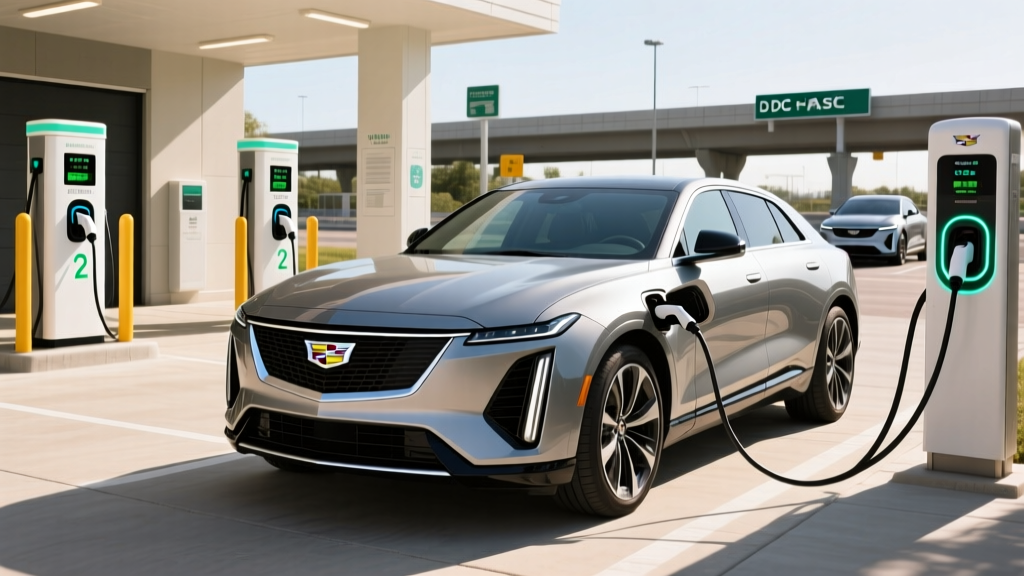
When EV owners talk about "supercharging," they're referring to Tesla's proprietary DC fast-charging network, now officially called the Tesla Supercharger network. As of 2026, Tesla has opened much of this network to non-Tesla EVs equipped with the North American Charging Standard (NACS) connector or using a Magic Dock adapter. The term "supercharge" in the EV world simply means charging at a high-power DC station — typically 150 kW to 350 kW — not adding boost pressure to an engine.
Throughout this guide, we use kW (kilowatts) to describe charging power — how fast energy flows into your battery — and kWh (kilowatt-hours) to describe battery capacity — how much energy the battery stores. Think of kW as the flow rate of a hose and kWh as the size of the bucket. Confusing them is the single most common EV literacy mistake, and it leads to wildly wrong expectations about charging time and cost.
The Three EV Charging Levels: Speeds, Power, and Range Added
Every EV sold in the United States charges via one of three levels. Understanding the real-world output of each — measured in kW and translated to approximate miles of range added per hour — is essential before you invest in home equipment or plan a road trip.
| Level | Voltage | Power (kW) | Miles of Range per Hour | Typical Use Case |
|---|---|---|---|---|
| Level 1 (120V) | 120V AC | 1.0–1.4 kW | 3–5 mi/hr | Overnight top-up, PHEVs, low-mileage drivers |
| Level 2 (240V) | 240V AC | 3.3–19.2 kW | 12–75 mi/hr | Home daily charging, workplace, destination |
| DC Fast Charging | 200–800V DC | 50–350 kW | 150–1,200+ mi/hr (peak) | Road trips, rapid top-up, commercial fleets |
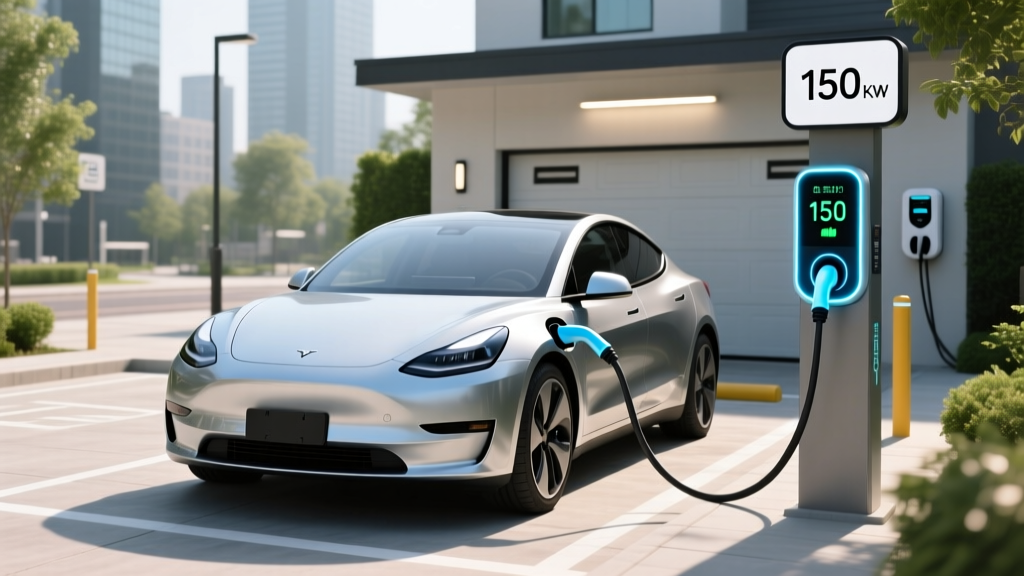
A few real-world caveats apply. Level 2 speeds depend on both the charger's output and the vehicle's onboard charger capacity. A 48-amp Level 2 wallbox can deliver up to 11.5 kW on a 240V circuit, but if your EV's onboard charger maxes out at 7.7 kW (like some base-trim models), you'll only see 7.7 kW regardless of the hardware on your wall.
DC fast charging speeds are never sustained at peak rate for an entire session. A vehicle advertising "250 kW peak" may hold that rate only between roughly 10% and 30% State of Charge (SoC), then taper progressively. A realistic 10–80% session on a 250 kW charger with a modern 82-kWh battery takes approximately 18–25 minutes, not the 10 minutes you'd calculate from peak power alone. This taper is called the charge curve, and it's dictated by battery chemistry and thermal management — not by the charger.
How Much Does It Cost to Install a Home EV Charger?
Home Level 2 charging is where 80% or more of EV charging happens for owners with garage or driveway access. The total cost depends on your electrical panel's capacity, the distance from panel to charger location, and local permitting requirements.
| Component | Typical Range | Notes |
|---|---|---|
| Level 2 Wallbox (hardware) | $350–$750 | Smart Wi-Fi-enabled, 32A–48A, 25-ft cable |
| Electrician labor (standard install) | $500–$1,500 | Short run from panel, same wall or adjacent |
| Electrician labor (long/complex run) | $1,500–$3,000+ | Conduit runs over 30 ft, trenching, attic routing |
| Electrical permit | $50–$250 | Varies by municipality; some jurisdictions waive for EV |
| Panel upgrade (if needed) | $1,500–$4,000 | Upgrading from 100A to 200A service; common in pre-1990 homes |
| Total (standard, no panel upgrade) | $900–$2,500 | Most homes with 200A service and short wire run |
| Total (with panel upgrade) | $2,400–$7,000 | Older homes or those with maxed-out 100A panels |
Panel upgrade reality check: A dedicated Level 2 charger on a 48-amp circuit draws roughly 11.5 kW continuously. The National Electrical Code (NEC) requires the circuit to be rated at 125% of continuous load, meaning you need a 60-amp breaker. If your home has a 100-amp main panel already serving an electric dryer, range, HVAC, and water heater, there may not be enough headroom. A licensed electrician will perform a load calculation to determine whether a panel upgrade is required. Don't skip this step — an overloaded panel is a fire hazard.
Safety and code essentials: Your installation must include a dedicated circuit (not shared with other appliances), a GFCI breaker (required by NEC 2023 and later for EV outlets), and an outdoor-rated (NEMA 4 or NEMA 4X) enclosure if the charger is mounted outside. Hardwired installations are generally preferred over NEMA 14-50 receptacles for 48A+ chargers because they eliminate a potential failure point at the plug.
Which Connector and Charger Is Compatible With My EV?
The connector landscape has consolidated significantly since 2023, when Ford and GM announced their switch to NACS. As of the 2026 model year, NACS (the North American Charging Standard, originally Tesla's proprietary connector) is the dominant light-duty EV connector in North America. CCS1 still appears on some carryover models and older vehicles, while CHAdeMO is effectively legacy — limited to the Nissan Leaf and Mitsubishi Outlander PHEV.
| Connector | Brands Using It (2026) | Adapter Needed for Supercharger Access? |
|---|---|---|
| NACS (native) | Tesla (all), Ford, GM, Rivian, Volvo, Polestar, Hyundai/Kia (2025+), BMW, Mercedes, Nissan (Ariya 2026+) | No — plug directly into Tesla Superchargers and NACS-equipped networks |
| CCS1 | Hyundai/Kia (pre-2025 models), VW ID.4 (pre-2026), Stellantis, some carryover models | Yes — CCS-to-NACS adapter ($100–$200) for Supercharger access; native CCS at Electrify America, EVgo |
| CHAdeMO | Nissan Leaf (legacy only) | No direct adapter to NACS; limited to CHAdeMO-equipped public stations (shrinking network) |
For Level 2 home charging, the picture is simpler: all EVs use the J1772 connector for AC charging, and NACS vehicles come with a J1772-to-NACS adapter in the box (or you can purchase one for ~$50–$100). Any Level 2 wallbox with a J1772 plug will charge any EV sold in the US. If you buy a wallbox with a native NACS plug (increasingly available in 2026), CCS vehicles will need their own adapter.
Charging Time Examples: How Long Does 10–80% Take?
Battery size and charging architecture determine how long a session takes. Here are realistic 10–80% DC fast-charging times for common 2026 EV battery configurations, assuming a compatible charger operating at the vehicle's maximum accepted rate:
- 62 kWh battery (e.g., Nissan Ariya, base Chevy Equinox EV) at 150 kW peak: ~22–28 minutes on a 150 kW charger; ~30–35 minutes on a 50 kW charger.
- 77–82 kWh battery (e.g., Tesla Model Y Long Range, Hyundai Ioniq 5) at 250 kW peak: ~18–22 minutes on a 250–350 kW charger. The Ioniq 5's 800V architecture sustains high power longer, achieving roughly 18 minutes 10–80%.
- 100+ kWh battery (e.g., GMC Sierra EV, Rivian R1S Max Pack) at 350 kW peak: ~25–35 minutes. Larger batteries take longer even at higher peak rates because there's more total energy to add.
For Level 2 home charging, plan on roughly 8–12 hours for a full charge from near-empty on a 48A/11.5 kW wallbox for a 82-kWh battery. Most owners charge from 20–30% to 80% overnight (6–8 hours), which is more than sufficient for daily driving.
How Much Does Charging Cost Per Mile vs Gas?
Charging cost depends heavily on where and when you charge. Home charging on an off-peak utility rate is dramatically cheaper than public DC fast charging, and both are usually cheaper than gasoline on a per-mile basis.
| Scenario | Rate | Vehicle Efficiency | Cost Per Mile |
|---|---|---|---|
| Home Level 2, off-peak utility rate | $0.08–$0.12/kWh | 3.0 mi/kWh (typical sedan) | $0.03–$0.04 |
| Home Level 2, standard residential rate | $0.14–$0.18/kWh | 3.0 mi/kWh | $0.05–$0.06 |
| Public Level 2 (workplace, destination) | $0.20–$0.35/kWh | 3.0 mi/kWh | $0.07–$0.12 |
| DC Fast Charging (Electrify America, EVgo) | $0.35–$0.55/kWh | 3.0 mi/kWh | $0.12–$0.18 |
| Tesla Supercharger (2026 avg) | $0.28–$0.40/kWh | 3.2 mi/kWh (Model Y) | $0.09–$0.13 |
| Gasoline car (30 MPG combined) | $3.30/gal (2026 avg) | 30 MPG | $0.11 |
| Gasoline truck/SUV (20 MPG combined) | $3.30/gal | 20 MPG | $0.17 |
According to fueleconomy.gov, the average 2026 EV achieves 3.0–3.5 miles per kWh. At the national average residential electricity rate of roughly $0.16/kWh, that translates to $0.046–$0.053 per mile — about half the cost of a 30-MPG gas car at $3.30/gallon. Over 15,000 miles per year, home-charging savings can reach $700–$1,200 annually versus gasoline.
However, if you rely exclusively on DC fast charging at $0.45/kWh, your per-mile cost rises to roughly $0.15, which is comparable to or slightly more expensive than a fuel-efficient gas car. This is why home charging access is the single biggest economic factor in EV ownership.
Recommended Home Level 2 Chargers (2026)
The home wallbox market has matured considerably. Here are three well-regarded options spanning different price points, all with confirmed specs as of early 2026:
ChargePoint Home Flex
- Power: Up to 12 kW (50A, configurable down to 16A)
- Connector: J1772 (NACS adapter included with newer units)
- Cable length: 23 ft
- Smart features: Wi-Fi, app scheduling, Alexa, energy tracking
- Price: ~$550–$650
- Best for: Flexible amperage for older panels; UL-listed
Emporia Vue EV Charger
- Power: Up to 11.5 kW (48A)
- Connector: J1772 (NACS version available)
- Cable length: 24 ft
- Smart features: Wi-Fi, real-time energy monitoring, solar integration, load management with Emporia panel monitor
- Price: ~$400–$500
- Best for: Budget-conscious buyers who want detailed energy data
Tesla Wall Connector
- Power: Up to 11.5 kW (48A)
- Connector: NACS native (J1772 adapter available separately)
- Cable length: 24 ft
- Smart features: Wi-Fi, power sharing (link up to 6 units on one circuit), OTA updates
- Price: ~$425–$475
- Best for: Tesla and NACS-native vehicle owners; clean integrated look
All three are hardwired, UL-listed, and rated for indoor or outdoor installation (NEMA 4). The ChargePoint Home Flex stands out for its configurable amperage — you can set it to 32A, 40A, or 48A to match your circuit capacity, which is especially useful if your panel can't support a full 60A breaker. Always verify with your electrician that the chosen amperage matches your dedicated circuit rating.
Frequently Asked Questions
Can you put a supercharger or turbocharger on an electric car?
No. Superchargers and turbochargers are forced-induction devices designed for internal combustion engines. They compress air into the intake manifold to allow more fuel to burn, producing additional horsepower. Electric vehicles have no intake manifold, no combustion chambers, and no exhaust system. An EV's power output is determined by its electric motor(s) and battery discharge rate, measured in kW. If you want more power in an EV, the path is a larger or additional motor, higher-discharge battery cells, or a software unlock — not a supercharger.
What electrical upgrades might I need for a home charger?
The most common upgrade is a panel upgrade from 100A to 200A service, which costs $1,500–$4,000 depending on your utility and local electrician rates. Homes built after roughly 2000 typically have 200A panels and can accommodate a 60A dedicated EV circuit without an upgrade. Your electrician will perform a NEC Article 220 load calculation. If your panel is at capacity, alternatives include a smart panel load-management device (such as the Emporia VUE with automatic load shedding) that dynamically reduces charger draw when other appliances activate, avoiding the need for a full panel swap.
How fast will each charging level add range?
Level 1 (120V) adds roughly 3–5 miles of range per hour — enough for plug-in hybrids with small batteries but impractical for full BEVs unless you drive under 30 miles daily. Level 2 (240V, 48A) adds 25–40 miles per hour for most EVs, meaning an overnight session easily replenishes 200+ miles. DC fast charging at 150–350 kW can add 100–250 miles in a 20-minute session, though the rate tapers significantly above 80% SoC to protect the battery.
Is DC fast charging bad for my EV battery?
Occasional DC fast charging has minimal impact on battery health. However, frequent daily use of DC fast charging — especially at rates above 150 kW — can accelerate degradation slightly over time. Most modern EVs use sophisticated thermal management to mitigate this. According to data tracked by Recurrent Auto, EVs that fast-charge regularly show only marginally higher degradation (roughly 1–3% more over 5 years) compared to those that primarily charge at Level 2. Battery warranties typically guarantee 70% capacity retention at 8 years/100,000 miles, and most packs exceed this by a wide margin.
Do I qualify for a tax credit on home charger installation?
The federal Alternative Fuel Vehicle Refueling Property Credit (IRS Form 8911) covers 30% of home charging equipment and installation costs, up to $1,000. However, eligibility is restricted to equipment installed in a census tract that meets specific low-income or non-urban criteria. Many suburban and urban tracts do not qualify. Check the IRS eligibility tool or consult a tax professional before counting on this credit. Some states and utilities offer additional rebates — check your local utility's EV programs page.
Can I charge any EV at a Tesla Supercharger?
As of 2026, most new EVs sold in North America are built with the NACS connector and can plug directly into Tesla Superchargers without an adapter. Vehicles with CCS1 connectors (primarily pre-2025 models from Hyundai, Kia, and VW) can access Superchargers equipped with Tesla's Magic Dock adapter or use a third-party CCS-to-NACS adapter. CHAdeMO vehicles (Nissan Leaf) cannot access the Supercharger network. Always verify station compatibility in your vehicle's navigation or the Tesla app before relying on Supercharger access during a road trip.