Every EV owner eventually faces the same question: do I supercharge or turbo charge my way through daily driving? The answer isn't about picking one over the other — it's about understanding which charging tier matches your routine, your home's electrical panel, and your budget. This guide breaks down every charging level with exact kW figures, real install costs, and per-mile economics so you can wire up the right setup and stop guessing at public stations.
Charging Levels Explained: Level 1, Level 2, and DC Fast Charging
Before comparing hardware, let's lock in the single most important distinction in EV charging: kW (kilowatts) measures power — how fast energy flows, while kWh (kilowatt-hours) measures energy — how much your battery holds. Think of kW as the width of a hose and kWh as the size of the bucket. A wider hose (higher kW) fills the bucket faster, but the bucket size doesn't change.
Here's how the three charging tiers stack up in 2026, measured in both power delivery and real-world range added per hour of charging:
| Level | Voltage | Typical Power (kW) | Miles of Range Added per Hour | Best Use Case |
|---|---|---|---|---|
| Level 1 | 120V AC | 1.0 – 1.4 kW | 3 – 5 miles | Overnight top-ups, PHEVs, low-mileage drivers |
| Level 2 | 240V AC | 3.3 – 19.2 kW | 12 – 75 miles | Daily home charging, workplace, destination charging |
| DC Fast Charge (DCFC) | 400V–900V DC | 50 – 350+ kW | 150 – 300+ miles (at peak) | Road trips, quick top-ups, commercial fleets |
A few critical caveats: the "miles per hour" figures above assume an average efficiency of 3–4 miles per kWh (typical for a mid-size crossover like the Hyundai Ioniq 5 or Tesla Model Y). Heavier vehicles like the Ford F-150 Lightning or Rivian R1T will see fewer miles per kWh. And DCFC speeds are peak rates — charging curves taper significantly above 80% state of charge to protect the battery, so a 350 kW peak rarely sustains for the full session.
Home Level 2 Installation: Electrical Requirements, Costs, and Panel Upgrades
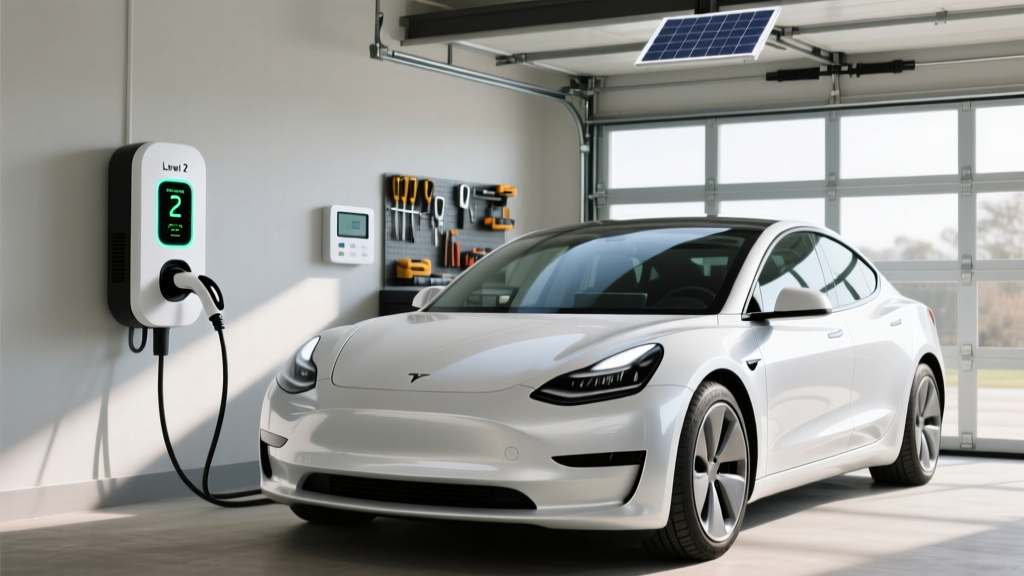
Level 2 is where most EV owners spend 80% or more of their charging time. A properly installed home Level 2 station on a 240V circuit can fully replenish a 75 kWh battery overnight — but getting there requires understanding your home's electrical capacity.
Electrical Requirements
A typical Level 2 home charger draws between 16A and 48A at 240V. The National Electrical Code (NEC) requires that continuous loads (like EV charging) use no more than 80% of a circuit's rated capacity. So a 48A charger needs a 60A dedicated circuit, while a 32A charger needs a 40A circuit.
- Common setup: 40A circuit / 32A charger = 7.7 kW (adds ~25–30 miles of range per hour)
- High-power setup: 60A circuit / 48A charger = 11.5 kW (adds ~37–44 miles of range per hour)
- Maximum residential: 80A circuit / 64A charger = 15.3–19.2 kW (adds ~55–75 miles per hour — requires 200A+ panel)
Panel Upgrade Considerations
Homes built before 2000 often have 100A or 150A main service panels. If your panel is already near capacity (running central AC, electric oven, dryer, and water heater), adding a 60A EV circuit may push you over the safe load calculation. An electrician will perform a load calculation per NEC Article 220 to determine if you need a panel upgrade to 200A. This is the single biggest variable in home charger installation cost.
| Component | Typical Cost Range | Notes |
|---|---|---|
| Level 2 EVSE (charger hardware) | $300 – $750 | Varies by power output, cable length, smart features |
| Electrician labor (standard install) | $500 – $1,500 | Assumes panel has capacity; short conduit run |
| Electrical permit | $50 – $200 | Required in most jurisdictions; varies by locality |
| Panel upgrade (if needed) | $1,500 – $4,000 | 100A→200A upgrade; not always required |
| Conduit/wiring (long runs) | $200 – $800 | Chargers far from panel cost more to wire |
| Total (no panel upgrade) | $850 – $2,450 | Most common scenario for modern homes |
| Total (with panel upgrade) | $2,350 – $6,450 | Older homes with 100A service |
The IRS §30D credit does not currently cover home charger installation directly for most taxpayers — the separate §30C alternative fuel vehicle refueling property credit offers up to $1,000 for home charging equipment, but it's subject to census-tract eligibility requirements. Check irs.gov for current-year rules, as these change frequently.
Connector Compatibility: NACS, CCS1, and CHAdeMO in 2026
The connector landscape has consolidated significantly since Ford, GM, Rivian, and most major automakers adopted Tesla's North American Charging Standard (NACS) starting in 2025. Here's where things stand for 2026 model-year vehicles:
| Connector | Brands Using It (2026 Models) | Public Network Support | Adapter Needed? |
|---|---|---|---|
| NACS (Tesla) | Tesla, Ford, GM, Rivian, Volvo, Polestar, Mercedes, Hyundai/Kia (select 2026 models), Fisker | Tesla Supercharger, Electrify America, EVgo, ChargePoint (growing NACS stalls) | CCS→NACS adapters available ($100–$200) for older CCS vehicles |
| CCS1 | Most legacy EVs (2024 and earlier), VW ID.4 (2025 carryover), BMW i4/iX, some Stellantis models | Electrify America, EVgo, ChargePoint (legacy CCS stalls remain widespread) | NACS→CCS adapters available for NACS-equipped vehicles at CCS-only stations |
| CHAdeMO | Nissan Leaf (discontinued after 2025), Mitsubishi Outlander PHEV (legacy) | Limited — many networks have removed CHAdeMO connectors | No widely available adapter; CHAdeMO is effectively end-of-life |
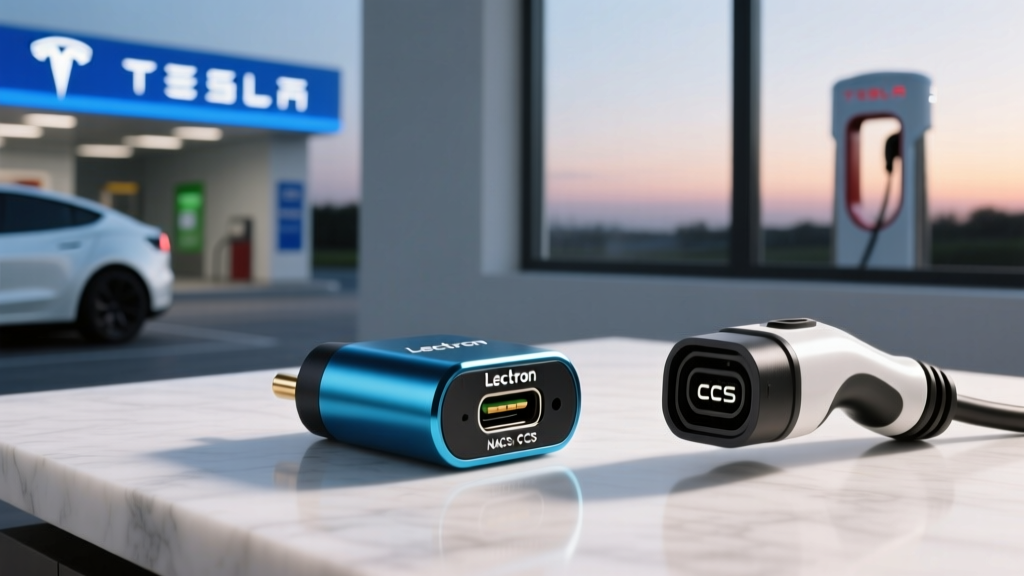
Practical advice: If you're buying a new EV in 2026, prioritize a NACS-equipped model for the broadest public charging access. Tesla's Supercharger network remains the most reliable, and NACS now unlocks it for non-Tesla vehicles. If you own an older CCS vehicle, a CCS→NACS adapter (~$150–$200 from brands like Lectron or A2Z) lets you use Superchargers.
Charging Cost Per Mile: Home vs. Public vs. Gas
The economic case for EV charging hinges on where you charge. Let's compare real per-mile costs using a mid-size EV averaging 3.5 miles per kWh (roughly 28.5 kWh/100mi — similar to a 2026 Hyundai Ioniq 5 or Tesla Model Y):
| Charging Scenario | Rate ($/kWh) | Cost per Mile | Annual Cost (12,000 mi) |
|---|---|---|---|
| Home — off-peak utility rate | $0.08 – $0.14 | $0.023 – $0.040 | $276 – $480 |
| Home — standard residential rate | $0.14 – $0.20 | $0.040 – $0.057 | $480 – $684 |
| Public Level 2 (ChargePoint, etc.) | $0.25 – $0.49 | $0.071 – $0.140 | $852 – $1,680 |
| DC Fast Charge (Electrify America, EVgo) | $0.35 – $0.69 | $0.100 – $0.197 | $1,200 – $2,364 |
| Tesla Supercharger (average 2026) | $0.28 – $0.42 | $0.080 – $0.120 | $960 – $1,440 |
| Gasoline car (28 MPG combined, $3.40/gal) | — | $0.121 | $1,457 |
The takeaway is clear: home charging at off-peak rates delivers per-mile costs 60–80% below gasoline. Even public DC fast charging at premium rates often matches or undercuts gas on a per-mile basis. But if you rely exclusively on expensive public DCFC (like $0.69/kWh peak rates at some airport locations), your costs can exceed a fuel-efficient hybrid. This is why home Level 2 installation pays for itself quickly — typically within 12–24 months of average driving.
Charging Time Examples: What to Expect with Common Battery Sizes
Charge times depend on battery capacity (kWh), charger power (kW), and the vehicle's onboard charge curve. Here are realistic 10–80% charge times for common 2026 EV battery sizes, accounting for taper above 80%:
- 60 kWh battery (e.g., base Chevy Equinox EV): 150 kW DCFC → ~22 minutes (10–80%); 11.5 kW Level 2 → ~4.5 hours
- 75 kWh battery (e.g., Tesla Model Y Long Range): 250 kW DCFC → ~20 minutes (10–80%); 11.5 kW Level 2 → ~5.5 hours
- 84 kWh battery (e.g., Hyundai Ioniq 5 Long Range): 350 kW DCFC → ~18 minutes (10–80%); 11.5 kW Level 2 → ~6 hours
- 100 kWh battery (e.g., Ford F-150 Lightning Extended Range): 150 kW DCFC → ~40 minutes (10–80%); 11.5 kW Level 2 → ~7.5 hours
- 115 kWh battery (e.g., GMC Hummer EV): 350 kW DCFC → ~32 minutes (10–80%); 19.2 kW Level 2 → ~5 hours
Charge curve reality check: No EV sustains peak charge rate for the entire session. A vehicle rated for 350 kW peak might only hold that rate between 10–30% state of charge before tapering to 200 kW, then 150 kW, then 50 kW above 80%. This is why manufacturers quote 10–80% times rather than 0–100% — the last 20% can take as long as the first 70%.
Recommended Home Level 2 Chargers for 2026
Based on reliability, features, and value, here are the Level 2 chargers we recommend for home installation:
ChargePoint Home Flex (Best Overall)
- Power: Up to 12 kW (50A) on a 60A circuit, adjustable down to 16A
- Connector: NACS or J1772 (select at purchase)
- Cable length: 23 feet
- Smart features: Wi-Fi, app scheduling, Alexa integration, energy tracking
- Price: ~$599 (NACS) / ~$549 (J1772)
- UL listed, indoor/outdoor rated (NEMA 4)
Tesla Wall Connector (Best for NACS Vehicles)
- Power: Up to 11.5 kW (48A) on a 60A circuit
- Connector: NACS native
- Cable length: 24 feet
- Smart features: Wi-Fi, over-the-air updates, Power Sharing (link two units on one circuit), load management
- Price: ~$475
- UL listed, indoor/outdoor rated (NEMA 3R)
Emporia Level 2 EV Charger (Best Budget)
- Power: Up to 11.5 kW (48A) on a 60A circuit
- Connector: J1772 (NACS adapter available)
- Cable length: 24 feet
- Smart features: Wi-Fi, app control, solar integration, energy monitoring, TOU scheduling
- Price: ~$399
- UL listed, indoor/outdoor rated
Grizzl-E Smart (Best for Cold Climates)
- Power: Up to 10 kW (40A) on a 50A circuit
- Connector: J1772 or NACS
- Cable length: 24 feet
- Smart features: OCPP-compatible, app scheduling, works with utility demand-response programs
- Price: ~$499
- Built in Canada, rated to -40°F, IP67 outdoor rating
All chargers above are hardwired or NEMA 14-50 plug compatible. Hardwired installations are generally preferred for 48A+ chargers, as NEMA 14-50 outlets are rated for 50A continuous — right at the edge for a 40A charger but insufficient for 48A continuous draw without derating.
Safety, Code, and Installation Best Practices
EV charging is a high-draw, continuous-load application. Cutting corners on safety creates fire risk and insurance liability. Here's what a proper installation requires:
- Dedicated circuit: Your EV charger must have its own dedicated breaker — never share a circuit with a dryer, oven, or HVAC system.
- GFCI protection: NEC 2023 (and carried into 2026 code cycles) requires GFCI protection for all 125V–250V receptacles in garages and outdoor locations where EVSE is installed. Hardwired EVSE units typically have built-in ground-fault protection.
- Outdoor rating: If your charger is mounted outside or in an open carport, it must be rated at minimum NEMA 3R (rain-resistant). For exposed locations, NEMA 4 (watertight) or IP65+ is preferable.
- Permit and inspection: Most jurisdictions require an electrical permit for EV charger installation. The inspection ensures your wiring, breaker sizing, and grounding meet code. Skipping this can void your homeowner's insurance coverage for electrical fires.
- EVSE-listed equipment: Only use chargers that are UL-listed (or ETL-listed to UL standards). Non-listed chargers imported from overseas marketplaces may lack critical safety protections and will fail inspection.
Always hire a licensed electrician — and specifically one experienced with EV installations. Ask if they'll perform a NEC Article 220 load calculation before quoting. An electrician who skips this step may install a charger that trips your main breaker when your AC kicks on simultaneously.
Frequently Asked Questions
How much does it cost to install a home EV charger?
A standard Level 2 home charger installation (40A–60A circuit, short wire run, no panel upgrade) typically costs $850–$2,450 including equipment, electrician labor, and permit. If your home needs a 100A-to-200A panel upgrade, add $1,500–$4,000, bringing the total to $2,350–$6,450. Get at least two quotes and confirm the electrician includes a load calculation.
How fast will each charging level add range?
Level 1 (120V) adds 3–5 miles of range per hour. Level 2 (240V) adds 12–75 miles per hour depending on circuit amperage (16A–80A). DC fast charging adds 150–300+ miles per hour at peak power, but only for a portion of the session — expect a realistic 10–80% session to take 18–40 minutes depending on battery size and charger power.
Which connector and charger is compatible with my EV?
For 2026 model-year vehicles, most new EVs from Tesla, Ford, GM, Rivian, Volvo, and select Hyundai/Kia models use NACS. Older or carryover models from VW, BMW, and some Stellantis brands still use CCS1. CHAdeMO is effectively discontinued. Check your vehicle's charge port or the manufacturer's spec sheet. For home Level 2 charging, match your charger's connector to your vehicle — or buy a quality adapter ($100–$200).
How much does charging cost per mile vs. gas?
Home charging at off-peak utility rates costs roughly $0.02–$0.04 per mile, compared to $0.12 per mile for a 28 MPG gasoline car at $3.40/gallon. That's a 65–80% per-mile savings. Public DC fast charging at $0.35–$0.69/kWh costs $0.10–$0.20 per mile — comparable to or slightly below gas, but significantly more than home charging.
What electrical upgrades might I need?
The most common upgrade is a panel upgrade from 100A to 200A service ($1,500–$4,000), needed when your existing panel lacks capacity for a new 40A–60A circuit. Some homes also need a new subpanel if the charger is far from the main panel (reduces wire cost). In rare cases, your utility may need to upgrade the service drop to your home. A licensed electrician's load calculation will determine exactly what's required — always get this done before purchasing equipment.
Is it worth getting a 48A charger over a 32A charger?
It depends on your battery size and schedule. A 32A charger (7.7 kW) fully recharges a 75 kWh battery in about 8 hours — sufficient for overnight charging if you plug in by 10 PM. A 48A charger (11.5 kW) does it in about 5.5 hours, which matters if you drive 200+ miles daily and need faster turnaround. For most drivers commuting 30–60 miles round trip, 32A is perfectly adequate and cheaper to install (40A circuit vs. 60A circuit).