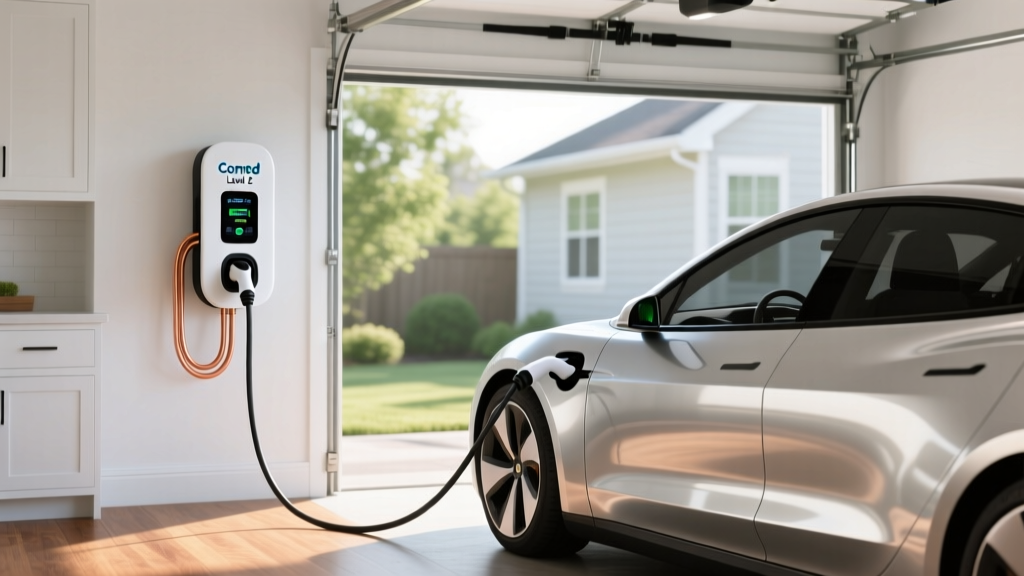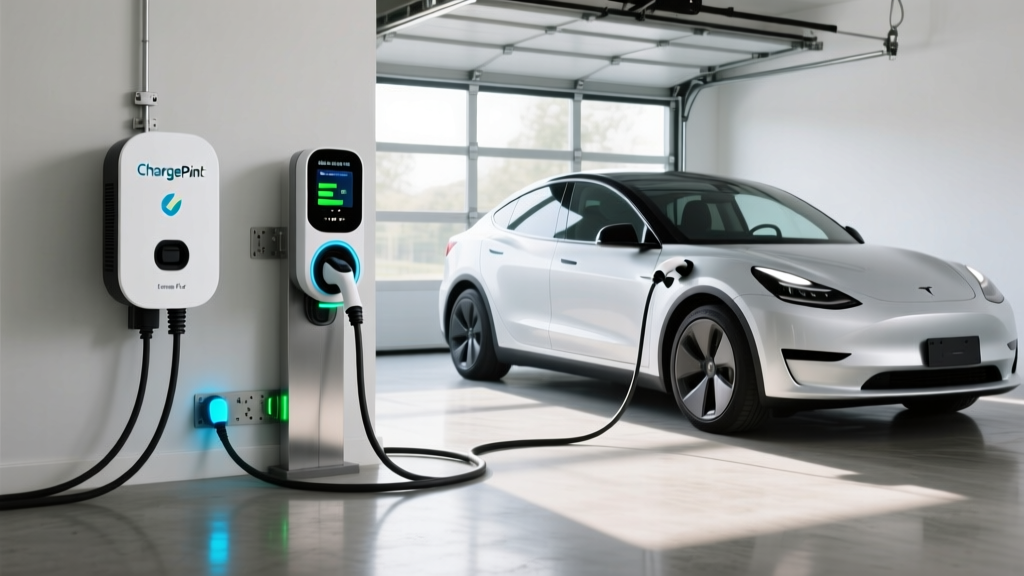
If you've been searching for a reliable Level 2 home charging solution, you've likely encountered the SuperBee EV charger alongside established brands like ChargePoint and Emporia. The SuperBee has gained attention in online EV communities for its competitive pricing and compact design, but how does it stack up against proven alternatives when you factor in real-world installation, charging speed, and long-term reliability?
This guide breaks down everything you need to know about choosing and installing a home Level 2 charger in 2026 — using the SuperBee and ChargePoint Home Flex as reference points — while covering the electrical requirements, costs, and connector compatibility that determine whether your home is ready for daily EV charging.
Understanding EV Charging Levels: Speeds That Matter
Before comparing specific hardware, you need to understand the three charging levels available to EV owners. The distinction between kW (kilowatts — the rate of power delivery) and kWh (kilowatt-hours — the total energy stored in your battery) is critical here. A charger's kW rating tells you how fast it can push energy into your car; your battery's kWh capacity tells you how much it holds.
| Level | Voltage | Max Power (kW) | Miles of Range Added Per Hour | Typical Use Case |
|---|---|---|---|---|
| Level 1 | 120V AC | 1.4 kW | 3–5 mi/hr | Overnight top-up, PHEVs, low-mileage drivers |
| Level 2 | 240V AC | 7.2–19.2 kW | 20–70 mi/hr | Primary home charging, workplace |
| DC Fast Charge | 400–800V DC | 50–350 kW | 150–1,000+ mi/hr (peak) | Road trips, commercial stations |
For most EV owners, a Level 2 home charger is the workhorse. A 48-amp Level 2 unit delivering 11.5 kW on a 240V circuit adds roughly 40–45 miles of range per hour of charging — enough to fully replenish a 75 kWh battery (like the one in a Tesla Model Y Long Range) in about 7–8 hours overnight.
SuperBee EV Charger: Specs and Positioning
The SuperBee charger positions itself as a budget-friendly Level 2 option, typically offering up to 48 amps (11.5 kW on a 240V/60A circuit) with a NACS (North American Charging Standard) connector native to Tesla vehicles and the growing number of 2025–2026 models adopting the Tesla-style plug — including Ford, GM, Rivian, and Volvo EVs.
The SuperBee's 11.5 kW output is a rate — like a hose's flow rate. Your EV's battery capacity (say, 84 kWh usable in a Hyundai Ioniq 5) is the tank size. Charging time = tank size ÷ flow rate, adjusted for losses (~10%). An 84 kWh battery at 11.5 kW takes roughly 8 hours from 0–100%.
However, the SuperBee's market presence remains limited compared to ChargePoint's Home Flex or the Emporia Vue, which have UL certification, established warranty networks, and broader electrician familiarity. Before purchasing any lesser-known charger brand, verify UL or ETL safety certification — this is non-negotiable for insurance and code compliance.
Home Charger Installation: Electrical Requirements and Costs
The charger itself is only part of the equation. Installation costs vary dramatically based on your home's electrical panel, the distance from panel to charging location, and local permitting requirements.
What Your Electrical Panel Needs
A 48-amp Level 2 charger requires a dedicated 60-amp circuit breaker on a 240V line (NEC code mandates that continuous loads use only 80% of a circuit's rated capacity — so 48A continuous draw needs a 60A breaker). Here's what to assess:
- Panel capacity: Most modern homes have 200-amp service panels. Older homes may have 100-amp panels that cannot support a 60A EV circuit alongside existing loads like electric ranges, dryers, and HVAC.
- Available breaker slots: You need two adjacent slots for a 240V double-pole breaker.
- Wire run distance: Longer runs from panel to garage or driveway require thicker-gauge wire (6 AWG copper for runs under 50 feet; 4 AWG for longer runs), increasing material cost.
- Panel upgrade: If your panel is maxed out or is a 100-amp service, a panel upgrade to 200A can add $1,500–$4,000 to your project.
| Component | Low Estimate | High Estimate | Notes |
|---|---|---|---|
| Level 2 Charger Equipment | $300 | $700 | SuperBee ~$350; ChargePoint Home Flex ~$550–$700 |
| Electrician Labor (standard install) | $500 | $1,500 | Depends on wire run length, wall type, conduit needs |
| Electrical Permit | $50 | $300 | Varies by municipality; required in most jurisdictions |
| Panel Upgrade (if needed) | $1,500 | $4,000 | 100A to 200A service upgrade; not always required |
| Additional Materials (conduit, wire, junction box) | $100 | $500 | Longer runs and outdoor installations cost more |
| Total (no panel upgrade) | $950 | $3,000 | Most homes with 200A service and short runs |
| Total (with panel upgrade) | $2,450 | $7,000 | Older homes with 100A service |
Always hire a licensed electrician and pull a permit. Unpermitted electrical work can void your homeowner's insurance and create fire hazards. Many utilities offer rebates of $250–$500 for permitted Level 2 installations — check with your local provider.
Connector Compatibility: NACS, CCS, and CHAdeMO
The connector landscape has shifted dramatically. As of 2026, the NACS (Tesla-style) connector has become the dominant standard for new EVs sold in North America. Here's where major brands stand:
| Connector | Brands Using It (2026) | Adapter Needed for Other Chargers? |
|---|---|---|
| NACS (Tesla plug) | Tesla, Ford, GM, Rivian, Volvo, Polestar, Mercedes, Hyundai/Kia (select models) | CCS-to-NACS adapter (~$200–$300) for older CCS chargers |
| CCS1 | Volkswagen ID.4 (2024 and earlier), BMW iX (2024 and earlier), some legacy models | NACS-to-CCS adapter available from Tesla and third parties |
| CHAdeMO | Nissan Leaf (discontinued after 2025), Mitsubishi Outlander PHEV (legacy) | Limited adapter options; CHAdeMO infrastructure declining |
If you're buying a SuperBee or any Level 2 charger in 2026, prioritize a NACS-native unit unless you own a CCS-equipped vehicle you plan to keep long-term. Most quality chargers now ship with NACS connectors or include a CCS adapter in the box.
Third-party adapters must be rated for the full amperage of your charger. A 48A charger requires a 48A-rated adapter. Underrated adapters can overheat. Stick to OEM or UL-listed adapters from reputable suppliers.
Charging Times: What to Expect with a 48A Level 2 Charger
Real-world charging times depend on your EV's onboard charger capacity (which limits how much AC power the car can accept), battery size, and charging curve behavior. Most 2026 EVs accept the full 11.5 kW from a 48A charger, but some — like certain PHEVs with smaller batteries — max out at 6.6 or 7.2 kW.
| Vehicle (2026) | Battery (kWh usable) | Onboard Charger | 10–80% Time | EPA Range |
|---|---|---|---|---|
| Tesla Model Y Long Range | 75 kWh | 11.5 kW | ~4.5 hours | 330 mi |
| Hyundai Ioniq 5 (Long Range) | 84 kWh | 10.9 kW | ~5.5 hours | 310 mi |
| Ford F-150 Lightning (Extended) | 131 kWh | 19.2 kW* | ~5 hours | 320 mi |
| Chevrolet Equinox EV | 85 kWh | 11.5 kW | ~5.5 hours | 315 mi |
| Toyota RAV4 Prime (PHEV) | 18.1 kWh | 6.6 kW | ~2 hours | 42 mi (EV only) |
*Requires 80A circuit and Ford's optional 19.2 kW onboard charger; standard onboard charger is 11.5 kW.
For context, EPA range figures represent mixed driving. In real-world highway driving at 70+ mph, expect 10–15% less range. In cold weather (below 30°F), range can drop 20–30% depending on whether the vehicle uses a heat pump for cabin heating.
Cost to Charge: Home vs. Public vs. Gas
One of the strongest arguments for home Level 2 charging is cost. Electricity rates vary by region and time of day, but home charging is consistently cheaper than public DC fast charging and gasoline.
| Scenario | Rate | Cost per Mile (at 3 mi/kWh or 25 MPG) |
|---|---|---|
| Home charging (off-peak utility rate) | $0.08–$0.12/kWh | $0.03–$0.04/mi |
| Home charging (standard residential rate) | $0.14–$0.18/kWh | $0.05–$0.06/mi |
| Public Level 2 (workplace, retail) | $0.20–$0.35/kWh | $0.07–$0.12/mi |
| DC Fast Charging (Electrify America, EVgo) | $0.35–$0.55/kWh | $0.12–$0.18/mi |
| Gasoline (national avg. $3.40/gal, 25 MPG) | $3.40/gal | $0.14/mi |
| Gasoline (national avg. $3.40/gal, 30 MPG) | $3.40/gal | $0.11/mi |
At 12,000 miles per year, home off-peak charging costs roughly $360–$480 annually compared to $1,360–$1,680 for gasoline in a 25–30 MPG vehicle. Even frequent DC fast charging at $0.48/kWh averages $1,920/year — still competitive with gas for less efficient vehicles.
According to fueleconomy.gov, the average EV achieves 3–4 miles per kWh, making home electricity the most cost-effective "fuel" by a wide margin when you can charge overnight on time-of-use rates.
Equipment Recommendations: What to Buy in 2026
Whether you're considering the SuperBee or comparing it against established options, here's how the leading home chargers compare on the specs that matter:
ChargePoint Home Flex (NACS)
- Power: Up to 11.5 kW (48A, 240V)
- Connector: NACS native (2025+ models); CCS adapter included
- Cable length: 23 feet
- Smart features: Wi-Fi, app scheduling, Alexa, utility demand-response
- Certification: UL listed, Energy Star
- Price: ~$550–$650
Emporia Level 2 EV Charger
- Power: Up to 11.5 kW (48A, 240V)
- Connector: NACS (2026 model); J1772 with adapter
- Cable length: 24 feet
- Smart features: Wi-Fi, solar integration, load management, app control
- Certification: UL listed
- Price: ~$399–$450
SuperBee EV Charger
- Power: Up to 11.5 kW (48A, 240V)
- Connector: NACS
- Cable length: 20–25 feet (varies by SKU)
- Smart features: App control, scheduling (verify Wi-Fi reliability)
- Certification: Verify UL/ETL listing before purchase
- Price: ~$300–$400
Tesla Wall Connector
- Power: Up to 11.5 kW (48A, 240V)
- Connector: NACS native; J1772 adapter included
- Cable length: 24 feet
- Smart features: Wi-Fi, OTA updates, power sharing (multiple units)
- Certification: UL listed
- Price: ~$450–$500
The SuperBee's price advantage is real — typically $150–$250 less than a ChargePoint Home Flex. However, before choosing based on price alone, confirm UL certification, read warranty terms carefully (minimum 3 years recommended), and check whether your electrician has experience installing the brand. Established chargers like the ChargePoint and Tesla Wall Connector benefit from broader electrician familiarity and more robust customer support infrastructure.
Safety, Code, and Installation Best Practices
EV charging places a sustained high-amperage load on your home's electrical system — unlike an oven or dryer that cycles on and off, an EV charger can draw maximum current for 6–10 hours straight. This makes proper installation critical.
- Dedicated circuit: Your Level 2 charger must have its own dedicated breaker — never share a circuit with other appliances.
- GFCI protection: The 2023 NEC update requires GFCI protection for outdoor receptacles used for EV charging. Hardwired installations (recommended) avoid this requirement and eliminate a common failure point.
- Hardwired vs. plug-in: Hardwired installations (no NEMA 14-50 outlet) are more reliable, allow full 48A operation, and avoid the NEC GFCI nuisance-tripping issues common with 14-50 receptacles. Plug-in units offer portability but are limited to 40A (on a 50A circuit) per NEC 80% rules.
- Outdoor rating: If your charger is installed outdoors or in an unenclosed carport, verify NEMA 4 (weatherproof) rating. Most quality chargers are rated for outdoor use.
- Load management: If your panel is near capacity, consider a smart charger with load-management features (like Emporia or ChargePoint) that dynamically adjusts charging current based on your home's total electrical demand.
Never use a standard extension cord with an EV charger. If you must extend reach, use only an EV-rated cord extension listed for the amperage. Improper cords can overheat and cause fires. If your cable doesn't reach, move the charger or your parking position.
Federal Tax Credit for Home Charging Equipment
The IRS §30C Alternative Fuel Vehicle Refueling Property Credit covers up to 30% of the cost of home EV charging equipment and installation, capped at $1,000. This is separate from the §30D vehicle purchase credit.
Key eligibility requirements for 2026:
- Your home must be located in an eligible census tract (non-urban or low-income community — check the IRS eligibility tool)
- Equipment must be new and placed in service during the tax year
- The credit covers both the charger hardware and installation labor
- Consult a tax professional — eligibility rules involve census-tract mapping that varies by address
Frequently Asked Questions
How much does it cost to install a home EV charger?
A standard Level 2 installation in a home with a 200-amp panel and a short wire run costs $950–$3,000 total (equipment, electrician, and permit). Homes needing a panel upgrade from 100A to 200A service should budget $2,450–$7,000. Always get multiple quotes from licensed electricians and verify they pull a permit.
How fast will each charging level add range?
Level 1 (120V) adds 3–5 miles per hour. Level 2 (240V, 48A) adds 35–45 miles per hour depending on vehicle efficiency. DC fast charging can add 150–300+ miles in 20–30 minutes at peak rates, but charging speed tapers significantly above 80% state of charge to protect the battery.
Which connector is compatible with my EV?
For 2026 models: Tesla, Ford, GM, Rivian, Volvo, Polestar, and select Hyundai/Kia models use NACS. Older Volkswagen, BMW, and some other legacy EVs use CCS1. The Nissan Leaf (now discontinued) used CHAdeMO. Check your vehicle's charge port or owner's manual. Adapters are available for cross-compatibility but must be properly rated.
How much does charging cost per mile vs. gas?
Home charging at off-peak rates costs $0.03–$0.04 per mile — roughly one-quarter the cost of gasoline at $3.40/gallon in a 25 MPG vehicle ($0.14/mile). Even standard residential rates ($0.14–$0.18/kWh) yield $0.05–$0.06 per mile. Public DC fast charging at $0.40–$0.55/kWh costs $0.13–$0.18 per mile, comparable to gas.
What electrical upgrades might I need?
The most common upgrade is a panel replacement from 100A to 200A service ($1,500–$4,000) in older homes. You may also need: a new conduit run if your panel is far from the garage, a sub-panel if your main panel has no available breaker slots, or a smart load-management system if your panel is near its capacity limit. Your electrician will assess this during a site visit.
Is the SuperBee charger safe and reliable?
Before purchasing any EV charger — including the SuperBee — verify that it carries a UL or ETL safety certification mark. This is required by the National Electrical Code and your homeowner's insurance. Check the warranty length (3 years minimum recommended), read independent reviews from verified purchasers, and confirm your electrician is comfortable installing the brand. Budget chargers can be excellent value, but only if they meet the same safety standards as established brands.