The 2025 Subaru Solterra Range Reality Check
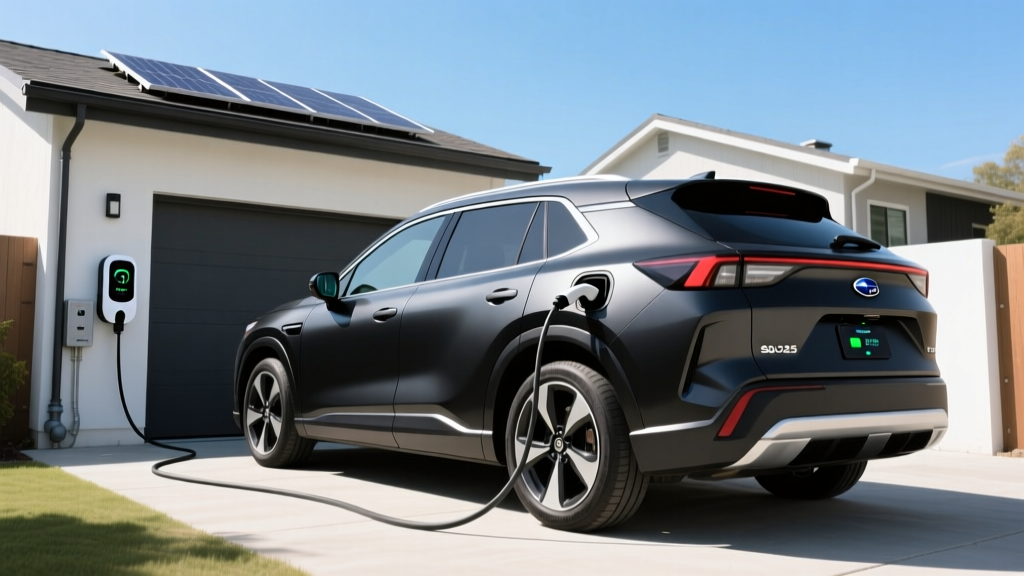
If you're researching the 2025 Subaru Solterra range and charging logistics, you're looking at Subaru's second model year of its co-developed (with Toyota) all-electric SUV. The Solterra carries a 71.4 kWh usable lithium-ion battery (NMC chemistry) and an EPA-estimated range that varies by trim: 227 miles on the Limited and Touring trims (20-inch wheels) and up to 228 miles on the Premium trim (18-inch wheels), per fueleconomy.gov.
| Spec | 2025 Solterra Premium | 2025 Solterra Limited/Touring |
|---|---|---|
| EPA Range | 228 mi | 227 mi |
| Battery (usable) | 71.4 kWh, NMC | |
| Efficiency | 104 MPGe | 102 MPGe |
| Peak DC Fast Charge | ~100 kW (150 kW capable with updated software) | |
| 10–80% DC Charge Time | ~35 minutes (at peak curve) | |
| Level 2 Onboard Charger | 7.2 kW | |
| 0–60 mph | ~6.5 seconds (215 hp, dual motor AWD) | |
| Base MSRP | $44,995 | $48,495 / $51,995 |
| Battery Warranty | 8 years / 100,000 miles | |
For 2025, Subaru improved the DC fast-charging curve over the launch-year 2023 model, which was notoriously slow. Early Solterras peaked around 50 kW; the 2024–2025 models with updated battery management software can now sustain higher rates, though they still trail competitors like the Hyundai Ioniq 5 (which peaks above 230 kW). Expect the Solterra to ramp up to roughly 100–150 kW at low states of charge, then taper significantly above 60% SoC. This means the 10–80% charge takes approximately 35 minutes at a 150+ kW DC fast charger under ideal conditions.
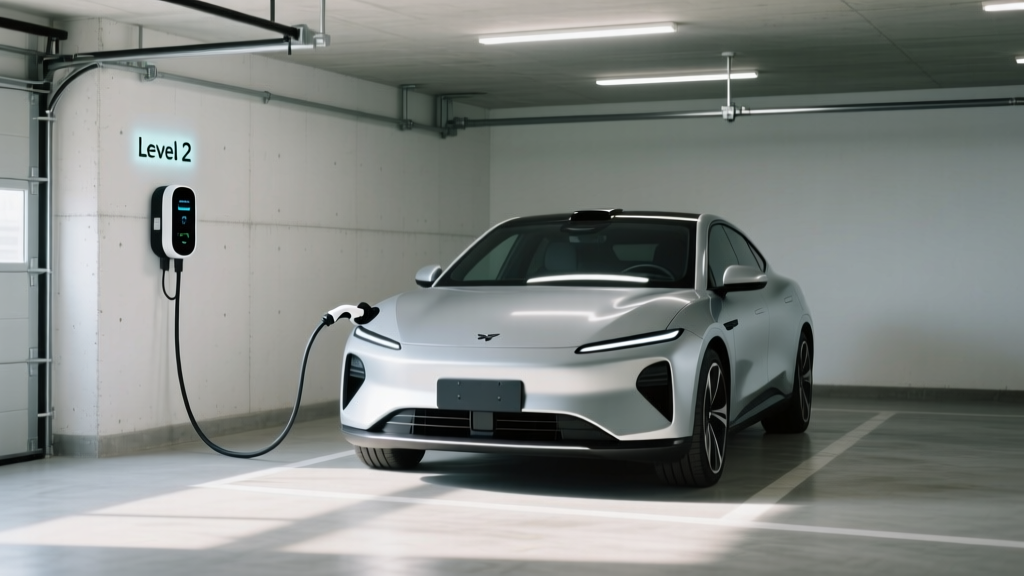
Charging Levels Explained: How Fast Will Each Level Add Range?
The single most important concept for new EV owners is the difference between kW (kilowatts — the rate of power delivery, like water pressure) and kWh (kilowatt-hours — the energy stored in your battery, like gallons in a tank). Your Solterra's battery holds 71.4 kWh. A charger delivering 7.2 kW would theoretically fill that battery in ~10 hours. Here's how the three charging levels break down:
| Level | Voltage | Power (kW) | Miles of Range Added Per Hour | Best For |
|---|---|---|---|---|
| Level 1 | 120V AC | 1.0–1.4 kW | 3–5 mi/hr | Overnight top-up, emergencies, low daily mileage |
| Level 2 (Home/Public) | 240V AC | 3.3–19.2 kW | 12–70 mi/hr | Daily home charging, workplace, shopping centers |
| DC Fast Charging | 400–800V DC | 50–350 kW | 150–300+ mi in 20–30 min | Road trips, highway corridors |
For the Solterra specifically, your onboard AC charger maxes out at 7.2 kW. That means even if you plug into an 11.5 kW Level 2 public charger, the car will only draw 7.2 kW. At that rate, a full 0–100% charge takes roughly 10 hours. A 10–80% home charge (the range most owners use daily) takes about 7 hours on a 7.2 kW Level 2 charger — ideal for overnight charging on a time-of-use electricity plan.
Home Level 2 Charger Installation: Electrical Requirements & Costs
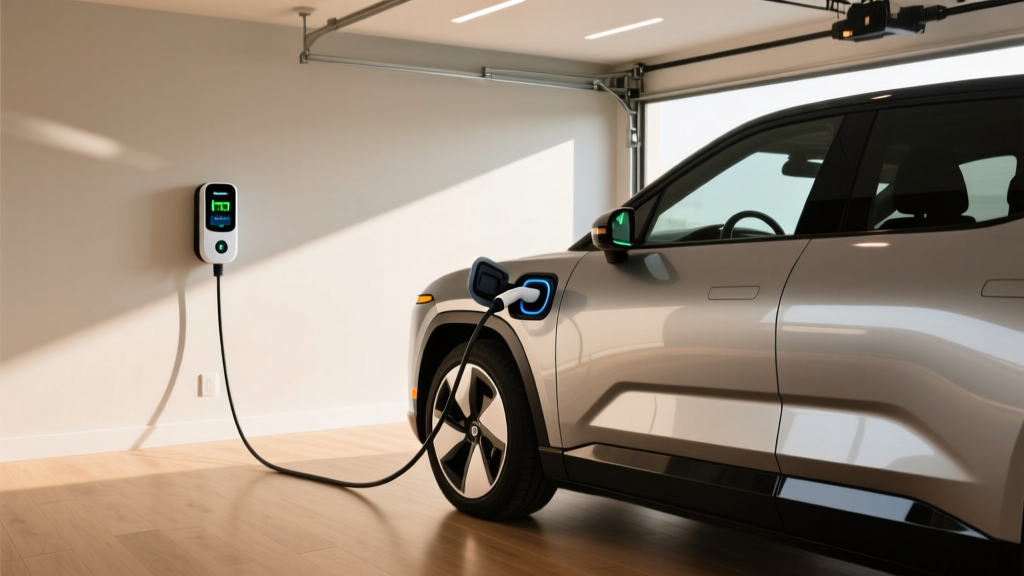
Most Solterra owners will want a dedicated Level 2 home charger. Here's what's involved electrically:
- Circuit requirement: A dedicated 40-amp, 240V circuit (NEMA 14-50 outlet or hardwired) to support a 32-amp continuous-draw charger. If you want headroom for a future higher-power EV, consider a 50-amp circuit with a 40-amp charger.
- Wire gauge: 6 AWG copper (for 40A) or 4 AWG (for 50A), run through conduit where required by code.
- Panel capacity: Your electrical panel must have room for a double-pole breaker AND sufficient total amperage. Most 200-amp panels can handle a 40A EV circuit. Older homes with 100-amp service will likely need a panel upgrade ($1,500–$3,500) or a load-management device like the Emporia Smart Load Manager.
- GFCI protection: NEC 2020 and later require GFCI breakers for EV receptacles in garages. Hardwired chargers may not require GFCI depending on local code interpretation — your electrician will advise.
- Permit: Most jurisdictions require an electrical permit ($50–$200) and a post-install inspection.
| Cost Component | Typical Range | Notes |
|---|---|---|
| Level 2 Charger Equipment | $350–$700 | 32–40A smart chargers (Emporia, ChargePoint, Wallbox) |
| Electrician Labor (standard install) | $500–$1,500 | Short run from panel, no conduit complications |
| Electrician Labor (complex install) | $1,500–$3,000+ | Long wire runs, conduit, panel relocation, trenching |
| Electrical Permit | $50–$200 | Varies by municipality |
| Panel Upgrade (if needed) | $1,500–$3,500 | 100A → 200A service upgrade |
| Total (typical, no panel upgrade) | $900–$2,400 | Most homes with 200A service |
| Total (with panel upgrade) | $2,400–$5,900 | Older homes with 100A service |
Pro tip: The federal Residential Clean Energy Credit does not cover EV chargers as of 2026 — that incentive (the Alternative Fuel Vehicle Refueling Property Credit, §30C) expired for most residential installations after 2025 unless extended. Check irs.gov and your state's energy office for any current local rebates. Some utilities offer $250–$500 rebates for installing smart Level 2 chargers.
Which Connector Is Compatible with the Solterra?
The 2025 Subaru Solterra uses the CCS1 (Combined Charging System) connector for both Level 2 AC and DC fast charging in North America. This is important context because the industry is rapidly transitioning to Tesla's NACS (North American Charging Standard).
| Connector | Used By | Solterra Compatible? |
|---|---|---|
| CCS1 | Solterra, VW ID.4, Ford Mustang Mach-E (2024 and earlier), Hyundai Ioniq 5/6, BMW i4, most non-Tesla EVs | Yes — native port |
| NACS (Tesla) | Tesla (all models), Ford (2025+), GM (2025+), Rivian (2025+), Hyundai (2026+) | Yes — with CCS-to-NACS adapter (sold separately, ~$200–$250) |
| CHAdeMO | Nissan Leaf (legacy) | No — not compatible |
| J1772 | Level 2 AC standard (subset of CCS1) | Yes — native for AC Level 2 |
For home Level 2 charging, your Solterra's CCS1 port accepts any J1772 connector natively — no adapter needed. Every Level 2 home charger on the market ships with a J1772 plug. For DC fast charging at Electrify America, EVgo, and ChargePoint stations, you'll plug in the CCS1 cable directly. If you want access to Tesla Superchargers (which offer the most reliable public DC network), you'll need a CCS-to-NACS adapter — Subaru has not announced a native NACS port for the Solterra as of the 2025 model year, though the upcoming 2026 refresh may adopt it.
Charging Cost Per Mile: Solterra vs. Gasoline
The Solterra's efficiency rating of 102–104 MPGe translates to roughly 33–34 kWh per 100 miles driven. Let's calculate actual cost per mile across common charging scenarios:
| Charging Scenario | $/kWh | Cost Per 100 Miles | Cost Per Mile |
|---|---|---|---|
| Home Off-Peak (utility TOU rate) | $0.09–$0.13 | $2.97–$4.42 | $0.03–$0.04 |
| Home Standard Rate (national avg.) | $0.16 | $5.36 | $0.05 |
| Public Level 2 (ChargePoint, etc.) | $0.25–$0.39 | $8.38–$13.10 | $0.08–$0.13 |
| DC Fast Charge (Electrify America) | $0.43–$0.56 | $14.49–$18.87 | $0.14–$0.19 |
| Comparable Gas SUV (25 MPG, $3.40/gal) | — | $13.60 | $0.14 |
If you charge primarily at home on off-peak rates, the Solterra costs roughly 3–5 cents per mile — about one-quarter to one-third the cost of a comparable gas SUV like the Subaru Outback (which averages 28 MPG combined). Even at public DC fast-charging rates, you're roughly breaking even with gasoline. The savings case for EVs is overwhelmingly driven by home charging. If you cannot charge at home and rely entirely on public DC fast chargers, the financial advantage narrows significantly.
Recommended Home Level 2 Chargers for the Solterra
Since the Solterra's onboard charger caps at 7.2 kW, you don't strictly need a 48-amp charger. A 32-amp unit (delivering 7.7 kW) will max out the car's capability. However, installing a 40-amp or 48-amp charger future-proofs your setup for your next EV.
Emporia Level 2 Smart Charger
- Power Output: 48A / 11.5 kW (hardwired) or 40A / 9.6 kW (plug-in)
- Connector: J1772 (CCS1 AC compatible)
- Cable Length: 24 ft
- Smart Features: Wi-Fi, energy monitoring via Emporia app, solar integration, TOU scheduling, load management
- Price: ~$399 (hardwired) / ~$399 (NEMA 14-50 plug)
- Verdict: Best value smart charger. Energy monitoring is excellent for tracking Solterra charging costs.
ChargePoint Home Flex
- Power Output: Up to 50A / 12 kW (adjustable via DIP switches)
- Connector: J1772
- Cable Length: 23 ft
- Smart Features: Wi-Fi, ChargePoint app scheduling, Alexa integration, flexible amperage
- Price: ~$699
- Verdict: Reliable, flexible amperage lets you match your circuit. Premium price but proven track record.
Wallbox Pulsar Plus
- Power Output: 40A / 9.6 kW or 48A / 11.5 kW
- Connector: J1772
- Cable Length: 25 ft
- Smart Features: Wi-Fi + Bluetooth, Wallbox app, Power Sharing for dual installations, Eco-Smart solar mode
- Price: ~$599–$649
- Verdict: Compact design, strong app, good for tight garages. Power Sharing useful if adding a second EV later.
Safety, Code & Electrical Panel Gotchas
A few safety and code considerations that catch first-time EV charger buyers off guard:
- Dedicated circuit is mandatory. Your Level 2 charger cannot share a circuit with other major appliances (dryer, oven, HVAC). The NEC requires a dedicated breaker sized at 125% of the continuous load — so a 32A charger needs a 40A breaker, and a 48A charger needs a 60A breaker.
- NEMA 14-50 vs. hardwired: A 14-50 outlet gives you portability (take the charger when you move), but NEC 2020+ requires GFCI protection on receptacles used for EV charging, which adds $50–$100 for a GFCI breaker. Hardwired installations may bypass this requirement in some jurisdictions and eliminate one failure point (loose receptacle connections).
- Outdoor rating: If your charger is installed outside or in an unenclosed carport, ensure it carries a NEMA 4 (weatherproof) rating. All three chargers recommended above are rated for outdoor use.
- Panel load calculation: Before your electrician runs wire, they should perform a NEC Article 220 load calculation on your panel. If your existing loads (HVAC, electric range, dryer, water heater) already consume most of your panel's capacity, you may need a panel upgrade or a smart load-management device that throttles the charger when other appliances are running. These devices cost $200–$400 and can avoid a $2,000+ panel upgrade.
- Preconditioning: The Solterra supports battery preconditioning for DC fast charging. Enable this in the vehicle's settings or via navigation routing to a charger — the car will warm the battery to optimal temperature, which can shave 5–10 minutes off your 10–80% charge time in cold weather.
Frequently Asked Questions
How much does it cost to install a home EV charger for the Solterra?
A typical Level 2 home charger installation costs $900–$2,400 including equipment, electrician labor, and permit — assuming your home has a 200-amp electrical panel with available capacity. Homes needing a panel upgrade should budget $2,400–$5,900 total. Get at least two quotes from licensed electricians, and confirm they have EV charger installation experience.
How fast will each charging level add range to my Solterra?
Level 1 (120V standard outlet): approximately 3–5 miles per hour — too slow for daily needs but useful for overnight top-ups if you drive less than 40 miles daily. Level 2 (240V home charger at 7.2 kW): approximately 22–25 miles per hour, adding roughly 175 miles overnight in 7–8 hours. DC Fast Charging (100–150 kW station): approximately 150–180 miles in 30–35 minutes (10–80% SoC).
Which connector and charger is compatible with my 2025 Solterra?
The 2025 Solterra uses a CCS1 port. For home Level 2 charging, any J1772-equipped charger works natively. For DC fast charging, CCS1 stations at Electrify America, EVgo, and ChargePoint are directly compatible. To access Tesla Superchargers, you'll need a CCS-to-NACS adapter (~$200–$250).
How much does charging the Solterra cost per mile vs. a gas car?
Charging at home on off-peak electricity costs roughly $0.03–$0.05 per mile, compared to $0.12–$0.15 per mile for a comparable 25-MPG gas SUV at $3.40/gallon. That's a savings of $0.08–$0.12 per mile, or roughly $1,000–$1,500 per year for a driver covering 12,000 miles annually. Public DC fast charging at $0.43–$0.56/kWh is roughly cost-equivalent to gasoline.
What electrical upgrades might I need before installing a charger?
The most common upgrade is a panel capacity increase from 100A to 200A service ($1,500–$3,500) for older homes. Other potential upgrades include: adding a sub-panel if your main panel is full ($500–$1,200), installing a smart load-management device to avoid a panel upgrade ($200–$400 plus install), or upgrading wiring in homes with outdated aluminum or knob-and-tube circuits near the install path. Your electrician's load calculation will determine what's required.
Does the 2025 Solterra qualify for the federal EV tax credit?
Federal §30D tax credit eligibility for the Solterra depends on battery-component and critical-mineral sourcing requirements, buyer income caps ($300K joint / $225K head of household / $150K individual AGI), and the vehicle's MSRP falling under the $80,000 SUV cap. As of 2026, credit amounts vary based on sourcing compliance — the Solterra has historically qualified for partial or full credit, but you should verify current eligibility on irs.gov and consult a tax professional. The point-of-sale transfer option allows dealers to apply the credit as an immediate price reduction if you qualify.