If you own or are shopping the Subaru Solterra, you already know it brings genuine off-road credibility to the electric SUV segment. But understanding the Subaru Solterra range and how to recharge its 71.4 kWh (usable) lithium-ion battery efficiently is where real ownership satisfaction begins. This guide covers everything from EPA estimates versus real-world expectations to exact home-charger installation costs, public charging speeds, and the equipment we recommend for 2026.
Subaru Solterra Range: EPA vs. Real World
EPA Estimate: Up to 227 miles (Touring/Grand Touring with 20-inch wheels); up to 222 miles (Premium with 18-inch wheels on 2025+ trims with updated efficiency tuning).
Real-World Expectation: Plan for 180–200 miles on sustained highway driving at 70+ mph. In cold weather (below 32°F), expect a 20–30% reduction, dropping usable range to roughly 155–180 miles. The Solterra's standard heat pump helps mitigate this compared to EVs without active thermal management, but the boxy, rugged shape carries a higher drag coefficient that penalizes highway efficiency.
Efficiency: 111 MPGe combined / 30 kWh per 100 miles (fueleconomy.gov).
Understanding Charging Levels: How Fast Can You Add Range?
The most common mistake new EV owners make is confusing kW (kilowatts — the rate of power delivery, like water pressure from a hose) with kWh (kilowatt-hours — the total energy stored in the battery, like the size of the bucket). Your Solterra's battery holds roughly 71.4 kWh of usable energy. How fast you fill that bucket depends on the charging level.
| Level | Voltage | Max Power (kW) | Miles of Range Added Per Hour | Best For |
|---|---|---|---|---|
| Level 1 | 120V AC | 1.2–1.4 kW | 3–5 mi/hr | Emergency top-ups, overnight trickle |
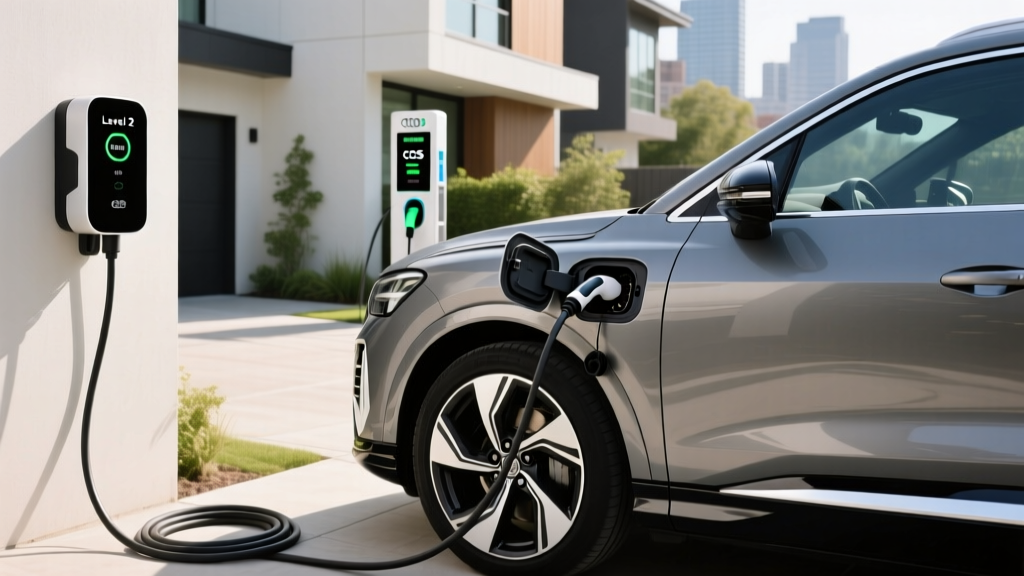
| Level 2 | 240V AC | 7.2–11.5 kW | 25–45 mi/hr | Daily home charging, workplace |
| DC Fast Charge | 400V+ DC | Up to 150 kW (Solterra peak) | ~150+ mi in 20 min (10–80%) | Road trips, highway corridors |
The Solterra accepts up to 150 kW peak DC fast charging on CCS1-equipped models and up to 11.5 kW on Level 2 AC (onboard charger). On a DC fast charger, Subaru rates the 10–80% charge time at approximately 35 minutes under ideal conditions. Real-world curves tell a more nuanced story: the Solterra sustains its peak rate only between roughly 10–40% state of charge, then tapers significantly. Expect 10–80% in 35–45 minutes depending on battery temperature and station output.
Home Charger Installation: Costs, Electrical Requirements & Panel Upgrades
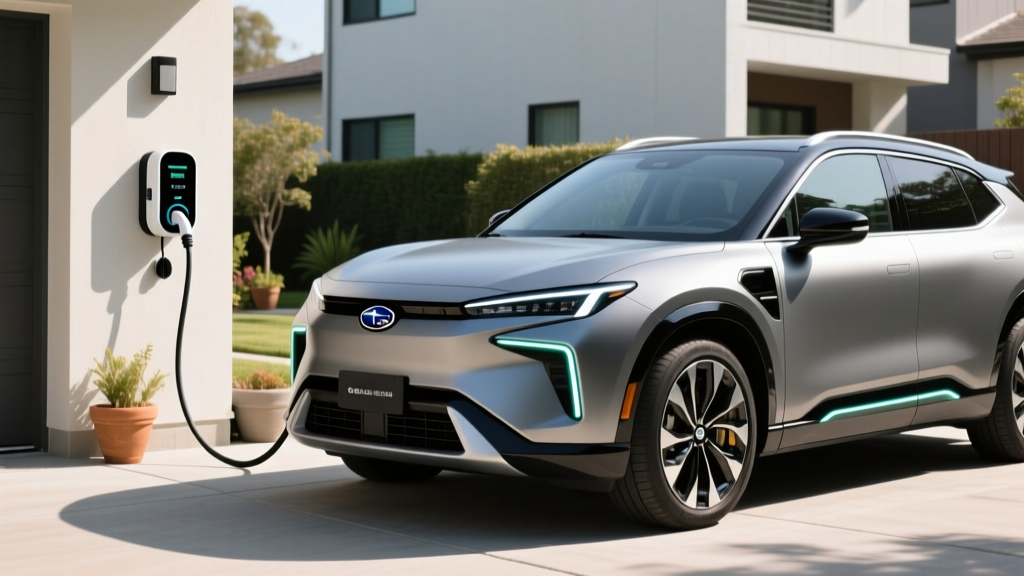
Installing a Level 2 home charger is the single biggest quality-of-life upgrade for any Solterra owner. Wake up every morning with 200+ miles of range, never visit a gas station, and pay a fraction of public-charging prices. But the installation cost varies enormously depending on your home's electrical panel.
Electrical Requirements for a Solterra Home Charger
To take advantage of the Solterra's 11.5 kW onboard charger, you need a 240V / 60-amp dedicated circuit (which supports continuous 48A charging per the 80% NEC rule). A 240V / 50-amp circuit (40A continuous, ~9.6 kW) is the more common residential standard and still charges the Solterra overnight in roughly 7–8 hours from near-empty.
If your home has a 100-amp main panel that is already near capacity, an electrician may recommend a panel upgrade to 200 amps — this is the hidden cost that catches many older-home buyers off guard.
| Component | Typical Cost Range | Notes |
|---|---|---|
| Level 2 EV Charger (hardware) | $350–$750 | Smart Wi-Fi chargers with 25-ft cable |
| Electrician labor (standard install) | $500–$1,500 | Run from panel to garage/carport; varies by distance |
| Electrical permit | $50–$200 | Required by most jurisdictions; inspected |
| Panel upgrade (if needed) | $1,500–$3,500 | 100A → 200A service upgrade for older homes |
| Total (no panel upgrade) | $900–$2,450 | Most homes with modern 200A panels |
| Total (with panel upgrade) | $2,400–$5,950 | Homes with 100A or maxed-out panels |
Before hiring an electrician, check your panel's amperage rating (printed on the main breaker) and calculate available headroom. A licensed electrician will perform a load calculation per NEC Article 220 to determine if your panel can handle a new 40A–60A circuit. The federal Residential Clean Energy Credit (IRS §25D) covers 30% of home EV charger equipment and installation costs up to $1,000 through 2032 — always confirm current-year eligibility with a tax professional.
Connector Compatibility: NACS, CCS1, and Adapter Realities
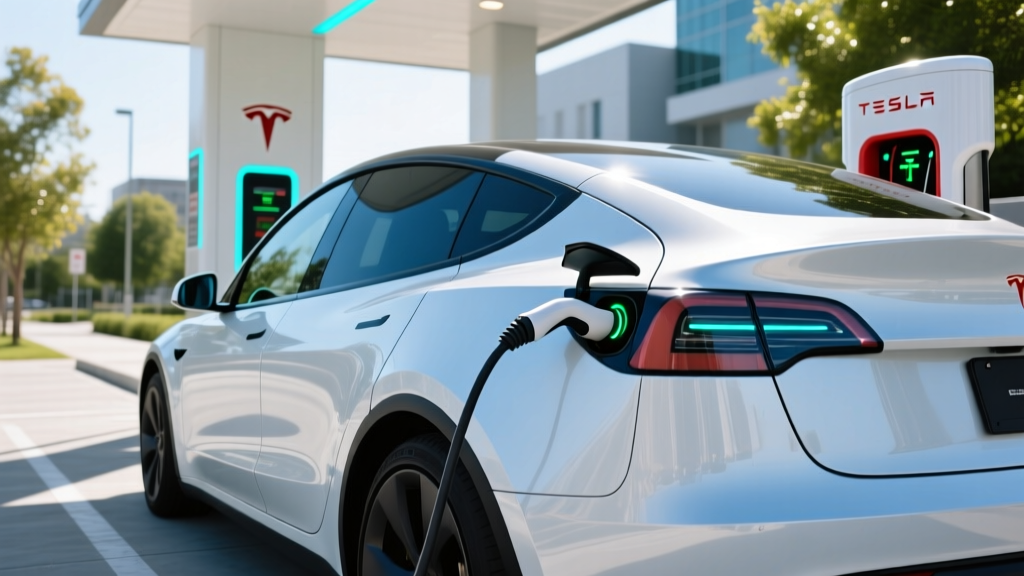
The Subaru Solterra launched in North America with a CCS1 (Combined Charging System) port. However, as of 2025, Subaru began transitioning to the NACS (North American Charging Standard / Tesla) connector on new production. By 2026, most new Solterras ship with NACS, and CCS1 models can access Tesla Superchargers via adapter.
| Connector | Networks Available | Solterra Compatibility |
|---|---|---|
| CCS1 | Electrify America, EVgo, ChargePoint, Ionity (EU) | Standard on 2023–2024 models; adapter needed for Superchargers |
| NACS (Tesla) | Tesla Supercharger network (17,000+ stalls in US), growing third-party | Standard on 2025+ models; CCS1 models use Subaru-approved adapter |
| CHAdeMO | Largely legacy; being phased out in North America | Not compatible — not relevant for Solterra owners |
| J1772 (AC Level 1/2) | Universal home and public AC charging | Native (CCS1 includes J1772 inlet); NACS models may need J1772-to-NACS adapter for older public AC stations |
If you own a 2023 or 2024 Solterra with CCS1, Subaru offers an official NACS adapter (approximately $200–$250) that unlocks the Tesla Supercharger network — a significant range-extension benefit for road trips. Always use manufacturer-approved adapters to maintain warranty coverage and ensure proper communication between vehicle and charger.
Charging Cost Per Mile: Solterra vs. Gasoline SUV
One of the strongest arguments for the Solterra is fuel-cost savings, but the math depends heavily on where and when you charge. Here's a realistic breakdown using the Solterra's efficiency of 30 kWh per 100 miles.
| Charging Scenario | Cost per kWh | Cost per 100 Miles | Cost per Mile |
|---|---|---|---|
| Home (off-peak utility rate) | $0.10–$0.14 | $3.00–$4.20 | $0.03–$0.04 |
| Home (standard residential rate) | $0.15–$0.18 | $4.50–$5.40 | $0.05–$0.05 |
| Public Level 2 (ChargePoint, etc.) | $0.25–$0.40 | $7.50–$12.00 | $0.08–$0.12 |
| DC Fast Charging (Electrify America) | $0.35–$0.55 | $10.50–$16.50 | $0.11–$0.17 |
| Tesla Supercharger (with adapter) | $0.25–$0.35 | $7.50–$10.50 | $0.08–$0.11 |
| Gas SUV baseline (25 MPG, $3.40/gal) | — | $13.60 | $0.14 |
Home charging during off-peak hours delivers the most dramatic savings — roughly 70–75% less per mile than a comparable gasoline SUV like the Subaru Outback. Even public DC fast charging is often competitive with or cheaper than gasoline on a per-mile basis, though you're paying for convenience and speed. For a driver covering 12,000 miles annually, home charging can save $1,000–$1,300 per year versus gasoline.
Recommended Home Chargers for the Subaru Solterra
These Level 2 chargers are selected for compatibility, reliability, smart features, and value. All support the J1772 connector standard (native on CCS1 Solterras; NACS models use the included vehicle adapter).
ChargePoint Home Flex
- Power Output: Up to 11.5 kW (50A) — adjustable down to 16A for lower-capacity circuits
- Connector: J1772 (25-ft cable)
- Smart Features: Wi-Fi, app scheduling, utility demand-response integration, energy tracking
- Price: ~$550–$650
- Why it works: Adjustable amperage means it works with almost any home panel without requiring a full upgrade. UL-listed, NEMA 4 outdoor-rated.
Emporia Level 2 EV Charger
- Power Output: Up to 11.5 kW (48A)
- Connector: J1772 (24-ft cable)
- Smart Features: Wi-Fi, app control, solar integration (pairs with Emporia Vue energy monitor), load management
- Price: ~$350–$450
- Why it works: Best value smart charger. Solar-aware charging is ideal for homes with rooftop panels. Load-management accessory avoids panel upgrades.
Grizzl-E Smart
- Power Output: Up to 10 kW (40A)
- Connector: J1772 (24-ft cable)
- Smart Features: Wi-Fi, OCPP compatibility, adjustable amperage
- Price: ~$450–$550
- Why it works: Built in Canada for extreme cold — IP67 rated, operational down to -40°F. Excellent for unheated garages and outdoor installs in northern climates where the Solterra is most at home.
Safety, Electrical Code & Installation Best Practices
EV charging draws sustained high current for hours — this is fundamentally different from intermittent appliance use. Proper installation isn't optional; it protects your home and your vehicle's warranty.
- Dedicated circuit: Your Level 2 charger must be on its own dedicated breaker — never shared with other outlets or appliances.
- GFCI protection: The 2023 NEC update requires GFCI protection for all EV receptacles. Hardwired installations (recommended) use a GFCI breaker at the panel. If using a NEMA 14-50 receptacle, a GFCI breaker is mandatory and adds $50–$100.
- Outdoor rating: For outdoor installations, choose a charger rated NEMA 4 or IP65 minimum. Ensure the connector holster protects the plug from rain and debris.
- Cable management: A 25-foot cable covers most garage and driveway configurations. Avoid extension cords — they introduce resistance, voltage drop, and fire risk.
- Permit and inspection: Most municipalities require an electrical permit for a new 240V circuit. The inspection ensures code compliance and protects your homeowner's insurance coverage.
Solterra Charging Times: What to Expect at Each Battery Level
Using the Solterra's 71.4 kWh usable battery capacity, here are realistic charge times from common states of charge:
- Level 1 (120V, 1.4 kW): 10% → 80% in approximately 35–40 hours — impractical for daily use; keep as a backup only.
- Level 2 (240V, 9.6 kW / 40A circuit): 10% → 80% in approximately 5.5–6 hours — perfect overnight charge.
- Level 2 (240V, 11.5 kW / 60A circuit): 10% → 80% in approximately 4.5–5 hours — maximizes the Solterra's onboard charger.
- DC Fast Charge (150 kW peak, CCS1 or NACS): 10% → 80% in approximately 35–45 minutes — note that the curve tapers sharply above 80%, so charging to 100% on DC adds another 25–35 minutes and is generally not recommended for battery longevity.
Pro tip: Enable the Solterra's battery preconditioning feature (available in the infotainment system under EV settings) when navigating to a DC fast charger. This warms the battery to optimal temperature and can shave 5–10 minutes off your charge session, especially in cold weather.
Frequently Asked Questions
How much does it cost to install a home EV charger for the Subaru Solterra?
A standard Level 2 installation in a home with an adequate 200-amp electrical panel typically costs $900–$2,450 including the charger, electrician labor, and permit. If your home requires a panel upgrade from 100A to 200A, add $1,500–$3,500, bringing the total to $2,400–$5,950. The federal Residential Clean Energy Credit (§25D) covers 30% of equipment and installation up to $1,000.
How fast will each charging level add range to the Solterra?
Level 1 (120V) adds roughly 3–5 miles per hour. Level 2 (240V) adds 25–45 miles per hour depending on circuit amperage. DC fast charging can add approximately 150 miles of range in about 20 minutes at a 150 kW station, though the charge curve tapers above 60% state of charge.
Which connector is compatible with my Subaru Solterra?
2023–2024 Solterras use CCS1; 2025 and newer models use NACS. All Solterras charge at home via J1772 (CCS1 models natively; NACS models via adapter). CCS1 owners can purchase a Subaru-approved NACS adapter (~$200–$250) to access Tesla Superchargers.
How much does charging the Solterra cost per mile compared to gas?
Home charging at off-peak rates costs roughly $0.03–$0.04 per mile — about 70–75% less than a comparable 25 MPG gasoline SUV at $3.40/gallon ($0.14/mile). Public DC fast charging costs $0.11–$0.17 per mile, which is still competitive with gasoline.
What electrical upgrades might I need for a Solterra home charger?
You need a dedicated 240V circuit rated for 40–60 amps. If your electrical panel is 100 amps or is already near capacity, you may need a panel upgrade to 200 amps ($1,500–$3,500). Some homeowners opt for smart load-management devices that share capacity between the EV charger and other large appliances, potentially avoiding a panel upgrade entirely.
Does cold weather affect the Solterra's range and charging speed?
Yes. Expect 20–30% range reduction in sustained sub-freezing temperatures (roughly 155–180 real-world miles). DC fast charging also slows in cold weather because the battery management system limits charge rate until the pack warms. Always use preconditioning when navigating to a fast charger in cold conditions.