Why Subaru Owners Are Searching for a NACS Adapter
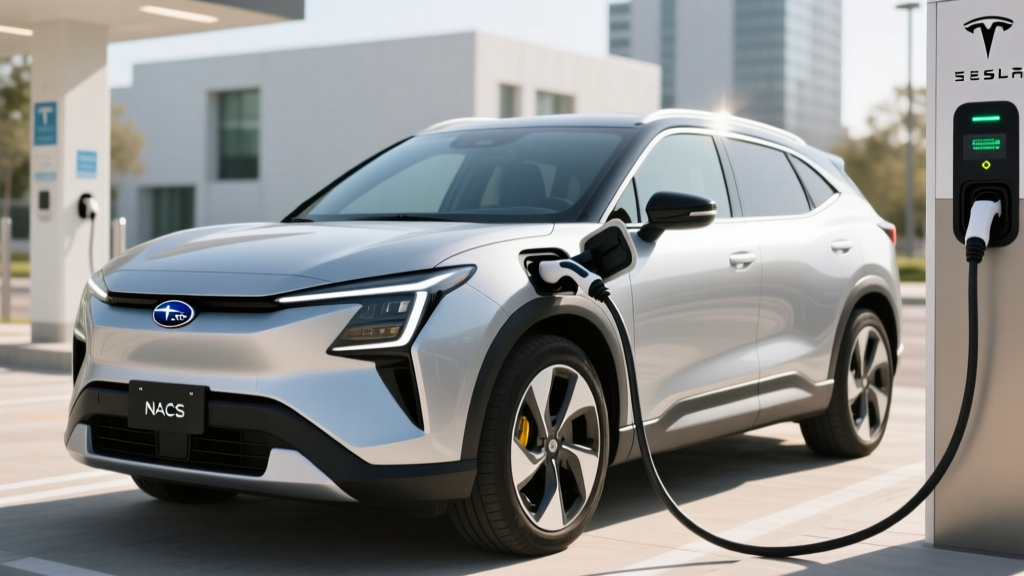
If you own a Subaru Solterra—or are considering one—you've likely noticed that DC fast-charging infrastructure outside the Tesla network can be inconsistent. The good news: Subaru has officially adopted the North American Charging Standard (NACS) for its EVs, and a Subaru NACS adapter is the bridge that unlocks access to over 20,000 Tesla Supercharger stalls nationwide.
For 2025 and later model-year Solterras, Subaru began equipping vehicles with native NACS ports. For 2023–2024 Solterra owners (which shipped with CCS1 connectors), the OEM-subaru NACS adapter enables DC fast charging at Tesla V3 and V4 Superchargers. This guide covers exactly how the adapter works, what charging speeds to expect, and how to set up a complete home charging solution alongside public network access.
- 2023–2024 Solterra: CCS1 port → requires Subaru NACS adapter for Tesla Superchargers
- 2025+ Solterra: Native NACS port → no adapter needed at Tesla stalls
- Adapter supports up to 150 kW DC fast charging (Solterra's peak charge rate)
- Level 2 AC charging at Tesla Destination Chargers also supported via adapter
Understanding Charging Levels: kW, kWh, and What They Mean for Your Solterra
Before discussing adapters and installation, let's nail down the single most important distinction in EV charging: kW (kilowatts) measures power—the rate of energy delivery, while kWh (kilowatt-hours) measures energy—the total capacity of your battery. Think of kW as the width of a hose and kWh as the size of the bucket you're filling.
The Subaru Solterra comes equipped with a 72.8 kWh (gross) lithium-ion battery pack, with approximately 64 kWh usable capacity thanks to a protective buffer. Here's how each charging level interacts with that battery:
| Charging Level | Power (kW) | Miles of Range Added per Hour | Typical Use Case |
|---|---|---|---|
| Level 1 (120V household outlet) | 1.0–1.4 kW | 3–5 mi/hr | Overnight trickle; emergency top-ups |
| Level 2 (240V home/public) | 7.2–11.5 kW | 20–37 mi/hr | Daily home charging; workplace; shopping centers |
| DC Fast Charging (public stations) | Up to 150 kW (Solterra peak) | ~200+ mi/hr (at peak rate) | Road trips; rapid top-ups via Supercharger or Electrify America |
Real-world Solterra charging times: With the 64 kWh usable battery, a 10–80% charge (adding ~45 kWh) takes approximately:
- Level 1 (1.4 kW): ~32 hours (impractical for daily use)
- Level 2 (11.5 kW, Solterra's onboard charger max): ~4 hours
- DC Fast Charge (150 kW peak, tapering to ~40 kW above 80%): ~30 minutes (10–80%)
Note that DC fast charging follows a curve: the Solterra will accept its peak ~150 kW rate only at a low state of charge (roughly 10–30%), then progressively taper. By 80% SoC, the rate drops significantly to protect battery health. This is why manufacturers quote 10–80% times rather than 0–100%.
Connector Compatibility: NACS, CCS1, and Your Subaru
The North American EV charging landscape has consolidated heavily around NACS (the Tesla connector, now standardized as SAE J3400). Here's how Subaru fits into this picture:
| Connector Type | Solterra Model Years | Networks Supported | Adapter Needed? |
|---|---|---|---|
| CCS1 (Combined Charging System) | 2023–2024 | Electrify America, EVgo, ChargePoint (CCS stalls) | No (native port) |
| NACS (SAE J3400 / Tesla) | 2025+ | Tesla Superchargers, Tesla Destination, NACS-equipped public chargers | No (native port on 2025+) |
| Subaru NACS Adapter (CCS1 → NACS) | 2023–2024 Solterra | Tesla Superchargers + all CCS1 networks | Yes — for Tesla access |
For 2023–2024 Solterra owners, the Subaru-branded NACS adapter is available through authorized Subaru dealerships. Third-party adapters (such as those from Lectron or A2Z EV) also exist, but we recommend the OEM adapter for warranty compatibility and guaranteed handshake protocol support with Tesla's Supercharger network. According to Subaru's official charging page, the OEM adapter supports DC fast charging at up to the vehicle's maximum acceptance rate of 150 kW.
CHAdeMO note: The CHAdeMO connector has been effectively discontinued in North America. If you encounter a CHAdeMO-only station, no commercially available adapter will connect it to your Solterra. Plan your routes around CCS1 or NACS infrastructure.
Home Charging Setup: Electrical Requirements, Costs, and Installation
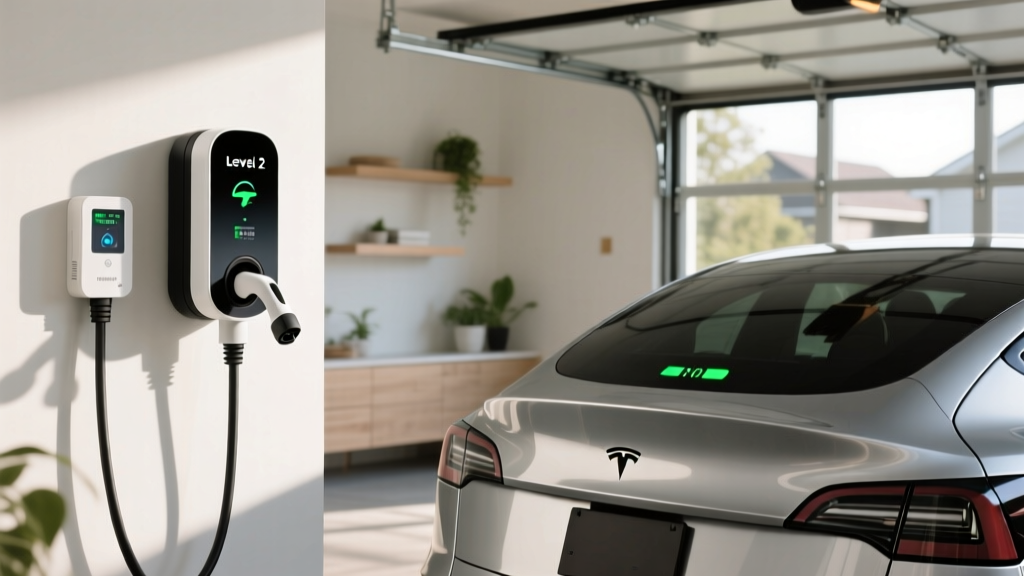
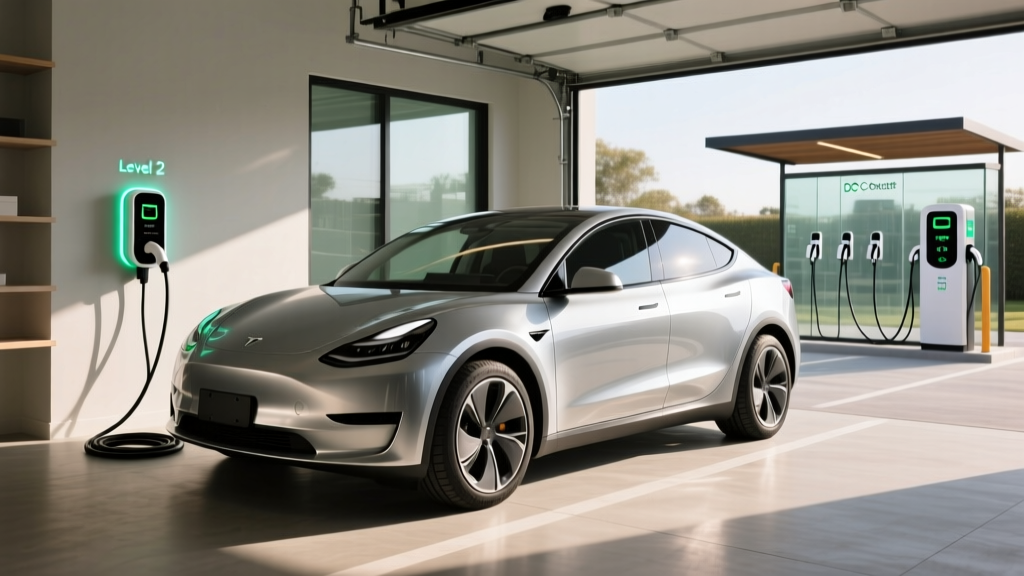
Public DC fast charging via the Subaru NACS adapter is excellent for road trips, but the majority of your charging—roughly 80–90% for most EV owners—will happen at home on a Level 2 charger. Here's what a proper home installation requires.
Electrical Requirements
A Level 2 home charger requires a dedicated 240V circuit, identical in concept to what powers your electric dryer or oven. The specific amperage depends on your chosen charger:
- 32-amp charger (7.7 kW): Requires a 40-amp dedicated circuit (National Electrical Code requires circuits to be rated 125% of continuous load)
- 40-amp charger (9.6 kW): Requires a 50-amp dedicated circuit
- 48-amp charger (11.5 kW): Requires a 60-amp dedicated circuit — this matches the Solterra's 11.5 kW onboard charger maximum, extracting the fastest Level 2 speeds
Installation Cost Breakdown
Home charger installation costs vary widely based on your home's electrical panel capacity, the distance from panel to charger location, and local labor rates. Here's a realistic breakdown:
| Component | Simple Install (panel nearby) | Complex Install (long run / panel upgrade) |
|---|---|---|
| Level 2 charger (hardware) | $350–$700 | $350–$700 |
| Licensed electrician labor | $300–$800 | $1,500–$4,000 |
| Electrical permit | $50–$200 | $50–$200 |
| Panel upgrade (if needed: 100A → 200A) | $0 (not needed) | $1,500–$3,500 |
| Total estimated cost | $700–$1,700 | $3,400–$8,400 |
Panel upgrade reality check: Homes built before 1990 often have 100-amp service panels that may lack spare breaker slots. Adding a 60-amp EV circuit may require a panel upgrade to 200 amps. Always have a licensed electrician perform a load calculation before committing to a charger amperage. Some utility companies offer rebates of $200–$1,000 for panel upgrades tied to EV adoption—check your local provider.
The federal Residential Clean Energy Credit (IRS §25D) covers 30% of the cost of EV charging equipment and installation, up to $1,000 per year. This is separate from the §30D vehicle purchase credit and applies to the charger hardware and electrician labor. Consult a tax professional for eligibility specifics.
Level 2 Charger Recommendations for Your Solterra
Since the Solterra's onboard charger maxes out at 11.5 kW, there's no benefit to installing a charger that delivers more than 48 amps. Here are three proven options across different budgets:
Best Overall: ChargePoint Home Flex
- Power: Up to 12 kW (50A), adjustable down to 16A
- Connector: J1772 (works natively with 2023–2024 Solterra; 2025+ needs NACS-to-J1772 adapter for home L2)
- Cable length: 23 feet
- Smart features: Wi-Fi, app scheduling, utility demand-response, Alexa integration
- NEMA rating: NEMA 4 (indoor/outdoor)
- Price: ~$550 (hardwired) / ~$600 (NEMA 14-50 plug)
Best Value: Emporia Level 2 Charger
- Power: Up to 11.5 kW (48A)
- Connector: J1772
- Cable length: 24 feet
- Smart features: Wi-Fi, app control, solar integration, energy monitoring
- NEMA rating: NEMA 4
- Price: ~$350–$400
Tesla Wall Connector (NACS native)
- Power: Up to 11.5 kW (48A)
- Connector: NACS (ideal for 2025+ Solterra; 2023–2024 CCS1 Solterras need a NACS-to-CCS1 adapter for home L2 use)
- Cable length: 24 feet
- Smart features: Wi-Fi, OTA updates, power sharing (multiple units on one circuit)
- NEMA rating: NEMA 3R (outdoor rated)
- Price: ~$425–$475
Important connector note: Level 2 AC charging uses the J1772 standard for non-Tesla vehicles. The 2023–2024 Solterra has a CCS1 port, which integrates J1772 for AC charging natively—no adapter needed for Level 2. The Subaru NACS adapter is specifically for DC fast charging at Tesla Superchargers and is not required for home Level 2 charging with a standard J1772 charger.
Cost to Charge: Home vs. Public vs. Gas
One of the strongest arguments for EV ownership is fuel cost savings—but the actual savings depend heavily on where and when you charge. Here's a realistic cost comparison for the Solterra, which achieves an EPA-estimated 104 MPGe combined (approximately 3.0–3.3 kWh/mile depending on trim and conditions). Per fueleconomy.gov, real-world efficiency will vary with temperature, terrain, and driving style.
| Charging Scenario | Rate ($/kWh) | Cost per Mile | Annual Cost (12,000 mi) |
|---|---|---|---|
| Home off-peak (utility time-of-use rate) | $0.08–$0.12 | $0.026–$0.038 | $310–$460 |
| Home standard rate (national avg.) | $0.16 | $0.051 | $614 |
| Public Level 2 (ChargePoint, etc.) | $0.25–$0.40 | $0.080–$0.128 | $960–$1,536 |
| DC Fast Charging (Electrify America / Supercharger) | $0.32–$0.50 | $0.102–$0.160 | $1,224–$1,920 |
| Gasoline comparison (25 MPG avg. SUV at $3.50/gal) | — | $0.140 | $1,680 |
The takeaway: home charging on off-peak rates delivers dramatic savings—roughly 75–80% less per mile than gasoline. Even standard-rate home charging cuts fuel costs by about 65%. However, exclusive reliance on DC fast charging can erode those savings to near-parity with gas, which is why a home Level 2 setup is essential for cost-effective Solterra ownership.
Safety, Electrical Code, and Installation Best Practices
A Level 2 EV charger draws a continuous high-amperage load for hours at a time—far longer than a dryer or oven cycle. This makes proper installation critical for safety and longevity.
- Dedicated circuit: Your EV charger must be on its own dedicated breaker — never shared with other appliances
- GFCI protection: NEC 2020 and later requires GFCI protection for all EV charging outlets (outdoor installations especially)
- Outdoor rating: If installing outside, both the charger (NEMA 4 or NEMA 3R minimum) and the receptacle must be rated for wet locations
- Wire gauge: 6 AWG copper for 50A circuits; 4 AWG for 60A circuits — your electrician will size this correctly
- Permit and inspection: Most jurisdictions require an electrical permit and post-installation inspection. Skipping this can void homeowner's insurance coverage for electrical fires
Hardwired vs. plug-in: Chargers rated above 40 amps (like a 48-amp unit) are often hardwired directly to the circuit rather than using a NEMA 14-50 plug. Hardwired installations eliminate the receptacle as a potential failure point and may not require GFCI breakers (which can be expensive at 60A). Discuss both options with your electrician.
Frequently Asked Questions
How much does it cost to install a home EV charger for my Solterra?
A straightforward Level 2 installation with an existing 200-amp panel and short wire run typically costs $700–$1,700 including equipment, electrician labor, and permits. Complex installations requiring long conduit runs, trenching, or a panel upgrade to 200A can push total costs to $3,400–$8,400. The federal §25D tax credit covers 30% of equipment and installation up to $1,000, and many utilities offer additional rebates.
How fast will each charging level add range to my Solterra?
Level 1 (120V) adds roughly 3–5 miles of range per hour—adequate only for overnight trickle charging. Level 2 (240V, 48A) adds approximately 30–37 miles per hour, fully replenishing the Solterra's battery in about 4 hours. DC fast charging at peak rate (150 kW) can add roughly 150 miles in 15 minutes, though the charge rate tapers significantly above 60% state of charge.
Which charger connector is compatible with my Subaru Solterra?
For 2023–2024 models: your Solterra has a CCS1 port, which natively accepts CCS1 DC fast chargers and J1772 Level 2 chargers. To use Tesla Superchargers, you need the Subaru NACS adapter (CCS1-to-NACS). For 2025+ models: your Solterra has a native NACS port and connects directly to Tesla Superchargers and NACS-equipped public chargers. For home Level 2 charging with a J1772 charger, 2025+ models need a NACS-to-J1772 adapter.
How much does charging cost per mile compared to gas?
Charging at home on off-peak utility rates costs approximately $0.03–$0.04 per mile in the Solterra—about 75% less than a comparable gas SUV at $0.14/mile. Standard home rates (~$0.16/kWh) bring this to about $0.05/mile. Exclusive use of DC fast charging ($0.32–$0.50/kWh) raises costs to $0.10–$0.16/mile, approaching gas parity.
What electrical upgrades might I need for a home charger?
If your home has a 100-amp electrical panel (common in pre-1990 construction), you'll likely need a panel upgrade to 200 amps to safely support a 48-amp or 60-amp EV circuit alongside existing loads. Even with a 200-amp panel, your electrician will perform a load calculation to verify available capacity. Homes with older wiring, no grounding, or panels at the far end of the property from the desired charger location may face additional upgrade costs for conduit runs or service entrance upgrades.
Can I use the Subaru NACS adapter at Tesla Destination Chargers?
Yes. Tesla Destination Chargers provide Level 2 AC power through a NACS connector. With the Subaru NACS adapter, 2023–2024 Solterra owners can charge at these locations. However, Destination Chargers typically deliver 7–11 kW, so plan for longer dwell times (2–4 hours for a meaningful charge) compared to DC Supercharger stops.
Does using the NACS adapter affect charging speed at Superchargers?
The adapter itself introduces negligible resistance. Your Solterra's peak DC charge rate of ~150 kW is the limiting factor, not the adapter. Tesla V3 Superchargers deliver up to 250 kW, but the Solterra will only draw what its battery management system allows. Expect a 10–80% charge in approximately 30 minutes at a V3 or V4 Supercharger—consistent with CCS1 charging at Electrify America stations.
Sources: fueleconomy.gov (EPA efficiency data), Subaru.com (Solterra charging specifications), IRS.gov (§25D Residential Clean Energy Credit). Pricing, incentive rules, and station availability are current as of 2026 and subject to change. Consult a licensed electrician for final installation specifications and a tax professional for credit eligibility.