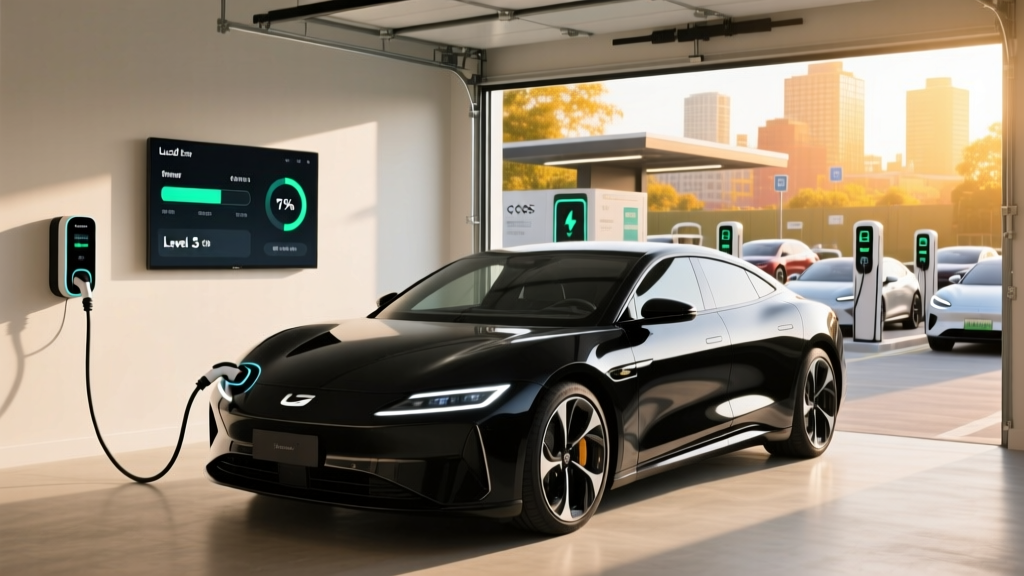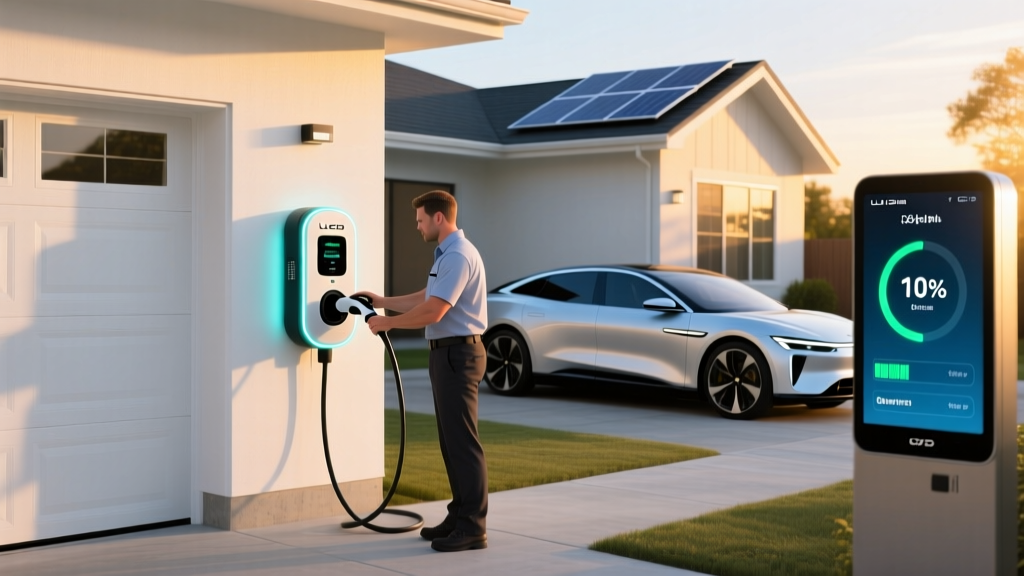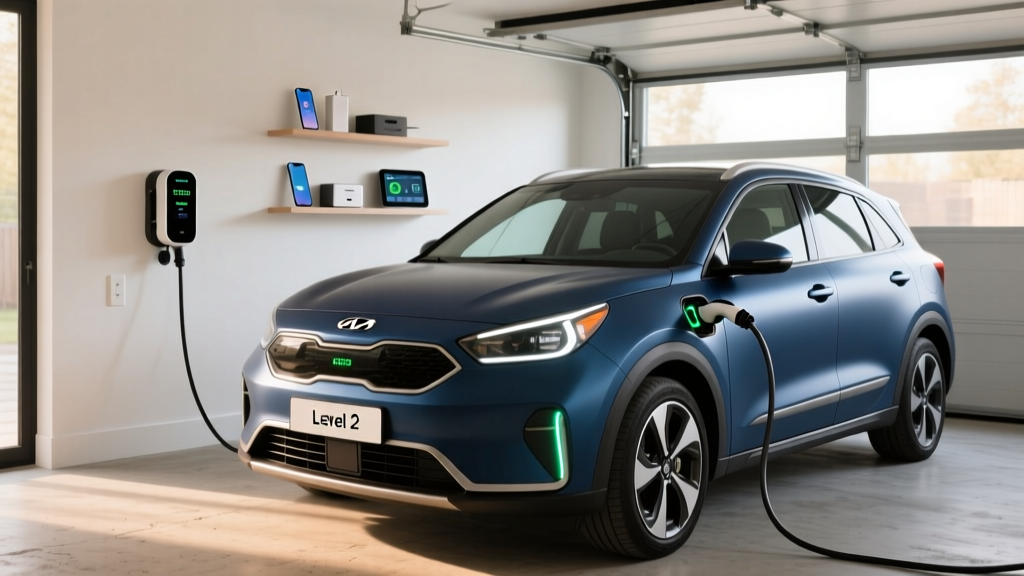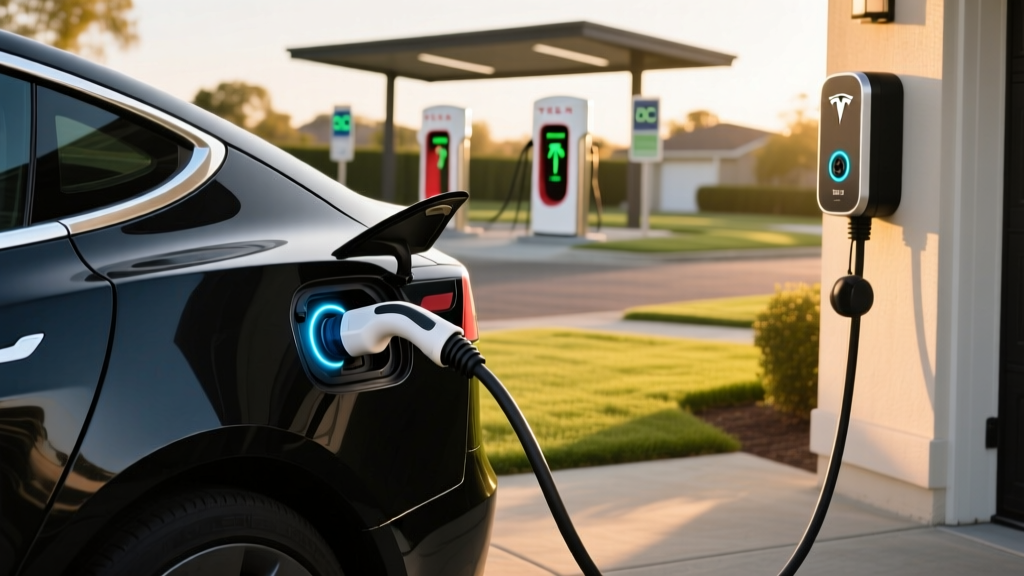
The Tesla Model 3 Standard Range Plus (often shortened to SR+) remains one of the most popular entry-level electric vehicles on the road. Whether you own a 2018–2023 model year or are picking one up on the used market, understanding exactly how to charge it — and what it costs — is essential to maximizing your ownership experience. This guide covers every charging scenario for the Standard Range Plus Model 3, from overnight Level 2 home charging to DC fast charging on road trips, with exact numbers for speed, cost, and equipment.
Understanding Your Model 3 SR+ Battery and Charging Basics
Before plugging in, it helps to know what you're working with. The Model 3 Standard Range Plus carries a usable battery capacity of approximately 50 kWh (gross capacity varies by model year, with some earlier versions at ~54 kWh). Tesla used a mix of NMC (nickel manganese cobalt) and, in later years, LFP (lithium iron phosphate) chemistry depending on production batch. The EPA rated most SR+ variants between 250 and 272 miles of range depending on the model year and wheel configuration.
Real-World Range Reality: The EPA sticker of 250–272 miles assumes a mix of city and highway driving at moderate temperatures. Expect roughly 210–235 miles on sustained highway driving at 70+ mph, and as low as 175–200 miles in sub-freezing winter conditions. Battery preconditioning (navigating to a Supercharger in the Tesla nav) helps recover some of this in cold weather.
One critical distinction every EV owner must internalize: kW (kilowatts) measures power — how fast energy flows into your car. kWh (kilowatt-hours) measures energy — how much your battery holds. Think of kW as the flow rate of a hose and kWh as the size of the bucket. A 50 kWh battery charged at 10 kW takes roughly 5 hours from empty to full (minus efficiency losses and charge-curve taper).
Charging Levels Explained: Speeds and Range Added Per Hour
There are three tiers of EV charging. Each delivers dramatically different speeds. Here's how they apply to the Standard Range Plus Model 3:
| Level | Voltage / Amperage | Power (kW) | Miles of Range Added Per Hour | Best Use Case |
|---|---|---|---|---|
| Level 1 | 120V / 12A | ~1.4 kW | ~4–5 miles/hr | Emergency / trickle top-up |
| Level 2 | 240V / 32–48A | 7.7–11.5 kW | ~25–44 miles/hr | Daily home / workplace charging |
| DC Fast Charging | 400V+ DC | Up to 170 kW (peak) | ~600+ miles/hr (peak rate) | Road trips, rapid top-ups |
Level 1 uses a standard household outlet. It's painfully slow for a 50 kWh battery — a full charge could take 35–40 hours. This is only practical as a backup or for drivers covering fewer than 30 miles per day.
Level 2 is the standard for home and workplace charging. The Model 3's onboard charger accepts up to 11.5 kW (48A) on later model years, and 7.7 kW (32A) on some earlier SR+ variants. At 11.5 kW, you'll add roughly 44 miles of range per hour — enough to fully recharge overnight in about 5 hours.
DC Fast Charging bypasses the onboard charger and feeds DC power directly into the battery. The SR+ peaks at approximately 170 kW on V3 Superchargers, though this peak only holds at low states of charge. A 10–80% charge typically takes 25–35 minutes depending on battery temperature and starting SoC. Above 80%, charging speed tapers significantly to protect battery health — expect 80–100% to take another 20+ minutes.
Home Charger Installation: Electrical Requirements, Costs, and Panel Upgrades
Installing a Level 2 home charger is the single most impactful upgrade for daily EV ownership. Here's what's involved for a Standard Range Plus Model 3 owner:
Electrical Requirements
A Level 2 charger for the Model 3 requires a 240-volt dedicated circuit. For maximum charging speed (11.5 kW / 48A), you need a 60-amp breaker (EV chargers are considered continuous loads, so the circuit must be rated 125% above the charger's max amperage — 48A × 1.25 = 60A). A 40A circuit (supporting 32A / 7.7 kW charging) requires a 50-amp breaker and is a viable lower-cost option.
Panel Capacity and Upgrade Considerations
Most modern homes have a 200-amp electrical panel, which typically has enough headroom for a 60A EV circuit. However, older homes with 100A or 150A panels may need a panel upgrade — a significant additional cost. Signs you may need an upgrade: your panel is near capacity already (multiple large appliances, central AC, electric heat), or your home was built before the 1990s.
| Component | Cost Range | Notes |
|---|---|---|
| Level 2 Charger (hardware) | $300–$700 | Varies by brand, power output, cable length |
| Electrician labor (standard install) | $500–$1,500 | Short run from panel to garage; longer runs cost more |
| Electrical permit | $50–$200 | Required by most jurisdictions; varies by municipality |
| Panel upgrade (if needed) | $1,500–$3,500 | 200A upgrade from 100A; not always necessary |
| Total (no panel upgrade) | $850–$2,400 | Most common scenario for newer homes |
| Total (with panel upgrade) | $2,350–$5,900 | Older homes with insufficient panel capacity |
Always get at least two quotes from licensed electricians and confirm they pull permits. Unpermitted work can void insurance coverage and cause issues at resale. The IRS does not currently offer a federal tax credit specifically for residential charger hardware in 2026, though some state and utility programs provide rebates — check your local utility's EV programs page and your state energy office for current offers.
Safety and Code Requirements
A proper installation must include:
- Dedicated circuit: The charger should not share a circuit with other major appliances.
- GFCI protection: Required for outdoor installations per NEC (National Electrical Code); many electricians include it for indoor garage installs as well.
- Outdoor-rated equipment (NEMA 4 or 4X): If your charger is installed outdoors (driveway, carport), the unit must be rated for weather exposure.
- Proper wire gauge: 6 AWG copper for a 60A circuit, 8 AWG for a 50A circuit — your electrician will spec this, but it's worth verifying.
Connector Compatibility: NACS, CCS, and Adapters
The Model 3 Standard Range Plus was built with Tesla's proprietary connector (now officially called NACS — North American Charging Standard). This is a significant advantage in 2026 because Tesla's Supercharger network — the largest and most reliable DC fast-charging network in North America — uses NACS natively.
| Connector Type | Used By | Model 3 SR+ Compatibility |
|---|---|---|
| NACS (Tesla) | Tesla vehicles; Ford, GM, Rivian, Hyundai, and most others (2025+ models) | Native — no adapter needed |
| CCS1 | Legacy non-Tesla EVs (VW, BMW, older Hyundai/Kia) | Adapter needed for CCS chargers; Tesla sells a CCS adapter (~$250) |
| CHAdeMO | Nissan Leaf, older Mitsubishi | No practical adapter available; avoid CHAdeMO stations |
| J1772 | All EVs (Level 1 & 2 AC charging standard) | Tesla Mobile Connector includes J1772 adapter in-box |
For home Level 2 charging, most third-party chargers ship with a J1772 connector. Tesla includes a J1772 adapter with every Model 3, so you can plug into any public Level 2 station. If you install a Tesla Wall Connector at home, it uses the native NACS plug — no adapter needed.
For public DC fast charging, your SR+ can use any Tesla Supercharger directly. For non-Tesla DC fast chargers (Electrify America, EVgo, Ionity), you'll need the Tesla CCS adapter to access CCS1 stalls. As of 2026, Tesla has also begun opening select Superchargers to non-Tesla vehicles, but your Model 3 accesses all of them natively.
Cost to Charge: Home vs. Public vs. Gas Comparison
One of the strongest ownership arguments for the Standard Range Plus Model 3 is fuel cost savings. Here's a realistic breakdown based on a 50 kWh usable battery:
| Charging Scenario | Typical $/kWh | Cost for Full Charge (50 kWh) | Cost Per Mile (at 4 mi/kWh) |
|---|---|---|---|
| Home (off-peak utility rate) | $0.08–$0.14 | $4.00–$7.00 | $0.02–$0.035 |
| Home (standard flat rate) | $0.13–$0.18 | $6.50–$9.00 | $0.033–$0.045 |
| Public Level 2 (ChargePoint, etc.) | $0.20–$0.35 | $10.00–$17.50 | $0.05–$0.088 |
| DC Fast (Tesla Supercharger) | $0.25–$0.40 | $12.50–$20.00 | $0.063–$0.10 |
| DC Fast (Electrify America / EVgo) | $0.35–$0.55 | $17.50–$27.50 | $0.088–$0.138 |
| Gasoline equivalent (30 MPG, $3.50/gal) | — | $29.17 (for 250 mi) | $0.117 |
At the Model 3 SR+'s real-world efficiency of approximately 4 miles per kWh (EPA-rated around 26–28 kWh/100mi), home charging on an off-peak rate delivers fuel costs of roughly 2–3.5 cents per mile. That's a fraction of the 11–12 cents per mile a comparable gas sedan costs at $3.50/gallon and 30 MPG combined.
Even at public DC fast chargers, the Model 3 is typically cheaper per mile than gasoline. The key optimization: charge at home as much as possible. If your utility offers time-of-use (TOU) rates, schedule charging for overnight off-peak hours (typically 10 PM – 6 AM) to lock in the lowest rates. The Tesla app lets you set scheduled charging windows natively.
According to fueleconomy.gov, the Model 3 Standard Range Plus achieves approximately 141 MPGe combined (miles per gallon equivalent), translating to about $500–$600 in annual electricity costs for 15,000 miles of driving — compared to $1,500–$1,800 in gasoline for a similar gas sedan.
Recommended Home Chargers for the Model 3 SR+
Here are three proven Level 2 chargers well-suited to the Standard Range Plus Model 3, selected for reliability, power output, and value:
Tesla Wall Connector (Gen 4)
- Power Output: Up to 11.5 kW (48A)
- Connector: NACS (native Tesla)
- Cable Length: 24 feet
- Smart Features: Wi-Fi, OTA firmware updates, load sharing (pair two units on one circuit), power-sharing with Powerwall
- Price: ~$475
- Best For: Tesla-only households wanting the cleanest, fastest home charging experience
ChargePoint Home Flex
- Power Output: Up to 12 kW (50A), configurable down to 16A
- Connector: J1772 (use Tesla's included adapter) or NACS (newer version available)
- Cable Length: 23 feet
- Smart Features: Wi-Fi, app scheduling, energy usage tracking, Alexa integration
- Price: ~$550–$650
- Best For: Multi-EV households (Tesla + non-Tesla) or renters who may move
Emporia Level 2 EV Charger
- Power Output: Up to 11.5 kW (48A)
- Connector: J1772 (use Tesla adapter) or NACS version
- Cable Length: 24 feet
- Smart Features: Wi-Fi, detailed energy monitoring, solar integration, load management
- Price: ~$350–$400
- Best For: Budget-conscious buyers who want smart features and energy monitoring
For the Model 3 SR+ specifically, the Tesla Wall Connector is the default recommendation — native plug, no adapter fumbling, and it supports the car's full 11.5 kW onboard charger capacity. If you own or plan to own a non-Tesla EV alongside it, the ChargePoint Home Flex in J1772 configuration (with the Tesla adapter for your Model 3) provides maximum flexibility.
DC Fast Charging Tips for Road Trips
The Model 3 Standard Range Plus charges at up to 170 kW peak on V3 Superchargers. Here's how to optimize your road-trip charging:
- Precondition the battery: Always navigate to a Supercharger using the car's built-in navigation. This activates battery preconditioning, warming the pack to optimal temperature for faster charging. In cold weather, preconditioning can cut your 10–80% charge time by 5–10 minutes.
- Charge in the 10–80% window: The charge curve peaks early and tapers steeply above 80%. Charging from 80–100% on DC fast charging can take as long as the entire 10–80% session. Plan to arrive at low SoC and leave at 80%.
- Expect real-world 10–80% times of 25–35 minutes depending on starting SoC, ambient temperature, and whether you're on a V2 (150 kW max) or V3 (170 kW peak) Supercharger.
- Use the Tesla app or in-car nav to check real-time stall availability and pricing before diverting to a Supercharger.
For non-Tesla DC fast chargers, remember you'll need the CCS adapter, and charge speeds may be limited by the station's power output. A 50 kW CHAdeMO station, for instance, will take roughly 50 minutes for 10–80% — significantly slower than Supercharging.
Frequently Asked Questions
How much does it cost to install a home EV charger for my Model 3 SR+?
A standard Level 2 home installation (no panel upgrade) typically costs $850–$2,400 including the charger hardware, electrician labor, and permit. If your home needs a panel upgrade (common in pre-1990s homes or those with 100A service), add $1,500–$3,500. Always get a detailed quote that breaks out equipment, labor, and permit costs separately.
How fast will each charging level add range to my Standard Range Plus Model 3?
Level 1 (120V) adds about 4–5 miles per hour. Level 2 (240V, 48A) adds about 44 miles per hour. DC fast charging at peak rate can add over 10 miles per minute initially, tapering as the battery fills. For daily driving, Level 2 at home is the sweet spot — plug in overnight and wake up to a full charge.
Which charger connector is compatible with my Model 3?
Your Model 3 uses the NACS connector natively for both AC and DC charging. For third-party Level 2 stations with J1772 connectors, use the J1772 adapter included with your Tesla. For non-Tesla DC fast chargers (CCS1), purchase Tesla's CCS adapter. CHAdeMO stations are not practically compatible.
How much does charging my Model 3 SR+ cost per mile compared to gas?
Home charging at typical residential rates costs approximately 2–4.5 cents per mile. Public DC fast charging runs 6–14 cents per mile. A comparable gas sedan at 30 MPG and $3.50/gallon costs about 11.7 cents per mile. Home charging delivers the largest savings; frequent reliance on public DC fast charging narrows but doesn't eliminate the cost advantage.
What electrical upgrades might I need before installing a home charger?
The most common upgrade is a panel capacity increase (from 100A or 150A to 200A) if your existing panel is near its limit. You may also need a new circuit run from the panel to your garage or driveway. Homes with 200A panels and available breaker slots typically need no panel upgrade. Have a licensed electrician perform a load calculation before committing to a 60A charger circuit.
Should I charge my LFP battery Model 3 SR+ to 100%?
If your Model 3 SR+ has an LFP battery (common in 2021–2023 Fremont-built Standard Range models), Tesla recommends charging to 100% at least once per week for accurate battery calibration. NMC variants should be kept at 80% for daily use and charged to 100% only before long trips. Check your vehicle's battery type in the Tesla app under Battery settings.
For the latest federal and state incentive information related to EV charging infrastructure, consult IRS.gov and your state's energy office, as programs vary by jurisdiction and change annually.