What Are SRT Chargers and Why Do EV Owners Search for Them?
When EV shoppers and new owners search for "SRT chargers," they're typically navigating one of two things: either looking for high-performance home charging equipment that matches the speed and premium feel of a Dodge/Chrysler SRT-badged vehicle, or searching for Smart/Standard/Rapid charging terminology used by some networks and equipment makers. Either way, the fundamentals of EV charging hardware remain the same — you need the right power output (measured in kilowatts, or kW), the correct connector for your vehicle, and a properly rated home electrical circuit.
This guide breaks down everything you need to set up fast, reliable home and public charging — whether you're plugging in a new electric muscle car, a mainstream crossover, or a long-range sedan. We'll cover charging speeds, real installation costs, connector standards, and exactly what it costs per mile compared to gasoline.
Charging Levels Explained: Speeds, Power, and Miles Per Hour
Every EV owner needs to understand three charging tiers. The speed difference between them is dramatic — and it dictates whether you'll wake up to a full battery or need to plan highway stops.
| Level | Voltage | Max Power (kW) | Miles of Range Per Hour | Best Use Case |
|---|---|---|---|---|
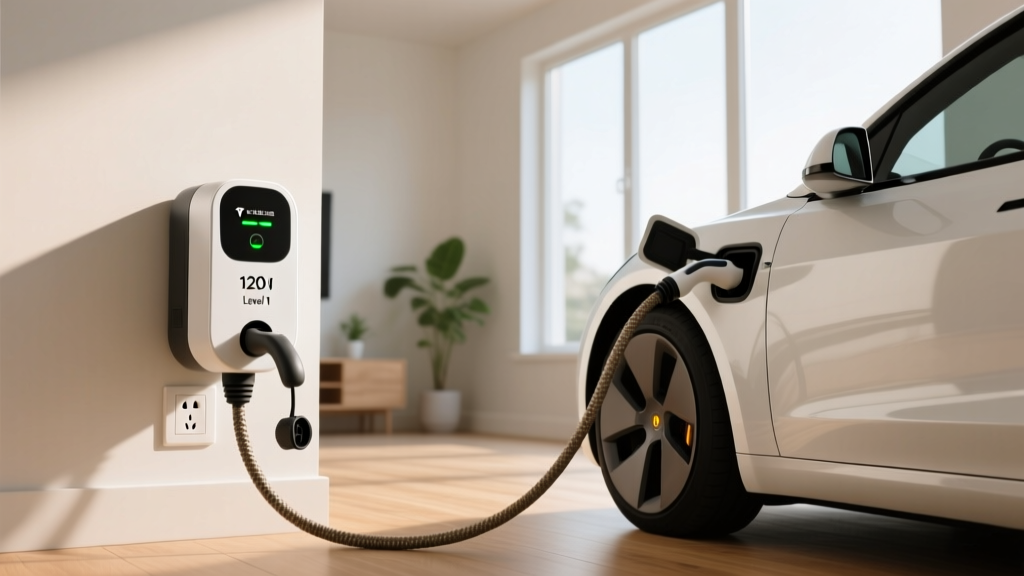
| Level 1 (120V) | 120V AC | 1.4 kW | 3–5 mi/hr | Overnight trickle for PHEVs or low-mileage drivers |
| Level 2 (240V) | 240V AC | 7.2–19.2 kW | 20–75 mi/hr | Daily home charging — the standard for BEV owners |
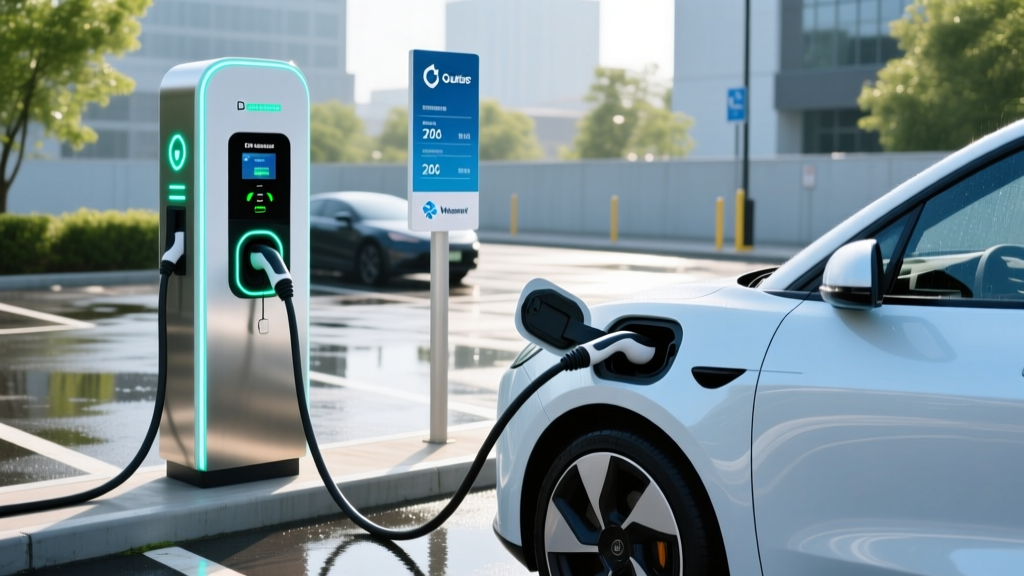
| DC Fast Charging | 200–900V DC | 50–350 kW | 150–1,200+ mi/hr | Road trips and quick top-ups on public networks |
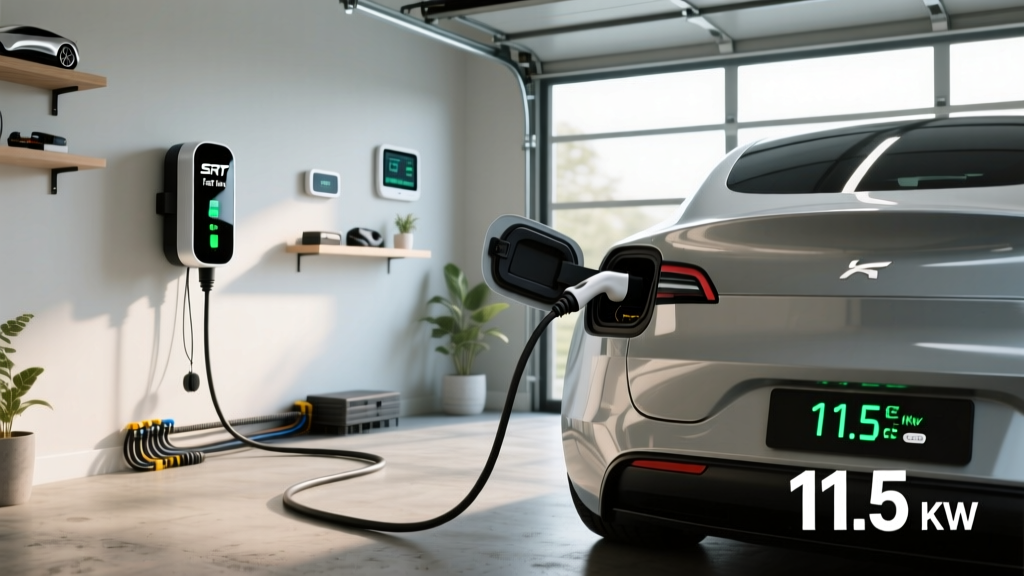
Real-world context: A Level 2 charger delivering 11.5 kW (the most common home setup on a 48-amp circuit) will add roughly 40–45 miles of range per hour for a mid-efficiency EV like the Hyundai Ioniq 5 or Tesla Model Y. That means an overnight session from 10 PM to 6 AM adds approximately 320–360 miles — more than enough to refill even the largest consumer EV batteries.
DC fast charging speeds vary enormously by vehicle. A Hyundai Ioniq 5 with 800V architecture can peak at 240 kW and charge from 10–80% in roughly 18 minutes at a compatible 350 kW station. A Chevrolet Equinox EV, capped at around 150 kW peak, will take closer to 30 minutes for the same 10–80% session. And charging speed is never linear — the battery management system (BMS) tapers power significantly above 80% state of charge to protect cell health.
Home Charger Installation: Electrical Requirements and Real Costs
This is where most first-time EV buyers get surprised. The charger hardware itself is often $300–$700, but the electrical work to support it can range from trivial to a major project depending on your home's panel capacity.
What Your Electrical Panel Needs
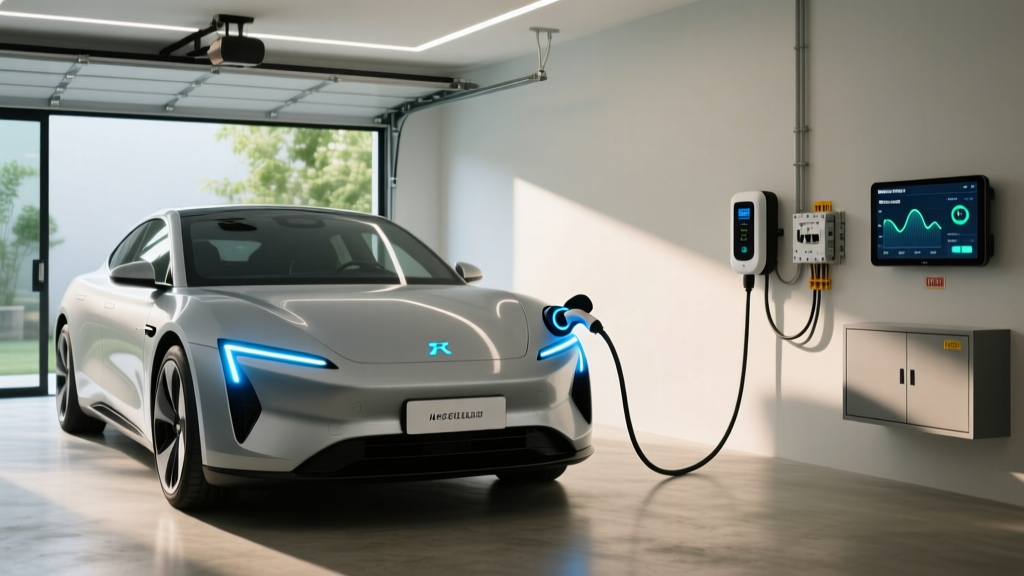
A typical Level 2 home charger running at 11.5 kW draws 48 amps on a 240V circuit. Per National Electrical Code (NEC), continuous loads can only use 80% of a circuit's rated capacity, so a 48-amp charger requires a 60-amp dedicated breaker. Here's what to check:
- Panel capacity: Most modern homes have 200-amp service. If your panel is already near capacity (electric range, dryer, HVAC, water heater), adding a 60-amp EV circuit may require a panel upgrade to 200A or even 400A.
- Available breaker slots: You need two adjacent slots for a 240V breaker.
- Wire gauge: A 60-amp circuit requires 6 AWG copper wire (or 4 AWG aluminum) run from the panel to the charger location.
- Distance matters: Longer wire runs (over 100 feet from panel to garage) increase material cost and may require thicker gauge to prevent voltage drop.
Installation Cost Breakdown
| Component | Low End | High End | Notes |
|---|---|---|---|
| Level 2 Charger Hardware | $300 | $700 | 40A–48A smart charger, 18–25 ft cable |
| Electrician Labor (standard install) | $400 | $1,200 | Short wire run, panel has capacity |
| Permit & Inspection | $50 | $300 | Varies by municipality |
| Panel Upgrade (if needed) | $1,500 | $4,000+ | 200A to 200A replacement or 400A upgrade |
| Conduit/Trenching (detached garage) | $500 | $3,000 | Underground runs add significant cost |
| Total (no panel upgrade) | $750 | $2,200 | Most homes with 200A service |
| Total (with panel upgrade) | $2,250 | $6,000+ | Older homes or high-demand panels |
Pro tip: Some utilities offer rebates of $250–$1,000 for home charger installation, and the federal Residential Clean Energy Credit covers 30% of charger hardware and installation costs up to $1,000 through 2032 (IRS Form 8911). Check your utility's EV program before scheduling work.
Connector Compatibility: NACS, CCS, and CHAdeMO in 2026
The connector landscape has consolidated significantly. Here's where things stand for model-year 2025–2026 vehicles:
| Connector Standard | Brands Using It (2025–2026) | Home Charger Availability |
|---|---|---|
| NACS (Tesla / J3400) | Tesla, Ford, GM, Rivian, Volvo, Polestar, Hyundai (2025+), Kia (2025+), BMW, Mercedes | Tesla Wall Connector, ChargePoint Home Flex (NACS), Emporia Level 2 |
| CCS1 (Combined Charging System) | VW, Audi (remaining models), some Stellantis models, legacy 2023–2024 models | ChargePoint Home Flex, Emporia, EnelX JuiceBox |
| CHAdeMO | Nissan Leaf (legacy only — discontinued for new US models) | Limited; adapters available |
Adapter reality check: If you own a CCS-equipped EV but want to use Tesla Superchargers (now open to non-Tesla vehicles at many locations), you'll need a CCS-to-NACS adapter. Ford and GM include these with qualifying vehicles. Third-party adapters from Lectron or A2Z cost $150–$250. For home charging, most Level 2 chargers now ship with NACS connectors, and CCS-terminated cables are still available from ChargePoint and Emporia.
For home Level 2 charging, the connector matters less than you might think — you plug in once and leave it. But if you're buying a charger today for a CCS vehicle and plan to switch to a NACS vehicle in the future, choose a charger with a swappable cable or buy the appropriate adapter.
Cost Per Mile: EV Charging vs. Gasoline
This is where the economics of EV ownership become compelling — or complicated, depending on how and where you charge.
| Scenario | Electricity Cost | Cost Per Mile (3.5 mi/kWh EV) | Equivalent Gas MPG at $3.50/gal |
|---|---|---|---|
| Home off-peak (utility rate) | $0.08–$0.12/kWh | $0.023–$0.034/mi | 103–152 MPG |
| Home standard rate | $0.14–$0.18/kWh | $0.040–$0.051/mi | 69–88 MPG |
| Public Level 2 (ChargePoint, etc.) | $0.25–$0.40/kWh | $0.071–$0.114/mi | 31–49 MPG |
| DC Fast Charging (Electrify America, EVgo) | $0.35–$0.55/kWh | $0.100–$0.157/mi | 22–35 MPG |
| Gasoline (30 MPG combined, $3.50/gal) | — | $0.117/mi | 30 MPG |
The bottom line: If you can charge at home on off-peak utility rates, your per-mile fuel cost drops to roughly 3 cents — about a quarter of what a 30 MPG gas car costs. Even on standard residential rates, you're paying the equivalent of 70+ MPG. But if you rely exclusively on DC fast charging at $0.48/kWh, your cost per mile approaches or even exceeds that of an efficient gasoline car. Home charging access is the single biggest factor in EV ownership economics.
Equipment Recommendations: Top Level 2 Home Chargers
Based on real-world testing, connector availability, and value, here are three home chargers worth considering for your garage or driveway:
Tesla Wall Connector (Gen 3)
- Power Output: Up to 11.5 kW (48 amps)
- Connector: NACS (native); J1772 adapter included for non-Tesla EVs
- Cable Length: 24 feet
- Smart Features: Wi-Fi, over-the-air updates, power sharing between two units, Tesla app integration
- Price: ~$475
- Best For: Tesla owners or households with NACS-equipped vehicles wanting a clean, reliable, no-subscription charger
ChargePoint Home Flex
- Power Output: Up to 12 kW (50 amps, configurable down to 16A)
- Connector: Available in NACS or J1772 (CCS) configurations
- Cable Length: 23 feet
- Smart Features: Wi-Fi, ChargePoint app with scheduling, energy tracking, Alexa integration
- Price: ~$599–$649
- Best For: Multi-EV households needing connector flexibility and detailed energy reporting
Emporia Level 2 EV Charger
- Power Output: Up to 11.5 kW (48 amps)
- Connector: NACS or J1772 options
- Cable Length: 24 feet
- Smart Features: Wi-Fi, Emporia app, real-time energy monitoring, solar integration for homes with PV systems
- Price: ~$349–$399
- Best For: Budget-conscious buyers who want smart features and solar-aware charging at the lowest hardware cost
Charging time benchmarks: Using an 11.5 kW (48A) Level 2 charger, a 75 kWh battery (like a Tesla Model Y Long Range) charges from 10–80% in approximately 4.5 hours. A larger 100 kWh battery (GMC Sierra EV, Rivian R1T Max Pack) takes roughly 6 hours for the same 10–80% session. Plug in at 10 PM, and you'll wake up to an 80% charge by morning — the ideal daily state of charge for NMC battery longevity.
Safety, Electrical Code, and Installation Best Practices
EV chargers are high-draw, continuous-load appliances. Cutting corners on installation is both dangerous and a potential insurance liability. Here's what proper installation looks like:
- Dedicated circuit: Your Level 2 charger must be on its own dedicated breaker — it cannot share a circuit with other appliances.
- GFCI protection: NEC 2020 and later requires GFCI protection for outdoor receptacles used for EV charging. Hardwired installations (recommended) typically satisfy this at the breaker level.
- Outdoor rating: If mounting outside, the charger must carry a NEMA 4 or NEMA 4X rating for weather resistance. All three chargers recommended above are outdoor-rated.
- Hardwired vs. plug-in: Hardwired installations (no plug, direct wire from panel to charger) are preferred for 48A+ chargers. NEMA 14-50 receptacles are rated for 50A but should only be used for chargers drawing 40A or less — and cheap 14-50 receptacles from big-box stores have caused documented fire incidents. If using a receptacle, specify an industrial-grade Hubbell or Bryant unit (~$80–$120).
- Permit and inspection: Most jurisdictions require an electrical permit for EV charger installation. The inspection verifies wire gauge, breaker sizing, grounding, and GFCI compliance. Skipping the permit can void homeowner's insurance claims related to electrical fires.
Frequently Asked Questions
How much does it cost to install a home EV charger?
For most homes with a 200-amp panel and a short wire run to the garage, expect $750–$2,200 all-in (charger hardware, electrician labor, and permit). If your panel needs upgrading from 100A to 200A, add $1,500–$4,000. Homes needing underground conduit to a detached garage can see total costs reach $3,000–$6,000. Always get 2–3 quotes from licensed electricians and verify they have EV charger installation experience.
How fast will each charging level add range?
Level 1 (120V, 1.4 kW) adds 3–5 miles per hour — only practical for plug-in hybrids with small batteries. Level 2 (240V, 7.2–11.5 kW) adds 20–50 miles per hour and is the daily-charging standard for battery-electric vehicles. DC fast charging (50–350 kW) can add 150–1,200+ miles per hour at peak, but speeds taper significantly above 80% state of charge, and sustained average rates are typically 40–60% of the peak kW figure.
Which connector is compatible with my EV?
For 2025–2026 model-year vehicles: Tesla, Ford, GM, Rivian, Hyundai, Kia, Volvo, and BMW all use NACS (also called J3400). Remaining VW and some Stellantis models still use CCS1. The Nissan Leaf (discontinued) used CHAdeMO. Check your vehicle's charge port or the manufacturer's spec page — and if you're buying a home charger, match the connector or plan for an adapter.
How much does charging cost per mile vs. gas?
At home on off-peak rates ($0.10/kWh), an efficient EV costs about 3 cents per mile — the equivalent of a gas car getting 120 MPG. On standard residential rates ($0.16/kWh), it's roughly 5 cents per mile (~70 MPG equivalent). Public DC fast charging at $0.45/kWh pushes costs to 13 cents per mile, comparable to a 27 MPG gas car. The savings are massive if you charge at home; they shrink considerably if you rely on public fast chargers.
What electrical upgrades might I need?
The most common upgrade is a panel replacement — if your home has 100-amp service (common in homes built before 1990), you'll likely need a 200-amp upgrade ($1,500–$3,000) to safely add a 60-amp EV circuit. Even with 200-amp service, if your panel is heavily loaded (electric heat, tankless water heater, dryer, range), an electrician may recommend a load-management device like the Emporia VUE or a Tesla Gateway that dynamically reduces charger draw when other appliances are running. This avoids a panel upgrade entirely in many cases.
Do SRT-branded EV chargers exist?
As of 2026, Stellantis (Dodge/Chrysler/Jeep parent) has not released a dedicated SRT-branded home EV charger. Dodge's transition to electrification with the Charger Daytona EV uses standard NACS connectors and is compatible with all third-party Level 2 chargers and the Tesla Supercharger network. Owners of performance-oriented Stellantis EVs should select a quality 48-amp Level 2 charger from Tesla, ChargePoint, or Emporia rather than waiting for an OEM-branded unit.