Quick Verdict: Who Should Consider the SolarEdge Bidirectional EV Charger
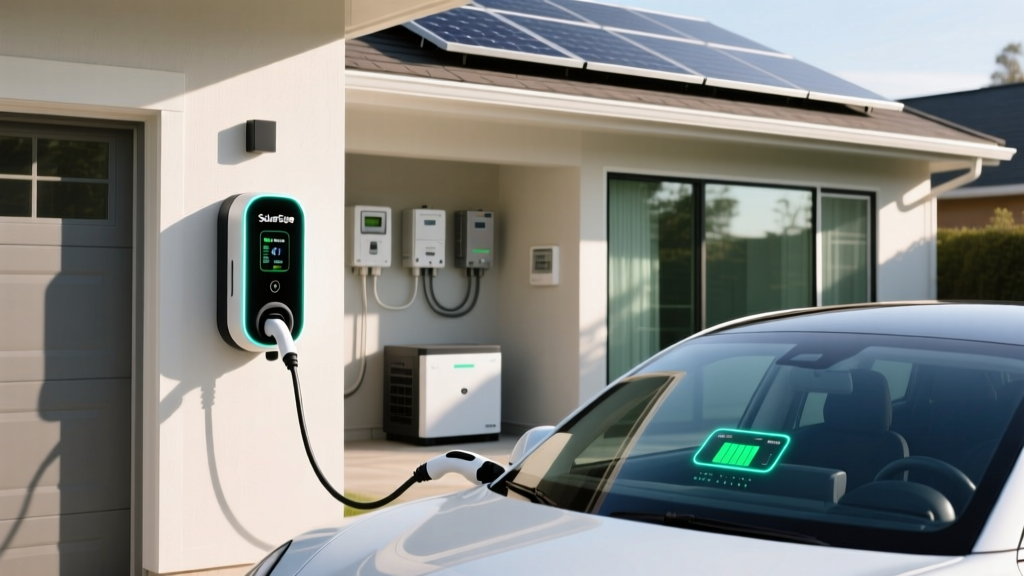
The SolarEdge bidirectional EV charger occupies a specific and growing niche: EV owners who want their vehicle battery to serve as a home backup power source (V2H — vehicle-to-home) while also integrating tightly with rooftop solar and a SolarEdge inverter ecosystem. Priced at approximately $1,200–$1,500 for the unit (before installation), it delivers up to 11.5 kW Level 2 charging on a 240V/48A circuit and supports DC-coupled V2H when paired with a compatible SolarEdge Home Hub and battery system. If you already run SolarEdge solar hardware or plan a full solar-plus-storage-plus-EV stack, it's a compelling integrated play. If you just need a fast, reliable Level 2 charger without the bidirectional ambition, there are simpler and cheaper options.
| Attribute | Value |
|---|---|
| Max Charge Rate (EV charging) | 11.5 kW (240V / 48A) |
| Max Discharge Rate (V2H) | Up to ~11.5 kW (vehicle-dependent) |
| Connector | J1772 (NACS adapter required for Tesla/NACS vehicles) |
| Cable Length | ~25 ft (7.6 m) |
| Smart Features | mySolarEdge app, solar-aware scheduling, V2H backup, grid services |
| Circuit Required | Dedicated 60A breaker (240V) |
| Indoor/Outdoor Rating | NEMA 4 (indoor/outdoor) |
| Estimated Unit Price | $1,200–$1,500 MSRP |
| Warranty | 5 years (standard) |
Understanding Charging Levels: Where This Unit Fits
Before evaluating the SolarEdge hardware specifically, it helps to anchor what each charging level actually delivers. Power is measured in kW (how fast energy flows), while your battery capacity is measured in kWh (how much energy it stores). Confusing these two is the single most common EV mistake — they're related but not interchangeable.
| Level | Voltage | Typical Power (kW) | Miles Added Per Hour | Use Case |
|---|---|---|---|---|
| Level 1 | 120V | 1.2–1.9 kW | 3–5 mi/hr | Overnight trickle; PHEVs or low-mileage drivers |
| Level 2 | 240V | 3.3–19.2 kW | 12–75 mi/hr | Primary home and workplace charging |
| DC Fast Charging | 400–900V DC | 50–350 kW | 150–1,000+ mi/hr | Road trips; 10–80% in 15–40 minutes |
The SolarEdge bidirectional charger is a Level 2 unit. At 11.5 kW, it adds roughly 35–45 miles of range per hour of charging for a typical midsize EV like a Tesla Model Y or Hyundai Ioniq 5. For a 75 kWh battery (common in long-range crossovers), a 10–80% charge takes approximately 5 to 5.5 hours — essentially an overnight session. For DC fast charging on road trips, you'd rely on public networks like Tesla Supercharger, Electrify America, or EVgo at 150–350 kW.
Home Installation: Electrical Requirements and Real Costs
The SolarEdge bidirectional charger requires a dedicated 240V/60A circuit, which means a hardwired connection to your electrical panel. This is non-negotiable for the 48A continuous draw — the National Electrical Code (NEC) requires circuits to be rated at 125% of the continuous load, hence 48A × 1.25 = 60A breaker.
| Component | Cost Range | Notes |
|---|---|---|
| SolarEdge Bidirectional Charger (unit) | $1,200–$1,500 | MSRP; may vary by distributor |
| Electrician labor (standard install) | $600–$1,500 | Run 6/3 or 4/3 wire, mount unit, connect to panel |
| Permit and inspection | $100–$400 | Varies by municipality |
| Electrical panel upgrade (if needed) | $1,500–$3,500 | 100A→200A upgrade for older homes with insufficient capacity |
| Conduit, wiring materials | $100–$500 | Depends on run length from panel to charger |
| Total (no panel upgrade) | $2,000–$3,900 | Typical scenario for newer homes |
| Total (with panel upgrade) | $3,500–$7,400 | Older homes with 100A or 150A panels |
The panel upgrade is the variable that shocks most buyers. If your home has a 200A panel (standard for homes built after ~2000) and available breaker slots, you're in the lower range. If you have a 100A panel — common in homes built before the 1980s — adding a 60A circuit may exceed your panel's capacity, requiring a full service upgrade. A licensed electrician should perform a load calculation before you commit.
V2H Requires Additional Integration
Bidirectional operation (sending power from your EV back to your home) is not a standalone feature. The SolarEdge charger requires integration with a SolarEdge Home Hub inverter and typically a SolarEdge Home Battery or compatible energy management system. This means V2H is realistic primarily for existing SolarEdge solar customers or those planning a full system install. If you don't have SolarEdge solar hardware, the bidirectional value proposition narrows significantly, and you may be better served by a simpler Level 2 charger.
Charging Cost Per Mile: EV vs. Gas
One of the strongest economic arguments for home charging is the per-mile cost advantage. Let's model this with real 2026 electricity and fuel prices.
| Scenario | Rate | Cost Per Mile (250 Wh/mi EV) | Equivalent Gas Vehicle (30 MPG) |
|---|---|---|---|
| Home — off-peak utility rate | $0.11/kWh | $0.028/mi | $0.117/mi (at $3.50/gal) |
| Home — standard residential rate | $0.16/kWh | $0.040/mi | $0.117/mi |
| Home — with solar (net cost near $0) | ~$0.04/kWh (amortized) | $0.010/mi | $0.117/mi |
| Public Level 2 (ChargePoint, etc.) | $0.30/kWh | $0.075/mi | $0.117/mi |
| DC Fast Charging (Electrify America) | $0.48/kWh | $0.120/mi | $0.117/mi |
At home on a standard rate, an efficient EV (consuming ~250 Wh per mile, typical of a Hyundai Ioniq 5 or Tesla Model 3) costs roughly $0.03–$0.04 per mile — about one-third the fuel cost of a 30 MPG gas car. With solar offsetting your electricity, it drops further. However, DC fast charging on road trips can match or exceed gasoline per-mile costs, which is why home charging remains the economic backbone of EV ownership.
The SolarEdge charger's bidirectional capability adds a secondary economic layer: during a grid outage, your EV battery (typically 60–100 kWh) can power essential home circuits for 2–5 days, potentially offsetting the need for a standalone home generator ($3,000–$8,000) or a dedicated home battery like the Tesla Powerwall (~$9,000–$12,000 installed).
Connector Compatibility: Will It Fit Your EV?
The SolarEdge bidirectional charger ships with a J1772 connector, which is the legacy North American standard. However, the industry has shifted decisively toward NACS (North American Charging Standard), originally developed by Tesla and now adopted by Ford, GM, Hyundai, Kia, Rivian, BMW, and most major automakers for 2025+ models.
| Vehicle Brand / Model | Native Connector | Adapter Needed? | Notes |
|---|---|---|---|
| Tesla (Model 3, Y, S, X — 2025+) | NACS | Yes — J1772-to-NACS (~$100–$200) | Tesla ships a J1772 adapter with many models |
| Ford (F-150 Lightning, Mustang Mach-E 2025+) | NACS | Yes — J1772-to-NACS | Earlier models may still have CCS1 |
| Hyundai / Kia (Ioniq 5/6, EV6/EV9 2025+) | NACS | Yes — J1772-to-NACS | 2024 and earlier use CCS1 — no adapter needed |
| GM (Equinox EV, Blazer EV, Silverado EV) | NACS | Yes — J1772-to-NACS | 2025+ models |
| Rivian (R1T, R1S 2025+) | NACS | Yes — J1772-to-NACS | Rivian includes adapter |
| Older EVs (Leaf, Bolt, 2024 Ioniq 5) | CCS1 or CHAdeMO | No (CCS1 uses J1772 for AC) | J1772 is the AC portion of CCS1 |
Important V2H caveat: Bidirectional power flow currently requires specific vehicle support. As of early 2026, the vehicles with confirmed V2H/V2G capability in the US market include the Ford F-150 Lightning (with Ford Charge Station Pro), Hyundai Ioniq 5 (V2L standard; full V2H with compatible hardware), GM Silverado EV, and select others. Tesla has announced V2H support but availability depends on firmware and hardware revisions. Always confirm bidirectional compatibility with both the vehicle manufacturer and SolarEdge before purchasing for V2H use.
Equipment Alternatives: How the SolarEdge Compares
If bidirectional capability and solar integration aren't your primary requirements, several excellent Level 2 chargers compete in the same power class. Here's how they stack up against the SolarEdge unit.
SolarEdge Bidirectional EV Charger
- Power: 11.5 kW (48A)
- Connector: J1772 (NACS adapter needed for most new EVs)
- Smart Features: Solar-aware scheduling, V2H backup, mySolarEdge app
- Cable: 25 ft
- Price: ~$1,200–$1,500
- Best for: SolarEdge solar/battery owners wanting V2H integration
ChargePoint Home Flex
- Power: Up to 12 kW (50A adjustable)
- Connector: J1772 or NACS (selectable at purchase)
- Smart Features: Wi-Fi, app scheduling, Alexa, utility demand-response
- Cable: 23 ft
- Price: ~$550–$700
- Best for: Standalone smart charger; wide compatibility; no solar ecosystem needed
Emporia Vue EV Charger
- Power: Up to 11.5 kW (48A)
- Connector: J1772 or NACS
- Smart Features: Energy monitoring, solar integration, app control
- Cable: 24 ft
- Price: ~$500–$650
- Best for: Budget-conscious solar-aware charging without bidirectional
Tesla Wall Connector
- Power: Up to 11.5 kW (48A)
- Connector: NACS native (J1772 adapter available)
- Smart Features: Wi-Fi, OTA updates, power sharing (multiple units), Solar integration (2025+ firmware)
- Cable: 24 ft
- Price: ~$450–$500
- Best for: Tesla owners or NACS-native vehicle owners; lowest price per kW
The SolarEdge unit commands a premium over the ChargePoint, Emporia, and Tesla Wall Connector. That premium is justified only if you are leveraging the bidirectional V2H capability within a SolarEdge ecosystem. As a pure Level 2 charger, the Tesla Wall Connector at ~$475 with native NACS delivers equivalent charging speed for roughly one-third the hardware cost.
Safety, Code, and Installation Best Practices
Any Level 2 charger installation must comply with the National Electrical Code (NEC) Article 625, which governs EV charging systems. Key requirements and best practices:
- Dedicated circuit: The charger must be on its own breaker — no shared circuits with other appliances.
- GFCI protection: NEC 2023 and later require GFCI protection for outdoor receptacles; hardwired units may have integrated ground-fault protection. Your electrician will confirm compliance with your local code cycle.
- NEMA 4 rating: The SolarEdge charger carries a NEMA 4 rating, meaning it's sealed against rain, splashing water, and dust — suitable for outdoor mounting without a protective enclosure.
- Wire gauge: A 60A circuit typically requires 6 AWG copper wire (THHN in conduit) or 4 AWG aluminum. Your electrician will size based on run length and local code.
- Permit and inspection: Virtually all jurisdictions require an electrical permit for a new 240V circuit. The inspection verifies proper grounding, breaker sizing, and wire routing. Budget $100–$400 and 1–3 weeks for this process.
- Cable management: The 25-foot cable should be routed to avoid tripping hazards, vehicle tire paths, and standing water. A wall-mounted cable organizer (~$20–$40) is strongly recommended.
For bidirectional V2H installations, additional code considerations apply. The system must include an automatic transfer switch or equivalent isolation hardware to prevent back-feeding the grid during an outage (which is both dangerous to utility workers and illegal). SolarEdge's Home Hub inverter handles this function when properly configured, but your electrician and local utility must sign off on the interconnection.
Federal Tax Credits and Incentives for Charger Installation
The federal residential clean energy credit (IRC §25D) has historically covered EV charger installation, but the rules have evolved. As of 2026, the Alternative Fuel Vehicle Refueling Property Credit (IRC §30C) provides up to $1,000 for home EV charger equipment and installation costs, with income and location requirements. The charger must be installed at your primary residence, and the credit is limited to 30% of the cost up to $1,000. This credit is subject to change — always verify current rules with a tax professional or the IRS before filing.
Additionally, many utilities offer rebates of $200–$500 for installing a smart Level 2 charger, particularly models enrolled in demand-response programs. Check with your local utility before purchasing — the SolarEdge charger's smart features may qualify.
Real-World Charging Times: What to Expect
Here's how the SolarEdge charger at 11.5 kW handles common EV battery sizes, assuming a 10–80% charge (the typical daily charging window to preserve battery health):
| Vehicle | Usable Battery (kWh) | Energy Needed (10–80%) | Estimated Time |
|---|---|---|---|
| Tesla Model 3 LR (2026) | 75 kWh | 52.5 kWh | ~4.6 hours |
| Hyundai Ioniq 5 (2026) | 77.4 kWh | 54.2 kWh | ~4.7 hours |
| Ford F-150 Lightning Ext Range | 131 kWh | 91.7 kWh | ~8.0 hours |
| Chevrolet Equinox EV (2026) | 85 kWh | 59.5 kWh | ~5.2 hours |
| Toyota bZ4X (2026) | 64 kWh | 44.8 kWh | ~3.9 hours |
These times assume sustained 11.5 kW delivery. In practice, charging power may taper slightly as the battery approaches 80% SoC, adding 15–30 minutes. For overnight charging, this is irrelevant — you'll wake up to a full battery regardless. For mid-day top-ups, plan accordingly.
Frequently Asked Questions
How much does it cost to install a SolarEdge bidirectional EV charger at home?
Total installed cost typically ranges from $2,000 to $3,900 for homes with a 200A panel and available capacity. If your home requires a panel upgrade from 100A to 200A, add $1,500–$3,500, bringing the total to $3,500–$7,400. The charger unit itself costs approximately $1,200–$1,500, with electrician labor at $600–$1,500 and permits at $100–$400.
How fast does the SolarEdge charger add range?
At 11.5 kW, expect roughly 35–45 miles of range per hour of charging, depending on the vehicle's efficiency (measured in Wh/mi). A typical 75 kWh battery charges from 10% to 80% in approximately 4.5–5 hours.
Is the SolarEdge charger compatible with my NACS-equipped vehicle?
The unit ships with a J1772 connector. If your vehicle has a native NACS port (Tesla, 2025+ Ford, GM, Hyundai, Kia, Rivian, and others), you'll need a J1772-to-NACS adapter (~$100–$200). The J1772 connector is the AC charging standard and is electrically compatible with NACS — only the physical plug shape differs.
How much does charging cost per mile compared to gasoline?
At a national average residential rate of ~$0.16/kWh and vehicle efficiency of 250 Wh/mi, home charging costs approximately $0.04 per mile. A comparable 30 MPG gas vehicle at $3.50/gallon costs $0.12 per mile — roughly three times more. With solar offsetting electricity costs, the EV advantage widens further.
What electrical upgrades might I need for a bidirectional charger?
At minimum, you need a dedicated 240V/60A circuit with a hardwired connection. Older homes with 100A or 150A panels may need a full panel upgrade ($1,500–$3,500). For V2H operation specifically, you also need a SolarEdge Home Hub inverter and an automatic transfer switch to isolate your home from the grid during outages. A licensed electrician should perform a load calculation before installation.
Does bidirectional V2H actually work, and which vehicles support it?
V2H is a real and functional technology, but vehicle support is still limited as of 2026. Confirmed V2H-capable vehicles include the Ford F-150 Lightning, Hyundai Ioniq 5 (with V2L and compatible hardware), and GM Silverado EV. Always verify bidirectional compatibility with both your vehicle manufacturer and SolarEdge before purchasing specifically for V2H. The feature also requires proper transfer-switch installation and utility interconnection approval.