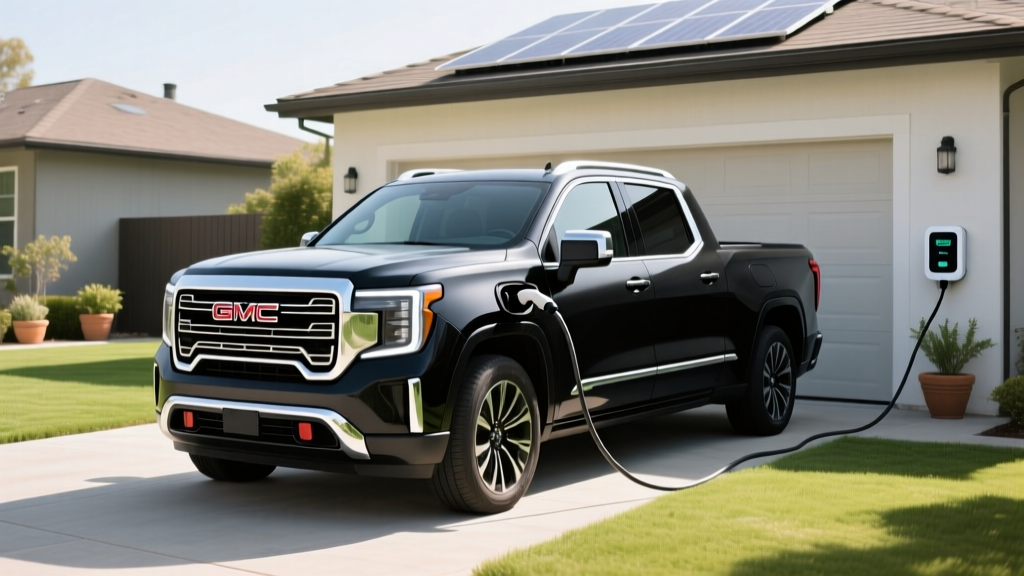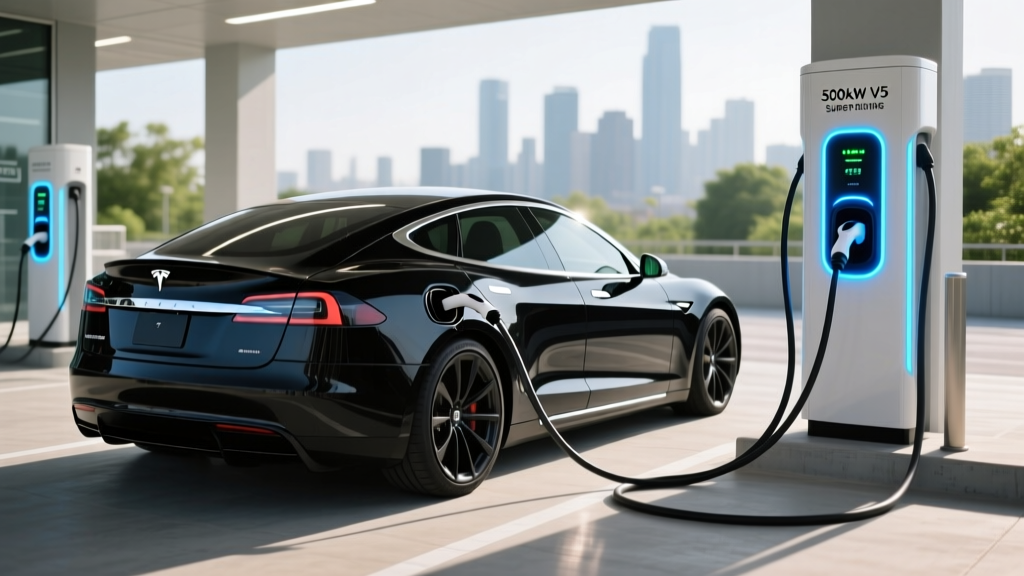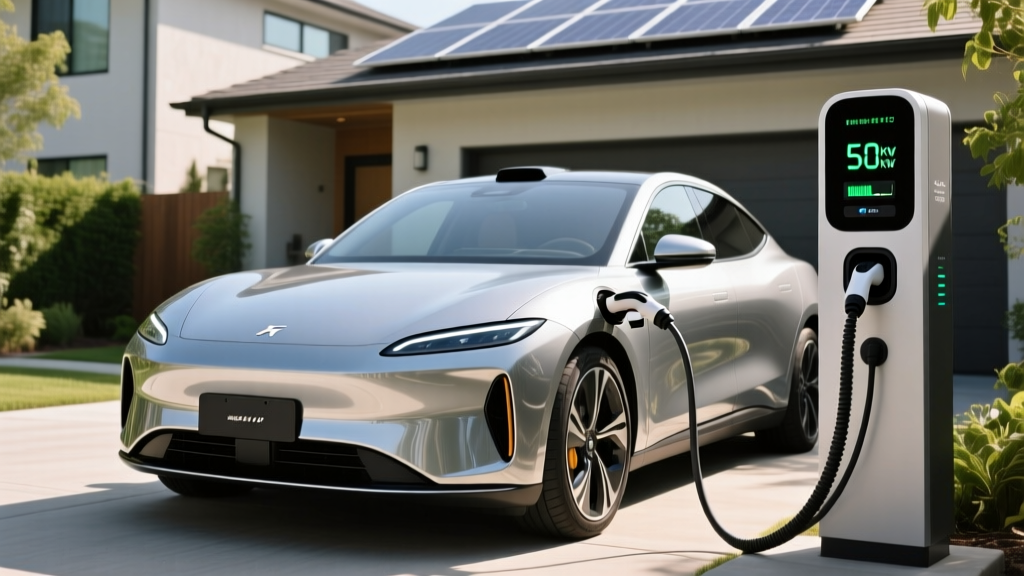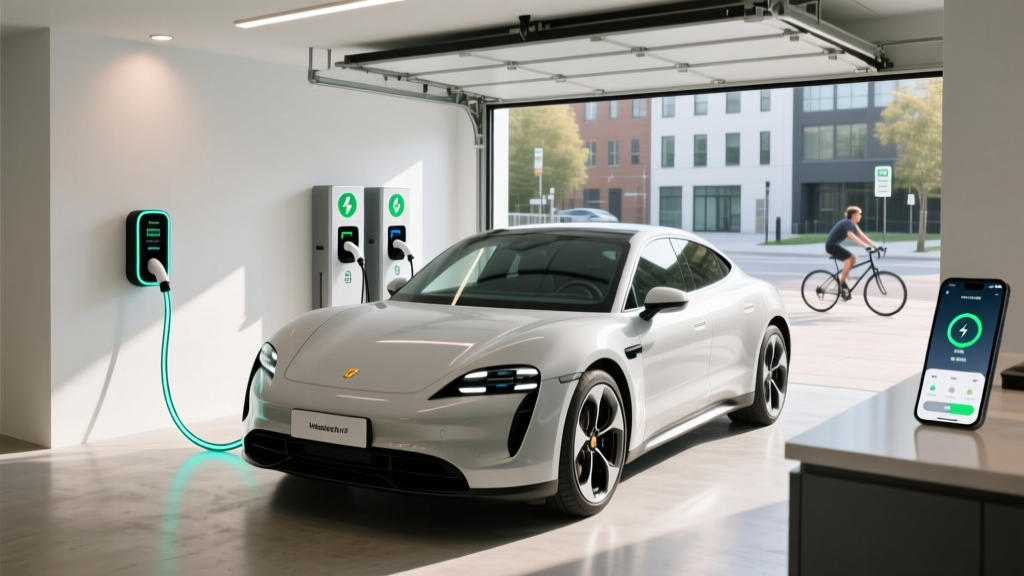
Why Smart EV Charging Matters for Every EV Owner
Plug in, walk away, and wake up with a full battery — that's the promise of smart EV charging at home. But the reality involves real decisions: which voltage your panel supports, whether your EV uses NACS or CCS1, how to schedule charging during off-peak utility hours, and what you'll actually pay per mile. This guide breaks down every number, cost, and compatibility detail you need to set up a charging routine that's fast, safe, and cheap.
Before we get into hardware, let's clear up the single most common point of confusion: kW (kilowatts) measures power — the rate of energy flow, like water pressure from a hose. kWh (kilowatt-hours) measures energy — the total amount stored in your battery, like gallons in a tank. A 48-amp Level 2 charger delivers up to 11.5 kW of power into an 80 kWh battery. Mixing these up leads to bad purchase decisions, so we'll keep them strictly separate throughout this guide.
Charging Levels Explained: Speed, Power, and Range Added
Every EV sold in the US charges on one of three levels. The table below shows realistic speeds — not marketing peak numbers, but sustained rates you'll see in daily use.
| Level | Voltage / Amperage | Power (kW) | Miles of Range Added Per Hour | Best For |
|---|---|---|---|---|
| Level 1 | 120V / 12A | 1.4 kW | 3–5 mi/hr | Overnight top-ups, PHEVs, emergency backup |
| Level 2 (Home) | 240V / 32A–48A | 7.7–11.5 kW | 25–44 mi/hr | Daily home charging, full overnight recharge |
| Level 2 (Public) | 240V / 32A–80A | 7.7–19.2 kW | 25–70 mi/hr | Workplace, shopping, apartment complexes |
| DC Fast Charge | 400V–800V DC | 50–350 kW | 150–1,000+ mi/hr (burst) | Road trips, highway corridors |
A few real-world notes: Level 1 is genuinely usable for plug-in hybrids with 30–40 miles of electric range — a full overnight session covers most commutes. For a BEV with an 80+ kWh battery, Level 1 adds roughly 30–40 miles over 10 hours, which won't keep up with a 50-mile daily commute. Level 2 at 48 amps (11.5 kW) is the practical sweet spot for battery-electric vehicles: a 75 kWh usable battery charges from 10% to 100% in roughly 6–7 hours.
DC fast charging speeds are peak rates, not sustained. A charger rated at 250 kW might deliver that rate between 10–40% state of charge (SoC), then taper to 150 kW, then 80 kW, then 40 kW as the battery approaches full. This charge-curve taper is why manufacturers quote 10–80% times rather than 0–100%. For example:
- Tesla Model Y (75 kWh, NMC): 250 kW peak, 10–80% in ~22 minutes at a V3 Supercharger
- Hyundai Ioniq 5 (77.4 kWh, NMC, 800V architecture): 240 kW peak, 10–80% in ~18 minutes at a 350 kW station
- Ford F-150 Lightning Extended Range (131 kWh, NMC): 150 kW peak, 15–80% in ~41 minutes
- Chevrolet Equinox EV (85 kWh, NMC): 150 kW peak, 10–80% in ~30 minutes
Above 80% SoC, charging slows dramatically to protect battery health. On a road trip, it's faster to charge to 80% and resume driving than to wait for the final 20%.
Home Charger Installation: Electrical Requirements and Costs
Installing a Level 2 home charger is an electrical project, not just plugging in an appliance. Here's what's involved and what it costs.
Electrical Requirements
A 48-amp Level 2 charger requires a dedicated 60-amp circuit (the National Electrical Code requires circuits to be rated at 125% of continuous load, so 48A × 1.25 = 60A). This means:
- Voltage: 240V (same as your dryer or oven)
- Circuit breaker: 60A double-pole breaker
- Wire gauge: 6 AWG copper (or 4 AWG aluminum) for runs up to ~50 feet; thicker wire for longer runs to reduce voltage drop
- Dedicated circuit: The charger cannot share the circuit with other appliances
- GFCI protection: Required by NEC 2020/2023 for EV charging outlets (some hardwired chargers have built-in ground-fault protection)
Do You Need a Panel Upgrade?
This is the biggest cost variable. Most homes built after 1990 have a 200-amp main panel, which usually supports a 60A EV circuit alongside existing loads. Older homes with 100A or 150A service may not have enough spare capacity. A licensed electrician will perform a load calculation (NEC Article 220) that sums your existing circuits and determines headroom. If you're already running electric heat, a hot tub, and an electric dryer on a 150A panel, adding 60A for EV charging may push you over the limit.
A panel upgrade from 100A/150A to 200A typically costs $1,500–$3,500. Upgrading to 400A (for homes adding solar, battery storage, and EV charging simultaneously) runs $3,000–$5,000+. This is why getting a load-calculation quote before buying a charger is essential.
| Component | Cost Range | Notes |
|---|---|---|
| Level 2 Charger (Equipment) | $350–$750 | Smart WiFi chargers, 32A–48A, NACS or CCS1/J1772 |
| Electrical Permit | $50–$200 | Required in most jurisdictions; varies by city/county |
| Electrician Labor (Standard Install) | $400–$1,200 | Assumes panel has capacity; 20–50 ft wire run to garage/carport |
| Panel Upgrade (if needed) | $1,500–$3,500 | 100A/150A → 200A service upgrade |
| Conduit & Wire (Long Runs) | $200–$600 | If charger is far from panel (detached garage, exterior wall) |
| Total (No Panel Upgrade) | $800–$2,150 | Typical for modern homes with 200A service |
| Total (With Panel Upgrade) | $2,300–$5,500 | Older homes needing service upgrade |
Some utilities offer rebates of $250–$500 for Level 2 charger installation, and the federal Residential Clean Energy Credit (IRS Form 5695) may cover 30% of charger equipment and installation costs up to $1,000 through 2032 — check current eligibility with a tax professional, as rules vary by census tract.
Connector Compatibility: NACS, CCS1, CHAdeMO, and Adapters
The connector landscape shifted dramatically in 2024–2025 when nearly every major automaker adopted the North American Charging Standard (NACS), originally developed by Tesla. Here's where things stand for 2026 model-year vehicles:
| Connector | Brands Using It (New Vehicles) | Adapter Needed? |
|---|---|---|
| NACS (Tesla-style) | Tesla, Ford, GM, Rivian, Volvo, Polestar, Mercedes-Benz, Nissan, Honda, Fisker, Lucid, Hyundai/Kia (2025+) | CCS1→NACS adapter for older CCS1 vehicles accessing Tesla Superchargers (~$200–$250) |
| CCS1 (Combo) | Legacy models (2024 and earlier from VW, BMW, Hyundai/Kia, Stellantis) | NACS→CCS1 adapter available from Tesla and third parties for Supercharger access |
| CHAdeMO | Nissan Leaf (legacy — final model years only); Mitsubishi Outlander PHEV | No adapter to NACS/CCS; CHAdeMO stations are declining |
Practical advice: If you're buying a new EV in 2026, it almost certainly has NACS. If you own a 2022–2024 CCS1 vehicle, a NACS-to-CCS1 adapter ($175–$250 from Tesla, Lectron, or A2Z) unlocks the Supercharger network — over 25,000 stalls in North America. For home Level 2 charging, most smart chargers ship with a J1772 connector (the AC standard); NACS vehicles use a simple J1772-to-NACS adapter (often included with the car).
DC fast charging connectors are physically different from AC Level 2 connectors. NACS handles both AC and DC on one port. CCS1 uses a separate DC pin below the J1772 AC connector. This matters when selecting public chargers — always check the station's connector type in apps like PlugShare or A Better Routeplanner before driving there.
Cost to Charge: Per-Mile Comparison vs. Gas
The economics of EV charging depend entirely on where and when you charge. Here's a realistic breakdown using a mid-size EV averaging 3.0 miles per kWh (roughly 112 MPGe combined, similar to a 2026 Tesla Model Y or Hyundai Ioniq 6).
| Charging Scenario | Cost per kWh | Cost per Mile (at 3.0 mi/kWh) | Equivalent Gas MPG (at $3.50/gal) |
|---|---|---|---|
| Home Off-Peak (Time-of-Use Rate) | $0.08–$0.12 | $0.027–$0.040 | 88–130 MPG |
| Home Standard Rate (No TOU) | $0.14–$0.18 | $0.047–$0.060 | 58–75 MPG |
| Public Level 2 (Workplace/Shopping) | $0.20–$0.35 | $0.067–$0.117 | 30–52 MPG |
| DC Fast Charge (Electrify America, EVgo, etc.) | $0.35–$0.55 | $0.117–$0.183 | 19–30 MPG |
| Tesla Supercharger (V3/V4) | $0.25–$0.40 | $0.083–$0.133 | 26–42 MPG |
| Gasoline Vehicle (28 MPG combined avg.) | — | $0.125 | 28 MPG |
The takeaway: home charging on an off-peak rate is 3–4× cheaper per mile than gasoline. Exclusive reliance on DC fast charging narrows the gap significantly — and in high-cost states like California, Hawaii, or Massachusetts, peak DC fast charging can briefly exceed the per-mile cost of a fuel-efficient gas car. This is why a home Level 2 setup is the economic foundation of EV ownership.
Smart chargers amplify savings by scheduling sessions during off-peak utility windows (typically 10 PM – 6 AM, but check your local utility's TOU schedule). A charger with WiFi scheduling can automatically start charging at midnight when rates drop, without you needing to remember.
Best Smart EV Chargers for Home: 2026 Equipment Picks
We evaluated chargers on power output, cable length, smart features, connector type, and real-world reliability. All picks below support WiFi connectivity, app-based scheduling, and utility demand-response programs.
Best Overall: ChargePoint Home Flex
- Power: Up to 11.5 kW (48A, adjustable down to 16A)
- Connector: NACS or J1772 (select at purchase)
- Cable Length: 23 ft
- Smart Features: WiFi scheduling, Alexa/Google integration, energy tracking, utility demand-response
- Installation: NEMA 14-50 plug or hardwired
- Price: ~$550–$650
- Why: Amperage is DIP-switch adjustable to match your circuit — install on a 40A or 50A circuit without overspending on panel capacity
Best for Tesla/NACS Ecosystem: Tesla Wall Connector
- Power: Up to 11.5 kW (48A)
- Connector: NACS (native); J1772 adapter included for non-Tesla EVs
- Cable Length: 24 ft
- Smart Features: WiFi firmware updates, power-sharing (link two units on one circuit), Tesla app integration
- Installation: Hardwired only (no plug option)
- Price: ~$475
- Why: Lowest cost among premium smart chargers; best integration for Tesla owners; power-sharing is ideal for two-EV garages
Best Budget Smart Charger: Emporia Vue Level 2
- Power: Up to 11.5 kW (48A)
- Connector: J1772 (use adapter for NACS vehicles)
- Cable Length: 24 ft
- Smart Features: WiFi scheduling, solar-integration mode (charge from excess solar), energy monitoring, TOU rate optimization
- Installation: NEMA 14-50 plug or hardwired
- Price: ~$350–$400
- Why: Best smart features for the price; solar-aware scheduling is unique at this cost tier
Best for High-Power EVs: Grizzl-E Smart
- Power: Up to 10 kW (40A) or 11.5 kW (48A, 2025+ models)
- Connector: J1772 or NACS
- Cable Length: 24 ft
- Smart Features: WiFi, OCPP compatibility (works with utility programs), adjustable amperage
- Installation: NEMA 14-50 or hardwired
- Price: ~$450–$550
- Why: Built in Canada with extreme cold-weather testing (-40°C); aluminum enclosure resists impact and UV; solid for outdoor mounts in harsh climates
When choosing, match the charger's max amperage to your available circuit. A 48A charger needs a 60A circuit. If your panel only has room for a 40A circuit, buy a charger configurable to 32A (like the ChargePoint Home Flex) rather than throttling a 48A unit with a smaller breaker — that violates NEC and voids warranties.
Safety, Code, and Installation Best Practices
EV chargers draw continuous high current for hours — this is a more demanding load than most household appliances. Cutting corners on installation creates fire risk and insurance complications.
- Always use a licensed electrician. DIY 240V work is dangerous and will fail inspection, potentially voiding homeowner's insurance coverage for electrical fires.
- Pull a permit. Most jurisdictions require an electrical permit for EV charger installation. The inspection ensures proper wire gauge, breaker sizing, and grounding. Unpermitted work can complicate home sales.
- Hardwire vs. plug: Hardwired installations eliminate the NEMA 14-50 receptacle as a failure point. Receptacles rated for continuous 48A loads can overheat if not industrial-grade (Hubbell or Bryant, not generic hardware-store outlets). If you choose a plug-in setup for portability, specify a commercial-grade receptacle.
- Outdoor rating: If mounting outside, ensure the charger is rated NEMA 4 (weatherproof). Most smart chargers carry this rating, but verify before purchasing. Use an in-use cover for NEMA 14-50 outdoor receptacles.
- GFCI: NEC 2020 and later require GFCI protection for EV charging outlets. Hardwired chargers with built-in ground-fault detection satisfy this requirement without a GFCI breaker (which can nuisance-trip on some circuits).
- WiFi security: Smart chargers connect to your home network. Use a strong WiFi password, keep firmware updated, and consider placing the charger on a separate IoT network if your router supports VLANs.
Frequently Asked Questions
How much does it cost to install a home EV charger?
A typical Level 2 home charger installation costs $800–$2,150 when your electrical panel has sufficient capacity. This includes the charger ($350–$750), electrician labor ($400–$1,200), and permit ($50–$200). If your home needs a panel upgrade from 100A or 150A to 200A, add $1,500–$3,500, bringing the total to $2,300–$5,500. Get a load calculation from a licensed electrician before committing to equipment.
How fast will each charging level add range?
Level 1 (120V) adds 3–5 miles of range per hour — suitable for PHEVs but inadequate for daily BEV use. Level 2 (240V, 48A) adds 25–44 miles per hour, fully recharging most EVs overnight. DC fast charging adds 150–1,000+ miles per hour at peak rates, but charging tapers significantly above 80% SoC, so real-world road-trip stops take 18–40 minutes for a 10–80% charge depending on the vehicle and charger.
Which connector or charger is compatible with my EV?
For 2026 model-year vehicles, NACS is the dominant standard — Tesla, Ford, GM, Rivian, Hyundai/Kia, Honda, Volvo, and others use it. Older CCS1 vehicles (2022–2024) can access Tesla Superchargers with a NACS-to-CCS1 adapter ($175–$250). CHAdeMO is limited to legacy Nissan Leaf models. For home Level 2, most chargers use J1772 (with a J1772-to-NACS adapter for newer vehicles) or ship directly with NACS.
How much does charging cost per mile vs. gas?
Home charging on off-peak electricity rates costs $0.03–$0.04 per mile — roughly equivalent to a car getting 88–130 MPG at $3.50/gallon gas. Standard home rates push this to $0.05–$0.06/mile (58–75 MPG equivalent). Exclusive DC fast charging costs $0.12–$0.18/mile, narrowing the advantage. The average gasoline car at 28 MPG costs about $0.125/mile. Source: fueleconomy.gov efficiency data.
What electrical upgrades might I need?
If your home has a 200A main panel with available capacity (confirmed by a NEC Article 220 load calculation), you likely need no upgrade — just a new 60A double-pole breaker and wire run. Homes with 100A or 150A service, or those already running multiple high-draw appliances (electric heat, hot tub, dryer, oven), may need a panel upgrade to 200A ($1,500–$3,500) or a smart panel/load-management device like the Emporia Smart Panel or Span Drive that dynamically limits charger draw when other loads spike. Some utilities offer rebates for load-management hardware as an alternative to panel upgrades.
Can I use a smart charger to save money with time-of-use rates?
Yes — this is the core value proposition of smart EV charging. Chargers with WiFi scheduling (ChargePoint, Emporia, Tesla Wall Connector) let you set charging windows via their apps. If your utility offers off-peak rates between 10 PM and 6 AM, schedule your charger to activate only during that window. Some utilities (PG&E, SCE, ConEdison) offer dedicated EV rate plans with significantly cheaper overnight kWh pricing and dedicated demand-response programs that pay you to pause charging during grid-peak events. Check with your utility's EV program page before installing.