Why "Slate Tesla Supercharger Access" Is the Top EV Charging Question of 2026
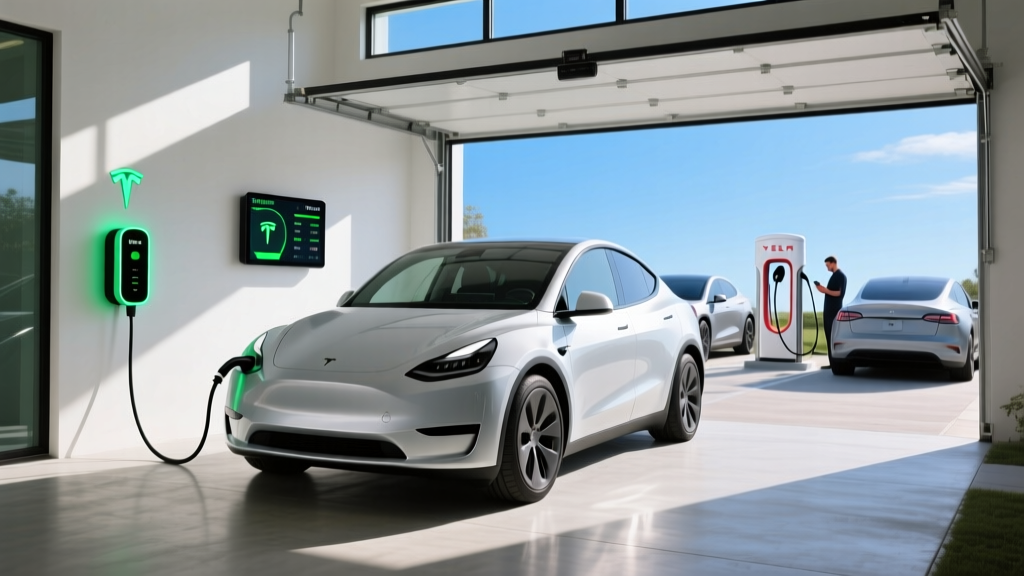
Tesla's Supercharger network — now exceeding 30,000 stalls across North America — was once an exclusive club. Today, thanks to the North American Charging Standard (NACS) opening and Tesla's "Open Supercharger" program, drivers of Ford, GM, Rivian, Hyundai, Kia, and dozens of other brands can plug in at Supercharger stalls. If you're researching "slate Tesla Supercharger access," you're likely trying to understand whether your non-Tesla EV can use these chargers, what adapter you need, how fast you'll charge, and what the full picture of home and public charging looks like.
This guide covers every layer: connector compatibility, charging-level speeds in kW and miles per hour, real-world home installation costs (including the panel upgrade nobody warns you about), and the actual cost per mile of electricity versus gasoline. We'll also recommend specific Level 2 home chargers with exact power outputs and prices.
Charging Levels Explained: Speeds in kW and Miles Added Per Hour
Before evaluating Supercharger access, you need the fundamentals. Electric vehicle charging operates at three distinct levels. The critical distinction: kW (kilowatts) measures power — how fast energy flows into your battery. kWh (kilowatt-hours) measures energy — the total capacity of your battery. Think of kW as the diameter of a hose and kWh as the size of the bucket you're filling.
| Level | Voltage | Max Power (kW) | Miles of Range Added Per Hour | Typical Use Case |
|---|---|---|---|---|
| Level 1 | 120V AC | 1.4 kW | 3–5 miles | Overnight trickle charge; PHEVs; emergency top-up |
| Level 2 | 240V AC | 7.2–19.2 kW | 20–60 miles | Daily home charging; workplace; hotels |
| DC Fast Charging | 400–800V DC | 50–350 kW | 150–1,000+ miles (theoretical) | Road trips; highway corridors; Tesla Superchargers |
A few real-world notes. Level 1 charging from a standard 120V outlet is viable for plug-in hybrids with small batteries (10–18 kWh) but painfully slow for a full EV — an 80 kWh battery could take 50+ hours from empty. Level 2 at 240V is the backbone of daily EV ownership, adding enough range overnight for virtually any commute. DC fast charging — which includes Tesla Superchargers (V3 at 250 kW, V4 at up to 350 kW) — is designed for road trips, delivering 10–80% in roughly 18–35 minutes depending on the vehicle's charge curve.
- Tesla Model Y (75 kWh battery) at a V3 Supercharger (250 kW peak): ~25 minutes
- Ford F-150 Lightning (131 kWh extended range) at 150 kW DCFC: ~41 minutes
- Hyundai Ioniq 5 (77.4 kWh) at 350 kW charger (800V architecture): ~18 minutes
- Chevrolet Equinox EV (85 kWh) at 150 kW DCFC: ~30 minutes
Note: Peak kW is not sustained kW. All batteries taper charge speed above ~60% SoC to protect cell health. The 10–80% window is the practical fast-charging range; 80–100% can take as long as 10–80%.
Non-Tesla Access to Superchargers: Connector Compatibility and Adapters
Tesla opened its Supercharger network to non-Tesla EVs in phases starting in 2024, initially through a limited pilot and then broadly via the Magic Dock adapter built into select stalls. By 2026, the landscape has consolidated around two paths:
| Connector | Brands Using It | Supercharger Access | Adapter Needed? |
|---|---|---|---|
| NACS (Tesla native) | Tesla (all), Ford (2025+), GM (2025+), Rivian (2025+), Volvo, Polestar, Mercedes (2025+), others adopting | Full access — plug directly into any Supercharger stall | No |
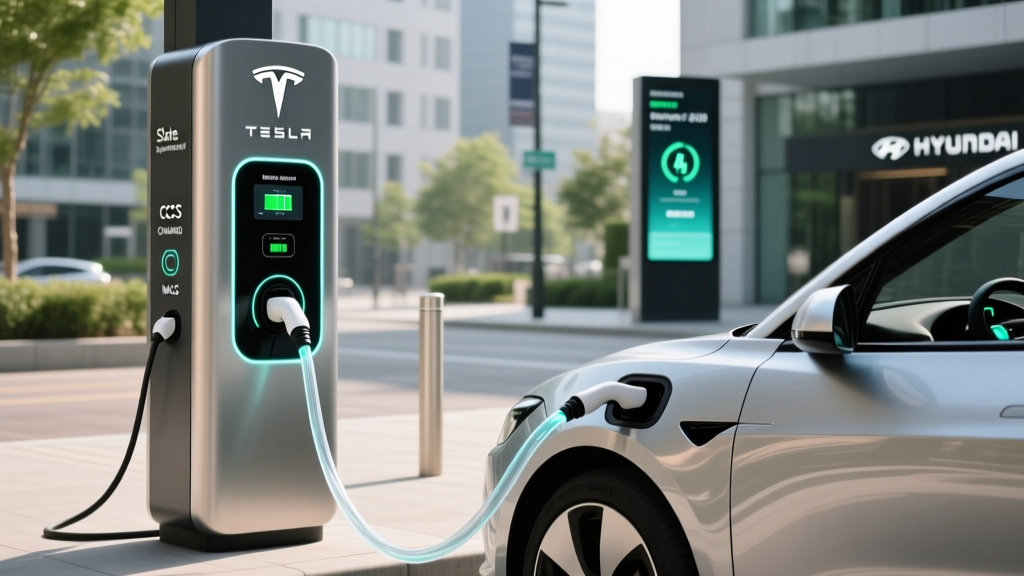
| CCS1 | Hyundai, Kia, BMW, VW, Stellantis, Honda, and most legacy EVs pre-2025 | Access at Supercharger stalls equipped with Magic Dock (CCS-to-NACS built in), or via aftermarket NACS adapter | Yes — Magic Dock at stall or purchased adapter |
| CHAdeMO | Nissan Leaf (legacy), Mitsubishi Outlander PHEV | Not compatible with Superchargers | No viable adapter exists |
Key details for CCS1 owners: If your EV has a CCS1 port, you have two options. First, use a Supercharger stall with Tesla's Magic Dock — a built-in adapter that converts the NACS connector to CCS1. These stalls are marked in the Tesla app. Second, purchase a third-party CCS1-to-NACS adapter. Tesla sells an official NACS DC adapter for CCS1 vehicles, and several third-party options (Lectron, A2Z EV) are available in the $150–$300 range. Verify that any adapter is rated for the full DC fast-charging power your vehicle can accept — a 150 kW-rated adapter will bottleneck a 250 kW-capable vehicle.
For NACS-native vehicles (Ford, GM, Rivian, etc. from 2025+): You plug directly into any Supercharger. No adapter required. Your vehicle's navigation system or the Tesla app will route you to open stalls.
Home Level 2 Charger Installation: Electrical Requirements, Costs, and Panel Upgrades
Public charging, including Superchargers, covers road trips. But 80–90% of EV charging happens at home. A properly installed Level 2 charger on a 240V circuit is the single biggest quality-of-life upgrade for any EV owner.
Electrical Requirements
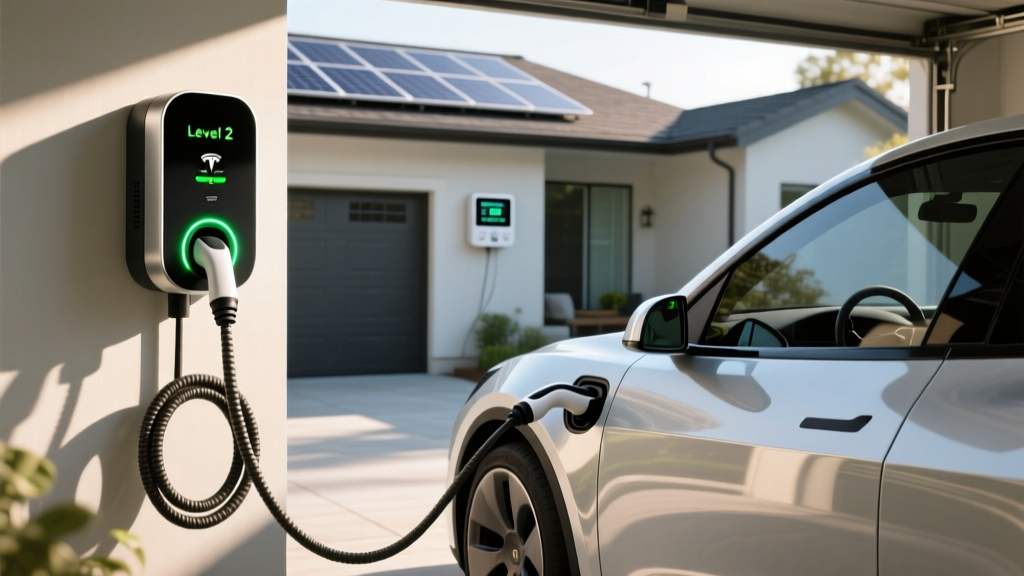
A Level 2 home charger requires a dedicated 240V circuit, similar to what an electric dryer or oven uses. The most common configurations:
- NEMA 14-50 outlet (50A circuit, 40A continuous): The most popular setup. Supports chargers up to 9.6 kW. Requires a 50A double-pole breaker.
- Hardwired 60A circuit (48A continuous): Supports chargers up to 11.5 kW. More reliable than a plug connection for high-amperage units; no outlet to loosen over time.
- Hardwired 80A circuit (64A continuous): Supports chargers up to 15.4–19.2 kW. Requires a robust electrical panel — many homes cannot support this without an upgrade.
Panel Upgrade: The Hidden Cost
Here's what most online guides gloss over: if your home has a 100A electrical panel (common in homes built before 2000), adding a 50A EV circuit may exceed your panel's capacity. An electrician will perform a load calculation per NEC Article 220 to determine if your panel can handle the additional draw alongside existing appliances (HVAC, water heater, dryer, stove).
If your panel is maxed out, you'll need a service upgrade to 200A, which typically costs $1,500–$3,500 including new panel, meter base work, and utility coordination. In some older homes with 60A or 100A service and knob-and-tube wiring, costs can reach $4,000–$5,000. Factor this into your budget before committing to a specific charger.
| Component | Cost Range | Notes |
|---|---|---|
| Level 2 Charger (equipment) | $300–$700 | Varies by power output, cable length, smart features |
| Electrician labor (standard install) | $500–$1,500 | Assumes panel has capacity; short run from panel to garage |
| Permit and inspection | $50–$250 | Required in most jurisdictions; varies by city/county |
| Electrical panel upgrade (if needed) | $1,500–$3,500 | 100A → 200A service upgrade; older homes may cost more |
| Long wire run / conduit (if needed) | $200–$800 | If charger location is far from the panel |
| Total (no panel upgrade) | $850–$2,450 | Typical scenario for modern homes with 200A panels |
| Total (with panel upgrade) | $2,350–$5,950 | Common for older homes with 100A service |
Safety and Code Considerations
- Dedicated circuit: NEC requires EV chargers to have their own dedicated circuit — no sharing with other appliances.
- GFCI protection: Outdoor installations require a GFCI (Ground Fault Circuit Interrupter) breaker. Many modern chargers include built-in GFCI protection, which can eliminate the need for a GFCI breaker at the panel (and avoid nuisance tripping).
- Outdoor rating: If your charger is mounted outdoors (carport, driveway), verify it carries a NEMA 4 or IP65 weather rating. All chargers recommended below meet this standard.
- Permit required: Skipping the permit saves money upfront but creates liability and insurance issues. Most insurers will deny claims related to unpermitted electrical work.
Recommended Level 2 Home Chargers: Power, Features, and Pricing
These are the chargers we recommend based on reliability, power output, smart features, and value. All are NACS or CCS1 compatible (or available in both configurations) and suitable for indoor or outdoor installation.
Tesla Wall Connector (Gen 3)
- Power output: Up to 11.5 kW (48A hardwired)
- Connector: NACS native (CCS1 adapter available separately)
- Cable length: 24 ft
- Smart features: Wi-Fi, OTA updates, power sharing (up to 6 units on one circuit), access control
- Price: ~$475
- Best for: Tesla owners and NACS-native Ford/GM/Rivian vehicles
ChargePoint Home Flex
- Power output: Up to 12 kW (50A, configurable via DIP switches from 16A–50A)
- Connector: Available in NACS or CCS1 (J1772 with adapter)
- Cable length: 23 ft
- Smart features: Wi-Fi, app scheduling, Alexa integration, energy tracking
- Price: ~$550–$650
- Best for: Multi-EV households needing flexible amperage
Emporia Vue Level 2 Charger
- Power output: Up to 11.5 kW (48A)
- Connector: J1772 (NACS adapter included in 2025+ models)
- Cable length: 24 ft
- Smart features: Wi-Fi, app control, solar integration, scheduled charging, energy monitoring
- Price: ~$399
- Best for: Budget-conscious buyers; solar panel owners
Grizzl-E Smart
- Power output: Up to 10 kW (40A)
- Connector: J1772 or NACS
- Cable length: 24 ft
- Smart features: OCPP-compatible, app control, adjustable amperage
- Price: ~$449
- Best for: Extreme cold climates (rated to -40°F); Canadian-built
Cost to Charge: Electricity vs. Gasoline Per Mile
The economic case for EVs hinges on fuel savings. Here's how charging costs break down across scenarios, compared to a gasoline vehicle averaging 28 MPG combined at $3.40/gallon.
| Charging Scenario | Rate ($/kWh) | Cost Per Mile* | Annual Fuel Cost (12,000 mi) |
|---|---|---|---|
| Home Level 2 — off-peak utility rate | $0.08–$0.12 | $0.025–$0.04 | $300–$480 |
| Home Level 2 — standard residential rate | $0.14–$0.18 | $0.04–$0.055 | $480–$660 |
| Public Level 2 (ChargePoint, EVgo L2) | $0.25–$0.40 | $0.075–$0.12 | $900–$1,440 |
| DC Fast Charging (Electrify America, EVgo) | $0.35–$0.55 | $0.10–$0.17 | $1,200–$2,040 |
| Tesla Supercharger (open network) | $0.28–$0.42 | $0.08–$0.13 | $960–$1,560 |
| Gasoline vehicle (28 MPG, $3.40/gal) | — | $0.12 | $1,457 |
*Based on an average EV efficiency of 3.0–3.2 miles per kWh (typical for a midsize crossover like the Tesla Model Y, Hyundai Ioniq 5, or Ford Mustang Mach-E). Source: fueleconomy.gov EPA data.
The takeaway: home charging at off-peak rates delivers fuel costs roughly 75–80% lower than gasoline. Even exclusive DC fast charging is roughly cost-competitive with gas, and most owners do 80%+ of their charging at home. The economics worsen if you rely solely on public DC fast charging — at $0.48/kWh national average, you're paying roughly the same per mile as a 30 MPG gas car. This is why home Level 2 installation is so critical to the EV value proposition.
Frequently Asked Questions
How much does it cost to install a home EV charger?
A standard Level 2 home charger installation costs $850–$2,450 total (equipment, electrician labor, and permit) if your electrical panel has sufficient capacity. If you need a panel upgrade from 100A to 200A service, expect $2,350–$5,950 all-in. The federal §30C tax credit can offset up to $1,000 of that cost if your census tract qualifies.
How fast will each charging level add range?
Level 1 (120V) adds 3–5 miles per hour — suitable only for PHEVs or overnight trickle charging. Level 2 (240V) adds 20–60 miles per hour depending on amperage — enough for virtually any daily commute. DC fast charging (including Tesla Superchargers at 150–250 kW) adds 150–300+ miles in 20–30 minutes, with the caveat that charging slows significantly above 80% state of charge.
Which connector and charger is compatible with my EV?
Check your vehicle's charge port. If it's NACS (the smaller, Tesla-style connector), you can plug directly into any Supercharger or use any NACS home charger. If it's CCS1 (the larger, two-part connector used by most non-Tesla brands through 2024), you'll need either a Supercharger stall with Tesla's Magic Dock adapter or a purchased CCS1-to-NACS adapter. CHAdeMO vehicles (primarily the Nissan Leaf) cannot access Tesla Superchargers at all. For home charging, CCS1 vehicles can use any J1772/CCS1 Level 2 charger without an adapter.
How much does charging cost per mile vs. gas?
At home off-peak rates ($0.10/kWh), EV charging costs roughly $0.03 per mile — about 75% less than a 28 MPG gas car at $3.40/gallon ($0.12/mile). Even at public DC fast charging rates ($0.45/kWh), EVs cost roughly $0.14/mile — comparable to gas. The savings are maximized with home charging, which is why a Level 2 installation is the single most impactful EV ownership decision.
What electrical upgrades might I need for a home charger?
The most common upgrade is a panel capacity increase from 100A to 200A service, needed when your existing panel can't handle the additional 40–50A load of an EV charger alongside your other appliances. Other potential upgrades include: replacing a Federal Pacific or Zinsco panel (known fire hazards, required replacement by most electricians), adding a sub-panel if the charger location is far from the main panel, or upgrading the meter base if your utility requires it. Always get a licensed electrician to perform a load calculation before purchasing equipment.
Can I charge a CCS1 EV at a Tesla Supercharger in 2026?
Yes, with conditions. Tesla has equipped a growing percentage of Supercharger stalls with the Magic Dock, a built-in CCS1-to-NACS adapter. These stalls are identified in the Tesla app and on your vehicle's navigation (if supported). Alternatively, you can purchase an aftermarket CCS1-to-NACS adapter ($150–$300) to use any standard Supercharger stall. Charging speeds will be limited by your vehicle's onboard charge acceptance rate — a Hyundai Ioniq 5 with 800V architecture can accept up to 238 kW, while a Chevy Bolt EUV is limited to ~55 kW.