What Is a SKAT Package Charger?
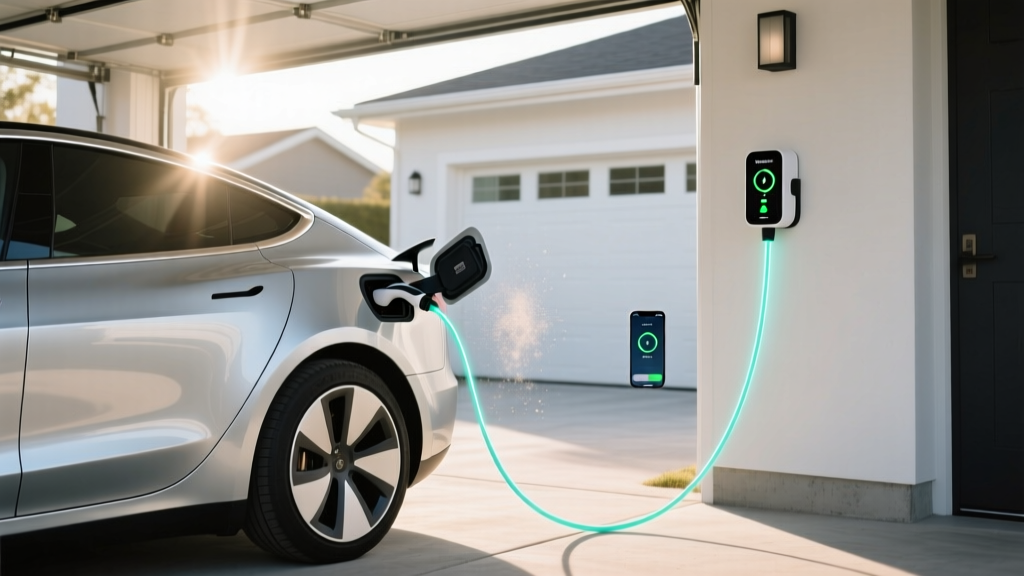
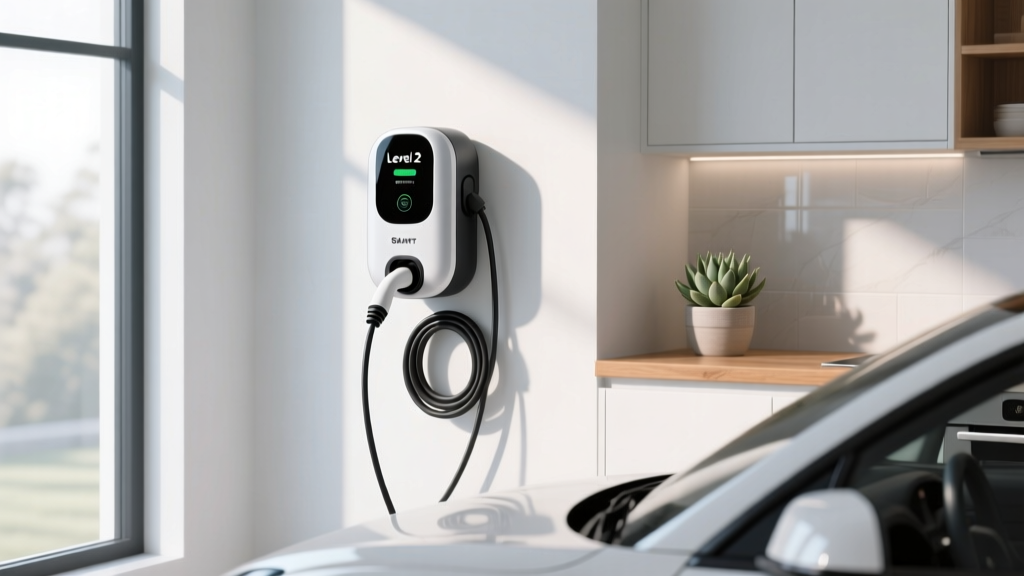
If you've encountered the term SKAT package charger while researching home EV charging, you're likely looking at a bundled Level 2 charging solution — typically a wall-mounted EVSE (Electric Vehicle Supply Equipment) paired with the necessary electrical hardware for a complete home installation. "SKAT" in EV charging contexts refers to a pre-packaged kit that includes the charging unit, mounting hardware, a dedicated circuit breaker, and sometimes a NEMA 14-50 receptacle or hardwire junction box, designed to streamline the path from panel to plug.
These packages have gained traction as more EV buyers realize that simply plugging into a standard 120V outlet (Level 1) won't keep up with daily driving needs. A proper SKAT-style Level 2 package delivers between 7.2 kW and 11.5 kW of power — enough to fully recharge most EV batteries overnight while you sleep.
kW vs kWh — the critical distinction: kW (kilowatts) measures power — the rate at which electricity flows into your car. kWh (kilowatt-hours) measures energy — the total capacity of your battery. A 10 kW charger delivering power for 8 hours adds 80 kWh of energy. Never use these interchangeably.
Charging Levels: Speed, Power, and Range Added Per Hour
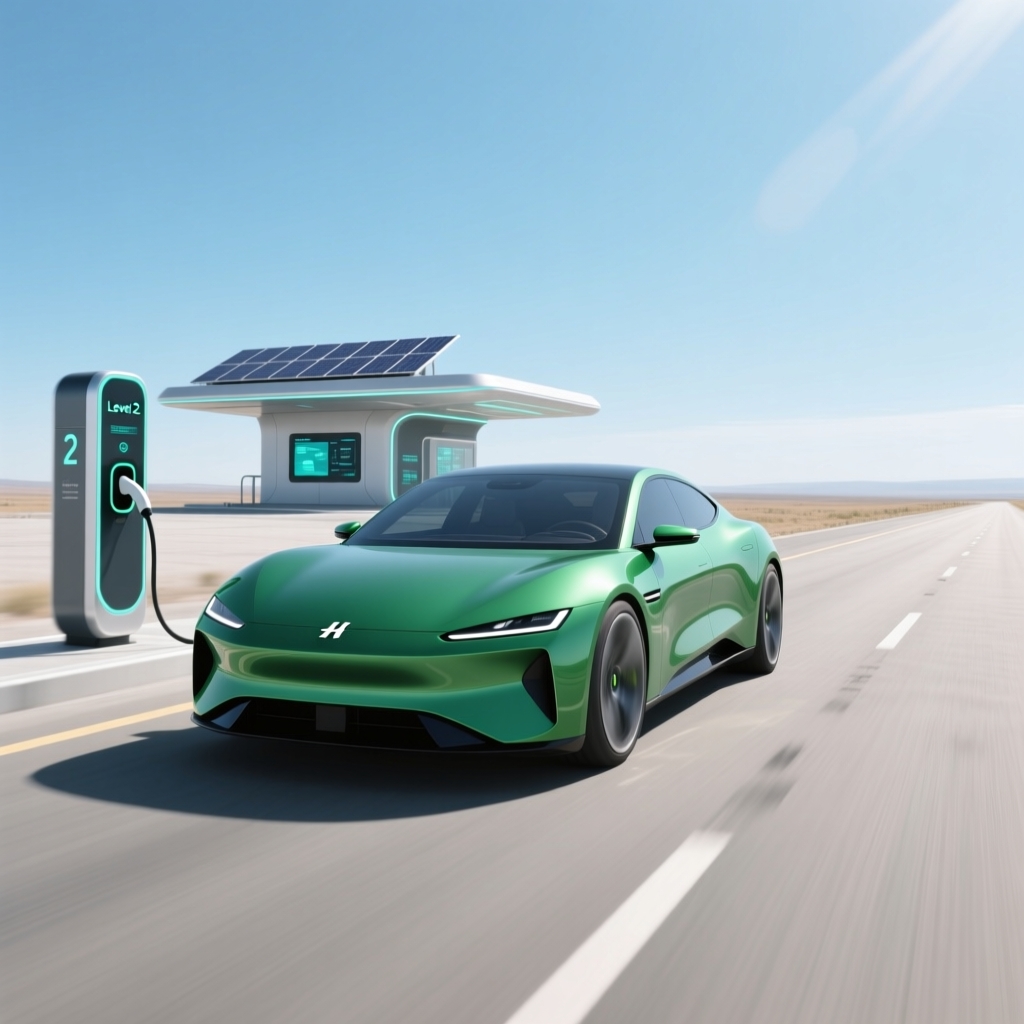
Understanding the three charging levels is essential before evaluating any charger package. Here's how they compare in real-world output:
| Level | Voltage | Power (kW) | Miles of Range/Hour | Typical Use |
|---|---|---|---|---|
| Level 1 | 120V AC | 1.2–1.9 kW | 3–5 mi/hr | Emergency / PHEV overnight |
| Level 2 | 240V AC | 7.2–11.5 kW | 20–44 mi/hr | Home daily charging |
| DC Fast (Level 3) | 400–900V DC | 50–350 kW | 150–1,200+ mi/hr | Road trips / public stations |
For a typical 75 kWh battery (like the one in a Tesla Model Y or Hyundai Ioniq 5), here's what charging times look like in practice:
- Level 1 (1.4 kW): 10–80% takes roughly 37 hours — impractical for daily BEV use
- Level 2 at 7.2 kW: 10–80% in approximately 7.3 hours — full overnight charge
- Level 2 at 11.5 kW: 10–80% in approximately 4.6 hours — faster turnaround
- DC Fast at 150 kW (peak): 10–80% in 18–25 minutes, though sustained rate tapers significantly above 80% SoC
The charge curve matters: most EVs accept peak kW only between roughly 10–50% SoC, then taper to protect battery health. A "250 kW" charger may average only 100–130 kW across a full 10–80% session.
Home Installation: Electrical Requirements and Costs
A SKAT package charger typically requires a 240V dedicated circuit — the same voltage your electric dryer or oven uses. Here's what that entails:
- Circuit amperage: Most Level 2 chargers draw 32A (7.7 kW) or 48A (11.5 kW). NEC code requires the circuit breaker to be rated 125% above continuous load — so a 48A charger needs a 60A breaker.
- Wire gauge: 6 AWG copper for 48A circuits; 8 AWG may suffice for 32A depending on run length.
- Connection type: NEMA 14-50 receptacle (plug-in, portable) or hardwired (permanent, often required for 48A+ units).
- Panel capacity: Your main service panel must have both physical breaker slots and sufficient amperage headroom. A 200A panel serving a home with electric HVAC, water heater, and dryer may need a load calculation before adding a 60A EV circuit.
Installation Cost Breakdown
Expect wide variation depending on your home's age, panel location, and local labor rates. Here's a realistic 2026 range:
| Component | Low Estimate | High Estimate | Notes |
|---|---|---|---|
| Level 2 EVSE unit (40A–48A) | $350 | $750 | Smart WiFi units cost more |
| Electrician labor (2–6 hrs) | $300 | $1,200 | Varies by region and run length |
| Materials (wire, conduit, breaker) | $100 | $400 | Longer runs = more copper |
| Permit and inspection | $50 | $250 | Required in most jurisdictions |
| Panel upgrade (if needed) | $1,500 | $4,000 | 100A→200A service upgrade |
| Total (no panel upgrade) | $800 | $2,600 | Most homes fall in $1,000–$1,800 |
| Total (with panel upgrade) | $2,300 | $6,600 | Older homes with 100A service |
Homes built after 2000 with 200A panels and garages adjacent to the panel typically land at the lower end. Pre-1980 homes with 100A service, or those needing a 60-foot wire run from panel to garage, will push costs higher. Always get at least two quotes from licensed electricians and confirm they pull permits — unpermitted work can void home insurance claims.
What Electrical Upgrades Might I Need?
Before committing to a SKAT package charger, have an electrician perform a load calculation per NEC Article 220. Common scenarios:
- No upgrade needed: 200A panel with spare slots and under ~80% existing load. Most newer homes qualify.
- Breaker swap or sub-panel: If slots are full but capacity exists, a tandem breaker or small sub-panel ($200–$500) may suffice.
- Service upgrade (100A → 200A): Required when existing load plus the EV circuit exceeds panel rating. Costs $1,500–$4,000 including utility coordination.
- Smart panel / load management: Devices like the Emporia Vue or Span smart panel can dynamically share capacity between EV charging and other loads, potentially avoiding a full upgrade.
Connector Compatibility: Which Plug Fits Your EV?
The connector landscape has shifted dramatically. As of 2026, the North American Charging Standard (NACS), originally developed by Tesla, has become the dominant connector for new vehicles, with most legacy CCS1 vehicles supported via adapters.
| Connector | Brands Using It (2025–2026 Models) | Adapter Needed? |
|---|---|---|
| NACS (Tesla-style) | Tesla (all), Ford, GM, Rivian, Volvo, Polestar, Hyundai/Kia (2025+), BMW, Mercedes | CCS1→NACS adapter for older public stations |
| CCS1 | VW ID.4 (pre-2025), older Ford/GM EVs, Stellantis, some legacy models | NACS→CCS1 adapter at Tesla Superchargers |
| CHAdeMO | Nissan Leaf (discontinued 2025), Mitsubishi Outlander PHEV | Limited network; consider adapter availability |
When selecting a SKAT package charger, match the connector to your vehicle. If you own a 2025+ Ford Mustang Mach-E or a 2026 Hyundai Ioniq 5, you'll want a NACS-terminated unit. If you're driving an older CCS1 vehicle, ensure the EVSE uses a J1772/CCS1 connector — or buy a quality adapter ($150–$300).
Cost to Charge: Per-Mile Economics vs Gasoline
One of the strongest arguments for home Level 2 charging is the per-mile cost advantage. Here's how common scenarios compare in 2026:
| Scenario | Rate ($/kWh) | Cost to Add 200 mi* | Cost Per Mile |
|---|---|---|---|
| Home off-peak (utility TOU rate) | $0.08–$0.12 | $5.60–$8.40 | $0.028–$0.042 |
| Home standard rate | $0.14–$0.18 | $9.80–$12.60 | $0.049–$0.063 |
| Public Level 2 (ChargePoint, etc.) | $0.25–$0.49 | $17.50–$34.30 | $0.088–$0.172 |
| DC Fast (Electrify America, EVgo) | $0.35–$0.55 | $24.50–$38.50 | $0.123–$0.193 |
| Gasoline (30 MPG avg, $3.40/gal) | — | $22.67 | $0.113 |
*Based on a vehicle consuming 3.5 miles per kWh (roughly 285 Wh/mi) — typical for a midsize crossover EV like the Tesla Model Y or Ioniq 5.
Home off-peak charging delivers fuel costs at roughly one-quarter to one-third the per-mile price of gasoline. Even standard-rate home charging undercuts gas significantly. The economics flip at DC fast chargers — frequent exclusive reliance on public DC charging can approach or exceed gasoline costs, which is why home Level 2 installation pays for itself within 1–3 years for most drivers covering 10,000+ miles annually.
According to fueleconomy.gov, the average EV achieves 3–4 miles per kWh, making electricity pricing the key variable in your operating cost.
Recommended Level 2 Chargers for Home Installation
Here are proven units that frequently appear in SKAT-style packages or as standalone purchases, evaluated on power output, connector options, smart features, and price as of early 2026:
ChargePoint Home Flex
- Power: Up to 12 kW (50A) — configurable down to 16A for lower-capacity circuits
- Connector: J1772 (CCS compatible) or NACS (2025+ version)
- Cable length: 23 feet
- Smart features: WiFi scheduling, Alexa integration, energy tracking, utility TOU optimization
- Price: $549–$649
- Best for: Flexible amperage settings; ideal if your panel can't support a full 48A circuit
Wall Connector (Tesla / Universal)
- Power: Up to 11.5 kW (48A)
- Connector: NACS native; Universal Wall Connector includes J1772 adapter
- Cable length: 24 feet
- Smart features: WiFi firmware updates, power-sharing between two units, Tesla app integration
- Price: $420–$475
- Best for: Tesla owners and NACS-equipped vehicles; cleanest aesthetic and best value at 48A
Emporia Level 2 EV Charger
- Power: Up to 11.5 kW (48A)
- Connector: J1772 (NACS adapter available)
- Cable length: 24 feet
- Smart features: Real-time energy monitoring, solar integration, load management with Emporia Vue panel
- Price: $399–$449
- Best for: Budget-conscious buyers wanting smart features; excellent for solar-equipped homes
Enel X JuiceBox 48
- Power: Up to 11.5 kW (48A)
- Connector: J1772 (NACS adapter sold separately)
- Cable length: 25 feet
- Smart features: WiFi scheduling, usage reports, utility demand-response compatibility
- Price: $499–$599
- Best for: Utility demand-response program participants; robust app and reporting
Safety, Code, and Installation Best Practices
EV charging draws sustained high current for hours — this isn't like running a microwave for two minutes. Safety and code compliance protect your home and your investment:
- Dedicated circuit: Your EVSE must have its own breaker — never share a circuit with other high-draw appliances. NEC 625.40 requires this for all EV supply equipment.
- GFCI protection: NEC 2023 (and carried into 2026 adoptions) requires GFCI protection for all 125V–250V receptacles in garages used for EV charging. Hardwired installations may be exempt depending on jurisdiction — confirm with your local inspector.
- Outdoor rating: If your charger mounts outside, verify an NEMA 4 or IP65 rating. Units rated only for indoor use will fail prematurely when exposed to rain or humidity.
- Cable management: Use a holster or cable retractor to prevent tripping hazards and protect the connector from ground contamination.
- Permit and inspection: Skipping permits saves $50–$250 upfront but creates liability exposure. Most insurers will deny fire claims traced to unpermitted electrical work. Per the National Electrical Code, all EVSE installations require a permit in adopting jurisdictions.
- Surge protection: A whole-home surge protector ($200–$400 installed) defends your EVSE and vehicle from grid transients — especially valuable in lightning-prone regions.
Federal Tax Credit and Incentives for Home Charging
The IRS §30C Alternative Fuel Vehicle Refueling Property Credit covers up to 30% of home EV charger equipment and installation costs, capped at $1,000. Key eligibility points for 2026:
- The charger must be installed at your primary residence in the United States.
- The property must be placed in service during the tax year.
- The credit is non-refundable — it reduces your tax liability but won't generate a refund beyond zero.
- Eligibility is subject to census-tract requirements: the installation location must be in a qualifying low-income or non-urban census tract for the full credit.
Many utilities also offer rebates of $200–$500 for Level 2 charger installation, and some provide free or discounted time-of-use (TOU) rate plans that slash your per-kWh cost during overnight hours. Check with your local utility before purchasing equipment — some require pre-approval to qualify.
Frequently Asked Questions
How much does it cost to install a home EV charger?
Most homes with a 200A panel pay between $800 and $2,600 total for equipment, electrician labor, materials, and permits. Homes needing a panel upgrade (100A to 200A) should budget $2,300–$6,600. The SKAT package approach bundles these components, sometimes reducing overall cost versus sourcing parts separately.
How fast will each charging level add range?
Level 1 (120V) adds 3–5 miles per hour — roughly 35–50 miles overnight. Level 2 (240V) at 7.2 kW adds 20–25 miles per hour; at 11.5 kW, it adds 35–44 miles per hour. DC fast charging at 150 kW can add 150+ miles in 15–20 minutes, though sustained rates taper above 80% SoC.
Which connector/charger is compatible with my EV?
Check your vehicle's charge port. 2025–2026 models from Tesla, Ford, GM, Hyundai, Kia, Rivian, BMW, and Volvo use NACS. Older EVs (pre-2024) from Volkswagen, Stellantis, and some others use CCS1/J1772. The Nissan Leaf used CHAdeMO. Most chargers now offer both connector options, and adapters bridge the gap for $150–$300.
How much does charging cost per mile vs gas?
Home off-peak charging costs $0.03–$0.04 per mile — about one-third the cost of gasoline at $0.11/mile (30 MPG, $3.40/gal). Standard-rate home charging runs $0.05–$0.06/mile. Public DC fast charging at $0.35–$0.55/kWh costs $0.12–$0.19/mile, approaching or exceeding gas costs.
What electrical upgrades might I need?
A licensed electrician should perform a load calculation. If your panel is 200A with spare capacity, you likely need only a new breaker and wire run. Homes with 100A service or panels near capacity may need a service upgrade ($1,500–$4,000) or a smart load-management device to share capacity dynamically.