What Is a 6 Pack Charger Setup — and Do You Actually Need One?
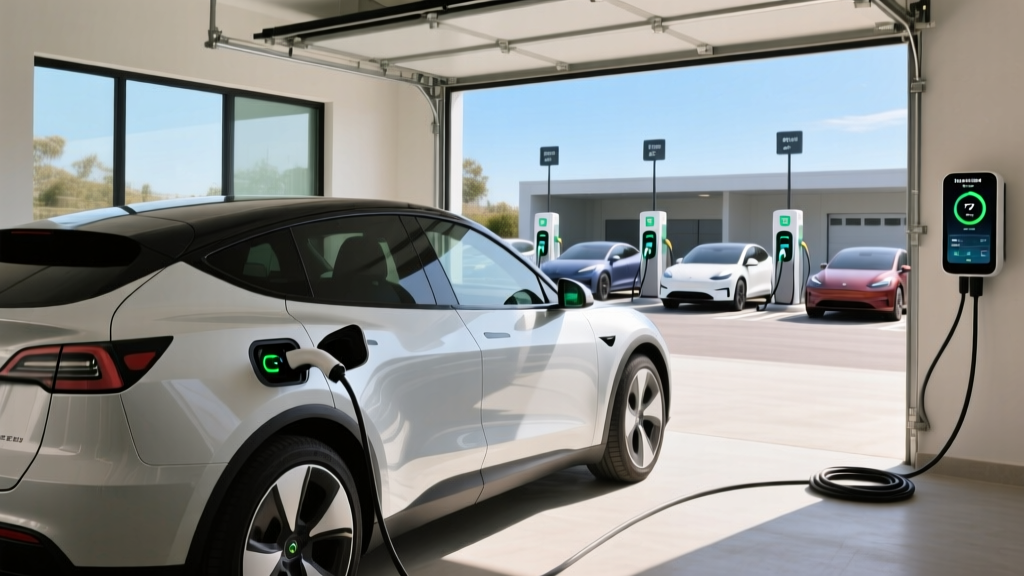
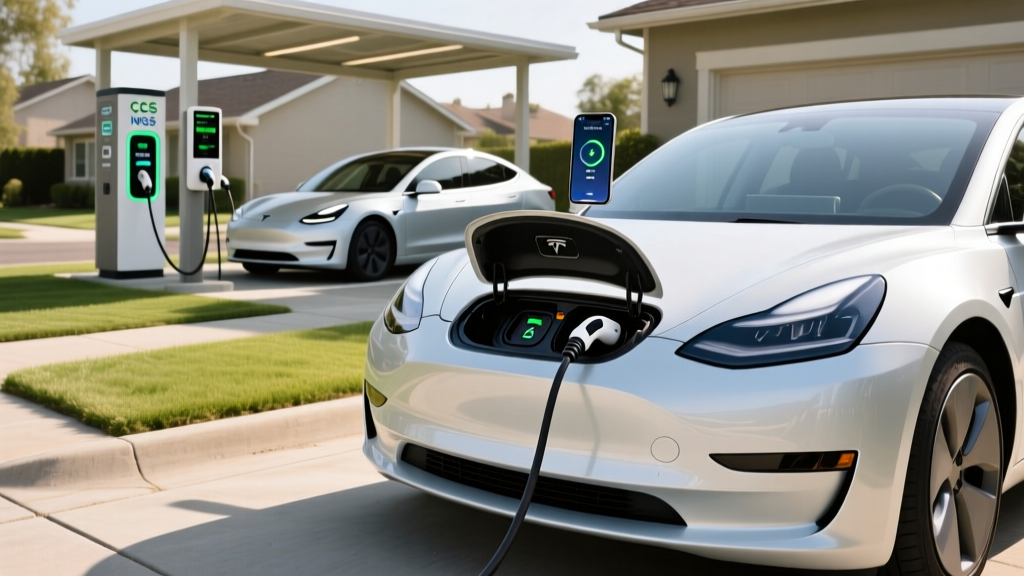
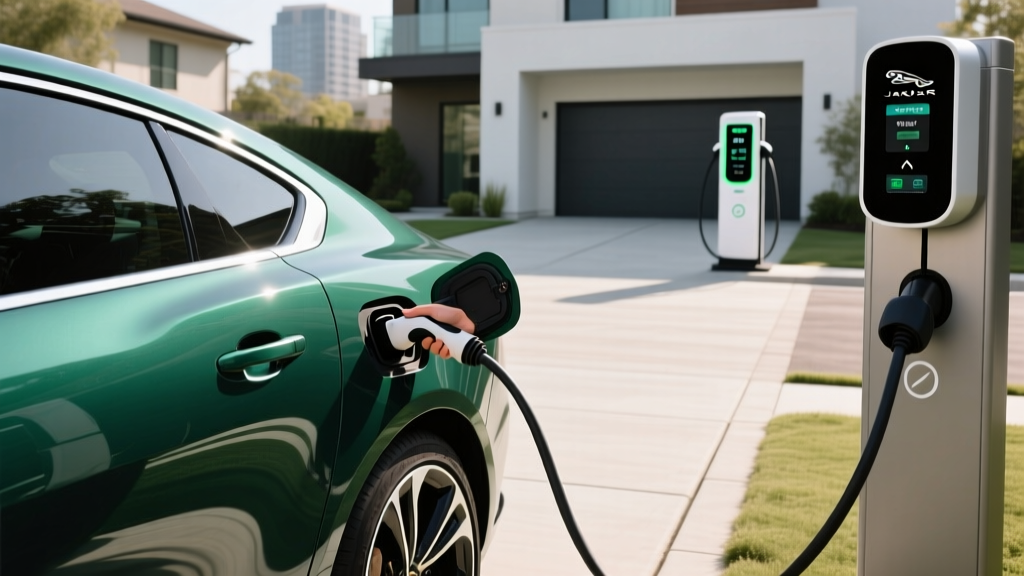
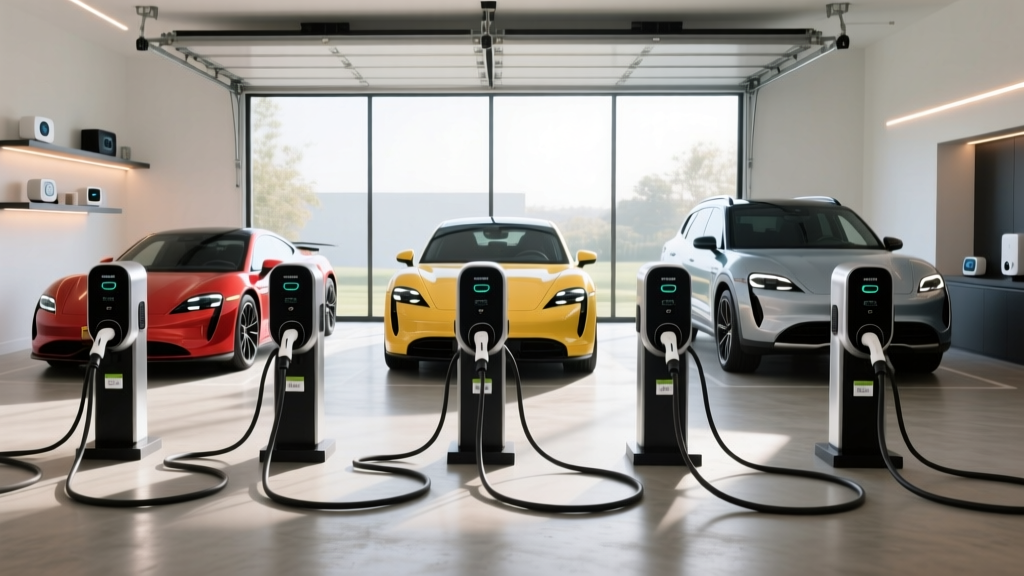
The term "6 pack charger" gets thrown around EV forums and Facebook groups, usually meaning one of two things: a multi-port Level 2 charging station that can serve several vehicles simultaneously (commonly found in apartment complexes, workplaces, or fleet depots), or a home setup designed to charge up to six EVs from a single electrical service. In either case, the electrical and logistical challenges are significant — and most homeowners dramatically underestimate the panel capacity required.
If you're a multi-EV household (two or three vehicles), a dual-port Level 2 station with load management is usually the practical ceiling. A true six-port installation is more relevant to small fleets, HOA shared parking, or commercial lots. This guide covers both scenarios: what equipment exists, what your electrical panel can actually handle, and what it all costs in 2026.
Charging Levels Explained: Speeds, Power, and Real-World Range Added
Before sizing a multi-port system, you need to understand the three charging levels and how they translate to miles on the road. Remember: kW (kilowatts) is the rate of power delivery, while kWh (kilowatt-hours) is the total energy stored in your battery. Think of kW as how fast water flows from a hose, and kWh as the size of the bucket.
| Level | Voltage | Typical Power (kW) | Miles of Range Added per Hour | Best Use Case |
|---|---|---|---|---|
| Level 1 | 120V AC | 1.2–1.9 kW | 3–5 miles | Overnight top-off, PHEVs, emergencies |
| Level 2 | 240V AC | 3.3–19.2 kW | 12–75 miles | Daily home/work charging, multi-EV setups |
| DC Fast Charge | 400–800V DC | 50–350 kW | 150–1,200+ miles (peak) | Road trips, rapid top-ups |
For a multi-EV home or small fleet, Level 2 is the only practical choice. DC fast chargers require 480V three-phase service and utility-level infrastructure — not something you install in a residential garage. A typical 2026 EV with an 80 kWh battery (like the Hyundai Ioniq 5 or Tesla Model Y Long Range) needs roughly 60 kWh to go from 10% to 80% state of charge. On a 48-amp (11.5 kW) Level 2 circuit, that takes about 5–6 hours. On a shared dual-port system splitting power, expect 8–12 hours.
Electrical Requirements: Panel Capacity, Amperage, and the Upgrade Reality
This is where most 6 pack charger plans hit a wall. Every Level 2 port requires a dedicated circuit, and the National Electrical Code (NEC) mandates that continuous loads (which EV charging qualifies as) cannot exceed 80% of the circuit breaker rating. So a 40-amp charger needs a 50-amp breaker; a 48-amp charger needs a 60-amp breaker.
Here's the math for a multi-port setup:
- Two 48-amp ports: 96 amps continuous → 120 amps of breaker capacity
- Three 40-amp ports: 120 amps continuous → 150 amps of breaker capacity
- Six 32-amp ports (a true "6 pack"): 192 amps continuous → 240 amps of breaker capacity
A standard modern home has a 200-amp main panel. Your HVAC, water heater, dryer, oven, and general circuits are already drawing from that. Adding 120–240 amps of EV charging almost always requires either a panel upgrade to 400 amps or the use of automatic load management (ALM) systems that dynamically throttle charging when household demand spikes.
How Much Does a Multi-Port EV Charger Installation Cost?
Below is a realistic breakdown for residential and light-commercial 6 pack charger installations in 2026. Costs vary significantly by region — expect the high end in California, New York, and the Pacific Northwest, and the low end in the Southeast and Midwest.
| Component | 2-Port Home Setup | 6-Port Commercial/Fleet |
|---|---|---|
| Charger equipment (hardware) | $1,200–$3,500 | $8,000–$25,000 |
| Electrical panel upgrade (if needed) | $2,500–$5,500 | $5,000–$15,000 |
| Wiring, conduit, breaker installation | $800–$2,500 | $4,000–$12,000 |
| Permits and inspections | $150–$600 | $500–$3,000 |
| Electrician labor (licensed) | $1,000–$3,000 | $5,000–$15,000 |
| Load management controller (if needed) | $400–$1,200 | $1,500–$5,000 |
| Total estimated range | $6,050–$16,300 | $24,000–$75,000 |
For homeowners, the sweet spot is usually a dual-port smart charger with built-in load sharing on a single 60-amp circuit. This avoids the panel upgrade entirely in most 200-amp homes and keeps total install cost in the $3,000–$7,000 range (assuming no panel work is needed).
Connector Compatibility: NACS, CCS, and CHAdeMO in 2026
The connector landscape has consolidated significantly since Ford, GM, Rivian, and most major automakers adopted the North American Charging Standard (NACS), originally developed by Tesla. As of the 2026 model year, NACS is the dominant connector for new EVs sold in the US. However, millions of CCS1-equipped vehicles remain on the road, and a few older models still use CHAdeMO.
| Connector | Common On (2026 Models) | Adapter Needed? |
|---|---|---|
| NACS (Tesla-style) | Tesla (all), Ford (F-150 Lightning, Mustang Mach-E, Explorer EV), GM (Equinox EV, Blazer EV, Silverado EV), Rivian (R1T, R1S), Hyundai (Ioniq 5, Ioniq 6, Ioniq 9), Kia (EV6, EV9), BMW (iX, i4), Volvo (EX30, EX90) | None for NACS vehicles; CCS vehicles need a NACS-to-CCS adapter (~$200–$300) |
| CCS1 | Older VW ID.4 (pre-2025), some Stellantis models, legacy BMW i3, older Hyundai Kona Electric | CCS-to-NACS adapter if charger is NACS-only |
| CHAdeMO | Nissan Leaf (all years), Mitsubishi Outlander PHEV (older) | No widely available adapter; CHAdeMO ports are being phased out at public stations |
If you're installing a multi-port system for mixed-fleet use (e.g., an HOA lot or small business), the smartest approach in 2026 is to install NACS-native chargers and provide one CCS adapter as a shared accessory. NACS is now the clear standard going forward, and per the SAE J3400 standard, it's the formalized North American connector.
Equipment Recommendations: Best Multi-Port and High-Power Chargers for 2026
Below are the top options for anyone researching a 6 pack charger configuration, from residential dual-port units to commercial multi-port stations.
Emporia Vue + Dual Level 2 (Best for Smart Homes)
- Power output: Up to 48 amps (11.5 kW) per port, 80 amps combined on dual configuration
- Connector: NACS (2026 model); CCS adapter available
- Cable length: 24 feet
- Smart features: Real-time energy monitoring via Emporia app, solar integration, automatic load management with Emporia Vue panel monitor, scheduled charging, utility demand-response compatible
- Price: ~$699 per unit (dual setup ~$1,398 before install)
- Best for: Homes with solar panels or time-of-use utility rates who want granular energy tracking
ChargePoint Home Flex (Best All-Around Single/Dual)
- Power output: Adjustable 16–50 amps (3.8–12 kW) per unit
- Connector: NACS or CCS1 (selectable at purchase); J1772 adapter included
- Cable length: 23 feet
- Smart features: ChargePoint app scheduling, Alexa/Google Home integration, load sharing between two units on one circuit, ENERGY STAR certified
- Price: ~$599–$749 per unit
- Best for: Two-EV households wanting reliable load sharing without a panel upgrade
Wallbox Pulsar Max (Best Compact High-Power)
- Power output: Up to 48 amps (11.5 kW)
- Connector: NACS (2026 version); integrated cable holster
- Cable length: 25 feet
- Smart features: Wi-Fi + Bluetooth, Power Sharing (link up to several units on one circuit), Power Boost (dynamic load management with grid meter), OTA firmware updates
- Price: ~$649 per unit
- Best for: Multi-EV setups where you want to daisy-chain 2–4 units with intelligent power distribution
Blink HQ 200 (Best for Commercial 6-Port)
- Power output: Up to 76 amps (19.2 kW) per port, dual-port pedestal configurations available; networked systems scale to 6+ ports
- Connector: NACS and CCS1 dual-cable options
- Cable length: 25 feet
- Smart features: Blink Network management dashboard, RFID access control, payment processing, load balancing across ports, ADA-compliant pedestal options
- Price: ~$4,500–$7,500 per dual-port pedestal (three pedestals for a 6-pack = $13,500–$22,500 equipment only)
- Best for: HOAs, apartment complexes, small fleet depots, and workplace charging
Cost to Charge: Home vs. Public vs. DC Fast — and How It Compares to Gas
One of the strongest arguments for electrifying a multi-vehicle fleet or household is the per-mile fuel cost. But the savings depend heavily on where and when you charge.
| Charging Scenario | Average Cost ($/kWh) | Cost to Add 200 Miles* | Cost per Mile |
|---|---|---|---|
| Home Level 2 (off-peak utility rate) | $0.08–$0.14 | $4.80–$8.40 | $0.024–$0.042 |
| Home Level 2 (standard residential rate) | $0.14–$0.20 | $8.40–$12.00 | $0.042–$0.060 |
| Home with rooftop solar (marginal cost) | $0.02–$0.06 | $1.20–$3.60 | $0.006–$0.018 |
| Public Level 2 (ChargePoint, EVgo L2) | $0.25–$0.49 | $15.00–$29.40 | $0.075–$0.147 |
| DC Fast Charge (Electrify America, Tesla Supercharger) | $0.32–$0.58 | $19.20–$34.80 | $0.096–$0.174 |
| Gasoline comparison (25 MPG avg, $3.40/gal) | — | $27.20 | $0.136 |
*Based on an average EV efficiency of 3.5 miles/kWh (roughly the combined efficiency of a 2026 Tesla Model Y or Hyundai Ioniq 5). Per fueleconomy.gov, actual efficiency varies from 2.5 mi/kWh (large trucks) to 4.5 mi/kWh (sedans like the Lucid Air).
The takeaway: home off-peak charging is 60–80% cheaper per mile than gasoline. Even DC fast charging is roughly cost-competitive with gas. But if your multi-EV household charges exclusively at public DC stations, the savings shrink significantly. This is exactly why investing in a home 6 pack charger setup pays for itself — the more vehicles you charge at home, the faster the ROI.
Charging Time Examples: What to Expect with Common Battery Sizes
Charging time depends on battery capacity (kWh), the charger's power output (kW), and the vehicle's onboard charge acceptance rate. Here are real-world 10–80% estimates for popular 2026 EVs on Level 2:
| Vehicle (2026) | Battery (kWh usable) | Max L2 Acceptance | 10–80% at 11.5 kW (48A) | 10–80% at 7.7 kW (32A) |
|---|---|---|---|---|
| Tesla Model Y Long Range | 75 kWh | 11.5 kW | ~4.5 hours | ~6.8 hours |
| Hyundai Ioniq 5 (Long Range) | 84 kWh | 10.9 kW | ~5.3 hours | ~7.9 hours |
| Ford F-150 Lightning (Extended) | 131 kWh | 19.2 kW | ~7.9 hours (at 11.5 kW shared) | ~11.9 hours |
| Chevrolet Equinox EV | 85 kWh | 11.5 kW | ~5.4 hours | ~8.1 hours |
| BMW i4 eDrive40 | 81 kWh | 11 kW | ~5.1 hours | ~7.6 hours |
With a shared dual-port system splitting a 60-amp circuit (delivering ~9.6 kW per port when both are active), expect charging times to roughly double compared to single-port dedicated use. This is fine for overnight charging but matters if you need quick turnarounds during the day.
Safety, Code, and Installation Best Practices
Any multi-port EV charging installation must comply with the National Electrical Code (NEC), specifically Article 625 (Electric Vehicle Charging System Equipment). Key requirements:
- Dedicated circuit: Each Level 2 port requires its own dedicated breaker unless the equipment is specifically listed for multi-port load sharing on a single circuit (e.g., ChargePoint dual load-sharing or Wallbox Power Sharing).
- GFCI protection: NEC 2023 (and continuing in 2026 local adoptions) requires GFCI protection for all receptacles used for EV charging. Hardwired installations often avoid this requirement and are generally preferred for reliability.
- Outdoor rating: If any port is mounted outdoors, the unit must carry a NEMA 4 or NEMA 4X rating for weather resistance. All chargers recommended above meet this standard.
- Ventilation: Indoor installations in enclosed garages should have adequate ventilation, though modern sealed EV batteries and chargers produce minimal off-gassing.
- Cable management: OSHA and local fire codes may require cable retraction systems or holsters to prevent tripping hazards in shared or commercial installations.
- Permit and inspection: Virtually all jurisdictions require an electrical permit for Level 2 installations. Budget $150–$600 for permits and plan for a post-install inspection. Unpermitted work can void homeowner's insurance claims.
Choose a networked 6-port commercial system if: You manage an HOA, apartment complex, or fleet of 4–6+ vehicles and need access control, payment processing, and load balancing ($25,000–$75,000 total).
Consider a panel upgrade or load management controller if: Your existing panel is at or above 75% capacity on its load calculation, or your utility charges demand-response penalties for high concurrent draw.
Frequently Asked Questions
How much does it cost to install a home EV charger?
A single-port Level 2 home charger installation typically costs $1,500–$4,500 total (equipment + electrician + permit) if no panel upgrade is needed. A dual-port setup with load sharing runs $3,000–$7,000. If a panel upgrade to 400 amps is required, add $3,000–$7,000. For a commercial 6-port installation, expect $24,000–$75,000 all-in.
How fast will each charging level add range?
Level 1 (120V) adds 3–5 miles per hour. Level 2 (240V) adds 12–75 miles per hour depending on amperage and vehicle acceptance rate. DC fast charging can add 150–1,200+ miles per hour at peak power, but charge curves taper significantly above 80% state of charge, so real-world sessions are typically 10–80% in 18–40 minutes depending on the vehicle and charger.
Which connector/charger is compatible with my EV?
For 2026 model-year vehicles, the vast majority now use NACS (the Tesla-derived standard). This includes Tesla, Ford, GM, Rivian, Hyundai, Kia, BMW, and Volvo. Older CCS1 vehicles (pre-2025 VW ID.4, some Stellantis models) can use NACS chargers with a $200–$300 adapter. CHAdeMO vehicles (Nissan Leaf) are increasingly incompatible with new infrastructure and have no widely available adapter.
How much does charging cost per mile vs gas?
Home off-peak charging costs $0.02–$0.04 per mile — roughly 70–80% cheaper than gasoline at $3.40/gallon and 25 MPG ($0.136/mile). Standard residential rates bring it to $0.04–$0.06/mile. Public DC fast charging at $0.32–$0.58/kWh costs $0.10–$0.17/mile, which is comparable to or slightly more than gas. The economics strongly favor home charging.
What electrical upgrades might I need?
For a single 48-amp Level 2 charger, most 200-amp panels have sufficient headroom — you'll need a 60-amp breaker and 6 AWG copper wire. For dual-port or larger "6 pack" configurations, you'll likely need a panel upgrade to 400 amps ($3,000–$7,000) or an automatic load management system ($400–$5,000) that throttles charging when household circuits are busy. Homes built before 2000 with 100-amp service will almost certainly need an upgrade. A licensed electrician should perform an NEC Article 220 load calculation before you purchase equipment.
Is there a tax credit for home charger installation?
The federal Alternative Fuel Vehicle Refueling Property Credit (IRS Form 8911) covers 30% of home charging equipment and installation costs, up to $1,000. However, eligibility depends on your census tract meeting certain low-income or non-urban criteria. Check the latest IRS guidance or consult a tax professional — rules and eligible tract maps have been updated for 2026.