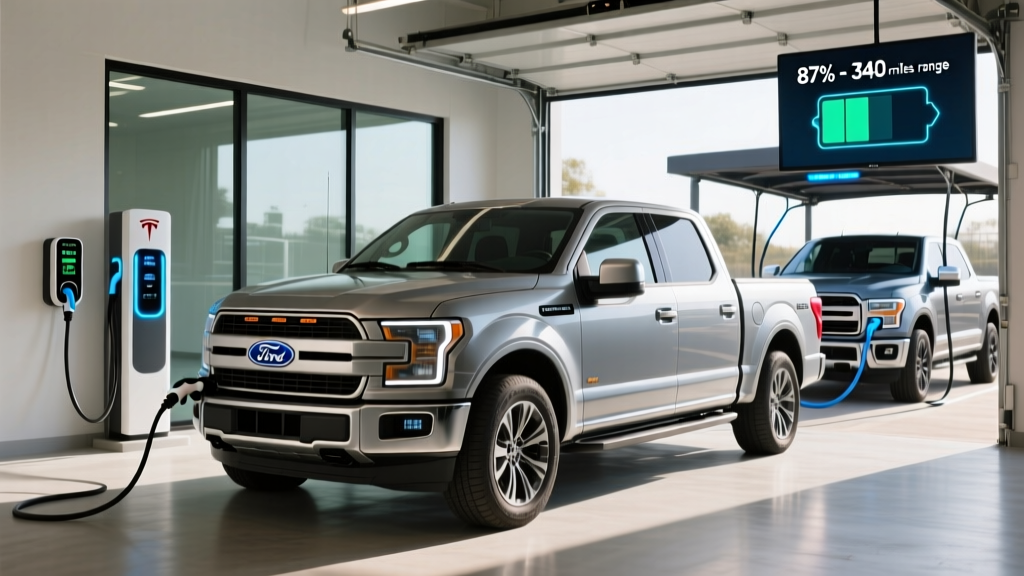
If you've been searching for a single cab F-150 supercharged electric conversion or are evaluating the Ford F-150 Lightning's extended-range battery as a towing workhorse, charging logistics are the make-or-break factor. A full-size electric pickup with a large battery pack (98–131 kWh usable) demands serious home infrastructure and careful public-charging planning. This guide covers exactly what you need to wire, plug in, and budget for in 2026.
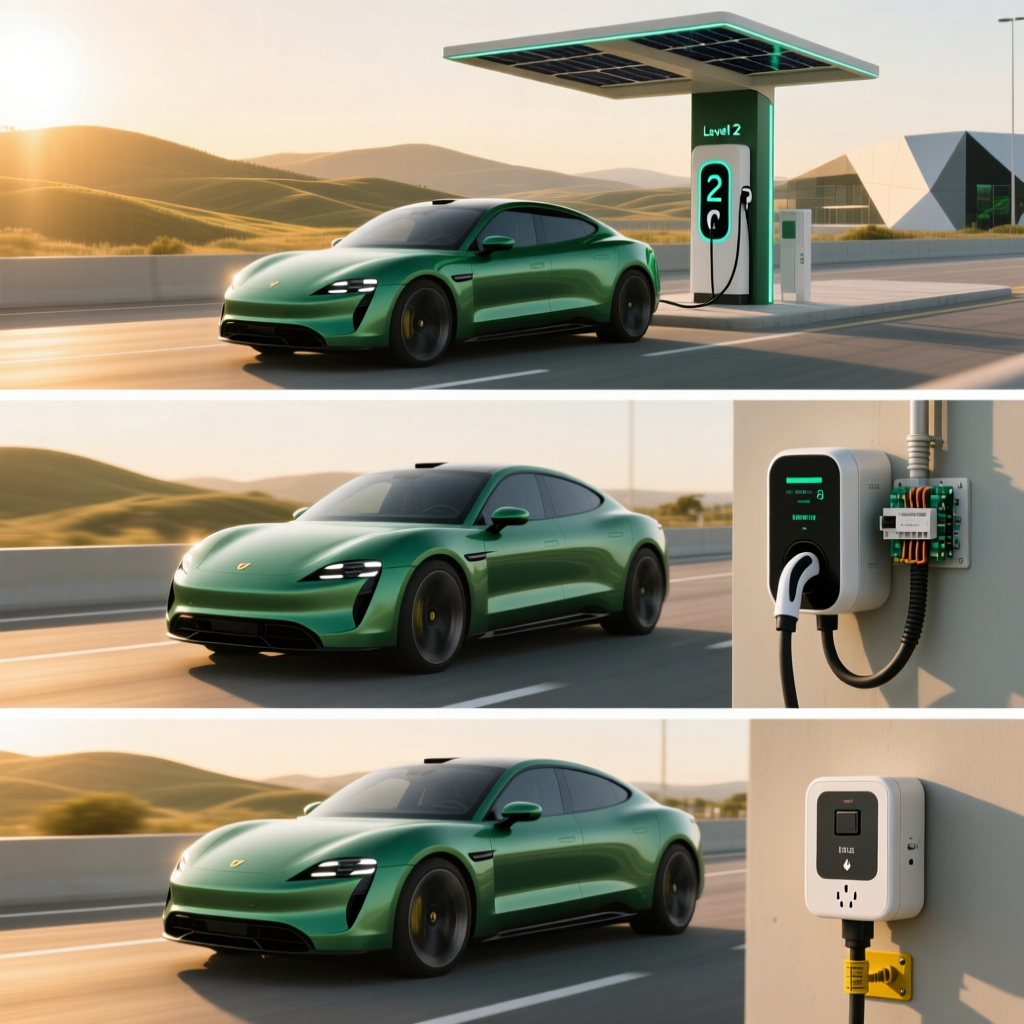
Charging Levels Explained: kW, Miles Per Hour, and Real-World Speeds
Before buying equipment, understand the three charging tiers. The most common confusion in EV ownership is mixing up kW (kilowatts — the rate of power delivery, like water pressure) with kWh (kilowatt-hours — the energy stored in the battery, like gallons in a tank). A charger rated at 11.5 kW delivers 11.5 kWh of energy per hour of charging.
| Level | Voltage / Amps | Power (kW) | Miles of Range Added per Hour | Best Use Case |
|---|---|---|---|---|
| Level 1 | 120V / 12A | ~1.4 kW | 3–5 miles | Emergency / overnight trickle |
| Level 2 (Home) | 240V / 40–48A | 9.6–11.5 kW | 25–35 miles | Daily home charging |
| Level 2 (Commercial) | 208–240V / 80A | 19.2 kW | 50–60 miles | Workplace / fleet depot |
| DC Fast (Level 3) | 400–800V DC | 150–350 kW | 180–400+ miles (peak) | Road trips, quick top-ups |
For a large-battery electric F-150 (Extended Range, 131 kWh usable), Level 1 charging is impractical — a full charge would take over 90 hours. A Level 2 home charger at 11.5 kW can replenish the pack from 10% to 80% in roughly 8–9 hours, making overnight charging feasible. DC fast charging at 150+ kW can handle 10–80% in approximately 38–44 minutes depending on the truck's charge curve and battery temperature.
Home Installation: Electrical Requirements, Panel Upgrades, and Costs
Installing a Level 2 home charger for an electric pickup is a significant electrical project. Most full-size EVs with large packs benefit from a 48-amp charger on a dedicated 60-amp, 240V circuit (the National Electrical Code requires circuits rated at 125% of continuous load). Here's what the installation typically involves:
| Component | Cost Range | Notes |
|---|---|---|
| Level 2 EVSE (charger hardware) | $400–$750 | Hardwired or NEMA 14-50 plug; 40–48A |
| Electrician labor (standard install) | $500–$1,500 | Run from panel to garage/carport; 20–50 ft |
| Electrical permit | $50–$200 | Varies by municipality |
| Panel upgrade (if needed) | $1,500–$4,000 | 100A → 200A service; common in older homes |
| Conduit, wiring, GFCI breaker | $150–$400 | 6 AWG copper for 60A circuit |
| Total (no panel upgrade) | $1,100–$2,850 | Most homes with 200A service |
| Total (with panel upgrade) | $2,600–$6,850 | Homes with 100A or older panels |
Will You Need a Panel Upgrade?
Homes built before 1990 often have 100-amp electrical service. Adding a 60-amp dedicated EV circuit to an already-loaded 100A panel may exceed the panel's capacity, especially if you run central A/C, an electric dryer, and an electric range simultaneously. A licensed electrician will perform a load calculation per NEC Article 220 to determine if an upgrade is required. Don't skip this step — an overloaded panel is a fire hazard and will fail inspection.
For the single cab F-150 supercharged electric conversion or a Lightning with the Extended Range pack, the 48A / 11.5 kW setup is strongly recommended over a 32A unit. The larger battery simply takes too long to fill at lower power levels, especially if you're towing and draining the pack frequently.
Connector Compatibility: NACS, CCS, and Adapter Requirements
As of 2026, the North American charging connector landscape has consolidated significantly around the North American Charging Standard (NACS), originally developed by Tesla. Ford was among the first legacy automakers to adopt NACS, meaning the F-150 Lightning (model year 2025+) ships with a native NACS charge port. Here's what you need to know:
| Connector | Type | Used By | Adapter Needed? |
|---|---|---|---|
| NACS (J3400) | AC + DC | Tesla, Ford (2025+), GM (2025+), Rivian, many others | No — native on new Fords |
| CCS1 | DC Fast | Older Ford EVs, VW, Hyundai/Kia (pre-2025), BMW | CCS-to-NACS adapter (~$200) for Tesla Superchargers |
| CHAdeMO | DC Fast | Nissan Leaf (legacy); nearly phased out | Not recommended for new purchases |
| J1772 | AC Level 1/2 | All non-Tesla EVs (pre-2025) | J1772-to-NACS adapter included with many new EVs |
If you own a 2022–2024 F-150 Lightning with a CCS port, Ford provides a NACS adapter that grants access to the Tesla Supercharger network (V3 and V4 stalls). For home Level 2 charging, most modern EVSE units now ship with a NACS connector, but J1772 units remain widely available and work with a simple adapter.
Cost Per Mile: Home Charging vs. Public DC Fast vs. Gas
One of the strongest ownership arguments for an electric F-150 over a gas-powered single cab F-150 supercharged (5.0L Coyote V8 with a supercharger kit, rated around 14–16 MPG combined) is fuel cost. Here's the math based on 2026 average energy prices:
| Scenario | Energy Cost | Efficiency | Cost Per Mile |
|---|---|---|---|
| Home Level 2 (off-peak rate) | $0.10/kWh | 2.0 kWh/mi (50 MPGe) | $0.20/mi |
| Home Level 2 (national avg) | $0.17/kWh | 2.0 kWh/mi | $0.34/mi |
| Public DC Fast (Electrify America) | $0.42/kWh | 2.0 kWh/mi | $0.84/mi |
| Gas F-150 Supercharged (5.0L SC) | $3.40/gal | 15 MPG combined | $0.23/mi |
| Gas F-150 Supercharged (towing) | $3.40/gal | 9 MPG | $0.38/mi |
At off-peak home rates, the electric truck costs less than a gas supercharged F-150 per mile. At the national average electricity rate, costs are comparable under normal driving and favor the electric truck heavily during towing, where a supercharged V8's fuel economy collapses. Public DC fast charging is the most expensive scenario — roughly double the cost of gas per mile — which is why home Level 2 installation is essential for EV pickup economics.
For reference, the EPA rates the F-150 Lightning Extended Range at 70 MPGe combined, translating to approximately 2.0 kWh per mile. Real-world highway efficiency at 75 mph drops to roughly 2.3–2.5 kWh/mi, and towing a 6,000-lb trailer can push consumption to 3.0+ kWh/mi.
Charging Times for Common Electric Pickup Battery Sizes
Charge time depends on battery capacity (kWh), charger power (kW), and the vehicle's charge curve. Most EVs charge fastest between 10–50% State of Charge, then taper significantly above 80% to protect the battery. Here are realistic 10–80% times for common electric pickup configurations:
| Battery (Usable kWh) | Level 2 at 11.5 kW | DC Fast at 150 kW (peak) | DC Fast at 250+ kW (peak) |
|---|---|---|---|
| 98 kWh (Lightning Std Range) | ~6 hours | ~35 min | ~32 min (curve-limited) |
| 131 kWh (Lightning Ext Range) | ~8.5 hours | ~44 min | ~38 min |
| 149 kWh (Silverado EV Max) | ~9.5 hours | ~48 min | ~30 min (350 kW capable) |
Key takeaway: peak kW ratings are not sustained. A truck that "accepts 150 kW" will only hold that rate for a portion of the session. The average rate across a 10–80% session is typically 60–75% of the peak. This is why we report 10–80% times rather than theoretical minimums.
Recommended Level 2 Home Chargers for Electric Pickups (2026)
ChargePoint Home Flex (NACS)
- Power Output: Up to 11.5 kW (48A, 240V)
- Connector: Native NACS (25-ft cable)
- Smart Features: Wi-Fi, app scheduling, Alexa, load sharing
- Price: ~$599
- Best For: Flexible amperage (16–48A dip-switch adjustable); works on 20A to 60A circuits
Emporia Level 2 EV Charger
- Power Output: Up to 11.5 kW (48A, 240V)
- Connector: NACS or J1772 options
- Smart Features: Real-time energy monitoring, solar integration, app control
- Price: ~$399
- Best For: Budget-conscious buyers who want energy tracking; pairs well with solar panels
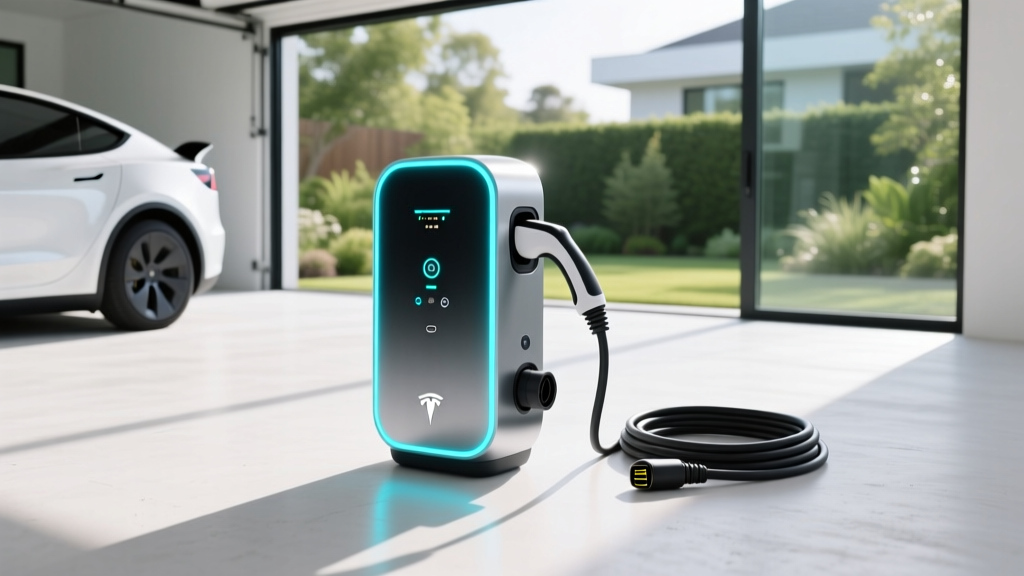
Tesla Wall Connector (Gen 4)
- Power Output: Up to 11.5 kW (48A, 240V)
- Connector: Native NACS (24-ft cable)
- Smart Features: Wi-Fi, OTA updates, Power-Share (load balancing with two units)
- Price: ~$475
- Best For: Tesla and NACS-equipped Ford/GM owners; cleanest industrial design
Ford Charge Station Pro
- Power Output: Up to 19.2 kW (80A, 240V) — requires 100A dedicated circuit
- Connector: Native NACS (2025+ models)
- Smart Features: FordPass integration, bidirectional V2H (vehicle-to-home power with Intelligent Backup Power)
- Price: ~$1,300 (hardware only; requires specific electrical panel setup)
- Best For: F-150 Lightning owners wanting home backup power capability
For most single cab F-150 supercharged electric conversion owners or Lightning buyers, the ChargePoint Home Flex at 48A offers the best balance of price, adjustability, and cable length. If you want vehicle-to-home backup power during outages, the Ford Charge Station Pro is the only option that enables Intelligent Backup Power — but it requires a specific transfer switch installation by a Ford-certified electrician.
Safety, Code Compliance, and Outdoor Installation
Level 2 charger installations must comply with NEC Article 625 (Electric Vehicle Charging System Equipment). Key requirements and best practices:
- Dedicated circuit: Your EVSE must be on its own dedicated breaker — never share a circuit with other appliances.
- GFCI protection: NEC 2020 and later requires GFCI protection for all receptacles used for EV charging (NEMA 14-50 outlets). Hardwired EVSE units have built-in ground-fault protection and typically do not require an external GFCI breaker — and adding one can cause nuisance tripping.
- Outdoor rating: If mounting outside, ensure the EVSE is rated NEMA 4 (weatherproof). All recommended units above carry outdoor ratings.
- Cable management: Use a holster or cable retractor to prevent tripping hazards and protect the connector from ground moisture.
- Permit and inspection: Most jurisdictions require a permit ($50–$200) and a post-install inspection. Skipping the permit can void homeowner's insurance claims related to electrical fires.
- Utility rebates: Many utilities offer $250–$500 rebates for Level 2 installations, and the federal §30C Alternative Fuel Vehicle Refueling Property Credit covers up to 30% of hardware and installation costs (max $1,000) if you live in an eligible census tract.
Frequently Asked Questions
How much does it cost to install a home EV charger for an electric F-150?
Expect $1,100–$2,850 for a standard installation (charger + electrician + permit) if your home already has 200-amp electrical service. If you need a panel upgrade from 100A to 200A, add $1,500–$4,000. The Ford Charge Station Pro for bidirectional power requires additional transfer-switch hardware and can push total costs to $3,500–$5,000.
How fast will each charging level add range to an electric F-150?
Level 1 (120V) adds roughly 3–5 miles per hour — essentially unusable for a 131 kWh pack. Level 2 at 48A/11.5 kW adds 25–35 miles per hour, sufficient for overnight replenishment of 200+ miles. DC fast charging at 150 kW can add 180+ miles in 20 minutes under ideal conditions.
Which connector is compatible with a 2025+ F-150 Lightning?
The 2025+ F-150 Lightning uses a native NACS charge port, compatible with Tesla Superchargers and all new NACS-equipped public stations. Older (2022–2024) Lightnings use CCS1 and require Ford's NACS adapter for Supercharger access. For home Level 2, any NACS or J1772 EVSE will work (with adapter for J1772 units on NACS trucks).
How much does charging cost per mile compared to a gas supercharged F-150?
At home off-peak rates ($0.10/kWh), an electric F-150 costs approximately $0.20/mile vs. $0.23/mile for a supercharged 5.0L V8 getting 15 MPG at $3.40/gal. Under towing conditions, the gas truck drops to ~9 MPG ($0.38/mile) while the electric truck rises to ~$0.30–$0.40/mile — still cheaper or comparable. Public DC fast charging at $0.42/kWh pushes the EV cost to $0.84/mile, making home charging essential for cost savings.
What electrical upgrades might I need for a Level 2 charger?
If your home has 100-amp service, you'll likely need a panel upgrade to 200A ($1,500–$4,000). Homes with 200A service typically have sufficient capacity for a 60A dedicated EV circuit unless multiple large electric loads (range, dryer, HVAC) run simultaneously. A licensed electrician will perform a NEC Article 220 load calculation to determine your exact needs.
Can I use a NEMA 14-50 outlet instead of hardwiring the charger?
Yes, but with caveats. A NEMA 14-50 outlet on a 50A breaker supports up to 40A continuous (9.6 kW). For 48A charging, you need a hardwired connection on a 60A breaker. Plug-in installations also require a GFCI breaker under current NEC, which adds $80–$150 and can cause nuisance trips with some EVSE models. Hardwired is generally preferred for reliability and maximum power.