Shell Recharge: What the Network Actually Delivers
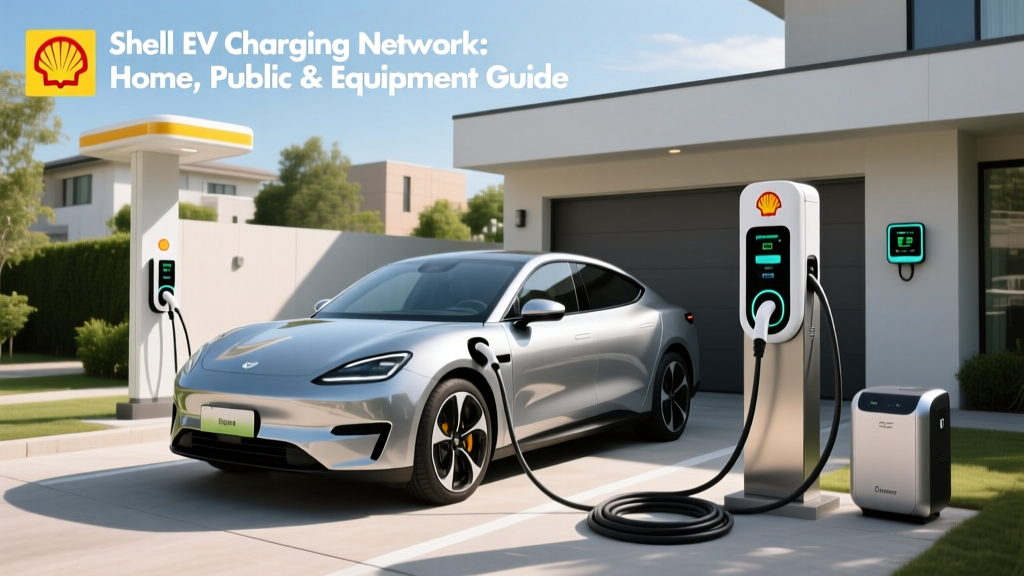
If you've seen Shell Recharge stations cropping up at grocery stores, gas stations, and highway rest stops, you're not alone. Shell has been expanding its EV charging footprint across the U.S. through its Shell Recharge brand, positioning itself as a bridge between legacy fuel infrastructure and electric mobility. But what does Shell EV charging actually offer in terms of speed, pricing, and reliability compared to home charging or other public networks?
This guide breaks down Shell's public charging capabilities, how they fit into the broader Level 1 / Level 2 / DC fast charging ecosystem, what you'll spend to install a home charger, and whether plugging in at a Shell Recharge station makes financial sense versus fueling a gas car.
Understanding Charging Levels: kW, kWh, and Miles Per Hour
Before evaluating Shell's network, you need clarity on the three charging tiers. The most common confusion in EV ownership is mixing up kW (kilowatts — the rate of power delivery, like water pressure from a hose) with kWh (kilowatt-hours — the total energy stored in your battery, like the size of the tank). Shell Recharge stations offer both Level 2 AC and DC fast charging, but the real-world experience varies dramatically between them.
| Level | Voltage / Phase | Power (kW) | Miles of Range Added Per Hour | Typical Use Case |
|---|---|---|---|---|
| Level 1 | 120V AC (standard outlet) | 1.0–1.4 kW | 3–5 miles | Overnight trickle, PHEVs, emergencies |
| Level 2 | 240V AC (home/public) | 3.3–19.2 kW | 12–75 miles | Daily home charging, destination, workplace |
| DC Fast Charging | 200–900V DC | 50–350 kW | 150–1,200+ miles (peak rate) | Highway travel, rapid top-ups |
Shell Recharge locations typically deploy Level 2 AC chargers at 7.4–22 kW (destination-style locations like parking garages) and DC fast chargers at 50–180 kW, with select corridor sites offering up to 350 kW units. The actual charge rate your vehicle accepts depends on its onboard charger (for AC) or battery management system (for DC).
Shell Recharge Public Network: Pricing and Access
Shell Recharge operates as an open network accessible via the Shell Recharge app, RFID card, or plug-and-charge on compatible vehicles. Pricing varies by location and time of day, but typical U.S. rates in 2026 fall in these ranges:
- Level 2 (AC): $0.35–$0.55/kWh, or $1.50–$2.50/hour at some destination sites
- DC Fast Charging (50–150 kW): $0.40–$0.65/kWh
- DC Fast Charging (150–350 kW): $0.48–$0.75/kWh
- Idle fees: $0.10–$0.20/minute after charging completes (varies by site)
Some Shell Recharge locations bundle charging with fuel-rewards programs or offer subscription discounts for frequent users. Always check the in-app pricing before initiating a session — rates are posted at each stall but can shift between peak and off-peak windows.
Home EV Charger Installation: Costs, Electrical Requirements, and Panel Upgrades
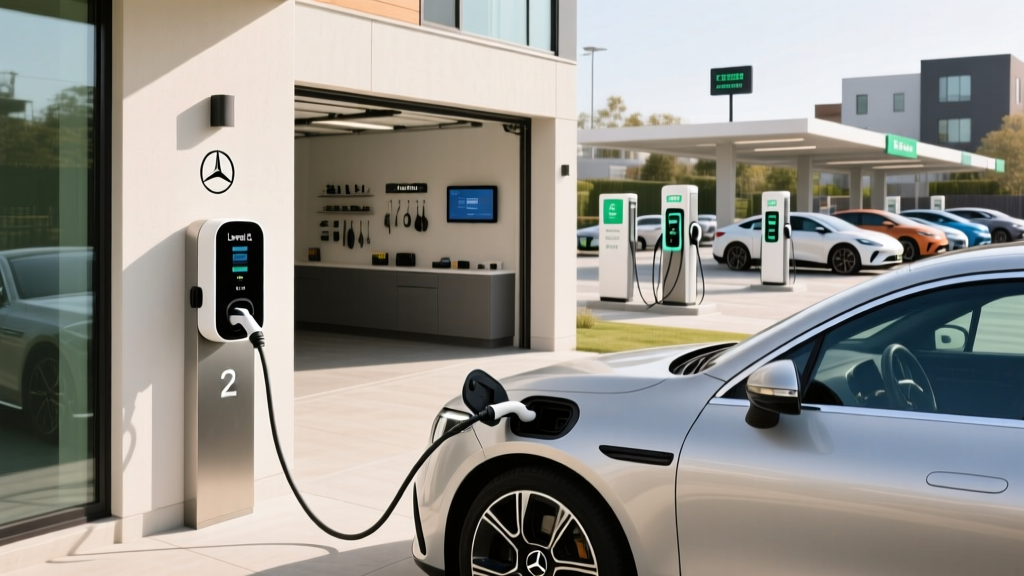
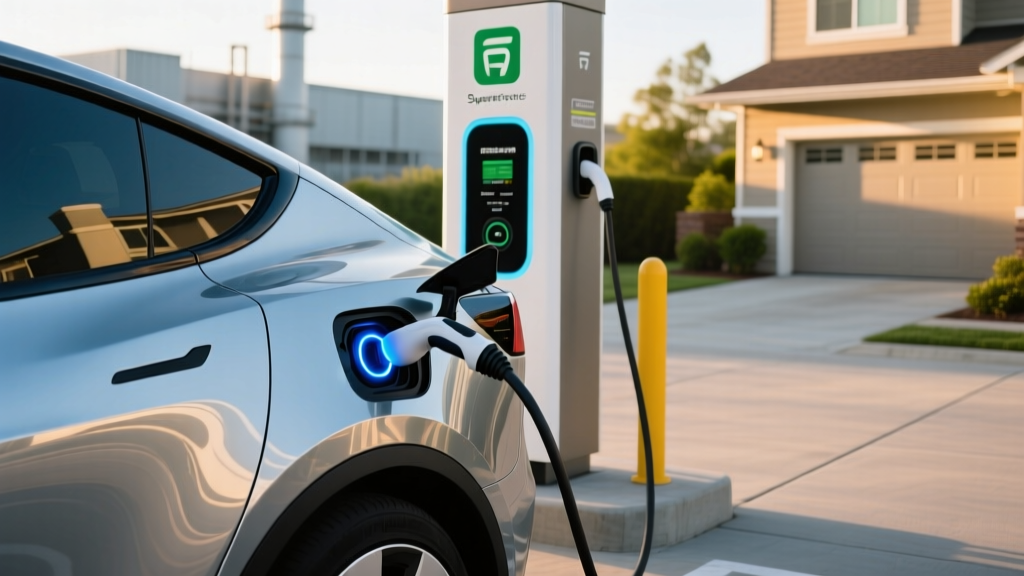
Public networks like Shell Recharge are essential for road trips, but the economics of EV ownership hinge on home charging. A Level 2 home charger on a dedicated 240V circuit delivers the best balance of speed and cost. Here's what installation actually involves and what it costs.
Electrical Requirements for a Level 2 Home Charger
Most home Level 2 chargers require a 240V, 40-amp or 48-amp dedicated circuit (NEMA 14-50 outlet or hardwired). The National Electrical Code (NEC) mandates that continuous loads not exceed 80% of circuit capacity, so a 48A charger needs a 60A breaker. Your electrical panel must have sufficient spare capacity — typically 200A service for modern homes, though older homes with 100A panels may need an upgrade.
| Component | Low Estimate | High Estimate | Notes |
|---|---|---|---|
| Level 2 Charger (Equipment) | $300 | $750 | Smart Wi-Fi chargers (e.g., ChargePoint, Emporia, Wallbox) |
| Electrician Labor | $400 | $1,500 | Depends on run length, conduit, drywall work |
| Permit & Inspection | $50 | $300 | Required by most jurisdictions for code compliance |
| Panel Upgrade (if needed) | $1,500 | $4,000 | 100A → 200A service; not needed in most modern homes |
| Total (no panel upgrade) | $750 | $2,550 | Typical range for straightforward installs |
| Total (with panel upgrade) | $2,250 | $6,550 | Older homes or high-load panels |
Safety and Code Considerations
- Dedicated circuit: Your EV charger must be on its own breaker — never share with other appliances.
- GFCI protection: NEC 2023 and later require ground-fault circuit interrupter protection for outdoor and garage EV outlets. Hardwired units with built-in GFCI are often preferred to avoid nuisance tripping.
- Outdoor rating: If mounting outside, ensure the charger carries a NEMA 4 or IP65 weather-resistance rating. NEMA 14-50 receptacles installed outdoors require an in-use weatherproof cover.
- Cable management: Keep charging cables off the ground to prevent tripping hazards and cord damage. Wall-mounted retractors or J-hooks are inexpensive solutions.
Connector Compatibility: NACS, CCS1, CHAdeMO, and Adapter Needs
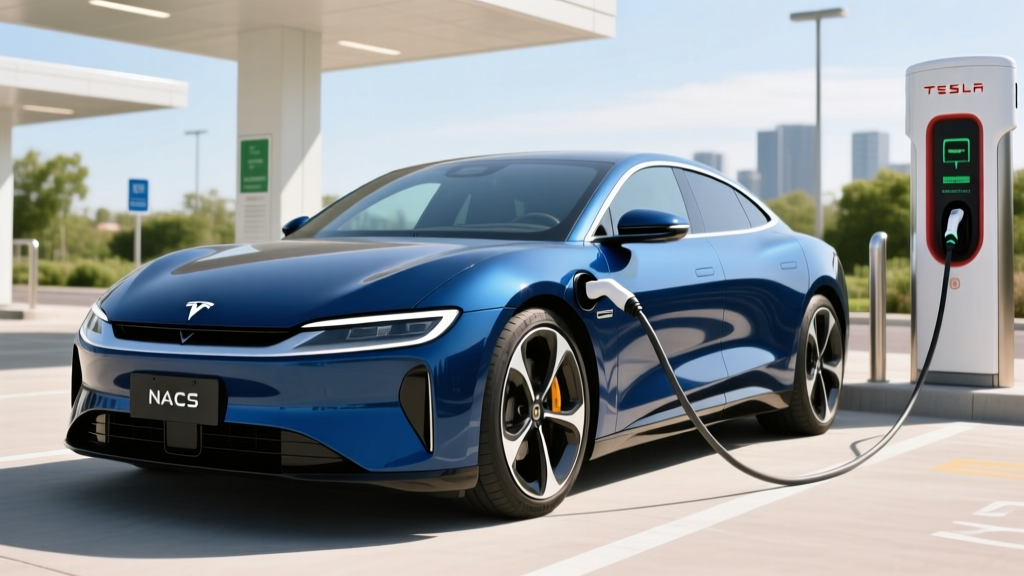
Shell Recharge stations in the U.S. predominantly feature CCS1 (Combined Charging System) connectors for DC fast charging and J1772 connectors for Level 2 AC. However, with Tesla's North American Charging Standard (NACS) becoming the dominant connector by 2026, Shell has been adding NACS cables to new and retrofitted stations.
| Connector | Native Vehicles | Adapter Available? |
|---|---|---|
| NACS (Tesla) | Tesla (all), Ford, Rivian, GM, Volvo, Polestar, Mercedes (2025+) | CCS → NACS adapters widely available ($150–$250) |
| CCS1 | Hyundai, Kia, BMW, VW, Audi, Porsche, most legacy EVs | NACS → CCS adapters available for newer vehicles |
| CHAdeMO | Nissan Leaf (legacy), Mitsubishi Outlander PHEV | Declining network support; no NACS adapter |
| J1772 (Level 2 AC) | All non-Tesla EVs (native); Tesla via Mobile Connector adapter | Tesla J1772 adapter included with vehicles |
If you drive a Tesla and encounter a Shell Recharge station with only CCS cables, you'll need a CCS-to-NACS adapter. Conversely, CCS-native vehicles like the Hyundai Ioniq 5 or Kia EV6 can use NACS-equipped Shell stations with an adapter. Shell's app shows connector types at each location, so check before driving to a site.
Cost to Charge: Shell Recharge vs. Home vs. Gas
The per-mile cost of driving electric depends entirely on where and when you charge. Here's a realistic comparison using a mid-size EV with 3.5 miles per kWh efficiency (typical of a Tesla Model Y or Hyundai Ioniq 5) and a comparable gas vehicle at 30 MPG combined.
| Scenario | Cost per kWh / Gallon | Cost Per Mile | Annual Cost (12,000 mi) |
|---|---|---|---|
| Home Level 2 (off-peak utility rate) | $0.12/kWh | $0.034 | $408 |
| Home Level 2 (standard residential rate) | $0.18/kWh | $0.051 | $612 |
| Shell Recharge Level 2 (public) | $0.45/kWh | $0.129 | $1,548 |
| Shell Recharge DC Fast | $0.55/kWh | $0.157 | $1,884 |
| Gas Vehicle (30 MPG) | $3.50/gallon | $0.117 | $1,404 |
Charging Time Examples: 10–80% for Common Battery Sizes
How long you'll spend at a Shell Recharge DC fast charger depends on your battery capacity and the station's power output. Here are realistic 10–80% session times accounting for charge-curve taper:
- 60 kWh battery (e.g., Nissan Ariya, base Chevy Equinox EV): 28–35 minutes on a 150 kW charger; 20–25 minutes on a 350 kW charger (if vehicle supports it)
- 77 kWh battery (e.g., Tesla Model Y, Hyundai Ioniq 5): 35–45 minutes on a 150 kW charger; 18–25 minutes on a 350 kW charger
- 100 kWh battery (e.g., Ford F-150 Lightning Extended Range, Rivian R1S): 45–60 minutes on a 150 kW charger; 30–40 minutes on a 350 kW charger
Preconditioning your battery (warming it to optimal temperature before arrival) is critical for hitting peak charge rates, especially in cold weather. Most modern EVs do this automatically when you navigate to a charger.
Recommended Home EV Chargers: Equipment Picks for 2026
If you're installing a Level 2 charger at home, these are the units we recommend based on reliability, smart features, and value:
ChargePoint Home Flex
- Power: Up to 12 kW (50A) on 240V; adjustable down to 16A for panel-limited homes
- Connector: J1772 (NACS adapter available)
- Cable Length: 23 feet
- Smart Features: Wi-Fi, app scheduling, Alexa integration, energy reporting
- Price: ~$550 (equipment only)
- Best For: Flexible amperage settings, strong app ecosystem
Emporia Vue Level 2 Charger
- Power: Up to 11.5 kW (48A)
- Connector: J1772 or NACS (configurable)
- Cable Length: 24 feet
- Smart Features: Wi-Fi, solar integration, load management with Emporia energy monitor
- Price: ~$400 (equipment only)
- Best For: Solar homes, budget-conscious buyers, load-balancing
Tesla Wall Connector (Gen 4)
- Power: Up to 11.5 kW (48A) on 240V single-phase
- Connector: NACS (native); J1772 adapter available
- Cable Length: 24 feet
- Smart Features: Wi-Fi, OTA updates, power sharing between multiple units, vehicle integration
- Price: ~$475 (equipment only)
- Best For: Tesla owners, multi-Tesla households
Frequently Asked Questions
How much does it cost to install a home EV charger?
A typical Level 2 home charger installation costs $750–$2,550 including equipment ($300–$750), electrician labor ($400–$1,500), and permits ($50–$300). If your home requires a panel upgrade from 100A to 200A service, add $1,500–$4,000. Most modern homes with 200A panels won't need an upgrade. Always get a load calculation from a licensed electrician before committing.
How fast will each charging level add range?
Level 1 (120V) adds 3–5 miles of range per hour — adequate for plug-in hybrids with small batteries but impractical for full EVs. Level 2 (240V) at 48A / 11.5 kW adds roughly 35–45 miles per hour, enough to fully replenish most EVs overnight. DC fast charging at 150 kW can add 150–250 miles in a 30-minute session, though actual rates taper above 50% state of charge.
Which connector or charger is compatible with my EV?
For 2026 model-year vehicles: Tesla, Ford, GM, Rivian, Volvo, and Polestar use NACS natively. Hyundai, Kia, BMW, and VW use CCS1. Level 2 AC charging uses J1772 for all non-Tesla vehicles; Tesla includes a J1772 adapter. Check Shell Recharge's app for connector availability at each station before visiting. Adapters for CCS-to-NACS or NACS-to-CCS cost $150–$250 and are widely available.
How much does charging cost per mile vs. gas?
Home charging at off-peak rates ($0.12/kWh) costs about $0.034 per mile for a typical EV — roughly 70% cheaper than a 30 MPG gas car at $3.50/gallon ($0.117/mile). However, public DC fast charging at Shell Recharge ($0.48–$0.75/kWh) can cost $0.14–$0.21 per mile, which exceeds gas costs. The economic advantage of EV ownership depends heavily on home or workplace charging access.
What electrical upgrades might I need for a home charger?
Most homes with 200A electrical service and available breaker slots need no upgrade beyond a dedicated 60A circuit for a 48A charger. Homes with 100A panels, older wiring, or panels already near capacity (common with electric heat, A/C, and cooking) may require a panel upgrade to 200A, costing $1,500–$4,000. Some utilities offer load-management devices that let you add an EV circuit without a panel upgrade by throttling charger power during peak household demand.
For authoritative guidance on home electrical safety, consult the National Electrical Code (NEC) and always hire a licensed electrician. For EV efficiency and range data, reference fueleconomy.gov. For current federal tax incentives on EV charger installation (up to $1,000 under §30C through 2032), see IRS.gov.