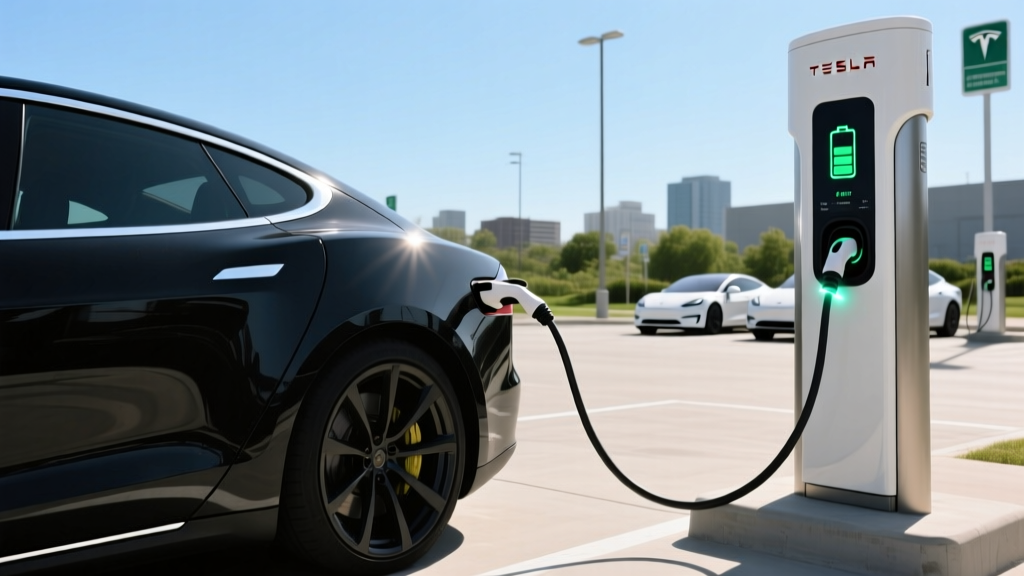
If you've pulled into a Shell station recently, you may have noticed something new next to the fuel pumps: DC fast chargers wearing the Shell Recharge branding. As one of the world's largest oil companies pivoting into electrification, Shell has been steadily building out its Shell electric vehicle charging footprint through its Shell Recharge network — a mix of public DC fast chargers, destination Level 2 units, and even home charging hardware sold under the Shell brand. For EV owners and shoppers, the question isn't whether Shell is in the charging game (it is), but whether its chargers, pricing, and home equipment are worth integrating into your daily driving routine.
This guide breaks down exactly how Shell Recharge fits alongside home Level 2 charging, what speeds you can expect, what it costs to install a home charger, and how per-mile charging costs stack up against gasoline in 2026.
Shell Recharge Network: What's Actually Available
Shell's EV charging presence operates under the Shell Recharge brand, which consolidated the company's earlier acquisitions — including Greenlots and NewMotion — into a single global charging identity. In the U.S., Shell Recharge operates public DC fast charging stations primarily at select Shell fuel stations, travel centers, and retail locations. The network is smaller than Electrify America or Tesla's Supercharger network, but it's growing, particularly along highway corridors and in metropolitan areas where Shell has high real-estate density.
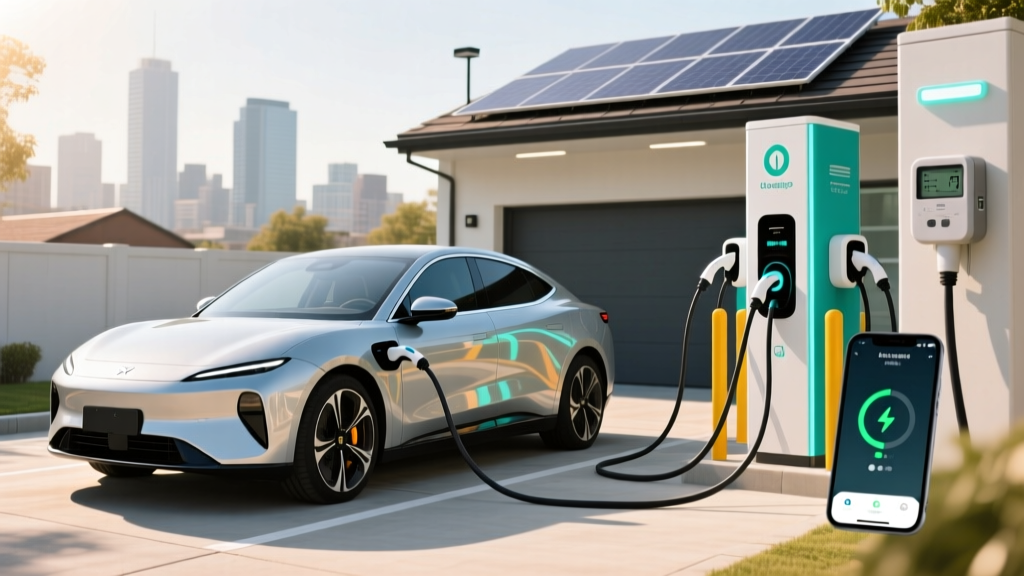
Shell also sells home Level 2 charging equipment through retail channels and offers fleet charging solutions for commercial operators. For the individual EV owner, Shell Recharge functions as one option among several public networks — useful if a station is conveniently located on your commute or road-trip route, but not a network you'd rely on exclusively.
Charging Levels Explained: Speeds in kW and Miles Per Hour
Before evaluating any specific network or home charger, you need clarity on the three charging levels and what they deliver. The critical distinction: kW (kilowatts) measures power — the rate at which energy flows into your battery. kWh (kilowatt-hours) measures energy — the total capacity of your battery. Think of kW as the width of a hose and kWh as the size of the bucket.
| Level | Voltage / Amps | Power (kW) | Miles of Range Added Per Hour | Best Use Case |
|---|---|---|---|---|
| Level 1 | 120V / 12A | ~1.4 kW | 3–5 mi/hr | Overnight top-up for PHEVs or low-mileage commuters |
| Level 2 | 240V / 32–48A | 7.7–11.5 kW | 25–44 mi/hr | Primary home charging; full overnight refill for any BEV |
| DC Fast Charging | 400–800V DC | 50–350 kW | 150–1,000+ mi/hr (peak) | Road trips and quick top-ups; 10–80% in 15–40 min |
A typical BEV with a 75 kWh battery (for example, a Tesla Model Y or Hyundai Ioniq 5) will fully recharge overnight on a Level 2 home charger in roughly 7–10 hours. That same vehicle on a 150 kW DC fast charger — the kind Shell Recharge commonly deploys — will go from 10% to 80% in approximately 25–35 minutes, depending on battery chemistry and thermal preconditioning.
Home EV Charger Installation: Electrical Requirements and Costs
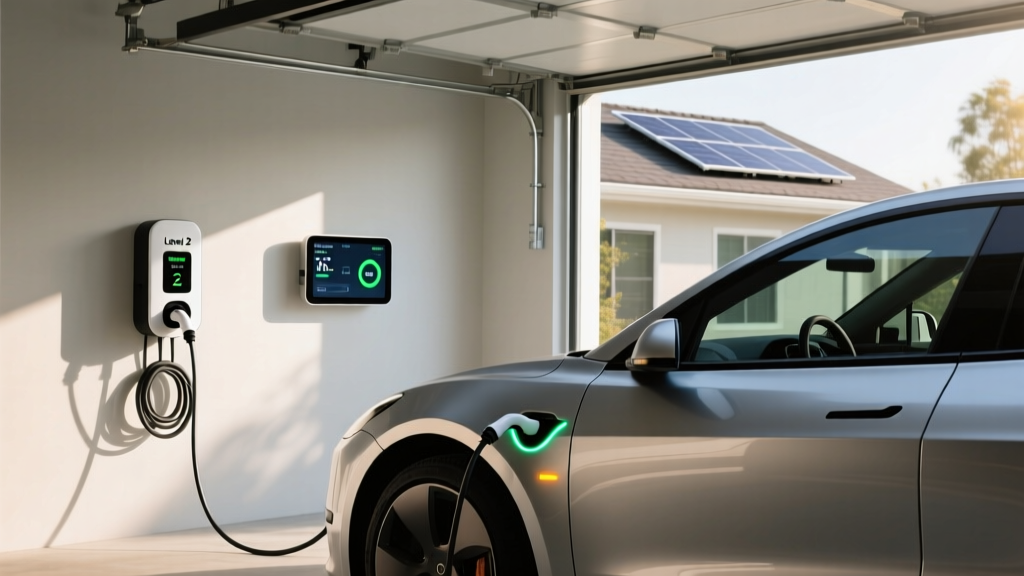
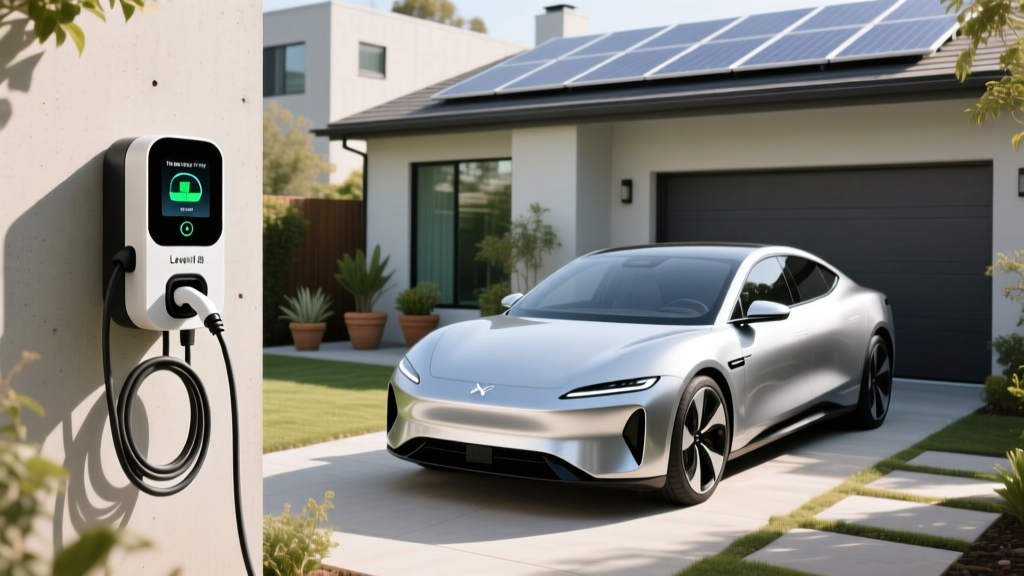
For most EV owners, a home Level 2 charger is the backbone of daily charging. Over 80% of EV charging happens at home, according to the U.S. Department of Energy, making a proper 240V installation the single most impactful charging investment you can make.
A Level 2 home charger requires a dedicated 240V circuit — the same voltage your electric dryer or oven uses. Most EV chargers draw between 32A and 48A, which requires a 40A to 60A dedicated circuit breaker (electrical code requires the breaker to be rated at 125% of the continuous load, so a 48A charger needs a 60A breaker).
What electrical upgrades might you need?
If your home has a 200A electrical panel with available capacity, a straightforward charger installation is typically possible. However, older homes with 100A panels, or homes already running multiple high-draw appliances (electric range, dryer, HVAC, water heater), may require a panel upgrade to 200A or even 400A — a significant additional cost. A licensed electrician will perform a load calculation to determine if your panel can handle the added draw.
| Cost Component | Typical Range | Notes |
|---|---|---|
| Level 2 Charger (Equipment) | $300–$700 | Varies by brand, power output, smart features |
| Electrician Labor | $400–$1,500 | Depends on run length from panel to garage/driveway |
| Permit & Inspection | $50–$300 | Required in most jurisdictions; varies by municipality |
| Panel Upgrade (if needed) | $1,500–$4,000+ | Only if existing panel lacks capacity; 100A → 200A |
| Total (No Panel Upgrade) | $750–$2,500 | Most common scenario for modern homes |
| Total (With Panel Upgrade) | $2,500–$6,500+ | Older homes or high-load households |
The federal residential clean energy credit (IRS Form 5695) covers 30% of the cost of home EV charging equipment and installation, up to $1,000, for equipment placed in service through 2032. This applies to the charger hardware and the electrical work directly associated with its installation. Consult a tax professional to confirm eligibility for your specific situation.
Connector Compatibility: NACS, CCS1, and CHAdeMO
As of 2026, the North American EV charging connector landscape has largely consolidated around two standards, with a legacy third still in circulation:
| Connector | Brands Using It (2026) | Shell Recharge Compatibility | Adapter Needed? |
|---|---|---|---|
| NACS (Tesla) | Tesla, Ford, GM, Rivian, Volvo, Polestar, Hyundai/Kia (2025+ models), others adopting | Newer Shell Recharge stations adding NACS cables; legacy CCS-only stations require adapter | CCS-to-NACS adapter for CCS-only stations |
| CCS1 | Most legacy non-Tesla EVs (2024 and earlier models from VW, BMW, Hyundai, Kia, etc.) | Majority of existing Shell Recharge DC stations have CCS1 connectors | None for CCS-equipped vehicles |
| CHAdeMO | Nissan Leaf (legacy), Mitsubishi Outlander PHEV (older) | Limited; some older Shell/Greenlots stations retain CHAdeMO cables | No adapter available for CHAdeMO vehicles to use CCS/NACS |
The key takeaway for 2026: if you're buying a new EV, it almost certainly uses NACS or CCS1. Shell Recharge stations increasingly offer both connector types at new installations, but older locations may still be CCS1-only. Ford, GM, and Rivian owners with NACS ports who encounter a CCS-only Shell station will need a CCS-to-NACS adapter (approximately $150–$250 from Tesla or authorized third-party manufacturers).
Charging Cost Per Mile: Home vs. Shell Recharge vs. Gasoline
One of the strongest arguments for EV ownership is fuel-cost savings — but the actual per-mile cost depends heavily on where and when you charge. Here's a realistic breakdown using 2026 electricity and gasoline pricing.
| Scenario | Rate ($/kWh) | Cost Per Mile* | Annual Cost (12,000 mi) |
|---|---|---|---|
| Home (off-peak utility rate) | $0.08–$0.14 | $0.024–$0.042 | $288–$504 |
| Home (standard residential rate) | $0.14–$0.20 | $0.042–$0.060 | $504–$720 |
| Shell Recharge DC Fast (public) | $0.35–$0.55 | $0.105–$0.165 | $1,260–$1,980 |
| Gasoline vehicle (28 MPG avg, $3.40/gal) | — | $0.121 | $1,457 |
*Based on an EV averaging 3.0 miles per kWh (approximately 112 MPGe combined), consistent with vehicles like the Tesla Model Y, Hyundai Ioniq 5, or Chevrolet Equinox EV. Actual efficiency varies by model, driving style, and temperature. Source: fueleconomy.gov EPA ratings.
The numbers make the case clearly: home charging at off-peak rates costs roughly one-quarter to one-third what gasoline costs per mile. Even at standard residential rates, EV charging undercuts gas. However, exclusive reliance on DC fast charging — whether Shell Recharge or any public network — pushes per-mile costs to parity with or even above gasoline. The economics of EV ownership strongly favor home or workplace Level 2 charging as the primary fueling method.
Home Charger Equipment Recommendations for 2026
If you're setting up home Level 2 charging, here are three well-regarded options across different price points. All deliver sufficient power for overnight charging of any current-production BEV.
Emporia Vue Smart Home EV Charger
- Power Output: 11.5 kW (48A) on a 60A circuit; configurable down to 32A
- Connector: NACS (J3400) with CCS adapter available
- Cable Length: 24 feet
- Smart Features: Wi-Fi connected, energy monitoring via Emporia app, solar integration, scheduled charging for off-peak rates
- Price: ~$350–$400
- Best For: Budget-conscious buyers who want smart scheduling and energy tracking
ChargePoint Home Flex
- Power Output: Up to 12 kW (50A) on a 60A circuit; adjustable 16A–50A via DIP switches
- Connector: NACS or CCS1 configurations available
- Cable Length: 23 feet
- Smart Features: Wi-Fi, ChargePoint app with charging history, Alexa integration, flexible amperage for panel-constrained homes
- Price: ~$550–$650
- Best For: Flexibility — adjustable amperage means it works even on 40A circuits without a panel upgrade
Tesla Wall Connector
- Power Output: 11.5 kW (48A) on a 60A circuit
- Connector: NACS native; includes J1772 adapter for non-Tesla EVs
- Cable Length: 24 feet
- Smart Features: Wi-Fi, over-the-air updates, power sharing between two Wall Connectors on one circuit, load management
- Price: ~$425–$475
- Best For: Tesla owners or households with multiple NACS-equipped EVs (power-sharing feature)
Safety, Electrical Code, and Installation Best Practices
EV charger installation involves sustained high-amperage electrical loads — far longer duty cycles than most household appliances. Cutting corners here risks fire, equipment damage, or insurance claim denials. Follow these non-negotiable requirements:
- Dedicated circuit: Your Level 2 charger must be on its own dedicated circuit — not shared with other outlets or appliances. This prevents overloading and tripped breakers.
- Breaker sizing: NEC Article 625 requires the circuit breaker to be rated at 125% of the charger's maximum continuous draw. A 48A charger requires a 60A breaker; a 32A charger requires a 40A breaker.
- GFCI protection: The 2020 NEC and later require GFCI protection for EV charging outlets in garages. Hardwired installations may have different requirements depending on local code. Your electrician will determine the correct approach.
- Outdoor-rated equipment: If your charger is installed outdoors or in an exposed carport, both the charger enclosure and the receptacle (if plug-in) must carry a NEMA 3R or NEMA 4 weather-resistance rating.
- Permit and inspection: Most jurisdictions require an electrical permit for EV charger installation, followed by an inspection. Skipping the permit may void your homeowner's insurance coverage for any related electrical incident.
- Wire gauge: A 60A circuit typically requires 6 AWG copper wire (THHN in conduit) or 4 AWG for longer runs to minimize voltage drop. Your electrician will size wire based on run distance.
Always hire a licensed electrician experienced with EV charger installations. The National Electrical Code (NEC) sets the baseline, but local amendments vary — a qualified local electrician will know your jurisdiction's specific requirements.
Using Shell Recharge for Public DC Fast Charging
When you're on a road trip or away from home, Shell Recharge DC fast stations can serve as a practical top-up option. Here's what to expect from a typical session:
Typical Shell Recharge DC fast charging session (75 kWh battery, 10–80%):
- 150 kW CCS/NACS station: ~28–38 minutes, depending on vehicle charge curve and battery preconditioning
- 50 kW station (older locations): ~55–70 minutes
- Cost for 10–80% session (~52.5 kWh): Approximately $18–$29 at $0.35–$0.55/kWh
Preconditioning your battery — warming it to optimal charging temperature before arriving at the station — can shave 5–10 minutes off your session, especially in cold weather. Most modern EVs automatically precondition when you navigate to a charging station in the vehicle's built-in navigation system. If you're using a phone app to navigate instead, manually activate preconditioning 15–20 minutes before arrival.
Shell Recharge pricing varies by location and time of day. Some stations offer lower rates during off-peak hours. Check the Shell Recharge app for station-specific pricing before committing to a stop.
Frequently Asked Questions
How much does it cost to install a home EV charger?
Most homeowners spend between $750 and $2,500 for a complete Level 2 home charger installation (equipment, electrician labor, and permit) when no panel upgrade is needed. If your home requires an electrical panel upgrade from 100A to 200A, total costs can range from $2,500 to $6,500 or more. The federal residential clean energy credit covers 30% of equipment and installation costs, up to $1,000.
How fast will each charging level add range?
Level 1 (120V) adds roughly 3–5 miles of range per hour — adequate only for plug-in hybrids or very low-mileage drivers. Level 2 (240V, 32–48A) adds 25–44 miles per hour, fully recharging most EVs overnight. DC fast charging (50–350 kW) can add 150–1,000+ miles per hour at peak rates, typically delivering a 10–80% charge in 15–40 minutes depending on the vehicle and charger power.
Which connector and charger is compatible with my EV?
Check your vehicle's charge port. New 2025–2026 models from Tesla, Ford, GM, Rivian, Hyundai, Kia, and others use the NACS connector. Older non-Tesla EVs typically use CCS1. The Nissan Leaf uses CHAdeMO. For home chargers, purchase a unit matching your vehicle's connector — or buy a NACS unit with a J1772/CCS adapter for flexibility. Shell Recharge public stations increasingly offer both NACS and CCS1 cables.
How much does charging cost per mile compared to gasoline?
Home charging at off-peak utility rates costs approximately $0.024–$0.042 per mile — roughly one-third the cost of gasoline at $3.40/gallon in a 28 MPG vehicle ($0.121/mile). Public DC fast charging at $0.35–$0.55/kWh costs $0.105–$0.165 per mile, which is comparable to or slightly above gasoline. Maximizing home and workplace Level 2 charging is key to realizing EV fuel-cost savings.
What electrical upgrades might I need for a home charger?
If your home has a 200A electrical panel with available breaker slots and sufficient load capacity, you likely need only a new dedicated circuit. Homes with 100A panels, or homes already running multiple high-draw electric appliances (dryer, range, heat pump, water heater), may need a panel upgrade to 200A or 400A. A licensed electrician will perform a load calculation per NEC Article 220 to determine your panel's available capacity before installation.
The Bottom Line on Shell Electric Vehicle Charging
Choose Shell Recharge for road-trip DC fast charging if a Shell Recharge station is conveniently located on your route, offers competitive per-kWh pricing, and has the connector your vehicle needs (verify via the Shell Recharge app or PlugShare before relying on it).
Don't rely on Shell Recharge as your primary charging strategy if you need consistent daily charging — home Level 2 installation remains the most cost-effective and convenient approach, delivering fuel costs 60–75% lower than gasoline. Shell Recharge is a useful supplement, not a replacement, for a well-configured home charging setup.