If you drive an electric vehicle through Pennsylvania, Ohio, Virginia, West Virginia, or the Carolinas, you've likely seen a Sheetz convenience store with EV chargers in the parking lot. Sheetz has been expanding its DC fast-charging footprint across its six-state territory, partnering with networks like Electrify America and EVgo to place chargers at high-traffic locations. But how reliable are these stations, what do they cost, and how do they compare to charging at home?
This guide covers exactly what you'll find at Sheetz EV charging locations, what connectors and speeds to expect, and — critically — how to set up Level 2 home charging that's cheaper, faster for daily use, and under your control. We'll break down installation costs, electrical requirements, equipment picks, and the real cost-per-mile math.
What to Expect at Sheetz EV Charging Stations
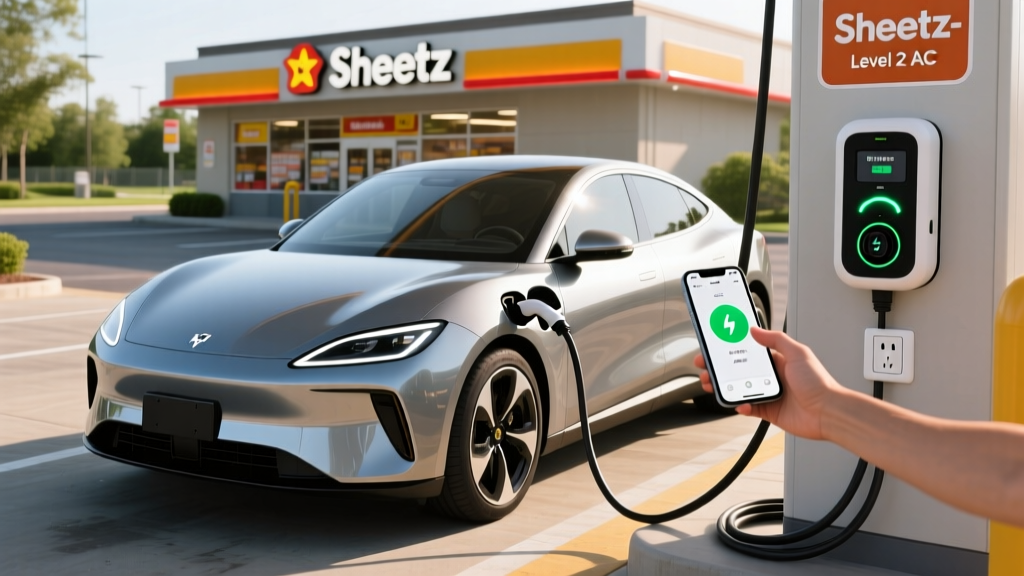
Sheetz locations with EV charging typically host DC fast chargers operated by third-party networks — most commonly Electrify America, and in some markets EVgo or Tesla Superchargers. The advantage is convenience: you can grab food, coffee, and use restrooms while your vehicle charges, which is exactly the kind of 20-40 minute stop that DC fast charging requires.
Here's the reality of what you'll encounter at most Sheetz DC fast-charging locations:
- Peak power: 50 kW to 350 kW depending on the station hardware and your vehicle's acceptance rate
- Connectors: CCS1 is standard; NACS (Tesla) connectors are increasingly common at newer Electrify America stalls; CHAdeMO is rare and being phased out
- Pricing: Typically $0.35–$0.55/kWh depending on the network, location, and time of day — some stations have idle fees after charging completes
- Real-world session: A 10–80% charge on a 75 kWh battery at a 150 kW stall takes roughly 25–35 minutes, assuming the battery is preconditioned and the charger isn't power-sharing with another vehicle
Charging Levels Explained: Speed, Power, and Use Cases
Before we get into home installation, you need to understand the three charging levels and what they actually deliver. The critical distinction: kW (kilowatts) measures the power flow rate — how fast energy moves into your battery. kWh (kilowatt-hours) measures energy capacity — how much total energy your battery stores. Think of kW as the width of a hose and kWh as the size of the bucket.
| Level | Voltage | Power (kW) | Miles of Range Added per Hour | Best For |
|---|---|---|---|---|
| Level 1 (120V) | 120V AC | 1.2–1.9 kW | 3–5 miles/hour | Overnight top-up, PHEVs, emergency |
| Level 2 (240V) | 240V AC | 3.3–19.2 kW | 14–75 miles/hour | Daily home charging, workplace |
| DC Fast (Level 3) | 200–1000V DC | 50–350 kW | 150–1,000+ miles/hour (peak) | Road trips, quick top-ups |
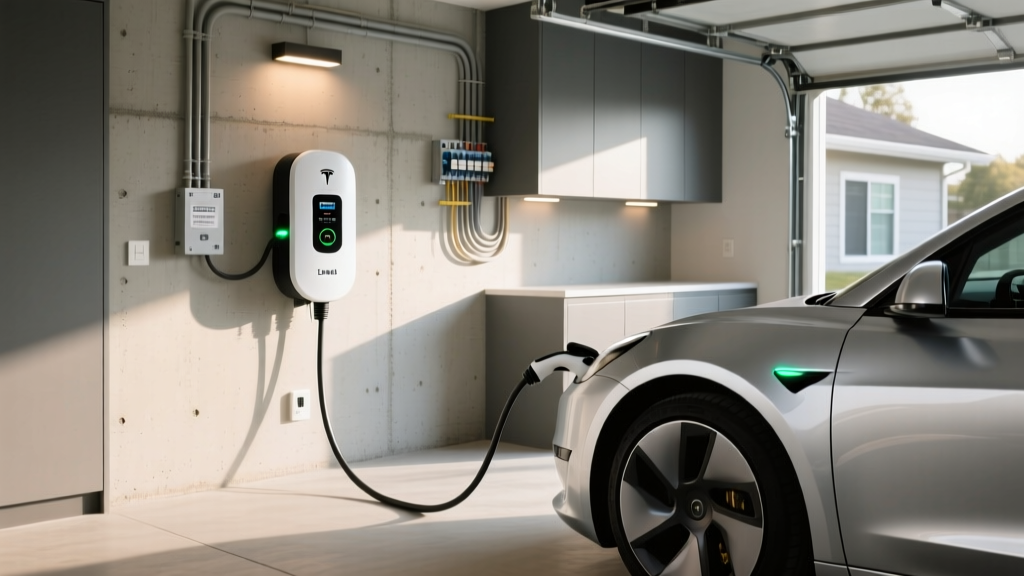
For daily driving, Level 2 at home is the sweet spot. A 48-amp (11.5 kW) Level 2 charger adds roughly 35–45 miles of range per hour for most EVs — meaning an overnight session of 8 hours easily replenishes 200+ miles, covering the vast majority of daily needs.
How Much Does It Cost to Install a Home EV Charger?
This is the question every prospective EV owner asks, and the answer varies enormously depending on your home's electrical panel, the distance from panel to charger location, and local permit fees. Here's a realistic breakdown for a typical 240V/48A Level 2 installation:
| Component | Low End | Typical | High End |
|---|---|---|---|
| Level 2 charger (hardware) | $300 | $500 | $750 |
| Electrician labor (2–6 hours) | $400 | $900 | $2,000 |
| Electrical permit | $50 | $150 | $350 |
| Conduit/wiring materials | $100 | $300 | $800 |
| Total (no panel upgrade) | $850 | $1,850 | $3,900 |
The Panel Upgrade Gotcha
If your home has a 100-amp electrical panel — common in homes built before the 1990s — adding a 60-amp dedicated circuit for a 48A charger may exceed your panel's capacity. A panel upgrade to 200 amps typically costs $1,500–$3,500 additional, depending on your utility's requirements and whether a new meter or service drop is needed.
A licensed electrician will perform a load calculation per NEC Article 220 to determine if your existing panel can handle the additional draw. In some cases, you can opt for a lower-amperage charger (32A/7.7 kW on a 40A circuit) to avoid a panel upgrade entirely — you'll sacrifice some charging speed, but for most drivers, 25–30 miles of range per hour overnight is more than sufficient.
Which Connector Does Your EV Need?
The connector landscape has shifted dramatically since Tesla opened its Supercharger network and the industry began adopting NACS (North American Charging Standard). Here's where things stand for 2025–2026 model-year vehicles:
| Connector | Brands Using It (Native) | Adapter Needed? |
|---|---|---|
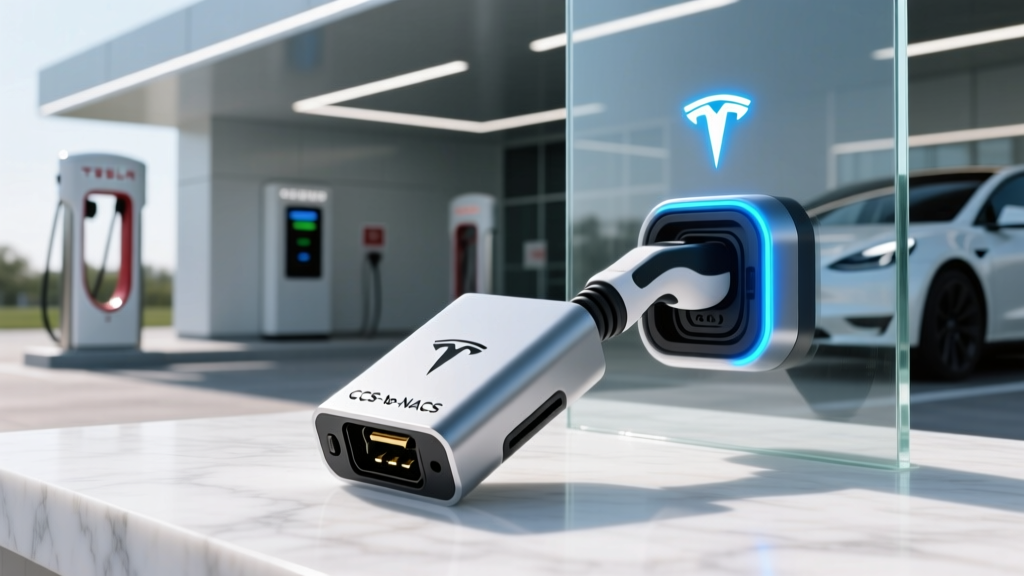
| NACS (Tesla) | Tesla (all), Ford (2025+), GM (2025+), Rivian (2025+), Volvo, Polestar, Fisker | CCS-to-NACS adapter for non-Tesla DC chargers (~$200–$250) |
| CCS1 | Hyundai, Kia, VW, BMW, Mercedes, Stellantis, Honda, Subaru, most legacy EVs | NACS-to-CCS adapter for Tesla Superchargers (~$200–$250) |
| CHAdeMO | Nissan Leaf (discontinued in US), Mitsubishi Outlander PHEV (older) | Limited fast-charging network; adapters scarce |
Key takeaway: NACS is becoming the dominant standard. If you're buying a new EV in 2025–2026, your vehicle likely has NACS or will include a CCS-to-NACS adapter for Supercharger access. For home Level 2 charging, the J1772 connector is still standard on non-Tesla vehicles, though Tesla's NACS connector is appearing on newer home chargers as well. Most quality home chargers ship with J1772 and include or offer a NACS adapter.
Charging Cost Per Mile: Home vs. Sheetz vs. Gas
This is where home charging's economics become overwhelming. Let's run the actual numbers using a representative EV averaging 3.0 miles per kWh (roughly 112 MPGe — typical for a midsize crossover like the Tesla Model Y or Hyundai Ioniq 5):
| Scenario | Cost per kWh | Cost per Mile (at 3 mi/kWh) | Cost for 300 Miles |
|---|---|---|---|
| Home (off-peak utility rate) | $0.10–$0.14 | $0.033–$0.047 | $10–$14 |
| Home (standard rate, no TOU) | $0.15–$0.20 | $0.050–$0.067 | $15–$20 |
| Sheetz / Electrify America (public DC fast) | $0.38–$0.55 | $0.127–$0.183 | $38–$55 |
| Gasoline (28 MPG avg at $3.30/gal) | N/A | $0.118 | $35 |
The math is stark: charging at home on off-peak rates costs roughly one-quarter to one-third what you'd pay at a public DC fast charger like those at Sheetz. And for a 300-mile road trip, relying exclusively on DC fast charging can actually cost more than gasoline — which is why home charging is the economic backbone of EV ownership.
Many utilities offer time-of-use (TOU) plans that drop rates to $0.08–$0.12/kWh during overnight hours (typically 11 PM – 6 AM). If your utility offers TOU, scheduling your home charger to run during off-peak hours can cut your fueling costs to $8–$12 for a full charge on a 75 kWh battery.
Charging Time Examples: What 10–80% Actually Takes
EV manufacturers and charging networks advertise peak kW rates, but the charge curve matters far more than the peak number. Batteries accept charge fastest between roughly 10–40% SoC, then taper progressively to protect cell health. Here are realistic 10–80% charging times for common scenarios:
- Tesla Model Y (75 kWh, NMC, 250 kW peak): ~15–18 minutes at a V3 Supercharger (250 kW); ~25–30 minutes at a 150 kW Electrify America stall (like many Sheetz locations)
- Hyundai Ioniq 5 (77.4 kWh, NMC, 240 kW peak): ~18 minutes at a 350 kW charger; ~28–32 minutes at 150 kW
- Ford F-150 Lightning Extended Range (131 kWh, NMC, 150 kW peak): ~40–45 minutes at a 150 kW charger due to the massive battery
- Chevy Equinox EV (85 kWh, NMC, 150 kW peak): ~30–35 minutes at a 150 kW charger
- Home Level 2 (11.5 kW / 48A): Full 10–80% on a 75 kWh battery takes approximately 4.5–5.5 hours — perfectly suited to overnight charging
Recommended Home Level 2 Chargers for 2026
After testing and tracking reliability across dozens of Level 2 units, here are our top picks organized by use case. Every recommendation includes the connector type, power output, and key features.
Best Overall: ChargePoint Home Flex
- Power: Up to 12 kW (50A) on a 60A circuit; adjustable down to 16A
- Connector: J1772 (NACS adapter available)
- Cable length: 23 feet
- Smart features: Wi-Fi, app scheduling, energy tracking, Alexa integration
- Price: ~$550–$600
- Why: Flexible amperage means you can install it on a 40A or 60A circuit depending on your panel capacity
Best for Tesla/NACS: Tesla Wall Connector
- Power: Up to 11.5 kW (48A) on a 60A circuit
- Connector: NACS native
- Cable length: 24 feet
- Smart features: Wi-Fi, OTA updates, power-sharing between two units, access control
- Price: ~$475
- Why: Best value for NACS-equipped EVs; sleek design; no adapter needed for Tesla, Ford, GM, Rivian
Best Smart/Budget: Emporia Vue EV Charger
- Power: Up to 11.5 kW (48A) on a 60A circuit
- Connector: J1772 (NACS version available)
- Cable length: 24 feet
- Smart features: Wi-Fi, solar integration, load management, detailed energy monitoring
- Price: ~$400–$450
- Why: Excellent app and energy data; ideal if you have solar panels and want to charge on excess production
Best for Outdoor/No Wi-Fi: Grizzl-E Smart
- Power: Up to 10 kW (40A) on a 50A circuit
- Connector: J1772 or NACS (select at purchase)
- Cable length: 24 feet
- Smart features: Basic Bluetooth scheduling; extremely durable enclosure
- Price: ~$450–$500
- Why: Built in Canada for extreme cold (-40°F rated); IP67 outdoor rating; no Wi-Fi dependency
Safety, Electrical Code, and Installation Requirements
A Level 2 EV charger is a significant continuous electrical load — the National Electrical Code (NEC) defines it as a load that runs for 3 hours or more. This triggers specific requirements that your electrician must follow:
- Dedicated circuit: Your charger must have its own dedicated breaker — no sharing with other outlets or appliances
- 80% rule: A 48A charger requires a 60A breaker (48A ÷ 0.80 = 60A minimum circuit rating). A 40A charger needs a 50A breaker. Never undersize the breaker.
- GFCI protection: NEC 2020 and later requires GFCI protection for all EV charging outlets in garages and outdoors. Hardwired chargers (no plug) may not require GFCI in all jurisdictions — your electrician will know local code.
- Outdoor rating: If installing outside, the charger must carry at minimum an IP55 rating (protected from water jets); IP67 is preferable for full weather exposure
- Wire gauge: A 60A circuit typically requires 6 AWG copper wire (THHN in conduit); a 50A circuit uses 6 AWG or 8 AWG depending on length and type. Longer runs may need thicker wire to prevent voltage drop.
- Permit: Virtually all jurisdictions require an electrical permit for EV charger installation. This protects you — unpermitted work can void insurance claims and cause issues at home sale.
According to the National Fire Protection Association's NEC guidelines, improper EV charger installation is a fire and shock hazard. Always use a licensed electrician — never DIY a 240V circuit unless you are qualified and pulling permits.
When Sheetz EV Charging Makes Sense (and When It Doesn't)
Sheetz DC fast chargers serve a specific purpose: road trip charging when you need 100–200 miles of range in 20–40 minutes. The convenience of food, restrooms, and well-lit parking makes them a solid stop on longer drives through the Mid-Atlantic and Southeast.
However, relying on public DC fast charging as your primary fueling method has real downsides:
- Cost: At $0.40–$0.55/kWh, you're paying 3–4x your home electricity rate
- Battery health: Frequent DC fast charging accelerates battery degradation compared to Level 2 — studies show exclusively fast-charged batteries may lose an additional 2–5% capacity over 5 years versus Level 2 charging, per NREL research on lithium-ion degradation
- Reliability: Public chargers experience downtime — broken screens, payment failures, and connector issues. At home, your charger works every time.
- Time: Even a "fast" 30-minute charge is 30 minutes you wouldn't spend if you charged overnight at home
The optimal EV ownership model: charge at home on Level 2 for 90%+ of your driving, and use Sheetz and other DC fast chargers exclusively for road trips where you'd stop for food or rest anyway.
Frequently Asked Questions
How much does it cost to install a home EV charger?
A typical Level 2 (240V/48A) home installation costs $1,200–$2,500 all-in (charger + electrician + permit + materials) if your electrical panel has capacity. If a 200A panel upgrade is needed, add $1,500–$3,500. Get at least two quotes from licensed electricians — prices vary significantly by region and job complexity.
How fast will each charging level add range?
Level 1 (120V) adds 3–5 miles per hour. Level 2 (240V) at 48A adds roughly 35–45 miles per hour for most EVs. DC fast charging at 150 kW can add 150–250+ miles in 20–30 minutes, but the rate tapers significantly above 60% state of charge.
Which connector/charger is compatible with my EV?
Check your vehicle's charge port. 2025–2026 Tesla, Ford, GM, Rivian, Volvo, and Polestar vehicles use NACS. Most other brands (Hyundai, Kia, VW, BMW, Mercedes) use CCS1. For home Level 2, non-Tesla EVs use J1772; Tesla uses NACS. Adapters exist in both directions (~$200–$250). The Nissan Leaf's CHAdeMO connector is legacy with dwindling public support.
How much does charging cost per mile vs. gas?
Home charging at off-peak rates ($0.10–$0.14/kWh) costs $0.03–$0.05 per mile for an average EV — roughly one-third the cost of gasoline at $3.30/gallon in a 28 MPG vehicle ($0.12/mile). Public DC fast charging at $0.40–$0.55/kWh costs $0.13–$0.18 per mile, which can exceed gasoline costs.
What electrical upgrades might I need?
The most common upgrade is a panel increase from 100A to 200A service ($1,500–$3,500). You may also need a new dedicated circuit with appropriate wire gauge and breaker, conduit runs from the panel to the charger location, and an electrical permit. Homes built after 2000 with 200A panels usually accommodate a Level 2 charger without upgrades. Your electrician will perform a NEC Article 220 load calculation to confirm.
Can I use Sheetz EV chargers with any EV?
Most Sheetz locations host Electrify America or EVgo stations with CCS1 connectors, which work natively with most non-Tesla EVs. Tesla owners will need a CCS-to-NACS adapter (or use Tesla Superchargers instead). Newer Electrify America stations are adding NACS cables. Check the station details in the PlugShare or network app before you arrive to confirm connector availability and real-time status.