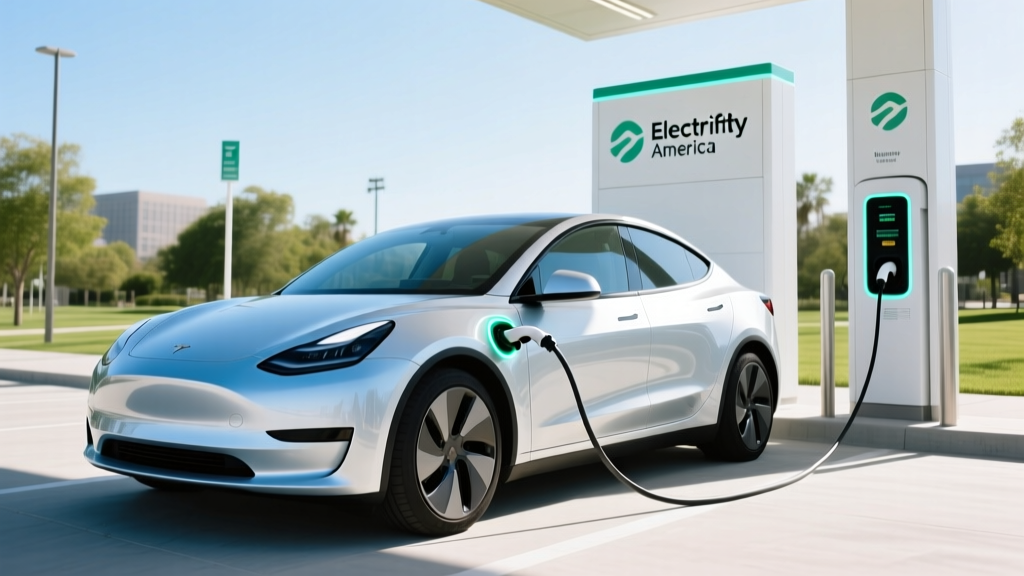
If you own a Tesla Model 3, Model Y, Model S, or Model X built before late 2020, your car came with a proprietary Tesla charge port — no CCS1 connector in sight. That means the growing Electrify America, EVgo, and third-party DC fast-charging networks are off-limits without hardware help. The Setec Tesla CCS adapter bridges that gap, letting pre-NACS-standard Teslas plug into any CCS1 DC fast charger in North America.
This guide covers exactly what the Setec adapter does, which Teslas it works with, real-world charging speeds you can expect, and the broader home and public charging setup every Tesla owner should understand in 2026.
Why the Setec Tesla CCS Adapter Exists
Tesla's North American Charging Standard (NACS) connector is now the industry default — Ford, GM, Rivian, Hyundai, and others have adopted it for 2025+ models. But Tesla's own vehicles shipped before roughly November 2020 use an earlier version of that same physical connector that lacks the CCS communication pins required by non-Tesla DC fast chargers.
The result: older Teslas can charge on Level 2 J1772 stations (with the Mobile Connector adapter Tesla includes), but they cannot handshake with CCS1 DC fast chargers at Electrify America or similar networks. The Setec Tesla CCS adapter contains the protocol-translation electronics needed to make that handshake happen, effectively converting a CCS1 plug into something your older Tesla can accept.
Tesla Charge Port Compatibility by Model Year
| Vehicle | Model Years | CCS Native? | Setec Adapter Needed? | Tesla CCS Retrofit Available? |
|---|---|---|---|---|
| Model 3 (US-built) | 2021–present | Yes (native CCS support) | No | N/A |
| Model 3 (US-built) | 2018–2020 | No | Yes | Yes (~$200 at Service Center) |
| Model Y | 2021–present | Yes | No | N/A |
| Model Y | 2020 | No | Yes | Yes (~$200 at Service Center) |
| Model S / Model X | 2012–2020 | No | Yes | Check with Tesla Service |
| Model S / Model X (refresh) | 2021–present | Yes | No | N/A |
Key decision point: Before buying the Setec adapter (typically $150–$190), check whether your Tesla qualifies for the official Tesla CCS retrofit at a Service Center. The OEM retrofit permanently adds CCS pins to your charge port for roughly $200 and is the cleaner long-term solution. The Setec adapter is the right call if your vehicle doesn't qualify for the retrofit, if you want a portable backup, or if you need a solution immediately.
Charging Levels Explained: Speeds, kW, and Miles per Hour
Understanding charging speed starts with one critical distinction: kW (kilowatts) measures power — the rate of energy delivery, like water pressure from a hose. kWh (kilowatt-hours) measures energy — the total amount stored in your battery, like the size of the tank. A 75 kWh battery charged at 11.5 kW takes roughly 6.5 hours from empty; at 150 kW DC fast charging, it takes about 30 minutes to 80%.
EV Charging Levels at a Glance
| Level | Voltage / Amps | Power (kW) | Miles of Range per Hour | Best For |
|---|---|---|---|---|
| Level 1 | 120V / 12A | ~1.4 kW | 3–5 mi/hr | Overnight top-up, PHEVs, emergencies |
| Level 2 (Home) | 240V / 32–48A | 7.7–11.5 kW | 25–44 mi/hr | Daily home charging, overnight full charge |
| Level 2 (Public) | 208–240V / 30–80A | 6.6–19.2 kW | 22–70 mi/hr | Workplace, shopping centers, hotels |
| DC Fast (CCS1/NACS) | 400–800V DC | 50–350 kW | 150–1,000+ mi/hr (peak) | Road trips, rapid top-ups |
Real-world charging time examples (10% to 80% SoC):
- Tesla Model 3 Long Range (75 kWh usable, NMC): ~25 min at a 250 kW V3 Supercharger; ~35 min at a 150 kW Electrify America CCS station (via Setec adapter); ~7 hours on a 48A Level 2 home charger.
- Tesla Model Y Long Range (75 kWh usable): ~27 min at V3 Supercharger; ~38 min at 150 kW CCS; ~7 hours Level 2 home.
- Tesla Model S (100 kWh usable): ~35 min at V3 Supercharger; ~50 min at 150 kW CCS; ~9 hours Level 2 home.
DC fast charging is never linear. Your Tesla will pull peak kW only between roughly 10–40% State of Charge (SoC), then taper progressively. By 80% SoC, even a 250 kW-capable vehicle may be drawing only 40–60 kW. This is why manufacturers quote 10–80% times rather than 0–100% — the final 20% can take as long as the first 70%.
Using the Setec Tesla CCS Adapter at Public Chargers
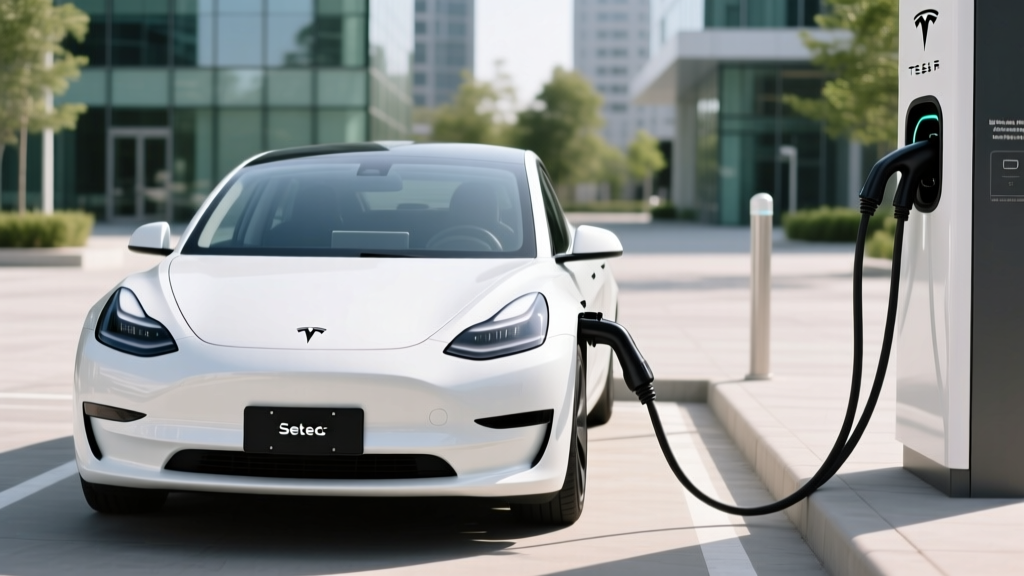
The Setec adapter is straightforward in practice: plug the CCS1 connector from the public charger into the Setec adapter, then plug the adapter's Tesla-side connector into your vehicle's charge port. The adapter's built-in electronics handle the CCS-to-Tesla communication protocol translation.
What to expect at the charger:
- Peak charge rate with the adapter: Most users report sustained peaks of 120–150 kW on 150 kW Electrify America chargers, and up to ~175 kW on 350 kW stations. The adapter itself is rated for up to 200A / 1000V DC, but real-world speed depends on your Tesla's onboard charge acceptance and the station's output.
- Handshake time: Expect 15–30 seconds for the adapter to establish communication before charging begins — slightly longer than native Supercharger plug-in.
- Network compatibility: Works with Electrify America, EVgo (CCS stalls), and most third-party CCS1 networks. Does not work with CHAdeMO stations (a legacy standard used by older Nissan Leafs).
- Weight and portability: The Setec adapter weighs roughly 1.5 lbs and stores easily in the frunk or trunk.
Connector Types and Adapter Requirements
| Connector | Used By | Charging Type | Tesla Adapter Needed |
|---|---|---|---|
| NACS (Tesla) | Tesla (all), Ford, GM, Rivian, Hyundai (2025+) | Level 2 AC + DC Fast | Native on Teslas |
| CCS1 | Most non-Tesla EVs (pre-2025) | DC Fast only | Setec CCS adapter (older Teslas) |
| J1772 | All EVs (Level 2 public) | Level 2 AC only | Tesla Mobile Connector J1772 adapter (included) |
| CHAdeMO | Nissan Leaf, Mitsubishi (legacy) | DC Fast only | Not compatible with Tesla |
Home Charging Setup: Electrical Requirements and Installation Costs
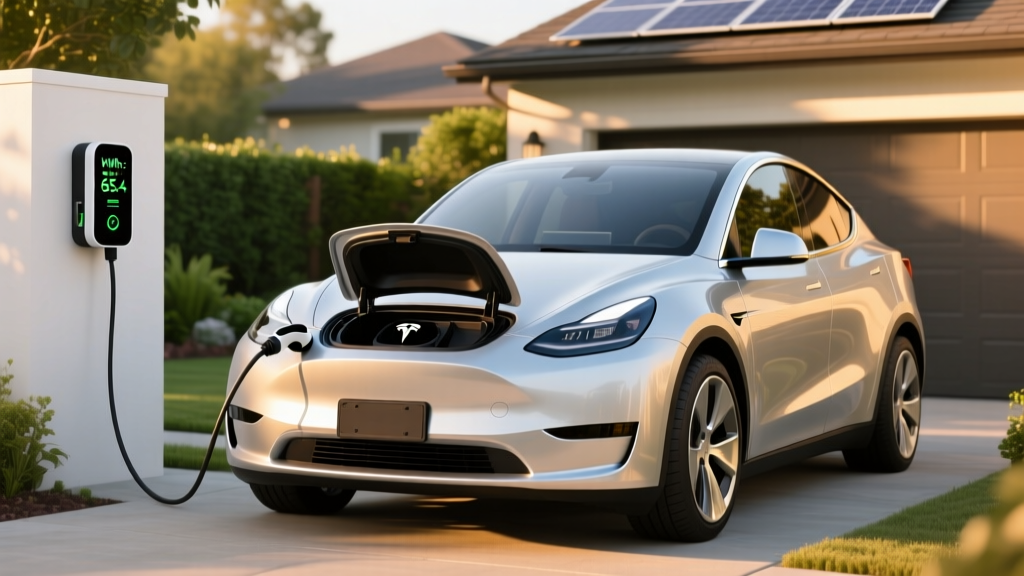
The Setec adapter solves your road-trip DC fast-charging problem, but 80–90% of EV charging happens at home. A proper Level 2 home installation is the single most impactful upgrade you can make as a Tesla owner.
Electrical Requirements for Level 2 Home Charging
A Level 2 charger requires a 240V dedicated circuit — the same voltage as your electric dryer or oven. The amperage depends on the charger you choose:
- 32A circuit (breaker rated 40A): Delivers 7.7 kW — sufficient for overnight charging of any Tesla.
- 48A circuit (breaker rated 60A): Delivers 11.5 kW — faster charging, recommended for Model S/X with larger batteries.
- 60A circuit (breaker rated 70–80A): Delivers 14.4 kW — maximum for some aftermarket chargers; requires substantial panel capacity.
The National Electrical Code (NEC) requires EV chargers to be on a dedicated circuit — meaning no other outlets or appliances share that breaker. For hardwired installations (recommended for 48A+), a licensed electrician runs conduit and wire directly from your panel to the charger. For plug-in installations using a NEMA 14-50 outlet, the circuit must still be dedicated, and the outlet must be properly grounded.
What Electrical Upgrades Might You Need?
This is where costs can escalate. Homes built before 1990 often have 100A or 125A main electrical panels. Adding a 40–60A dedicated EV circuit to an already-loaded panel may require:
- Panel upgrade to 200A: $1,500–$3,500 installed. Necessary when your existing panel lacks physical breaker spaces or amperage headroom.
- Load management device: $300–$600 (equipment). Devices like the Emporia Vue or Span panel can dynamically limit charger draw to avoid overloading the panel — a cheaper alternative to a full upgrade in some cases.
- Conduit run: If your panel is far from the garage (100+ feet), expect higher wire and labor costs.
Home Level 2 Charger Installation Cost Breakdown
| Component | Simple Install (Near Panel) | Complex Install (Far Run / Panel Upgrade) |
|---|---|---|
| Level 2 Charger Equipment | $400–$650 | $400–$650 |
| Electrician Labor (2–4 hrs simple / 6–10 hrs complex) | $300–$600 | $900–$2,000 |
| Materials (Wire, Conduit, Breaker) | $100–$250 | $300–$600 |
| Permit and Inspection | $50–$150 | $50–$200 |
| Panel Upgrade (if needed) | $0 | $1,500–$3,500 |
| Total | $850–$1,650 | $3,150–$6,950 |
How much does it cost to install a home EV charger? For most homeowners with a modern 200A panel and a garage close to the panel, expect $850–$1,650 all-in for a quality 48A hardwired charger. If your home needs a panel upgrade, budget $3,000–$5,000+ total. Always get at least two quotes from licensed electricians, and confirm they pull a permit — unpermitted EV charger installations can void home insurance claims and cause problems at resale.
Safety, Code, and Equipment Considerations
EV charging draws sustained high current for hours — this is fundamentally different from the brief surge of a microwave or air conditioner compressor. Proper installation isn't optional.
- GFCI protection: The 2020 NEC and later require GFCI protection for outdoor receptacles used for EV charging. Hardwired chargers avoid this requirement and are generally preferred for reliability.
- Outdoor rating: If your charger is installed outside (driveway, exterior wall), it must carry a NEMA 4 or NEMA 4X weather rating. All major chargers listed below meet this standard.
- Cable length: Standard cables are 18–24 feet. If your charge port location varies (garage vs. driveway), opt for a 25-foot cable.
- UL listing: Only purchase chargers with UL or ETL certification. Uncertified chargers from marketplace sellers may lack overcurrent and thermal protection.
- Wi-Fi / smart features: Smart chargers enable scheduled charging (critical for time-of-use electricity rates), energy monitoring, and remote start/stop. Non-smart "dumb" chargers are cheaper but forfeit utility-rate savings.
Equipment Recommendations: Best Level 2 Chargers for Tesla Owners
Since your Tesla uses the NACS connector natively, you have two paths for home Level 2 charging: a NACS (Tesla-connector) wall charger, or a J1772 charger used with the J1772 adapter Tesla includes with every vehicle. We recommend NACS wall connectors for convenience — no adapter fumbling in the rain.
Top Level 2 Home Chargers for 2026
Tesla Wall Connector (Gen 4)
- Power Output: 48A / 11.5 kW (hardwired, 60A breaker)
- Connector: NACS (Tesla native)
- Cable Length: 24 ft
- Smart Features: Wi-Fi, scheduled charging, energy tracking, load sharing (pair two units on one circuit), Power Share with Tesla Powerwall
- Outdoor Rating: NEMA 4
- Price: ~$420
Best for: Tesla-only households. Seamless integration, competitive price, excellent reliability.
ChargePoint Home Flex (NACS version)
- Power Output: Up to 50A / 12 kW (hardwired, 60A breaker); adjustable down to 16A for smaller circuits
- Connector: NACS or J1772 (configurable)
- Cable Length: 23 ft
- Smart Features: Wi-Fi, ChargePoint app scheduling, Alexa integration, detailed energy reports, amperage flexibility
- Outdoor Rating: NEMA 4
- Price: ~$550–$600
Best for: Multi-EV households (Tesla + non-Tesla), renters who may move (adjustable amperage adapts to different homes).
Emporia Level 2 EV Charger
- Power Output: 48A / 11.5 kW (hardwired, 60A breaker)
- Connector: J1772 (use Tesla J1772 adapter) or NACS version available
- Cable Length: 24 ft
- Smart Features: Wi-Fi, integrates with Emporia Vue energy monitor for whole-home tracking, solar-aware charging, TOU scheduling
- Outdoor Rating: NEMA 4
- Price: ~$400
Best for: Budget-conscious buyers, solar panel owners who want to charge only on excess solar production.
Cost to Charge: Home vs. Public vs. Gas
The economics of EV charging depend heavily on where you charge. Home charging on off-peak utility rates is dramatically cheaper than DC fast charging — and both are usually cheaper than gasoline.
Cost per Mile: EV Charging vs. Gasoline (2026 Averages)
| Scenario | Rate ($/kWh) | Efficiency (kWh/100mi) | Cost per Mile | Equivalent MPG at $3.50/gal |
|---|---|---|---|---|
| Home Level 2 (off-peak TOU) | $0.09–$0.13 | 26 (Model 3 LR) | $0.023–$0.034 | 103–152 MPGe |
| Home Level 2 (standard rate) | $0.14–$0.18 | 26 | $0.036–$0.047 | 75–97 MPGe |
| Public Level 2 (network) | $0.20–$0.35 | 26 | $0.052–$0.091 | 38–67 MPGe |
| DC Fast (Electrify America) | $0.35–$0.55 | 26 | $0.091–$0.143 | 24–38 MPGe |
| Tesla Supercharger V3 | $0.25–$0.40 | 26 | $0.065–$0.104 | 34–54 MPGe |
| Gasoline (30 MPG vehicle) | $3.50/gal | — | $0.117 | 30 MPG |
| Gasoline (22 MPG vehicle) | $3.50/gal | — | $0.159 | 22 MPG |
How much does charging cost per mile vs. gas? A Tesla Model 3 Long Range charged at home on off-peak rates costs roughly $0.03 per mile — about 4x cheaper than a 30 MPG gas car at $3.50/gallon. Even on DC fast chargers at $0.48/kWh, the Model 3 costs about $0.12/mile, still competitive with a 29 MPG gas car. The key takeaway: home charging is where the savings live. Relying exclusively on public DC fast charging erodes the cost advantage significantly.
According to fueleconomy.gov, the 2025 Tesla Model 3 Long Range achieves 132 MPGe combined (26 kWh/100mi), making it one of the most efficient EVs on the market and amplifying the cost advantage of cheap home electricity.
Federal Tax Credit for Home Charger Installation
The IRS Residential Clean Energy Credit (IRC §25C) previously covered 30% of home EV charger equipment and installation costs, up to $1,000. However, the availability and terms of this credit have shifted with recent legislative changes. As of 2026, verify current eligibility on IRS.gov or consult a tax professional before budgeting for this credit. Some states and utilities also offer separate rebates for Level 2 charger installation — check your local utility's EV programs.
For the vehicle itself, the federal §30D tax credit of up to $7,500 remains available for eligible new EVs, subject to MSRP caps ($55,000 for sedans, $80,000 for SUVs/trucks), buyer income limits ($150K single / $300K joint), and critical-mineral and battery-component sourcing requirements. The point-of-sale transfer option lets dealers apply the credit directly to your purchase price. Full rules are at IRS.gov.
Frequently Asked Questions
Is the Setec Tesla CCS adapter safe to use?
Yes, when purchased from the official Setec store or authorized resellers. The adapter includes overcurrent, overvoltage, and thermal protection. It has been widely tested by the EV community since 2022. Avoid cheap clones from unverified marketplace sellers — they may lack safety certifications. Always inspect the adapter's connectors for damage before each use and store it in a dry case.
Will the Setec adapter work at Tesla Superchargers?
No — and it doesn't need to. Your Tesla plugs directly into Superchargers with its native connector. The Setec adapter is exclusively for CCS1 DC fast chargers on non-Tesla networks like Electrify America, EVgo, and regional providers.
How fast will each charging level add range to my Tesla?
Level 1 (120V) adds roughly 3–5 miles per hour — only practical for plug-in hybrids or emergency trickle-charging. Level 2 (240V, 48A) adds approximately 35–44 miles per hour, fully recharging a Model 3 Long Range overnight in about 7 hours. DC fast charging at 150 kW adds roughly 150–200 miles in 15–20 minutes, tapering above 80% SoC.
Should I get the Tesla CCS retrofit or the Setec adapter?
If your Tesla qualifies for the official Service Center CCS retrofit (approximately $200, permanent hardware modification), that's the better long-term solution — no adapter to carry or potentially lose. The Setec adapter makes sense for vehicles that don't qualify for the retrofit, as an emergency backup, or if you need CCS access immediately while waiting for a Service Center appointment.
Can I charge my Tesla at home with just a standard 120V outlet?
Technically yes, using the Tesla Mobile Connector with the included NEMA 5-15 adapter. But at roughly 1.4 kW, you'll gain only 3–5 miles of range per hour — a full charge of a Model 3 Long Range would take over 50 hours. For any Tesla with a battery larger than 60 kWh, a 240V Level 2 installation is strongly recommended.
Which connector/charger is compatible with my EV?
All Teslas use the NACS (Tesla) connector for both Level 2 AC and DC fast charging. For non-Tesla EVs purchased before 2025, CCS1 is the standard DC fast connector and J1772 is the Level 2 AC connector. Starting in 2025, most new EVs from Ford, GM, Rivian, and others ship with NACS. CHAdeMO is a legacy DC fast standard found only on older Nissan Leafs and Mitsubishi models and is being phased out.