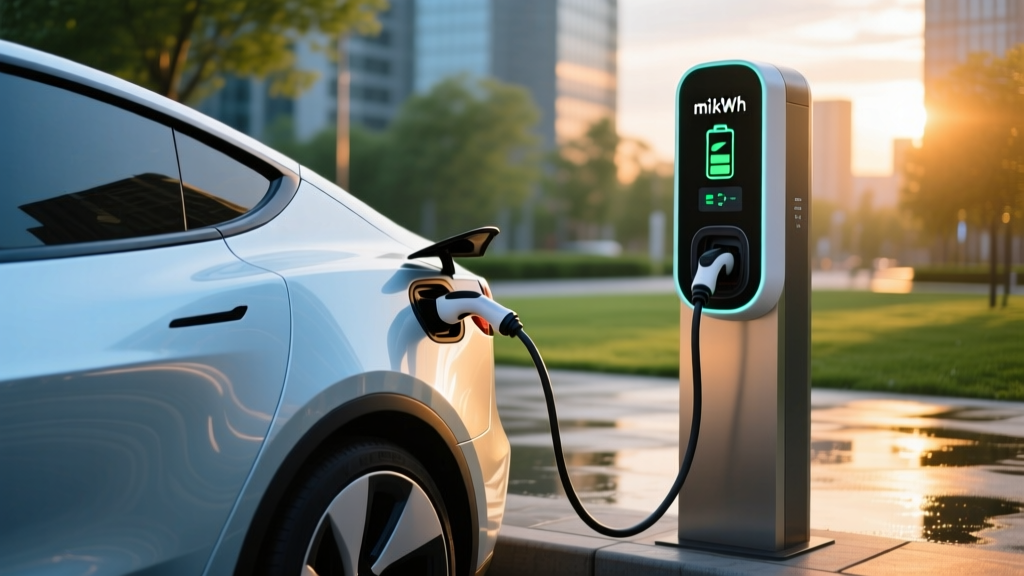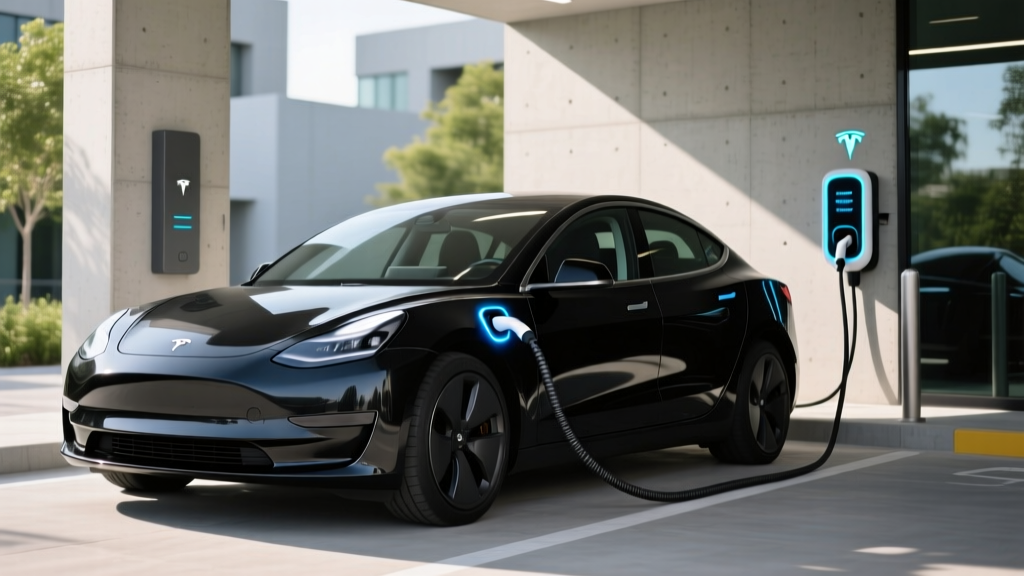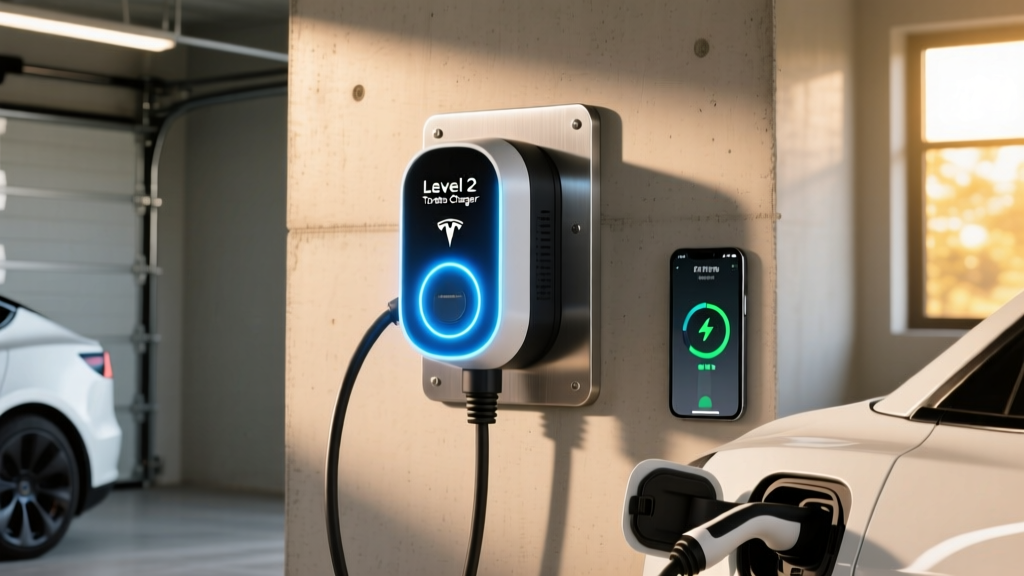
If you've been researching electrified vehicles, you've likely encountered the term "self-charging hybrid cars" — a marketing phrase used to describe conventional hybrids (HEVs) that recharge their small batteries through regenerative braking and the gas engine, with no plug required. But how do these vehicles compare to battery-electric vehicles (BEVs) when it comes to fueling, cost, and real-world practicality? This guide breaks down the charging landscape for both categories, including what home EV charger installation actually costs, how fast each charging level adds range, and what you'll spend per mile versus gas.
What Self-Charging Hybrid Cars Actually Are
"Self-charging hybrid" is not a technical classification — it's a branding term popularized by Toyota and Lexus to describe standard hybrid electric vehicles (HEVs). These cars pair a gasoline engine with a small battery pack (typically 1.0–1.6 kWh) and electric motor(s). The battery recharges via regenerative braking and engine-driven generation. You never plug in.
Examples for the 2026 model year include the Toyota Prius (57 MPG combined), Toyota Camry Hybrid (52 MPG combined), Honda Accord Hybrid (48 MPG combined), and Toyota RAV4 Hybrid (40 MPG combined). These vehicles deliver excellent fuel economy but offer zero electric-only range beyond brief low-speed assist.
This contrasts sharply with plug-in hybrids (PHEVs) like the Toyota RAV4 Prime (42 miles electric-only) or full battery-electric vehicles (BEVs) like the Hyundai Ioniq 6 (361 miles EPA range). Both PHEVs and BEVs require plug-in charging to unlock their electric capabilities — and that's where understanding charging levels, equipment, and cost becomes critical.
Charging Levels Explained: Speeds in kW and Miles Per Hour
For any vehicle you plug in — whether a BEV or a PHEV — charging happens at one of three levels. Understanding the difference between kW (kilowatts, the rate of power delivery) and kWh (kilowatt-hours, the total energy stored) is essential. Think of kW as how fast water flows from a hose, and kWh as the size of the bucket you're filling.
| Level | Voltage / Amperage | Power (kW) | Miles of Range Added Per Hour | Best Use Case |
|---|---|---|---|---|
| Level 1 | 120V / 12A | 1.4 kW | 3–5 miles | Overnight top-off, PHEVs, emergencies |
| Level 2 | 240V / 32–48A | 7.7–11.5 kW | 25–45 miles | Daily home charging, workplace, shopping centers |
| DC Fast Charge | 400–800V DC | 50–350 kW | 150–1,000+ miles (theoretical) | Road trips, highway corridors, quick top-ups |
Real-world charging time examples:
- Hyundai Ioniq 5 (84 kWh battery, 350 kW peak DCFC): 10–80% in approximately 18 minutes on a 350 kW charger; ~7 hours on a 48A Level 2 home charger.
- Tesla Model Y Long Range (75 kWh usable, 250 kW peak DCFC): 10–80% in approximately 25–30 minutes on a V3 Supercharger; ~8 hours on a 32A Level 2 charger.
- Toyota RAV4 Prime PHEV (18.1 kWh battery): Full charge in ~2.5 hours on Level 2; ~5.5 hours on Level 1. (Most PHEVs do not support DC fast charging.)
Home EV Charger Installation: Requirements, Costs, and Panel Upgrades
If you're moving from a self-charging hybrid to a plug-in vehicle, home Level 2 charging is the single biggest ownership adjustment. Here's what it actually takes.
Electrical Requirements
A Level 2 charger requires a dedicated 240-volt circuit, similar to what powers an electric dryer or oven. Common configurations:
- 32-amp circuit (7.7 kW output) — requires a 40-amp breaker (NEC requires 125% overrating for continuous loads)
- 40-amp circuit (9.6 kW output) — requires a 50-amp breaker
- 48-amp circuit (11.5 kW output) — requires a 60-amp breaker
Do You Need a Panel Upgrade?
Many homes built before 2000 have 100-amp electrical service panels. Adding a 40–60 amp dedicated circuit may exceed your panel's capacity, requiring an upgrade to 200-amp service. Signs you may need a panel upgrade:
- Your panel is already near capacity (few unused breaker slots)
- You have 100-amp service and run multiple high-draw appliances (electric range, dryer, HVAC)
- Your panel is a recalled or outdated model (e.g., Federal Pacific, Zinsco)
| Component | Typical Cost Range | Notes |
|---|---|---|
| Level 2 Charger Equipment | $300–$700 | Varies by brand, power output, smart features |
| Electrician Labor (standard install) | $500–$1,500 | Depends on run length from panel to garage/driveway |
| Permit & Inspection | $50–$300 | Required by most jurisdictions; varies by municipality |
| Electrical Panel Upgrade (if needed) | $1,500–$4,000 | 100A to 200A upgrade; not always required |
| Total (no panel upgrade) | $850–$2,500 | Most common scenario for modern homes |
| Total (with panel upgrade) | $2,350–$6,500 | Older homes or high-load panels |
The IRS Residential Clean Energy Credit covers 30% of home EV charger equipment and installation costs (up to $1,000) for equipment placed in service through 2032. Check irs.gov for current eligibility details and Form 8911.
Connector Compatibility: NACS, CCS, and CHAdeMO
The connector landscape has consolidated significantly. As of 2026, nearly all new EVs sold in North America use the NACS (North American Charging Standard) port, originally developed by Tesla. Most legacy CCS1 vehicles can access Tesla Superchargers via adapter.
| Connector | Brands Using It (2026 Models) | Adapter Needed? |
|---|---|---|
| NACS (Tesla) | Tesla, Ford, GM, Rivian, Volvo, Polestar, Hyundai, Kia, BMW, Mercedes-Benz (new models) | No (native on new models) |
| CCS1 | Older Hyundai/Kia, VW ID.4 (pre-2025), legacy models | CCS-to-NACS adapter (~$150–$200) for Supercharger access |
| CHAdeMO | Nissan Leaf (discontinued after 2025), Mitsubishi Outlander PHEV | Limited network; no NACS adapter widely available |
For home Level 2 charging, all connectors use the J1772 standard or NACS (which is backward-compatible with J1772 signaling). Most Level 2 home chargers ship with a J1772 connector; NACS-equipped vehicles include a J1772-to-NACS adapter in the box.
Cost to Charge: Per-Mile Comparison vs. Gasoline
The operating-cost advantage of plug-in vehicles over both self-charging hybrids and conventional gas cars is where BEVs and PHEVs shine — but the savings depend heavily on how and where you charge.
| Scenario | Rate ($/kWh) | Vehicle Efficiency | Cost Per Mile |
|---|---|---|---|
| Home off-peak (utility time-of-use) | $0.08–$0.12 | 3.5 mi/kWh (Ioniq 6) | $0.023–$0.034 |
| Home standard rate | $0.14–$0.18 | 3.5 mi/kWh | $0.040–$0.051 |
| Public Level 2 (ChargePoint, workplace) | $0.20–$0.35 | 3.5 mi/kWh | $0.057–$0.100 |
| DC Fast Charging (Electrify America, EVgo) | $0.35–$0.55 | 3.2 mi/kWh (highway) | $0.109–$0.172 |
| Gasoline (self-charging hybrid, 50 MPG) | $3.40/gallon ÷ 50 MPG | $0.068 | |
| Gasoline (conventional car, 28 MPG) | $3.40/gallon ÷ 28 MPG | $0.121 | |
The takeaway: Home-charged BEVs at off-peak rates cost roughly 2.3–3.4 cents per mile — about half what even an efficient self-charging hybrid spends on gasoline. However, if you rely exclusively on DC fast charging, the per-mile cost can exceed that of a 50 MPG hybrid. Access to affordable home charging is the single biggest factor in EV operating economics.
Recommended Home Level 2 Chargers for 2026
Based on reliability, features, and value, here are three chargers that cover most residential needs. All are hardwired or NEMA 14-50 plug compatible, UL-listed, and suitable for indoor or outdoor installation.
ChargePoint Home Flex
- Power: Up to 11.5 kW (48A), configurable down to 16A
- Connector: J1772 (NACS adapter included for newer models)
- Cable Length: 23 feet
- Smart Features: Wi-Fi, app scheduling, Alexa, energy tracking
- Price: ~$550–$650
Best for: Flexible amperage to match your panel capacity.
Tesla Wall Connector
- Power: Up to 11.5 kW (48A)
- Connector: NACS native (J1772 adapter available separately)
- Cable Length: 24 feet
- Smart Features: Wi-Fi, OTA updates, power sharing (multiple units), Tesla app integration
- Price: ~$425–$475
Best for: Tesla owners or households with NACS-equipped vehicles.
Emporia Level 2 EV Charger
- Power: Up to 11.5 kW (48A)
- Connector: J1772 (NACS version available)
- Cable Length: 24 feet
- Smart Features: Wi-Fi, real-time energy monitoring, solar integration, load management
- Price: ~$350–$400
Best for: Budget-conscious buyers wanting detailed energy data.
Safety and Electrical Code Considerations
EV charging is a continuous electrical load, which the National Electrical Code (NEC) treats more conservatively than intermittent loads. Key requirements:
- Dedicated circuit: Your EV charger must have its own breaker — no sharing with other outlets or appliances.
- 125% rule: A 40A continuous charger requires a 50A breaker. Never install a charger rated at 100% of the breaker capacity.
- GFCI protection: NEC 2020 and later requires GFCI protection for all EV charging outlets (hardwired units are exempt in most jurisdictions).
- Outdoor rating: If your charger is installed outdoors or in an unsealed garage, it must carry a NEMA 4 or IP65 weather-resistance rating.
- Wire gauge: 6 AWG copper for 48A circuits; 8 AWG for 32A circuits. Aluminum wire requires upsizing.
- Permit and inspection: Most municipalities require an electrical permit and post-installation inspection. Skipping this can void homeowner's insurance coverage for electrical fires.
Always hire a licensed electrician familiar with EV charging installations. Get at least two quotes, and ask whether the estimate includes permit fees and any necessary panel work.
Self-Charging Hybrids vs. Plug-In: Which Is Right for You?
Choose a Self-Charging Hybrid (HEV) If:
- You cannot install a home charger (apartment, street parking, landlord restrictions)
- You want zero behavior change — no plugging in, no charging apps, no route planning
- Your daily commute is long and mostly highway driving (where hybrids are most efficient)
- Upfront cost is a priority — HEVs typically cost $2,000–$5,000 less than comparable BEVs
Choose a Plug-In Hybrid (PHEV) If:
- You can charge at home and have a short commute (under 30–40 miles round trip)
- You want electric-only daily driving but need gas flexibility for road trips
- You're not ready to commit to full electric but want to reduce gas consumption significantly
Choose a Battery-Electric Vehicle (BEV) If:
- You have reliable home charging access (garage or driveway with 240V circuit)
- You want the lowest per-mile operating cost (2–5 cents/mile on home power)
- You're eligible for the federal clean vehicle credit (up to $7,500, subject to MSRP caps, income limits, and battery sourcing requirements under IRS §30D)
- You want to eliminate oil changes, gas station visits, and tailpipe emissions entirely
Frequently Asked Questions
How much does it cost to install a home EV charger?
Expect to pay $850–$2,500 for a standard Level 2 installation (equipment, electrician, and permit) in a home with adequate electrical panel capacity. If your panel needs upgrading from 100A to 200A service, add $1,500–$4,000, bringing the total to $2,350–$6,500. The 30% Residential Clean Energy Credit (up to $1,000) can offset part of this cost.
How fast will each charging level add range?
Level 1 (120V) adds 3–5 miles per hour — adequate for PHEVs with small batteries. Level 2 (240V, 32–48A) adds 25–45 miles per hour, fully recharging most BEVs overnight. DC fast charging adds 100–250+ miles in 15–30 minutes depending on vehicle architecture and charger output, but speeds taper significantly above 80% state of charge.
Which connector/charger is compatible with my EV?
If you're buying a 2025 or 2026 model-year EV from a major manufacturer, it almost certainly uses the NACS connector. Older CCS1 vehicles (pre-2024 models from Hyundai, Kia, VW) may need a CCS-to-NACS adapter (~$150–$200) to access Tesla Superchargers. For home Level 2 charging, any J1772 or NACS charger will work with appropriate adapters.
How much does charging cost per mile vs. gas?
Home charging at off-peak rates costs 2–4 cents per mile for most EVs. Even at standard residential rates, it's typically 4–5 cents per mile. A 50 MPG self-charging hybrid at $3.40/gallon gasoline costs about 6.8 cents per mile. DC fast charging at $0.45/kWh can push EV costs to 12–17 cents per mile — comparable to or exceeding a gas car. The economics strongly favor home charging.
What electrical upgrades might I need?
The most common upgrade is a panel capacity increase from 100A to 200A service, needed when your existing panel is near capacity. Other potential upgrades include running a new 240V circuit from the panel to your garage or driveway (cost increases with distance), replacing an outdated or recalled panel, or adding a sub-panel if your main panel is far from the charging location. A licensed electrician can perform a load calculation to determine if an upgrade is necessary.
Do self-charging hybrid cars qualify for federal tax credits?
No. Standard HEVs (self-charging hybrids like the Toyota Prius hybrid or Honda Accord Hybrid) do not qualify for the federal §30D Clean Vehicle Credit, which requires plug-in capability with a minimum 7 kWh battery. Some HEVs may have qualified for a smaller alternative motor vehicle credit in prior years, but that has largely expired. PHEVs and BEVs are the electrified vehicles eligible for federal incentives, subject to MSRP, income, and battery-sourcing requirements.