The Truth About "Self-Charging" Electric Cars
If you've searched for self-charging electric cars, you've likely encountered a confusing mix of marketing claims, misleading ads, and outright myths. Let's clear this up immediately: no production electric vehicle on the market today can fully recharge itself without being plugged in or connected to an external power source.
What does exist are three technologies that get mislabeled as "self-charging":
- Regenerative braking — Every EV and hybrid recovers kinetic energy during deceleration and feeds it back into the battery. This typically recaptures 15–30% of energy spent accelerating, extending range modestly but never replacing plugging in.
- Toyota's "self-charging hybrid" marketing — This refers to conventional hybrids (HEVs) like the Prius, which use a small battery recharged by the gas engine and regen braking. These are not EVs; they cannot be plugged in and offer zero electric-only miles at highway speeds.
- Solar roof panels — Vehicles like the Lightyear 0 (now defunct) and the upcoming Aptera prototype integrate solar cells that might add 15–40 miles of range per day under ideal sun. No current production car sold in the U.S. relies on this as a primary charge source.
The reality for every EV owner in 2026 is that you will charge from the grid — at home, at work, or at public stations. The good news? Home Level 2 charging is faster, cheaper, and more convenient than most new EV buyers expect. This guide covers exactly what you need.
Charging Levels Explained: Speeds, kW, and Real-World Range Added
EV charging is categorized into three levels, each defined by its power delivery in kilowatts (kW). Remember: kW measures power (the rate of charging), while kWh measures energy (your battery's capacity). A 75 kWh battery charged at 11.5 kW takes roughly 6.5 hours from empty to full, minus taper losses.
| Level | Voltage / Amps | Max Power (kW) | Miles of Range Added Per Hour | Typical Use Case |
|---|---|---|---|---|
| Level 1 | 120V / 12–16A | 1.4–1.9 kW | 3–5 miles/hr | Overnight trickle; PHEVs; emergencies |
| Level 2 | 240V / 32–48A | 7.7–11.5 kW | 25–44 miles/hr | Home daily charging; workplaces; hotels |
| DC Fast (Level 3) | 400–800V DC | 50–350 kW | 150–1,000+ miles/hr (peak) | Road trips; highway corridors |
A few real-world notes:
- Level 1 is fine for plug-in hybrids with 15–40 kWh batteries but painfully slow for a 82 kWh EV like the Tesla Model Y Long Range — expect 30+ hours for a full charge.
- Level 2 at 48A (11.5 kW) is the practical home sweet spot for most EVs, delivering a full overnight charge for even the largest batteries.
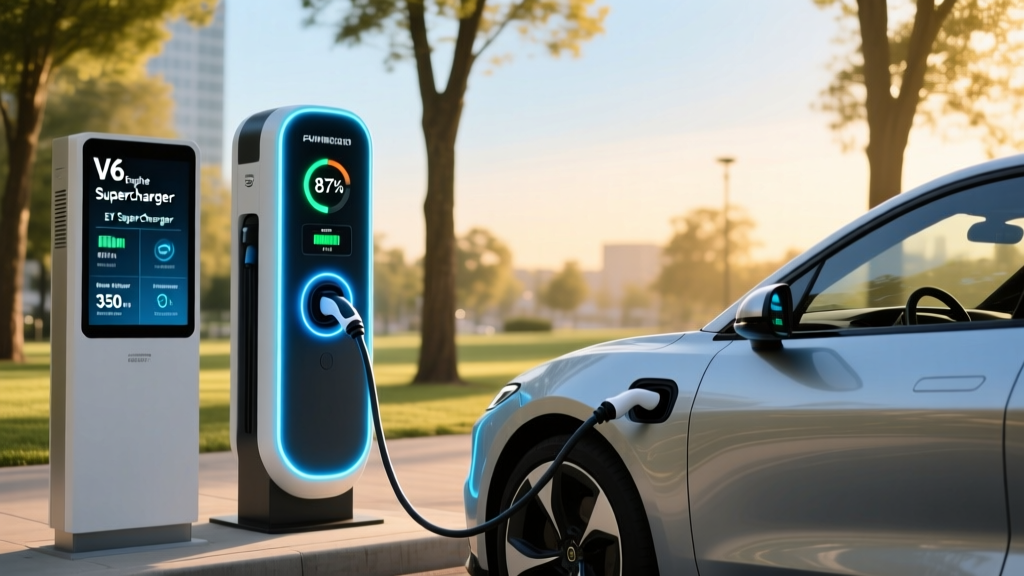
- DC fast charging rarely sustains its peak kW. A 250 kW-rated Tesla Supercharger V4 might peak at 250 kW for 3–5 minutes, then taper as the battery's state of charge rises. That's why we measure 10–80% times, not peak numbers.
10–80% Charging Times for Common Battery Sizes
| Vehicle (Example) | Battery (kWh usable) | Peak DC kW | 10–80% Time |
|---|---|---|---|
| Hyundai Ioniq 5 (Long Range) | 77.4 kWh (NMC) | 238 kW (800V) | ~18 minutes |
| Tesla Model Y Long Range AWD | 75 kWh (NMC) | 250 kW | ~25 minutes |
| Ford F-150 Lightning (Extended) | 131 kWh (NMC) | 155 kW | ~41 minutes |
| Chevrolet Equinox EV 3LT | 85 kWh (NMC) | 150 kW | ~30 minutes |
Sources: fueleconomy.gov, manufacturer spec sheets.
Which Connector Fits Your EV? NACS, CCS1, and CHAdeMO
The connector landscape shifted dramatically between 2023 and 2026. Tesla's North American Charging Standard (NACS) has become the dominant plug, adopted by Ford, GM, Rivian, Hyundai, Kia, Volvo, BMW, and most major OEMs for 2025+ model-year vehicles. CCS1 remains on many 2020–2024 EVs. CHAdeMO is effectively legacy — the Nissan Leaf is its last mainstream holdout, and the Leaf itself is being phased out.
| Connector | Brands Using It (Native) | Adapter Needed? |
|---|---|---|
| NACS (Tesla) | Tesla, Ford, GM, Rivian, Hyundai/Kia (2025+), Volvo, BMW, Mercedes, Honda | CCS→NACS adapters for older CCS vehicles to use Superchargers |
| CCS1 | VW ID.4 (pre-2026), older Chevy Bolt, Hyundai/Kia (pre-2025), BMW i4 (pre-2025) | CCS→NACS adapter for Supercharger access |
| CHAdeMO | Nissan Leaf (legacy) | Limited adapter options; network shrinking |
Buying advice: If you're shopping for a new EV in 2026, prioritize NACS. It unlocks Tesla's Supercharger network (20,000+ stalls in North America), which remains the most reliable DC fast-charging infrastructure. If you own a CCS vehicle, the official Tesla CCS-to-NACS adapter (~$200) or third-party options like Lectron or A2Z work well, but confirm your vehicle's firmware supports Supercharger handshake protocols.
Home Charger Installation: Electrical Requirements, Panel Upgrades, and Real Costs
A proper home Level 2 installation involves more than plugging into an outlet. Here's what a licensed electrician will evaluate:
Electrical Requirements
- Circuit: A dedicated 240V circuit — typically 40A, 50A, or 60A — with a NEMA 14-50 outlet or hardwired connection.
- Continuous load rule: The National Electrical Code (NEC) requires EVSE to run at 80% of breaker capacity. A 50A breaker delivers 40A continuous (9.6 kW); a 60A breaker delivers 48A continuous (11.5 kW).
- Wire gauge: 6 AWG copper for 50A circuits; 4 AWG for 60A. Aluminum is cheaper but thicker.
- GFCI protection: NEC 2020+ requires GFCI breakers for receptacle-based EVSE installations (not required for hardwired units, which is why many electricians prefer hardwired).
Do You Need a Panel Upgrade?
This is the single biggest cost variable. A modern 200A service panel usually handles an EV circuit without issue. Older homes with 100A or 150A panels, or panels already near capacity (electric dryer, range, HVAC), may need a service upgrade to 200A — adding $1,500–$3,500 to your project. An electrician will perform a load calculation (NEC Article 220) to determine this before pulling a permit.
| Component | Low-End Estimate | High-End Estimate |
|---|---|---|
| Level 2 EVSE hardware (40A–48A smart charger) | $350 | $700 |
| Electrician labor (simple install, same wall as panel) | $400 | $900 |
| Electrician labor (long run, conduit, attic crawl) | $900 | $2,500 |
| Permit & inspection | $50 | $300 |
| Panel upgrade (if needed) | $1,500 | $3,500 |
| Total (no panel upgrade) | $800 | $2,800 |
| Total (with panel upgrade) | $2,300 | $6,300 |
Many utilities and states offer rebates covering $250–$1,000 of installation costs — check your utility's website and your state energy office. The federal Residential Clean Energy Credit (30% of charger + install, up to $1,000) was available through 2032 under the IRA, but confirm current-year status with a tax professional as legislative changes are possible.
Level 2 Home Chargers Worth Buying in 2026
Not all EVSE is equal. Here are four chargers that consistently earn high marks for reliability, smart features, and build quality:
ChargePoint Home Flex
- Power: Up to 50A (12 kW) adjustable
- Connector: NACS or J1772
- Cable: 23 ft
- Smart: Wi-Fi, app scheduling, utility integration
- Price: ~$550–$650
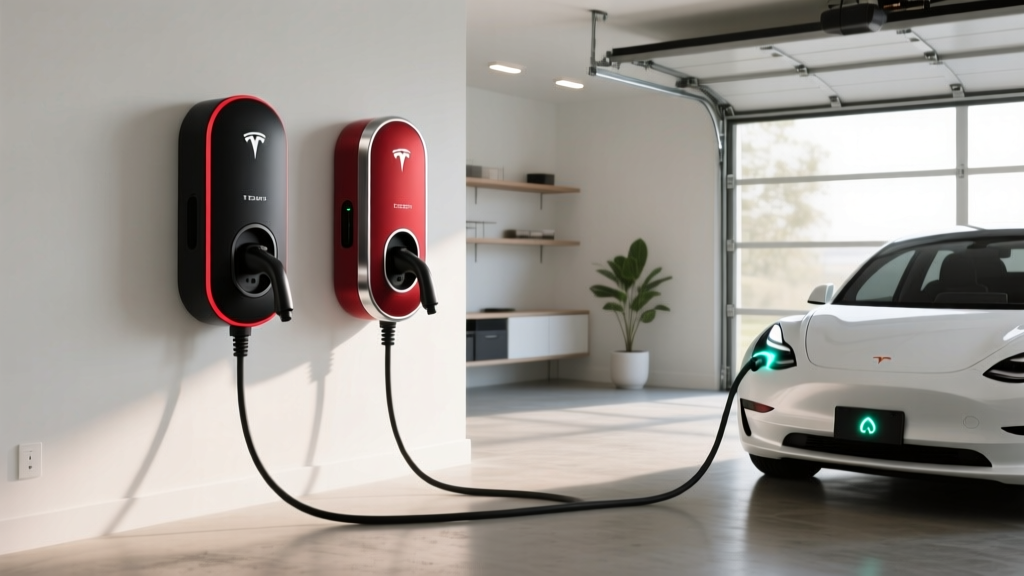
Wall Connector (Tesla Gen 3)
- Power: 48A (11.5 kW)
- Connector: NACS native
- Cable: 24 ft
- Smart: Wi-Fi updates, power sharing for multi-unit installs
- Price: ~$475
Emporia Level 2 EV Charger
- Power: 48A (11.5 kW)
- Connector: J1772 (NACS adapter available)
- Cable: 24 ft
- Smart: Energy monitoring, solar integration
- Price: ~$400
Grizzl-E Smart
- Power: 40A (9.6 kW)
- Connector: J1772 or NACS
- Cable: 24 ft
- Smart: OCPP, adjustable amperage, -40°C rated
- Price: ~$450–$550
Safety checklist before you buy: Look for UL or ETL certification (mandatory for insurance and code compliance), NEMA 4 outdoor rating if installing outside, and a minimum 3-year warranty. Avoid no-name Amazon EVSE without safety certification — they're a fire risk and may void your homeowner's insurance coverage.
Charging Cost Per Mile: EV vs. Gas in 2026
The economic case for EVs hinges on fuel savings, but those savings vary dramatically based on how and where you charge. Here's a realistic comparison using a 2026 Tesla Model Y Long Range (EPA 320 mi, ~28 kWh/100 mi) versus a 2026 Toyota RAV4 AWD (EPA 30 MPG combined).
| Scenario | Rate | EV $/mile | Gas $/mile |
|---|---|---|---|
| Home charging (off-peak utility rate) | $0.11/kWh | $0.031 | — |
| Home charging (national avg residential) | $0.17/kWh | $0.048 | — |
| Public Level 2 (ChargePoint, EVgo) | $0.25–$0.35/kWh | $0.084 | — |
| DC fast charging (Tesla Supercharger avg) | $0.28–$0.38/kWh | $0.092 | — |
| DC fast charging (EA, high-fee locations) | $0.45–$0.60/kWh | $0.140 | — |
| Gas (national avg $3.40/gal, 30 MPG) | $3.40/gal | — | $0.113 |
The takeaway: Home charging on off-peak rates delivers fuel costs roughly one-quarter of gas. Even expensive DC fast charging is usually cheaper than gas per mile. But if you can only rely on premium-priced public fast chargers, the gap narrows considerably — and in high-fee locations, you might actually pay more per mile than a fuel-efficient hybrid. This is why home Level 2 access is the single most important factor in EV ownership economics.
Safety, Code, and the Fine Print Your Electrician Should Mention
Beyond the hardware and the breaker, a few code and safety considerations separate a clean install from a problematic one:
- Dedicated circuit: EVSE must have its own breaker — no sharing with laundry or HVAC circuits.
- Hardwired vs. receptacle: Hardwired units avoid the NEC GFCI breaker requirement (which causes nuisance trips on some older panels) and allow 11.5 kW on a 60A circuit. Receptacle-based (NEMA 14-50) installs are portable but capped at 40A continuous in practice.
- Outdoor rating: If your charger lives outside, both the EVSE (NEMA 4) and any outdoor junction boxes must be weather-rated. Conduit runs must be sealed against water intrusion.
- Permit and inspection: Skipping permits saves $50–$300 upfront but can void your homeowner's insurance if an electrical fire traces back to unpermitted work. Most insurers will deny the claim.
- Wi-Fi connectivity: Smart chargers let you schedule charging during off-peak utility windows (often 11 PM – 7 AM), cutting your per-kWh rate by 30–60%.
Frequently Asked Questions
Do self-charging electric cars exist?
No. No production EV can fully recharge itself without external power. Hybrids marketed as "self-charging" (like Toyota's HEVs) use a gas engine to replenish a small battery — they are not electric vehicles. Regenerative braking recovers energy but does not eliminate the need to plug in.
How much does it cost to install a home EV charger?
Expect $800–$2,800 total for a straightforward install (charger + electrician + permit) if your panel has capacity. If a panel upgrade to 200A service is required, the total rises to $2,300–$6,300. Always get a load calculation from a licensed electrician before committing.
How fast will each charging level add range?
Level 1 (120V): 3–5 miles per hour. Level 2 (240V, 48A): 25–44 miles per hour depending on vehicle efficiency. DC fast charging: peak rates can add 200+ miles in 15–20 minutes, but sustained rates taper as the battery fills — plan around 10–80% times, not peak kW numbers.
Which connector or charger is compatible with my EV?
For 2026 model-year vehicles, most new EVs use NACS (Tesla's standard). Older CCS-equipped EVs (2020–2024) can use Tesla Superchargers with a $200 CCS-to-NACS adapter. CHAdeMO is limited to the legacy Nissan Leaf. Check your owner's manual or the charge port itself — it's labeled on the vehicle.
How much does charging cost per mile vs. gas?
At home on off-peak rates (~$0.11/kWh), an efficient EV costs $0.03–$0.05 per mile — roughly 25–40% of what a 30 MPG gas car costs at $3.40/gallon ($0.11/mile). Public DC fast charging at $0.30–$0.40/kWh narrows the gap but still usually beats gas. High-fee urban chargers can exceed gas costs.
What electrical upgrades might I need?
Homes with 100A or 150A service, panels near capacity, or Federal Pacific/Zinsco panels (which are fire hazards and must be replaced regardless) will likely need a 200A panel upgrade. Long wire runs from panel to garage, attic conduit routing, or detached-garage subpanels also add cost. An electrician's load calculation is the only reliable way to know.
For authoritative EV efficiency data, consult fueleconomy.gov. For current tax credit and clean energy incentive rules, see IRS.gov.