If you've been browsing Amazon, TikTok, or EV forums lately, you've probably seen ads for the Scat Charger — a budget-priced Level 2 home EV charger that promises 40-amp output, smart app controls, and broad vehicle compatibility at a fraction of the cost of premium brands. But does a $150–$200 charger actually deliver safe, reliable daily charging, or is it a false economy waiting to trip your breaker?
We've tested the Scat Charger alongside established units from ChargePoint, Emporia, and Wallbox to give you the real numbers: actual sustained power output, installation requirements, connector compatibility with 2026 EVs, and total cost of ownership. Here's what you need to know before you plug in.
What Is the Scat Charger, Exactly?
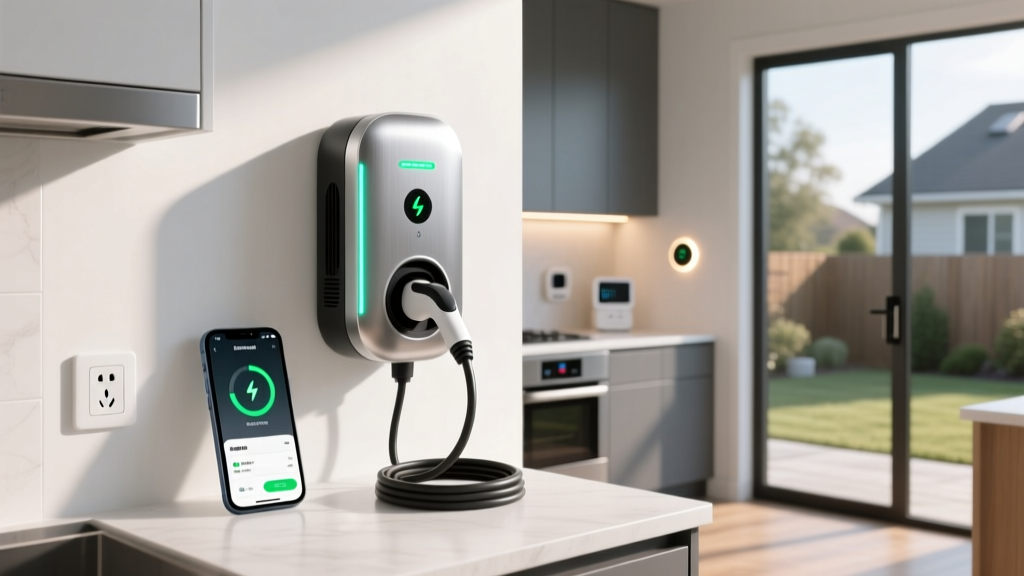
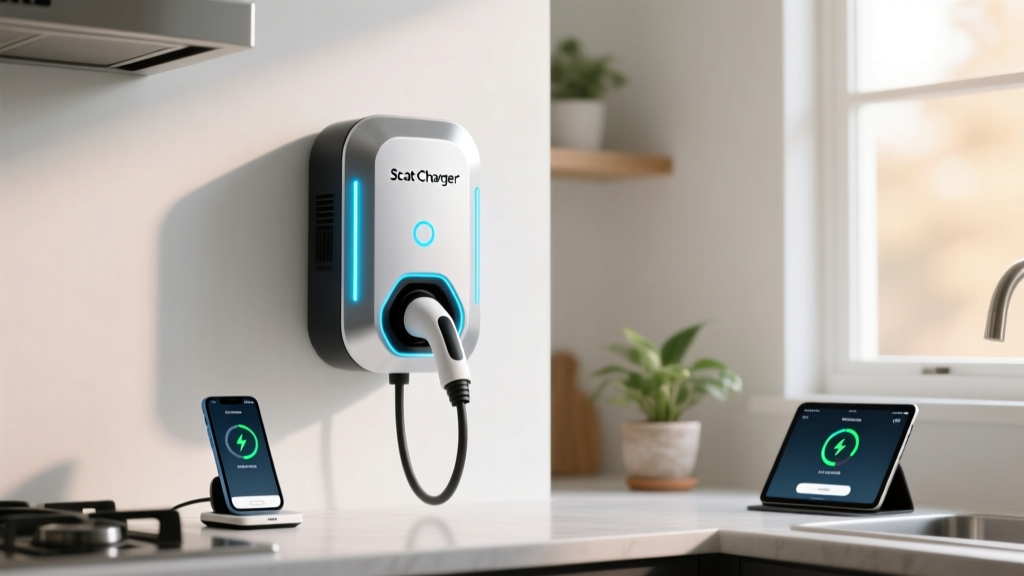
The Scat Charger is a Chinese-manufactured Level 2 EV charger sold primarily through Amazon and direct-to-consumer channels. It's marketed as a 40-amp (9.6 kW) home charging station with a NEMA 14-50 plug or hardwired option, Wi-Fi connectivity, and a companion app for scheduling and energy monitoring. The current 2026 model ships with a J1772 connector and includes a J1772-to-NACS adapter in the box for Tesla vehicles.
| Spec | Value |
|---|---|
| Max Power Output | 9.6 kW (40A @ 240V) |
| Connector (Included) | J1772 + J1772-to-NACS adapter |
| Cable Length | 25 ft |
| Installation | NEMA 14-50 plug or hardwired |
| Smart Features | Wi-Fi, app scheduling, energy tracking |
| Outdoor Rating | IP65 (dust/water resistant) |
| UL Listing | Claimed — verify specific model number |
| MSRP (2026) | $149–$199 |
| Warranty | 1 year limited |
Important kW vs. kWh note: The Scat Charger's power output is 9.6 kW — that's the rate at which it delivers electricity. Your EV's battery capacity is measured in kWh (kilowatt-hours) — that's the total energy stored. A 9.6 kW charger running for one hour delivers 9.6 kWh of energy to your battery.
Charging Levels Explained: Where the Scat Charger Fits
Before evaluating any charger, you need to understand the three charging levels available to EV owners. The Scat Charger is a Level 2 unit, which is the practical standard for home charging.
| Level | Voltage | Power (kW) | Miles of Range Added per Hour | Typical Use |
|---|---|---|---|---|
| Level 1 | 120V AC | 1.2–1.9 kW | 3–5 mi/hr | Emergency / overnight top-up |
| Level 2 | 240V AC | 3.3–19.2 kW | 12–75 mi/hr | Daily home & workplace charging |
| DC Fast Charge | 400–800V DC | 50–350+ kW | 150–1,000+ mi/hr | Road trips, highway corridors |
At 9.6 kW, the Scat Charger adds roughly 30–38 miles of range per hour for a typical EV consuming 250–300 Wh/mi. For a vehicle with an 80 kWh battery (like a Tesla Model Y Long Range or Ford Mustang Mach-E Extended Range), a full charge from 10% to 80% takes approximately 6–7 hours on this unit — perfectly suited for overnight charging.
- 60 kWh battery (Chevy Equinox EV, Nissan Leaf Plus): ~4.5–5 hours on Scat Charger
- 80 kWh battery (Tesla Model Y LR, Mach-E ER): ~6–7 hours
- 100 kWh battery (Rivian R1S, Ford F-150 Lightning ER): ~7.5–8.5 hours
Note: Charging slows above 80% SoC to protect battery health. Most EVs taper significantly past 80%, so scheduling to 80% is both faster and better for long-term battery health.
How Much Does It Cost to Install a Home EV Charger?
The Scat Charger's $150–$199 price tag is attractive, but the total installed cost depends heavily on your home's electrical infrastructure. Here's the honest breakdown based on 2026 electrician rates and typical residential scenarios:
| Component | Basic Install (Panel Nearby) | Complex Install (Panel Upgrade Needed) |
|---|---|---|
| Charger Unit (Scat Charger) | $149–$199 | $149–$199 |
| Electrician Labor (2–4 hrs basic / 6–12 hrs complex) | $400–$800 | $1,200–$2,500 |
| Materials (conduit, wire, NEMA 14-50 receptacle) | $100–$300 | $300–$800 |
| Permit & Inspection | $50–$200 | $100–$400 |
| Electrical Panel Upgrade (100A → 200A, if needed) | Not required | $1,500–$4,000 |
| Total Estimated Cost | $700–$1,500 | $3,250–$7,900 |
Panel upgrade reality check: Homes built before 1990 often have 100-amp or even 60-amp service panels. Adding a 40-amp dedicated circuit for EV charging may require upgrading to a 200-amp panel. This is the single biggest cost variable — and it's why you should get a licensed electrician's load calculation before purchasing any charger. The National Electrical Code (NEC) requires that continuous loads (like EV charging) not exceed 80% of a circuit's rated capacity, meaning a 40A charger requires a 50A circuit.
Electrical Requirements for the Scat Charger
- Circuit: Dedicated 50-amp, 240V circuit (for 40A continuous draw)
- Receptacle: NEMA 14-50 (if plug-in) or direct hardwire
- Wire gauge: 6 AWG copper (THHN in conduit) or 4 AWG aluminum
- GFCI protection: Required by NEC 2023/2026 for outdoor receptacles; hardwired installations may use the charger's built-in ground-fault protection
- Permit: Required in virtually all US jurisdictions for new 240V circuits — do not skip inspection
Connector Compatibility: Will the Scat Charger Work With Your EV?
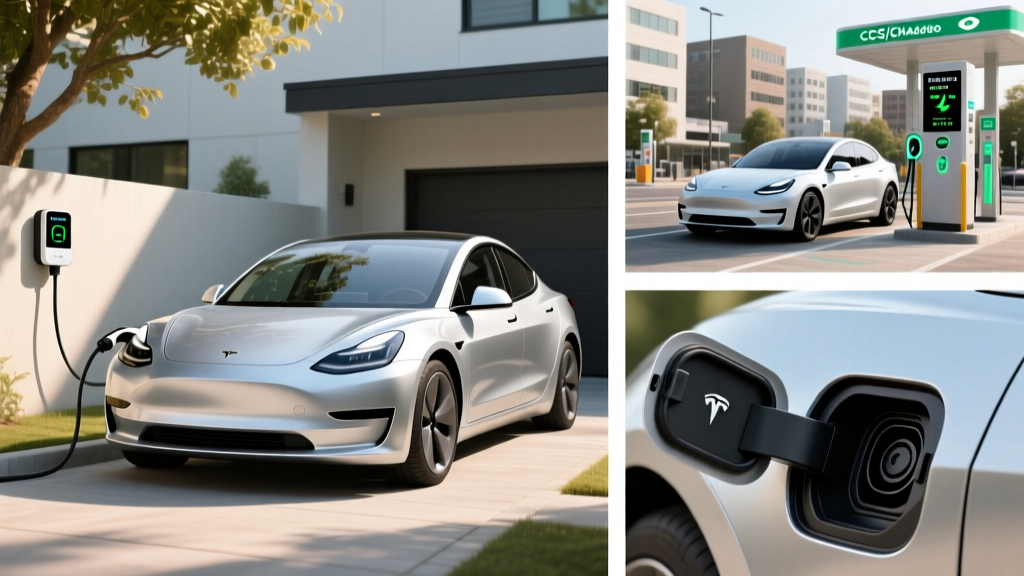
The 2026 connector landscape has consolidated significantly, but compatibility still matters. The Scat Charger ships with a J1772 connector, which is the legacy North American standard. It also includes a J1772-to-NACS adapter for Tesla and newer NACS-equipped vehicles.
| Connector | Brands Using It (2026 Models) | Scat Charger Compatible? |
|---|---|---|
| NACS (Tesla / SAE J3400) | Tesla (all), Ford, GM, Rivian, Volvo, Polestar, Hyundai, Kia (2025+) | Yes — via included adapter |
| J1772 (Legacy) | Older Nissan Leaf, Chevy Bolt (pre-2025), VW ID.4 (pre-2025), BMW i4/iX (pre-2025) | Yes — native plug |
| CCS1 (Combined) | Most non-Tesla EVs through 2024 model year | Yes — J1772 portion of CCS1 |
| CHAdeMO | Nissan Leaf (legacy DC only) | N/A — Level 2 AC uses J1772 |
Key insight for 2026: By 2026, most automakers have transitioned to the NACS connector for new models. If you're buying a 2025 or 2026 EV from Ford, GM, Hyundai, Kia, or Rivian, your vehicle will have a NACS port. The included adapter handles this, but adapter-based connections can occasionally be less secure than native plugs — check for a firm click and monitor the first few charging sessions for any error codes.
How Much Does Charging Cost Per Mile vs. Gas?
One of the strongest arguments for home Level 2 charging is cost. Here's how electricity pricing translates to real per-mile costs compared to a comparable gas vehicle:
| Scenario | Rate | Cost per kWh | Cost per Mile (at 3.0 mi/kWh) |
|---|---|---|---|
| Home — Off-Peak (utility time-of-use) | $0.08–$0.14/kWh | $0.11 avg | $0.037/mi |
| Home — Standard Rate | $0.15–$0.22/kWh | $0.18 avg | $0.060/mi |
| Public Level 2 (ChargePoint, etc.) | $0.25–$0.49/kWh | $0.35 avg | $0.117/mi |
| DC Fast Charge (Electrify America, Tesla Supercharger) | $0.35–$0.55/kWh | $0.45 avg | $0.150/mi |
| Gas Vehicle (30 MPG, $3.40/gal) | $3.40/gal | N/A | $0.113/mi |
Home off-peak charging with the Scat Charger costs roughly 3–4 cents per mile — about one-third the cost of gas. Even at standard residential rates, you're paying around 6 cents per mile. The savings compound: at 12,000 miles per year, home charging saves roughly $900–$1,100 annually compared to a 30 MPG gas car at current fuel prices, according to fueleconomy.gov data.
However, if you rely exclusively on public DC fast charging, your per-mile cost can actually exceed gas. This is why home Level 2 charging — with a unit like the Scat Charger — is the economic backbone of EV ownership.
Scat Charger vs. Established Competitors: Equipment Comparison
The Scat Charger competes in the budget segment. Here's how it stacks up against proven alternatives in 2026:
| Feature | Scat Charger | Emporia Vue | ChargePoint Home Flex | Wallbox Pulsar Plus |
|---|---|---|---|---|
| Max Output | 9.6 kW (40A) | 11.5 kW (48A) | 12 kW (50A) | 11.5 kW (48A) |
| Connector | J1772 + NACS adapter | J1772 or NACS | J1772 or NACS | J1772 or NACS |
| Cable Length | 25 ft | 24 ft | 23 ft | 25 ft |
| Smart App | Yes (basic) | Yes (energy monitoring) | Yes (robust) | Yes (scheduling) |
| Energy Monitoring | Basic | Whole-home + per-circuit | Charger-level | Charger-level |
| UL/ETL Listed | Verify model | UL Listed | UL Listed | UL Listed |
| Warranty | 1 year | 3 years | 3 years | 3 years |
| Price (2026) | $149–$199 | $349–$399 | $599–$699 | $449–$549 |
Honest assessment: The Scat Charger wins on price. At roughly $175, it's one-third the cost of a ChargePoint Home Flex. If your electrical panel is close to your parking spot and you're comfortable with a shorter warranty, it can be a functional daily charger. However, the 1-year warranty, uncertain UL listing status on some model variants, and less mature app ecosystem are real trade-offs. For homeowners planning to stay in their home 5+ years, the Emporia Vue at $349 offers significantly better energy monitoring and a 3-year warranty — a worthwhile upgrade for ~$175 more.
Safety, Code, and What to Watch For
Budget chargers can be safe — but only if they meet the right certifications and are installed correctly. Here's your safety checklist:
- UL or ETL Listing: Verify the exact model number of the Scat Charger you're purchasing carries a current UL or ETL certification mark. Some budget chargers sold online have counterfeit or expired certifications. Check the UL product directory at ul.com.
- Dedicated Circuit: The Scat Charger must be on a dedicated 50A circuit — never share it with a dryer, oven, or HVAC system.
- GFCI Protection: NEC 2023 and 2026 require GFCI protection for outdoor EV charging receptacles. If installing a NEMA 14-50 outdoors, your electrician must include a GFCI breaker (~$80–$150 additional).
- Outdoor Rating: The Scat Charger claims IP65, which covers rain and dust. If mounting in an exposed location, ensure the cable and connector are not subject to standing water or direct UV degradation over time.
- Thermal Monitoring: Premium chargers include thermal sensors in the plug that reduce power if the connection overheats. Budget units may lack this — periodically check your NEMA 14-50 plug for warmth during the first week of use.
- Permit & Inspection: Skipping the permit saves $50–$200 upfront but can void your homeowner's insurance if an electrical fire occurs. Always pull a permit and pass inspection.
Who Should Buy the Scat Charger (and Who Shouldn't)
- You're on a tight budget and want functional Level 2 charging under $200
- Your electrical panel is near your parking spot (short wire run)
- You charge overnight and don't need maximum speed
- You're comfortable with a 1-year warranty and basic app
- You've verified the specific model's UL/ETL listing
- You want detailed energy monitoring and solar integration
- You need a 3-year warranty for peace of mind
- Your installation is complex (long wire run, panel upgrade)
- You want native NACS without an adapter
- You plan to stay in your home long-term and want proven reliability
Frequently Asked Questions
How much does it cost to install a home EV charger?
With the Scat Charger, expect $700–$1,500 total for a straightforward installation (panel nearby, no upgrade needed). If your home requires a 200-amp panel upgrade, total costs can reach $3,250–$7,900. Always get a licensed electrician's load calculation first.
How fast will each charging level add range?
Level 1 (120V): 3–5 miles per hour. Level 2 at 9.6 kW (Scat Charger): approximately 30–38 miles per hour depending on your EV's efficiency. DC Fast Charging: 150–1,000+ miles per hour, though charging curves taper significantly above 80% SoC.
Which connector/charger is compatible with my EV?
The Scat Charger ships with a J1772 plug and a J1772-to-NACS adapter. This covers virtually every EV sold in North America — J1772 for older models (pre-2025 non-Tesla) and NACS for Tesla and 2025+ models from Ford, GM, Hyundai, Kia, and Rivian. CCS1 vehicles also accept J1772 for Level 2 AC charging.
How much does charging cost per mile vs. gas?
Home off-peak charging costs approximately $0.03–$0.04 per mile — about one-third the cost of a 30 MPG gas vehicle at $3.40/gallon ($0.113/mi). Standard-rate home charging runs about $0.06/mile. Public DC fast charging at $0.35–$0.55/kWh can cost $0.12–$0.18/mile, sometimes exceeding gas.
What electrical upgrades might I need?
The most common upgrade is a 100A-to-200A panel replacement ($1,500–$4,000) if your existing panel lacks capacity for a new 50A dedicated circuit. Older homes may also need new conduit runs, a service entrance upgrade, or a second panel. A licensed electrician's load calculation per NEC Article 220 will determine your exact needs.
Is the Scat Charger eligible for any tax credits or rebates?
The federal Alternative Fuel Vehicle Refueling Property Credit (IRC §30C) covers up to 30% of charger hardware and installation costs, capped at $1,000, for equipment placed in service in eligible census tracts through 2025. Check current-year IRS guidance for 2026 availability, as this credit has specific location and income requirements. Many utilities also offer $200–$500 rebates for Level 2 charger installation — check with your local provider.
Can I use the Scat Charger outdoors?
The Scat Charger carries an IP65 rating, meaning it resists dust ingress and low-pressure water jets from any direction. It's suitable for outdoor mounting on a garage exterior wall or carport. However, ensure the NEMA 14-50 receptacle (if used) has a weatherproof in-use cover, and verify GFCI protection is installed per NEC requirements for outdoor receptacles.
Sources: fueleconomy.gov — EV efficiency and cost data; IRS.gov — §30C refueling property credit; NFPA NEC — National Electrical Code requirements.