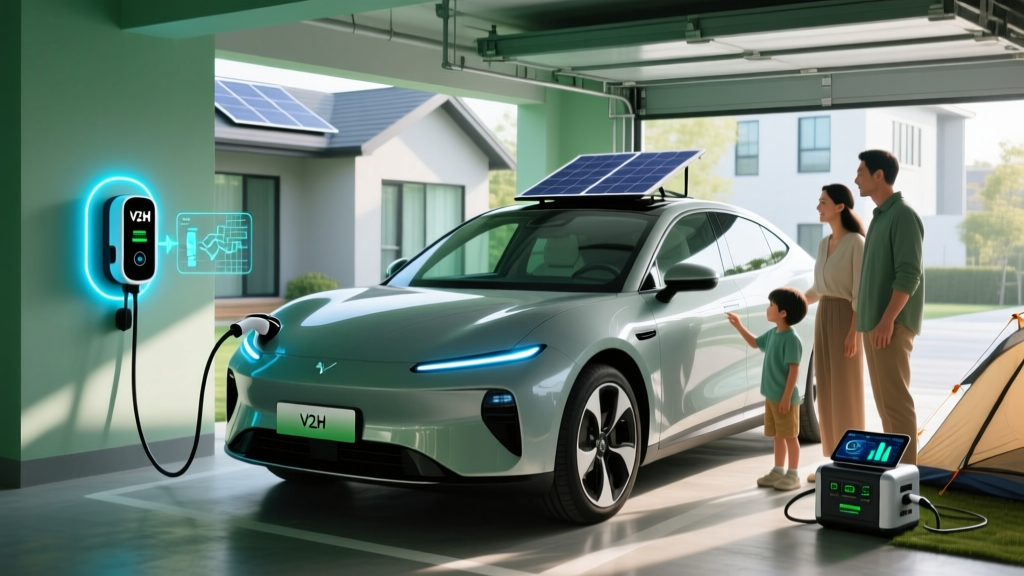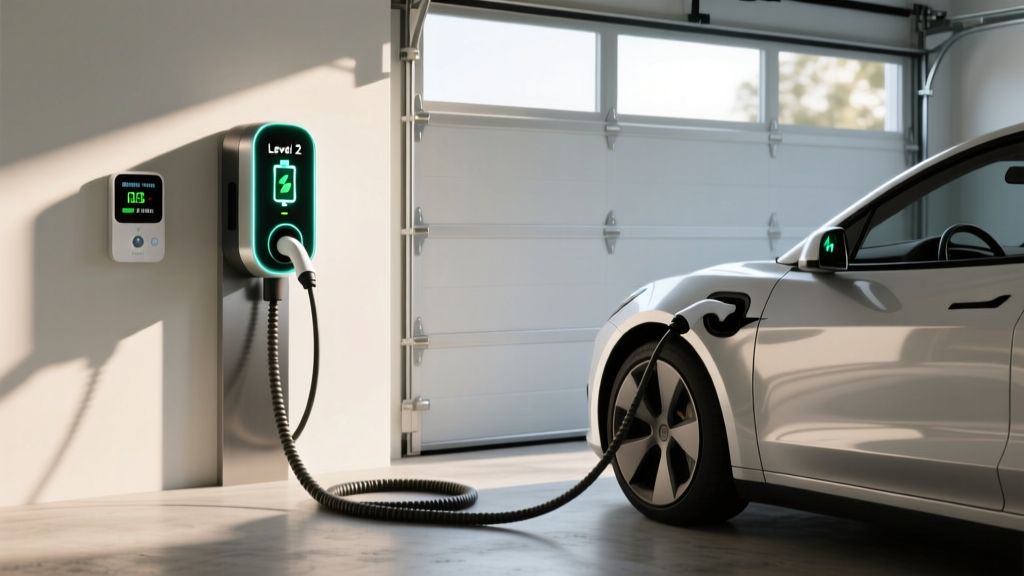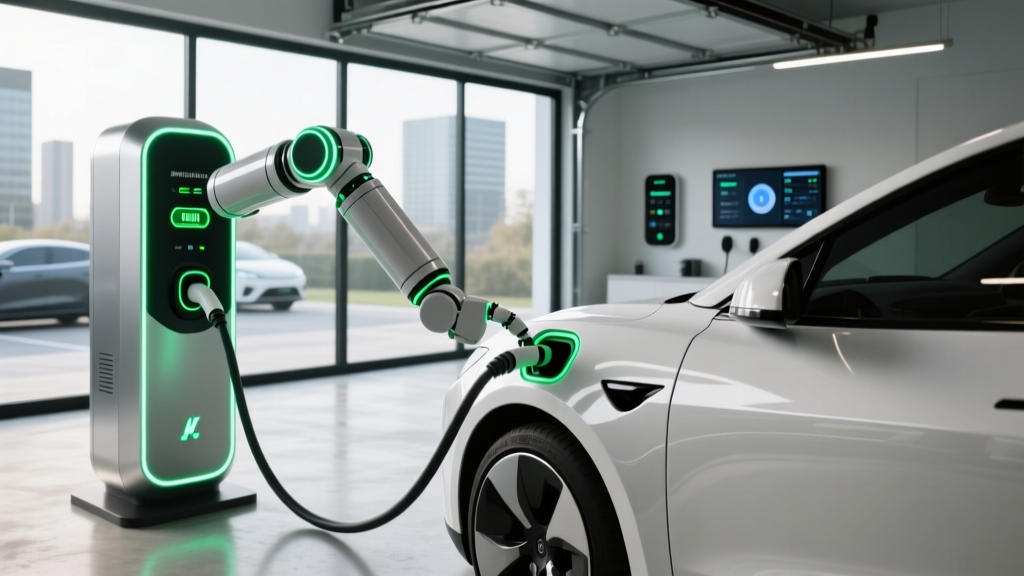
For most EV owners, charging means grabbing a cable, plugging in, and walking away. But a growing niche called robot charging aims to eliminate even that small step. Automated robotic arms, inductive pads, and self-parking garage systems can connect your vehicle without you ever touching a plug. In 2026, robot charging is no longer a lab experiment — limited products from companies like WiBotic, Ziggy, and Volkswagen's pilot programs are entering residential garages and commercial fleet depots.
This guide breaks down where robot charging stands today, how its speeds and costs compare to conventional Level 2 and DC fast charging, and what you'd actually need to install one at home.
What Is Robot Charging and How Does It Work?
Robot charging refers to any system that physically connects an EV to a power source without human intervention. There are three main approaches in 2026:
- Robotic-arm chargers: A wall- or floor-mounted arm with a camera and sensor array locates your EV's charge port and inserts a CCS or NACS connector automatically. You simply park and walk away.
- Inductive (wireless) pads: A ground-mounted transmitter coil and a vehicle-mounted receiver coil transfer energy magnetically — no physical plug at all. Efficiency typically runs 85–93% compared to 95–98% for a wired connection.
- Mobile charging robots: Battery-equipped autonomous carts (like EV Safe Charge's Ziggy) roll to your parked EV and plug in or supply power from an onboard battery. These are mostly deployed in parking garages and fleet yards, not private homes.
Most residential robot-charging products use the robotic-arm approach because it works with any EV equipped with a standard NACS or CCS port — no vehicle-side modifications required.
Charging Speeds: Robot Charging vs. Conventional Levels
Robot chargers are fundamentally delivering the same electricity as a standard home or public charger. The robot is just the delivery mechanism. Here's how the three conventional charging levels compare, with notes on what robot systems typically support:
| Level | Voltage / Power | Typical kW Output | Miles of Range Added per Hour | Robot Charging Available? |
|---|---|---|---|---|
| Level 1 | 120V / 1.4–1.9 kW | 1.4–1.9 kW | 3–5 mi/hr | No — robotic arms don't target Level 1 |
| Level 2 | 240V / 3.3–19.2 kW | 7.7–11.5 kW (most homes) | 25–44 mi/hr | Yes — most residential robot arms deliver Level 2 |
| DC Fast (Level 3) | 400–900V / 50–350+ kW | 50–350 kW | 180–1,200+ mi/hr | Limited — fleet/commercial robotic DC systems exist; none for homes |
Real-world charging note: A 10–80% charge on a typical 75 kWh battery (e.g., Tesla Model Y Long Range) takes roughly 7–8 hours on an 11.5 kW Level 2 robot arm — identical to a standard wall connector. On a 250 kW DC fast charger, that same 10–80% session takes about 20–25 minutes, though the rate tapers significantly above 80% as the battery management system protects cell health.
How Much Does Robot Charging Equipment Cost?
Robot chargers carry a substantial premium over conventional Level 2 wall connectors. In 2026, expect the following pricing tiers:
| Item | Conventional Level 2 | Residential Robot Arm Charger |
|---|---|---|
| Charger hardware | $400–$750 | $3,500–$8,000 |
| Electrician labor (install) | $500–$2,000 | $1,500–$3,500 |
| Permit & inspection | $100–$400 | $200–$600 |
| Electrical panel upgrade (if needed) | $1,500–$4,000 | $1,500–$4,000 |
| Total (no panel upgrade) | $1,000–$3,150 | $5,200–$12,100 |
The premium reflects the robotic arm's motors, vision system, and control electronics. For most homeowners, a conventional Level 2 charger like the ChargePoint Home Flex ($550) or Tesla Wall Connector ($420) delivers the same kWh to the battery at a fraction of the cost. Robot charging makes more sense in contexts where the driver cannot or prefers not to handle a cable — think mobility-limited users, luxury convenience, or fleet vehicles that self-park in automated yards.
Electrical Requirements: What Your Home Needs
Whether you install a robot arm or a standard Level 2 charger, the electrical demands are identical. Here's what to expect:
- Circuit: A dedicated 240V circuit, typically 40A or 60A, depending on the charger's rated output. A 48A charger requires a 60A breaker (NEC requires circuits rated at 125% of continuous load).
- Wire gauge: 6 AWG copper for a 60A circuit; 8 AWG for a 40A circuit. Longer runs may require upsizing to compensate for voltage drop.
- Panel capacity: Most modern homes with a 200A service panel can accommodate a 60A EV circuit. Older homes with 100A or 150A panels may need an upgrade to 200A — that's the $1,500–$4,000 line item above.
- GFCI protection: The 2020 and 2023 NEC require GFCI protection for EV receptacles (NEMA 14-50). Hardwired chargers — which most robot arms are — may be exempt in some jurisdictions, but your inspector will confirm.
- Outdoor rating: If your robot charger mounts in an open carport or driveway, ensure the unit carries a NEMA 4 or IP65 rating for weather resistance.
Always hire a licensed electrician familiar with EV installations. The National Electrical Contractors Association maintains a directory of certified EV installers.
Connector Compatibility: NACS, CCS, and CHAdeMO
Robot chargers must physically mate with your EV's charge port. Here's the 2026 connector landscape:
| Connector | Brands Using It (2026) | Robot Charger Support |
|---|---|---|
| NACS (Tesla / J3400) | Tesla, Ford, GM, Rivian, Hyundai, Kia, Volvo, Polestar, and most major OEMs | Yes — most robot arms now ship with NACS as default |
| CCS1 (Combo) | Legacy VW ID.4, some older BMW iX, pre-2025 models | Yes — some robot arms offer CCS; adapters also available |
| CHAdeMO | Nissan Leaf (discontinued in US after 2025), Mitsubishi Outlander PHEV | Limited — CHAdeMO is being phased out; robot support rare |
If you drive a CCS-equipped EV and your chosen robot arm only ships with NACS, a CCS-to-NACS adapter (roughly $150–$250) resolves the issue. Verify adapter compatibility with both the charger and the vehicle before purchasing.
Cost to Charge: Robot vs. Standard — Same Electricity, Same Price
The robot arm doesn't change your electricity rate. You're paying per kWh regardless of how the electrons reach your battery. Here's what charging actually costs in 2026:
| Scenario | Rate ($/kWh) | Cost for 300-Mile Refuel (75 kWh usable) | Cost per Mile |
|---|---|---|---|
| Home Level 2 (off-peak utility rate) | $0.08–$0.14 | $6.00–$10.50 | $0.02–$0.035 |
| Home Level 2 (standard residential rate) | $0.14–$0.22 | $10.50–$16.50 | $0.035–$0.055 |
| Public Level 2 (ChargePoint, EVgo, etc.) | $0.20–$0.40 | $15.00–$30.00 | $0.05–$0.10 |
| DC Fast Charging (Electrify America, Tesla Supercharger) | $0.30–$0.55 | $22.50–$41.25 | $0.075–$0.14 |
| Gas vehicle (28 MPG combined, $3.40/gal) | $3.40/gallon | $36.43 (10.7 gal) | $0.12 |
Even at peak DC fast-charging rates, EVs generally beat gas on cost per mile. Home charging — whether via robot arm or standard Level 2 — is by far the cheapest option. According to fueleconomy.gov, the average EV in 2026 achieves 3–4 miles per kWh, making home charging at $0.14/kWh roughly $0.035–$0.047 per mile.
Equipment Recommendations: Robot Chargers and Conventional Alternatives
WiBotic RoboCharge (Residential Arm)
- Power output: 11.5 kW (48A, 240V)
- Connector: NACS (J3400); CCS adapter available
- Cable reach: ~6 feet from mount point
- Smart features: Wi-Fi scheduling, load management, app monitoring
- Price: ~$5,500 (hardware only)
- Best for: Mobility-limited drivers, luxury garage setups
EV Safe Charge Ziggy (Mobile Robot)
- Power output: Battery-buffered; delivers up to 75 kWh from onboard storage, recharges from grid when idle
- Connector: NACS and CCS options
- Deployment: Commercial parking garages, fleet depots — not for private home use
- Price: Fleet/enterprise pricing (contact vendor)
- Best for: Garages where chargers are scarce and robots can rotate among parked EVs
ChargePoint Home Flex (Conventional Level 2)
- Power output: Up to 12 kW (50A, 240V); configurable down to 16A
- Connector: NACS (2025+ models); J1772 with adapter for older EVs
- Cable length: 23 feet
- Smart features: Wi-Fi, Alexa/Google Home integration, scheduling, energy dashboard
- Price: ~$550
- Best for: Most EV owners — reliable, flexible amperage, NEMA 4 rated
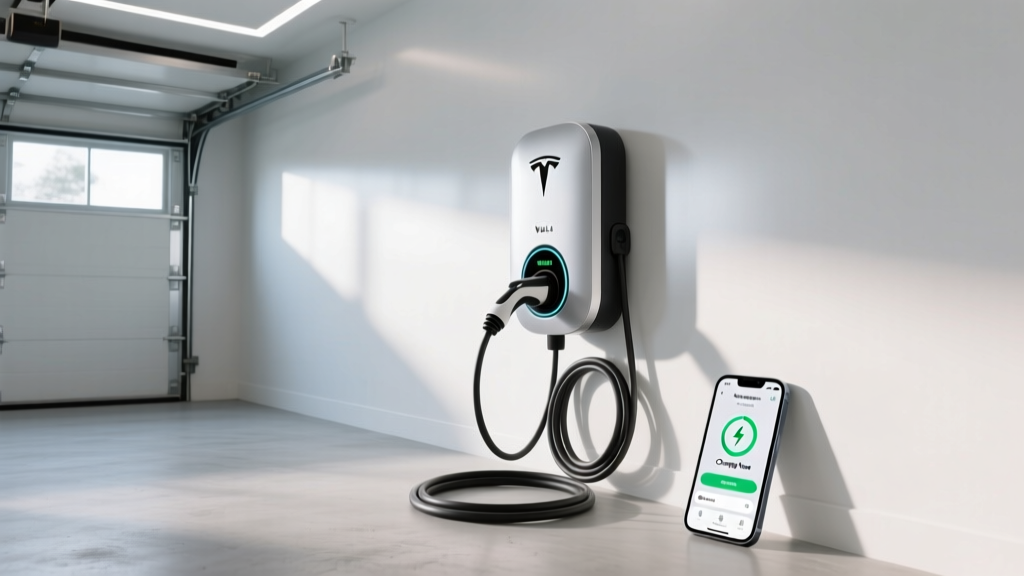
Tesla Wall Connector (Conventional Level 2)
- Power output: Up to 11.5 kW (48A, 240V)
- Connector: NACS native; J1772 adapter included
- Cable length: 24 feet
- Smart features: Wi-Fi, over-the-air updates, power sharing between two units
- Price: ~$420
- Best for: Tesla owners and any NACS-equipped EV; excellent value
Is Robot Charging Worth It for Your Home?
Choose a robot charger if:
- You or a household member has limited mobility and cannot easily handle a charge cable
- You want a fully automated luxury garage experience and budget is secondary
- You operate a fleet or commercial parking facility where vehicles self-park and need autonomous plug-in
Choose a conventional Level 2 charger if:
- You're a typical EV owner — plugging in takes 5 seconds and costs 10× less in hardware
- You want maximum reliability with minimal moving parts
- You're installing in a tight garage where a robotic arm's reach envelope may be constrained
For the vast majority of EV owners in 2026, a high-quality Level 2 wall connector paired with a dedicated 60A circuit delivers everything you need: overnight charging that adds 200+ miles by morning, at the lowest possible per-mile cost. Robot charging is real and functional, but it solves a convenience problem most drivers don't find painful enough to justify a $5,000+ premium.
Frequently Asked Questions
How much does it cost to install a home EV charger?
A conventional Level 2 charger installation typically runs $1,000–$3,150 total (equipment, electrician, and permit) if your panel doesn't need upgrading. A residential robot-arm charger runs $5,200–$12,100 for the same electrical work plus the premium hardware. If your home needs a panel upgrade from 100A to 200A, add $1,500–$4,000 to either scenario.
How fast will each charging level add range?
Level 1 (120V) adds roughly 3–5 miles per hour. Level 2 (240V, 11.5 kW) adds 35–44 miles per hour depending on your EV's efficiency. DC fast charging at 150–250 kW can add 200+ miles in 15–20 minutes, though the charge curve tapers significantly above 80% state of charge.
Which connector/charger is compatible with my EV?
Check your vehicle's charge port. Most 2025+ EVs sold in the US use NACS (J3400). Older models from VW, BMW, and others may still use CCS1. The Nissan Leaf used CHAdeMO but is no longer sold new in the US. Every robot arm and wall connector sold in 2026 offers NACS as standard; CCS adapters are available.
How much does charging cost per mile vs gas?
Home charging at $0.14/kWh costs roughly $0.035–$0.05 per mile for a typical EV. Gas at $3.40/gallon in a 28 MPG vehicle costs about $0.12 per mile. Even public DC fast charging at $0.45/kWh ($0.11–$0.15/mile) is competitive with or cheaper than gas.
What electrical upgrades might I need?
If your home has a 200A electrical panel with available breaker slots, you likely need nothing beyond a new 60A double-pole breaker and a wire run to your garage. If your panel is 100A or 150A, or if it's already near capacity with HVAC, electric range, and dryer loads, a panel upgrade to 200A may be required — budget $1,500–$4,000 for that work. A licensed electrician can perform a load calculation to determine your exact needs.
Does robot charging void my EV's warranty?
No. Robot chargers that use a standard NACS or CCS connector interface with your EV exactly as a human-inserted plug would. The Magnuson-Moss Warranty Act protects consumers from warranty voids based on the use of compatible third-party equipment.