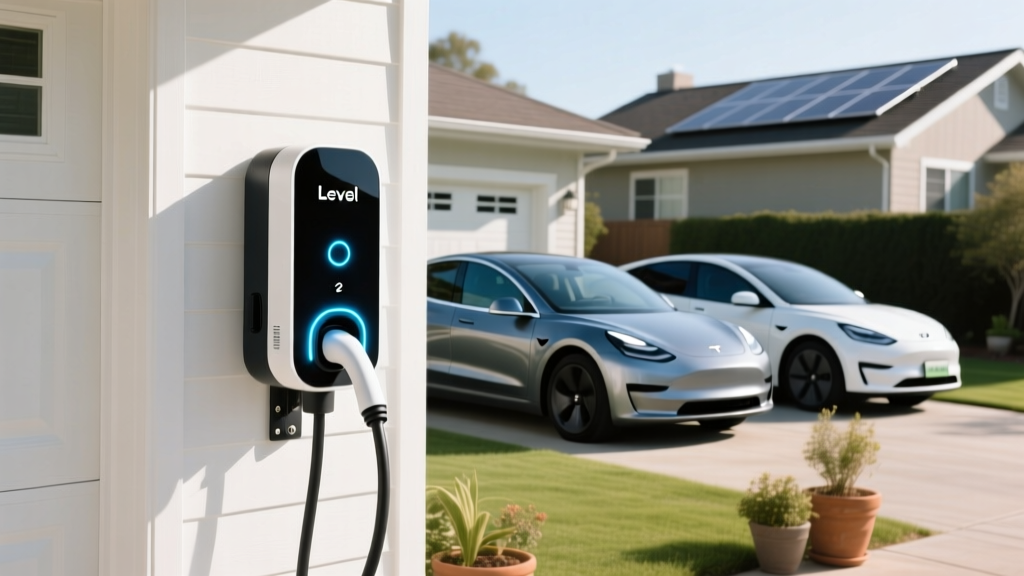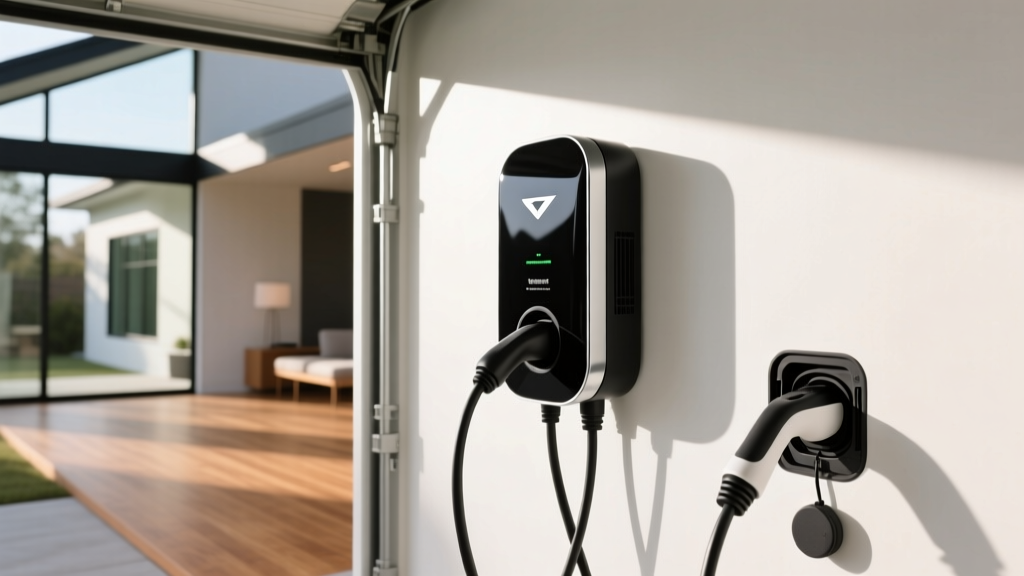
If you own a Rivian R1T or R1S — or you're about to take delivery — the single most impactful upgrade you can make is a proper Level 2 home charging station. Rivian's own Wall Charger is purpose-built for the job, but is it the right pick for your garage, your electrical panel, and your budget? This guide breaks down the Rivian Wall Charger's real-world performance, installation requirements, costs, and how it stacks up against the best third-party alternatives in 2026.
Rivian Wall Charger: Quick Specs at a Glance
| Spec | Detail |
|---|---|
| Max Power Output | 11.5 kW (240V / 48A) |
| Connector (2025+ models) | NACS (Tesla-style plug) |
| Connector (2022–2024 models) | CCS1 (J1772 combo) — adapter available |
| Cable Length | 25 feet |
| Wi-Fi / Smart Features | Yes — OTA updates, Rivian app integration, scheduled charging |
| Indoor/Outdoor Rating | NEMA 4 (indoor and outdoor rated) |
| Energy Star Certified | Yes |
| Price (MSRP) | ~$550 |
| Warranty | 3 years |
The headline number is 11.5 kW. That's the maximum AC power the charger can deliver to your vehicle's onboard charger. To put that in practical terms: if your Rivian R1T Dual-Motor (with the ~128.9 kWh usable Standard battery) is nearly empty, the Wall Charger will add roughly 30–33 miles of range per hour of charging. A full overnight session from 20% to 80% takes about 9–10 hours — perfectly suited to a standard sleep cycle.
Charging Levels Explained: What Speed Are You Actually Getting?
Before evaluating the Rivian Wall Charger specifically, it helps to understand where it fits in the broader charging ecosystem. EV charging is categorized into three levels, each with dramatically different speeds:
| Charging Level | Voltage | Typical Power (kW) | Miles of Range Added per Hour | Best Use Case |
|---|---|---|---|---|
| Level 1 (Standard Outlet) | 120V AC | 1.0–1.4 kW | 3–5 mi/hr | Emergency top-ups, PHEVs, very low daily mileage |
| Level 2 (Home/Public AC) | 240V AC | 7.2–19.2 kW | 20–60 mi/hr | Daily home charging, workplace, destinations |
| DC Fast Charging | 400–800V DC | 50–350+ kW | 150–1,000+ mi/hr | Road trips, rapid top-ups (not for daily use) |
The Rivian Wall Charger is a Level 2 unit. It's the practical daily workhorse of EV ownership — the charger you plug into every evening and wake up to a full (or near-full) battery every morning. Level 1, using a standard 120V household outlet, is painfully slow for a large-battery EV like the R1T or R1S: adding just 3–5 miles per hour means a full charge could take 4+ days. DC fast charging is essential for road trips — Rivians can accept up to 220 kW at compatible DC fast chargers, reaching 10–80% in roughly 30–35 minutes — but it's neither necessary nor ideal for daily charging due to higher costs and long-term battery wear from frequent high-power sessions.
Installation Requirements: What Your Electrical Panel Needs
The Rivian Wall Charger requires a dedicated 240-volt circuit with a 60-amp breaker (which allows a continuous draw of 48 amps per the National Electrical Code's 80% rule for continuous loads). This is the same circuit requirement as most high-output Level 2 chargers, but it's not trivial — many older homes don't have the spare capacity.
Minimum Electrical Requirements
- Voltage: 240V (split-phase, standard US residential)
- Breaker size: 60A dedicated
- Continuous amperage: 48A
- Wire gauge: 6 AWG copper (minimum; some jurisdictions require 4 AWG for 60A runs over longer distances)
- Circuit type: Hardwired (the Rivian Wall Charger does not use a plug — it's hardwired directly into a junction box)
Will You Need a Panel Upgrade?
This is the question that can turn a $500 charger install into a $3,000+ project. Most modern homes with a 200-amp electrical service panel can accommodate a 60A EV circuit without issue, provided the panel isn't already near capacity. Here's how to assess:
- 100A panel (common in pre-1990 homes): Very likely needs an upgrade to 200A. Budget $1,500–$3,500 for a panel upgrade alone.
- 200A panel with spare slots and moderate load: Usually fine. A licensed electrician will perform a load calculation per NEC Article 220 to confirm.
- 200A panel already heavily loaded (electric heat, hot tub, multiple large appliances): May need a load management device or panel upgrade.
If a full panel upgrade isn't feasible, consider a smart load management system like the Emporia Smart Load Center or a charger with built-in load balancing (such as the Wallbox Pulsar Plus with Power Meter). These devices dynamically reduce charger amperage when other heavy loads are running, potentially allowing installation on a smaller breaker — for example, running the Rivian charger at 32A instead of 48A on a 40A circuit.
How Much Does It Cost to Install the Rivian Wall Charger?
Installation costs vary enormously depending on your home's existing electrical infrastructure, the distance from panel to charger location, and local labor rates. Here's a realistic breakdown based on 2025–2026 contractor pricing data:
| Cost Component | Simple Install (panel nearby, no upgrade) | Moderate Install (longer run, minor panel work) | Complex Install (panel upgrade needed) |
|---|---|---|---|
| Rivian Wall Charger (equipment) | $550 | $550 | $550 |
| Electrician labor (2–4 hrs typical) | $300–$600 | $600–$1,200 | $800–$1,500 |
| Permit and inspection | $50–$150 | $50–$200 | $100–$300 |
| Wire, conduit, junction box | $50–$150 | $150–$400 | $200–$500 |
| Electrical panel upgrade | $0 | $0 | $1,500–$3,500 |
| Total Estimated Range | $950–$1,450 | $1,350–$2,350 | $3,150–$5,850 |
Connector Compatibility: NACS, CCS, and What You Need for Your Rivian
Rivian's connector strategy has evolved significantly. Here's where things stand in 2026:
- 2025+ Rivian R1T and R1S (2nd generation): Built with the NACS (North American Charging Standard) charge port. The current Rivian Wall Charger ships with a NACS connector — plug and play.
- 2022–2024 Rivian R1T and R1S (1st generation): Built with a CCS1 charge port. If you purchase the latest NACS-equipped Rivian Wall Charger, you'll need a NACS-to-CCS adapter to charge. Rivian sells an official adapter (~$200). Alternatively, you can source an older CCS1 Rivian Wall Charger on the secondary market.
| Connector Type | Brands Using It (2026) | Adapter Needed for Rivian (Gen 1)? |
|---|---|---|
| NACS (Tesla-style) | Tesla, Rivian (2025+), Ford, GM, Hyundai/Kia, Volvo, Polestar, most new EVs | Yes — NACS-to-CCS adapter for Gen 1 R1T/R1S |
| CCS1 (J1772 Combo) | Older Rivians, older VW ID.4, BMW i4/iX, some legacy models | No — native on Gen 1 Rivian |
| CHAdeMO | Nissan Leaf (discontinued), Mitsubishi Outlander PHEV (older) | Not compatible — different standard entirely |
For public DC fast charging, the NACS transition means Gen 2 Rivians can use Tesla Superchargers directly (Rivian gained Supercharger access in 2024 with the adapter, and Gen 2 vehicles have native NACS ports). Gen 1 owners use the Rivian-provided NACS adapter for Supercharger access.
Cost to Charge: Home vs. Public vs. Gas — What You'll Actually Spend
One of the strongest arguments for home Level 2 charging is cost. Here's a realistic comparison for a Rivian R1T Dual-Motor Standard Pack (128.9 kWh usable battery, ~2.0 kWh/mile efficiency or roughly 3.0 mi/kWh):
| Charging Scenario | Cost per kWh | Cost to Add 100 Miles | Cost to Charge 20–80% (~77 kWh) |
|---|---|---|---|
| Home (national avg. residential rate) | $0.16/kWh | $3.20 | $12.32 |
| Home (off-peak utility TOU rate) | $0.08/kWh | $1.60 | $6.16 |
| Public Level 2 (ChargePoint, EVgo, etc.) | $0.25–$0.49/kWh | $5.00–$9.80 | $19.25–$37.73 |
| DC Fast Charging (Electrify America, EVgo) | $0.35–$0.55/kWh | $7.00–$11.00 | $26.95–$42.35 |
| Gas truck equivalent (20 MPG, $3.40/gal) | $0.17/mile | $17.00 | N/A |
The takeaway: home charging at off-peak rates costs roughly 1.6 cents per mile in a Rivian R1T, compared to about 17 cents per mile for a comparable gas truck getting 20 MPG. Even at standard residential rates, you're paying roughly 3.2 cents per mile — about one-fifth the fuel cost of gasoline. Over 15,000 miles per year, that's a potential fuel savings of $2,070–$2,310 annually.
Public DC fast charging, however, narrows the gap considerably. At $0.48/kWh (a common rate on Electrify America or EVgo without a subscription), you're paying roughly 9.6 cents per mile — still less than gas, but not the dramatic savings home charging delivers. This is why a home Level 2 setup is economically essential for EV ownership.
Rivian Wall Charger vs. Top Alternatives: Which Should You Buy?
The Rivian Wall Charger is a solid, well-integrated unit, but it's not the only option. Here's how it compares to the leading third-party chargers for Rivian owners:
Rivian Wall Charger
- Power: 11.5 kW / 48A
- Connector: NACS (current) or CCS1 (older)
- Cable: 25 ft
- Smart: Yes — OTA, app scheduling
- Price: ~$550
- Pros: Seamless Rivian app integration, clean design, OTA updates
- Cons: Hardwired only (not portable), no load management built in
Tesla Wall Connector
- Power: 11.5 kW / 48A
- Connector: NACS (native)
- Cable: 24 ft
- Smart: Yes — Wi-Fi, OTA, power sharing
- Price: ~$450
- Pros: Lower price, power sharing for multi-charger setups, NACS native
- Cons: No native CCS output; less app integration with Rivian
ChargePoint Home Flex
- Power: Up to 12 kW / 50A (configurable down to 16A)
- Connector: J1772 (CCS adapter needed for NACS vehicles)
- Cable: 23 ft
- Smart: Yes — excellent app, Alexa, load management capable
- Price: ~$550–$650
- Pros: Adjustable amperage fits any panel, plug-in option (NEMA 14-50), strong app
- Cons: J1772 connector requires adapter for NACS-port Rivians
Wallbox Pulsar Plus
- Power: Up to 11.5 kW / 48A
- Connector: J1772 or NACS (configurable at purchase)
- Cable: 25 ft
- Smart: Yes — app, load balancing with Power Meter accessory
- Price: ~$550–$700
- Pros: Compact size, built-in load management option, NACS option available
- Cons: Power Meter accessory adds ~$150
Charging Time Examples: How Long Does a Rivian Actually Take to Charge?
Real charging times depend on battery size, starting state of charge (SoC), and the charger's power output. Here are practical estimates for the most common Rivian configurations on a Level 2 charger at 11.5 kW:
| Rivian Model / Battery | Usable Capacity | 20–80% at 11.5 kW (Level 2) | 0–100% at 11.5 kW | 10–80% DC Fast (220 kW peak) |
|---|---|---|---|---|
| R1T/R1S Dual-Motor Standard | ~128.9 kWh | ~6.7 hours | ~11.2 hours | ~30–35 minutes |
| R1T/R1S Dual-Motor Large | ~140.5 kWh | ~7.3 hours | ~12.2 hours | ~35–40 minutes |
| R1T/R1S Tri-Motor / Quad-Motor Max | ~149 kWh | ~7.8 hours | ~13 hours | ~35–42 minutes |
A few real-world caveats on these numbers:
- Charge curve taper: The 11.5 kW rate is sustained throughout most of the Level 2 charge because AC charging is limited by the onboard charger, not the battery's acceptance rate. Unlike DC fast charging — which peaks early and tapers significantly above 80% SoC — Level 2 charging stays relatively flat. This is why Level 2 is actually very efficient for the 20–80% daily range.
- Cold weather impact: In sub-freezing temperatures, expect Level 2 charging to slow by 10–20% if the battery is cold-soaked. The Rivian's battery thermal management system will use some incoming power to warm the pack before accepting full charge rate. Using the Rivian app to precondition the battery while still plugged in mitigates this significantly.
- Voltage sag: In homes with long wire runs from the panel to the charger, actual voltage at the unit may drop below 240V (to 232–236V), reducing effective power by 2–4%. This is normal and minor.
Safety, Permits, and Code Requirements
A 60A, 240V circuit is a serious electrical installation. Here's what you need to know to ensure it's done safely and legally:
- Dedicated circuit: The NEC requires EV chargers to be on a dedicated circuit — it cannot share a breaker with any other outlet or appliance. Your electrician will install a new breaker and run dedicated wiring to the charger location.
- GFCI protection: The 2023 NEC (and most jurisdictions adopting it) requires GFCI (Ground Fault Circuit Interrupter) protection for EV charging circuits. The Rivian Wall Charger has built-in ground fault protection, which typically satisfies this requirement for hardwired installations. Your inspector will verify.
- Permit required: Virtually all US jurisdictions require an electrical permit for a new 240V circuit. Permit fees typically range from $50–$200. The work must pass a final inspection before it's legal and insurable. Do not skip the permit — unpermitted electrical work can void your homeowner's insurance in the event of a fire.
- Outdoor installation: The Rivian Wall Charger carries a NEMA 4 rating, meaning it's rated for outdoor use and can withstand rain, snow, and hose-directed water. However, installing it under a carport or garage overhang is always preferable to prolong the unit's lifespan and keep the connector clean.
- Wire sizing: 6 AWG copper wire is the NEC minimum for 60A circuits, but many electricians specify 4 AWG for runs over 50 feet to prevent voltage drop. Aluminum wire is cheaper but requires a larger gauge (typically 4 AWG or 2 AWG) and is not always accepted by local inspectors for EV circuits.
Frequently Asked Questions
How much does it cost to install a home EV charger?
For the Rivian Wall Charger, expect $950–$1,450 for a straightforward install near your electrical panel, $1,350–$2,350 for a moderate run, and $3,150–$5,850 if you need a panel upgrade. The charger itself costs ~$550; the rest is labor, materials, and permits. You may qualify for up to $1,000 back via the federal §30C tax credit for home charging equipment.
How fast will each charging level add range to my Rivian?
Level 1 (120V): about 3–5 miles per hour. Level 2 (240V at 11.5 kW, like the Rivian Wall Charger): about 30–33 miles per hour. DC Fast Charging (220 kW peak): roughly 150+ miles in 15 minutes, or 10–80% in about 30–35 minutes. For daily driving, Level 2 is the practical standard.
Which connector does my Rivian use?
Gen 2 Rivians (2025 model year and later) use NACS natively. Gen 1 Rivians (2022–2024) use CCS1. If you buy the current NACS Rivian Wall Charger for a Gen 1 vehicle, you'll need a NACS-to-CCS adapter (~$200 from Rivian). For DC fast charging at Tesla Superchargers, Gen 1 owners use Rivian's provided NACS adapter.
How much does charging cost per mile vs. gas?
Charging a Rivian R1T at home at the national average residential rate ($0.16/kWh) costs about 3.2 cents per mile. At off-peak TOU rates ($0.08/kWh), it drops to about 1.6 cents per mile. A comparable gas truck at 20 MPG and $3.40/gallon costs about 17 cents per mile. Home charging is roughly 5–10x cheaper per mile.
What electrical upgrades might I need?
The most common upgrade is ensuring you have a 200A electrical panel with sufficient spare capacity for a 60A breaker. Homes with 100A panels or heavily loaded 200A panels may need a panel upgrade ($1,500–$3,500) or a smart load management device. A licensed electrician will perform an NEC Article 220 load calculation to determine your exact needs. Always get this assessment before purchasing your charger.
Can I use a NEMA 14-50 outlet instead of hardwiring?
The Rivian Wall Charger is hardwired only — it does not come with a plug. If you want the flexibility of a plug-in charger (useful for portability or if you rent), consider the ChargePoint Home Flex or Tesla Wall Connector, both of which offer NEMA 14-50 plug configurations. A NEMA 14-50 outlet on a 50A breaker delivers up to 40A continuous (9.6 kW), which is slightly slower than the Rivian charger's 48A (11.5 kW) but still adds ~25–27 miles per hour.