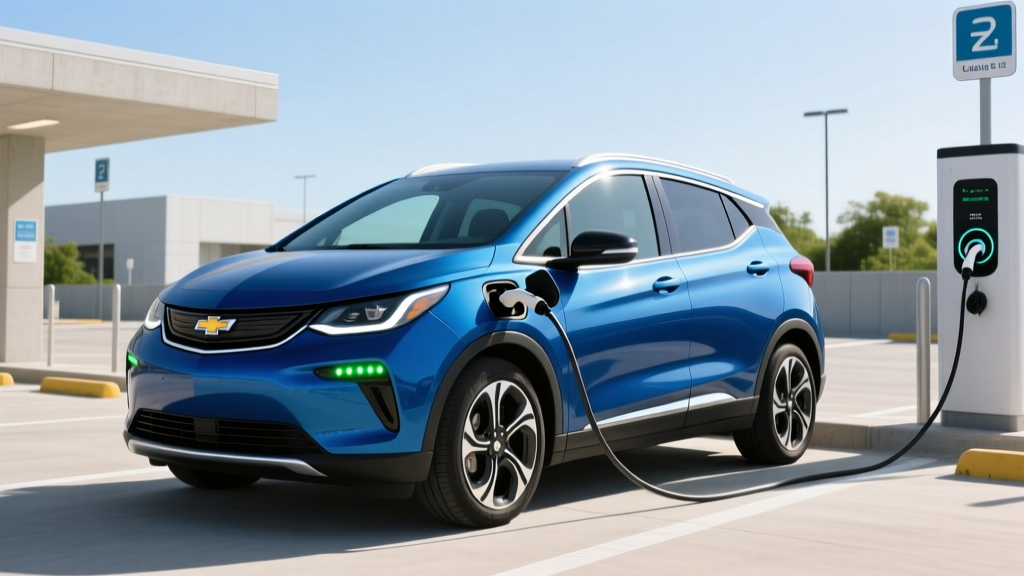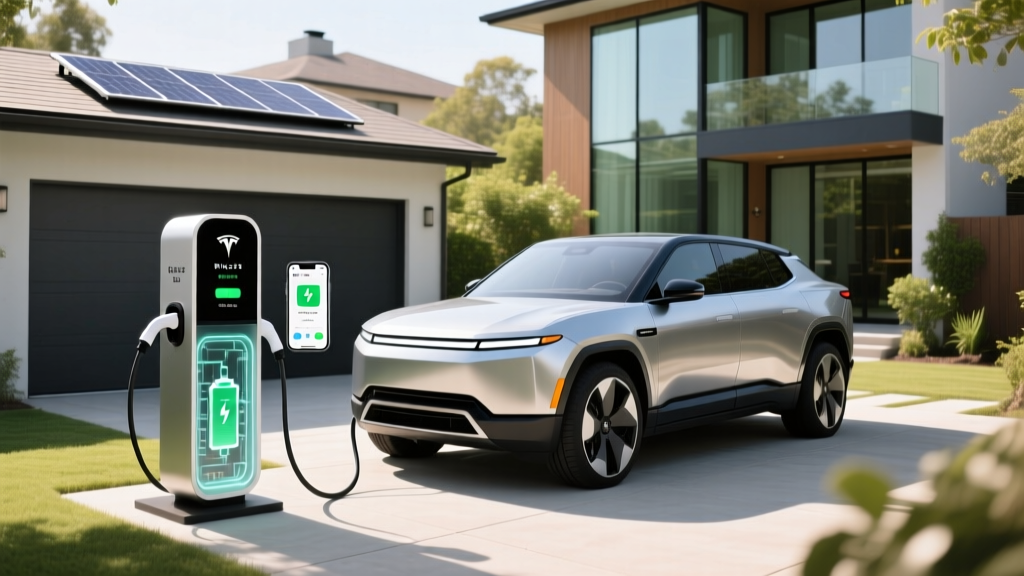
If you own a Rivian R1T or R1S — or you're shopping for one — you've likely encountered the term Rivian Tesla adapter in forums, Reddit threads, or Rivian's own app updates. That's because the North American Charging Standard (NACS), originally developed by Tesla, has become the dominant EV connector in the U.S., and Rivian officially adopted NACS starting with 2025-model-year vehicles. For owners of earlier CCS-equipped Rivians, the adapter is the bridge to Tesla's massive Supercharger network. For new NACS-equipped Rivian owners, it's about understanding what's changed and what charging infrastructure looks like in 2026.
This guide breaks down every charging scenario a Rivian owner will face: home Level 2 installation (with real costs and electrical requirements), public DC fast charging with and without the adapter, connector compatibility across model years, and the actual dollars-per-mile math of charging versus filling up a comparable gas truck.
Why the Rivian Tesla Adapter Matters in 2026
In early 2024, Rivian began shipping its official NACS adapter to CCS-equipped R1T and R1S owners, granting access to Tesla's Supercharger network — over 25,000 stalls in North America by 2026. For 2025 and newer model years, Rivian switched to a native NACS charge port, eliminating the need for an adapter at Superchargers but requiring a reverse adapter (NACS-to-CCS1) for older Electrify America or third-party CCS stations that haven't yet retrofitted NACS cables.
The practical upshot: regardless of your Rivian's model year, you need to understand which connector your truck has, where an adapter is required, and how that affects your charging options at home and on the road.
| Model Year | Native Port | Supercharger Access | CCS Station Access | Adapter Needed? |
|---|---|---|---|---|
| 2022–2024 R1T/R1S | CCS1 (J1772 combo) | Via NACS-to-CCS adapter (Rivian-supplied) | Native plug-in | NACS adapter for Superchargers |
| 2025+ R1T/R1S (Dual/Max) | NACS | Native plug-in | Via CCS1-to-NACS adapter | CCS adapter for older public stations |
| Rivian EDV (Amazon vans) | CCS1 | Fleet-only arrangements | Native plug-in | N/A for consumer use |
If you're on a CCS-era Rivian, the Rivian Tesla adapter (officially the NACS adapter) was mailed to registered owners and is also available through Rivian's gear shop. It supports up to 250 kW DC fast charging at V3 and V4 Supercharger stalls. Third-party adapters exist, but Rivian's official unit is the only one validated for safe thermal management and software handshake with the vehicle's Battery Management System (BMS).
Charging Levels Explained: Speeds, kW, and Miles per Hour
Before we get into installation costs and equipment, here's a foundational refresher. kW (kilowatts) measures power — how fast energy flows into your battery. kWh (kilowatt-hours) measures energy capacity — the size of your battery. Think of kW as the flow rate of a hose and kWh as the size of the bucket. You need both numbers to calculate charging time.
| Level | Voltage | Max Power (kW) | Miles of Range Added per Hour | Typical Use Case |
|---|---|---|---|---|
| Level 1 | 120V AC | 1.0–1.4 kW | 3–5 mi/hr | Emergency top-ups, overnight trickle (not practical for Rivian's ~100+ kWh battery) |
| Level 2 | 240V AC | 7.2–19.2 kW | 22–60 mi/hr | Home daily charging, workplace, hotels |
| DC Fast Charge | 400–800V DC | 50–350 kW | 150–800+ mi/hr (peak) | Road trips, highway corridor charging |
For a Rivian R1T with the Max Pack (~149 kWh usable battery), Level 1 charging from empty would take over 100 hours — essentially useless. A properly installed Level 2 home charger at 11.5 kW (48A on a 60A circuit) adds roughly 35 miles of range per hour, replenishing a full Max Pack in about 13 hours. That's the realistic overnight target for most owners.
At a DC fast charger, the R1T Dual Motor peaks around 200 kW, while the Max Pack variant can sustain higher rates longer due to its larger thermal mass. Expect a 10–80% session in approximately 28–35 minutes at a V3 Supercharger (250 kW) or comparable CCS station, though the charge curve tapers significantly above 80% — a universal lithium-ion behavior to protect cell longevity.
How Much Does a Home Level 2 Charger Installation Cost?
This is where real-world numbers matter more than marketing promises. A Level 2 home charger installation involves three cost layers: the charger unit itself, the electrician's labor and materials, and any electrical panel upgrades your home may require.
| Component | Low End | Typical | High End | Notes |
|---|---|---|---|---|
| Level 2 Charger (hardware) | $350 | $550 | $800 | 40A–48A Wi-Fi-enabled units; NACS or CCS native |
| Electrician labor (run + mount) | $400 | $800 | $1,500 | Depends on distance from panel to garage/carport |
| Permit & inspection | $50 | $150 | $400 | Varies by municipality; some jurisdictions waive for EV circuits |
| Electrical panel upgrade (if needed) | $1,500 | $2,500 | $4,500 | Required if your panel is 100A or has no spare breaker slots |
| Total (no panel upgrade) | $800 | $1,500 | $2,700 | Most homes with 200A service |
| Total (with panel upgrade) | $2,300 | $4,000 | $7,200 | Older homes, 100A panels, or full-to-capacity panels |
Electrical requirements for a Rivian-optimized Level 2 circuit: The R1T and R1S onboard charger accepts up to 11.5 kW (48A). To deliver this, you need a 240V circuit on a 60A breaker (National Electrical Code requires continuous loads to use only 80% of breaker capacity, so 60A × 80% = 48A continuous). The wiring should be 6 AWG copper (or 4 AWG aluminum) in conduit, run from your panel to the charger location.
Panel upgrade reality check: If your home has a 100-amp main panel — common in houses built before 1990 — adding a 60A EV circuit will likely exceed your panel's capacity, especially if you already have electric appliances (dryer, range, HVAC). An upgrade to 200A service typically costs $1,500–$4,500 depending on your utility's requirements and local labor rates. Some utilities offer rebates of $200–$500 for panel upgrades tied to EV adoption — check with your provider before scheduling work.
The IRS §30D credit does not cover home charger installation for most taxpayers in 2026; the alternative fuel vehicle refueling property credit (§30C) expired for residential installations after 2023 for most areas, though it remains available in certain designated low-income or rural census tracts. Always verify current eligibility on IRS.gov or consult a tax professional.
Which Charger Should You Buy for a Rivian?
With the NACS transition, equipment selection depends on your Rivian's model year. Here are three chargers we recommend based on power output, build quality, smart features, and connector options as of 2026.
Tesla Wall Connector (NACS, Gen 4)
- Power Output: Up to 11.5 kW (48A) at 240V
- Connector: Native NACS — plug directly into 2025+ Rivians; CCS-era Rivians need their Rivian-supplied NACS adapter for Level 2 as well (the adapter works for AC and DC)
- Cable Length: 24 ft
- Smart Features: Wi-Fi, OTA updates, power-sharing between two units on one circuit, access control via Tesla app
- Price: ~$475
- Best For: 2025+ Rivian owners who also charge a Tesla or want the simplest NACS-native setup
ChargePoint Home Flex (J1772/NACS configurable)
- Power Output: Up to 12 kW (50A) at 240V — adjustable down to match your circuit
- Connector: Ships with J1772; NACS pigtail available; CCS-era Rivians can use J1772-to-J1772 (native on 2022–2024 models for AC charging)
- Cable Length: 23 ft
- Smart Features: Wi-Fi, ChargePoint app scheduling, Alexa integration, amperage dial for flexible circuit matching
- Price: ~$599
- Best For: Multi-EV households or owners who want app-based scheduling and energy tracking
Emporia Level 2 Smart Charger
- Power Output: Up to 11.5 kW (48A) at 240V
- Connector: J1772 (NACS version available in 2026)
- Cable Length: 24 ft
- Smart Features: Wi-Fi, real-time energy monitoring via Emporia app, integrates with Emporia Vue whole-home energy panel, solar-aware charging
- Price: ~$399
- Best For: Budget-conscious buyers who want energy monitoring and solar integration
Important note for 2022–2024 Rivian owners: Your truck's AC charging port is J1772 (the top portion of the CCS1 connector). You do not need the NACS adapter for Level 2 home charging — that adapter is only for DC Supercharger use. Any J1772 Level 2 charger will plug in natively. For 2025+ Rivians with a NACS port, you'll want a NACS-native charger or a J1772-to-NACS adapter for older public Level 2 stations.
Public Charging: Superchargers, Electrify America, and Adapter Logistics
Rivian's built-in navigation routes you to compatible chargers and can precondition the battery for optimal charging speed — a process that warms the cells to ~95°F to accept peak kW rates. Always precondition before a DC fast charge session, especially in cold weather, where an unconditioned battery may accept only 50–80 kW instead of its 200+ kW peak.
For CCS-era Rivians (2022–2024) at Superchargers: Plug the Rivian Tesla adapter into the Supercharger cable, then plug the adapter into your truck's CCS port. The adapter handles the communication protocol translation. Maximum charge rate is 250 kW at V3 stalls. Note that Supercharger stalls are increasingly equipped with "Magic Dock" — a built-in CCS adapter at the stall itself — which means some locations no longer require your personal adapter. Check the Tesla app or your Rivian's map for Magic Dock availability at your destination.
For 2025+ NACS Rivians at CCS stations: Some Electrify America, EVgo, and ChargePoint stations still use CCS1 cables. Rivian offers a CCS1-to-NACS adapter (~$200 through the gear shop) for these scenarios. As of 2026, most major networks are mid-transition, adding NACS cables to new and retrofitted stations, but rural and older installations may remain CCS-only through 2027.
DC fast charging times for Rivian battery packs:
| Battery Pack | Usable Capacity | Peak DC Rate | 10–80% Time (optimal conditions) | 10–80% Time (cold/unconditioned) |
|---|---|---|---|---|
| Standard (~95 kWh usable) | 95 kWh | ~190 kW | ~27 min | ~45+ min |
| Large (~128 kWh usable) | 128 kWh | ~200 kW | ~32 min | ~50+ min |
| Max (~149 kWh usable) | 149 kWh | ~220 kW | ~35 min | ~55+ min |
These times assume a preconditioned battery, a stall capable of delivering the vehicle's peak rate, and a state of charge starting at 10%. Real-world sessions often add 3–5 minutes for plug-in, authentication, and initial ramp-up.
How Much Does Charging Cost per Mile vs. Gas?
The economics of charging a Rivian depend heavily on where and when you charge. Here's a realistic cost comparison using the R1T Dual Motor Large Pack (~128 kWh usable, EPA-estimated 2.0–2.2 kWh/mi depending on configuration and tires).
| Scenario | Rate | Cost per Mile (Rivian R1T) | Cost per Mile (Gas Truck, 19 MPG combined) |
|---|---|---|---|
| Home charging (off-peak utility rate) | $0.09/kWh | $0.19 | $0.18 (at $3.40/gal) |
| Home charging (average U.S. residential) | $0.17/kWh | $0.36 | $0.18 (at $3.40/gal) |
| Home charging (high-cost state, e.g. CA) | $0.30/kWh | $0.63 | $0.24 (at $4.60/gal) |
| Public Level 2 (workplace, retail) | $0.25/kWh | $0.53 | $0.18–$0.24 |
| DC fast charging (Electrify America) | $0.48/kWh | $1.01 | $0.18–$0.24 |
| Tesla Supercharger (member pricing) | $0.32/kWh | $0.67 | $0.18–$0.24 |
The takeaway: home charging on off-peak or average rates makes the Rivian cheaper per mile than a gas truck. Exclusive DC fast charging on road trips costs significantly more than gas per mile — but road trips represent a small fraction of most owners' total miles. According to fueleconomy.gov, the average American drives 37 miles per day, most of which can be covered with overnight Level 2 charging at home.
If your utility offers time-of-use (TOU) rates, scheduling your Rivian to charge between 10 PM and 6 AM can cut your per-mile cost below that of even the most efficient gas pickups. The ChargePoint and Emporia chargers mentioned above both support scheduled charging via their apps.
Safety, Code, and Installation Best Practices
Any Level 2 installation must comply with the National Electrical Code (NEC) and your local jurisdiction's amendments. Key requirements for a safe, code-compliant Rivian home charger:
- Dedicated circuit: Your EV charger must have its own breaker — no sharing with other appliances. A 60A breaker with 6 AWG copper wire is standard for 48A continuous charging.
- GFCI protection: NEC 2020 and later requires GFCI (Ground Fault Circuit Interrupter) protection for all EV charging outlets rated 150V to ground or less and 50A or less. Hardwired chargers often include internal GFCI; receptacle-based installs (NEMA 14-60) need a GFCI breaker, which adds $50–$100 to material costs.
- Outdoor rating: If your charger is mounted outside (carport, driveway), it must carry a NEMA 4 or IP65 rating for weather resistance. All three chargers recommended above meet this standard.
- Permit and inspection: Most jurisdictions require an electrical permit for new 240V circuits. Your electrician typically pulls this. The inspection ensures proper wire gauge, breaker sizing, grounding, and GFCI compliance. Skipping a permit risks insurance claim denials and code violations that surface during home resale.
- Hardwired vs. plug-in: Hardwired installations (no plug, direct wire to the unit) are preferred for 48A+ chargers because NEMA 14-60 receptacles are rated for 50A and can overheat under sustained 48A loads. Many EV electricians recommend hardwiring for any circuit above 40A.
Always hire a licensed electrician familiar with EV charger installations. Ask whether they perform a load calculation on your panel before recommending a circuit size — this is the proper way to determine whether your panel can handle the new load without an upgrade.
Frequently Asked Questions
How much does it cost to install a home EV charger for my Rivian?
Expect $800–$2,700 for a standard installation (charger + electrician + permit) if your home has a 200A panel with spare capacity. If a panel upgrade is needed, total costs range from $2,300 to $7,200. The charger hardware itself runs $350–$800.
How fast will each charging level add range to my Rivian?
Level 1 (120V) adds roughly 3–5 miles per hour — impractical for a Rivian's large battery. Level 2 (240V, 48A) adds about 35 miles per hour, fully replenishing a Large Pack overnight in ~12 hours. DC fast charging at 200+ kW can add 200+ miles in 20 minutes under optimal conditions.
Which connector and charger are compatible with my Rivian?
2022–2024 Rivians have a CCS1 port and accept J1772 for AC charging natively. Use the Rivian Tesla adapter (NACS) for Supercharger access. 2025+ Rivians have a native NACS port and plug directly into Superchargers and NACS home chargers; a CCS1-to-NACS adapter is needed for older CCS public stations.
How much does charging a Rivian cost per mile compared to gas?
At home on average U.S. electricity rates ($0.17/kWh), the R1T costs roughly $0.36/mile. On off-peak rates ($0.09/kWh), it drops to ~$0.19/mile. A comparable gas truck at 19 MPG costs $0.18–$0.24/mile depending on fuel prices. Exclusive DC fast charging ($0.32–$0.48/kWh) costs $0.67–$1.01/mile — more than gas.
What electrical upgrades might I need for a Level 2 charger?
If your home has a 200A electrical panel with available breaker slots and sufficient load capacity, no upgrade is needed — just a new 60A breaker and wire run. If your panel is 100A, fully loaded, or uses outdated fuse-based breakers, a panel upgrade to 200A (costing $1,500–$4,500) will be required before the charger circuit can be installed.
Can I use a third-party NACS adapter with my Rivian?
Rivian officially supports only its own NACS adapter for CCS-era vehicles. Third-party adapters may not properly communicate with Rivian's BMS, potentially causing charging errors, thermal events, or warranty disputes. Stick with the factory-supplied unit.
Does the Rivian Tesla adapter work with Level 2 AC charging at Superchargers?
Tesla Superchargers are DC fast chargers — they don't provide AC Level 2 charging. For Level 2 AC at home or public stations, 2022–2024 Rivians use J1772 natively (no adapter needed), while 2025+ Rivians use NACS natively or with a J1772-to-NACS adapter at older stations.
For the latest Rivian charging specifications, adapter availability, and Supercharger network compatibility, consult Rivian's official charging page and the IRS credits and deductions portal for current incentive rules. The NACS transition is still unfolding — staying informed ensures you're never stranded without the right plug.