Why Rivian R2 Range Options Demand a Charging Plan
Rivian's R2 platform arrives with two battery configurations — a Standard pack and a larger Max pack — each with distinct EPA range estimates and charging behaviors. But range is only half the equation. How quickly you replenish those miles at home, on a road trip, or at a destination charger determines whether the R2 fits your lifestyle or frustrates it.
This guide breaks down every Rivian R2 range option through a charging lens: what each battery size means for your electrical panel, your daily routine, your wallet, and your road-trip downtime. We cover Level 1, Level 2, and DC fast charging with exact kW figures, real installation costs, and equipment picks for 2026.
Rivian R2 Preliminary Battery & Charging Specs
| Spec | Standard Pack | Max Pack |
|---|---|---|
| Battery Capacity (usable) | ~75 kWh (LFP chemistry) | ~105 kWh (NMC chemistry) |
| EPA Range (est.) | ~270 miles | ~340 miles |
| Real-World Highway Range | ~225–245 mi (70 mph, mild weather) | ~285–310 mi |
| Cold-Weather Range (20°F) | ~195–215 mi | ~250–275 mi |
| Peak DC Fast Charge Rate | ~175 kW | ~200 kW |
| 10–80% DC Fast Charge Time | ~28 minutes | ~32 minutes |
| Max Level 2 AC Charge Rate | 11.5 kW (48A) | 11.5 kW (48A) |
| Native Connector | NACS (Tesla-style) | NACS (Tesla-style) |
Note: Specs are based on Rivian's announced R2 platform details as of early 2026 and may shift slightly before deliveries ramp. Source: Rivian R2 official page.
Real-World Range Reality Check
EPA range stickers assume a mix of city and highway driving at moderate speeds and temperatures. On a sustained 75 mph highway run in 40°F weather with the cabin heater on, expect the Standard R2 to deliver roughly 195–220 miles before you need to plug in. The Max pack extends that to 250–280 miles under the same conditions. Always plan road-trip charging stops with a 15–20% buffer below your real-world estimate.
Charging Levels Explained: Speeds, kW, and Miles per Hour
Understanding charging speed starts with a critical distinction: kW (kilowatts) measures power — how fast energy flows into your battery. kWh (kilowatt-hours) measures energy — the total capacity of your battery. Think of kW as the width of the hose and kWh as the size of the bucket.
| Level | Voltage / Amperage | Power (kW) | Miles of Range Added per Hour | Best Use Case |
|---|---|---|---|---|
| Level 1 | 120V / 12A | ~1.4 kW | ~4–5 mi/hr | Overnight top-up, low-mileage drivers, no electrical work needed |
| Level 2 | 240V / 40–48A | 9.6–11.5 kW | ~30–38 mi/hr | Daily home charging, overnight full recharge |
| DC Fast Charge | 400V+ / variable | 50–200+ kW | ~200–600+ mi/hr (at peak) | Road trips, quick top-ups away from home |
What This Means for Each R2 Battery
Standard Pack (~75 kWh):
- Level 1 (1.4 kW): A full 10–80% charge takes roughly 37 hours. Practical only for adding 30–40 miles overnight.
- Level 2 at 11.5 kW: 10–80% in about 4.5 hours. Plug in at 10 PM, wake up to a full battery by 6 AM with room to spare.
- DC Fast Charge (peak 175 kW): 10–80% in approximately 28 minutes, though the charge curve tapers significantly above 80% SoC.
Max Pack (~105 kWh):
- Level 1 (1.4 kW): 10–80% takes over 50 hours. Not viable as a primary strategy.
- Level 2 at 11.5 kW: 10–80% in roughly 6 hours. Still fully achievable overnight.
- DC Fast Charge (peak 200 kW): 10–80% in about 32 minutes. The larger battery sustains higher charge rates longer, partially offsetting the extra capacity.
The Charge Curve Reality
No EV sustains its peak kW rate from 10% to 80%. The R2's charge curve, like most modern EVs, peaks in the 10–40% SoC window and progressively tapers. By 70% SoC, you might see rates drop to 60–80 kW. By 90%, charging slows to roughly Level 2 speeds. This is why 10–80% times are the industry standard — charging past 80% on a road trip is rarely worth the wait unless you need every last mile to reach your destination.
Home Level 2 Installation: Electrical Requirements and Costs
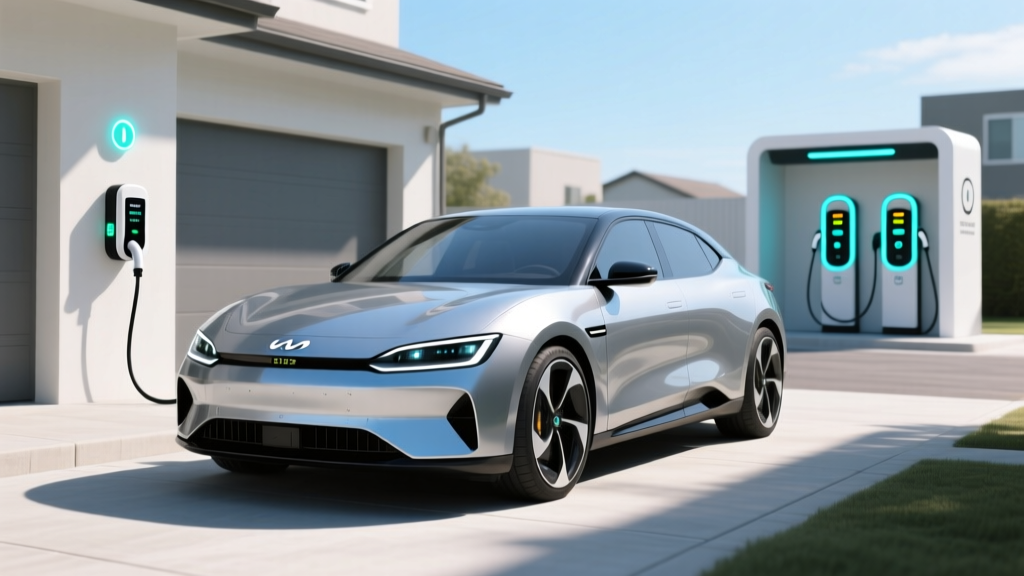
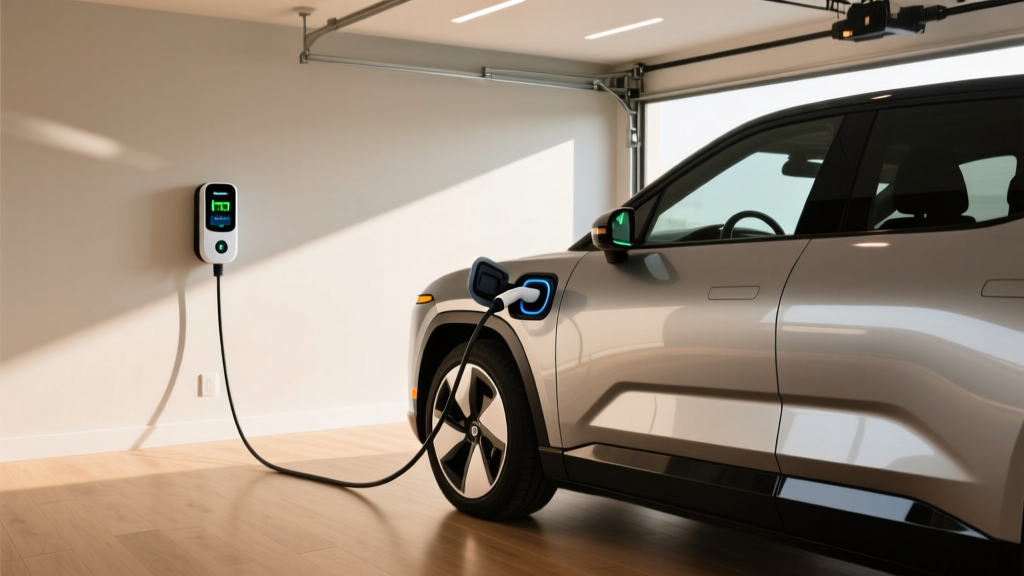
A Level 2 home charger is the backbone of practical EV ownership. For the Rivian R2, which accepts up to 11.5 kW on AC power, you'll want a 240V circuit rated for at least 48 amps to capture the vehicle's full charging capability.
Electrical Requirements
- Circuit: 60-amp dedicated breaker (NEC code requires circuits to be rated at 125% of the continuous load, so a 48A charger needs a 60A breaker)
- Wire: 6 AWG copper (or 4 AWG aluminum) for runs up to ~100 feet; larger gauge for longer runs to minimize voltage drop
- Panel capacity: Your main service panel needs at least 60 amps of available headroom. Many 100-amp panels in older homes cannot accommodate this without an upgrade.
- Outlet vs. hardwired: A NEMA 14-60 outlet offers portability (take the charger when you move), while hardwired installations can support higher amperage and avoid GFCI breaker requirements that some jurisdictions mandate for outdoor receptacles.
Panel Upgrade: The Hidden Cost
If your home has a 100-amp main panel — common in homes built before 2000 — adding a 60-amp EV circuit may push your total calculated load beyond the panel's rating. An upgrade to a 200-amp panel typically costs $1,800–$3,500 depending on your utility's requirements, trenching needs, and local labor rates. This is the single biggest variable in home charging costs and one that many online guides gloss over.
Home Level 2 Charger Installation Cost Breakdown
| Component | Low End | High End | Notes |
|---|---|---|---|
| Level 2 Charger (Equipment) | $350 | $750 | Smart Wi-Fi chargers, 40–48A, 18–25 ft cable |
| Electrician Labor (standard install) | $500 | $1,500 | Depends on panel proximity, wall type, conduit run length |
| Electrical Permit | $50 | $250 | Varies by municipality; some jurisdictions bundle with inspection |
| Panel Upgrade (if needed) | $1,800 | $3,500 | 100A → 200A service upgrade; not needed for most modern homes |
| Total (no panel upgrade) | $900 | $2,500 | Typical scenario for homes built after 2000 with 200A service |
| Total (with panel upgrade) | $2,700 | $6,000 | Older homes or those with high existing electrical loads |
Always get at least two quotes from licensed electricians. Some utilities offer rebates of $250–$500 for Level 2 installations — check with your local provider. A federal §30C tax credit covers up to 30% of home charging equipment and installation costs (max $1,000) for eligible taxpayers in qualifying census tracts.
Connector Compatibility: NACS, CCS, and the R2
The Rivian R2 ships with a NACS (North American Charging Standard) port — the connector originally developed by Tesla and now adopted across the industry. This is a significant advantage for charging access in 2026.
Connector Compatibility for Rivian R2
| Connector Type | Native on R2? | Network Access | Adapter Needed? |
|---|---|---|---|
| NACS (Tesla-style) | Yes — native | Tesla Superchargers, Electrify America (new stalls), Rivian Adventure Network, EVgo, many others | No |
| CCS1 | No | Legacy Electrify America stalls, some ChargePoint and EVgo stations | Yes — NACS-to-CCS adapter (~$150–$250) |
| CHAdeMO | No | Limited and declining network (mostly older Nissan Leaf infrastructure) | Not recommended; adapters are rare and expensive |
| J1772 (Level 2 AC) | No — NACS handles AC natively | Public Level 2 stations (hotels, workplaces, shopping centers) | Most R2 owners will not need one; NACS handles both AC and DC |
What This Means in Practice
With a native NACS port, the R2 gains access to the Tesla Supercharger network — over 25,000 stalls in North America as of 2026 — without any adapter. This is the most reliable and extensive DC fast-charging network available. For the shrinking number of CCS-only stations, a NACS-to-CCS adapter is a worthwhile $150–$250 accessory to keep in the frunk for redundancy, but you'll rarely need it.
At home, your Level 2 charger will either have a NACS connector built in (newer models) or use a hardwired connection that bypasses the connector question entirely. Rivian's own Wall Connector and third-party options like the ChargePoint Home Flex both offer NACS-native configurations.
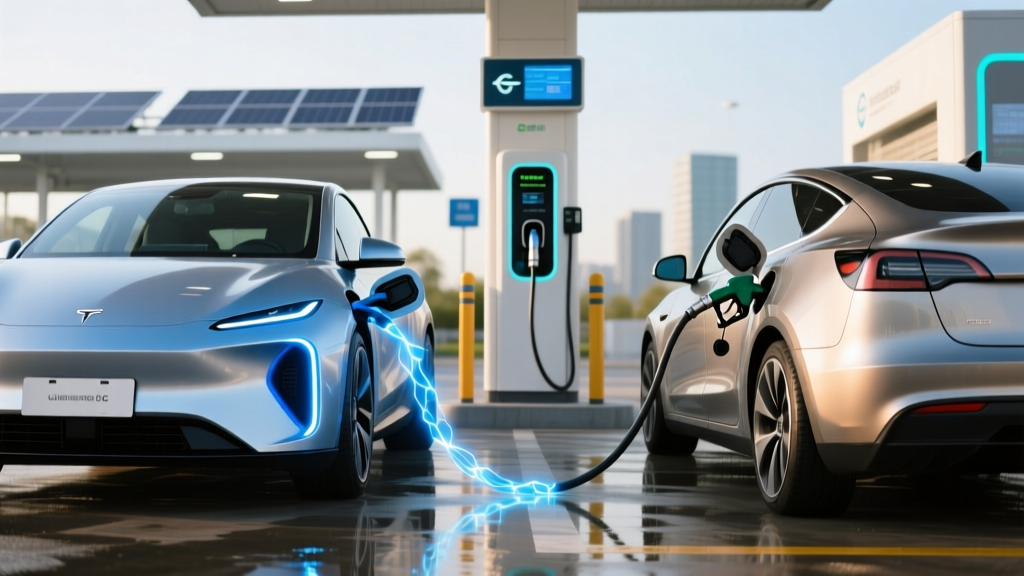
Cost to Charge: Home, Public, and DC Fast Compared to Gas
The economic case for the R2 hinges on charging costs. Here's how each scenario breaks down per mile, using the R2's estimated efficiency of 2.8 miles/kWh (approximately 36 kWh/100 miles combined).
Rivian R2 Charging Cost vs. Gasoline
| Scenario | Price | Cost per kWh | Cost per Mile (R2) | Equivalent Gas Vehicle (25 MPG @ $3.50/gal) |
|---|---|---|---|---|
| Home — Off-Peak TOU Rate | Varies by utility | $0.09–$0.13/kWh | $0.032–$0.047/mi | $0.140/mi |
| Home — Standard Rate | National avg. | $0.16/kWh | $0.057/mi | $0.140/mi |
| Public Level 2 | Varies | $0.25–$0.40/kWh | $0.089–$0.143/mi | $0.140/mi |
| DC Fast Charge (Tesla Supercharger avg.) | Varies by region | $0.28–$0.42/kWh | $0.100–$0.150/mi | $0.140/mi |
| DC Fast Charge (peak pricing) | High-demand urban | $0.48–$0.60/kWh | $0.171–$0.214/mi | $0.140/mi |
Electricity rates from EIA data. Gas cost assumes a comparable midsize SUV at 25 MPG combined. R2 efficiency estimated at 36 kWh/100 mi.
The Bottom Line on Cost
If you charge primarily at home on an off-peak rate (which most R2 owners will), your fuel cost drops to roughly $0.04 per mile — about one-quarter the cost of a gas-powered SUV. Even at public DC fast chargers, you're generally breaking even or slightly saving versus gas. The only scenario where the R2 costs more per mile than gas is peak-priced urban DC fast charging, which should be an occasional convenience, not your routine.
For a driver covering 12,000 miles per year:
- Home charging (off-peak): ~$480/year in electricity
- Gas equivalent (25 MPG, $3.50/gal): ~$1,680/year
- Annual savings: ~$1,200/year, or ~$6,000 over five years
Best Home Chargers for the Rivian R2
Since the R2 accepts up to 11.5 kW (48 amps) on Level 2, you want a charger that can deliver at least that much power. Here are three strong options for 2026, all available with NACS connectors or hardwired configurations.
Rivian Wall Connector
- Power Output: 11.5 kW (48A)
- Connector: NACS native
- Cable Length: 25 feet
- Smart Features: Integrated with Rivian app, scheduled charging, energy tracking, software updates via Wi-Fi
- Price: ~$550
- Best For: Rivian owners who want seamless app integration and a single ecosystem. Matches the R2's maximum AC charge rate perfectly.
ChargePoint Home Flex (NACS)
- Power Output: Up to 12 kW (50A) — adjustable via dip switch
- Connector: NACS (2025+ models) or J1772 with adapter
- Cable Length: 23 feet
- Smart Features: Wi-Fi, ChargePoint app, Alexa integration, load sharing for multi-charger setups, UL-listed
- Price: ~$600–$700
- Best For: Households that might add a second EV later. The adjustable amperage lets you dial it down if your panel is tight on capacity.
Emporia Vue Level 2 Charger
- Power Output: 11.5 kW (48A)
- Connector: NACS or J1772 options
- Cable Length: 24 feet
- Smart Features: Wi-Fi, Emporia app with real-time energy monitoring, solar integration, scheduled charging, works with Emporia whole-home energy monitor
- Price: ~$400–$500
- Best For: Budget-conscious buyers and solar-panel owners who want granular energy tracking. Best value-to-feature ratio in 2026.
Safety, Code, and Installation Best Practices
EV charging involves sustained high-current draw — more like running an electric furnace for 6 hours than plugging in a phone. Proper installation isn't optional.
Key Safety Requirements
- Dedicated circuit: Your Level 2 charger must be on its own dedicated breaker — not shared with other outlets or appliances. A shared circuit risks tripping the breaker mid-charge or, worse, overheating.
- GFCI protection: The 2023 NEC (and most adopted local codes) requires GFCI protection for outdoor receptacles. Hardwired installations bypass this requirement, which is one reason many electricians recommend hardwiring. If you use a NEMA 14-60 outlet outdoors, expect your electrician to install a GFCI breaker (~$50–$80 more than a standard breaker).
- Outdoor rating: If your charger mounts outside, it must carry at least a NEMA 4 (weather-resistant) rating. All three chargers recommended above meet this standard.
- Permit and inspection: Nearly all jurisdictions require an electrical permit for a new 240V circuit. The inspection ensures the wire gauge, breaker size, and grounding meet code. Skipping the permit risks insurance claim denial if a fire originates from the circuit.
- Cable management: A 25-foot charging cable is heavy and can be a tripping hazard. Plan your charger location to minimize cable stretch across walkways or driveways. Wall-mounted cable organizers ($20–$40) keep things tidy and safe.
Preconditioning: The Often-Overlooked Charging Trick
The R2's battery management system works best when the battery is warm. When navigating to a DC fast charger (or scheduling a departure time for home charging), the R2 will precondition the battery — warming it to the optimal temperature for accepting charge. In cold weather, preconditioning can reduce your 10–80% charge time by 5–10 minutes at a DC fast charger. Always use the navigation system to route to a charger rather than just driving there cold.
Frequently Asked Questions
How much does it cost to install a home EV charger for the Rivian R2?
Expect $900–$2,500 for a typical installation in a home with a 200-amp electrical panel. This includes the charger ($350–$750), electrician labor ($500–$1,500), and a permit ($50–$250). If your home needs a panel upgrade from 100A to 200A service, add $1,800–$3,500. The federal §30C credit may cover up to 30% of equipment and installation costs (max $1,000) depending on your census tract eligibility.
How fast will each charging level add range to the R2?
Level 1 (120V standard outlet) adds roughly 4–5 miles per hour — enough for about 40 miles overnight. Level 2 (240V, 48A) adds approximately 32–38 miles per hour, fully recharging either R2 battery pack overnight. DC fast charging at peak rates adds 200+ miles in 15–20 minutes, though the rate tapers as the battery fills.
Which connector and charger is compatible with the Rivian R2?
The R2 uses a native NACS (Tesla-style) connector for both AC Level 2 and DC fast charging. This gives you direct access to the Tesla Supercharger network, Rivian Adventure Network, and growing NACS-equipped stations from Electrify America, EVgo, and others. For legacy CCS-only stations, a NACS-to-CCS adapter ($150–$250) provides backup access.
How much does charging the R2 cost per mile compared to gas?
Charging at home on an off-peak electricity rate costs approximately $0.04 per mile — roughly one-quarter the $0.14/mile cost of a 25 MPG gas SUV at $3.50/gallon. Public DC fast charging costs $0.10–$0.15 per mile, still comparable to or less than gas. Annual savings for a 12,000-mile driver typically exceed $1,000.
What electrical upgrades might I need for a Level 2 charger?
The most common upgrade is a panel replacement from 100-amp to 200-amp service, needed when your existing panel lacks 60 amps of available capacity for the charger circuit. Homes built after 2005 typically have 200-amp panels and need no upgrade. Your electrician will perform a load calculation during the estimate to determine if an upgrade is necessary. Other potential costs include trenching for detached garages ($500–$2,000) or upgrading aluminum wiring in older homes.
Does the Rivian R2 qualify for the federal EV tax credit?
The §30D federal tax credit offers up to $7,500 for eligible new EVs, but eligibility depends on MSRP caps ($80,000 for SUVs), buyer income limits ($300,000 joint / $150,000 single), and battery component and critical mineral sourcing requirements. The R2's expected starting price falls well below the MSRP cap, but final credit eligibility depends on battery sourcing at time of purchase. Check the latest rules at IRS.gov and confirm with a tax professional. As of 2026, the credit can be transferred to the dealer at point of sale, reducing your purchase price directly.
Should I choose the Standard or Max battery pack?
If you can charge at home daily and your typical driving is under 200 miles round-trip, the Standard pack (~270 mi EPA) keeps the purchase price lower and the LFP chemistry offers excellent long-term cycle life with minimal degradation. If you road-trip frequently, live in a cold climate, or lack reliable home charging, the Max pack (~340 mi EPA) provides a meaningful buffer. The NMC chemistry in the Max pack has higher energy density but benefits from staying between 20–80% SoC for daily use, whereas the Standard's LFP pack can be charged to 100% regularly without accelerated degradation.