The upcoming Rivian R2 is positioned as the more affordable sibling to the R1S and R1T, targeting a sub-$45,000 starting price and a midsize SUV footprint. But for buyers transitioning from gas or a smaller EV, the real questions start after the reservation: What Rivian R2 range can you actually expect? How fast will it charge at home and on the road? And what will a Level 2 home charger installation actually cost?
This guide covers everything you need to plan your charging infrastructure before the R2 arrives in your driveway. We'll break down charging levels in kW (power) versus kWh (energy), home electrical requirements, connector compatibility with the NACS standard, and real cost-per-mile figures.
The Rivian R2 is expected to offer multiple battery configurations. Rivian has targeted a maximum EPA range of 300+ miles for the largest pack variant, with a smaller standard-range pack likely landing in the 240–270 mile EPA range. As with any EV, real-world highway driving at 75+ mph typically reduces range by 10–15%, and cold-weather operation (below 32°F) can reduce it by 20–30% without preconditioning. Final EPA figures will be confirmed closer to delivery.
Understanding EV Charging Levels: kW, kWh, and Miles Per Hour
Before selecting equipment, you need to understand the three charging tiers and what they actually deliver. The most common EV mistake is confusing kW (kilowatts — the rate of power flow, like water pressure) with kWh (kilowatt-hours — the total energy stored, like gallons in a tank). Your charger's kW rating determines how fast it fills your battery's kWh capacity.
| Charging Level | Voltage | Power Output | Miles of Range Added Per Hour | Best Use Case |
|---|---|---|---|---|
| Level 1 | 120V AC | 1.0–1.4 kW | 3–5 miles/hour | Overnight top-up, low daily mileage |
| Level 2 | 240V AC | 7.2–19.2 kW | 20–60 miles/hour | Daily home charging, overnight full charge |
| DC Fast Charging | 400–800V DC | 50–350 kW | 150–300+ miles in 20 min | Road trips, rapid top-ups |
For a vehicle like the Rivian R2 with an estimated usable battery capacity of 75–100 kWh, Level 1 charging is impractical as a primary method — a full charge would take 3–5 days. Level 2 at 11.5 kW (the typical 48-amp home charger) can replenish a depleted R2 battery in roughly 8–10 hours, ideal for overnight charging. DC fast charging will handle road trips, with Rivian's larger vehicles (R1T/R1S) capable of peak rates around 200+ kW, suggesting the R2 will target similar or improved charge-curve performance.
Home Charger Installation: Electrical Requirements and Costs
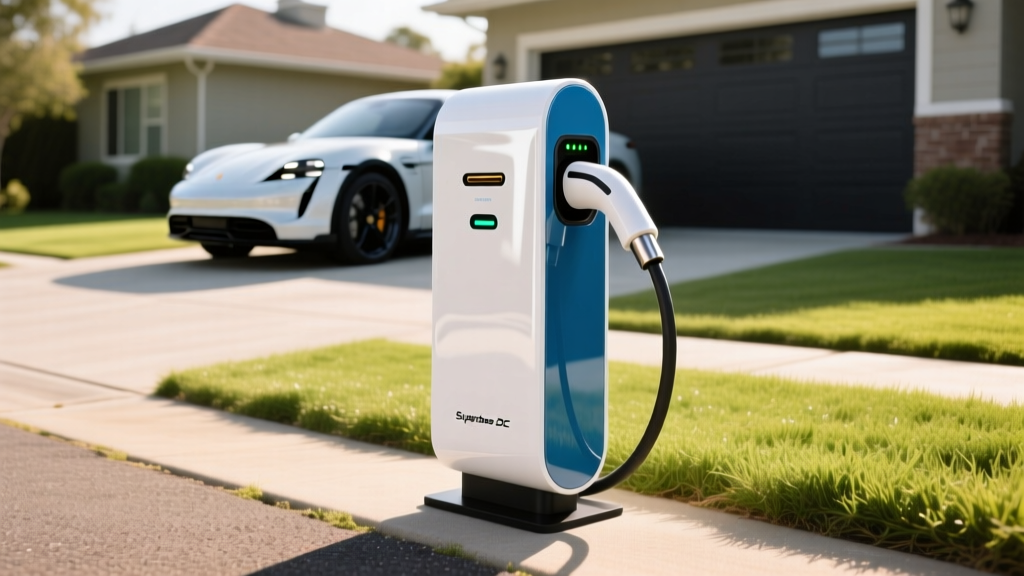
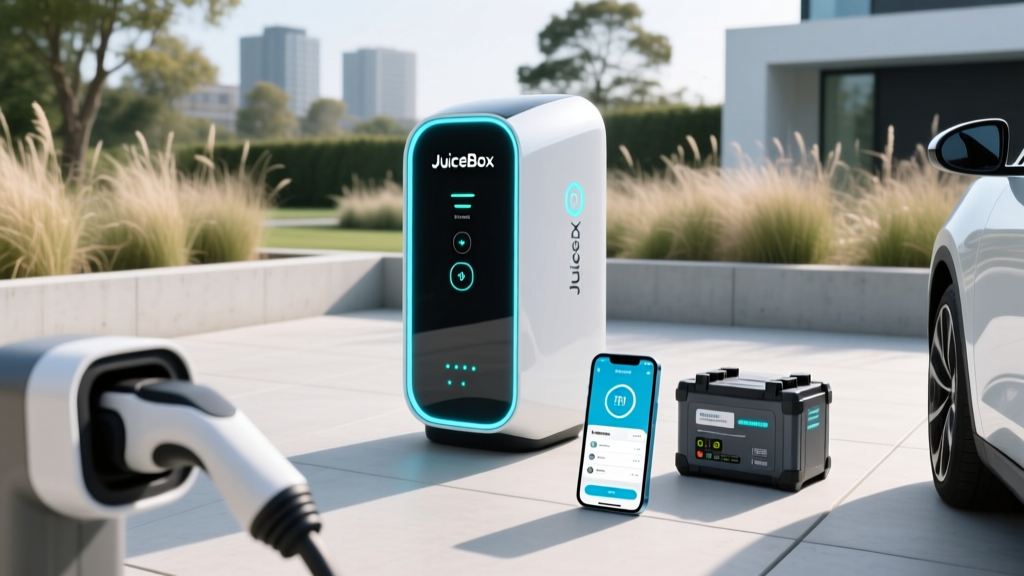
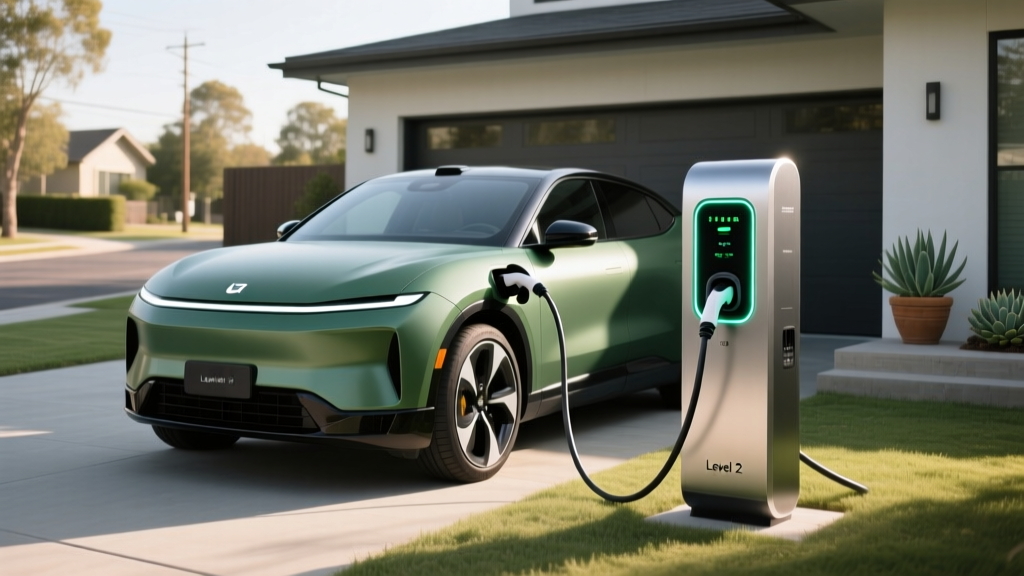
Installing a Level 2 home charger is the single most impactful upgrade for EV ownership. Here's what's involved electrically and financially.
Electrical Panel and Circuit Requirements
A standard Level 2 charger delivering 11.5 kW requires a 240V, 60-amp dedicated circuit (which delivers up to 48 amps continuously to the vehicle, per the 80% NEC continuous-load rule). Some homeowners opt for a 50-amp circuit (delivering 40 amps / 9.6 kW), which is sufficient for most overnight charging needs and may avoid a panel upgrade.
Your electrical panel must have enough spare capacity to support the new circuit. Most modern 200-amp panels can accommodate a 60-amp breaker without issue. However, older homes with 100-amp service or panels already near capacity may require a panel upgrade to 200 amps, which is a significant added cost.
Estimated Home Level 2 Charger Installation Costs
| Component | Typical Cost Range | Notes |
|---|---|---|
| Level 2 EVSE Equipment (charger unit) | $350–$800 | Smart Wi-Fi-enabled units; hardwired or NEMA 14-50 plug |
| Electrician Labor | $500–$2,000 | Depends on run length from panel, wall/floor penetrations |
| Electrical Permit | $50–$250 | Required in most jurisdictions; inspected after install |
| Panel Upgrade (if needed) | $1,500–$4,000 | 100A → 200A upgrade; not required for most modern homes |
| Total (no panel upgrade) | $900–$3,050 | Most common scenario |
| Total (with panel upgrade) | $2,400–$7,050 | Older homes or max-capacity panels |
The federal Residential Clean Energy Credit does not cover EV chargers as of 2026 (the alternative fuel vehicle refueling property credit under §30C expired for most residential installations after 2023, though some census-tract-based eligibility may apply). Check with a tax professional and your local utility — many utilities offer rebates of $250–$500 for smart charger installations.
Safety and Code Considerations
- Dedicated circuit: Your EV charger must be on its own dedicated breaker — never shared with other appliances.
- GFCI protection: NEC 2020+ requires GFCI protection for outdoor receptacles; many hardwired EVSEs include built-in ground-fault protection.
- Outdoor rating: If mounting outdoors, ensure the EVSE carries a NEMA 4 or NEMA 4X rating for weather resistance.
- Hardwired vs. plug: Hardwired installations avoid the code requirement for GFCI breakers on 240V receptacles (which can nuisance-trip with some EVSEs) and are generally recommended for permanent installations.
- Permit and inspection: Always pull a permit. An unpermitted installation can void home insurance claims and create issues at resale.
Rivian R2 Connector Compatibility: NACS, Adapters, and Networks
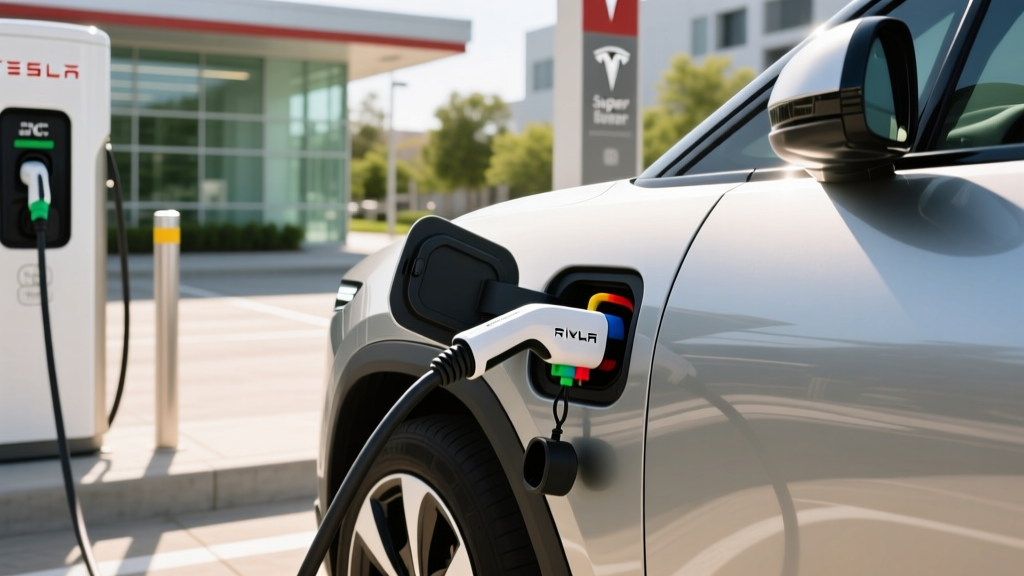
The Rivian R2 will ship with the NACS (North American Charging Standard) connector — the Tesla-originated plug now adopted by nearly every major automaker for the North American market. This is a significant advantage for charging-network access.
| Connector Type | Network Access | Rivian R2 Compatibility |
|---|---|---|
| NACS (native) | Tesla Supercharger network, Rivian Adventure Network, growing third-party NACS stations | Native — no adapter needed |
| CCS1 | Electrify America, EVgo, ChargePoint DC fast stations (legacy CCS stalls) | NACS-to-CCS adapter required (available from Rivian and third parties) |
| CHAdeMO | Limited legacy stations (Nissan Leaf ecosystem) | Not recommended; adapters scarce and expensive |
| J1772 (Level 2) | Public Level 2 stations, older destination chargers | NACS-to-J1772 adapter needed for public L2 (included with many EVSEs) |
The biggest practical benefit of NACS on the R2: direct access to the Tesla Supercharger network, which remains the most reliable and geographically comprehensive DC fast-charging network in North America, with over 25,000 stalls. Rivian owners already have Supercharger access via adapter on their R1 vehicles; the R2 will have it natively.
For CCS-based public chargers (still common at Electrify America and other networks), a NACS-to-CCS adapter (~$150–$250) will let you use those stations, though you should confirm adapter compatibility with your specific charger model and vehicle firmware.
Cost to Charge: Home vs. Public vs. Gas Per-Mile Comparison
Charging economics vary enormously depending on where and when you plug in. Here's a realistic breakdown for the Rivian R2 assuming an average efficiency of 3.0 miles/kWh (a reasonable estimate for a midsize electric SUV, though final EPA efficiency figures are pending).
| Charging Scenario | Cost per kWh | Cost per Mile | Cost for 300-Mile Trip |
|---|---|---|---|
| Home — Off-Peak Utility Rate | $0.08–$0.12 | $0.03–$0.04 | $9–$12 |
| Home — Standard Residential Rate | $0.14–$0.18 | $0.05–$0.06 | $15–$18 |
| Public Level 2 (ChargePoint, etc.) | $0.25–$0.40 | $0.08–$0.13 | $24–$39 |
| DC Fast Charging (Tesla Supercharger) | $0.25–$0.45 | $0.08–$0.15 | $24–$45 |
| DC Fast Charging (Electrify America) | $0.35–$0.55 | $0.12–$0.18 | $36–$54 |
| Gasoline Vehicle (25 MPG, $3.40/gal) | $0.136/mile | $0.14 | $42 |
Home charging is decisively the cheapest option. At off-peak utility rates, the R2 could cost roughly $10–$12 to "fill" a 300-mile battery — about a quarter of what a comparable gas SUV would spend. Even at standard residential rates, you're saving 50–60% per mile versus gasoline. Public DC fast charging erodes those savings but still typically undercuts gas on a per-mile basis.
Many utilities now offer time-of-use (TOU) rates that make overnight charging dramatically cheaper. If your utility offers EV-specific TOU plans, enroll before your R2 arrives — the savings can be $300–$600 per year for an average driver covering 12,000 miles.
Charging Time Estimates for the Rivian R2
Charging speed isn't linear. EVs charge fastest at low states of charge (SoC) and taper significantly above 80% to protect battery health. This is called the charge curve, and it's why manufacturers quote 10–80% times rather than 0–100%.
Based on Rivian's existing 400V architecture in the R1 platform and the R2's expected battery sizes, here are projected charging times. (Final specs will depend on the production R2's confirmed battery capacity and charge-rate capability.)
Estimated Rivian R2 Charging Times by Scenario
| Scenario | Battery Size (Est.) | Charge Method | Estimated Time |
|---|---|---|---|
| Overnight Home Charge | 85 kWh usable | Level 2, 48A / 11.5 kW | ~7.5 hours (0–100%) |
| Overnight Home Charge | 85 kWh usable | Level 2, 40A / 9.6 kW | ~9 hours (0–100%) |
| DC Fast Charge (Road Trip) | 85 kWh usable | 200 kW peak DC | ~22–28 min (10–80%) |
| DC Fast Charge (Road Trip) | 85 kWh usable | 150 kW peak DC | ~30–38 min (10–80%) |
| Emergency Top-Up | 85 kWh usable | Level 1, 120V / 1.2 kW | ~4 miles per hour of charging |
A key insight: if you charge at home every night, you'll rarely need to charge above 80–90% for daily driving. Set your R2's charge limit to 80% for routine use and reserve 100% charges for road-trip mornings. This practice extends long-term battery health and keeps you within the faster portion of the charge curve when using DC fast chargers.
Recommended Level 2 Home Chargers for the Rivian R2
With a NACS-equipped vehicle, your charger selection should prioritize NACS-native units for a seamless plug-in experience without adapters. Here are top-rated options as of 2026:
Top Level 2 Home Charger Picks (NACS-Compatible)
1. Tesla Wall Connector (NACS)
- Power Output: Up to 11.5 kW (48 amps) on a 60A circuit
- Connector: Native NACS
- Cable Length: 24 feet
- Smart Features: Wi-Fi, OTA updates, power sharing between multiple units, load management
- Price: ~$475
- Best For: NACS-native EVs like the R2; cleanest integration with the Supercharger-standard plug
2. ChargePoint Home Flex (NACS version)
- Power Output: Up to 12 kW (50 amps) on a 60A circuit; adjustable down to 16A
- Connector: NACS (2025+ models) or J1772 with adapter
- Cable Length: 23 feet
- Smart Features: Wi-Fi, ChargePoint app scheduling, Alexa integration, detailed energy reporting
- Price: ~$650–$700
- Best For: Buyers who want robust app features and flexible amperage settings for older electrical panels
3. Emporia Vue Level 2 Charger
- Power Output: Up to 11.5 kW (48 amps)
- Connector: NACS or J1772 versions available
- Cable Length: 24 feet
- Smart Features: Integration with Emporia energy monitoring, solar-aware charging, utility demand-response
- Price: ~$400–$500
- Best For: Solar-panel owners and energy-monitoring enthusiasts
4. Rivian Wall Charger (Expected)
- Power Output: Expected 11.5 kW (48 amps)
- Connector: Native NACS
- Cable Length: TBD (likely 18–25 feet based on Rivian's current mobile charger)
- Smart Features: Rivian app integration, scheduled charging, vehicle-status pairing
- Price: TBD (likely $500–$650 based on current Rivian accessories)
- Best For: Rivian loyalists who want single-app ecosystem control
Whichever unit you choose, opt for hardwired installation over a NEMA 14-50 receptacle unless you specifically need portability. Hardwired chargers avoid GFCI breaker nuisance-tripping issues and are the cleaner, more reliable long-term solution.
Frequently Asked Questions: Rivian R2 Charging
How much does it cost to install a home EV charger for the Rivian R2?
Most homeowners can expect to pay $900–$3,050 total for a Level 2 charger installation (equipment + electrician + permit) if no panel upgrade is needed. If your home has a 100-amp panel or insufficient spare breaker slots, a panel upgrade to 200 amps adds $1,500–$4,000. Always get 2–3 quotes from licensed electricians and confirm they have EVSE installation experience.
How fast will each charging level add range to the R2?
Level 1 (120V) adds roughly 3–5 miles per hour — essentially useless as a primary strategy. Level 2 (240V, 48A) adds approximately 30–38 miles per hour, enough to fully replenish the R2 overnight. DC fast charging at 150–200 kW can add 150–200+ miles in a 20-minute session, making it practical for road-trip stops.
Which connector is compatible with the Rivian R2?
The R2 will use NACS natively, giving it direct access to the Tesla Supercharger network and Rivian's own Adventure Network. For legacy CCS stations, a NACS-to-CCS adapter is needed. For public Level 2 stations with J1772 connectors, a NACS-to-J1772 adapter is required — many chargers include one, and aftermarket options cost $30–$80.
How much does charging the R2 cost per mile compared to gas?
At home on off-peak electricity rates ($0.10/kWh), the R2 should cost roughly $0.03–$0.04 per mile. A comparable gas SUV at 25 MPG with $3.40/gallon fuel costs about $0.14 per mile — roughly 4x more. Even public DC fast charging at $0.35/kWh ($0.12/mile) undercuts gasoline. The annual fuel savings for a 12,000-mile driver are typically $900–$1,400.
What electrical upgrades might I need before installing a charger?
The most common upgrade is a panel capacity increase (100A to 200A) for older homes. You may also need to upgrade the service wire from the utility meter to the panel. In rare cases, the utility may need to upgrade the transformer serving your home. An electrician's load calculation will determine if your current panel can handle a 60-amp dedicated circuit. Homes built after 2000 with 200A service rarely need upgrades.
Will the Rivian R2 qualify for the federal EV tax credit?
Federal §30D tax credit eligibility depends on MSRP caps (currently $80,000 for SUVs), buyer income limits ($300K joint / $150K single), and battery-sourcing requirements that tighten annually. Rivian's R2 starting price is expected to fall well under the MSRP cap. However, critical-mineral and battery-component sourcing rules under the Inflation Reduction Act are complex and change frequently. The credit can now be transferred to the dealer at point of sale as an instant discount. Consult the IRS qualified vehicles list at the time of purchase and speak with a tax professional.
Can I use a Tesla Supercharger with the Rivian R2?
Yes. Because the R2 uses a native NACS connector, it will plug directly into Tesla Superchargers without an adapter. You'll need to set up payment through the Tesla app or your Rivian vehicle's integrated charging interface (details to be confirmed at R2 launch). This is one of the R2's strongest practical advantages — access to the most reliable DC fast-charging network in North America.