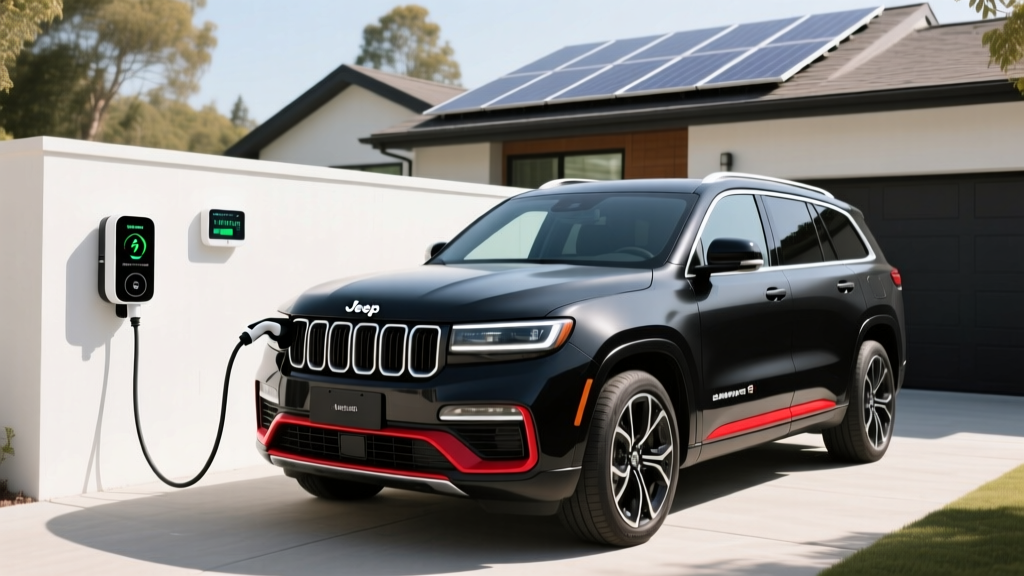
The Rivian R2 is poised to be one of the most important mainstream electric SUVs when it reaches driveways in 2026. With a starting MSRP around $45,000 and a targeted EPA range of approximately 330 miles on the largest battery pack, the R2 aims to bridge the gap between premium EVs and family-friendly practicality. But range is only half the ownership equation — how you charge at home, what it costs, and how fast you can top up on the road matter just as much.
This guide walks through the Rivian R2's expected battery and charging specifications, then builds out a complete charging strategy: home Level 2 installation (including real costs and electrical upgrades), DC fast-charging expectations, connector compatibility, and a cost-per-mile breakdown compared to a gas-powered compact SUV.
Rivian R2 Battery & Charging Specifications
Before planning your charging setup, you need the R2's core energy numbers. Rivian has confirmed the R2 will use a new, more cost-effective battery architecture with structural battery packs. Here's what we know from announced specifications:
| Spec | Standard Pack (est.) | Max Pack (est.) |
|---|---|---|
| Usable Battery Capacity | ~75 kWh (LFP) | ~105 kWh (NMC) |
| Targeted EPA Range | ~270 mi | ~330 mi |
| Max DC Fast Charge Rate | ~175 kW (peak) | ~200 kW (peak) |
| 10-80% DC Fast Charge | ~28 min | ~30 min |
| Level 2 AC Charge Rate | 11.5 kW (48A) | 11.5 kW (48A) |
| Native Connector | NACS | NACS |
| Estimated Base MSRP | ~$45,000 | ~$52,000+ |
Note: These are preliminary specifications based on Rivian's announcements. Final EPA certification and production specs may differ. The Standard pack is expected to use LFP (lithium iron phosphate) chemistry, which offers longer cycle life and can be charged to 100% daily without degradation concerns. The Max pack will likely use NMC (nickel manganese cobalt) for higher energy density.
Charging Levels Explained: Speeds in kW and Miles Per Hour
Understanding EV charging requires distinguishing between kW (kilowatts), which measures power — the rate of energy flow — and kWh (kilowatt-hours), which measures energy — the total capacity of the battery. Think of kW as the width of a hose and kWh as the size of the bucket you're filling.
| Level | Voltage / Amps | Power (kW) | Miles of Range / Hour | Full Charge Time (R2 Max ~105 kWh) |
|---|---|---|---|---|
| Level 1 | 120V / 12A | ~1.4 kW | 3-5 mi/hr | 75+ hours |
| Level 2 | 240V / 48A | 11.5 kW | 30-37 mi/hr | ~9-10 hours |
| Level 2 (40A circuit) | 240V / 32A | 7.7 kW | 20-25 mi/hr | ~14 hours |
| DC Fast Charging | 400V+ / variable | Up to 200 kW | Up to 500+ mi/hr (peak) | 10-80% in ~30 min |
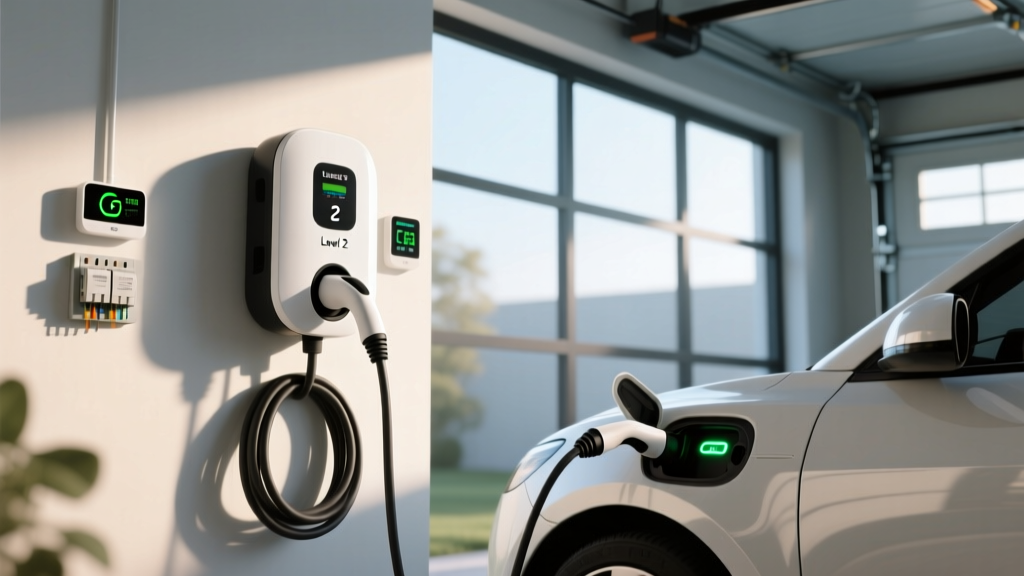
For R2 owners, Level 2 at home is the practical baseline. A 48-amp Level 2 charger on a 60-amp dedicated circuit will replenish the Max pack from 20% to 80% overnight in roughly 6 hours — more than enough for daily driving. Level 1 is an emergency backup only; plugging into a standard 120V outlet adds about 40 miles overnight, which won't cover most commutes.
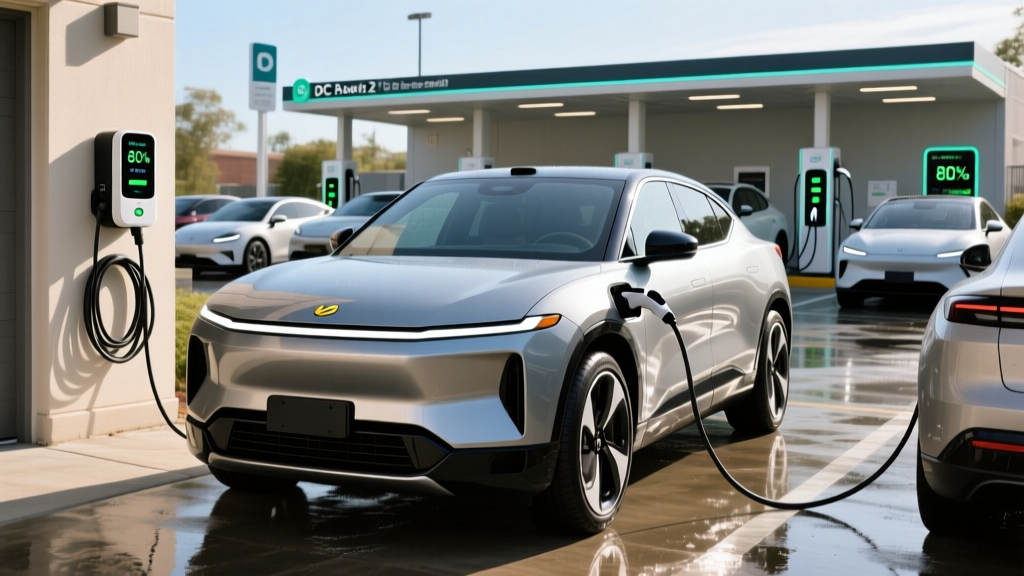
DC fast charging follows a charge curve: the R2 will peak near 200 kW at low state-of-charge (around 10-20%), then taper progressively as the battery fills. The 10-80% time of ~30 minutes reflects this average, not a sustained peak rate. Above 80%, charging slows dramatically to protect battery health — expect 80-100% to take nearly as long as 10-80%.
Home Charger Installation: Electrical Requirements & Real Costs
Installing a Level 2 home charger is the single highest-impact upgrade for EV ownership. Here's what the R2 demands and what it will cost.
Electrical Requirements for the Rivian R2
The R2's onboard charger accepts up to 11.5 kW at 48 amps. To deliver this, you need a 240-volt, 60-amp dedicated circuit (the National Electrical Code requires circuits to be rated at 125% of continuous load, so 48A × 1.25 = 60A breaker).
If your electrical panel has spare capacity and is rated at 200 amps or higher, a licensed electrician can typically run a new 60A circuit with 6 AWG copper wire to a NEMA 14-60 outlet or hardwire a wall-mounted charger. If your panel is older (100A or 150A) or already near capacity, you may need a panel upgrade to 200A, which is a significant added cost.
| Component | Low Estimate | High Estimate | Notes |
|---|---|---|---|
| Level 2 Charger (hardware) | $350 | $700 | 40A-48A smart charger |
| Electrician labor (standard install) | $500 | $1,500 | Depends on wire run length, wall type |
| Permit & inspection | $50 | $250 | Varies by municipality |
| Panel upgrade (if needed) | $1,500 | $3,500 | 100A → 200A service upgrade |
| Total (no panel upgrade) | $900 | $2,450 | Most homes with 200A panel |
| Total (with panel upgrade) | $2,400 | $5,950 | Older homes with 100A/150A panel |
Always get a licensed electrician to assess your panel before purchasing a charger. Many utilities offer free or low-cost home energy assessments that include EV-readiness checks. Some states and utilities also offer rebates of $250-$1,000 for home charger installation — check your local utility and state incentive databases for current programs.
Connector Compatibility: NACS, CCS, and the R2
The Rivian R2 will ship with a native NACS (North American Charging Standard) port — the connector pioneered by Tesla and now adopted across the industry. This is a significant advantage for charging access.
| Connector | R2 Native? | Networks Available | Adapter Needed? |
|---|---|---|---|
| NACS | Yes (native) | Tesla Supercharger, Electrify America (new stations), Rivian Adventure Network, ChargePoint (new units) | None |
| CCS1 | No | Electrify America (legacy), EVgo, ChargePoint (legacy) | NACS-to-CCS adapter (~$200-$250) |
| CHAdeMO | No | Limited legacy stations (phasing out) | Not recommended; adapters rare |
| J1772 (Level 2 AC) | Adapter included | Most public Level 2 stations, home chargers | NACS-to-J1772 adapter (usually included with vehicle) |
The NACS native port means R2 owners get direct access to the Tesla Supercharger network — currently the largest and most reliable DC fast-charging network in the US, with over 25,000 stalls. For legacy CCS stations, Rivian is expected to offer or support a NACS-to-CCS adapter, similar to what's available for the R1S/R1T.
Cost to Charge: Home vs. Public vs. Gas Comparison
One of the strongest arguments for the R2 over a gas-powered compact SUV like the Toyota RAV4 or Honda CR-V is fuel cost. Here's how the numbers break down across charging scenarios:
| Scenario | Rate | Cost for 300 mi (R2 Max) | Cost Per Mile |
|---|---|---|---|
| Home (off-peak utility rate) | $0.10/kWh | $9.00 | $0.030 |
| Home (average US rate) | $0.16/kWh | $14.40 | $0.048 |
| Public Level 2 (ChargePoint, etc.) | $0.25-$0.40/kWh | $22.50-$36.00 | $0.075-$0.120 |
| DC Fast (Tesla Supercharger avg) | $0.28-$0.36/kWh | $25.20-$32.40 | $0.084-$0.108 |
| DC Fast (Electrify America) | $0.35-$0.48/kWh | $31.50-$43.20 | $0.105-$0.144 |
| Gas SUV (28 MPG combined, $3.40/gal) | $3.40/gal | $36.43 | $0.121 |
Calculations assume ~3.0 kWh/mile for the R2 Max pack (105 kWh ÷ 330 mi ≈ 3.18 kWh/mi EPA; ~3.0 accounting for charging losses at home). Gas comparison based on a 28 MPG combined compact SUV per fueleconomy.gov data.
The takeaway: home charging is 60-75% cheaper per mile than gasoline. Even DC fast charging on the road is competitive with or cheaper than gas in most markets. The key to maximizing savings is charging at home on off-peak utility rates whenever possible. Many utilities offer time-of-use (TOU) plans with rates as low as $0.06-$0.10/kWh between midnight and 6 AM.
Recommended Level 2 Home Chargers for the R2
The R2's 11.5 kW onboard charger means you want a Level 2 unit capable of at least 48 amps to maximize charge speed. Here are proven options across price tiers:
Tesla Wall Connector
- Power: 11.5 kW (48A)
- Connector: NACS (native for R2)
- Cable Length: 24 ft
- Smart Features: Wi-Fi, OTA updates, load sharing, power sharing between units
- Price: ~$425
- Best For: R2 owners wanting a native NACS connection without adapters; cleanest install
ChargePoint Home Flex
- Power: Up to 12 kW (50A) — configurable 16A-50A
- Connector: J1772 (NACS adapter needed) or NACS version available
- Cable Length: 23 ft
- Smart Features: Wi-Fi, app scheduling, Alexa integration, flexible amperage
- Price: ~$550-$650
- Best For: Households with mixed EV brands; adjustable amperage for panel-constrained homes
Emporia Vue Level 2 Charger
- Power: 11.5 kW (48A)
- Connector: J1772 or NACS
- Cable Length: 24 ft
- Smart Features: Energy monitoring, solar integration, scheduling, load management
- Price: ~$350-$400
- Best For: Budget-conscious buyers; solar-panel households wanting energy tracking
Grizzl-E Smart
- Power: 10 kW (40A)
- Connector: J1772 (NACS adapter needed)
- Cable Length: 24 ft
- Smart Features: OCPP compatible, basic app, extreme cold rated (-40°F)
- Price: ~$400
- Best For: Cold-climate garages; durable, no-frills reliability
For the R2 specifically, the Tesla Wall Connector is the logical first choice: native NACS plug means no adapter fumbling, and it delivers the full 48A/11.5 kW the R2 can accept. If you have other EVs in the household with J1772 ports, the ChargePoint Home Flex with a NACS configuration offers the best flexibility.
Safety, Code, and Installation Considerations
EV charging is a high-draw, continuous electrical load. Cutting corners here risks fire, failed inspections, or voided insurance. Key requirements:
- Dedicated circuit: Your Level 2 charger must be on its own dedicated breaker — not shared with other appliances. A 48A charger requires a 60A breaker.
- Hardwire vs. plug: Hardwired installations (no plug) are preferred for 48A+ circuits. The NEC limits plug-in (NEMA 14-60) outlets to 40A continuous draw (80% of a 50A breaker). If you want the full 48A, hardwire is required.
- GFCI protection: The 2023 NEC (and most adopted local codes) requires GFCI protection for EV charging outlets. Hardwired chargers with built-in ground-fault protection may satisfy this without a separate GFCI breaker, which can be expensive and prone to nuisance tripping.
- Outdoor rating: If your charger is installed outside (carport, driveway), ensure the unit carries a NEMA 4 or IP65 weather rating. All chargers listed above meet this standard.
- Permit and inspection: Most jurisdictions require an electrical permit for EV charger installation. The inspection verifies wire gauge, breaker sizing, and grounding. Skipping this step can create liability issues and may void homeowner's insurance coverage for electrical fires.
- Wire gauge: A 60A circuit requires minimum 6 AWG copper wire (THHN in conduit or NM-B/Romex where permitted). For runs over 50 feet, your electrician may upsized to 4 AWG to reduce voltage drop.
Rivian R2 Charging FAQ
How much does it cost to install a home EV charger for the Rivian R2?
For most homes with a 200A electrical panel, expect $900-$2,450 total (charger hardware + electrician labor + permit). If your home has an older 100A or 150A panel that needs upgrading, total costs can reach $2,400-$5,950. Always get a licensed electrician's assessment before committing.
How fast will each charging level add range to the R2?
Level 1 (120V) adds roughly 3-5 miles per hour — essentially overnight trickle charging. Level 2 at 48A/240V adds 30-37 miles per hour, fully replenishing the R2 overnight. DC fast charging peaks at ~200 kW, adding up to 500+ miles per hour at peak rate, though the average 10-80% session takes about 30 minutes due to charge-curve tapering.
Which connector does the Rivian R2 use?
The R2 uses a native NACS (North American Charging Standard) port — the same connector used by Tesla. This gives direct access to Tesla Superchargers and the growing NACS-equipped public charging network. For legacy CCS stations, a NACS-to-CCS adapter (expected from Rivian or third-party suppliers, ~$200-$250) will be needed. For Level 2 AC charging at J1772 stations, a NACS-to-J1772 adapter is typically included with the vehicle.
How much does charging the R2 cost per mile compared to gas?
Charging at home on an average US electricity rate ($0.16/kWh) costs approximately $0.048 per mile — about 60% cheaper than a 28 MPG gas SUV at $3.40/gallon ($0.121/mile). Off-peak home rates ($0.10/kWh) drop that to $0.030/mile. DC fast charging on the road costs $0.08-$0.14/mile depending on the network, still competitive with or cheaper than gas.
What electrical upgrades might I need for a Level 2 charger?
If your electrical panel is 200A or larger with spare breaker slots, you likely only need a new 60A dedicated circuit — straightforward work for an electrician. If your panel is 100A or 150A, or already near capacity with existing loads, you'll need a panel upgrade ($1,500-$3,500) or a smart load-management system that dynamically limits charger draw when other high-power appliances are running.
Will the Rivian R2 qualify for the federal EV tax credit?
Federal §30D tax credit eligibility depends on several factors that are subject to change: the vehicle's MSRP must not exceed $80,000 for SUVs (the R2 should qualify), the buyer's adjusted gross income must fall below $150,000 (single) / $300,000 (joint), and the battery must meet critical-mineral and battery-component sourcing requirements that tighten annually. The credit can now be transferred to the dealer at point of sale for an immediate price reduction. Consult a tax professional and check current IRS guidance for your specific situation.
Does the R2's LFP battery need special charging care?
If you opt for the Standard pack with LFP chemistry, you can — and should — charge to 100% regularly. LFP batteries don't suffer the same high-state-of-charge degradation as NMC, and periodic full charges help the battery management system calibrate cell voltages accurately. For the Max pack (NMC), daily charging to 80-90% is recommended for longevity, with 100% reserved for road trips.
Sources: Rivian announced specifications, fueleconomy.gov, IRS §30D Clean Vehicle Credit, National Electrical Code (NEC) Article 625. All pricing and specifications are estimates based on available information as of early 2026 and may change with final production vehicles.