Rivian R2 Range Meets Reality: Charging the 335-Mile Compact SUV
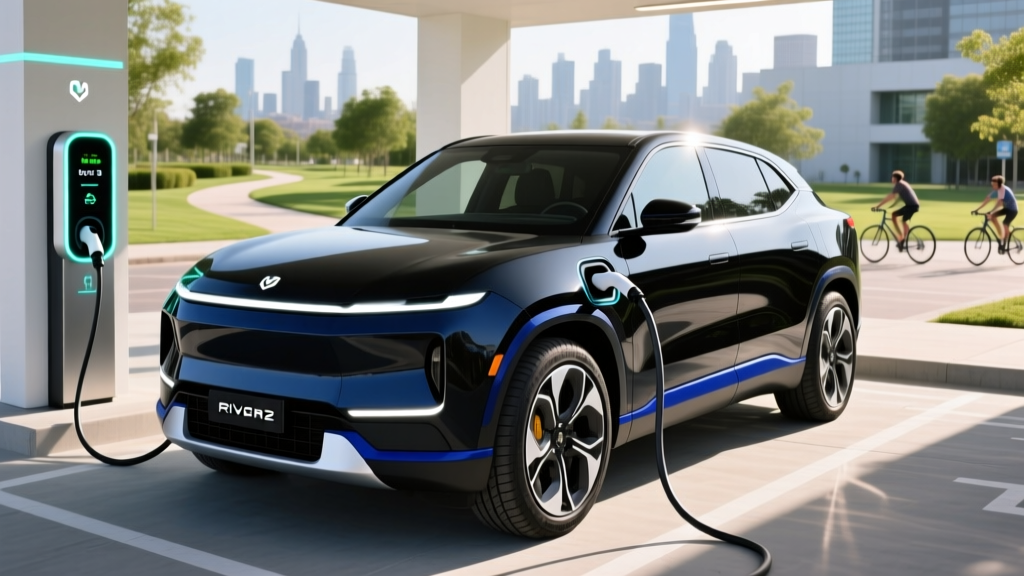
With the Rivian R2 officially certified for 335 miles of EPA range, the compact electric SUV enters the market as one of the most range-capable vehicles in its class. But EPA stickers only tell part of the story. What matters equally — and often gets buried in launch coverage — is how quickly and affordably you can replenish that 335-mile battery in your garage, at a public DC fast charger, or on a cross-country road trip.
This guide breaks down exactly what the R2's range certification means in real-world driving, how to set up home charging for Rivian's newest model, which connectors you'll encounter, what installation actually costs, and how the R2's per-mile charging cost compares to a gas equivalent. Whether you're a reservation holder or cross-shopping against the Tesla Model Y and Hyundai IONIQ 5, these are the charging numbers that matter.
EPA Combined: 335 miles
Real-World Highway (70-75 mph): ~270–295 miles
Real-World Cold Weather (below 30°F): ~235–265 miles
Real-World Mixed Commute: ~300–320 miles
Expect 10–15% range reduction on sustained highway driving and 20–30% in freezing temperatures. Rivian's thermal management system and available heat pump help mitigate cold-weather losses compared to competitors without active battery preconditioning.
Understanding Charging Levels: How Fast Can You Replenish the R2?
Before plugging in, it's essential to distinguish between kW (kilowatts — the rate of power delivery, like water pressure in a hose) and kWh (kilowatt-hours — the total energy stored in the battery, like the size of the water tank). The R2's battery capacity is measured in kWh; the charger's speed is measured in kW. Confusing these is the single most common EV literacy mistake.
| Level | Voltage / Amperage | Power (kW) | Miles of Range Added per Hour | Best Use Case |
|---|---|---|---|---|
| Level 1 | 120V / 12A | ~1.4 kW | ~3–5 mi/hr | Emergency / overnight trickle |
| Level 2 | 240V / 32–48A | 7.7–11.5 kW | ~22–37 mi/hr | Daily home charging |
| DC Fast Charging | 400V+ architecture | Up to ~200 kW peak | ~600+ mi/hr (at peak) | Road trips / rapid top-ups |
The Rivian R2 supports DC fast charging at up to approximately 200 kW peak. On a capable 350 kW CCS or NACS station, expect a 10–80% charge in roughly 25–30 minutes under ideal conditions. However, charging curves are not linear: the R2 will sustain peak rates between 10–50% SoC, then progressively taper above 80% to protect battery longevity. Plan road-trip stops around the 10–80% window for maximum time efficiency.
Home Charger Installation: Electrical Requirements and Costs
Level 2 home charging is where the majority of R2 miles will be added. A properly installed 240V Level 2 station replenishes the R2's battery fully overnight and is dramatically cheaper per mile than public DC fast charging. Here's what the installation actually involves.
Electrical Requirements for the Rivian R2
The R2's onboard charger is capable of accepting up to 11.5 kW on Level 2 (240V / 48A). To take full advantage, you'll need a dedicated 240V / 60A circuit (the circuit must be rated 125% above the continuous load of 48A, per NEC code). If you're willing to accept slightly slower charging, a 240V / 40A circuit (delivering ~7.7 kW) adds about 22 miles per hour and still covers most daily needs overnight.
Panel upgrade reality check: Homes built before 2000 often have 100A or 150A main electrical panels. Adding a 60A EV circuit may require upgrading to a 200A panel — a significant additional cost. Have a licensed electrician perform a load calculation before committing to a charger amperage.
| Component | Budget Scenario (40A) | Standard Scenario (48A) | Complex Scenario (60A + Panel Upgrade) |
|---|---|---|---|
| Level 2 Charger Unit | $400–$600 | $550–$750 | $550–$750 |
| Electrician Labor | $500–$1,000 | $800–$1,500 | $1,500–$2,500 |
| Permit & Inspection | $100–$250 | $100–$300 | $150–$400 |
| Panel Upgrade (if needed) | N/A | $0–$500 | $1,500–$3,500 |
| Total Estimated Cost | $1,000–$1,850 | $1,450–$3,050 | $3,700–$7,150 |
Permits are not optional — they ensure your installation meets NEC (National Electrical Code) standards and protects your homeowner's insurance coverage. Most jurisdictions require a permit for any new 240V circuit. Your electrician typically handles the filing.
Connector Compatibility: NACS, CCS, and What the R2 Uses
The North American charging connector landscape has shifted dramatically. Rivian has adopted the NACS (North American Charging Standard) — the Tesla-originated connector — for the R2, aligning with the broader industry transition away from CCS1. This has major implications for where and how you charge.
| Connector Type | Native on R2? | Adapter Needed? | Network Availability |
|---|---|---|---|
| NACS (Tesla-style) | ✅ Yes — native port | No | Tesla Superchargers, Electrify America (new stations), EVgo, Rivian Adventure Network |
| CCS1 | ❌ No | Yes — NACS-to-CCS adapter (~$150–$200) | Legacy Electrify America, ChargePoint, older public stations |
| CHAdeMO | ❌ No | Not available for NACS vehicles | Legacy Nissan Leaf infrastructure — increasingly rare |
| J1772 (Level 2) | ❌ No | Yes — J1772-to-NACS adapter (often included with vehicle) | Public Level 2 stations, older home chargers |
Practical takeaway: With a native NACS port, the R2 gains direct access to the Tesla Supercharger network — over 25,000 stalls in North America — without an adapter. For legacy CCS stations, invest in a quality NACS-to-CCS adapter from a reputable brand like Lectron or A2Z. Rivian typically includes a J1772-to-NACS adapter in the vehicle's charging kit for public Level 2 compatibility.
Level 2 Charger Recommendations for the Rivian R2
Not all home chargers are equal. The right unit depends on your electrical panel capacity, whether you charge indoors or outdoors, and whether you want smart scheduling features to take advantage of off-peak electricity rates.
🏆 Best Overall: ChargePoint Home Flex
- Power Output: Up to 11.5 kW (240V / 48A)
- Connector: NACS (native) or J1772 (with adapter)
- Cable Length: 23 feet
- Smart Features: Wi-Fi, app scheduling, energy tracking, Alexa integration
- Indoor/Outdoor: NEMA 4 rated — suitable for outdoor install
- Price: ~$599–$699
- Why for R2: Matches the R2's 11.5 kW onboard charger ceiling, flexible amperage configuration (16A–48A) to match your panel capacity
🔌 Best Value: Emporia Level 2 Charger
- Power Output: Up to 11.5 kW (240V / 48A)
- Connector: J1772 (use included NACS adapter) or NACS version
- Cable Length: 24 feet
- Smart Features: Wi-Fi, app control, solar integration, energy monitoring
- Indoor/Outdoor: NEMA 4 rated
- Price: ~$399–$449
- Why for R2: Full 48A output at a budget price, excellent energy monitoring for cost-conscious owners
🏡 Best for Smart Homes: Tesla Wall Connector (NACS)
- Power Output: Up to 11.5 kW (240V / 48A)
- Connector: NACS native — no adapter needed for R2
- Cable Length: 24 feet
- Smart Features: Wi-Fi, firmware updates, power sharing (multiple units on one circuit)
- Indoor/Outdoor: NEMA 3R rated — indoor or covered outdoor
- Price: ~$475–$550
- Why for R2: Native NACS plug, seamless if you already have Tesla Solar/Powerwall ecosystem
All three chargers support the R2's maximum Level 2 acceptance rate. Choose based on your existing smart-home ecosystem, whether you need a NACS-native plug (Tesla Wall Connector wins), and your budget. A licensed electrician should perform a load calculation to confirm whether your panel supports 48A continuous draw or whether a 32A/40A configuration is more appropriate.
Cost to Charge the Rivian R2: Home vs. Public vs. Gas
The 335-mile EPA range is only half the equation — what matters for ownership cost is how much it costs to refill that range. Electricity pricing varies dramatically by location, time of day, and charging method. Here's a realistic breakdown.
| Scenario | Rate ($/kWh) | Cost for Full Charge (0–100%) | Cost per Mile | Cost for 335 Miles |
|---|---|---|---|---|
| Home Off-Peak (utility time-of-use rate) | $0.08–$0.12 | $6.80–$10.20 | $0.02–$0.03 | $6.80–$10.20 |
| Home Standard Rate (national avg) | $0.15–$0.18 | $12.75–$15.30 | $0.04–$0.05 | $12.75–$15.30 |
| Public Level 2 (ChargePoint, etc.) | $0.20–$0.35 | $17.00–$29.75 | $0.05–$0.09 | $17.00–$29.75 |
| DC Fast Charging (Supercharger, EA) | $0.30–$0.50 | $25.50–$42.50 | $0.08–$0.13 | $25.50–$42.50 |
| Gas Equivalent (25 MPG combined, $3.40/gal) | — | — | $0.14 | $45.56 |
The bottom line: Home off-peak charging delivers fuel costs at roughly one-quarter to one-fifth the per-mile cost of a comparable gas SUV. Even exclusive DC fast charging remains competitive with or cheaper than gasoline. The savings compound: at 12,000 miles per year, home-charging the R2 saves approximately $1,500–$2,500 annually versus a 25 MPG gas SUV at current fuel prices, according to fueleconomy.gov comparisons.
Safety and Code Considerations for R2 Home Charging
A 240V EV charging circuit carries enough current to pose serious fire and shock risks if installed improperly. These are non-negotiable requirements:
- Dedicated circuit: The EV charger must have its own dedicated breaker — never share a circuit with a dryer, oven, or HVAC system.
- GFCI protection: NEC 2020 and later require GFCI (Ground Fault Circuit Interrupter) protection for all 240V EV charging outlets. Many modern hardwired chargers include built-in GFCI; if using a receptacle, a GFCI breaker is required.
- Outdoor rating: If installing outdoors, the charger must carry at minimum a NEMA 3R rating (rain protection) or NEMA 4 (weatherproof). The ChargePoint Home Flex and Emporia both meet NEMA 4.
- Wire gauge: A 48A continuous load requires 6 AWG copper wire minimum (or 4 AWG aluminum). Your electrician will specify based on run length and local code.
- Hardwired vs. plug: Hardwired installations (no plug) are preferred for 48A circuits — they eliminate the NEMA 14-50 receptacle as a potential failure point and often don't require a separate GFCI breaker since the charger handles ground-fault protection internally.
- Permit and inspection: Your jurisdiction's electrical inspector must sign off on the installation before it's energized. Skipping this step can void homeowner's insurance coverage in the event of an electrical fire.
For detailed electrical code requirements, consult the NFPA 70 National Electrical Code or your local building department.
Charging Times for the Rivian R2: From Empty to Full
How long does it actually take to charge the R2's approximately 85 kWh usable battery from various states of charge? These estimates assume optimal conditions — extreme cold or an aged battery will extend times.
- Level 1 (120V / 1.4 kW): 0–100% in ~61 hours. Useful only for maintaining charge or emergency trickle — adds roughly 35 miles overnight (10 hours).
- Level 2 at 7.7 kW (32A): 0–100% in ~11 hours. Covers a full recharge in one overnight session.
- Level 2 at 11.5 kW (48A): 0–100% in ~7.5 hours. The fastest Level 2 option, fully replenishing the R2 well within a typical overnight window.
- DC Fast Charging at ~200 kW peak: 10–80% in approximately 25–30 minutes. Expect the rate to taper significantly above 80% — charging from 80–100% on DC fast can add another 20+ minutes. For road trips, plan stops at the 10–80% sweet spot.
Charge curve reality: The R2 will not sustain 200 kW for the entire session. Expect peak rates between 10–40% SoC, a taper to ~150 kW from 40–60%, ~100 kW from 60–80%, and a steep taper to ~50 kW or less above 80%. This is normal battery-management behavior, not a defect — it protects long-term battery health.
Frequently Asked Questions
How much does it cost to install a home EV charger for the Rivian R2?
A standard 48A Level 2 home charger installation ranges from $1,450 to $3,050 including the charger unit ($550–$750), electrician labor ($800–$1,500), and permit ($100–$300). If your home requires an electrical panel upgrade from 100A/150A to 200A, add $1,500–$3,500, bringing the total to $3,700–$7,150. Always get a load calculation from a licensed electrician before committing to an amperage.
How fast will each charging level add range to the R2?
Level 1 (120V) adds ~3–5 miles per hour. Level 2 (240V) adds ~22 miles/hour at 7.7 kW (32A) or ~37 miles/hour at 11.5 kW (48A). DC fast charging at peak rate can add 10+ miles per minute, though the rate tapers as the battery fills. A 10–80% DC fast charge takes approximately 25–30 minutes on a 200+ kW station.
Which connector and charger is compatible with the Rivian R2?
The R2 uses a NACS (North American Charging Standard) port natively. This means direct compatibility with Tesla Superchargers, Rivian Adventure Network chargers, and new Electrify America/EVgo NACS stations — no adapter needed. For legacy CCS1 stations, you'll need a NACS-to-CCS adapter (~$150–$200). For older J1772 Level 2 public chargers, a J1772-to-NACS adapter is typically included with the vehicle.
How much does charging the R2 cost per mile compared to gas?
Home off-peak charging costs approximately $0.02–$0.03 per mile. Home standard-rate charging runs $0.04–$0.05/mile. Public DC fast charging is $0.08–$0.13/mile. A comparable gas SUV at 25 MPG and $3.40/gallon costs about $0.14/mile. Home charging the R2 saves roughly 75–85% on fuel costs versus gasoline.
What electrical upgrades might I need for R2 home charging?
The most common upgrade is a panel capacity increase — homes with 100A or 150A main service may need a 200A panel to safely support a 48A or 60A EV circuit alongside existing loads. Other potential upgrades include: running new 6 AWG copper wire from the panel to the charger location (especially for long runs exceeding 50 feet), installing a GFCI breaker if using a receptacle rather than hardwired installation, and upgrading the meter base if the utility requires it for higher service amperage. Budget $1,500–$3,500 for a panel upgrade if needed.
Does the Rivian R2 qualify for the federal EV tax credit?
Federal §30D tax credit eligibility depends on MSRP caps (SUVs capped at $80,000), buyer income limits ($150,000 single / $300,000 joint modified AGI), battery critical-mineral sourcing requirements, and North American final assembly. The credit can be transferred to the dealer as a point-of-sale discount. Check current eligibility on IRS.gov or consult a tax professional, as sourcing rules and eligible vehicle lists update regularly.
Will charging the R2 at home increase my electricity bill significantly?
At the national average rate of ~$0.16/kWh and driving 12,000 miles per year, expect to add approximately $50–$65 per month to your electric bill for R2 charging. If your utility offers time-of-use (TOU) rates, scheduling charging between 10 PM and 6 AM can reduce this to $25–$40/month. Many utilities offer dedicated EV rate plans that make overnight charging even cheaper.
The Rivian R2's 335-mile EPA certification positions it as a range leader in the compact electric SUV segment, but range is only useful if you can replenish it conveniently and affordably. A properly specified Level 2 home charger — matched to your panel capacity and installed to code — transforms the R2 into a vehicle you refuel for pennies per mile while you sleep. For road trips, the native NACS port and ~200 kW DC fast-charging capability give access to the continent's largest fast-charging network with minimal adapter hassle. Plan your home installation early, budget for a potential panel upgrade, and choose a charger that matches the R2's 11.5 kW onboard charger ceiling for the best overnight experience.