The Rivian R1T Max Pack with its EPA-estimated 420 miles (Dual-Motor) to approximately 510 miles of range represents one of the largest battery packs in any production electric vehicle. That massive battery — roughly 149 kWh of usable capacity — demands a serious charging strategy. Whether you're plugging in at home, topping up on a road trip, or calculating whether the electricity bill beats your old gas truck, this guide breaks down exactly what it takes to keep the R1T Max Pack charged and ready.
Understanding Charging Levels: What Speeds to Expect
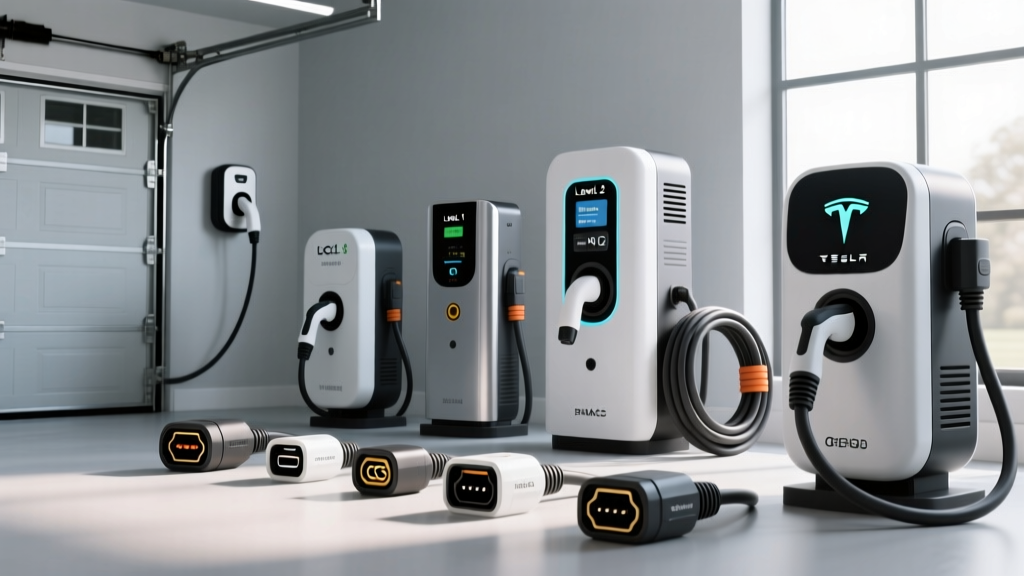
Electric vehicle charging operates across three primary tiers. The distinction between kW (kilowatts, a measure of power or charge rate) and kWh (kilowatt-hours, a measure of energy or battery capacity) is critical: your R1T Max Pack holds roughly 149 kWh of energy, and a charger delivering 11.5 kW would theoretically take about 13 hours to fill it from empty.
| Charging Level | Voltage | Power (kW) | Miles of Range per Hour | Best Use Case |
|---|---|---|---|---|
| Level 1 (Standard Outlet) | 120V | 1.2–1.4 kW | ~2–3 miles/hr | Emergency/trickle only |
| Level 2 (Home/Public AC) | 240V | 7.2–19.2 kW | ~14–38 miles/hr | Daily home charging |
| DC Fast Charging | 400V+ | 50–220+ kW | ~100–400+ miles/hr | Road trips, rapid top-ups |
For a battery as large as the R1T Max Pack's 149 kWh pack, Level 1 charging is impractical for anything beyond maintaining charge. A full Level 1 charge from 10% to 100% would take over 100 hours. Level 2 is where most R1T owners will do the majority of their charging, and DC fast charging is essential for road trips.
How Fast Will Each Charging Level Add Range to the R1T Max Pack?
The Rivian R1T supports up to 19.2 kW of Level 2 AC charging (when equipped with the optional dual onboard chargers) and up to 220 kW peak DC fast charging on the Max Pack configuration. Here's what those numbers mean in practice:
| Charging Scenario | Power | 10–80% Time (Approx.) | Range Added in 1 Hour |
|---|---|---|---|
| Level 1 (120V / 12A) | 1.4 kW | Not practical | ~2–3 miles |
| Level 2 (240V / 32A) | 7.7 kW | ~15 hours | ~15 miles |
| Level 2 (240V / 48A) | 11.5 kW | ~10 hours | ~23 miles |
| Level 2 (240V / 80A, dual charger) | 19.2 kW | ~6 hours | ~38 miles |
| DC Fast (50 kW) | 50 kW | ~2 hours | ~100 miles |
| DC Fast (150 kW peak) | 150 kW | ~50 minutes | ~250 miles (peak) |
| DC Fast (220 kW peak, Max Pack) | 220 kW | ~42 minutes | ~350+ miles (peak) |
Charging curve reality: The 220 kW peak rate applies only at lower states of charge (roughly 10–30% SoC) under ideal thermal conditions. Above 80% SoC, charging speed tapers significantly to protect the battery. A 10–80% session at a 220 kW-capable station will average closer to 130–160 kW across the session. Always precondition the battery via the Rivian app before arriving at a DC fast charger — this warms the pack and enables faster charge acceptance.
Home Charger Installation: Electrical Requirements & Costs
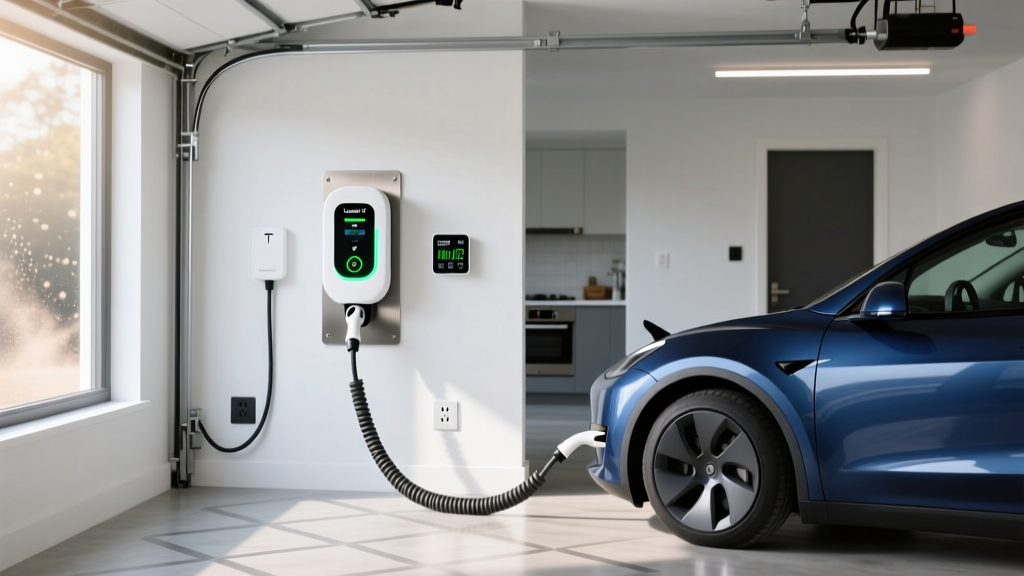
Installing a Level 2 home charger for the R1T Max Pack requires careful planning, especially given the truck's enormous battery. Here's what you need to know about the electrical infrastructure.
Electrical Requirements
A Level 2 charger requires a 240-volt dedicated circuit. The circuit amperage determines your charging speed:
- 40A circuit (supports 32A continuous charging / 7.7 kW) — minimum practical setup for the Max Pack
- 50A circuit (supports 40A continuous / 9.6 kW) — common residential setup
- 60A circuit (supports 48A continuous / 11.5 kW) — recommended for the R1T's large battery
- 100A circuit (supports 80A continuous / 19.2 kW) — requires dual onboard chargers and a robust electrical panel
Per the National Electrical Code (NEC), EV chargers are considered continuous loads, meaning the circuit must be rated at 125% of the charger's maximum draw. A 48A charger requires a 60A breaker.
Do You Need a Panel Upgrade?
Many homes built before 2010 have 100A or 150A main service panels. Adding a 60A EV circuit to an already-loaded 100A panel may exceed capacity. A licensed electrician will perform a load calculation to determine if your panel can handle the additional circuit. If a panel upgrade to 200A is needed, expect significant additional cost.
| Cost Component | Typical Range | Notes |
|---|---|---|
| Level 2 Charger (Equipment) | $400–$1,200 | Varies by brand, power output, smart features |
| Electrician Labor (standard install) | $500–$1,500 | Depends on run length, conduit, wall type |
| Permit & Inspection | $50–$300 | Varies by municipality; some jurisdictions waive for EV |
| Electrical Panel Upgrade (if needed) | $1,500–$4,000 | 100A → 200A upgrade; not always required |
| Total (no panel upgrade) | $950–$3,000 | Most common scenario for newer homes |
| Total (with panel upgrade) | $2,450–$7,000 | Older homes with 100A service |
The federal Residential Clean Energy Credit does not cover EV charger equipment for most taxpayers after 2022. However, some states and utilities offer rebates of $250–$1,000 for Level 2 charger installation — check with your local utility and the Alternative Fuels Data Center for current incentives in your state.
Connector Compatibility: NACS, CCS, and the Rivian R1T
Rivian made a significant transition beginning with 2025 model-year vehicles, moving from the CCS1 connector to the NACS (North American Charging Standard) connector, aligning with the Tesla Supercharger network. This has major implications for R1T owners.
| Model Year | Built-In Connector | Tesla Supercharger Access | CCS Network Access | Adapter Needed? |
|---|---|---|---|---|
| 2022–2024 R1T | CCS1 | Yes (with Rivian-provided NACS adapter) | Native | NACS adapter for Superchargers |
| 2025+ R1T | NACS | Native | Yes (with CCS adapter) | CCS adapter for Electrify America, etc. |
What this means practically: If you own a 2022–2024 R1T with CCS1, Rivian has distributed NACS adapters enabling access to Tesla Superchargers — which now number over 25,000 stalls across North America. For 2025+ models with native NACS, you'll want a CCS adapter (available from Rivian and third parties) to access Electrify America, EVgo, and other CCS-based networks. Home Level 2 charging uses the J1772 standard for CCS vehicles or NACS for newer models; most Level 2 chargers now ship with or support both connector types.
Cost to Charge the R1T Max Pack: Electricity vs. Gas
The R1T Max Pack's efficiency is rated at approximately 2.0–2.3 kWh per mile (roughly 43–50 MPGe combined, per fueleconomy.gov). Let's break down the actual cost per mile across different charging scenarios and compare it to a gas-powered truck.
| Charging Scenario | Cost per kWh | Cost for 10–80% (~105 kWh) | Cost per Mile |
|---|---|---|---|
| Home (off-peak utility rate) | $0.08–$0.12 | $8.40–$12.60 | $0.03–$0.04 |
| Home (average US residential) | $0.16–$0.18 | $16.80–$18.90 | $0.05–$0.06 |
| Public Level 2 (ChargePoint, etc.) | $0.25–$0.39 | $26.25–$40.95 | $0.08–$0.12 |
| DC Fast Charging (Electrify America) | $0.36–$0.56 | $37.80–$58.80 | $0.11–$0.17 |
| Tesla Supercharger (average) | $0.25–$0.36 | $26.25–$37.80 | $0.08–$0.11 |
Gas truck comparison: A comparable gas-powered pickup averaging 18 MPG combined at $3.50/gallon costs approximately $0.19 per mile in fuel. Even at public DC fast charging rates, the R1T Max Pack undercuts gas on a per-mile basis. With home charging at off-peak rates, the R1T costs roughly 75–85% less per mile to "fuel" than a gas truck.
For a full 149 kWh charge from empty at home (average rate of $0.17/kWh), expect to pay approximately $25.33. That same energy at a DC fast charger ($0.48/kWh average) would cost roughly $71.52 — which is why home charging is the economic backbone of EV ownership.
Recommended Home Charging Equipment for the R1T Max Pack
With a 149 kWh battery, you want the fastest Level 2 charger your electrical panel can support. Here are top equipment picks matched to the R1T's capabilities:
Emporia Vue Level 2 Charger
- Power Output: Up to 48A (11.5 kW) on a 60A circuit
- Connector: J1772 (NACS adapter included with newer units)
- Cable Length: 24 feet
- Smart Features: Wi-Fi, energy monitoring, solar integration, scheduling via app
- Price: ~$399–$449
- Best For: Budget-conscious R1T owners wanting energy data and solar pairing
ChargePoint Home Flex
- Power Output: Configurable 16A–50A (up to 12 kW on 50A/60A circuit)
- Connector: J1772 (NACS version available)
- Cable Length: 23 feet
- Smart Features: Wi-Fi, Alexa integration, scheduling, charge tracking, flexible amperage
- Price: ~$599–$699
- Best For: Versatile amperage settings for panels with limited capacity
Tesla Wall Connector (Universal)
- Power Output: Up to 48A (11.5 kW) on a 60A circuit
- Connector: NACS native + integrated J1772 adapter (Universal model)
- Cable Length: 24 feet
- Smart Features: Wi-Fi, OTA updates, power sharing between multiple units, load management
- Price: ~$599–$650
- Best For: 2025+ R1T owners with native NACS; seamless Supercharger ecosystem pairing
Grizzl-E Smart Level 2
- Power Output: Up to 40A (9.6 kW) on a 50A circuit
- Connector: J1772 or NACS (select at purchase)
- Cable Length: 24 feet
- Smart Features: OCPP-compatible, adjustable amperage, outdoor-rated (NEMA 4), extreme cold tested
- Price: ~$449–$549
- Best For: Outdoor installations, cold climates, rugged durability
Pro tip for Max Pack owners: If your electrical panel can support a 100A circuit and your R1T has the dual onboard charger option, a high-amperage charger like the ClipperCreek HCS-80 (up to 19.2 kW) can cut overnight charge times nearly in half. However, this requires a 100A breaker and 1/0 AWG copper wire — a significant installation investment best suited for homes with 200A+ panels and short conduit runs.
Safety, Electrical Code, and Installation Best Practices
EV charger installation involves high-voltage electrical work that must comply with the National Electrical Code (NEC) Article 625 and local building codes. Key requirements include:
- Dedicated circuit: Your EV charger must be on its own dedicated breaker — it cannot share a circuit with other appliances or outlets.
- GFCI protection: The NEC requires Ground Fault Circuit Interrupter protection for outdoor EV charging outlets. Many hardwired chargers have built-in GFCI; outdoor receptacles require a GFCI breaker.
- Outdoor rating: If your charger is installed outdoors (garage exterior, carport, driveway), both the charger enclosure and any receptacle must carry a NEMA 4 or NEMA 4X weather-resistance rating.
- Permit and inspection: Most jurisdictions require an electrical permit for EV charger installation. A post-installation inspection ensures code compliance and protects your home insurance coverage.
- Wire gauge: Proper wire sizing is critical. A 60A circuit typically requires 6 AWG copper; a 100A circuit requires 1/0 AWG. Undersized wire creates a fire hazard.
Always hire a licensed electrician experienced with EV charger installations. The combination of continuous high-current draw and outdoor exposure makes this a project where cutting corners carries real safety risk. Ask your electrician about load-management devices (like the Emporia Smart Panel or Tesla Power Sharing) if your panel capacity is tight — these systems dynamically reduce charger draw when other household loads spike, avoiding panel upgrades.
Charging the R1T Max Pack on Road Trips: Public Network Strategy
The R1T Max Pack's 220 kW peak DC fast charging capability makes it a competent road-trip vehicle, but strategic planning maximizes efficiency. Here's what to know about public charging networks:
- Tesla Superchargers (NACS): Now the largest and most reliable DC fast charging network. V3 stalls deliver up to 250 kW; V4 stalls can deliver 350+ kW. The R1T Max Pack can leverage up to 220 kW at these stations. Expect 10–80% in approximately 40–50 minutes.
- Electrify America (CCS): Offers up to 350 kW stalls. The R1T Max Pack will peak around 220 kW here as well. Reliability has improved but still trails Tesla's network in uptime. CCS adapter required for 2025+ R1T models.
- EVgo (CCS/NACS): Expanding NACS compatibility. Stations typically offer 50–350 kW. Good urban coverage in many metro areas.
Road trip charging tip: Use the Rivian app's built-in route planner, which accounts for elevation changes, temperature, and driving speed to predict range and suggest optimal charging stops. Charge to 80% and move on rather than waiting for 100% — the charging curve taper above 80% means those last 20% can take as long as the first 70%.
Frequently Asked Questions
How much does it cost to install a home EV charger for the Rivian R1T?
A typical Level 2 home charger installation costs between $950 and $3,000 if your electrical panel has sufficient capacity. This includes the charger unit ($400–$1,200), electrician labor ($500–$1,500), and permit fees ($50–$300). If your home requires a panel upgrade from 100A to 200A service, add $1,500–$4,000, bringing the total to $2,450–$7,000.
How long does it take to fully charge the R1T Max Pack at home?
From 10% to 100% on a standard 48A/11.5 kW Level 2 charger, expect approximately 12–13 hours. On a 32A/7.7 kW charger, plan for 17–19 hours. For daily use, most owners charge from 20–80% overnight (roughly 8–9 hours at 11.5 kW), which is sufficient for nearly all driving needs.
Which connector does the Rivian R1T use?
2022–2024 model-year R1T vehicles use the CCS1 connector natively, with a NACS adapter available from Rivian for Tesla Supercharger access. 2025 and newer R1T models use the NACS connector natively, with a CCS adapter needed for Electrify America and other CCS-based networks. Home Level 2 chargers are available in both connector types.
Is it cheaper to charge the R1T at home or use gas in a comparable truck?
Home charging is dramatically cheaper. At an average US residential rate of $0.17/kWh, charging the R1T Max Pack costs approximately $0.05–$0.06 per mile. A comparable gas truck at 18 MPG and $3.50/gallon costs about $0.19 per mile — roughly 3–4x more expensive per mile driven. Even public DC fast charging at $0.48/kWh ($0.11–$0.17/mile) typically undercuts gasoline.
What electrical upgrades might I need for a Level 2 charger?
The most common upgrade is a panel capacity increase from 100A to 200A service, needed if your existing panel is already near capacity. Your electrician will perform a NEC-compliant load calculation. Other potential upgrades include adding a sub-panel closer to the garage (to reduce wire run costs), installing a smart load-management system to avoid panel upgrades, or upgrading the meter base. Homes with 200A+ panels typically need no upgrades beyond the dedicated circuit and breaker.
Does the R1T Max Pack's battery degrade from frequent DC fast charging?
Modern battery management systems in the R1T include active liquid cooling and thermal preconditioning that mitigate degradation from DC fast charging. Rivian's battery warranty covers 8 years or 175,000 miles (whichever comes first) with a minimum 70% capacity retention threshold. Occasional DC fast charging on road trips will not meaningfully impact long-term battery health. For daily use, Level 2 home charging at moderate speeds is ideal for battery longevity.
Note: All pricing, range estimates, and charging specifications reflect 2025–2026 model-year data and current utility rates. Federal and state incentive eligibility varies by individual circumstance — consult the IRS and a qualified tax professional for your specific situation. Always verify installation requirements with a licensed electrician in your jurisdiction.