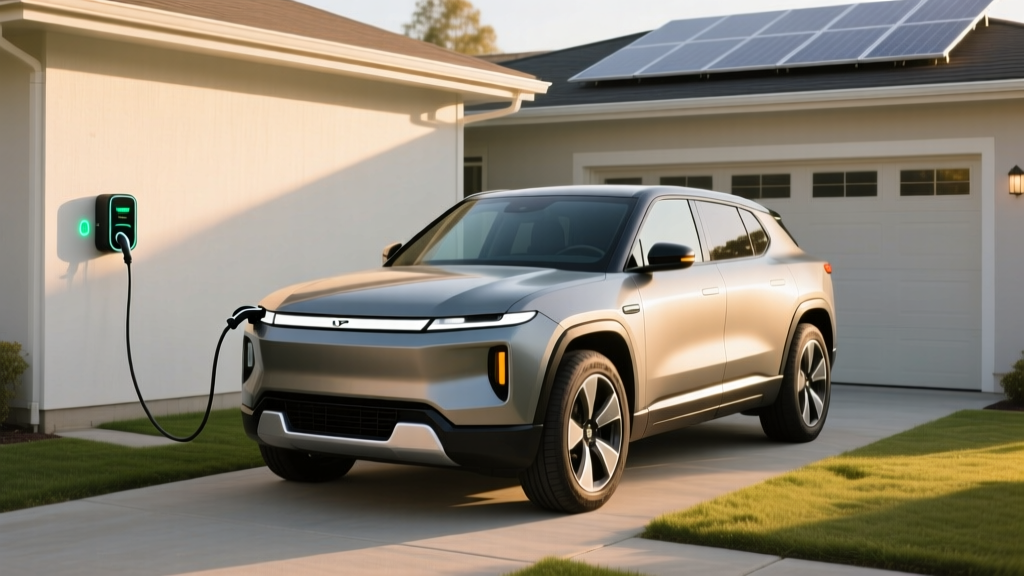
The Rivian R1S is one of the few electric SUVs that genuinely replaces a three-row gas hauler — but its 410-mile EPA sticker (Dual-Motor Max Pack) only tells part of the story. If you're researching the Rivian R1S range and how to actually keep that massive battery fed, this guide breaks down the real-world efficiency, the home electrical work you'll need, and what charging actually costs mile-for-mile compared to premium unleaded.
Dual-Motor Standard (106 kWh usable): EPA 270 mi — expect ~230–245 mi highway, ~200 mi in sub-30°F cold.
Dual-Motor Large (128 kWh usable): EPA 352 mi — expect ~300–320 mi highway, ~260 mi in sub-30°F cold.
Dual-Motor Max (149 kWh usable): EPA 410 mi — expect ~350–375 mi highway, ~300 mi in sub-30°F cold.
Highway speeds (75+ mph) and cold temperatures reduce range 10–25%. Source: fueleconomy.gov EV range methodology.
Rivian R1S Battery, Range, and Charging Specs at a Glance
| Spec | Standard Pack | Large Pack | Max Pack |
|---|---|---|---|
| Usable Battery (kWh) | ~106 | ~128 | ~149 |
| Chemistry | NMC (Nickel Manganese Cobalt) | NMC | NMC (Samsung 2170 cells) |
| EPA Range (mi) | 270 | 352 | 410 |
| Efficiency (MPGe) | ~69 MPGe | ~73 MPGe | ~77 MPGe |
| Max DC Fast Charge (kW) | ~200 kW | ~220 kW | ~220 kW |
| 10–80% DC Time | ~30 min | ~30 min | ~35 min |
| Level 2 Max Accept Rate | 11.5 kW (48A) | 11.5 kW (48A) | 11.5 kW (48A) |
| Native Connector | NACS (2025+ models) | NACS (2025+ models) | NACS (2025+ models) |
| 0–60 mph (Dual-Motor) | ~4.5 sec | ~4.5 sec | ~4.5 sec |
| Battery Warranty | 8 years / 175,000 miles (≥70% capacity retention) | ||
| Base MSRP (2025 Dual-Motor) | ~$75,900 | ~$82,400 | ~$89,900 |
Key charging-curve insight: The R1S peaks at ~220 kW only between roughly 10–30% State of Charge (SoC). From 50–80%, the rate tapers to ~100–130 kW. That's why a "10–80% in 30 minutes" claim is realistic, but 0–100% at peak rate is not how lithium-ion charging physics works. Always precondition the battery via the Rivian app before arriving at a DC fast charger — cold batteries charge dramatically slower.
Charging Levels Explained: kW, Miles Per Hour, and What the R1S Accepts
The single most common EV confusion is mixing up kW (kilowatts — the rate of energy flow, like water pressure) and kWh (kilowatt-hours — the total energy stored, like gallons in a tank). Your R1S Max Pack holds ~149 kWh of energy. A charger delivering 11.5 kW adds 11.5 kWh per hour.
| Level | Voltage / Amperage | Max Power (kW) | Miles of Range Added/Hour | Full Charge Time (Max Pack 149 kWh) |
|---|---|---|---|---|
| Level 1 (120V outlet) | 120V / 12A | ~1.4 kW | ~3–4 mi/hr | ~100+ hours (impractical) |
| Level 2 (240V home/public) | 240V / 48A | 11.5 kW | ~28–32 mi/hr | ~13 hours (0–100%) |
| Level 2 (240V / 32A) | 240V / 32A | 7.7 kW | ~19–22 mi/hr | ~19 hours (0–100%) |
| DC Fast (public) | 400V+ / variable | Up to 220 kW | ~500+ mi/hr (at peak) | 10–80% in ~30–35 min |
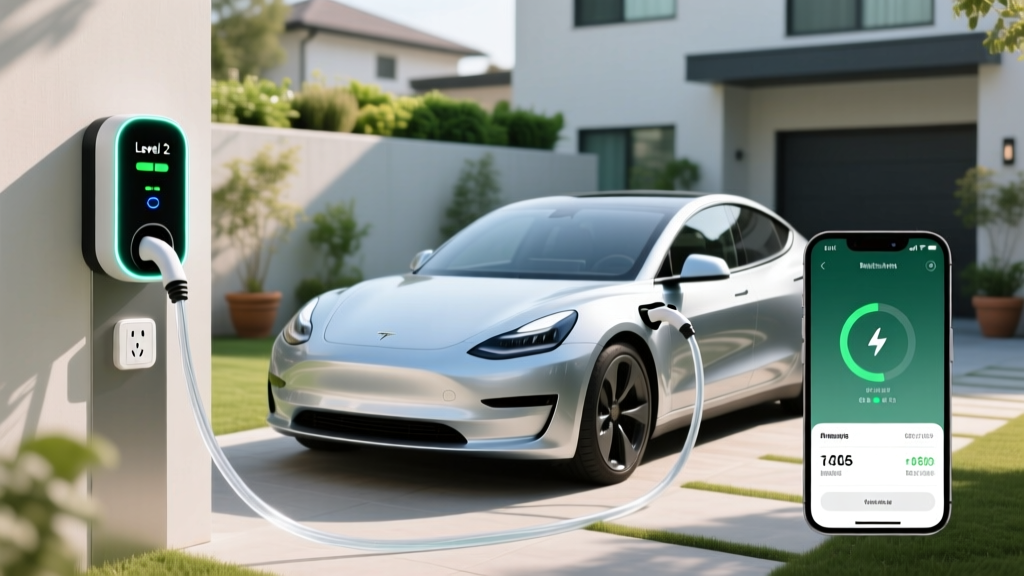
For daily driving, Level 2 at home is the gold standard. Plug in when you get home, wake up fully charged. The R1S accepts up to 11.5 kW on Level 2, so a 48-amp charger maximizes your overnight replenishment — roughly 300 miles of range added in a 10-hour overnight session, enough to refill even the Max Pack.
Home Charger Installation: Electrical Requirements, Costs, and Panel Gotchas
Installing a Level 2 home charger for the R1S is straightforward in newer homes but can trigger expensive upgrades in older ones. Here's what you're actually signing up for:
Electrical requirements for a 48A Level 2 charger:
- Circuit: Dedicated 60-amp breaker (NEC requires circuits rated at 125% of continuous load, so 48A × 1.25 = 60A)
- Voltage: 240V (same as a dryer or oven circuit)
- Wire: 6 AWG copper (THHN in conduit or 6/2 NM-B Romex for short indoor runs)
- Panel capacity: You need at least 60A of spare capacity on your main service panel
- Permit: Required in virtually all US jurisdictions — typically $50–$200
- GFCI: NEC 2020+ requires GFCI protection for outdoor EV outlets; hardwired indoor units may not require it, but your local inspector decides
Do You Need a Panel Upgrade?
This is the make-or-break cost. A typical home has a 100A or 200A main service panel. If your panel is already near capacity (electric oven, dryer, HVAC, water heater all drawing), adding a 60A EV circuit may require upgrading to a 200A or even 400A panel — or installing a smart load-management device like the NeoCharge Smart Splitter or a panel-level monitor (e.g., Emporia Vue) that dynamically throttles the charger when other appliances are running.
| Item | Typical Cost Range | Notes |
|---|---|---|
| Level 2 Charger (hardware) | $400–$700 | 48A smart charger (Wall Connector, ChargePoint, Emporia) |
| Electrician labor (standard install) | $500–$1,500 | Depends on panel-to-garage distance, conduit run, wall type |
| Permit & inspection | $50–$250 | Varies by municipality |
| Panel upgrade (if needed) | $1,500–$4,000+ | 200A upgrade; 400A can exceed $5,000 |
| Total (no panel upgrade) | $950–$2,450 | Most homes with 200A service |
| Total (with panel upgrade) | $2,500–$6,500+ | Older homes with 100A service |
Pro tip: The federal IRS Residential Clean Energy Credit (Form 5695) covers 30% of home EV charger equipment and installation costs, up to $1,000, for equipment placed in service through 2032. Check irs.gov for current eligibility. Some utilities also offer rebates of $250–$500 for smart Level 2 chargers — check your local co-op or utility.
Disclaimer: Always hire a licensed electrician for a final assessment. Panel capacity calculations require a professional load calculation per NEC Article 220.
Connector Compatibility: NACS, CCS, and Charging the R1S Anywhere
Starting with the 2025 model year, Rivian switched the R1S to the NACS (North American Charging Standard) connector — the same plug used by Tesla. This is a major advantage: it gives you native access to the Tesla Supercharger network (over 25,000 stalls in North America) without an adapter.
| Connector | R1S (2025+ NACS) | R1S (2022–2024 CCS) | Network Examples |
|---|---|---|---|
| NACS | ✅ Native | ⚠️ Requires CCS-to-NACS adapter | Tesla Supercharger, Rivian Adventure Network |
| CCS1 | ⚠️ Requires NACS-to-CCS adapter | ✅ Native | Electrify America, EVgo, ChargePoint DC |
| CHAdeMO | ❌ Not compatible (no adapter available) | ❌ Not compatible | Legacy Nissan Leaf network (declining) |
| J1772 (Level 2 AC) | ⚠️ NACS-to-J1772 adapter needed | ✅ Native (CCS includes J1772) | Public Level 2 stations, older home chargers |
If you own a 2022–2024 R1S with a CCS port, Rivian sells an official NACS adapter (~$200) that unlocks Supercharger access. For 2025+ NACS-native R1S owners, you'll want a NACS-to-CCS adapter (~$150–$250 from brands like Lectron or A2Z) if you plan to use Electrify America or EVgo stations frequently. Keep both adapters in the frunk for road trips.
What Does Charging the Rivian R1S Actually Cost Per Mile?
The R1S Max Pack's efficiency is roughly 2.7–3.0 miles per kWh (about 77 MPGe combined per fueleconomy.gov). Here's how that translates to real dollars:
| Scenario | Price per kWh | Cost per Mile | Cost for 400-Mile Road Trip |
|---|---|---|---|
| Home charging (off-peak utility rate) | $0.12/kWh | $0.04/mi | $16.00 |
| Home charging (avg US rate) | $0.17/kWh | $0.057/mi | $22.80 |
| Public Level 2 (ChargePoint, etc.) | $0.25–$0.35/kWh | $0.09–$0.12/mi | $36–$48 |
| DC Fast Charging (Electrify America) | $0.40–$0.56/kWh | $0.14–$0.19/mi | $56–$76 |
| Tesla Supercharger (avg) | $0.30–$0.40/kWh | $0.10–$0.14/mi | $40–$56 |
| Gas SUV comparison (20 MPG, $3.50/gal) | $0.175/mi | $0.175/mi | $70.00 |
The takeaway: Home charging the R1S costs roughly one-third to one-quarter what a comparable gas SUV (like a Toyota Sequoia or Chevy Tahoe at 16–22 MPG) costs per mile. Even DC fast charging on road trips is typically cheaper than gas — and with Rivian's Adventure Network and Supercharger access, you're rarely paying the most expensive public rates. A Max Pack owner charging primarily at home on a $0.12/kWh off-peak rate will spend roughly $500–$600/year on electricity for 12,000 miles of driving, versus $2,100+ for gas in a comparable three-row SUV.
Best Level 2 Home Chargers for the Rivian R1S
Since the R1S can accept up to 11.5 kW (48A) on Level 2, you want a charger that can deliver the full 48 amps to minimize overnight charge time. Here are proven picks:
Tesla Wall Connector (Gen 4)
- Power: Up to 48A / 11.5 kW (hardwired, 240V)
- Connector: NACS native — perfect for 2025+ R1S
- Cable: 24 ft
- Smart features: Wi-Fi, OTA updates, power sharing between two units, access control
- Price: ~$450
- Why it works: Cheapest 48A NACS charger available; Rivian owners report flawless compatibility
Emporia Vue Level 2 Charger
- Power: Up to 48A / 11.5 kW (hardwired or NEMA 14-50 plug)
- Connector: J1772 (with NACS adapter) or NACS version
- Cable: 24 ft
- Smart features: Integrates with Emporia Vue energy monitor for load management, solar-aware scheduling, app control
- Price: ~$400
- Why it works: Best value with load-management — ideal if your panel is tight on capacity
ChargePoint Home Flex
- Power: Up to 50A / 12 kW (configurable 16A–50A, hardwired or NEMA)
- Connector: J1772 (CCS-era R1S) or NACS (2025+)
- Cable: 23 ft
- Smart features: Alexa integration, scheduling, charging history, amperage adjustable to match your circuit
- Price: ~$650
- Why it works: Flexible amperage settings let you install on a 40A or 50A circuit if 60A isn't available
Rivian Wall Charger
- Power: Up to 48A / 11.5 kW (hardwired, 240V)
- Connector: NACS (2025+ models)
- Cable: 25 ft
- Smart features: Native Rivian app integration, scheduled charging, status LED, rugged outdoor rating
- Price: ~$550
- Why it works: Seamless integration with the Rivian ecosystem; matches R1S design aesthetic
Safety, Code, and Outdoor Installation Considerations
A few critical safety and code items that experienced EV owners learn the hard way:
- Dedicated circuit only: Never share the EV charger circuit with other appliances. The NEC considers EV charging a "continuous load" (running 3+ hours), so the circuit must be rated 125% above the charger's max draw.
- NEMA 14-50 vs. hardwired: A NEMA 14-50 outlet gives you portability (take the charger when you move), but some jurisdictions now require GFCI breakers for 14-50 receptacles used for EV charging — and GFCI breakers for 50–60A circuits cost $100–$200 and can nuisance-trip. Hardwired installations avoid this requirement in many areas.
- Outdoor rating: If your charger mounts outside or in an open carport, ensure it's rated NEMA 4 (weather-resistant). All four chargers above carry outdoor ratings.
- Cable management: A 24–25 ft cable is essential for the R1S, which is 200+ inches long. The charge port is on the driver-side rear quarter panel — make sure your cable reaches from the mount point to the port with slack.
- Utility notification: Some utilities require you to notify them before installing a Level 2 charger, and may offer time-of-use (TOU) rate plans that drop your off-peak rate to $0.06–$0.10/kWh. Call before you install.
Frequently Asked Questions
How much does it cost to install a home EV charger for the Rivian R1S?
A typical installation with a 200A panel and a short conduit run costs $950–$2,450 total (charger + electrician + permit). If your home needs a panel upgrade from 100A to 200A, add $1,500–$4,000. The IRS Residential Clean Energy Credit covers 30% of equipment and installation up to $1,000, and many utilities offer additional rebates.
How fast will each charging level add range to the R1S?
Level 1 (120V): ~3–4 miles per hour — essentially useless for the R1S's large battery. Level 2 (240V, 48A): ~28–32 miles per hour, fully replenishing overnight. DC fast charging: up to 220 kW peak, adding 10–80% in roughly 30–35 minutes, though the rate tapers significantly above 50% SoC.
Which connector and charger is compatible with my Rivian R1S?
2025 and newer R1S models use the NACS connector natively, giving direct access to Tesla Superchargers and Rivian's Adventure Network. 2022–2024 models use CCS1 and need a NACS adapter for Supercharger access. For home charging, any 48A Level 2 charger with the matching connector (or adapter) works — the Tesla Wall Connector, Emporia, and Rivian's own wall charger are top picks.
How much does charging the R1S cost per mile compared to gas?
At home on an average $0.17/kWh rate, the R1S costs roughly $0.05–$0.06 per mile. A comparable three-row gas SUV at 20 MPG with $3.50/gallon gas costs $0.175 per mile — about three times more. Even public DC fast charging at $0.40–$0.56/kWh ($0.14–$0.19/mi) typically undercuts gas. Over 12,000 miles per year, home charging saves $1,200–$1,500 annually.
What electrical upgrades might I need for a 48A home charger?
You need a dedicated 60A breaker on a 240V circuit with 6 AWG wire. The main concern is whether your service panel has enough spare capacity. Homes with 100A panels often need an upgrade to 200A ($1,500–$4,000). Alternatives include installing a lower-amperage charger (32A on a 40A circuit), using a smart load-management device that throttles the charger dynamically, or installing a NeoCharge Smart Splitter that shares an existing dryer circuit.
Does the Rivian R1S lose range in cold weather?
Yes — all EVs do, and the R1S is no exception. In temperatures below 30°F, expect a 15–25% range reduction depending on driving speed and cabin heating use. The Max Pack's EPA 410 miles drops to roughly 300–350 miles in deep cold. The R1S uses a heat pump (standard on 2025+ models) which improves cold-weather efficiency compared to resistive heating. Preconditioning the battery and cabin while plugged in recovers significant range.
Is the R1S eligible for the federal EV tax credit?
Under current IRS §30D rules, the R1S qualifies for up to $7,500 in federal tax credits, but eligibility depends on your income (AGI caps: $150K single / $300K joint), the vehicle's MSRP (SUV cap is $80,000 — some R1S trims exceed this), and battery critical-mineral sourcing requirements that change annually. The credit can now be transferred to the dealer as a point-of-sale discount. Check the latest rules at IRS.gov Clean Vehicle Credits and consult a tax professional.