The Rivian, Ionna, and WeaveGrid Charging Partnership Explained
The Rivian Ionna WeaveGrid charging partnership represents a three-pronged approach to solving the EV charging puzzle: Ionna builds the high-power DC fast-charging stations, Rivian integrates them into its Adventure Network and vehicle navigation, and WeaveGrid provides the software layer that manages grid load and enables smart charging. For Rivian R1T and R1S owners — and potentially other EV drivers as these stations open to the broader public — understanding how this ecosystem works, what speeds to expect, and how home charging fits in is essential for planning road trips and daily driving alike.
This guide breaks down the technical specifics of the partnership, maps it against the full charging spectrum from Level 1 to DC fast charging, and gives you the numbers you need: install costs, charge times, cost per mile, and equipment picks for 2026.
How the Three Companies Fit Together
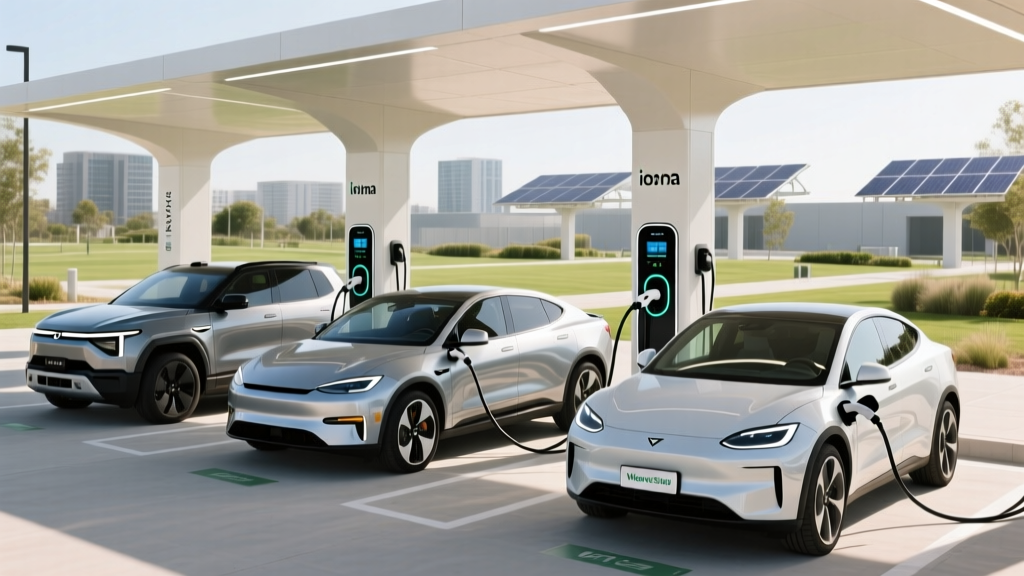
Ionna is the charging infrastructure joint venture backed by seven automakers (BMW, GM, Honda, Hyundai, Kia, Mercedes-Benz, and Stellantis). While Rivian is not a founding Ionna member, Ionna stations are designed to serve all CCS1 and NACS-equipped vehicles, and Rivian's Adventure Network has been expanding interoperability agreements. Ionna stations target 350 kW CCS1 and NACS dual-cable dispensers, placing them in high-traffic highway corridors and urban charging hubs.
WeaveGrid provides the utility-integration software that sits behind the scenes. Its platform connects chargers to local utility demand-response programs, enabling off-peak scheduling, grid-load balancing, and potential cost savings for the charger operator — savings that can translate to lower per-kWh pricing for the end user. WeaveGrid also supports managed charging for home Level 2 setups, letting utility customers earn rebates by allowing the grid to pause or throttle charging during peak demand windows.
Rivian's role is vehicle-side integration: the R1T and R1S navigation systems can route through Ionna stations, precondition the battery for optimal DC fast-charge speeds on arrival, and leverage WeaveGrid-connected home charging to schedule sessions during off-peak electricity windows. For the 2026 model year, Rivian vehicles ship with the NACS connector natively, eliminating the need for a CCS-to-NACS adapter at most new public stations.
Charging Levels: Speeds, Power, and What to Expect
Before mapping this partnership to your daily routine, here is the fundamental breakdown of EV charging levels. Remember: kW (kilowatts) measures power — how fast energy flows into the battery. kWh (kilowatt-hours) measures energy — the total capacity of the battery. A 110 kWh battery charged at 11 kW takes roughly 10 hours; at 150 kW, the math changes dramatically.
| Level | Voltage / Amps | Power (kW) | Miles of Range Added per Hour | Typical Use Case |
|---|---|---|---|---|
| Level 1 | 120V / 12A | 1.4 kW | 3–5 mi/hr | Overnight top-up, emergency |
| Level 2 (Home/Public) | 240V / 32–48A | 7.7–11.5 kW | 25–44 mi/hr | Daily home charging, workplace |
| DC Fast Charging | 400–800V DC | 50–350 kW | 150–800+ mi/hr (peak) | Road trips, rapid top-ups |
For context, the 2026 Rivian R1T Dual-Motor with the Max Pack (141 kWh usable battery, NMC chemistry) carries an EPA-estimated range of 410 miles. At Level 2 (11.5 kW), a full 10–100% charge takes approximately 12 hours. At a 350 kW Ionna DC fast charger, the R1T Max Pack can accept up to 220 kW peak, achieving a 10–80% charge in roughly 28–32 minutes before the charge curve tapers above 80% SoC.
Real-World Range Note: The EPA 410-mile sticker on the R1T Max Pack assumes mixed driving. Expect approximately 320–350 miles at sustained 75 mph highway speeds, and 280–310 miles in sub-30°F winter conditions. Plan DC fast-charge stops around the 250-mile mark on road trips to maintain a comfort buffer and stay in the fastest portion of the charge curve (10–80% SoC).
Home Charger Installation: Electrical Requirements, Costs, and Upgrades
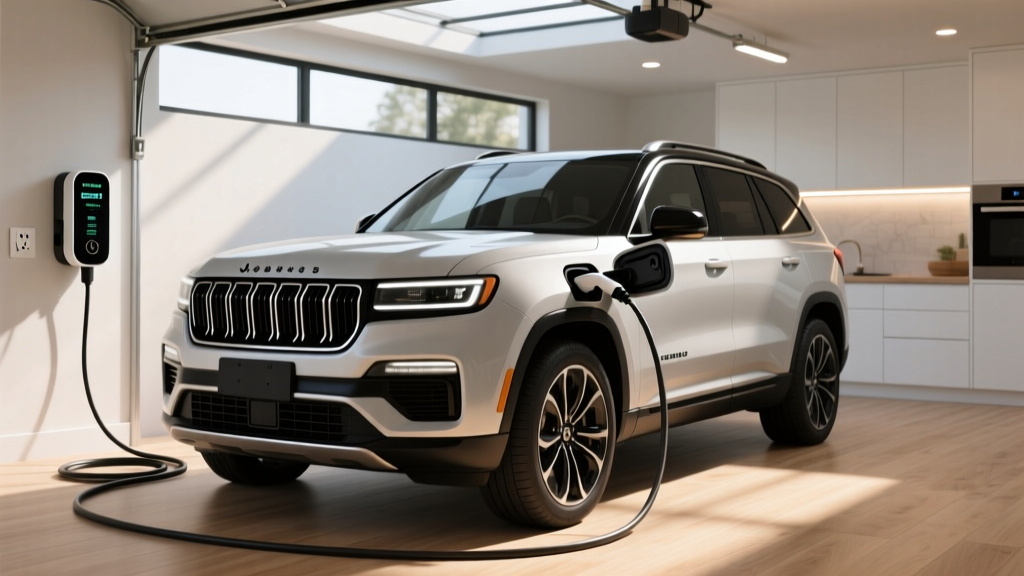
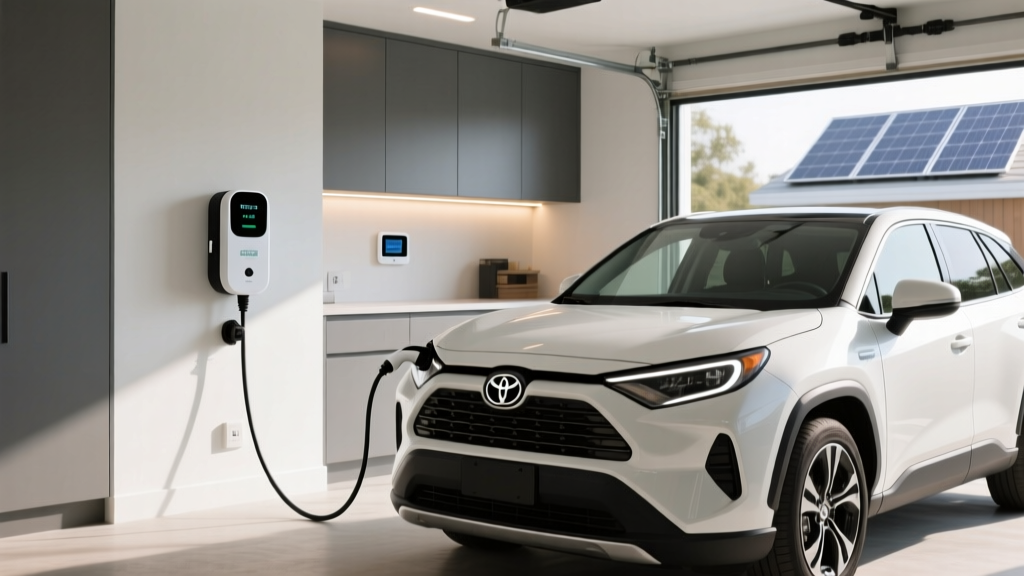
The WeaveGrid side of this partnership shines at home, where smart scheduling can cut your electricity costs significantly. But first, you need the hardware and the electrical infrastructure to support it.
Electrical Requirements for Level 2 Home Charging
A Level 2 home charger requires a dedicated 240V circuit. The most common configurations:
- 240V / 40A circuit → 32A continuous charge (9.6 kW) — adequate for most daily needs
- 240V / 50A circuit → 40A continuous charge (9.6 kW) — the NEMA 14-50 outlet standard
- 240V / 60A circuit → 48A continuous charge (11.5 kW) — maximum Level 2 speed for most EVs, including Rivian
The 80% continuous-load rule (NEC Article 210.20) means a 48A charger requires a 60A breaker. Your electrical panel must have the spare capacity to accommodate this — typically 200A service is sufficient for most modern homes, but older homes with 100A panels will likely need an upgrade.
Panel Upgrade Considerations
If your home has a 100A main panel, adding a 60A EV circuit may push you past safe capacity. A panel upgrade to 200A typically costs $1,500–$3,500 depending on your utility's requirements, conduit runs, and local permit fees. Some utilities offer rebates of $200–$500 for panel upgrades tied to EV adoption — check with your provider.
| Component | Low End | High End | Notes |
|---|---|---|---|
| Level 2 Charger (Equipment) | $350 | $750 | 32A–48A smart chargers |
| Electrician Labor | $400 | $1,500 | Depends on panel distance, conduit run |
| Electrical Permit | $50 | $250 | Varies by municipality |
| Panel Upgrade (if needed) | $1,500 | $3,500 | 100A → 200A service upgrade |
| Total (no panel upgrade) | $800 | $2,500 | Most homes with 200A service |
| Total (with panel upgrade) | $2,300 | $6,000 | Older homes with 100A panels |
Always hire a licensed electrician and pull a permit. Unpermitted EV charger installations can void home insurance claims and create fire-risk liabilities. A dedicated GFCI-protected circuit is required for outdoor installations per NEC 2023 code updates, and your charger should carry a NEMA 4 (outdoor) rating if mounted outside.
How Much Does It Cost to Install a Home EV Charger?
For most homes with existing 200A service and a short conduit run from the panel to the garage, expect to pay $800–$2,500 total (equipment + electrician + permit). If a panel upgrade is required, budget $2,300–$6,000. The IRS §30C Alternative Fuel Vehicle Refueling Property Credit covers up to 30% of home charging equipment and installation costs (capped at $1,000), subject to census-tract eligibility — consult a tax professional for your specific situation.
Connector Compatibility: NACS, CCS1, and Adapters
The connector landscape has shifted dramatically. As of 2026, NACS (the North American Charging Standard, originally Tesla's connector) has become the dominant standard for new EVs, including Rivian's 2025+ models. Ionna stations deploy both NACS and CCS1 cables at most locations.
| Connector | Brands Using It Natively | DC Fast Charge Standard | Adapter Needed? |
|---|---|---|---|
| NACS | Tesla, Rivian (2025+), Ford, GM, Hyundai, Kia, Volvo, Polestar | Primary at Tesla Superchargers, growing at Ionna/Electrify America | No (native); CCS→NACS adapters available for older vehicles |
| CCS1 | VW, BMW (some), legacy EVs (2024 and earlier) | Primary at Electrify America, EVgo, Ionna | NACS→CCS adapter needed for newer NACS vehicles at CCS-only stations |
| CHAdeMO | Nissan Leaf (legacy), Mitsubishi Outlander PHEV | Being phased out at most networks | Not compatible with NACS or CCS; limited adapter options |
Which connector/charger is compatible with my EV? If you own a 2025 or 2026 Rivian R1T or R1S, your vehicle has a native NACS port. You can charge at any NACS-equipped Ionna station or Tesla Supercharger without an adapter. For older CCS1-only stations, Rivian provides a CCS-to-NACS adapter (included with some trims, available for purchase separately at ~$200).
Charging Costs: Per-kWh, Per-Mile, and Gas Comparisons
One of the strongest arguments for the Rivian + WeaveGrid integration is cost optimization. WeaveGrid's platform can shift your home charging to off-peak windows when electricity rates drop, potentially saving 40–60% compared to unmanaged charging.
| Scenario | Cost per kWh | Efficiency | Cost per Mile | Annual Cost (12,000 mi) |
|---|---|---|---|---|
| Home Off-Peak (WeaveGrid managed) | $0.08–$0.12 | 2.0 kWh/mi (R1T) | $0.16–$0.24 | $1,920–$2,880 |
| Home Standard Rate | $0.14–$0.18 | 2.0 kWh/mi | $0.28–$0.36 | $3,360–$4,320 |
| Public Level 2 | $0.25–$0.40 | 2.0 kWh/mi | $0.50–$0.80 | $6,000–$9,600 |
| DC Fast Charging (Ionna/EA) | $0.35–$0.55 | 2.0 kWh/mi | $0.70–$1.10 | $8,400–$13,200 |
| Gasoline Truck (18 MPG combined) | $3.40/gal | 18 MPG | $0.19/mi (wait—) | $2,267 |
Correction on gas math: At $3.40/gal and 18 MPG, a comparable gas truck costs roughly $0.19 per mile, or $2,267 annually. Home off-peak EV charging at $0.10/kWh yields $0.20/mile — nearly identical. The savings compound when you factor in reduced maintenance (no oil changes, fewer brake replacements with regen braking) and available federal/state incentives. However, if you rely primarily on DC fast charging at $0.45/kWh, your per-mile cost rises to $0.90 — well above gasoline. The economics strongly favor home charging.
How much does charging cost per mile vs gas? For a Rivian R1T charged at home during off-peak hours: approximately $0.16–$0.24/mile. A comparable gas-powered full-size truck: approximately $0.19–$0.22/mile at current fuel prices. The break-even depends heavily on your local electricity rates and whether you can access off-peak pricing through WeaveGrid or your utility's managed-charging program.
Charging Time Examples: 10–80% for Common Battery Sizes
DC fast-charging speed is not a single number — it's a curve. A vehicle may peak at 220 kW but sustain that rate only between 10–40% SoC before tapering. Here are realistic 10–80% times for popular battery configurations:
- Rivian R1T Max Pack (141 kWh, NMC) at a 350 kW Ionna station: peaks at ~220 kW, 10–80% in approximately 28–32 minutes. Sustained average rate: ~155 kW.
- Rivian R1T Standard Pack (106 kWh, LFP) at a 350 kW station: peaks at ~180 kW, 10–80% in approximately 24–27 minutes. LFP chemistry tolerates higher sustained rates near the top of the curve.
- Hyundai Ioniq 5 (84 kWh, NMC) at 350 kW: peaks at ~240 kW (800V architecture), 10–80% in approximately 18 minutes — among the fastest in production.
- Tesla Model Y Long Range (78 kWh, NMC) at a V4 Supercharger: peaks at ~250 kW, 10–80% in approximately 20–23 minutes.
Key insight: preconditioning matters. The Rivian navigation system will warm the battery to optimal temperature (roughly 95–105°F) when you route to a DC fast charger. Arriving without preconditioning in cold weather can add 10–15 minutes to your 10–80% time. Always navigate to the charger through the vehicle's built-in routing rather than a third-party app to trigger preconditioning.
Recommended Home Charging Equipment for 2026
For Rivian owners and other NACS-equipped EVs, these Level 2 chargers offer the best combination of power, smart features, and WeaveGrid compatibility:
ChargePoint Home Flex (NACS)
- Power Output: Up to 11.5 kW (48A, 240V)
- Connector: NACS (native); CCS1 adapter available
- Cable Length: 23 feet
- Smart Features: Wi-Fi, app scheduling, utility demand-response compatible, WeaveGrid integration supported
- Price: ~$550
- Best For: Rivian owners wanting full 48A charging with smart utility integration
Wallbox Pulsar Plus (NACS)
- Power Output: Up to 11.5 kW (48A, 240V)
- Connector: NACS (2025+ models); CCS1 available
- Cable Length: 20 feet
- Smart Features: Wi-Fi + Bluetooth, Eco-Smart mode for solar integration, load balancing, utility program compatible
- Price: ~$499
- Best For: Homes with solar panels or tight panel capacity needing load management
Emporia Vue Level 2 Charger
- Power Output: Up to 11.5 kW (48A, 240V)
- Connector: NACS or J1772 (configurable)
- Cable Length: 24 feet
- Smart Features: Integrated whole-home energy monitoring, Time-of-Use scheduling, WeaveGrid and utility demand-response ready
- Price: ~$399
- Best For: Budget-conscious buyers who want energy monitoring bundled with the charger
All three chargers require hardwired installation for 48A operation (NEMA 14-50 plug-in is limited to 40A/9.6 kW by code). For Rivian R1T and R1S owners, the 48A/11.5 kW rate adds roughly 44 miles of range per hour of charging — enough to fully replenish a daily commute in under two hours.
Safety, Code, and Smart-Grid Considerations
Beyond the physical installation, several code and safety requirements apply to home EV charging in 2026:
- Dedicated Circuit: NEC requires a dedicated breaker for EVSE — you cannot share the circuit with other appliances.
- GFCI Protection: Outdoor installations require a GFCI breaker (NEC 2023, Article 625.54). Indoor garage installations may also require GFCI in some jurisdictions.
- Outdoor Rating: If your charger is mounted outside, it must carry at least a NEMA 4 rating for weather resistance. All three chargers recommended above meet this standard.
- Wire Gauge: 6 AWG copper for 48A circuits; 8 AWG for 40A circuits. Your electrician will size this based on run length and local code.
- WeaveGrid / Utility Managed Charging: Enrolling in a managed-charging program may give your utility the ability to pause or reduce your charging during peak demand events (typically 4–7 PM on summer weekdays). Most programs allow you to override this if needed, and they compensate you with bill credits of $5–$15/month.
Frequently Asked Questions
How fast will each charging level add range to my Rivian?
Level 1 (120V) adds approximately 3–5 miles per hour — only practical for overnight top-ups. Level 2 (240V, 48A) adds roughly 44 miles per hour to an R1T. DC fast charging at a 350 kW Ionna station can add up to 180+ miles in 15 minutes during the peak portion of the charge curve (roughly 10–40% SoC), tapering significantly above 80%.
Can I use Ionna stations if I don't drive a Rivian?
Yes. Ionna stations are open to all EVs equipped with NACS or CCS1 connectors. The Rivian-Ionna-WeaveGrid partnership focuses on software integration and routing, but the physical chargers serve all compatible vehicles. Pricing is per-kWh and set by Ionna, typically in the $0.35–$0.50/kWh range depending on location and time of day.
What electrical upgrades might I need for a home charger?
The most common upgrade is a panel capacity increase from 100A to 200A service ($1,500–$3,500). You may also need a new conduit run from the panel to the garage or exterior wall ($200–$800 depending on distance), and a permit ($50–$250). Homes built after 2000 typically already have 200A service and need only the dedicated circuit and outlet/hardwire.
Does WeaveGrid work with non-Rivian EVs?
WeaveGrid partners with multiple utilities and charger manufacturers, not exclusively Rivian. If your utility offers a WeaveGrid-managed demand-response program, you can typically enroll any smart Level 2 charger that supports the OpenADR or similar protocol. Check with your utility for enrolled charger compatibility.
Is the Rivian Adventure Network separate from Ionna?
Yes. Rivian's Adventure Network consists of Rivian-branded chargers at adventure-oriented locations (trailheads, national parks, ski areas). Ionna is a separate network built by the seven-automaker JV. Rivian vehicles can use both networks, and the navigation system integrates chargers from both, plus Tesla Superchargers and third-party networks like Electrify America and EVgo, into a single routing experience.