Understanding the Rivian Charging Network Map
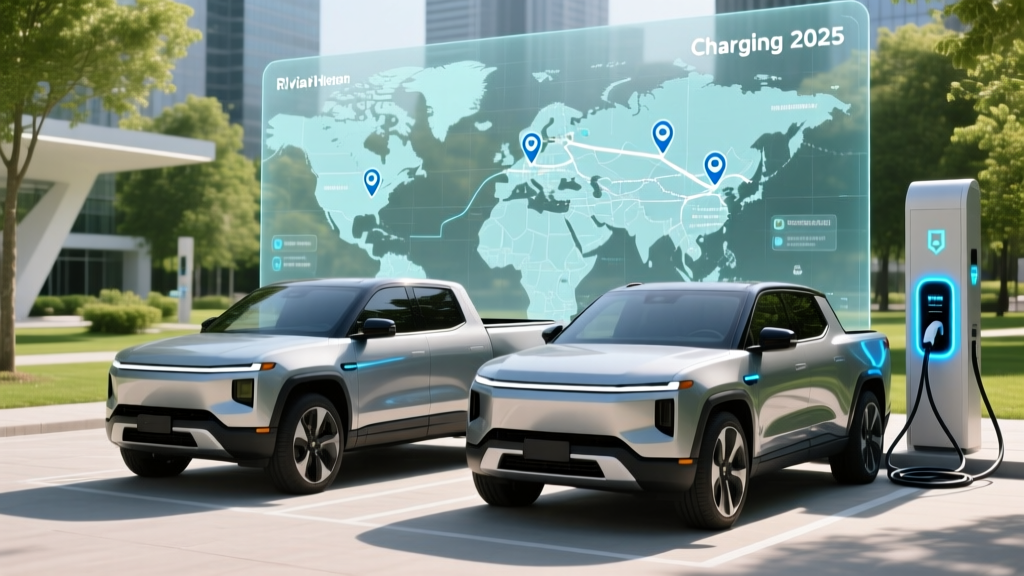
For Rivian R1T and R1S owners—or those considering joining the electric adventure-vehicle club—understanding where and how to charge is as critical as knowing your vehicle's EPA range. The Rivian charging network map isn't a single proprietary network like Tesla's Superchargers; instead, it's an aggregation of multiple networks that Rivian integrates into its in-dash navigation and mobile app. As of 2025, Rivian drivers can access over 50,000 charging points across North America, including the game-changing addition of Tesla Supercharger stations via the NACS adapter.
This guide breaks down the full Rivian charging ecosystem: the networks on the map, charging speeds at each level, home installation realities, connector compatibility, and what you'll actually pay per mile compared to gas. Whether you're planning an overland trip in your R1T Dual-Motor or commuting daily in an R1S Tri-Motor, these numbers will shape your ownership experience.
Charging Levels Explained: Speeds, Power, and Range Added
Before diving into the network map, let's establish the three charging levels every Rivian owner must know. The distinction between kW (kilowatts, a measure of power or charge rate) and kWh (kilowatt-hours, a measure of energy or battery capacity) is foundational. Your R1T's Large battery pack holds roughly 135 kWh of usable energy; a 150 kW DC fast charger can, at peak, push 150 kW of power into that pack.
| Level | Voltage / Amps | Max Power (kW) | Miles of Range Added per Hour | Typical Use Case |
|---|---|---|---|---|
| Level 1 | 120V / 12A | ~1.4 kW | ~3–4 mi/hr | Emergency / overnight trickle |
| Level 2 (Home) | 240V / 48A | ~11.5 kW | ~25–30 mi/hr | Daily home charging |
| Level 2 (Public) | 240V / 32–80A | 7.7–19.2 kW | ~18–45 mi/hr | Workplace, hotels, retail |
| DC Fast Charging | 400V+ DC | Up to 200+ kW | ~200+ mi in 20 min (peak) | Road trips, highway corridors |
Real-world note: DC fast charging speeds peak only between roughly 10–30% State of Charge (SoC). Above 80%, the charge curve tapers significantly to protect battery health. Rivian's Large pack (135 kWh usable, NMC chemistry) can accept up to 200 kW peak on compatible chargers, achieving a 10–80% charge in approximately 40–45 minutes at a 150+ kW station. The Standard pack (~106 kWh usable, LFP chemistry on 2025 models) charges somewhat slower in absolute kW but benefits from LFP's tolerance for regular 100% charging.
What's on the Rivian Charging Network Map?
The Rivian Adventure Network, as displayed in the vehicle's navigation and the Rivian app, aggregates several sources:
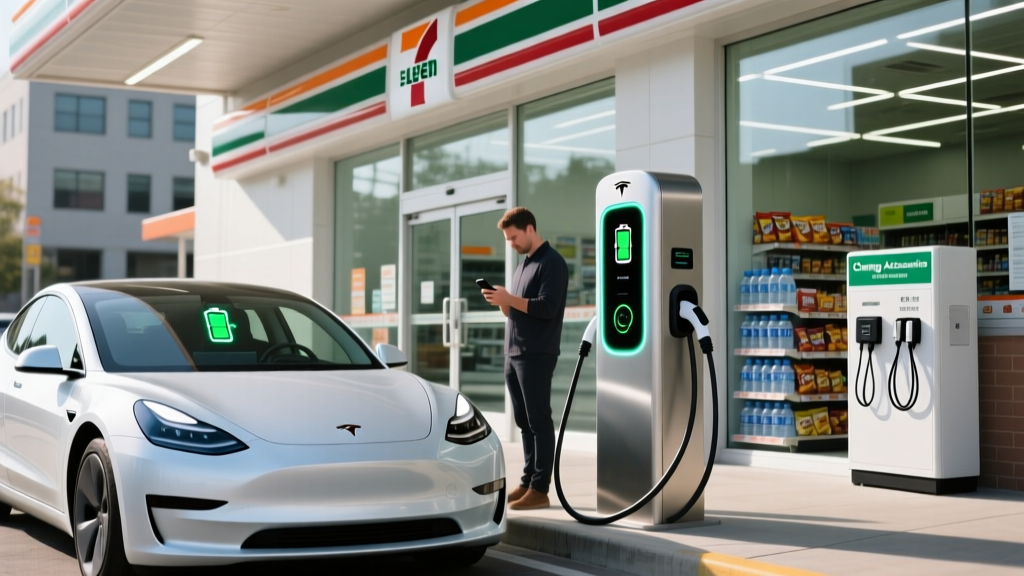
- Tesla Superchargers (NACS): Starting in 2024, Rivian began providing NACS adapters to owners, unlocking access to 15,000+ Tesla Supercharger stalls across North America. By mid-2025, Rivian vehicles are shipping with native NACS ports, eliminating the adapter requirement. Tesla Superchargers offer up to 250 kW (V3 stalls) and are widely regarded as the most reliable DC fast-charging network.
- Rivian Adventure Network (Proprietary): Rivian has installed its own chargers at select adventure-oriented destinations—trailheads, national park gateways, and partner lodging. These are typically Level 2 (up to 11.5 kW) or DC fast (up to 150 kW) and are strategically placed for the overlanding lifestyle. Locations include areas near Moab, Zion, and select Basecamp partners.
- Third-Party DC Networks: Electrify America, EVgo, and ChargePoint stations appear on the Rivian map. These use CCS1 connectors natively on 2024 and earlier Rivians. Electrify America stations offer up to 350 kW, though the R1T/R1S will accept only what its onboard system allows (~200 kW peak).
- Level 2 Public Chargers: Thousands of J1772/CCS Level 2 stations at grocery stores, parking garages, and workplaces populate the map for opportunistic top-ups.
Connector Compatibility: NACS, CCS1, and Adapter Requirements
The connector landscape shifted dramatically in 2024–2025 as the industry converged on the North American Charging Standard (NACS), originally Tesla's proprietary plug. Here's where Rivian stands:
| Connector | 2022–2024 R1T/R1S | 2025+ R1T/R1S | Adapter Needed? |
|---|---|---|---|
| NACS (Tesla) | Via Rivian-provided adapter | Native port | 2022–24: Yes (included); 2025+: No |
| CCS1 | Native port | Via NACS-to-CCS adapter | 2022–24: No; 2025+: Yes (aftermarket) |
| CHAdeMO | Via CCS-to-CHAdeMO adapter | Not recommended | Yes (rare, legacy network) |
| J1772 (Level 2) | Via included J1772-to-NACS/CCS adapter | Via included adapter | Yes (included with vehicle) |
Practical advice: If you own a 2022–2024 Rivian, the NACS adapter is essential for Supercharger access. Request one through Rivian if you haven't already. For 2025+ owners with native NACS, purchase an aftermarket NACS-to-CCS1 adapter (~$200–$300 from brands like Lectron or A2Z) if you want to retain access to Electrify America or EVgo's CCS-only stalls. CHAdeMO is effectively a legacy standard in the U.S. and rarely needed.
Home Charging Installation: Costs, Electrical Requirements, and Upgrades
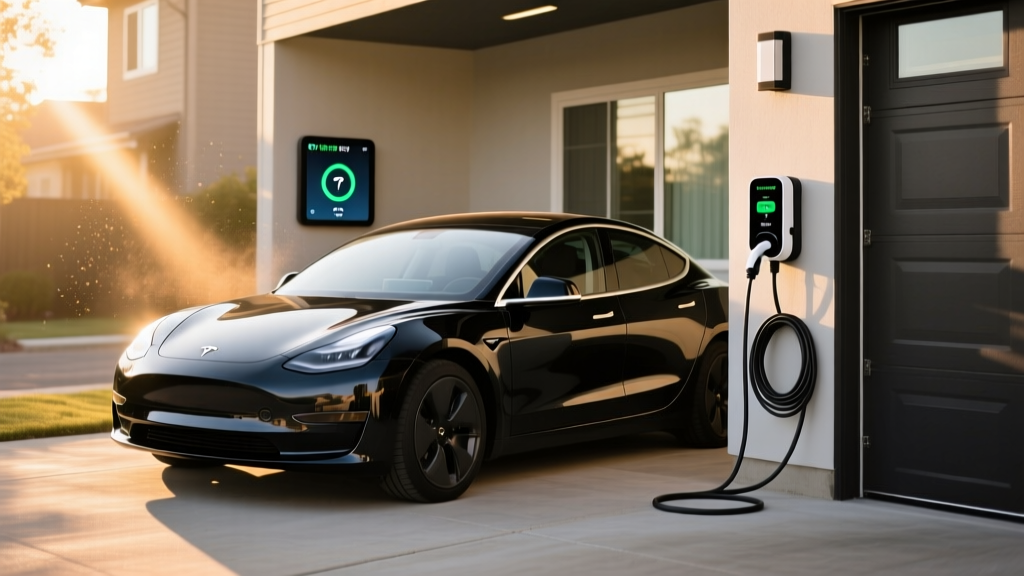
Most Rivian owners do 80% or more of their charging at home. Setting up a proper Level 2 station requires understanding your home's electrical capacity and budgeting for professional installation.
Electrical Requirements for Rivian Home Charging
The Rivian Wall Charger delivers up to 11.5 kW (240V / 48A) and requires a dedicated 60-amp circuit (EV chargers must operate at 80% of circuit capacity per NEC code, so a 48A charger needs a 60A breaker). Key considerations:
- Panel capacity: Most modern homes with 200-amp service can accommodate a 60A EV circuit. Older homes with 100A service may need a panel upgrade ($1,500–$3,500) or a lower-amperage charger (e.g., 32A on a 40A circuit).
- Wire gauge: A 60A circuit typically requires 6 AWG copper wire; runs over 100 feet may need 4 AWG to minimize voltage drop.
- Permit: Most jurisdictions require an electrical permit for EV charger installation ($50–$250 depending on locality).
- GFCI protection: NEC 2020 and later require GFCI breakers for EV charging circuits in garages, adding ~$50–$100 to material costs.
| Component | Cost Range | Notes |
|---|---|---|
| Rivian Wall Charger (hardware) | $550–$750 | 11.5 kW, 25-ft cable, Wi-Fi enabled |
| Electrician labor (standard install) | $500–$1,500 | Short run from panel, garage mount |
| Electrician labor (complex install) | $1,500–$3,000 | Long wire run, conduit, outdoor mount |
| Electrical permit | $50–$250 | Varies by municipality |
| Panel upgrade (if needed) | $1,500–$3,500 | 100A to 200A service upgrade |
| Total (typical, no panel upgrade) | $1,100–$2,500 | Most homeowners fall in this range |
| Total (with panel upgrade) | $2,600–$6,250 | Older homes may require this |
Alternative chargers: If the Rivian Wall Charger doesn't suit your needs, excellent third-party options include the ChargePoint Home Flex (up to 12 kW / 50A, ~$650, adjustable amperage for older panels), the Emporia Vue Level 2 (up to 11.5 kW / 48A, ~$400, budget-friendly with energy monitoring), and the Enel X JuiceBox Pro (up to 11.5 kW / 48A, ~$600, smart scheduling features). All use a J1772 connector; you'll plug your Rivian's included J1772 adapter into them.
Safety and Code Considerations
- Always use a licensed electrician familiar with NEC Article 625 (EV charging systems).
- Outdoor installations require a NEMA 4-rated (weatherproof) enclosure and in-use cover.
- Hardwired installations are preferred over NEMA 14-50 outlets for reliability—outlets can loosen over time with the sustained high-current draw of EV charging.
- Some utilities offer rebates of $250–$1,000 for home charger installation; check with your local provider.
Cost to Charge: Home vs. Public vs. Gas
One of the strongest economic arguments for the R1T and R1S is the per-mile fuel cost. Let's run the numbers using a 2025 R1T Dual-Motor Large Battery (EPA-estimated 352 miles range, ~135 kWh usable, combined efficiency of ~2.1 kWh/mile or ~70 MPGe per fueleconomy.gov).
| Scenario | Cost per kWh or Gallon | Cost per Mile (R1T) | Comparable Gas Truck (18 MPG combined) |
|---|---|---|---|
| Home charging (off-peak utility rate) | $0.12/kWh | $0.25/mi | $0.21/mi (at $3.80/gal) |
| Home charging (national avg residential) | $0.17/kWh | $0.36/mi | $0.21/mi |
| Public Level 2 (ChargePoint, etc.) | $0.25–$0.35/kWh | $0.53–$0.74/mi | $0.21/mi |
| DC Fast Charging (Electrify America) | $0.35–$0.48/kWh | $0.74–$1.01/mi | $0.21/mi |
| Tesla Supercharger (avg 2025) | $0.28–$0.36/kWh | $0.59–$0.76/mi | $0.21/mi |
The honest math: Home charging on an off-peak rate is where the R1T beats a gas truck. At the national average residential rate of ~$0.17/kWh, the Rivian is slightly more expensive per mile than an efficient gas truck at today's fuel prices. On road trips relying on DC fast charging, the R1T will cost more per mile than gasoline. The savings case for an electric truck depends heavily on home charging access, local electricity rates, and whether your utility offers time-of-use (TOU) plans with cheap overnight rates.
• R1T Large Battery (135 kWh) at 200 kW DC fast charger: ~40–45 minutes
• R1T Large Battery at 150 kW charger: ~50–55 minutes
• R1T Standard Battery (106 kWh, LFP) at 150 kW charger: ~40–45 minutes
• R1T at home Level 2 (11.5 kW): ~9–10 hours for a full 0–100% charge
• R1T on Level 1 (1.4 kW): ~96 hours (4 full days) for 0–100%—emergency use only
Equipment Recommendations: Best Home Chargers for Rivian Owners
Whether you choose Rivian's own hardware or a third-party unit, here are the top-performing Level 2 chargers compatible with the R1T and R1S, evaluated on power output, cable length, smart features, and value.
Rivian Wall Charger
Power: 11.5 kW (48A, 240V)
Cable: 25 ft
Connector: NACS (native, 2025+ compatible)
Smart features: Wi-Fi, Rivian app integration, scheduled charging
Price: ~$650
Best for: Seamless integration with your Rivian's ecosystem and native NACS plug.
ChargePoint Home Flex
Power: Up to 12 kW (50A, 240V); adjustable down to 16A
Cable: 23 ft
Connector: J1772 (use Rivian adapter)
Smart features: Wi-Fi, ChargePoint app, Alexa, adjustable amperage
Price: ~$650
Best for: Homes with limited panel capacity—adjustable amps let you dial down to fit a 40A circuit.
Emporia Vue Level 2
Power: Up to 11.5 kW (48A, 240V)
Cable: 24 ft
Connector: J1772
Smart features: Wi-Fi, energy monitoring, solar integration
Price: ~$400
Best for: Budget-conscious buyers who want real-time energy tracking.
Grizzl-E Smart
Power: Up to 10 kW (40A, 240V)
Cable: 24 ft
Connector: J1772
Smart features: OCPP-compatible, app control, extreme cold rated (-40°F)
Price: ~$500
Best for: Cold-climate owners—built in Canada, rated for harsh winters.
Frequently Asked Questions
How much does it cost to install a home EV charger for my Rivian?
A typical installation with the Rivian Wall Charger runs $1,100–$2,500 including hardware, electrician labor, and permit—assuming your electrical panel has capacity for a 60A circuit. If your home needs a panel upgrade from 100A to 200A service, expect total costs of $2,600–$6,250. Always get quotes from 2–3 licensed electricians and confirm they pull a permit.
How fast will each charging level add range to my R1T or R1S?
Level 1 (120V) adds about 3–4 miles per hour—barely enough for daily driving. Level 2 at 240V/48A adds roughly 25–30 miles per hour, fully replenishing the Large Battery overnight. DC fast charging at 150+ kW can add approximately 140 miles of range in 20 minutes at peak speed (10–30% SoC), though the charge curve tapers significantly above 80%.
Which connector and charger is compatible with my Rivian?
2022–2024 R1T and R1S vehicles have a native CCS1 port and can access Tesla Superchargers via the Rivian-provided NACS adapter. 2025+ models ship with a native NACS port and require an aftermarket NACS-to-CCS adapter for non-Tesla DC fast chargers. For Level 2 home and public charging, all Rivians use a J1772 adapter (included with the vehicle).
How much does charging cost per mile versus gas?
At home on off-peak electricity ($0.12/kWh), the R1T costs roughly $0.25 per mile—competitive with a gas truck at current fuel prices. On the national average residential rate ($0.17/kWh), it's about $0.36/mile. Public DC fast charging ($0.35–$0.48/kWh) pushes the cost to $0.74–$1.01 per mile, which is more expensive than gasoline. The economic case for an electric truck hinges on consistent home charging access.
What electrical upgrades might I need for a home charger?
If your home has a 200-amp electrical panel with available breaker slots, you likely need no upgrade. Homes with 100-amp service, older wiring, or panels near capacity may require a service upgrade ($1,500–$3,500), a sub-panel installation, or a lower-amperage charger (e.g., 32A instead of 48A). A licensed electrician can perform a load calculation to determine your options. Some utilities offer alternative fuel refueling property credits that may offset installation costs—consult a tax professional for eligibility.
Can I use Tesla Superchargers with my Rivian?
Yes. As of 2024, Rivian owners can access Tesla's Supercharger network using the provided NACS adapter (2022–2024 models) or natively (2025+ models). The Rivian navigation system and app now display Supercharger locations on the charging network map. Expect peak speeds of up to 250 kW at V3 Supercharger stalls, though the R1T's onboard acceptance rate caps at approximately 200 kW.
For the latest Rivian charging network updates, always check the Rivian charging page and your vehicle's over-the-air software release notes, which frequently expand network integration and routing features.