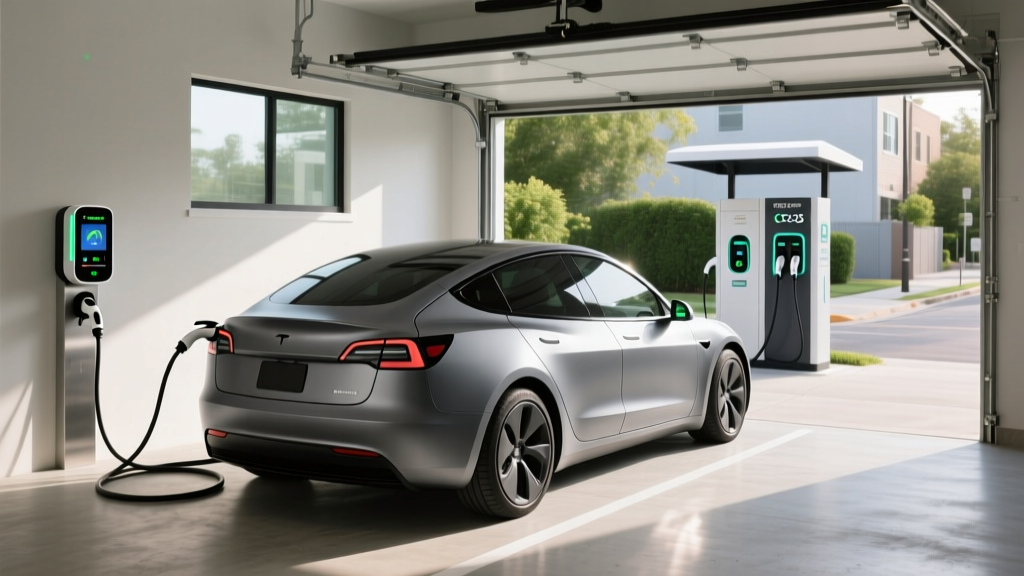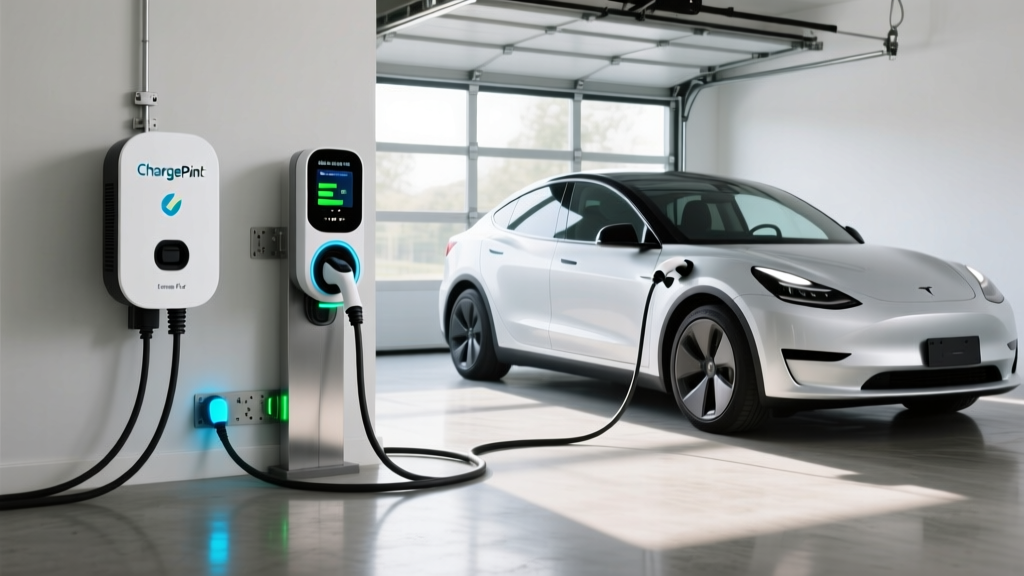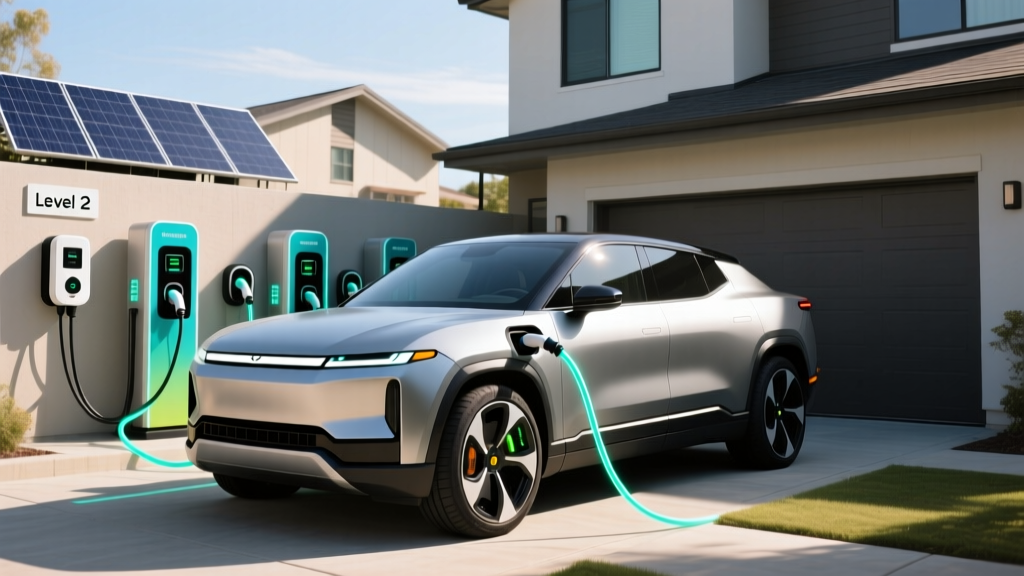
If you own or are considering a Rivian R1T or R1S, understanding the Rivian charging network — and the broader charging ecosystem available to Rivian owners — is essential for daily driving and road trips alike. Rivian has built a targeted charging strategy that combines its proprietary Adventure Network with broad compatibility across third-party DC fast chargers and, increasingly, Tesla Superchargers via NACS adapter. This guide breaks down exactly how fast each charging level adds range, what home installation costs, which connectors you need, and what you will actually pay per mile.
Rivian Charging Levels Explained: Speeds, kW, and Range Added
Every EV charges at one of three levels. The critical distinction: kW (kilowatts) measures charging power — how fast energy flows into the battery. kWh (kilowatt-hours) measures energy capacity — how much the battery holds. A Rivian R1T Dual-Motor carries a 128.9 kWh (usable) battery pack; the Standard pack holds 92.5 kWh usable. The larger the battery, the longer any given kW rate takes to fill it.
| Level | Voltage / Power | Peak kW | Miles of Range Added per Hour | Typical Use Case |
|---|---|---|---|---|
| Level 1 | 120V / 1.4 kW | 1.4 kW | ~3-5 mi/hr | Emergency / trickle top-up |
| Level 2 (Home) | 240V / 7.7-19.2 kW | 11.5 kW (Rivian Wall Charger) | ~25-30 mi/hr | Daily home charging |
| DC Fast Charging | 400V+ / 50-220+ kW | ~200 kW peak (Quad-Motor) | ~140-190 mi in 20 min | Road trips, Adventure Network |
Home Charger Installation: Electrical Requirements, Costs, and Panel Upgrades
Most Rivian owners install a 240V Level 2 home charger for overnight replenishment. The Rivian Wall Charger delivers up to 11.5 kW (48 amps) on a dedicated 60-amp circuit. Here is what the installation actually requires and costs.
Electrical Requirements
- Circuit: Dedicated 60-amp breaker for 48A continuous charging (NEC requires circuits rated 125% of continuous load)
- Wiring: 6 AWG copper (or 4 AWG aluminum) for runs up to ~100 feet; thicker gauge for longer runs
- Panel capacity: Your home's main service panel must have at least 60 amps of spare capacity. Many older 100-amp or 150-amp panels will need an upgrade to 200 amps.
- Permit: Required in nearly all US jurisdictions — typically $50-$250 depending on locality
- GFCI protection: NEC 2020+ requires GFCI protection for outdoor receptacles; hardwired chargers may bypass this requirement in some jurisdictions
| Component | Low Estimate | High Estimate | Notes |
|---|---|---|---|
| Level 2 Charger (Equipment) | $400 | $700 | Rivian Wall Charger ~$550; third-party smart chargers $400-$700 |
| Electrician Labor | $500 | $2,000 | Depends on panel proximity, wall type, conduit run length |
| Electrical Permit | $50 | $250 | Varies by municipality |
| Panel Upgrade (if needed) | $1,500 | $4,000 | 100A to 200A service upgrade; not always required |
| Total (No Panel Upgrade) | $950 | $2,950 | Typical for modern 200A homes |
| Total (With Panel Upgrade) | $2,450 | $6,950 | Older homes with 100-150A service |
Rivian Adventure Network and Public Charging Compatibility
The Rivian charging network — officially called the Rivian Adventure Network — is a growing system of DC fast chargers strategically placed near outdoor recreation areas, national parks, and adventure corridors. As of early 2026, Rivian has deployed chargers at dozens of locations with plans for continued expansion. These chargers feature CCS1 connectors natively and deliver up to 200+ kW to compatible Rivian vehicles.
However, the Adventure Network is a supplement, not a replacement, for broader public charging infrastructure. Rivian owners rely on a combination of networks:
- Rivian Adventure Network: Proprietary DC fast chargers at adventure destinations; CCS1 connector; integrated into Rivian's in-dash navigation for routing and preconditioning.
- Electrify America, EVgo, ChargePoint: Major third-party DC fast-charging networks with CCS1 connectors widely compatible with Rivian vehicles.
- Tesla Supercharger Network (via NACS adapter): Starting in 2024-2025, Rivian began offering a NACS (North American Charging Standard) adapter enabling access to Tesla's V3 and V4 Superchargers. This dramatically expands fast-charging coverage for road trips. The adapter is available through Rivian's gear shop.
| Connector Type | Native on Rivian? | Adapter Needed? | Network Access |
|---|---|---|---|
| CCS1 | Yes (all R1T/R1S models) | No | Rivian Adventure Network, Electrify America, EVgo, most public DCFC |
| NACS (Tesla) | No (2025+ models may transition) | Yes — Rivian NACS Adapter (~$250) | Tesla Supercharger V3/V4 stations (17,000+ stalls in US) |
| CHAdeMO | No | Not recommended / unavailable | Largely deprecated in North America |
| J1772 (Level 2 AC) | Yes (via included mobile charger) | No | Public Level 2 stations, home outlets |
For 2026 model-year Rivians, monitor whether your specific build date includes a native NACS port (Rivian has announced a transition). Earlier models with CCS1 ports will continue to work with the NACS adapter indefinitely. According to Rivian's official charging page, the adapter supports up to the maximum charge rate the vehicle hardware allows.
Cost to Charge a Rivian: Home vs. Public vs. Gas Comparison
The economics of charging a Rivian R1T or R1S depend heavily on where and when you plug in. Here are real cost scenarios based on the R1T Dual-Motor's EPA efficiency of approximately 41-44 kWh/100 miles (roughly 2.0-2.4 miles per kWh depending on configuration), per fueleconomy.gov.
| Scenario | Rate | Cost per 100 Miles | Cost per Mile |
|---|---|---|---|
| Home Charging (off-peak utility rate) | $0.12/kWh | $4.92 - $5.28 | $0.05 - $0.053 |
| Home Charging (average US residential) | $0.17/kWh | $6.97 - $7.48 | $0.07 - $0.075 |
| Public Level 2 (e.g., ChargePoint) | $0.25-$0.35/kWh | $10.25 - $15.40 | $0.10 - $0.15 |
| DC Fast Charging (Electrify America) | $0.35-$0.50/kWh | $14.45 - $22.00 | $0.14 - $0.22 |
| Tesla Supercharger (via adapter) | $0.28-$0.40/kWh | $11.48 - $17.60 | $0.11 - $0.18 |
| Gas Truck (20 MPG, $3.50/gal) | $3.50/gallon | $17.50 | $0.175 |
The takeaway: Home charging on off-peak rates makes the Rivian R1T roughly 70% cheaper per mile than a comparable gas truck. Even DC fast charging on the road is often cost-competitive with gas, especially on networks with membership pricing. However, exclusive reliance on premium-priced public DC fast chargers can narrow or eliminate the cost advantage.
Recommended Home Charging Equipment for Rivian Owners
The Rivian Wall Charger is the default choice, but several third-party chargers offer compelling features. All recommendations below support the J1772 connector standard used by Rivian for AC Level 2 charging.
Rivian Wall Charger
- Power: 11.5 kW (48A)
- Connector: J1772
- Cable Length: 25 ft
- Smart Features: Wi-Fi, Rivian app integration, scheduled charging
- Price: ~$550
- Best For: Seamless Rivian ecosystem integration
ChargePoint Home Flex
- Power: Up to 12 kW (50A), configurable 16-50A
- Connector: J1772
- Cable Length: 23 ft
- Smart Features: Wi-Fi, app scheduling, Alexa, amperage adjustment
- Price: ~$550-$650
- Best For: Flexible amperage for older panels
Emporia Vue EV Charger
- Power: Up to 11.5 kW (48A)
- Connector: J1772
- Cable Length: 24 ft
- Smart Features: Energy monitoring, solar integration, load management
- Price: ~$400-$500
- Best For: Solar-home owners, budget-conscious buyers
Grizzl-E Smart
- Power: Up to 10 kW (40A)
- Connector: J1772
- Cable Length: 24 ft
- Smart Features: Wi-Fi, OCPP support, extreme cold rated (-40°F)
- Price: ~$450-$550
- Best For: Cold-climate garages, durability focus
DC Fast Charging Times: Rivian Battery Pack Sizes
Charging speed depends on battery size, charger output, battery temperature, and state of charge. Below are estimated 10-80% DC fast charging times for current Rivian configurations when connected to a capable 200+ kW charger with a preconditioned battery.
- Standard Pack (92.5 kWh usable): ~25-35 minutes (10-80%)
- Large Pack (128.9 kWh usable): ~30-40 minutes (10-80%)
- Max Pack (149 kWh usable, R1T only): ~35-45 minutes (10-80%)
Safety, Code, and Installation Best Practices
EV charger installation is electrical work that must meet the National Electrical Code (NEC) and your local jurisdiction's requirements. Key considerations:
- Dedicated circuit: Your Level 2 charger must be on its own dedicated breaker — never shared with other appliances.
- Hardwired vs. plug-in: Hardwired installations (no NEMA outlet) avoid GFCI requirements in many jurisdictions and offer a cleaner install. Plug-in (NEMA 14-60) offers portability but may require GFCI breakers that can nuisance-trip.
- Outdoor rating: If installing outside, ensure the charger carries a NEMA 4 or IP65 weather rating. All recommended chargers above are outdoor-rated.
- Permit and inspection: Skipping permits risks insurance claim denials and code violations. Most jurisdictions require a final inspection.
- Utility rebates: Many utilities offer $250-$1,000 rebates for Level 2 charger installation, sometimes requiring a dedicated meter or time-of-use rate enrollment. Check with your local utility before purchasing equipment.
Frequently Asked Questions
How much does it cost to install a home EV charger for a Rivian?
Expect $950-$2,950 for a typical installation in a home with an adequate 200-amp electrical panel. If your home needs a panel upgrade from 100A or 150A to 200A, add $1,500-$4,000. The Rivian Wall Charger itself costs approximately $550, and electrician labor typically ranges from $500-$2,000 depending on the complexity of the wire run from your panel to the charger location.
How fast will each charging level add range to my Rivian R1T?
Level 1 (120V standard outlet) adds approximately 3-5 miles of range per hour — useful only for overnight trickle charging or emergencies. Level 2 (240V home charger at 11.5 kW) adds roughly 25-30 miles per hour, fully replenishing a Large Pack overnight in about 11-12 hours. DC fast charging at 200 kW can add up to 140-190 miles in approximately 20 minutes, depending on pack size and state of charge.
Which connector and charger is compatible with my Rivian?
All current Rivian R1T and R1S vehicles use a CCS1 connector for DC fast charging and a J1772 connector for Level 2 AC charging. For Tesla Supercharger access, you will need Rivian's official NACS adapter (approximately $250). For home Level 2 charging, any J1772-compatible charger works — the Rivian Wall Charger, ChargePoint Home Flex, and Emporia Vue are all excellent choices.
How much does charging a Rivian cost per mile compared to gas?
At the US average residential electricity rate of $0.17/kWh, charging a Rivian R1T Dual-Motor costs approximately $0.07-$0.075 per mile — about 57% less than a gas truck getting 20 MPG at $3.50/gallon ($0.175/mile). Off-peak home charging at $0.12/kWh drops to roughly $0.05/mile. Public DC fast charging at $0.35-$0.50/kWh ranges from $0.14-$0.22/mile, still competitive with gas in most scenarios.
What electrical upgrades might I need for a Rivian home charger?
The most common upgrade is a panel service increase from 100A or 150A to 200A, costing $1,500-$4,000. Even with a 200A panel, you may need a load calculation to confirm 60 amps of spare capacity. Alternatives include installing a lower-amperage charger (e.g., 32A/7.7 kW on a 40A circuit) or using a smart load-management device that dynamically reduces charger draw when other appliances activate. Consult a licensed electrician for a site-specific assessment.
Can I use Tesla Superchargers with my Rivian?
Yes. Rivian offers an official NACS adapter that enables R1T and R1S vehicles to charge at Tesla Supercharger V3 (250 kW) and V4 stations. The adapter costs approximately $250 and is available through Rivian's gear shop. Tesla Supercharger locations appear in the Rivian navigation system once the adapter is paired. This access adds over 17,000 fast-charging stalls to your road-trip network. Note that some older V2 Superchargers (150 kW) may require a CCS-to-NACS adapter configuration — check Rivian's support documentation for your specific model year.