Rivian's R1T and R1S are among the few consumer EVs in the U.S. that support bidirectional charging — the ability to push energy out of the vehicle's large battery pack, not just pull it in. For the 2025 and 2026 model years, Rivian offers Vehicle-to-Load (V2L) on all R1 dual-motor and tri-motor configurations, and is rolling out Vehicle-to-Home (V2H) capability through a partnership with Wallbox and compatible home energy systems. If you're evaluating a Rivian for its power-export potential, or just need a clear-eyed guide to charging one at home and on the road, this breakdown covers the exact numbers.
What Rivian Bidirectional Charging Actually Does
Bidirectional charging comes in three flavors, and Rivian currently supports two of them:
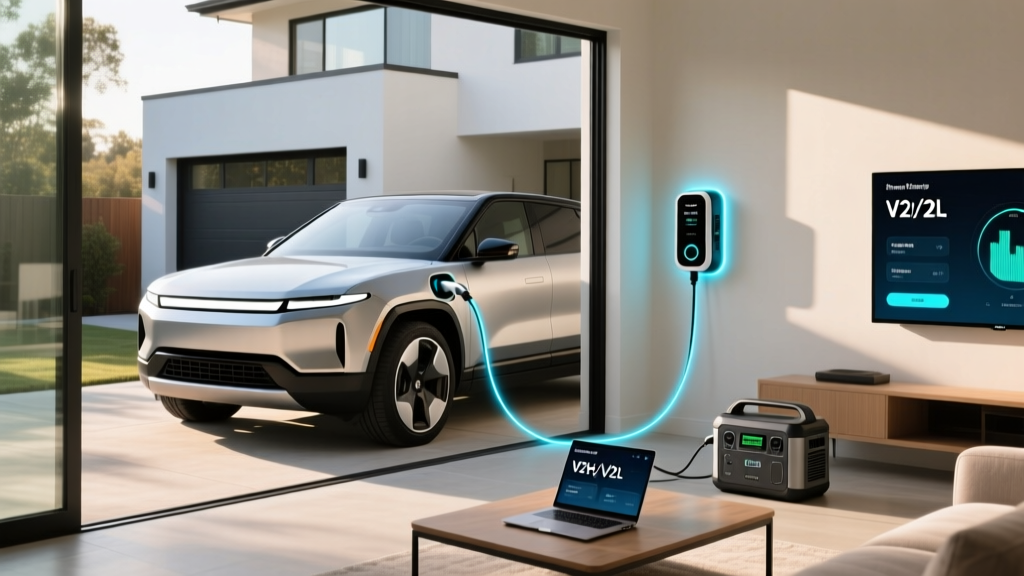
- V2L (Vehicle-to-Load): Powers external devices directly — tools, appliances, camping gear, job-site equipment. The R1T's bed outlet and cabin outlets deliver up to 3.6 kW continuous (120V/240V AC), enough to run a circular saw, a full-size refrigerator, or multiple smaller loads simultaneously.
- V2H (Vehicle-to-Home): Feeds power back into your home's electrical panel during an outage. Rivian's V2H system, paired with the Wallbox Quasar 2 or a compatible bidirectional charger and a transfer switch, can supply up to 11.5 kW to your home — sufficient to run essential circuits (refrigerator, HVAC blower, lights, well pump) for days using the R1's 106–149 kWh usable battery.
- V2G (Vehicle-to-Grid): Sends power back to the utility grid for demand-response credits. Rivian has not announced consumer V2G support as of 2026; this remains limited to pilot programs with specific utilities.
The R1T's Large Pack (128.9 kWh usable, NMC chemistry) and Max Pack (149 kWh usable) are particularly well-suited to V2H. At a sustained 7 kW home draw, a Max Pack R1T can power an average U.S. home (roughly 30 kWh/day) for 4–5 days before hitting a 10% state-of-charge floor.
Charging Levels: Speeds and Range Added Per Hour
Before discussing bidirectional export, it's essential to understand how energy flows into the vehicle. EV charging is measured in kW (kilowatts) — the rate of power delivery — while battery capacity is measured in kWh (kilowatt-hours) — the total energy stored. Confusing the two is the single most common EV mistake.
| Level | Voltage / Amperage | Max Power (kW) | Miles of Range Added Per Hour | 0–80% Time (est.) |
|---|---|---|---|---|
| Level 1 (120V household) | 120V / 12A | 1.4 kW | ~3–4 mi/hr | ~70+ hours |
| Level 2 (240V home/public) | 240V / 48A | 11.5 kW | ~30–35 mi/hr | ~9–10 hours |
| DC Fast Charging | 400V architecture | 200 kW peak | ~200+ mi in 20 min | 10–80% in ~28 min |
Real-world caveat: The 200 kW peak DC fast-charge rate applies only between roughly 10–40% state of charge. Above 60% SoC, the charge curve tapers significantly — expect ~80 kW from 60–80%, and ~30 kW from 80–100%. This taper protects battery longevity but means the last 20% takes nearly as long as the first 60%. On a road trip, charge to 80% and drive.
Home Charger Installation: Electrical Requirements and Cost
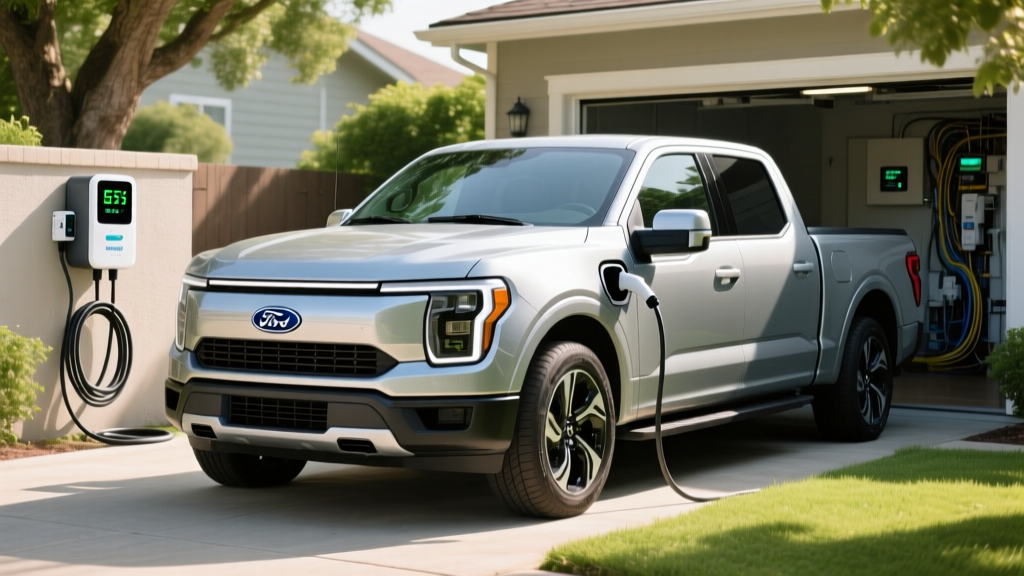
To unlock Rivian's full Level 2 charging rate of 11.5 kW (and to enable V2H bidirectional flow), you need a properly sized 240V circuit and a compatible charger. Here's what the electrical side looks like.
Electrical Specifications
- Circuit requirement: 60-amp dedicated breaker (for a 48A continuous charger) or 50-amp breaker (for a 40A charger).
- Wire gauge: 6 AWG copper (THHN in conduit) for 48A; 8 AWG for 40A.
- Panel capacity: Most modern 200-amp panels can accommodate a 60A EV circuit. Older 100A or 150A panels may require a panel upgrade ($1,500–$3,500) or a load-management device like the Emporia Load Management Controller (~$200) that throttles the charger when other circuits are heavily loaded.
- Permit: Required in nearly all U.S. jurisdictions for new 240V circuits. Typical cost: $50–$200.
- GFCI: NEC 2020 and later require GFCI protection on 240V receptacles in garages. Hardwired chargers avoid this requirement and are generally preferred.
| Line Item | Typical Range | Notes |
|---|---|---|
| Level 2 Charger (Equipment) | $400–$700 | Wallbox Pulsar Plus, ChargePoint Home Flex, Emporia Level 2 |
| Bidirectional Charger (V2H) | $1,500–$3,000 | Wallbox Quasar 2 or equivalent (when available) |
| Electrician Labor | $600–$2,500 | Depends on panel proximity, conduit run length, drywall work |
| Electrical Permit | $50–$200 | Varies by municipality |
| Panel Upgrade (if needed) | $1,500–$3,500 | 100A → 200A service upgrade |
| Transfer Switch (for V2H) | $500–$1,200 | Manual or automatic; required for home backup |
| Total (standard Level 2) | $1,050–$3,400 | Without panel upgrade |
| Total (V2H bidirectional) | $3,500–$7,900 | Including charger, transfer switch, and labor |
The IRS §30D credit does not cover home charger installation for most taxpayers after 2022 — the residential alternative-fuel infrastructure credit (§30C) expired for most installations, though it was partially revived for low-income census tracts. Check your eligibility with a tax professional.
Connector Compatibility: NACS, CCS1, and Rivian's Network
Rivian's connector situation evolved significantly between 2024 and 2026. Here's where things stand:
| Model Year | Built-In Port | Tesla Supercharger Access | CCS1 Charging | CHAdeMO |
|---|---|---|---|---|
| 2022–2024 R1T/R1S | CCS1 | Via Rivian-provided NACS adapter (free for owners) | Native | No (adapters discontinued) |
| 2025–2026 R1T/R1S | NACS (native) | Native — no adapter needed | Via NACS-to-CCS adapter (~$200–$250) | No |
The Rivian Adventure Network — the company's proprietary DC fast-charging network at trailheads and adventure destinations — uses CCS1 on older chargers and is being upgraded to NACS. As of early 2026, roughly 50 Rivian Adventure Charger sites are operational, with more in development.
Adapter note: If you own a 2022–2024 Rivian and want Tesla Supercharger access, Rivian ships a NACS adapter with the vehicle or provides one upon request. Third-party adapters (like the A2Z Typhoon) also work but check firmware compatibility — Rivian's app must recognize the adapter for the session to initiate.
Cost to Charge: Home vs. Public vs. Gas
The economic case for a Rivian depends heavily on where you charge. Here's a per-mile cost comparison for an R1T Dual-Motor Large Pack (EPA combined: ~2.0 kWh/mile or ~3.1 kWh/mi for the Tri-Motor).
| Charging Scenario | Rate | Cost per Mile (R1T Dual-Motor) | Equivalent Gas Vehicle (18 MPG, $3.40/gal) |
|---|---|---|---|
| Home (off-peak utility rate) | $0.10/kWh | $0.20 | $0.19 |
| Home (average U.S. rate) | $0.16/kWh | $0.32 | $0.19 |
| Public Level 2 (ChargePoint, EVgo) | $0.30/kWh | $0.60 | $0.19 |
| DC Fast (Electrify America, Tesla) | $0.40–$0.55/kWh | $0.80–$1.10 | $0.19 |
The honest math: If you charge primarily at home on an off-peak or time-of-use plan, the R1T is cheaper per mile than a comparable gas truck. If you rely on public DC fast charging, the Rivian costs significantly more per mile than a fuel-efficient gas vehicle. The savings case for large EVs is almost entirely dependent on home charging access. According to fueleconomy.gov, the 2026 R1T Dual-Motor achieves approximately 73 MPGe combined — but that figure assumes grid electricity at average U.S. rates.
For V2H backup use, the "cost" of exported energy is essentially your charging cost. At $0.12/kWh, a full 128.9 kWh pack costs ~$15.47 to fill — and can power your home through a multi-day outage. Compared to a standby natural-gas generator ($5,000–$10,000 installed, plus fuel), the bidirectional Rivian is a compelling dual-use asset if you already own the truck.
Equipment Recommendations: Chargers That Work With Rivian
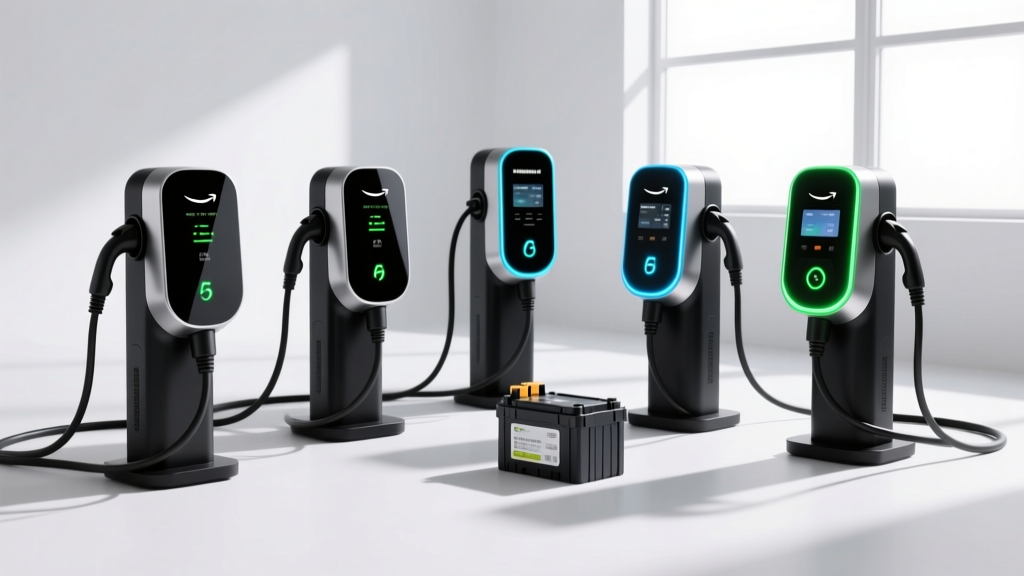
Not every Level 2 charger delivers the same experience. Here are the units we recommend for Rivian owners, based on power output, cable management, smart features, and real-world reliability.
Wallbox Pulsar Plus (48A)
- Power: 11.5 kW (240V/48A)
- Connector: NACS (2025+ Rivian) or J1772 with adapter
- Cable: 25 ft
- Smart features: Wi-Fi, app scheduling, load balancing, solar integration
- Price: ~$649
- Why: Compact, reliable, and the same brand as Rivian's V2H Quasar 2 — simplifies ecosystem if you plan bidirectional use.
ChargePoint Home Flex (50A)
- Power: 12 kW (240V/50A)
- Connector: NACS or J1772 (configurable)
- Cable: 23 ft
- Smart features: Wi-Fi, Alexa, detailed energy reporting, utility demand-response
- Price: ~$699
- Why: Excellent app, flexible amperage settings (16A–50A via DIP switch), strong utility rebate compatibility.
Emporia Level 2 Smart Charger (48A)
- Power: 11.5 kW (240V/48A)
- Connector: J1772 (NACS adapter available)
- Cable: 24 ft
- Smart features: Wi-Fi, real-time energy monitoring, solar-aware scheduling, load management
- Price: ~$399
- Why: Best value. Pairs with Emporia Vue home energy monitor for whole-home visibility and intelligent load management — critical if your panel is near capacity.
For V2H bidirectional charging, the Wallbox Quasar 2 (11.5 kW bidirectional, NACS connector, ~$2,500–$3,000) is currently the primary consumer-grade option compatible with Rivian's platform. Availability has been limited — check Rivian's official shop or Wallbox directly for current stock.
Safety, Code, and Installation Best Practices
EV charging involves sustained high-current draw — far more thermal stress than a dryer or oven cycle. Proper installation is non-negotiable:
- Dedicated circuit: The charger must be on its own breaker. Do not share the circuit with other appliances.
- Hardwired vs. plug-in: Hardwired installations (no receptacle) are preferred for 48A+ chargers. They eliminate the GFCI breaker requirement (NEC 625.41), reduce failure points, and are typically cheaper on the electrician's side since no 240V outlet is needed.
- Outdoor rating: If your charger is mounted outside, ensure it carries a NEMA 4 or IP65 rating. The Wallbox Pulsar Plus and ChargePoint Home Flex are both rated for outdoor use.
- Wire sizing: Oversizing wire (e.g., 4 AWG instead of 6 AWG for a 48A circuit) reduces voltage drop on long runs (>50 ft from panel) and runs cooler. Your electrician should calculate voltage drop for runs over 50 feet.
- Surge protection: A whole-panel surge protective device (SPD, ~$150–$300 installed) protects your charger and vehicle from lightning-induced transients. Strongly recommended in storm-prone regions.
Always use a licensed electrician and pull a permit. Unpermitted EV charger installations can void home insurance claims and create fire risk. The NHTSA and your local authority having jurisdiction (AHJ) can clarify code requirements in your area.
Frequently Asked Questions
How much does it cost to install a home EV charger for a Rivian?
A standard Level 2 (48A, hardwired) installation typically costs $1,050–$3,400 including equipment, electrician labor, and permit — assuming your electrical panel has adequate capacity. If a panel upgrade is required (100A to 200A), add $1,500–$3,500. For V2H bidirectional charging with a Wallbox Quasar 2 and transfer switch, budget $3,500–$7,900 total.
How fast will each charging level add range to my Rivian?
Level 1 (120V) adds roughly 3–4 miles per hour — suitable only for overnight top-ups of ~30–40 miles. Level 2 (240V, 48A) adds approximately 30–35 miles per hour, fully replenishing a Large Pack overnight in ~9–10 hours. DC fast charging at a 200 kW station adds over 200 miles in roughly 20 minutes (10–80% in ~28 minutes), but the rate tapers significantly above 60% SoC.
Which connector does my Rivian use, and do I need an adapter?
2022–2024 Rivian R1T and R1S models have a native CCS1 port and include a NACS adapter for Tesla Supercharger access. 2025–2026 models ship with a native NACS port and can use CCS1 chargers via a NACS-to-CCS adapter (~$200–$250). CHAdeMO is not supported on any Rivian model.
How much does charging a Rivian cost per mile compared to gas?
At home on an average U.S. electricity rate of $0.16/kWh, the R1T Dual-Motor costs approximately $0.32/mile. A comparable gas truck at 18 MPG with $3.40/gallon fuel costs ~$0.19/mile. However, on off-peak utility rates ($0.10/kWh), the Rivian drops to ~$0.20/mile. Public DC fast charging at $0.40–$0.55/kWh pushes costs to $0.80–$1.10/mile — significantly more expensive than gas. Home charging access is the deciding economic factor.
What electrical upgrades might I need for a Rivian home charger?
If your home has a 200-amp electrical panel with available breaker slots and adequate load headroom, you likely need only a new 60A breaker and a conduit run to the charger location. Homes with 100A or 150A service, or panels near their load capacity, may need a panel upgrade ($1,500–$3,500) or a smart load-management device (~$200) that dynamically throttles the charger to stay within panel limits.
Can I use my Rivian to power my entire house during an outage?
Not the entire house simultaneously, but you can power essential circuits. The Rivian V2H system delivers up to 11.5 kW through a transfer switch, which is sufficient for a refrigerator, HVAC blower, lights, Wi-Fi, well pump, and electronics. Central air conditioning compressors (which can draw 5–7 kW startup surge) may require a soft-start device. A fully charged Max Pack R1T (149 kWh usable) can sustain essential loads for 4–5 days.