What Is the Rivian Adventure Network?
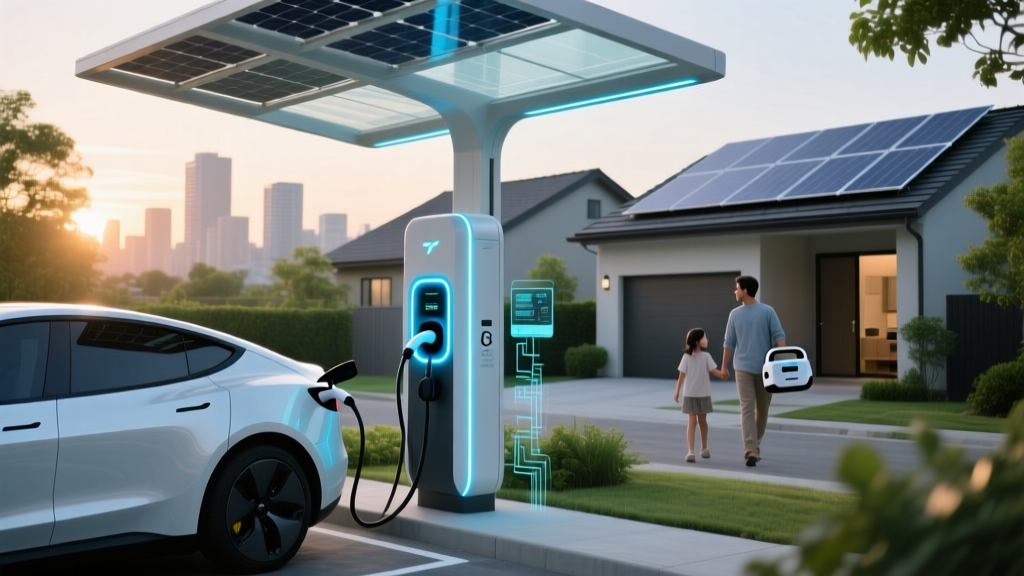
The Rivian Adventure Network is Rivian's proprietary DC fast-charging ecosystem, purpose-built for its R1T pickup and R1S SUV lineup. Unlike general-purpose networks that serve every EV brand, Rivian has strategically placed its Adventure Network chargers near trailheads, national parks, ski resorts, and overlanding corridors — locations where Rivian owners actually take their vehicles off-pavement. As of early 2026, the network includes over 500 DC fast-charging stalls across North America, with Rivian committing to open access to non-Rivian EVs at select locations.
But the Adventure Network is only one piece of the charging puzzle. Most Rivian owners do the bulk of their charging at home on Level 2 equipment, use third-party DC fast chargers for highway travel, and rely on adapters for connector compatibility. This guide covers every charging scenario a Rivian owner will face — from the Adventure Network's peak charge rates to the electrical realities of installing a 60-amp home circuit.
Charging Levels Explained: Speeds, kW, and Miles Per Hour
Before breaking down specific networks, it is critical to understand the difference between kW (kilowatts — the rate of power delivery, like water pressure from a hose) and kWh (kilowatt-hours — the total energy stored in the battery, like the size of the tank). Charging speed is measured in kW; battery capacity is measured in kWh. A 200 kW charger delivers energy 5× faster than a 40 kW charger, but both are filling the same kWh battery.
| Level | Voltage | Max Power (kW) | Miles of Range Added Per Hour | Typical Use Case |
|---|---|---|---|---|
| Level 1 (120V) | 120V AC | 1.4 kW | ~3–5 mi/hr | Emergency/trickle only |
| Level 2 (240V) | 240V AC | 11.5 kW (R1T/R1S onboard limit) | ~25–30 mi/hr | Home daily charging |
| DC Fast Charging | 400V+ DC | Up to 220 kW (Adventure Network) | ~140–180 mi/hr (at peak) | Road trips, rapid top-ups |
The Rivian R1T and R1S (2025–2026 model years, with the Dual-Motor and Tri-Motor configurations) accept up to 220 kW peak DC fast charging on compatible chargers, including Rivian Adventure Network stalls. On a Large Pack (~128.9 kWh usable, NMC chemistry), Rivian quotes a 10–80% charge in approximately 30 minutes under ideal thermal conditions. The Standard Pack (~93.5 kWh usable) reaches 10–80% in roughly 25 minutes.
Rivian Adventure Network Chargers: Locations, Speeds, and Access
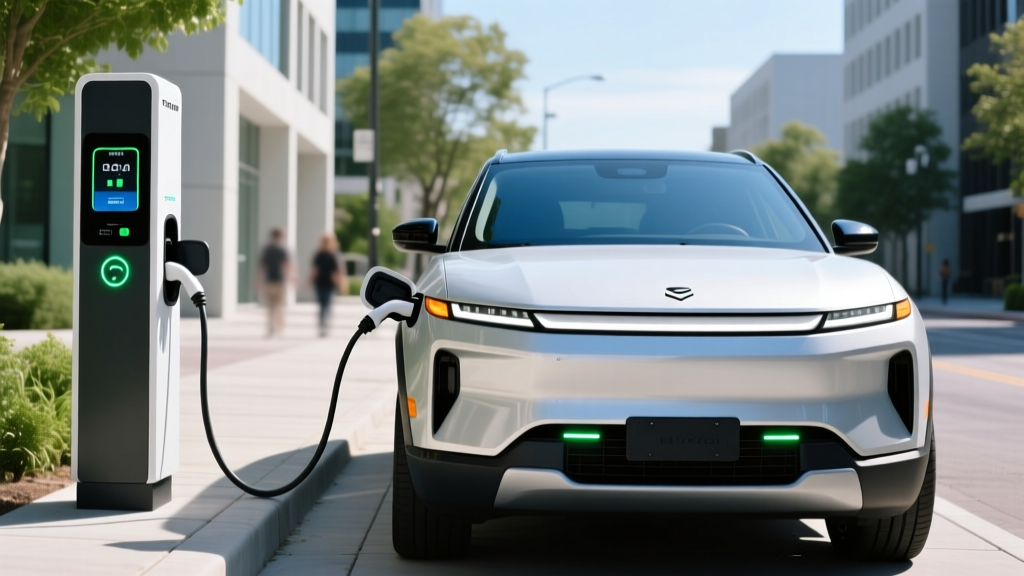
Rivian Adventure Network chargers are DC fast-charging stations delivering up to 220 kW per stall. They use the NACS (North American Charging Standard) connector as of the 2025 model year refresh, aligning with Rivian's transition to the Tesla-originated plug standard. Earlier 2022–2024 Rivian vehicles were equipped with CCS1 connectors and require a NACS-to-CCS adapter (provided by Rivian) at newer Adventure Network stalls.
Key characteristics of the Adventure Network:
- Power output: Up to 220 kW DC per stall
- Connector: NACS (2025+); CCS1 on legacy stations (2022–2024)
- Locations: Concentrated near outdoor recreation areas — Moab, UT; Jackson Hole, WY; Tahoe region; Pacific Northwest trailheads; Colorado ski corridors
- Access: Rivian vehicles get priority; select stations open to non-Rivian EVs via the Rivian app
- Pricing: Typically $0.31–$0.45/kWh for Rivian owners; non-Rivian users may pay a premium
- Reliability: Rivian reports 97%+ uptime across the network, with on-site support at high-traffic locations
For Rivian owners planning overland trips, the Adventure Network fills a genuine gap: many national parks and remote recreation areas lack Electrify America or Tesla Supercharger coverage. Rivian's siting strategy directly serves its adventure-oriented buyer demographic. However, for interstate highway travel, Rivian owners will still rely on third-party networks — which brings us to connector compatibility.
Connector Compatibility: NACS, CCS1, and What You Need
The EV charging connector landscape shifted dramatically between 2023 and 2025, with nearly every major automaker adopting NACS. Here is where Rivian fits:
| Model Year | Native Connector | Rivian Adventure Network | Tesla Supercharger | Electrify America / CCS Networks | Adapter Needed? |
|---|---|---|---|---|---|
| 2022–2024 R1T/R1S | CCS1 | Legacy CCS1 stalls or NACS adapter | NACS adapter (Rivian-provided) | Native — no adapter | NACS adapter for Tesla/new RAN stalls |
| 2025–2026 R1T/R1S | NACS | Native — no adapter | Native — no adapter | CCS1 adapter (aftermarket) | CCS1 adapter for legacy DC stations |
Practical advice: If you own a 2025+ Rivian, keep a CCS1-to-NACS adapter (such as the Lectron or A2Z adapter, ~$150–$200) in your frunk for Electrify America and other legacy CCS stations. If you own a 2022–2024 model, Rivian provides a NACS adapter that unlocks Tesla Superchargers and newer Adventure Network stalls. Always verify adapter firmware compatibility before purchasing third-party units — Rivian's official adapter is the safest option for guaranteed communication handshake with the vehicle's BMS (battery management system).
Home Level 2 Charging: Installation, Costs, and Electrical Requirements
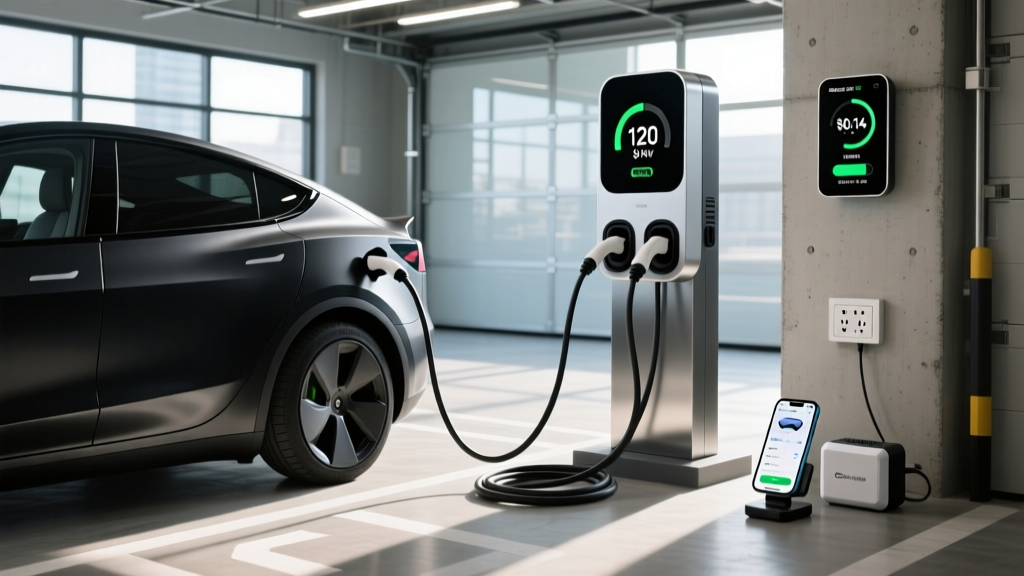
Most Rivian owners charge at home 85–95% of the time. The R1T and R1S have an onboard charger rated at 11.5 kW (48 amps on a 60-amp circuit). This means a full overnight charge from 20% to 100% takes roughly 10–11 hours on the Large Pack — easily accomplished while you sleep.
Electrical Requirements
To deliver the full 11.5 kW, you need:
- A 240V dedicated circuit (NEMA 14-60 outlet or hardwired connection)
- A 60-amp breaker (EVSE rated for 48 amps continuous draw, which requires a circuit rated at 125% of continuous load = 60 amps per NEC Article 625)
- Sufficient panel capacity: your electrical panel must have at least 60 amps of available headroom. Many older homes with 100-amp or 150-amp panels may need a panel upgrade to 200 amps, which is the single largest variable in installation cost.
Installation Cost Breakdown
| Component | Simple Install (panel nearby, no upgrade) | Complex Install (long run, panel upgrade) |
|---|---|---|
| Level 2 EVSE equipment (charger unit) | $500–$700 | $500–$700 |
| Electrician labor (2–4 hrs simple / 6–10 hrs complex) | $600–$1,200 | $1,800–$3,500 |
| Electrical panel upgrade (if needed) | $0 | $1,500–$3,000 |
| Permit and inspection | $100–$250 | $150–$400 |
| Conduit, wiring, misc. materials | $100–$300 | $400–$800 |
| Total estimated cost | $1,300–$2,450 | $4,350–$8,400 |
Safety and Code Considerations
Per the National Electrical Code (NEC Article 625), all EV charging installations require:
- A dedicated circuit — no sharing with other appliances
- GFCI protection for outdoor installations (and many jurisdictions now require it indoors as well)
- An outdoor-rated (NEMA 4) enclosure if the charger is mounted outside
- Proper wire gauge: 6 AWG copper for a 60-amp circuit (4 AWG aluminum as an alternative)
- A permit and final inspection — skipping this voids homeowner's insurance coverage for electrical fires and creates liability issues at resale
Recommended Level 2 Chargers for Rivian R1T and R1S
Not all Level 2 chargers are equal. Here are units that pair well with the Rivian's 11.5 kW onboard charger and NACS connector:
Emporia Vue Level 2 EVSE
- Power: 48A / 11.5 kW (240V)
- Connector: NACS (native), J1772 adapter included
- Cable length: 24 ft
- Smart features: Wi-Fi, app scheduling, solar integration, energy monitoring
- Price: ~$550–$650
- Best for: Budget-conscious buyers who want smart scheduling and energy tracking
ChargePoint Home Flex
- Power: Up to 50A / 12 kW (configurable 16–50A)
- Connector: NACS or J1772 (select at purchase)
- Cable length: 23 ft
- Smart features: Wi-Fi, Alexa integration, charge scheduling, detailed app analytics
- Price: ~$650–$750
- Best for: Flexible amperage configuration for older panels (can dial down to 32A/40A circuit)
Tesla Wall Connector (NACS)
- Power: 48A / 11.5 kW (240V/60A circuit)
- Connector: NACS native
- Cable length: 24 ft
- Smart features: Wi-Fi, OTA updates, power sharing between two units, load management
- Price: ~$475
- Best for: Rivian NACS owners wanting the lowest-cost high-quality unit; power-sharing ideal for two-EV households
Rivian Wall Charger
- Power: 48A / 11.5 kW (240V/60A circuit)
- Connector: NACS (2025+ models); CCS1 (legacy)
- Cable length: 25 ft
- Smart features: Integrated with Rivian app, scheduled charging, departure preconditioning
- Price: ~$650 (often included with vehicle purchase promotions)
- Best for: Seamless Rivian ecosystem integration and preconditioning coordination
Charging Cost Per Mile: Rivian vs Gas Truck
One of the strongest ownership arguments for the R1T over a gas-powered truck (Ford F-150, Ram 1500) is fuel cost. The R1T Dual-Motor Large Pack achieves an EPA-rated 70 MPGe combined, which translates to roughly 35–38 kWh per 100 miles in mixed driving. Highway-only efficiency drops to approximately 40–44 kWh/100mi due to the R1T's 7,000+ lb curb weight and boxy aerodynamics.
| Scenario | Cost per kWh or Gallon | R1T Cost/Mile | Gas Truck (18 MPG) Cost/Mile |
|---|---|---|---|
| Home charging (off-peak utility rate) | $0.12/kWh | $0.043 | — |
| Home charging (average US rate) | $0.17/kWh | $0.061 | — |
| Public Level 2 (ChargePoint, etc.) | $0.25/kWh | $0.090 | — |
| DC Fast Charging (Adventure Network) | $0.38/kWh | $0.137 | — |
| DC Fast Charging (Electrify America) | $0.48/kWh | $0.173 | — |
| Gasoline (national average) | $3.40/gal | — | $0.189 |
At home on off-peak rates, the R1T costs roughly $0.04 per mile — less than a quarter of what a comparable gas truck burns. Even at DC fast-charging prices on the Rivian Adventure Network, the per-mile cost undercuts gasoline. The savings are most dramatic for owners who charge at home 90%+ of the time and use DC fast charging only for road trips.
Charging Time Examples: What to Expect with Rivian Battery Packs
Real-world charging times depend on battery size, starting state of charge, ambient temperature, and whether the battery has been preconditioned. The Rivian app and in-dash navigation automatically precondition the battery when a charger is set as your destination — this warms the pack to optimal temperature and can reduce 10–80% charging time by 5–10 minutes in cold weather.
| Charger Type | Standard Pack (~93.5 kWh) 10–80% | Large Pack (~128.9 kWh) 10–80% | Max Pack (~149 kWh) 10–80% |
|---|---|---|---|
| Level 1 (120V, 1.4 kW) | ~45 hours | ~62 hours | ~72 hours |
| Level 2 (240V, 11.5 kW) | ~5.5 hours | ~7.5 hours | ~8.5 hours |
| DC Fast (220 kW, Adventure Network) | ~25 minutes | ~30 minutes | ~35 minutes |
| DC Fast (150 kW, Electrify America) | ~35 minutes | ~42 minutes | ~50 minutes |
| DC Fast (50 kW, older CHAdeMO station) | ~90 minutes | ~120 minutes | ~140 minutes |
For daily driving, most owners charge from 20–80% at home overnight — a 6-hour window on Level 2 that adds roughly 180 miles of range on the Large Pack. Rivian recommends setting a daily charge limit of 80% for NMC battery longevity, reserving 100% charges for road trips. For the LFP-equipped Standard Pack (available on select 2025+ trims), Rivian permits regular 100% charging without degradation concerns — a key advantage of LFP chemistry.
Frequently Asked Questions
How much does it cost to install a home EV charger for a Rivian?
A straightforward Level 2 installation with an existing 200-amp panel and short wire run costs $1,300–$2,450 all-in (equipment, electrician, permit). If your home needs a panel upgrade from 100A or 150A to 200A, expect the total to rise to $4,350–$8,400. Always get a load calculation from a licensed electrician before committing to equipment.
How fast will each charging level add range to my Rivian?
Level 1 (120V) adds roughly 3–5 miles per hour — essentially useless for daily driving on a large battery. Level 2 (240V, 11.5 kW) adds approximately 25–30 miles per hour, which fully replenishes a day's driving in 1–2 hours. DC fast charging at 220 kW (Rivian Adventure Network) adds up to 140–180 miles in the first 15 minutes before tapering.
Which connector is compatible with my Rivian?
2025–2026 Rivian R1T and R1S models use the NACS connector natively, which is compatible with the Rivian Adventure Network, Tesla Superchargers, and any NACS-equipped public station. 2022–2024 models use CCS1 and require a Rivian-provided NACS adapter for newer stations. Carry a CCS1 adapter if you have a NACS-equipped Rivian and plan to use Electrify America or older public chargers.
How much does charging a Rivian cost per mile vs a gas truck?
Home charging at the US average rate of $0.17/kWh costs approximately $0.06 per mile in a Rivian R1T. A comparable gas truck at 18 MPG and $3.40/gallon costs $0.19 per mile. Even at premium DC fast-charging rates ($0.38–$0.48/kWh), the Rivian matches or undercuts gasoline on a per-mile basis.
What electrical upgrades might I need for a home charger?
The most common upgrade is a 200-amp panel replacement if your existing panel is 100A or 150A and already near capacity. Other potential needs include: a new dedicated 60-amp breaker slot (your panel must have physical space), upgraded service entrance wiring from the utility meter, and a GFCI breaker if your jurisdiction requires it for EV circuits. Some utilities offer time-of-use (TOU) rate plans that make overnight charging significantly cheaper — ask your provider about EV-specific rate schedules.
Can I use Tesla Superchargers with my Rivian?
Yes. All 2025+ Rivian vehicles with native NACS connectors can use Tesla Superchargers directly. For 2022–2024 models with CCS1 connectors, Rivian provides a NACS adapter that enables Supercharger access. Use the Rivian app or Tesla app to initiate sessions — plug-and-charge functionality varies by station and model year. Supercharger V3 stalls (250 kW) and V4 stalls will charge the Rivian at the vehicle's peak acceptance rate of 220 kW.
Sources: Rivian Charging, EPA Fueleconomy.gov — Rivian R1T, NEC Article 625 — EV Charging Requirements