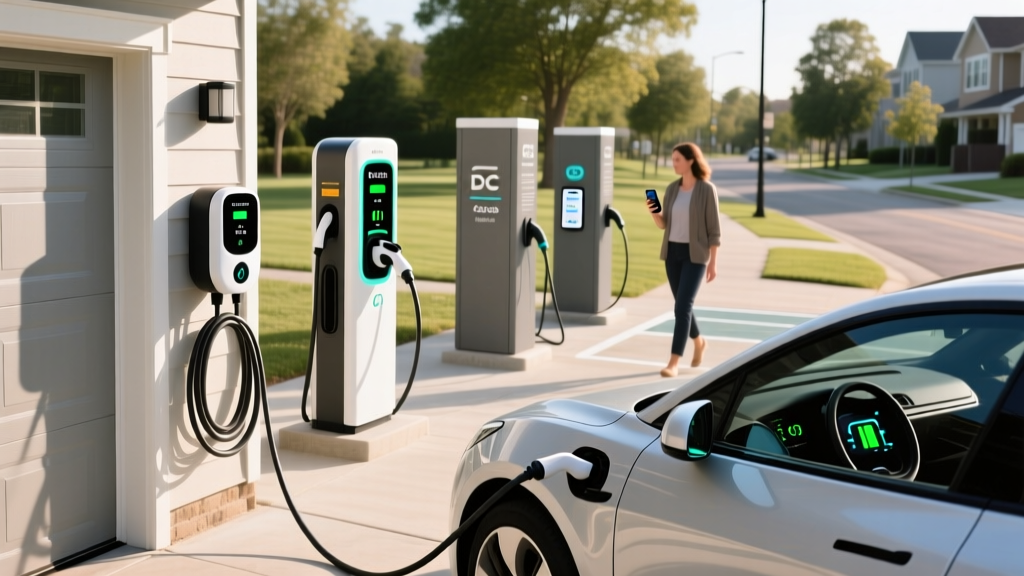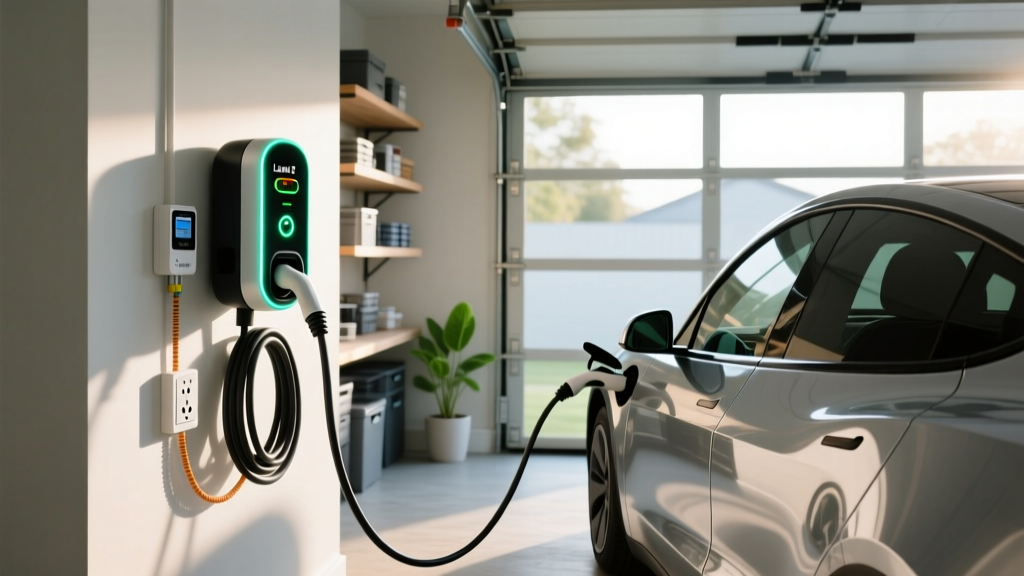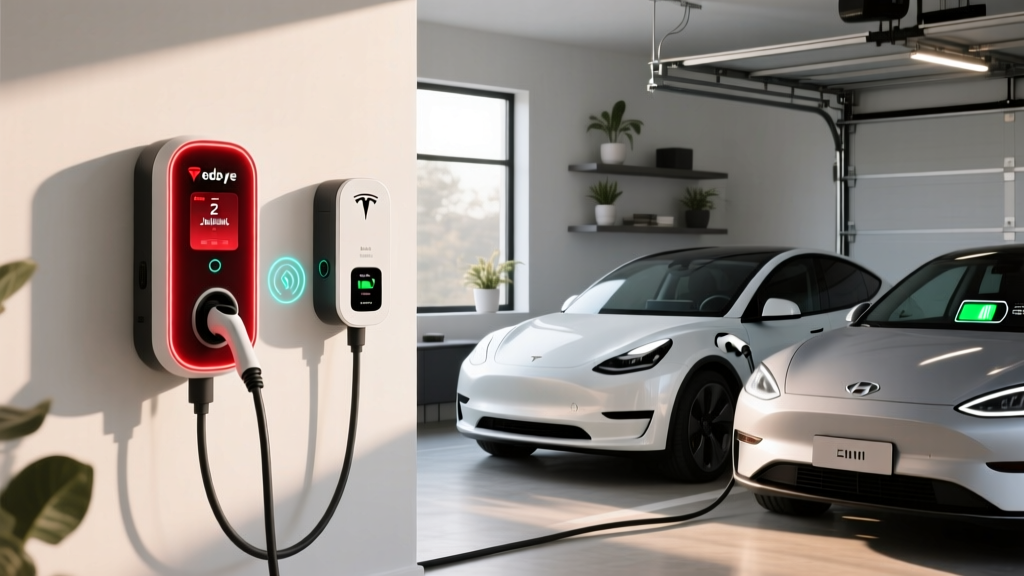
If you've been browsing Dodge enthusiast forums or EV-tuning communities, you've likely encountered the term Redeye Jailbreak Charger. In the Dodge Charger ecosystem, "Redeye" designates the supercharged 6.2L HEMI V8 trim producing up to 797 horsepower, while "Jailbreak" refers to an unlocked software calibration that removes factory-imposed limiter restrictions — unlocking custom tuning for boost pressure, shift points, and rev limits. But as Dodge pivots to electrification with the 2024–2026 Charger Daytona EV lineup, the "charger" conversation is shifting from jailbreak tunes to actual EV charging hardware.
This guide bridges both worlds. We'll clarify what the Redeye Jailbreak Charger designation means in 2026, then deliver a complete breakdown of home EV charging for the new Charger Daytona EV and comparable electric vehicles — covering kW speeds, installation costs, connector types, and the best Level 2 equipment on the market.
What Is the Redeye Jailbreak Charger in 2026?
The Dodge Charger SRT Hellcat Redeye Jailbreak was the pinnacle of the internal-combustion Charger lineup. The "Jailbreak" package unlocked six factory calibration parameters, letting owners customize powertrain behavior through the infotainment system. Key specs of the ICE Redeye Jailbreak included:
- Engine: 6.2L supercharged HEMI V8 (Redeye output)
- Horsepower: 797 hp / 707 lb-ft torque
- 0-60 mph: ~3.5 seconds
- Top speed: 203 mph (with Jailbreak unlock)
- Drivetrain: Rear-wheel drive, 8-speed automatic
However, the final model year for the Hellcat-powered Charger was 2023. For 2026, Dodge's Charger lineup centers on the Charger Daytona EV (the Scat Pack and R/T trims) built on the STLA Large platform. If you're a former Redeye owner transitioning to the Daytona EV — or any EV buyer researching home charging — the rest of this guide is built for you.
Charging Levels Explained: kW Speeds and Miles Per Hour
Understanding EV charging starts with distinguishing kW (kilowatts) from kWh (kilowatt-hours). kW measures power — the rate at which electricity flows into your vehicle. kWh measures energy — the total capacity stored in your battery. Think of kW as the width of a hose and kWh as the size of the bucket.
Here's how each charging level translates to real-world range recovery:
| Charging Level | Voltage | Power (kW) | Miles of Range Per Hour | Best Use Case |
|---|---|---|---|---|
| Level 1 (Standard Outlet) | 120V AC | 1.2–1.9 kW | 3–5 miles | Overnight trickle, PHEV top-ups |
| Level 2 (Home/Public AC) | 240V AC | 7.2–19.2 kW | 20–60 miles | Daily home charging, workplace |
| DC Fast Charging | 400–800V DC | 50–350 kW | 150–1,000+ miles | Road trips, rapid top-ups |
For context, the 2026 Dodge Charger Daytona Scat Pack carries a 100.5 kWh (gross) battery pack. On a Level 2 charger delivering 11.5 kW (48A), a full 10–80% charge takes approximately 7–8 hours. On a DC fast charger, the Daytona supports peak rates up to ~175 kW, achieving 10–80% in roughly 27–32 minutes depending on battery temperature and state of charge.
How Much Does It Cost to Install a Home EV Charger?
Home Level 2 charger installation costs vary dramatically based on your electrical panel's capacity, the distance from panel to charger location, and local permit fees. Here's a realistic 2026 cost breakdown:
| Cost Component | Low-End Estimate | High-End Estimate | Notes |
|---|---|---|---|
| Level 2 Charger Equipment | $350 | $750 | Smart Wi-Fi chargers, 32A–48A |
| Electrician Labor | $400 | $1,500 | Depends on run length and complexity |
| Electrical Permit | $50 | $250 | Varies by municipality |
| Panel Upgrade (if needed) | $1,500 | $4,000 | 100A → 200A service upgrade |
| Conduit & Wiring Materials | $100 | $500 | Longer runs cost more |
| Total (no panel upgrade) | $900 | $3,000 | Most homes with 200A service |
| Total (with panel upgrade) | $2,400 | $7,000 | Older homes with 100A panels |
What Electrical Upgrades Might I Need?
A dedicated Level 2 charger requires a 240V circuit with appropriate amperage. A 48-amp charger needs a 60-amp dedicated breaker (the National Electrical Code requires circuits rated at 125% of continuous load). Here's when upgrades become necessary:
- 100-amp main panel: Almost certainly requires an upgrade to 200A service before adding a 60A EV circuit. Common in homes built before 1990.
- 200-amp panel with available slots: Usually sufficient. Your electrician will verify total load calculation against existing appliances (HVAC, electric oven, dryer).
- Panel at capacity: Even a 200A panel may need a sub-panel or smart load-management device (like the Emporia VUE or Span smart panel) if existing loads max out the service.
Always hire a licensed electrician who will pull a permit. Unpermitted EV charger installations can void homeowner's insurance claims and create fire hazards.
Connector Compatibility: NACS, CCS1, and CHAdeMO
The connector landscape has consolidated significantly since 2024. Here's where things stand in 2026:
| Connector Standard | Vehicles Using It (2026) | Adapter Availability |
|---|---|---|
| NACS (Tesla/J3400) | Tesla (all), Ford, GM, Rivian, Volvo, Polestar, Dodge Charger Daytona (2025+), most new models | CCS-to-NACS adapters from Tesla, A2Z, Lectron (~$200–$300) |
| CCS1 (Combined Charging System) | Hyundai, Kia, BMW, VW, older Ford/GM models (pre-2025), Stellantis PHEVs | NACS-to-CCS adapters widely available |
| CHAdeMO | Nissan Leaf (legacy), Mitsubishi Outlander PHEV (legacy) | Limited adapters; infrastructure declining |
The 2026 Dodge Charger Daytona EV ships with a NACS (J3400) port, aligning with Stellantis's adoption of the Tesla-standard connector. This means direct access to Tesla Supercharger V3 and V4 stalls (now open to non-Tesla EVs via the Supercharger network expansion) without an adapter. If you own an older CCS-equipped EV, a NACS-to-CCS adapter allows you to use Tesla Superchargers as well.
For home Level 2 charging, most chargers ship with a J1772 connector (the legacy AC standard). NACS-equipped vehicles like the Daytona include a J1772-to-NACS adapter in the vehicle kit, so any standard Level 2 home charger will work.
Cost to Charge: Home vs. Public vs. Gas Comparison
Charging economics depend heavily on where and when you charge. Below is a cost-per-mile comparison using the Charger Daytona Scat Pack's efficiency of approximately 2.0 miles/kWh (roughly 67 MPGe combined per fueleconomy.gov):
| Charging Scenario | Cost per kWh | Cost per Mile | Annual Cost (12,000 mi) |
|---|---|---|---|
| Home (off-peak utility rate) | $0.09–$0.14 | $0.045–$0.07 | $540–$840 |
| Home (standard rate, no TOU) | $0.15–$0.20 | $0.075–$0.10 | $900–$1,200 |
| Public Level 2 (ChargePoint, EVgo) | $0.25–$0.49 | $0.125–$0.245 | $1,500–$2,940 |
| DC Fast (Electrify America, Tesla) | $0.35–$0.56 | $0.175–$0.28 | $2,100–$3,360 |
| Gas equivalent (25 MPG, $3.40/gal) | — | $0.136 | $1,632 |
The takeaway: home charging on an off-peak time-of-use (TOU) plan delivers the lowest cost per mile — typically 3–5 cents, compared to 13+ cents for gasoline. Public DC fast charging can exceed gas costs per mile, so it's best reserved for road trips.
Many utilities offer EV-specific TOU rates. For example, charging overnight between 11 PM and 6 AM can drop your effective rate to $0.06–$0.09/kWh in markets like PG&E, SCE, and ConEdison. Check with your local utility for EV rate plans.
Best Level 2 Home Chargers for 2026: Equipment Picks
Here are the top-performing Level 2 home chargers for 2026, selected for reliability, smart features, and value. All are hardwired or NEMA 14-50 plug-in compatible and UL-listed for safety.
Emporia Level 2 EV Charger
- Power Output: 11.5 kW (48A) at 240V
- Connector: J1772 (NACS adapter included for newer EVs)
- Cable Length: 24 feet
- Smart Features: Wi-Fi, app scheduling, solar integration, energy monitoring via Emporia VUE panel
- Price: ~$399
- Best For: Budget-conscious buyers wanting smart energy tracking
ChargePoint Home Flex
- Power Output: Up to 12 kW (50A) at 240V — configurable from 16A to 50A
- Connector: J1772 (NACS adapter available)
- Cable Length: 23 feet
- Smart Features: Wi-Fi, Alexa integration, flexible amperage to match panel capacity, ChargePoint network access
- Price: ~$549
- Best For: Homes with limited panel capacity (dial down amperage)
Wallbox Pulsar Plus (48A)
- Power Output: 11.5 kW (48A) at 240V
- Connector: J1772
- Cable Length: 25 feet
- Smart Features: Wi-Fi + Bluetooth, load sharing (two chargers on one circuit), Power Boost dynamic load management
- Price: ~$649
- Best For: Two-EV households needing load-balanced dual charging
Tesla Wall Connector (J3400/NACS)
- Power Output: 11.5 kW (48A) at 240V
- Connector: NACS (J3400) native — no adapter needed for NACS vehicles
- Cable Length: 24 feet
- Smart Features: Wi-Fi, OTA updates, power sharing, integrated cable management
- Price: ~$420
- Best For: NACS-equipped EVs like the Charger Daytona, Tesla, Ford, and GM models
For Charger Daytona EV owners, the Tesla Wall Connector is the cleanest option since both the car and charger use NACS natively. For multi-EV households with mixed connectors, the ChargePoint Home Flex offers the most flexibility.
Charging Time Examples: 10–80% for Common Battery Sizes
Charging times are governed by battery size (kWh), charger power (kW), and the charge curve — the reality that charging slows significantly above 80% state of charge to protect battery longevity. Here's what 10–80% looks like across common scenarios:
| Battery Size | Example Vehicle | Level 2 (11.5 kW) | DC Fast (Peak kW) | DC Fast 10–80% Time |
|---|---|---|---|---|
| 72.6 kWh | Hyundai Ioniq 5 | ~5 hours | 240 kW | ~18 minutes |
| 82 kWh | VW ID.4 | ~5.5 hours | 175 kW | ~28 minutes |
| 100.5 kWh | Dodge Charger Daytona | ~7 hours | ~175 kW | ~27–32 minutes |
| 75 kWh | Tesla Model 3 LR | ~5 hours | 250 kW | ~15–20 minutes |
| 131 kWh | Ford F-150 Lightning ER | ~9 hours | 150 kW | ~41 minutes |
Why does DC fast charging slow above 80%? Lithium-ion cells experience increased resistance and heat generation at higher states of charge. Battery management systems (BMS) taper the charge rate to prevent degradation and lithium plating. A charger rated at 175 kW peak may only sustain that rate between 10–40% SoC, dropping to 50 kW or below past 80%. This is why manufacturers quote 10–80% times rather than 0–100%.
Preconditioning tip: If your EV supports it (the Daytona does), navigate to a DC fast charger using the built-in navigation. The vehicle will pre-warm the battery to optimal temperature, enabling faster peak charge rates. Cold batteries charge significantly slower — a 10–80% session in 20°F weather without preconditioning can take 50–100% longer.
Safety and Code Considerations for Home Charger Installation
EV chargers are classified as continuous loads under the National Electrical Code (NEC Article 625), meaning the circuit must be rated at 125% of the charger's maximum draw. Key safety requirements include:
- Dedicated circuit: Your EV charger must have its own breaker — no sharing with other appliances. A 48A charger requires a 60A breaker.
- GFCI protection: NEC 2023 and later require GFCI (Ground Fault Circuit Interrupter) protection for all EV charging outlets. Hardwired chargers with built-in GFCI may satisfy this; plug-in NEMA 14-50 receptacles require a GFCI breaker.
- Outdoor rating: If installing outdoors, the charger must carry a NEMA 4 or NEMA 4X rating for weather resistance. All chargers listed above meet this standard.
- Wire gauge: A 60A circuit requires 6 AWG copper wire (or 4 AWG aluminum). Your electrician will size appropriately based on run length and local amendments.
- Permit and inspection: Virtually all jurisdictions require an electrical permit and post-installation inspection. Skipping this risks insurance denial in the event of a fire.
For detailed code requirements, reference the National Electrical Code (NFPA 70) and consult your local building department. The U.S. Department of Energy also maintains a useful home charging installation guide.
Federal Tax Credit for Home Charging Equipment
The Alternative Fuel Vehicle Refueling Property Credit (IRS §30C) provides a tax credit of up to 30% of the cost of home EV charging equipment and installation, capped at $1,000. Key eligibility rules for 2026:
- The equipment must be installed at your primary residence.
- The property must be located in an eligible census tract (non-urban or low-income community as defined by the IRS). Check the IRS eligibility tool.
- The credit covers both equipment cost and electrician labor.
- This is separate from the §30D new EV purchase credit.
Frequently Asked Questions
Can I plug an EV charger into a regular outlet?
Yes, but only for Level 1 charging. A standard 120V household outlet delivers 1.2–1.9 kW, adding roughly 3–5 miles of range per hour. This works for plug-in hybrids with small batteries or as an emergency option for BEVs. For daily charging of a large-battery EV like the Charger Daytona (100.5 kWh), Level 1 would take over 50 hours for a full charge — a dedicated 240V Level 2 circuit is strongly recommended.
Does the Redeye Jailbreak Charger still exist in 2026?
No. The Dodge Charger Hellcat Redeye, including the Jailbreak edition, ended production after the 2023 model year. Dodge's 2026 Charger lineup is the Daytona EV (R/T and Scat Pack trims) on the STLA Large platform. Enthusiasts seeking the "Redeye Jailbreak" experience will find comparable performance in the Daytona Scat Pack, which produces up to 670 hp and hits 0–60 in 3.3 seconds.
Do I need a smart charger, or will a basic unit work?
A basic (non-smart) Level 2 charger will charge your EV just fine. However, smart chargers offer scheduling (charge during off-peak hours for lower rates), energy monitoring, remote start/stop, and utility demand-response integration. Given the $100–$200 premium for smart features, the long-term utility savings typically justify the investment.
Can my solar panels power my EV charger?
Yes, if your solar array generates sufficient surplus energy during the day. A typical 8 kW residential solar system produces roughly 30–40 kWh per day in good conditions — enough to replenish a significant portion of daily driving. Chargers like the Emporia Level 2 integrate directly with solar monitoring systems to prioritize self-generated power. Note that solar production and EV charging schedules may not align without a home battery (like a Tesla Powerwall) to store daytime generation for evening charging.
How fast will each charging level add range to my Charger Daytona?
On Level 1 (120V): ~3–5 miles per hour. On Level 2 (240V, 48A/11.5 kW): ~23 miles per hour — enough to fully replenish a day's driving overnight. On DC fast charging (~175 kW peak): approximately 150–180 miles in 15 minutes under optimal conditions, tapering as the battery approaches 80%.
What connector does the 2026 Dodge Charger Daytona use?
The 2026 Charger Daytona EV uses the NACS (J3400) connector, which is now the dominant standard across most new EVs sold in North America. This provides native access to Tesla Superchargers and the growing NACS public charging network.