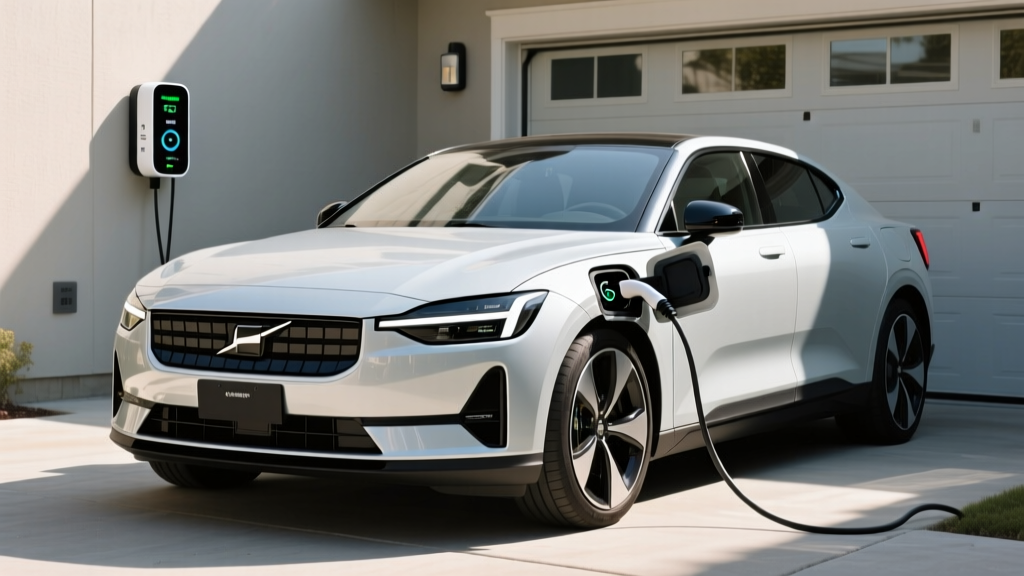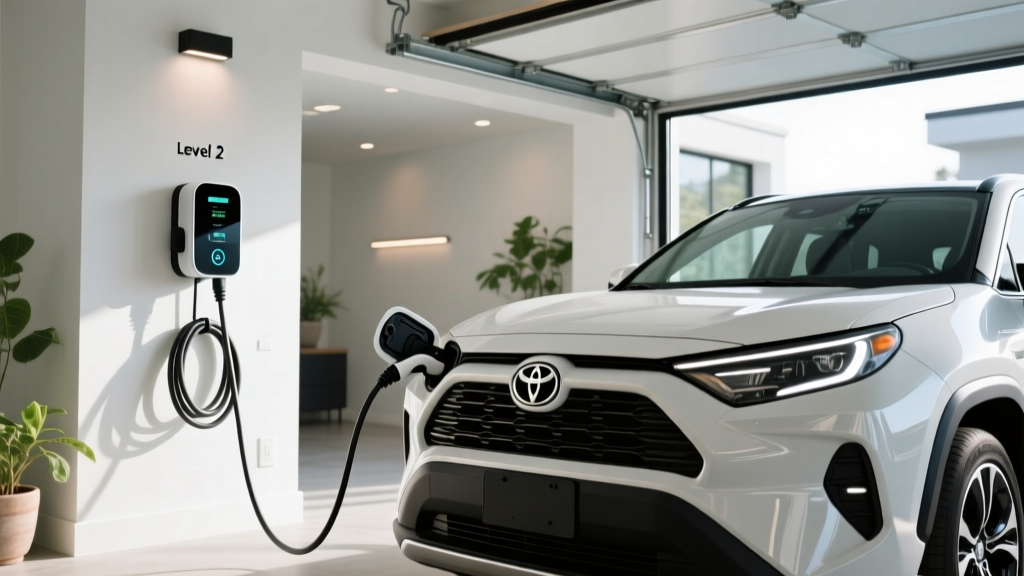
The Toyota RAV4 Prime remains one of the most practical plug-in hybrids on the market, blending a usable electric-only commute with the security of a gasoline engine for longer trips. But extracting the maximum Toyota RAV4 plug-in hybrid range from the vehicle depends heavily on how you charge it. A proper Level 2 home charging setup doesn't just refill the 18.1 kWh battery faster — it ensures you actually use electric mode daily, dramatically cutting fuel costs and preserving battery health over the long term.
This guide breaks down the RAV4 Prime's real-world electric range, the charging hardware you need, what a home installation actually costs in 2026, and how your per-mile charging cost stacks up against gasoline.
RAV4 Prime Range and Efficiency: EPA vs. Real World
The current-generation Toyota RAV4 Prime (also marketed as the RAV4 Plug-In Hybrid) carries an 18.1 kWh lithium-ion traction battery paired with a 2.5-liter four-cylinder engine and dual electric motors producing a combined 302 horsepower. According to fueleconomy.gov, the EPA rates it at:
| Metric | EPA Estimate |
|---|---|
| Electric-only range | 42 miles |
| Combined MPGe (electric + gas) | 94 MPGe |
| Gas-only combined MPG | 38 MPG |
| Total range (EV + gas) | ~600 miles |
| Battery capacity (usable) | ~14.9 kWh usable of 18.1 kWh gross |
| 0–60 mph | 5.7 seconds |
Charging Levels Explained: How Fast Will Each Level Add Range?
Understanding charging speed requires separating kW (kilowatts), which is the rate of power delivery, from kWh (kilowatt-hours), which is the total energy stored in the battery. Think of kW as the width of a hose and kWh as the size of the bucket. The RAV4 Prime's 18.1 kWh battery is a relatively small bucket, which means even modest charging speeds fill it reasonably quickly.
| Level | Voltage / Amperage | Power (kW) | Miles of EV Range Added per Hour | RAV4 Prime Full Charge Time (0–100%) |
|---|---|---|---|---|
| Level 1 (standard outlet) | 120V / 12A | ~1.4 kW | ~4–5 miles/hr | ~10–12 hours |
| Level 2 (home/public AC) | 240V / 16–32A | 3.3–6.6 kW | ~12–25 miles/hr | ~2.5–4.5 hours |
| DC Fast Charging | 400V+ DC | 50–350 kW | N/A (not supported on RAV4 Prime) | Not applicable |
Critical detail: The RAV4 Prime's onboard charger is limited to 3.3 kW on SE trim and 6.6 kW on XSE trim. This means even if you plug into a 48-amp Level 2 station delivering 11.5 kW, the car will only accept its maximum rate. XSE owners charging at 6.6 kW can refill from empty to full in roughly 2.5 hours; SE owners will take closer to 4.5 hours on the same station.
DC fast charging (Level 3) is not supported on the RAV4 Prime. This is typical for plug-in hybrids — the battery is too small to benefit from high-speed DC, and Toyota omits the hardware to save weight and cost. For PHEVs, Level 2 home charging is the practical ceiling and, frankly, all you need.
Connector Compatibility: What Plugs Into the RAV4 Prime?
The RAV4 Prime uses the J1772 connector for all AC charging (Level 1 and Level 2). This is the universal standard for non-Tesla EVs and PHEVs in North America. Here's how connector types map to the RAV4 Prime:
| Connector Type | Compatible with RAV4 Prime? | Notes |
|---|---|---|
| J1772 (AC) | Yes — native | Standard for all Level 1 and Level 2 AC charging |
| NACS / Tesla (AC) | With adapter | Tesla J1772-to-NACS adapter needed for Tesla Wall Connectors or Destination Chargers |
| NACS / Tesla (DC Supercharger) | No | RAV4 Prime cannot DC fast charge — Superchargers are not usable |
| CCS1 (DC) | No | DC fast charging not supported on PHEV |
| CHAdeMO (DC) | No | Legacy DC standard; not applicable |
For home installation, any J1772 Level 2 charger will work natively. If you share a garage with a Tesla or plan to use a Tesla Wall Connector (which is well-priced and reliable), you'll need a J1772-to-NACS adapter (~$50–$150). For public charging, stick to J1772-equipped Level 2 stations — ChargePoint, EVgo Level 2, and most workplace chargers will have the right plug.
Home Charger Installation: Requirements, Costs & Electrical Upgrades
Installing a Level 2 home charger is the single biggest upgrade a RAV4 Prime owner can make. It transforms daily charging from a slow overnight trickle into a convenient 2.5-hour refill that ensures you start every morning with a full 42-mile electric range.
Electrical Requirements
A Level 2 charger requires a dedicated 240V circuit, similar to what an electric dryer or oven uses. The specific amperage depends on your charger:
- 16-amp charger (3.8 kW): Requires a 20-amp dedicated circuit
- 32-amp charger (7.7 kW): Requires a 40-amp dedicated circuit
- 48-amp charger (11.5 kW): Requires a 60-amp dedicated circuit
For the RAV4 Prime specifically, a 32-amp charger is the sweet spot — it exceeds the car's 6.6 kW maximum acceptance rate, which means you'll charge at the vehicle's full speed while keeping the charger from running at its thermal limit (extending equipment life). A 48-amp unit is fine too if you plan to eventually add a full EV to the household.
Panel Upgrade Considerations
Many homes built before 2000 have 100-amp electrical panels. Adding a 40-amp or 60-amp EV circuit may push total load past 80% of panel capacity — the threshold where electrical code requires an upgrade. A licensed electrician will perform a load calculation to determine if your panel can handle the new circuit.
If an upgrade is needed, expect to move from a 100-amp to a 200-amp panel. This is a significant cost factor and the single most variable line item in a home charger installation.
| Component | Typical Range | Notes |
|---|---|---|
| Level 2 charging equipment | $250–$700 | Varies by brand, amperage, smart features, cable length |
| Electrician labor (standard install) | $400–$1,200 | Depends on run length from panel, wall material, conduit needs |
| Electrical permit | $50–$200 | Required in most jurisdictions; varies by municipality |
| Panel upgrade (if needed) | $1,500–$3,500 | 100A → 200A upgrade; not always required |
| Total (no panel upgrade) | $700–$2,100 | Most common scenario for homes with 200A panels |
| Total (with panel upgrade) | $2,200–$5,400 | Older homes with 100A service |
The federal Residential Clean Energy Credit (sometimes called the Alternative Fuel Infrastructure Tax Credit, IRC §30C) can cover up to 30% of charger equipment and installation costs, capped at $1,000, for chargers installed in eligible census tracts. Check with a tax professional to confirm eligibility for your specific address and installation year.
Level 2 Charger Equipment Recommendations for the RAV4 Prime
Since the RAV4 Prime caps at 6.6 kW, you don't need the most powerful charger on the market — but investing in a quality 32-amp or 40-amp unit gives you headroom for a future full-EV purchase. Here are three proven options:
ChargePoint Home Flex
- Power: Up to 11.5 kW (48A), configurable down to 16A
- Connector: J1772 (native for RAV4 Prime)
- Cable length: 23 feet
- Smart features: Wi-Fi, scheduling, energy tracking, Alexa integration
- Price: ~$550–$650
- Best for: Flexible amperage settings to match any circuit
Emporia Level 2 EV Charger
- Power: Up to 11.5 kW (48A)
- Connector: J1772
- Cable length: 24 feet
- Smart features: Wi-Fi, solar integration, energy monitoring via Emporia app
- Price: ~$350–$400
- Best for: Budget-conscious buyers with solar panels
Tesla Wall Connector (with adapter)
- Power: Up to 11.5 kW (48A)
- Connector: NACS (requires J1772-to-NACS adapter for RAV4 Prime)
- Cable length: 24 feet
- Smart features: Wi-Fi, power sharing between two units, OTA updates
- Price: ~$425 (charger) + ~$80 (adapter)
- Best for: Mixed-vehicle households (Tesla + non-Tesla)
For a dedicated RAV4 Prime household, the Emporia offers the best value — it's UL-listed, has a long cable, and the smart scheduling lets you charge during off-peak utility hours automatically. If you anticipate buying a full EV in the next few years, the ChargePoint Home Flex gives you the most configurability.
Charging Cost Per Mile: RAV4 Prime Electric vs. Gasoline
The economic case for the RAV4 Prime hinges on driving within its electric range as much as possible. Here's how the per-mile cost compares across different charging and fueling scenarios, based on a national average electricity rate of $0.17/kWh and $3.30/gallon for regular unleaded in early 2026:
| Scenario | Rate | Cost per Mile | Notes |
|---|---|---|---|
| Home Level 2 (off-peak utility rate) | $0.11/kWh | $0.035 | Time-of-use plans; cheapest option |
| Home Level 2 (standard residential rate) | $0.17/kWh | $0.054 | National average; no TOU plan |
| Public Level 2 (network charging) | $0.30/kWh | $0.095 | ChargePoint, EVgo Level 2 typical |
| Gasoline (combined 38 MPG) | $3.30/gallon | $0.087 | When battery is depleted |
| Gasoline (city-heavy, 34 MPG) | $3.30/gallon | $0.097 | Stop-and-go without regen advantage |
The takeaway: Charging at home on an off-peak rate costs roughly $0.035 per mile — about 60% less than burning gasoline. Even at a standard residential rate, electric driving saves $0.033 per mile. Over a 12,000-mile year with 70% of driving within electric range, that translates to $280–$450 in annual fuel savings compared to a conventional RAV4. Over five years, savings compound further when you factor in reduced brake wear from regenerative braking.
Public Level 2 charging, however, is often more expensive than gasoline on a per-mile basis. This is why home charging isn't just convenient for PHEV owners — it's economically essential. If you can't charge at home or at work, the RAV4 Prime's cost advantage over the standard RAV4 Hybrid narrows considerably.
Safety, Electrical Code & Best Practices
A Level 2 charger installation involves high-voltage wiring that must meet National Electrical Code (NEC) Article 625 requirements. Key considerations:
- Dedicated circuit: Your EV charger must have its own breaker — it cannot share a circuit with other appliances. This prevents overloads and nuisance tripping.
- GFCI protection: NEC 2020 and later requires Ground Fault Circuit Interrupter protection for EV outlets. Many modern chargers have built-in GFCI, but your electrician will verify code compliance.
- Outdoor rating: If installing outside, ensure the charger is rated NEMA 4 (weatherproof). All three chargers recommended above carry outdoor ratings.
- Cable management: A 23–24 foot cable is standard. Avoid extension cords entirely — they introduce resistance, heat, and code violations.
- Hardwired vs. plug: Hardwired installations (no plug, direct wire from breaker to charger) are generally preferred for 40-amp and above circuits. A NEMA 14-50 outlet offers portability but requires a higher-quality receptacle (specify a Hubbell or Bryant industrial-grade outlet — cheap versions have caused fires).
Always pull a permit and have the work inspected. Unpermitted electrical work can void home insurance coverage and create a safety hazard. Your electrician should handle permitting as part of the job.
Frequently Asked Questions
How much does it cost to install a home EV charger for the RAV4 Prime?
A typical Level 2 installation with a 200-amp panel runs $700–$2,100 including equipment, electrician labor, and permit. If your home has a 100-amp panel and needs an upgrade, expect $2,200–$5,400. The federal §30C tax credit may offset up to $1,000 of this cost depending on your census tract.
How fast will each charging level add range to my RAV4 Prime?
Level 1 (120V) adds about 4–5 miles of EV range per hour. Level 2 (240V) at the RAV4 Prime's maximum 6.6 kW rate adds approximately 20–25 miles per hour on XSE trim, or 12–14 miles per hour at 3.3 kW on SE trim. A full charge takes 2.5 hours (XSE) or 4.5 hours (SE) on Level 2.
Which connector and charger is compatible with my RAV4 Prime?
The RAV4 Prime uses the J1772 connector for all AC charging. Any Level 2 charger with a J1772 plug will work natively. Tesla Wall Connectors require a J1772-to-NACS adapter. DC fast charging connectors (CCS1, CHAdeMO, NACS Supercharger) are not applicable — the RAV4 Prime does not support DC fast charging.
How much does charging cost per mile versus gas?
Home charging at off-peak rates costs about $0.035/mile. Standard residential rates push it to ~$0.054/mile. Gasoline in the RAV4 Prime (when the battery is depleted) costs roughly $0.087–$0.097/mile depending on driving conditions. Home electric driving is 40–65% cheaper per mile.
What electrical upgrades might I need for a home charger?
If your home has a 200-amp panel (standard in most homes built after 2000), you likely need no upgrade — just a new dedicated 40-amp breaker and wiring run. If you have a 100-amp panel (common in older homes), an electrician's load calculation may require a panel upgrade to 200 amps, adding $1,500–$3,500 to the project. Homes with existing 240V outlets (dryer, range) may be able to use a smart splitter device to share the circuit, reducing cost.
Does the RAV4 Prime battery degrade, and will range drop over time?
All lithium-ion batteries lose capacity over time, but the RAV4 Prime's battery management system keeps a generous buffer (roughly 3.2 kWh of the 18.1 kWh gross is reserved and inaccessible). Toyota covers the hybrid battery under a 10-year/150,000-mile warranty (in states adopting California emissions standards; 10-year/100,000-mile elsewhere). Real-world reports from high-mileage RAV4 Prime owners suggest 5–10% capacity loss over the first 80,000 miles — meaning your 42-mile range might settle to 38–40 miles over several years, which is still highly usable.