If you're researching the RAV4 Hybrid range before buying, you're likely weighing the standard hybrid (HEV) against the plug-in RAV4 Prime (PHEV). Both wear the RAV4 badge, but their powertrains, electric-only capabilities, and charging requirements are vastly different. This guide breaks down exact EPA figures, real-world expectations, and what it takes to charge a RAV4 Prime at home—so you can decide which version fits your driving routine and budget.
RAV4 Hybrid (HEV) vs RAV4 Prime (PHEV): Range & Efficiency at a Glance
| Spec | RAV4 Hybrid (HEV) | RAV4 Prime (PHEV) |
|---|---|---|
| Powertrain | 2.5L 4-cyl + 2 electric motors (AWD) | 2.5L 4-cyl + 2 electric motors (AWD) |
| Combined HP | 219 hp | 302 hp |
| EPA Combined MPG | 39 MPG (AWD) | 94 MPGe (EV+gas combined) |
| Gas-only MPG (PHEV) | N/A | 38 MPG combined |
| Electric-only range | None (self-charging) | 42 miles EPA |
| Battery capacity | ~1.6 kWh (NiMH, buffer-limited) | 18.1 kWh usable (Li-ion) |
| Total range (gas + electric) | ~580 miles | ~600 miles |
| 0-60 mph | 7.4 sec | 5.7 sec |
| Base MSRP (2025) | $33,425 (LE AWD) | $44,915 (SE AWD) |
| Federal tax credit (§30D) | Not eligible | Up to $7,500 (eligibility varies) |
| Hybrid battery warranty | 10 yr / 150,000 mi | 10 yr / 150,000 mi |
Sources: fueleconomy.gov — RAV4 Hybrid AWD, fueleconomy.gov — RAV4 Prime AWD, Toyota Motor North America press site.
Charging the RAV4 Prime: What PHEV Owners Need to Know
The standard RAV4 Hybrid (HEV) never plugs in. Its small battery recharges through regenerative braking and the gas engine. If you own the HEV, skip to the cost-per-mile section below.
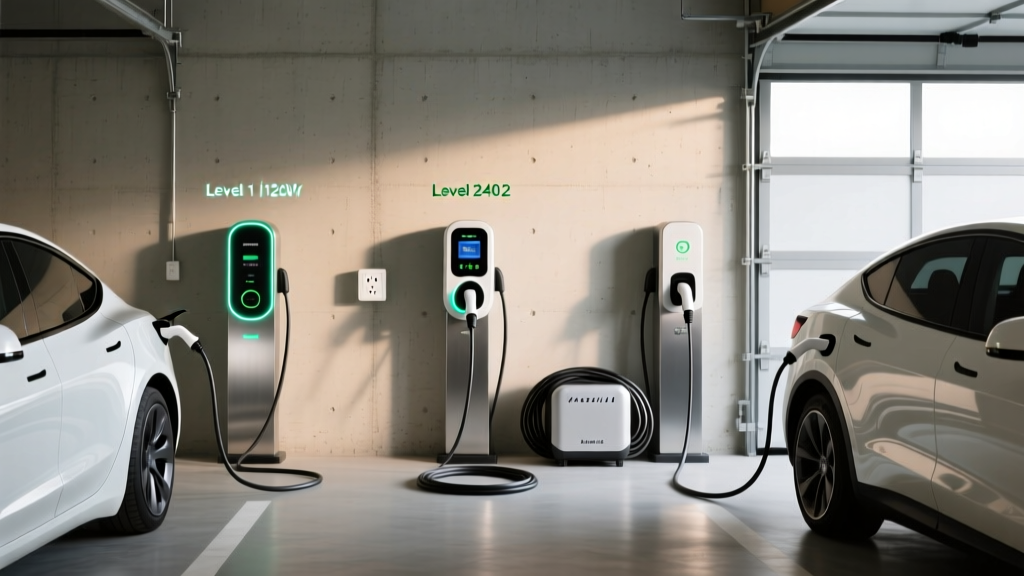
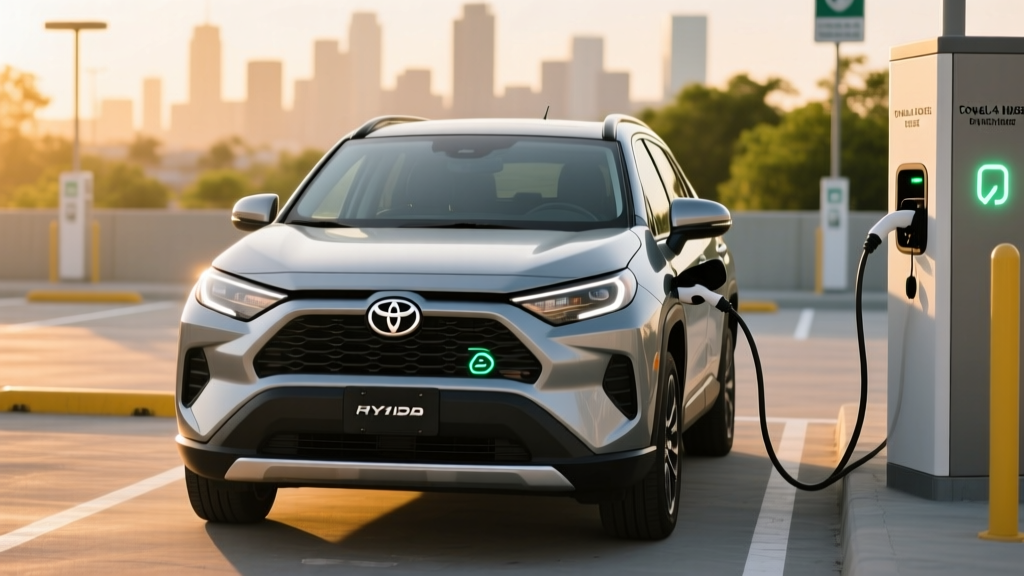
The RAV4 Prime (PHEV), however, has an 18.1 kWh lithium-ion battery and a J1772 charge port (CCS1-compatible for DC fast charging on some trims). Here's how each charging level performs with the Prime's battery:
| Level | Power (kW) | Voltage / Amps | Miles of EV Range Added per Hour | 0–100% Charge Time |
|---|---|---|---|---|
| Level 1 (standard outlet) | 1.2–1.4 kW | 120V / 12A | ~4 miles/hr | ~12–14 hours |
| Level 2 (home/public) | 3.3 kW (onboard limit) | 240V / 16A | ~12 miles/hr | ~4.5–5.5 hours |
| DC Fast Charge (CHAdeMO)* | Up to 50 kW | DC direct | N/A (10–80% in ~45 min) | ~45 min (10–80%) |
*DC fast charging is only available on RAV4 Prime trims equipped with the CHAdeMO port. Most 2023+ models dropped CHAdeMO — confirm your trim's port before relying on DC fast charging. The onboard AC charger caps at 3.3 kW, meaning even a 48A Level 2 station will only deliver 3.3 kW to the Prime.
How Much Does It Cost to Install a Home EV Charger?
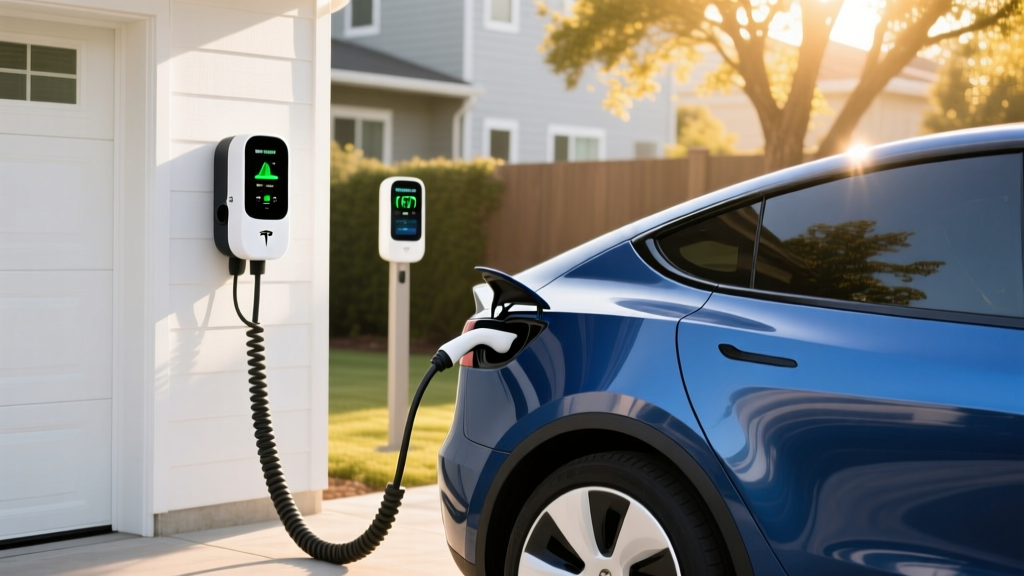
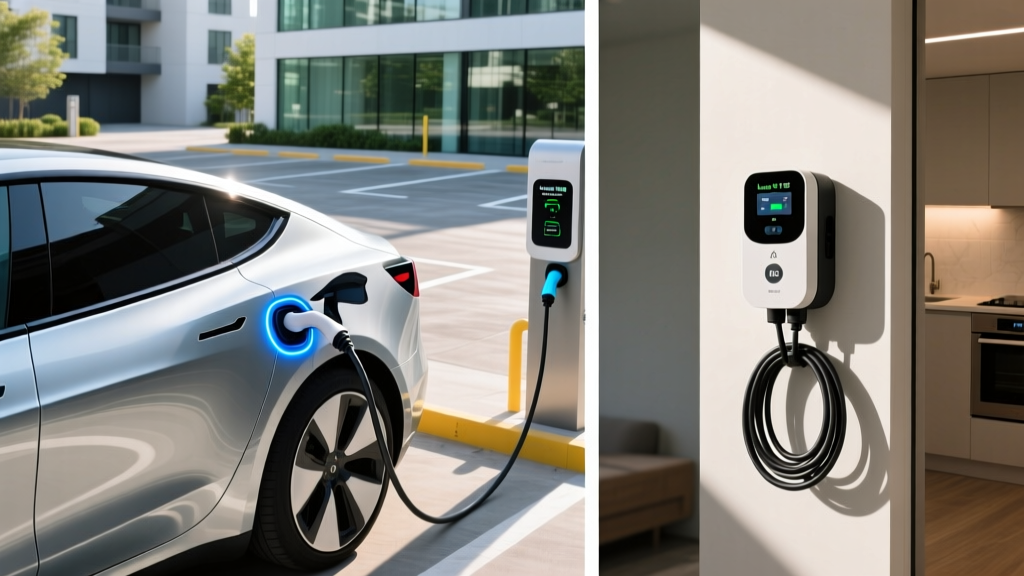
Even though the RAV4 Prime's onboard charger limits you to 3.3 kW, installing a proper 240V Level 2 circuit is still the best approach. It future-proofs your garage for a full BEV later and delivers the fastest AC charge the Prime can accept.
| Component | Typical Range | Notes |
|---|---|---|
| Level 2 EVSE equipment | $300 – $700 | Smart chargers (Wi-Fi, scheduling) cost more |
| Electrician labor (240V/20A circuit) | $500 – $1,500 | Depends on run length from panel to garage |
| Electrical permit | $50 – $200 | Varies by municipality |
| Panel upgrade (if needed) | $1,500 – $3,500 | Required if panel is maxed at 100A or has no spare slots |
| Total (no panel upgrade) | $850 – $2,400 | Average: ~$1,200–$1,600 |
| Total (with panel upgrade) | $2,350 – $5,900 | Common in homes built before 2000 |
Electrical Requirements for the RAV4 Prime
Because the Prime's onboard charger maxes at 3.3 kW (16A at 240V), a 240V / 20A dedicated circuit is sufficient. You do not need a 48A or 60A circuit for this vehicle — but installing a 40A or 50A circuit is smart if you plan to upgrade to a full BEV (like a Tesla Model Y or Hyundai Ioniq 5) in the future. A licensed electrician should evaluate your panel's spare capacity before any work begins.
Do You Need a Panel Upgrade?
Your home's electrical panel has a maximum amperage rating (typically 100A, 150A, or 200A). If your panel is already near capacity — running electric HVAC, a dryer, an oven, and a water heater — adding even a 20A EV circuit may require an upgrade to 200A service. Signs you may need a panel upgrade:
- Your panel is rated 100A or less
- No available breaker slots remain
- Your electrician's load calculation exceeds 80% of panel capacity
- Your home was built before 1990 and hasn't had electrical work since
Which Connector and Charger Are Compatible?
Connector compatibility is one of the most confusing aspects of EV and PHEV ownership. Here's what fits the RAV4 Prime and other common electrified vehicles:
| Connector Type | Used By | AC / DC | Notes |
|---|---|---|---|
| J1772 | RAV4 Prime, most non-Tesla PHEVs/BEVs | AC (Level 1 & 2) | Universal standard for AC charging in North America |
| CCS1 (Combined Charging System) | Ford, GM, Hyundai, VW, most non-Tesla BEVs | DC fast charge | J1772 + 2 DC pins below |
| CHAdeMO | Nissan Leaf, older RAV4 Prime trims | DC fast charge | Legacy; being phased out in North America |
| NACS (Tesla / North American Charging Standard) | Tesla, Ford (2025+), GM (2025+), Rivian | AC + DC | Adopted by most automakers for 2025+ models |
For the RAV4 Prime, you'll use a J1772 connector for all home and public AC charging. If your trim has DC fast capability, it uses CHAdeMO — not CCS1 or NACS. If you later buy a Tesla or a NACS-equipped Ford/GM, you'll need a J1772-to-NACS adapter (or a NACS-native charger) for home use.
Level 2 Home Charger Recommendations for the RAV4 Prime
Since the Prime's onboard charger caps at 3.3 kW, you don't need a high-amperage unit. However, buying a 32A or 40A charger now protects your investment for a future BEV. Here are three proven options:
Emporia Level 2 Smart Charger
- Power output: Up to 11.5 kW (48A) — Prime will draw 3.3 kW max
- Connector: J1772 (NACS adapter available)
- Cable length: 24 ft
- Smart features: Wi-Fi, app scheduling, energy monitoring, solar integration
- Price: ~$399
- Best for: Budget-conscious buyers who want smart scheduling and energy tracking
ChargePoint Home Flex
- Power output: Up to 12 kW (50A) — configurable via DIP switches
- Connector: J1772 (NACS version now available)
- Cable length: 23 ft
- Smart features: Wi-Fi, ChargePoint app, Alexa integration, scheduled charging
- Price: ~$699
- Best for: Reliability-focused buyers who want a proven brand with broad public network integration
Tesla Universal Wall Connector
- Power output: Up to 11.5 kW (48A)
- Connector: NACS + built-in J1772 adapter (Magic Dock style)
- Cable length: 24 ft
- Smart features: Wi-Fi, Tesla app, Powerwall integration, load sharing
- Price: ~$599
- Best for: Households with both Tesla and non-Tesla vehicles — one charger serves both
Cost to Charge the RAV4 Prime vs. Gas: Per-Mile Breakdown
One of the strongest arguments for the RAV4 Prime over the standard Hybrid is the ability to drive 42 miles on electricity alone — which is significantly cheaper per mile than gasoline in most markets.
| Scenario | Cost per kWh / Gallon | Cost per Mile (EV mode) | Cost per Mile (Gas mode) |
|---|---|---|---|
| Home charging (off-peak utility rate) | $0.12/kWh | $0.036/mi | N/A |
| Home charging (average US rate) | $0.17/kWh | $0.051/mi | N/A |
| Public Level 2 (ChargePoint, etc.) | $0.25–$0.40/kWh | $0.075–$0.12/mi | N/A |
| DC Fast Charging ( Electrify America) | $0.40–$0.55/kWh | $0.12–$0.17/mi | N/A |
| RAV4 Hybrid (gas only, 39 MPG) | $3.40/gal | N/A | $0.087/mi |
| RAV4 Prime (gas mode, 38 MPG) | $3.40/gal | N/A | $0.089/mi |
Calculation basis: RAV4 Prime consumes ~33 kWh/100 miles in EV mode (per EPA). Gas cost based on AAA national average regular unleaded as of early 2025. Your utility rate and local gas price will shift these numbers — check your electricity bill's $/kWh line for precision.
Federal Tax Credit for the RAV4 Prime (§30D)
The RAV4 Prime may qualify for the IRS §30D Clean Vehicle Credit of up to $7,500, but eligibility depends on several factors that change annually. Here's the current checklist:
- MSRP cap: SUVs/vans must be under $80,000 — the RAV4 Prime qualifies at all trims
- Buyer income cap: Modified AGI must not exceed $150,000 (single), $225,000 (head of household), or $300,000 (joint)
- Battery sourcing: Critical minerals and battery components must meet phased-in percentages from US/free-trade-partner sources — Toyota's supply chain has been adjusting, and eligibility can shift mid-year
- Point-of-sale transfer: As of 2024+, you can transfer the credit to the dealer at purchase for an immediate price reduction, rather than waiting to claim it on your tax return
- Assembly: Vehicle must undergo final assembly in North America — the RAV4 Prime is assembled in Japan, which disqualifies it from the new-vehicle §30D credit
Safety and Electrical Code Considerations
Any Level 2 home charger installation must comply with the National Electrical Code (NEC) and your local jurisdiction's amendments. Key requirements:
- Dedicated circuit: The EV charger must be on its own dedicated breaker — not shared with outlets, lighting, or appliances
- GFCI protection: NEC 2020 and later require GFCI protection for all 240V EV charging outlets (NEMA 14-50 or hardwired). Some EVSE units have built-in GFCI; if yours doesn't, a GFCI breaker is required
- Outdoor rating: If your charger is installed outdoors or in an open carport, the EVSE must carry a NEMA 4 or NEMA 4X rating for weather resistance. All three chargers recommended above meet this standard
- Permit and inspection: Most jurisdictions require an electrical permit and a post-installation inspection. Skipping this can void your homeowner's insurance coverage for electrical fires
- Cable management: A 24-ft cable left on a garage floor is a trip hazard. Wall-mount a cable organizer or retractable hook to keep the cord off the ground
Frequently Asked Questions
How much does it cost to install a home charger for the RAV4 Prime?
For a straightforward installation with no panel upgrade, expect $850–$2,400 total (charger + electrician + permit). If your home needs a panel upgrade from 100A to 200A, add $1,500–$3,500. The RAV4 Prime only needs a 240V/20A circuit, which is less expensive to install than the 40A–60A circuits required by full BEVs.
How fast will each charging level add range to the RAV4 Prime?
Level 1 (120V wall outlet) adds roughly 4 miles of EV range per hour — enough to fully recharge the 42-mile battery overnight in about 12 hours. Level 2 (240V) adds about 12 miles per hour, fully recharging in roughly 5 hours. The Prime's 3.3 kW onboard charger is the bottleneck — plugging into a 48A station won't charge it any faster than a 16A station.
Which connector does the RAV4 Prime use?
The RAV4 Prime uses a J1772 connector for all AC charging (Level 1 and Level 2). Some older trims include a CHAdeMO port for DC fast charging, but most 2023+ models dropped this option. The Prime does not use CCS1 or NACS connectors.
Is the RAV4 Prime worth it over the standard RAV4 Hybrid?
If your daily commute is under 40 miles and you can charge at home, the Prime eliminates most of your gasoline use and delivers 302 hp with a 5.7-second 0-60 time. However, the $11,490 price premium over the HEV is hard to justify on fuel savings alone (~$370/year). The Prime makes the most sense if you value the performance upgrade, want to reduce tailpipe emissions, and plan to keep the vehicle 5+ years. Without the federal new-vehicle tax credit (due to Japan assembly), the financial case weakens considerably.
What electrical upgrades might I need for a home charger?
If your electrical panel is 200A with spare breaker slots, you likely need nothing beyond a new 240V/20A circuit run to your garage. If your panel is 100A, fully loaded, or uses an older fuse box, a panel upgrade to 200A service will be required — typically $1,500–$3,500. Have a licensed electrician perform a load calculation before committing to a charger purchase.
Does the standard RAV4 Hybrid (HEV) need a charger?
No. The RAV4 Hybrid is a self-charging hybrid — it recovers energy through regenerative braking and the gas engine. There is no plug, no charge port, and no home charger needed. Its 39 MPG combined efficiency comes entirely from the hybrid powertrain managing the small NiMH battery automatically.