The Original RAV4 EV: Range Reality and Charging Fundamentals
The Toyota RAV4 EV remains one of the most significant early compliance electric vehicles ever sold in the United States. Produced in two distinct generations — the first-generation (1997–2003, NiMH battery) and the second-generation (2012–2014, Tesla-sourced lithium-ion powertrain) — the RAV4 EV introduced thousands of drivers to battery-electric ownership long before the current EV wave. If you're researching RAV4 EV range today, you're likely either a current owner looking to optimize charging, a used-EV shopper evaluating a legacy model, or someone comparing early EVs to modern offerings.
RAV4 EV Range (2nd Generation, 2012–2014)
EPA-rated range: 103 miles (41.8 kWh usable battery, Tesla-derived powertrain)
Real-world expectation: 75–90 miles in mixed highway driving; 60–75 miles in cold weather (below 40°F) due to cabin heating load and increased battery internal resistance.
First-generation (1997–2003): EPA-rated 95 miles on a ~27 kWh NiMH pack — expect 60–80 miles real-world given battery age and degradation.
The second-generation RAV4 EV was built in collaboration with Tesla, sharing the powertrain architecture of the contemporary Tesla Model S. It features a 129 kW (173 hp) AC induction motor, front-wheel drive, and a 41.8 kWh usable lithium-ion battery (gross capacity ~50 kWh). The 0–60 mph time sits at approximately 8.6 seconds, and the EPA efficiency rating is 76 MPGe combined (roughly 44 kWh/100 miles). Per fueleconomy.gov, the RAV4 EV was rated at 103 miles of combined range — impressive for 2012, but modest by 2026 standards where mainstream EVs routinely exceed 250 miles.
| Spec | Value |
|---|---|
| EPA Range | 103 miles |
| Battery (usable) | 41.8 kWh, lithium-ion |
| Motor Output | 129 kW / 173 hp |
| 0–60 mph | ~8.6 seconds |
| EPA Efficiency | 76 MPGe (44 kWh/100 mi) |
| Onboard Charger | ~10 kW (Level 2 AC) |
| DC Fast Charging | Not supported (J1772 AC only) |
| Connector | J1772 (standard AC) |
| Original MSRP | $49,500 (before incentives) |
Charging Levels Explained: What RAV4 EV Owners Need to Know
Understanding charging levels is essential for any EV owner. The critical distinction: kW (kilowatts) measures charging power — the rate of energy flow. kWh (kilowatt-hours) measures battery energy capacity — the total fuel in the tank. A 10 kW charger delivers 10 kWh of energy per hour. The RAV4 EV's 41.8 kWh battery means a full charge at 10 kW would take roughly 4.2 hours in ideal conditions.
| Level | Power (kW) | Voltage/Amps | Miles of Range Added per Hour | 0–100% Time (42 kWh) |
|---|---|---|---|---|
| Level 1 (Standard Outlet) | 1.0–1.4 kW | 120V / 12A | ~3–5 miles | ~35–42 hours |
| Level 2 (Home/Public AC) | 3.3–19.2 kW | 240V / 16–80A | ~12–65 miles | ~2.2–12 hours |
| DC Fast Charging | 50–350 kW | 400–800V DC | ~150–1,000+ miles | N/A (RAV4 EV not compatible) |
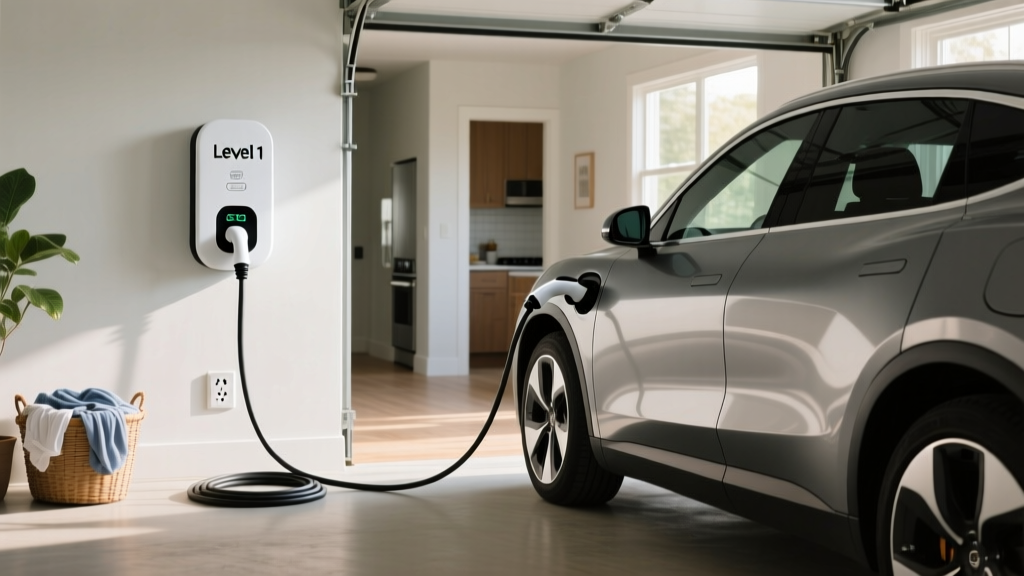
Level 1 Charging (120V household outlet): Every EV comes with a portable Level 1 cord. For the RAV4 EV, expect roughly 3–5 miles of range per hour of charging. This is adequate only for overnight top-ups if you drive less than 30 miles daily. A full charge from empty takes well over 30 hours — impractical for most owners.
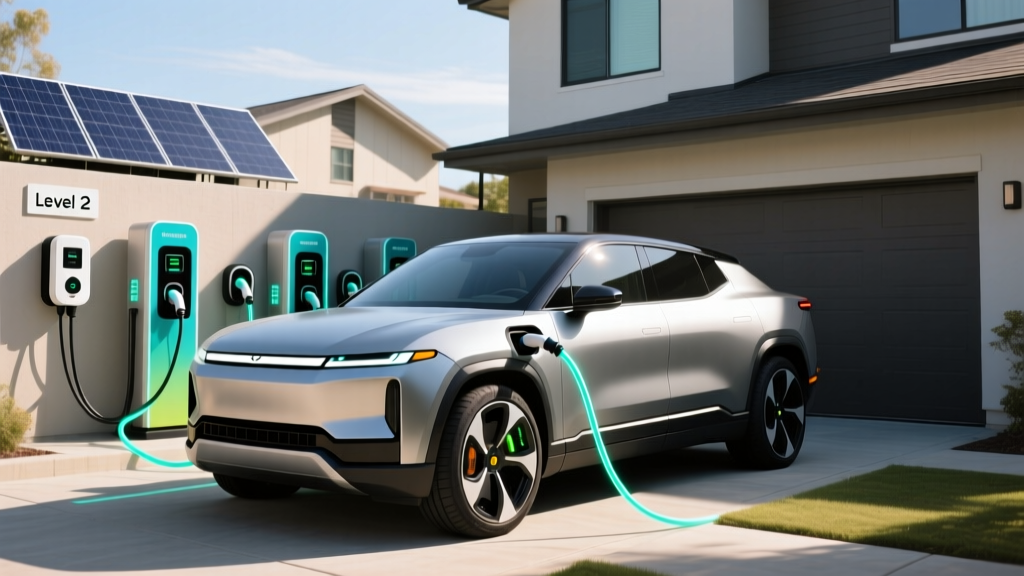
Level 2 Charging (240V): This is the practical standard for home EV charging. The second-generation RAV4 EV has a robust onboard charger rated at approximately 10 kW, meaning it can accept up to ~40 amps at 240V. A Level 2 charge from empty to full takes roughly 4–5 hours. This is ideal for overnight charging and ensures a full battery every morning.
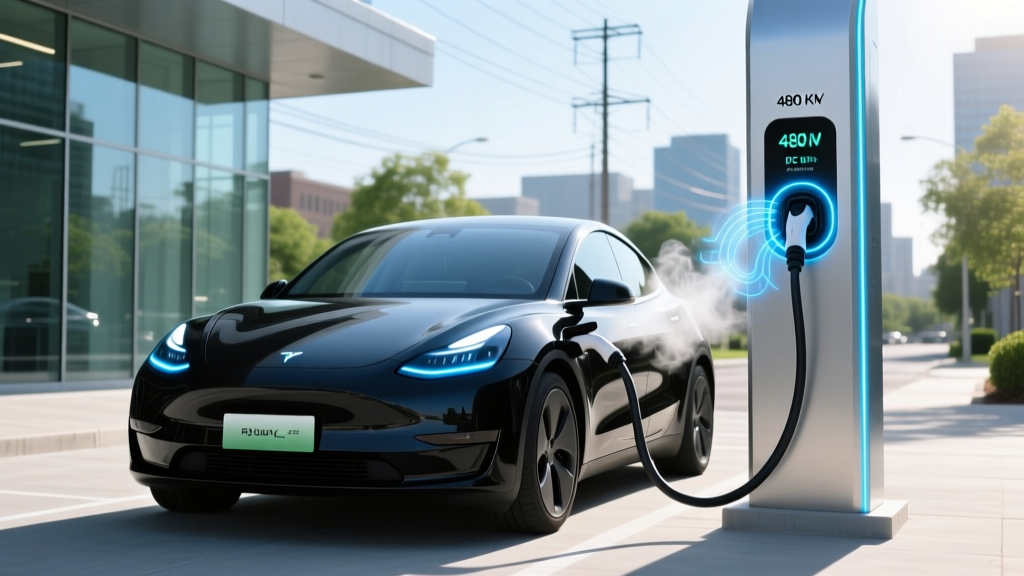
DC Fast Charging: The RAV4 EV does not support DC fast charging. The vehicle was designed before the CCS and CHAdeMO standards became widespread, and Tesla's Supercharger network was not accessible to the RAV4 EV (despite the Tesla powertrain). All charging must be done via AC through the J1772 connector.
Home Charger Installation: Costs, Electrical Requirements, and Gotchas
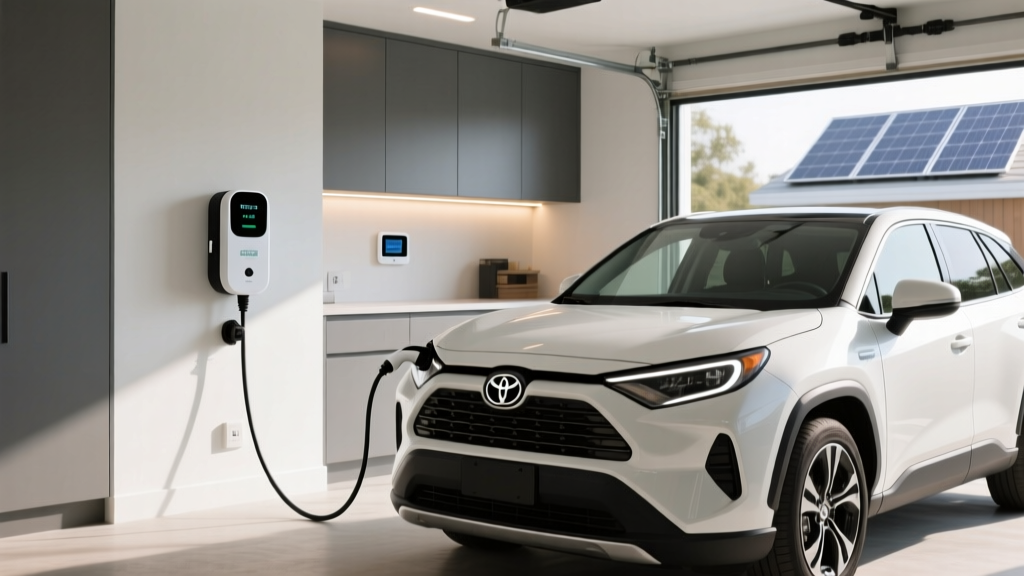
Installing a Level 2 home charger is the single most impactful upgrade an EV owner can make. For RAV4 EV owners, a properly installed 240V Level 2 station unlocks the vehicle's full 10 kW onboard charging capability.
Electrical Requirements for a Level 2 Home Charger
A Level 2 charger capable of delivering 10 kW to the RAV4 EV requires a 240V dedicated circuit rated at 50 amps (to support a continuous 40A load, the National Electrical Code requires circuits rated 125% of continuous load). Here's what that entails:
- Dedicated circuit: The charger must have its own breaker — no sharing with other appliances.
- Wire gauge: Typically 6 AWG copper for a 50A circuit; your electrician will confirm based on run length.
- Panel capacity: Your electrical panel must have spare capacity. Most modern 200A panels can accommodate an EV circuit, but older 100A panels often cannot.
- GFCI protection: The 2020 NEC requires GFCI protection for EV receptacles in garages; hardwired chargers may be exempt depending on jurisdiction.
- Permit: Most municipalities require an electrical permit and inspection for a new 240V circuit. Permits typically cost $50–$200.
Panel Upgrade: The Hidden Cost
If your home has a 100A electrical panel (common in homes built before the 1990s), adding a 50A EV circuit may exceed your panel's capacity. A panel upgrade to 200A typically costs $1,500–$3,500 depending on your utility's requirements, trenching needs, and local labor rates. Some homeowners opt for a smart load-management system (like the Emporia VUE with EV charger integration) to avoid a panel upgrade by dynamically limiting charger draw when other appliances are running. These systems cost $200–$500 additional.
| Component | Low End | Typical | High End |
|---|---|---|---|
| Level 2 Charger Equipment (hardwired, 40–48A) | $300 | $500 | $750 |
| Electrician Labor (new 50A circuit, standard run) | $500 | $1,000 | $2,000 |
| Electrical Permit & Inspection | $50 | $125 | $250 |
| Panel Upgrade (if needed, 100A → 200A) | $1,500 | $2,500 | $3,500 |
| Conduit / Trenching (long outdoor runs) | $0 | $300 | $1,500 |
| Total (no panel upgrade) | $850 | $1,625 | $4,500 |
| Total (with panel upgrade) | $2,350 | $4,125 | $8,000 |
Federal incentive note: The IRS Residential Clean Energy Credit (§25C) was modified under recent legislation. As of 2026, check current IRS guidance for whether home EV charging equipment qualifies for any remaining energy-efficiency credits. Eligibility, caps, and qualifying equipment change frequently — consult a tax professional before claiming.
Connector Compatibility: J1772, NACS, CCS, and Adapter Needs
The RAV4 EV uses the J1772 connector — the North American standard for AC Level 1 and Level 2 charging. This is the same connector used by virtually every non-Tesla EV sold in North America through 2024. Here's how connector standards break down across the EV landscape:
| Connector | Type | Used By | RAV4 EV Compatible? |
|---|---|---|---|
| J1772 | AC (Level 1/2) | All non-Tesla NA EVs (2010–2024+) | Yes — native |
| NACS (Tesla) | AC + DC | Tesla (all); Ford, GM, Rivian, others (2025+) | AC only via adapter |
| CCS1 (Combo) | DC Fast | Most non-Tesla NA EVs (2014+) | No — RAV4 EV has no DC port |
| CHAdeMO | DC Fast | Nissan Leaf, Mitsubishi (legacy) | No — RAV4 EV has no DC port |
Because the RAV4 EV only accepts AC charging through J1772, connector compatibility is straightforward: any J1772 Level 2 station will work. If you install a NACS (Tesla Wall Connector) at home, you'll need a Tesla-to-J1772 adapter (approximately $150–$250 from third-party manufacturers like Lectron or Telog). Tesla's official adapter is designed for Tesla vehicles to use J1772 stations, not the reverse, so third-party solutions are the practical option.
Charging Cost: Home vs. Public vs. Gas Comparison
One of the strongest ownership arguments for the RAV4 EV — even a decade after production — is fuel cost. At 44 kWh per 100 miles, the RAV4 EV's electricity consumption translates to real dollars based on your local rate.
| Scenario | Rate | Cost per 100 Miles | Cost per Mile |
|---|---|---|---|
| Home charging (off-peak utility rate) | $0.12/kWh | $5.28 | $0.053 |
| Home charging (national avg residential) | $0.17/kWh | $7.48 | $0.075 |
| Public Level 2 (network pricing) | $0.30/kWh | $13.20 | $0.132 |
| Comparable gas SUV (25 MPG, $3.50/gal) | $3.50/gal | $14.00 | $0.140 |
| Comparable gas SUV (25 MPG, $4.50/gal) | $4.50/gal | $18.00 | $0.180 |
At typical residential electricity rates, the RAV4 EV costs roughly half as much per mile to "fuel" as a comparable gas-powered RAV4 (which averages 28 MPG combined for the 2026 model year). Even at public Level 2 rates, the EV is generally cheaper per mile. The savings are most pronounced for owners who can charge at home on off-peak utility rates — some utilities offer EV-specific time-of-use plans with rates as low as $0.07–$0.10/kWh overnight.
Recommended Level 2 Chargers for the RAV4 EV
Since the RAV4 EV's onboard charger tops out at roughly 10 kW (40A at 240V), you don't need the most powerful home charger on the market. A 40A or 48A unit will fully utilize the vehicle's capability. Here are proven, well-built options:
ChargePoint Home Flex
- Power: Up to 12 kW (50A) — adjustable via dip switch
- Connector: J1772 (native; NACS version available)
- Cable Length: 23 feet
- Smart Features: Wi-Fi, scheduling, energy tracking, Alexa integration
- Installation: Hardwired or NEMA 14-50 plug
- Price: ~$550–$650
- Why for RAV4 EV: Adjustable amperage lets you match your circuit exactly; excellent app for tracking charge sessions.
Emporia Level 2 EV Charger
- Power: Up to 11.5 kW (48A)
- Connector: J1772
- Cable Length: 24 feet
- Smart Features: Wi-Fi, solar integration, load management, energy dashboard
- Installation: Hardwired or NEMA 14-50 plug
- Price: ~$350–$450
- Why for RAV4 EV: Best value smart charger; load-management feature can help avoid panel upgrades.
Tesla Wall Connector (with J1772 adapter)
- Power: Up to 11.5 kW (48A)
- Connector: NACS (requires Tesla-to-J1772 adapter for RAV4 EV)
- Cable Length: 24 feet
- Smart Features: Wi-Fi, power sharing (multi-unit), OTA updates
- Installation: Hardwired only
- Price: ~$425 (charger) + $150–$250 (adapter)
- Why for RAV4 EV: Excellent build quality; makes sense if you plan to own a Tesla in the future and want a single home charger.
Safety, Code, and Long-Term Ownership Considerations
Charging a legacy EV like the RAV4 EV safely requires attention to a few details that newer EV owners may not encounter:
- Dedicated circuit: Never share your EV charger circuit with other loads. The NEC requires a dedicated breaker for continuous loads over 16A.
- Outdoor rating: If your charger is installed outdoors (carport, driveway), ensure it carries a NEMA 4 or IP65 weather rating. All recommended chargers above meet this standard.
- Cable management: A 23–24 foot cable is sufficient for most single-car garages. If your charge port is on the opposite side from your charger, consider a cable organizer or longer-cable model.
- Battery age: The RAV4 EV's lithium-ion battery is now 11–14 years old. Expect some degradation — real-world range may be 80–90% of original capacity depending on climate history and charging habits. NHTSA has no outstanding battery-specific recalls for the 2nd-gen RAV4 EV, but always verify VIN-specific recall status.
- Used EV battery health: If purchasing a used RAV4 EV, request a battery health report (State of Health, or SoH). A pack below 75% SoH will deliver noticeably reduced range. Replacement batteries are scarce and expensive ($8,000–$15,000+ if available through salvage or specialist shops).
RAV4 EV vs. Modern EVs: Is Upgrading Worth It?
If you're evaluating whether to keep a RAV4 EV or upgrade to a modern EV, consider the range and charging gap:
- RAV4 EV (2012–2014): 103 miles EPA, AC-only charging, no DC fast charge, aging battery.
- 2026 Toyota RAV4 PHEV (Prime): 42 miles electric-only range, then hybrid. No range anxiety for longer trips.
- 2026 Hyundai Ioniq 5: 318 miles EPA, 350 kW DC fast charging (10–80% in ~18 min), NACS native.
- 2026 Chevrolet Equinox EV: 319 miles EPA, 150 kW DC fast charging, starting ~$33,000 before credits.
For daily commutes under 60 miles with reliable home charging, the RAV4 EV remains a viable and extremely low-cost commuter. For anyone needing road-trip capability or public fast-charging access, the lack of DC fast charging is a hard limitation that no home setup can overcome.
Frequently Asked Questions
How much does it cost to install a home EV charger for a RAV4 EV?
A typical Level 2 home charger installation (equipment + electrician + permit) costs $850–$4,500 if your electrical panel has spare capacity. If a panel upgrade from 100A to 200A is needed, add $1,500–$3,500. The RAV4 EV's 10 kW onboard charger means a mid-range 40–48A charger ($350–$550) is the sweet spot.
How fast will each charging level add range to the RAV4 EV?
Level 1 (120V outlet): ~3–5 miles per hour. Level 2 (240V, 40A): ~25–30 miles per hour — enough for a full charge in roughly 4 hours. DC fast charging is not supported on the RAV4 EV.
Which connector is compatible with the RAV4 EV?
The RAV4 EV uses the J1772 connector for all AC charging. It has no DC fast-charge port, so CCS1 and CHAdeMO connectors are not applicable. If installing a Tesla Wall Connector (NACS), you'll need a third-party Tesla-to-J1772 adapter.
How much does charging the RAV4 EV cost per mile vs. gas?
At the national average residential rate of ~$0.17/kWh, the RAV4 EV costs roughly $0.075/mile to charge. A comparable gas SUV at 25 MPG and $3.50/gallon costs $0.14/mile — nearly double. Off-peak home charging can reduce EV fuel cost to under $0.05/mile.
What electrical upgrades might I need for a home charger?
Most homes with a 200A panel can add a 50A dedicated EV circuit without upgrades. Homes with 100A panels (common pre-1990s) may need a panel upgrade ($1,500–$3,500) or a smart load-management system ($200–$500) to avoid one. Your licensed electrician will perform a load calculation to determine your specific needs.
Can I use a public charging station with the RAV4 EV?
Yes, but only AC Level 2 public stations with a J1772 connector. The RAV4 EV cannot use DC fast chargers (CCS, CHAdeMO, or Tesla Superchargers). This limits its practicality for road trips and makes home charging the primary fueling strategy.